Some Canadian animals are rare because there are almost none left. Others are rare because they look like something a six-year-old invented during a sugar crash. This list covers both.
Most articles pick a lane. The conservation lists give you population graphs and IUCN codes. The “weird creatures” galleries give you the blood-squirting lizard and skip the part where it’s actually at risk. We’re doing both, because the most interesting animals in Canada tend to be the ones that are strange and disappearing — and because the question “what’s the rarest animal in Canada” has a real answer once you put numbers next to the names.
Each entry below has the same things: what makes it weird or notable, roughly how many are left, where it lives, and its conservation status under COSEWIC, the federal committee that assesses species at risk. There’s a comparison table near the top if you just want the rankings, and a section at the end on where you can actually go see some of these without breaking any laws.
Table of Contents
- The rarest of the rare, ranked
- The critically endangered
- The genuinely strange
- Rare and found almost nowhere else
- Where you can actually see them
- What “rare” really means here
The rarest of the rare, ranked
If you sort by how few individuals are left, the picture gets grim fast. The Vancouver Island marmot has clawed back from near-zero, but a few of these animals number in the dozens to low hundreds in the wild.
| Animal | Status (COSEWIC) | Rough wild population | Where |
|---|---|---|---|
| Vancouver Island marmot | Endangered | ~200–250 | Vancouver Island, BC |
| Peary caribou | Endangered | ~13,000 (down from ~50,000) | High Arctic islands |
| Sea otter (BC) | Special Concern | ~8,000 | BC coast |
| Burrowing owl | Endangered | ~270–360 pairs | Prairies |
| Spotted owl | Endangered | Fewer than 10 wild | Southwest BC |
| Spiny softshell turtle | Endangered | A few thousand | Ontario, Quebec |
| Eastern wolf | Threatened | ~500 mature | Ontario, Quebec |
| Greater sage-grouse | Endangered | Roughly 150 | Alberta, Saskatchewan |
| Whooping crane | Endangered | ~500+ (one wild flock) | Wood Buffalo NP |
| Blanding’s turtle | Endangered/Threatened | Tens of thousands, declining | Ontario, Nova Scotia |
| North Atlantic right whale | Endangered | ~370 total | Atlantic Canada |
| Star-nosed mole | Not at risk | Common but secretive | Eastern Canada wetlands |
| Greater short-horned lizard | Endangered | Unknown, localized | Southern Alberta, Saskatchewan |
| Wolverine | Special Concern (eastern pop. extirpated) | Low density, widespread | Northern Canada |
Population figures shift year to year and some are genuinely hard to count. Treat them as ballparks, not census results.
The critically endangered
These are the animals where a bad decade could mean the end of them in Canada.
Spotted owl
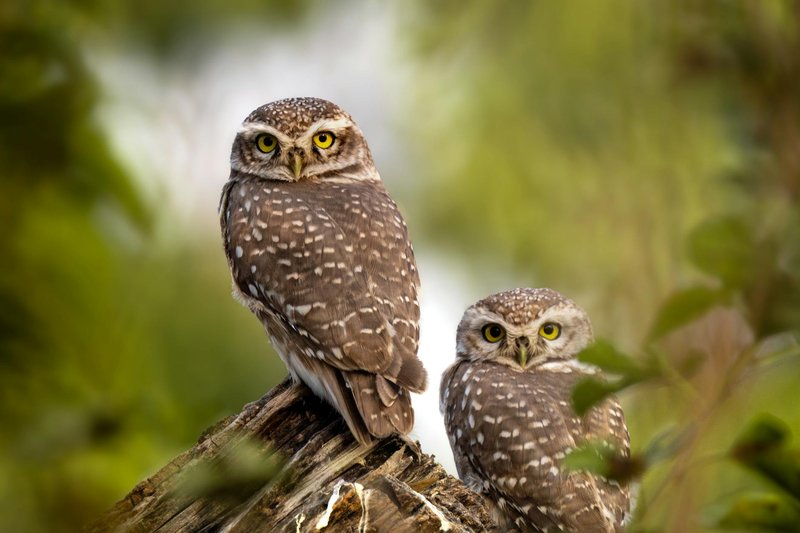
The northern spotted owl is, by individual count, about as close to gone as a Canadian bird gets. The wild population in British Columbia has been down in the single digits for years — at points, fewer than five breeding-age birds were known in the entire country. The problem is old-growth forest: spotted owls need big, ancient trees in the southwestern BC mountains, and that habitat got logged faster than the owls could adapt. There’s a captive breeding facility near Langley releasing birds, but a species hanging on through a breeding program isn’t a recovery, it’s a holding pattern.
Vancouver Island marmot
This is the one conservation success story people in BC actually cite, and it earned it. The Vancouver Island marmot lives nowhere else on Earth — it’s endemic to a handful of mountain meadows on a single island. By 2003, the wild population had crashed to around 30 animals. Captive breeding and reintroduction pulled it back to roughly 200–250 today. It’s a fat, brown, chocolate-colored rodent about the size of a housecat that whistles to warn the colony of eagles. Losing it would have meant losing an entire species, not just a Canadian population.
Burrowing owl
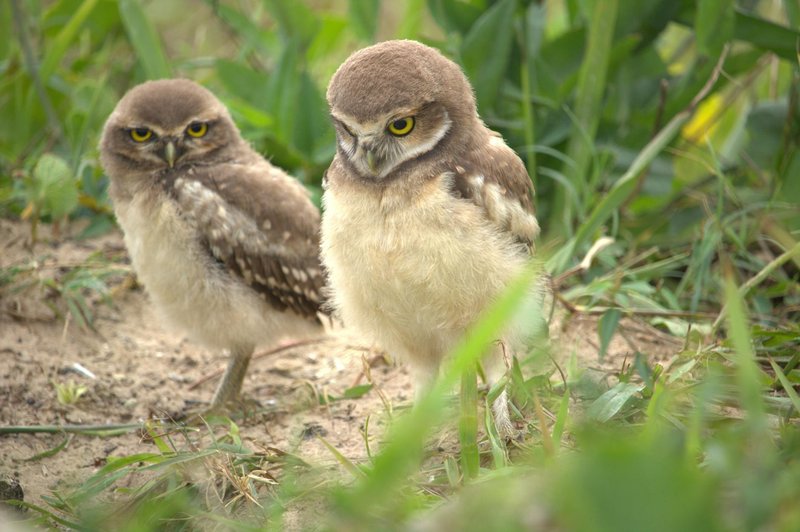
A grassland owl that lives underground and hunts during the day breaks two rules at once. Burrowing owls nest in old badger and ground-squirrel burrows on the prairies, which is a problem when both the burrows and the grassland keep getting converted to cropland. Canada’s population has fallen to a few hundred pairs, and the birds that migrate south in winter often don’t come back. They’re tiny — barely taller than a soda can — and they’ll do a rattlesnake impression from inside the burrow to scare off predators.
Greater sage-grouse
The greater sage-grouse is the bird whose males inflate two yellow air sacs on their chest and make a sound like someone plucking a rubber band underwater. In Canada, it’s nearly gone: the population in Alberta and Saskatchewan dropped roughly 90% over a couple of decades and now sits around 150 birds. They depend on sagebrush, and sagebrush habitat on the Canadian prairie has been carved up by agriculture and energy development. An emergency protection order in 2013 was one of the first of its kind in Canada.
North Atlantic right whale
There are roughly 370 North Atlantic right whales left on the entire planet, and a meaningful share of them feed in Canadian waters in the Gulf of St. Lawrence. They’re slow, they swim near the surface, and they were named “right whales” because whalers considered them the right whale to kill — they float when dead. Today the threats are ship strikes and entanglement in fishing gear. According to NOAA Fisheries, they’re one of the most endangered large whale species in the world, and Canada has redrawn shipping lanes and closed fishing zones to try to keep them alive. They’re far from the only marine species under pressure here — the endangered animals of Newfoundland and Labrador include several seabirds and marine mammals facing the same kinds of threats off Atlantic Canada.
Peary caribou
The smallest and palest caribou, the Peary caribou lives in the High Arctic — Banks Island, Ellesmere, the Queen Elizabeth Islands. Its numbers have swung hard, dropping from around 50,000 in the 1960s to a low point where some islands lost most of their herd to brutal winter icing events that sealed the tundra under ice and starved them. Climate change is making those ice events more common, which is a slow-motion problem for an animal already living at the edge of where caribou can survive.
The genuinely strange
Not all rare animals are endangered, and not all strange animals are rare. These are the ones that earn the “weird Canadian wildlife” headlines.
Star-nosed mole
This is the one that looks like a mistake. The star-nosed mole has 22 pink, fleshy tentacles ringing its snout, arranged like a star, and they’re not for smelling — they’re a touch organ. It’s the fastest-eating mammal known to science: it can identify and swallow a prey item in under a quarter of a second. The “star” has more than 100,000 nerve fibers, more touch sensors than the entire human hand. It lives in wet eastern Canadian soil, is mostly blind, and can smell underwater by blowing bubbles and re-inhaling them. It’s one of many rare wetland animals that thrive in marshes most people walk right past. It is not endangered. It is just deeply strange.
Greater short-horned lizard
Yes, Canada has a lizard that squirts blood from its eyes. The greater short-horned lizard lives in the dry badlands of southern Alberta and Saskatchewan, near the northern limit of where any horned lizard can survive. When a predator like a fox or coyote grabs it, it can rupture small vessels near its eyes and shoot a stream of foul-tasting blood up to a third of a meter. It’s also rare and localized in Canada — listed as endangered — because it needs warm, arid slopes that don’t freeze too hard in winter, and there isn’t much of that this far north.
Spiny softshell turtle
A turtle with a flat, leathery, pancake-like shell and a snout like a tiny snorkel doesn’t look like it should exist in Ontario, but it does. The spiny softshell has no hard scutes — its shell is covered in soft skin, with small spiny projections at the front edge. It can stay underwater for long stretches by absorbing oxygen through its skin and throat lining. It’s endangered in Canada, hurt by shoreline development, boat propellers, and nest predation, and it’s down to a few isolated populations in southern Ontario and Quebec.
Wolverine
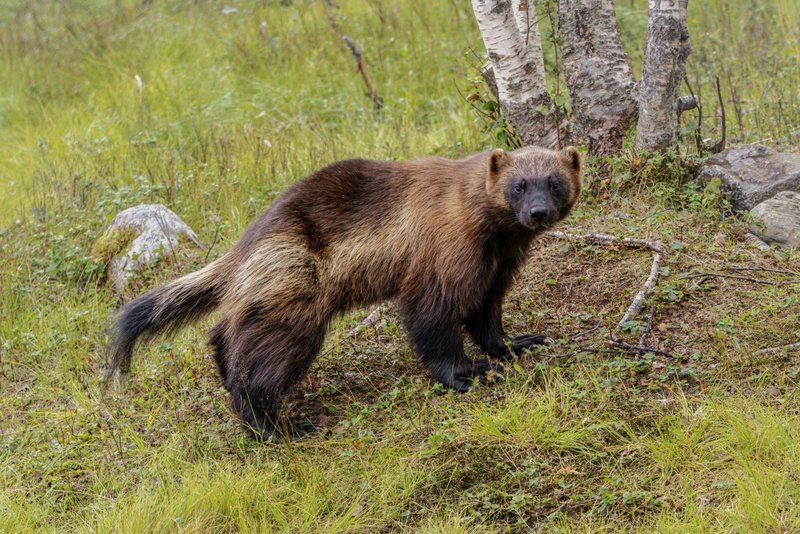
The wolverine isn’t rare because of low total numbers so much as low density — it needs enormous territories of undisturbed wilderness, so even a healthy population is spread thin. A single wolverine can range over hundreds of square kilometers. They’re famous for strength out of proportion to their size, capable of driving much larger predators off a kill and cracking frozen bone. The eastern Canadian population is considered extirpated, gone from Quebec and Labrador, while northern and western populations hang on at special-concern status. You can be a deeply experienced Canadian outdoorsperson and never see one.
Rare and found almost nowhere else
A few species are notable because Canada is most or all of their world.
Whooping crane
The whooping crane is North America’s tallest bird and one of conservation’s most famous near-misses. The species dropped to about 15 birds in the 1940s. The only self-sustaining wild flock nests in Canada — in and around Wood Buffalo National Park on the Alberta–Northwest Territories border — and migrates all the way to the Texas coast each year. The total wild population is back over 500, which sounds healthier until you remember the entire migratory flock still funnels through a single route, where one bad event could undo decades of work. It sits alongside other rare animals of North America whose recoveries hang on a single flock or a handful of protected sites.
Sea otter
Sea otters were hunted out of Canadian waters entirely during the fur trade — by the early 1900s there were none left on the BC coast. Every sea otter in British Columbia today descends from a small group reintroduced from Alaska in the late 1960s and early 70s. They’ve recovered to several thousand, which is genuinely good news, but they’re still listed as special concern, and the whole population traces back to that one reintroduction. They have the densest fur of any animal, up to a million hairs per square inch, because they have no blubber and the cold Pacific would otherwise kill them.
Eastern wolf
The eastern wolf is the canid that taxonomists keep arguing about — smaller than a gray wolf, genetically distinct, and centered on Ontario and Quebec. Its stronghold is Algonquin Provincial Park, where roughly a few hundred mature animals make up a meaningful chunk of the species. Outside protected areas they hybridize with coyotes and get shot or trapped, which makes the protected populations disproportionately important. It’s the wolf you’ll most likely hear if you do a public wolf howl night in Algonquin in August.
Where you can actually see them
Most of these animals you will never see by accident. A few you can, if you go to the right place at the right time.
- Sea otters — boat tours out of Tofino and the west coast of Vancouver Island regularly find rafts of them. This is the easiest rare animal on the list to actually watch in the wild.
- Eastern wolves — Algonquin Provincial Park runs guided public wolf howls in August when conditions are right. You won’t see one, but you’ll hear a pack answer.
- Vancouver Island marmots — Mount Washington on Vancouver Island has marmots that recovery crews monitor, and summer hikes in their alpine meadows can turn one up. Keep your distance.
- Whooping cranes — you’re more likely to see the Canadian flock on its Texas wintering grounds than at the Wood Buffalo nesting site, which is remote and protected.
- Star-nosed moles — almost impossible to see on purpose, since they live underground in wetlands. Your best odds are spotting one swimming in a clear marsh or pond.
- North Atlantic right whales — responsible tour operators in the Gulf of St. Lawrence sometimes encounter them, but viewing is tightly regulated to avoid disturbing a critically endangered animal.
If you do go looking, follow distance guidelines and never bait or chase wildlife. For genuinely rare species, a careless close encounter does real harm. The IUCN Red List is a good place to check just how precarious a given species is before you make the trip.
What “rare” really means here
Rare isn’t one thing. The wolverine is rare because it lives at low density across a huge area. The spotted owl is rare because there are almost none left. The star-nosed mole isn’t rare at all — it’s just so strange and so hidden that most people will never see one, which feels like the same thing.
The animals worth caring about most are the ones in that first table near the top: the marmot at a couple hundred, the sage-grouse around 150, the spotted owl in the single digits. Those numbers are the actual answer to “what’s the rarest animal in Canada,” and they’re the reason the conservation work behind names like COSEWIC and captive breeding programs isn’t abstract. For several of these species, the difference between a recovery story and an extinction is a few dozen animals and the next ten years.