The phrase “exotic cat” hides a fault line that trips up almost everyone shopping for one. On one side: domestic cats bred to look wild — spotted, rangy, gold-eyed, but still a regular housecat under the hood and legal in all 50 states. On the other: actual wild cats — servals, caracals, ocelots — that need a permit in most places, a six-figure enclosure budget, and a vet who’ll return your calls.
Most lists blur the two together, which is how people end up emotionally attached to a serval before learning their state bans them outright. So we split this one down the middle. First the breeds you can actually bring home this year, then the wildcats — with honest notes on what owning each really costs and demands. There’s a comparison table up top if you just want the verdict.
Table of Contents
- The Quick-Reference Table
- Domestic Breeds That Look Wild
- Bengal
- Savannah
- Egyptian Mau
- Ocicat
- Toyger
- Pixie-Bob
- Chausie
- Serengeti
- Exotic Shorthair (the impostor)
- True Wildcats and the Legal Wall
- Serval
- Caracal
- Ocelot
- Bobcat
- Asian Leopard Cat
- Which Exotic Cat Is Right for You
The Quick-Reference Table
The fastest way to see where each cat lands. “Legality” refers to private ownership across most US states — wildcat rules change county by county, so treat it as a starting point, not legal advice.
| Breed | Weight | Temperament | Typical Price | Care Difficulty | Legal to Own (US) |
|---|---|---|---|---|---|
| Bengal | 8–15 lb | High-energy, chatty | $1,500–$3,000 | Moderate | Yes (all states)* |
| Savannah (F1) | 12–25 lb | Bold, dog-like | $12,000–$25,000 | High | Restricted in some states |
| Savannah (F4+) | 8–15 lb | Active, loyal | $1,000–$5,000 | Moderate | Yes (most states) |
| Egyptian Mau | 6–14 lb | Reserved, fast | $800–$1,800 | Low | Yes |
| Ocicat | 6–15 lb | Social, outgoing | $800–$1,500 | Low | Yes |
| Toyger | 7–15 lb | Calm, friendly | $1,500–$5,000 | Low | Yes |
| Pixie-Bob | 8–17 lb | Quiet, loyal | $1,000–$2,000 | Low | Yes |
| Chausie | 12–25 lb | Athletic, intense | $1,000–$5,000 | High | Yes (later gens) |
| Serengeti | 8–15 lb | Active, vocal | $600–$2,000 | Low | Yes |
| Exotic Shorthair | 7–14 lb | Placid, cuddly | $1,200–$2,500 | Moderate (face) | Yes |
| Serval | 20–40 lb | Wild, demanding | $6,000–$10,000 | Extreme | Banned/permit |
| Caracal | 18–40 lb | Wild, territorial | $7,000–$12,000 | Extreme | Banned/permit |
| Ocelot | 18–35 lb | Wild, elusive | $15,000+ | Extreme | Banned/permit |
| Bobcat | 15–35 lb | Wild, predatory | $1,500–$4,000 | Extreme | Banned/permit |
*Some jurisdictions (e.g., New York City, Hawaii) restrict early-generation Bengals (F1–F4). By the F5+ generation, the cats most breeders sell, those rules generally don’t apply.
Domestic Breeds That Look Wild
These nine are Felis catus — the same species as your neighbor’s tabby. They’re the result of deliberate breeding to capture a wild look without the wild liability. You can own them, vaccinate them at any clinic, and board them like a normal cat.
Bengal
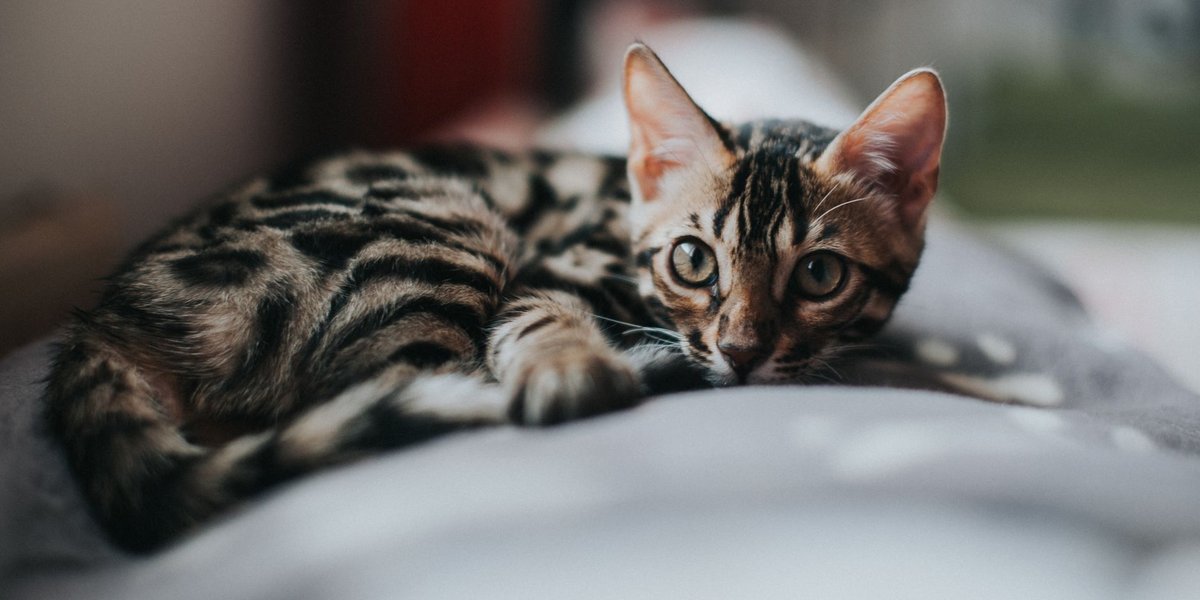
The Bengal is what most people actually picture when they say “exotic cat.” It descends from crosses between domestic cats and the Asian leopard cat, and the breed carries a trait you won’t find anywhere else in the cat world: glitter. Run your hand along a Bengal’s coat in sunlight and the tips of the fur catch the light like they’ve been dusted with metallic powder. That’s a real, named characteristic breeders select for, not marketing.
Rosetted Bengals — the ones with two-toned spots that look like miniature leopard markings — command the highest prices. Expect a loud, athletic cat that opens cabinets, plays fetch, and frequently develops a strange love of water. The International Cat Association recognized them in 1986, and they’re now one of the most registered breeds in the world. Plan for vertical space and daily play, or the Bengal will invent its own entertainment, usually at your expense.
Savannah
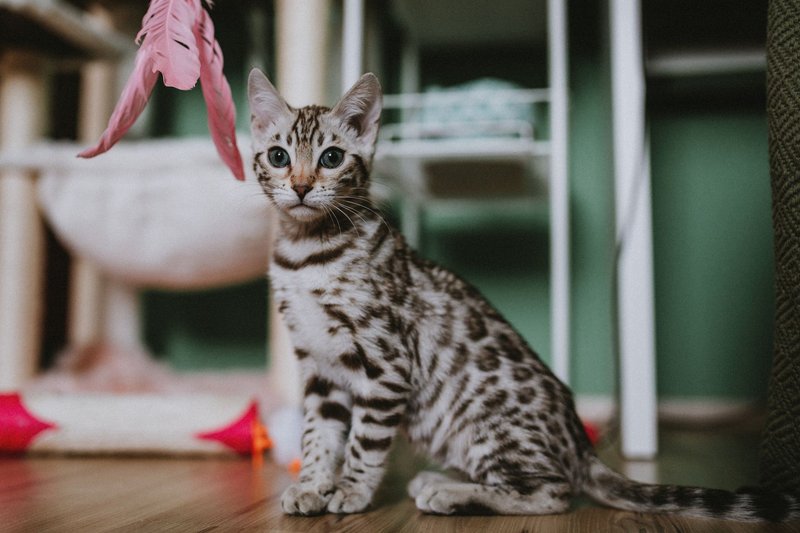
The Savannah is the tallest domestic cat breed, and the one where generation numbers matter more than anything else. An F1 Savannah has a serval parent and can hit 25 pounds, stand 17 inches at the shoulder, and cost as much as a used car — $12,000 to $25,000 is normal. By F4 and F5, the serval blood is diluted enough that the cat is smaller, cheaper, and legal in far more places.
This is the single most important thing to understand before buying: an F1 and an F5 Savannah are wildly different animals in size, price, temperament, and legality. Many states that ban early-generation Savannahs allow F4 and later. They’re famously dog-like — they’ll follow you room to room, learn to walk on a leash, and leap onto the top of a door frame from a standstill. Buy from a breeder who’s transparent about generation, and confirm your state’s rules first.
Egyptian Mau
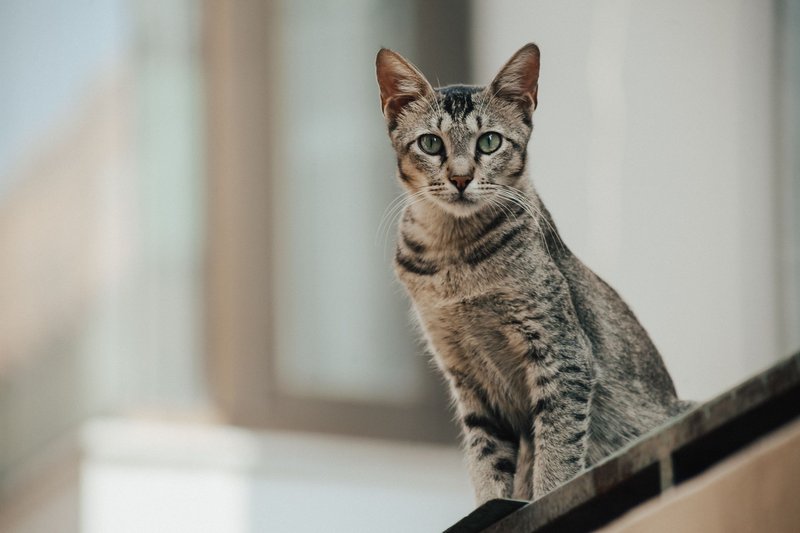
The Mau is the only naturally spotted domestic cat — its markings weren’t engineered by modern breeders but appear on tomb walls and papyri from ancient Egypt. It’s also the fastest domestic cat, clocked at over 30 mph, with a loose flap of skin at the belly that extends its stride like a cheetah’s.
Maus are reserved with strangers and intensely bonded to their people. They “chortle” — a quiet, conversational trill they use when happy — and wag their tails when excited. If you want the wild look without the wild-cat care burden, this is one of the easiest exotic-looking breeds to own. No special generation rules, no permits, just a fast, devoted cat with a 4,000-year résumé.
Ocicat
The Ocicat looks like a small wildcat and acts like a golden retriever. Despite the name, there’s no ocelot or any wild blood in it at all — it came from an accidental cross of a Siamese, Abyssinian, and American Shorthair in 1964, and the spotted result was so striking the breeder kept going.
That entirely-domestic ancestry is exactly why it’s a great pick for first-timers who want the look without the commitment. Ocicats are relentlessly social, learn tricks fast, and don’t do well left alone all day — they’ll greet guests at the door and expect to be part of the conversation. Friendly to the point of being undignified about it.
Toyger
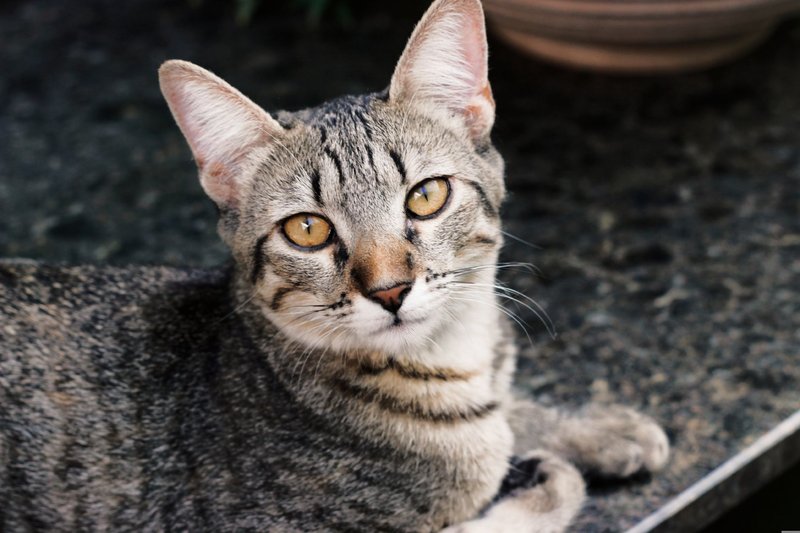
The Toyger is a deliberate project: breed a domestic cat to look like a toy tiger, complete with vertical, branching stripes instead of the usual tabby pattern. Judkins started the program in the 1980s specifically to inspire conservation awareness for wild tigers, and breeders still select for clean, tiger-like striping and a circular facial pattern. It sits at the bolder end of the striped cat breeds spectrum, where most patterns are the standard mackerel tabby rather than a tiger’s vertical bars.
It’s a newer breed, still rare, which is why prices run high for show-quality cats. Temperament-wise, the Toyger is the opposite of the high-strung Bengal it’s partly descended from — calm, easygoing, happy to be a lap cat. The tiger look with none of the chaos.
Pixie-Bob
The Pixie-Bob looks like it walked out of a North American forest — short bobbed tail, tufted ears, a heavy muscular build that reads bobcat. Folklore claims the breed came from wild bobcat crosses, but DNA testing has found no wild ancestry; it’s a domestic cat that simply resembles one.
What sets it apart genetically is polydactyly: many Pixie-Bobs have extra toes, and it’s one of the few breeds where the standard permits it. They’re quiet — more chirps and chitters than meows — and they bond to the household like a dog, often following one person everywhere. A calm, sturdy cat for someone who wants the wild silhouette without the wild energy.
Chausie
The Chausie is the hybrid most people have never heard of: a cross between the jungle cat (Felis chaus) and a domestic cat. Early generations are tall, lean, and wildly athletic — built like a runner, capable of clearing six feet vertically. Like the Savannah, generation matters, and later-generation Chausies are the practical pets.
This is not a cat for a quiet apartment dweller — if your space is tight, you’re far better served by one of the calmer apartment cat breeds built for small quarters. Chausies need room to sprint and climb, get bored fast, and can develop digestive sensitivity that sometimes requires a grain-free diet. Get the energy outlet right and you have an intensely loyal, doglike companion. Get it wrong and you have a 20-pound cat redecorating your living room.
Serengeti
The Serengeti was created to mimic the look of a serval — long legs, large upright ears, a spotted golden coat — without using any actual wild blood. It’s a cross of Bengal and Oriental Shorthair, developed by biologist Karen Sausman in the 1990s, and the whole point was achieving the wildcat silhouette through fully domestic lines.
That makes it one of the smarter buys on this list: serval looks, housecat legality, no permit anywhere. Serengetis are confident, vocal, and active — they want to be in the middle of things and will tell you about it. Still rare enough that finding a breeder takes patience.
Exotic Shorthair (the impostor)
A fair warning, because Google serves this breed for the same search and it confuses a lot of people. The “Exotic Shorthair” is not wild-looking at all — it’s the short-coated version of the Persian, with the same flat face, round body, and famously placid personality. The Cat Fanciers’ Association recognizes it, and people often land on it by accident when searching “exotic cat breeds.”
If you wanted a leopard-spotted athlete, this is the wrong cat. If you wanted a calm, plush lap cat, the Exotic Shorthair is wonderful — it consistently ranks among the most reliable lap cat breeds for exactly that placid, settle-in temperament. Just know the flat face brings the same breathing and tear-duct issues as Persians, so budget for the occasional vet visit. Not exotic in the wild sense. Exotic in name only.
True Wildcats and the Legal Wall
Now the other half. These are genuine wild species, not domestic breeds, and owning one is a fundamentally different undertaking. The price tag is the cheapest part — the real cost is the enclosure, the specialized diet, the exotic vet, the insurance, and the legal paperwork.
Before you fall for any of these, check your state and county. Roughly a dozen states ban private ownership of big and exotic cats outright, many more require a permit or USDA license, and the federal Big Cat Public Safety Act, signed in late 2022, ended most private ownership and breeding of big cats nationwide. Servals and caracals aren’t classified as “big cats” under that law, but state rules still frequently prohibit them.
Serval
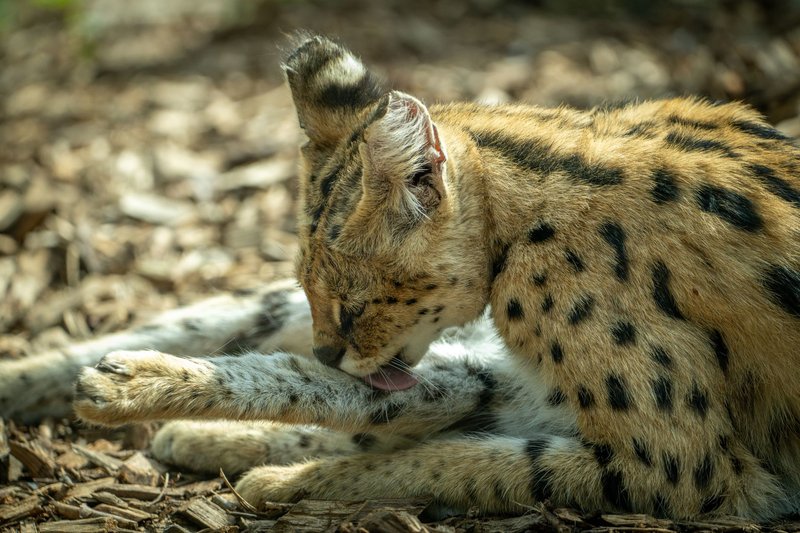
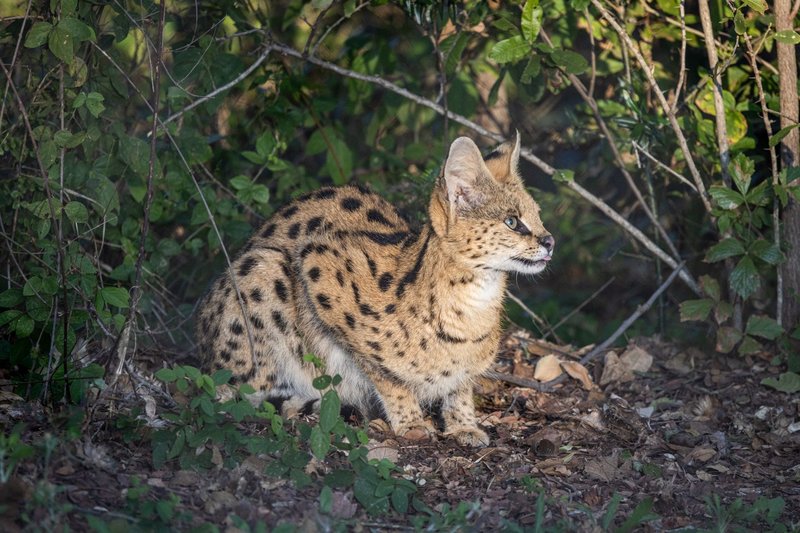
The serval is the African wildcat behind the Savannah breed — long legs, huge satellite-dish ears, and the highest ear-to-body ratio of any cat, which it uses to hear rodents moving underground. In the wild it has one of the highest hunting success rates of any feline, around 50%, by leaping straight up and pinning prey.
People are drawn to servals because Savannahs gave them a taste. But a serval is not a big Savannah. It can spray to mark territory regardless of fixing, needs a large outdoor enclosure, eats whole prey, and rarely tolerates strangers. They require permits or are banned in most states. Sanctuaries are full of servals surrendered by owners who genuinely loved them and simply couldn’t meet the need.
Caracal
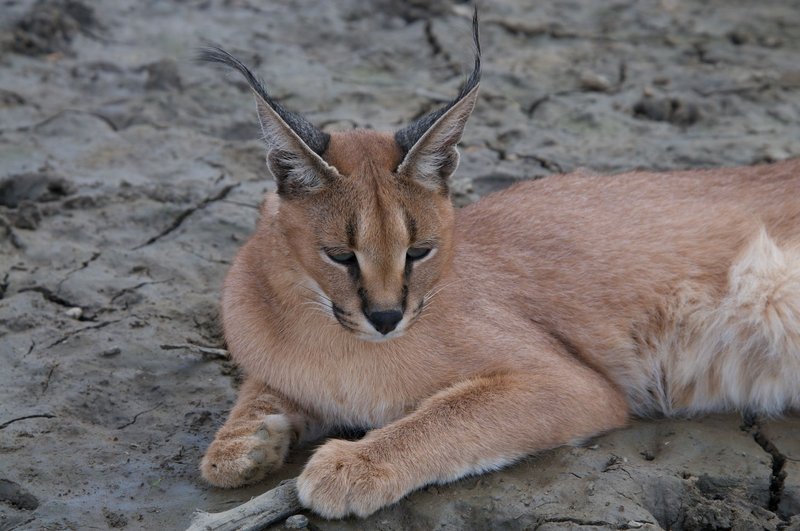
The caracal is the one with the dramatic black ear tufts — over an inch of tufting that may help it pinpoint sound or signal to other caracals. It’s a powerful jumper, able to leap more than 10 feet to swat birds out of the air, a skill once exploited in historical hunting competitions.
As a pet, the caracal carries all the same demands as the serval plus a stronger territorial streak. It’s a solitary, ambush predator by nature, and that wiring doesn’t switch off in a living room. Legal ownership is restricted or banned across most of the US, and even where permitted, an adult caracal is an animal that requires serious containment and an exotic vet on call.
Ocelot
The ocelot is the gorgeous one — a small spotted cat of the Americas whose coat was so prized it was hunted nearly to collapse in the 20th century before international protection. Salvador Dalí famously kept one named Babou, which is roughly the entire reason some people still ask about owning them.
In reality the ocelot is protected under CITES and the US Endangered Species Act, making private ownership extraordinarily restricted and, in most cases, illegal. They’re nocturnal, scent-mark heavily, and need expansive enclosures. Admire this one in a documentary or at an accredited sanctuary. It is not a pet.
Bobcat
The bobcat is North America’s most common wildcat and, oddly, one of the cheaper exotics by purchase price — a few thousand dollars in states that allow it. The Pixie-Bob breed exists specifically to give people the bobcat look legally, which should tell you something about how often the real thing disappoints as a pet.
A bobcat is a capable predator that can take down prey several times its size. It does not bond like a domestic cat, it requires secure outdoor housing, and laws vary sharply by state — some allow it with a permit, others ban it entirely. The low sticker price is a trap; the lifetime cost in containment, diet, and risk is anything but low.
Asian Leopard Cat
The Asian leopard cat is the wild ancestor that started it all — the species crossed with domestic cats to create the Bengal. Roughly housecat-sized, with the spotted coat and large eyes the Bengal inherited, it ranges across much of Asia and is, by population, doing fine in the wild.
But it’s a wild animal that does not domesticate. Owners describe them as shy, prone to hiding, and unwilling to use a litter box reliably — they scent-mark instead. Legality varies and a permit is usually required. The honest takeaway: everything appealing about the leopard cat’s look already exists in the Bengal, minus the wild temperament and the paperwork.
Which Exotic Cat Is Right for You
Strip away the romance and the decision gets simple.
If you’ve never owned an exotic-looking cat: Start with an Ocicat, Egyptian Mau, or Serengeti. They give you the wild aesthetic, full legality, normal-cat care, and prices under $2,000. No generation math, no permits, no surprises.
If you want maximum wow factor and can handle the energy: A rosetted Bengal or a later-generation (F4+) Savannah is the sweet spot. You get the leopard look and the doglike personality, legally, as long as you commit to daily play and vertical space. Skip the F1 Savannah unless you’ve owned high-energy hybrids before and your state allows it.
If you want a calm cat that just looks wild: Toyger, Pixie-Bob, or — if a flat face appeals more than spots — the Exotic Shorthair. Wild silhouette, mellow temperament.
If you’re eyeing a serval, caracal, or ocelot: Be honest with yourself. The animal will outlive your enthusiasm, cost more in enclosure and vet care than in purchase price, and may be illegal where you live. Visit an accredited sanctuary, spend a day, and you’ll usually leave grateful you can go home to a Bengal.
The wild look is gettable. The wild animal is a different commitment entirely — and for almost everyone asking, the breed on the legal side of the line is the better cat anyway.