Table of Contents
- Arctic vs. Antarctic: Two Very Different Poles
- Marine Mammals
- Terrestrial Mammals of the Arctic
- Seabirds
- Polar Fish
- Invertebrates: The Unseen Foundation
- Arctic vs. Antarctic: Side-by-Side Comparison
- Climate Change and Specific Species in Trouble
- Final Thoughts
The poles get lumped together as “frozen wastelands,” but that framing misses everything interesting. The Arctic and Antarctic are ecologically opposite in ways that matter for the animals living there — one is an ocean surrounded by land, the other is land surrounded by ocean. That structural difference shapes which fauna can survive, and how.
What follows is a species-level look at polar fauna: who lives there, how they’ve adapted, and what’s changing for them.
Arctic vs. Antarctic: Two Very Different Poles {#arctic-vs-antarctic}
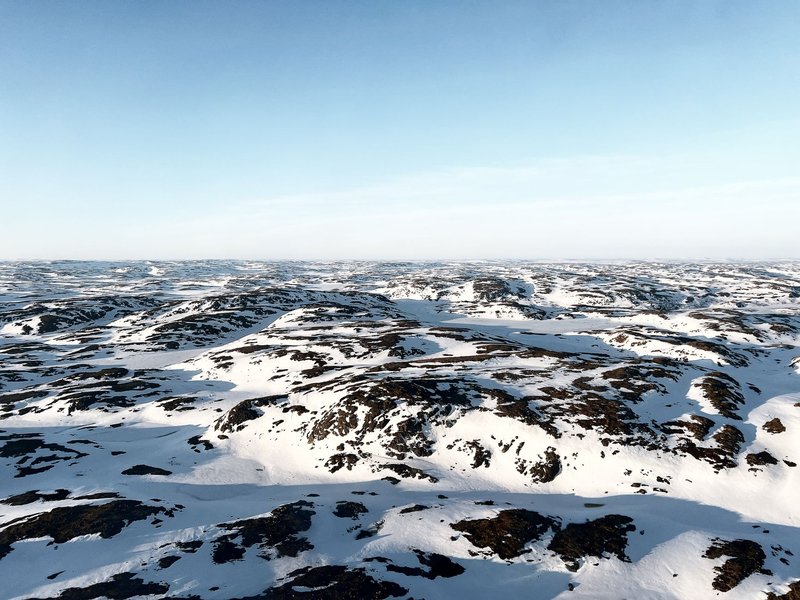
The Arctic is a frozen ocean ringed by the landmasses of Russia, Canada, Greenland, Norway, and Alaska. It supports land-dwelling megafauna — polar bears, Arctic foxes, caribou — because there’s ground to stand on.
Antarctica is the inverse: a continent the size of the contiguous United States covered in ice up to 4.8 km thick, surrounded entirely by sea. Land mammals can’t colonize it easily. What evolved there instead were animals supremely adapted to the Southern Ocean: penguins, seals, and whales.
This is why the two poles don’t share the same flagship species. Polar bears live in the Arctic; penguins are Antarctic. They’ve never coexisted in the wild.
Marine Mammals {#marine-mammals}
Polar Bear (Ursus maritimus)
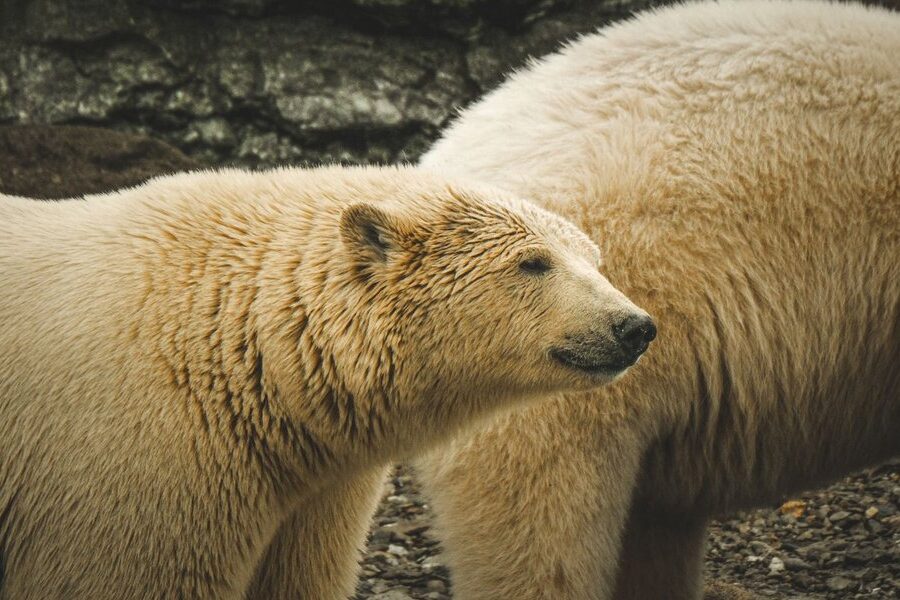
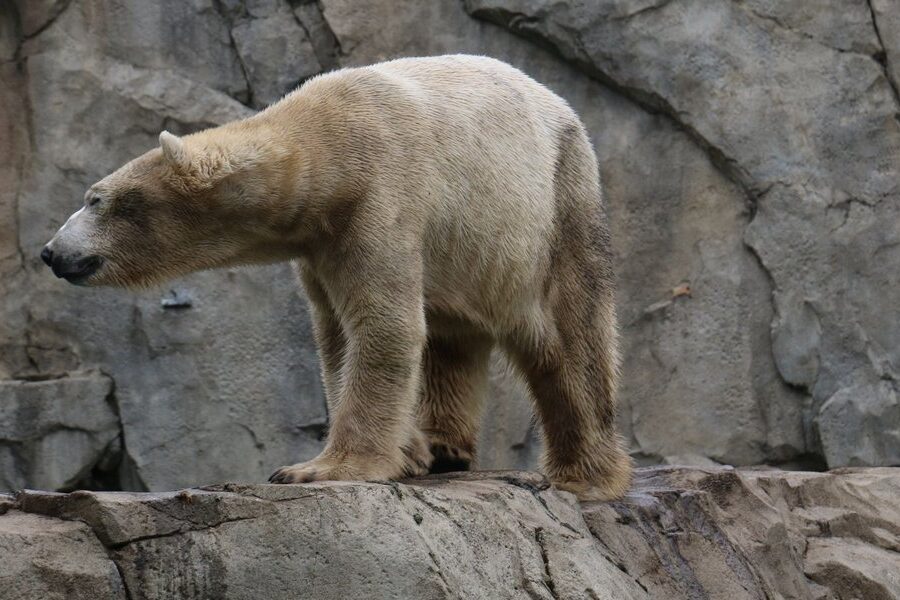
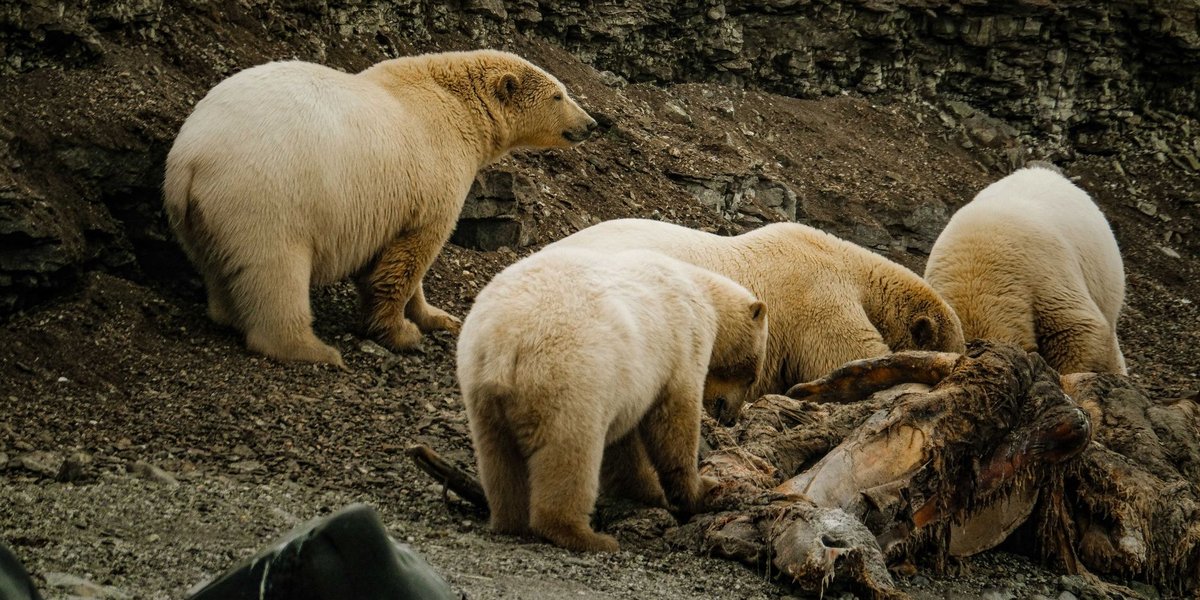
The polar bear is the Arctic’s apex predator and the largest land carnivore on Earth, with males weighing up to 700 kg. They’re classified as marine mammals because their survival depends almost entirely on sea ice and the ringed seals (Pusa hispida) they hunt from it.
Their fur isn’t actually white — it’s transparent and hollow, scattering light to appear white while channeling UV radiation toward black skin underneath. Their massive, partially webbed paws act as paddles and snowshoes. They can swim continuously for days and have been tracked crossing 687 km of open water in a single journey.
Walrus (Odobenus rosmarus)
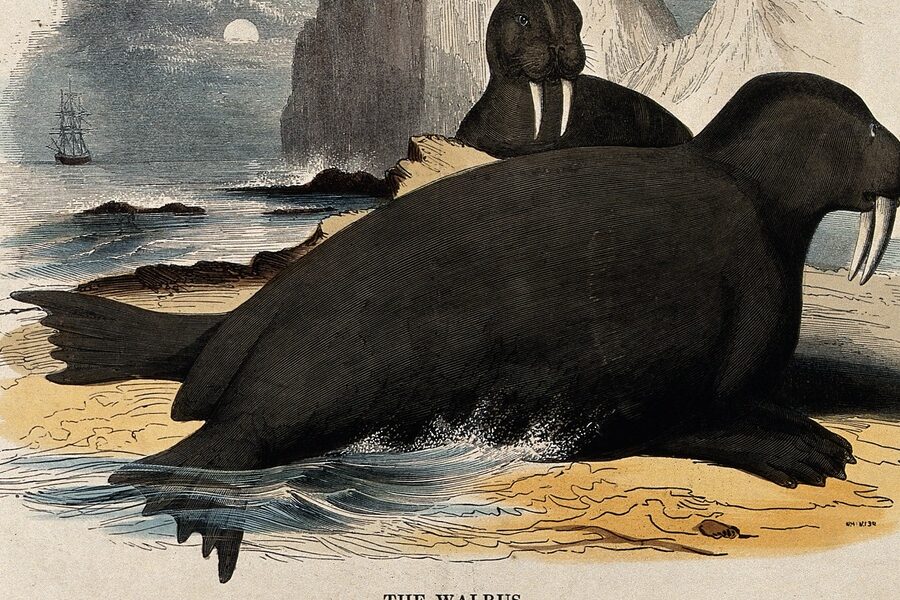
Walruses use their tusks primarily as ice hooks — hauling 1,500 kg of body weight out of the water — not weapons, despite how they look. They feed on benthic invertebrates, using sensitive whiskers to detect clams and mollusks on the seafloor in near-zero visibility.
Walrus populations rely on sea ice as resting platforms between dives. As Arctic ice retreats, they’ve begun hauling out on land in massive, dangerous aggregations where trampling during stampedes kills significant numbers of calves.
Leopard Seal (Hydrurga leptonyx)
Antarctica’s top predator among pinnipeds. Leopard seals are solitary, aggressive, and built differently from other seals — longer and more reptilian in movement, with a jaw that opens nearly 160 degrees. They hunt penguins, fish, and other seals, often playing with prey before killing it. Adult females are larger than males, a reversal of the typical pinniped pattern.
Weddell Seal (Leptonychotes weddellii)
The southernmost naturally occurring mammal in the world, Weddell seals live on fast ice ringing the Antarctic continent and dive to depths of 600 m for up to 80 minutes. They keep breathing holes open through thick ice by gnawing — their teeth show the wear marks. Their blood has unusually high oxygen-carrying capacity, a direct adaptation to extended dives in near-freezing water.
Narwhal (Monodon monoceros)
The narwhal’s “horn” is a modified canine tooth that can reach 3 m in length, containing up to 10 million nerve endings — effectively a sensory organ rather than a weapon. They’re deep-water divers, descending to 1,500 m in the Canadian Arctic and Greenland Sea, feeding on Arctic cod, Greenland halibut, and shrimp.
Terrestrial Mammals of the Arctic {#terrestrial-mammals}
Arctic Fox (Vulpes lagopus)
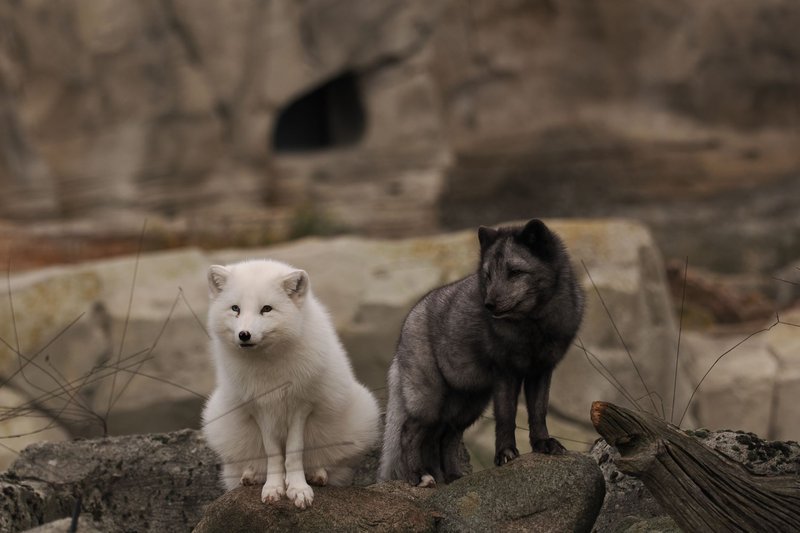
The Arctic fox is one of the few animals that changes coat color with the seasons — brown-gray in summer, pure white in winter. In exceptional cold (down to −70°C), it keeps a core body temperature around 38°C by lowering the temperature of its extremities near the freezing point of seawater, preventing heat loss without losing circulation. It’s a genuine feat of thermal engineering.
They’re also opportunists. When lemmings (their primary prey) crash in population, Arctic foxes follow polar bears and clean up seal carcass leftovers. Some populations cache thousands of prey items in summer for winter use.
Caribou / Reindeer (Rangifer tarandus)
Caribou undertake the longest terrestrial migrations of any land mammal — up to 4,800 km round-trip across the Arctic tundra. Both males and females grow antlers, unique among deer. Their hooves are specialized: hard and sharp in summer for digging through tundra; concave and soft in winter for gripping ice.
Musk Ox (Ovibos moschatus)
Musk oxen are a Pleistocene survivor, unchanged from the megafauna era. Their outer guard hairs hang to the ground; beneath that is qiviut, a cashmere-grade undercoat eight times warmer than sheep’s wool by weight. When threatened by wolves, they form a defensive circle facing outward, calves protected at the center — a tactic that works perfectly against natural predators but made them catastrophically easy to shoot by 19th-century hunters.
Seabirds {#seabirds}
Emperor Penguin (Aptenodytes forsteri)
The emperor penguin breeds during Antarctic winter — the coldest, darkest, most inhospitable season — laying a single egg in June when temperatures drop to −60°C and winds reach 200 km/h. Males incubate the egg on their feet under a brood pouch for two months without eating, losing up to 40% of their body weight. Females return from the sea with food timed exactly to the chick’s hatching. Among the biggest birds on Earth, emperor penguins are the heaviest of all penguin species, with adults regularly exceeding 40 kg.
No other bird breeds in Antarctic winter. Emperor penguins are the only species that does, and IUCN currently lists them as Vulnerable — a status driven by projected sea ice loss.
Snowy Owl (Bubo scandiacus)
Snowy owls are built for Arctic life in ways the standard owl body plan isn’t: extra layers of feathers insulating even their talons, yellow eyes adapted to 24-hour daylight, and directional hearing strong enough to locate a lemming under 30 cm of snow. Unlike most owls, they hunt actively during the day. Breeding success is tightly linked to lemming cycles — in boom years, a pair may raise nine chicks; in crash years, they may not breed at all.
Arctic Tern (Sterna paradisaea)
The Arctic tern holds the migration record for any animal: roughly 70,000–80,000 km round-trip annually, flying from the Arctic to the Antarctic and back. Over a 30-year lifespan, an individual tern travels the equivalent of three trips to the Moon and back. They nest in Arctic colonies in summer, then head south to exploit the Antarctic summer — experiencing more daylight than any other animal on Earth. For a broader look at the animal kingdom’s greatest travelers, the top 10 migratory animals spans species from monarch butterflies to humpback whales.
Polar Fish {#polar-fish}
Cold-water fish are often overlooked, but they underpin both polar food webs.
Antarctic Icefish (Channichthyidae family)
Icefish are the only known vertebrates with no red blood cells and no hemoglobin. Their blood is colorless — a ghostly pale — and carries oxygen dissolved directly in the plasma. This works because cold water holds more oxygen than warm water, and their enlarged hearts and wide blood vessels compensate for the lower oxygen-carrying capacity. They live exclusively in Antarctic waters.
Arctic Cod (Boreogadus saida)
Arctic cod are the keystone species of the Arctic marine food web. Nearly every predator above them — narwhals, beluga whales, ringed seals, seabirds — relies on them as a primary food source. They survive in near-freezing brine channels beneath sea ice using antifreeze glycoproteins (AFGPs) that suppress ice crystal formation in their tissues. As sea ice retreats and water temperatures rise, their habitat is compressing from the bottom up.
Patagonian Toothfish (Dissostichus eleginoides)
Known to restaurants as Chilean sea bass, the Patagonian toothfish is a deepwater species found around Antarctic subantarctic islands. It grows slowly, lives up to 50 years, and reaches 2 m in length — traits that made it highly vulnerable to overfishing before the Commission for the Conservation of Antarctic Marine Living Resources (CCAMLR) implemented catch limits.
Invertebrates: The Unseen Foundation {#invertebrates}
Antarctic Krill (Euphausia superba)
Everything in the Southern Ocean eventually traces back to krill. These 6-cm shrimp-like crustaceans form swarms so dense they can be detected by satellite — biomass estimates put the total at around 500 million tonnes. They feed on ice algae and phytoplankton. Penguins, seals, whales, and fish all eat them. Without krill, the Southern Ocean food web doesn’t function.
Krill also sequester carbon. When they feed near the surface and then defecate or die at depth, they move carbon from the atmosphere to the ocean floor — a process called the biological pump. Research published in Nature suggests this contribution is larger than previously estimated. Ocean chemistry shifts are compounding this pressure: the 8 key facts about ocean acidification explain how rising CO₂ is already altering the Southern Ocean conditions that krill and the ice algae they depend on require.
Ice Worms (Mesenchytraeus solifugus)
Ice worms are small oligochaetes that live exclusively in glacial ice — not just surviving in it but thriving in it. Temperatures above 5°C kill them. They emerge at dusk to feed on algae and bacteria on the snow surface, retreating back into ice at dawn. They’re the only worms known to live permanently in ice, and their existence challenges assumptions about the limits of habitable environments.
Arctic vs. Antarctic: Side-by-Side Comparison {#comparison-table}
| Feature | Arctic | Antarctic |
|---|---|---|
| Geography | Ocean ringed by land | Continent ringed by ocean |
| Land mammals | Yes (polar bear, Arctic fox, musk ox, caribou) | None native |
| Penguins | No | Yes (18 species) |
| Polar bears | Yes | No |
| Native land birds | Yes (snowy owl, ptarmigan) | No (all seabirds) |
| Unique fish | Arctic cod | Icefish (no hemoglobin) |
| Keystone invertebrate | Copepods, Arctic cod | Antarctic krill |
| Ice type | Sea ice (seasonal) | Ice sheet + sea ice |
| Approximate species richness | Higher (connected to boreal zones) | Lower but highly specialized |
Climate Change and Specific Species in Trouble {#climate-change}
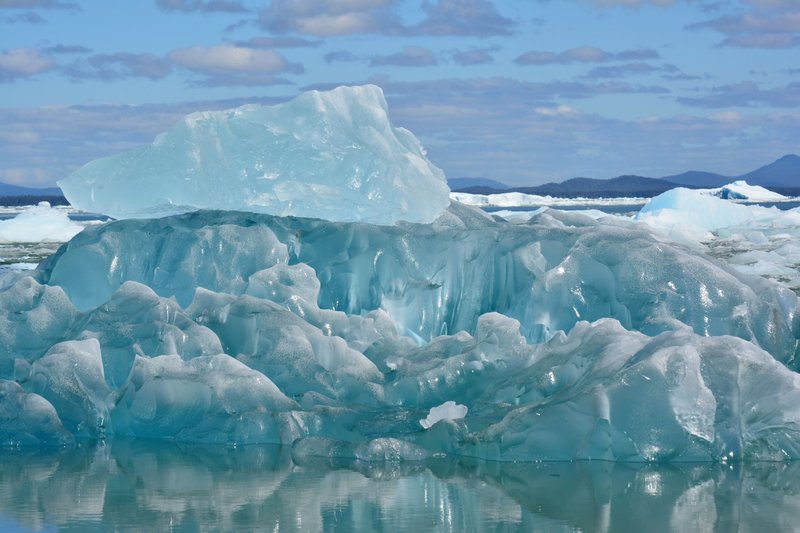
The threat to polar fauna isn’t abstract. For specific species, there are documented mechanisms and timelines.
Polar bears depend on sea ice as a hunting platform. As Arctic sea ice thins and the ice-free season extends, bears spend more time on land where they can’t access seals. NASA satellite data shows Arctic sea ice minimum extent has declined roughly 13% per decade since 1979. Longer fasting periods reduce female body condition, which directly cuts cub survival rates. Some subpopulations in the southern Hudson Bay are already showing reproductive decline.
Emperor penguins need stable sea ice to breed. Their breeding sites must hold from April through December — if the ice breaks up early, chicks that haven’t yet molted into waterproof feathers drown. In 2022, satellite imagery documented near-total breeding failure at four out of five emperor penguin colonies in the Bellingshausen Sea. According to research in Nature Climate Change, more than 90% of emperor penguin colonies could be quasi-extinct by 2100 under current emissions trajectories.
Arctic cod face a dual threat: warmer water pushes them into diminishing suitable habitat, and it simultaneously allows Atlantic cod — their larger, warmer-water competitors and predators — to expand northward. This isn’t hypothetical. Atlantic cod have been observed in Norwegian and Russian Arctic waters where they were absent two decades ago.
Antarctic krill reproduce in winter under sea ice, where their larvae feed on ice algae. Reduced sea ice extent directly cuts krill recruitment. Because krill are the base of the Southern Ocean food web, population declines ripple upward to penguins, seals, and whales simultaneously.
Narwhals are unusually sensitive to climate disruption among cetaceans. Their Arctic range is highly specific, their diet is narrow (they rely heavily on halibut and Arctic cod), and they’re not known to adapt quickly to range shifts. Stress responses when confronted with icebreaker ships or changed conditions are extreme compared to other whales — heart rate spikes combined with metabolic suppression, a conflict that burns energy reserves rapidly.
Final Thoughts {#final-thoughts}
Polar fauna are specialists in the deepest sense — these aren’t generalists that happen to tolerate cold. Every species here evolved specifically for conditions that would kill most other animals: perpetual darkness, temperatures below −60°C, ice that forms and melts on seasonal schedules their biology is locked into.
That specialization is also what makes them fragile to a changing baseline. A polar bear can handle cold. It can’t hunt without sea ice. An emperor penguin can survive −40°C winds. It can’t breed without stable ice that lasts the right number of months. The adaptations that made them extraordinary made them precise, and precision has limits.
The species-level picture matters here more than the headline number of “x% of polar species at risk.” Arctic cod declining means narwhals, beluga whales, ringed seals, and dozens of seabird species are destabilized in the same event. Antarctic krill collapsing means the Southern Ocean ecosystem fails from the bottom up. Polar fauna aren’t individual stories — they’re a web, and the threads connect fast.