Tuvalu has roughly 37 recorded bird species. That’s not a typo, and it’s not a sign of a thin checklist someone forgot to finish. It’s the honest total for one of the smallest, most remote nations on Earth — nine coral atolls scattered across the Pacific, with a combined land area smaller than most airports. Few species reach it. The ones that do are worth knowing by name.
So this isn’t a 4,000-word taxonomy dump. It’s a field overview of the birds you’ll actually see flying over Funafuti’s lagoon or wheeling above the reef, grouped the way a birder thinks about them: seabirds, shorebirds, land birds. Plus where to point your binoculars, when to go, and why every species on this list is living on borrowed elevation.
Table of Contents
- Why So Few Birds?
- The Seabirds
- The Shorebirds
- The Land Birds
- Where and When to Watch
- The Climate Clock
Why So Few Birds?
Bird diversity tracks habitat diversity, and Tuvalu has almost none. The highest natural point in the entire country sits about 4.6 meters above sea level. There are no mountains, no rivers, no forests in the continental sense — just coral rubble, coconut palms, pandanus, salt-tolerant scrub, and the lagoon. A landscape that uniform can’t support the dozens of specialist niches that fill a rainforest checklist.
What Tuvalu does have is ocean, and ocean birds don’t care about elevation. So the avifauna skews hard toward seabirds that nest on the ground or in low vegetation and feed at sea, plus a rotating cast of migratory shorebirds passing through on the East Asian–Australasian Flyway. Resident land birds are a short list, and several of those arrived with help from people.
The upshot for a visitor: you won’t rack up a huge day-list, but the birds you find are easy to see, often unafraid, and concentrated in a few predictable spots.
The Seabirds
This is the heart of Tuvalu birding. The seabirds are the headline act, the ones you’ll see without trying.
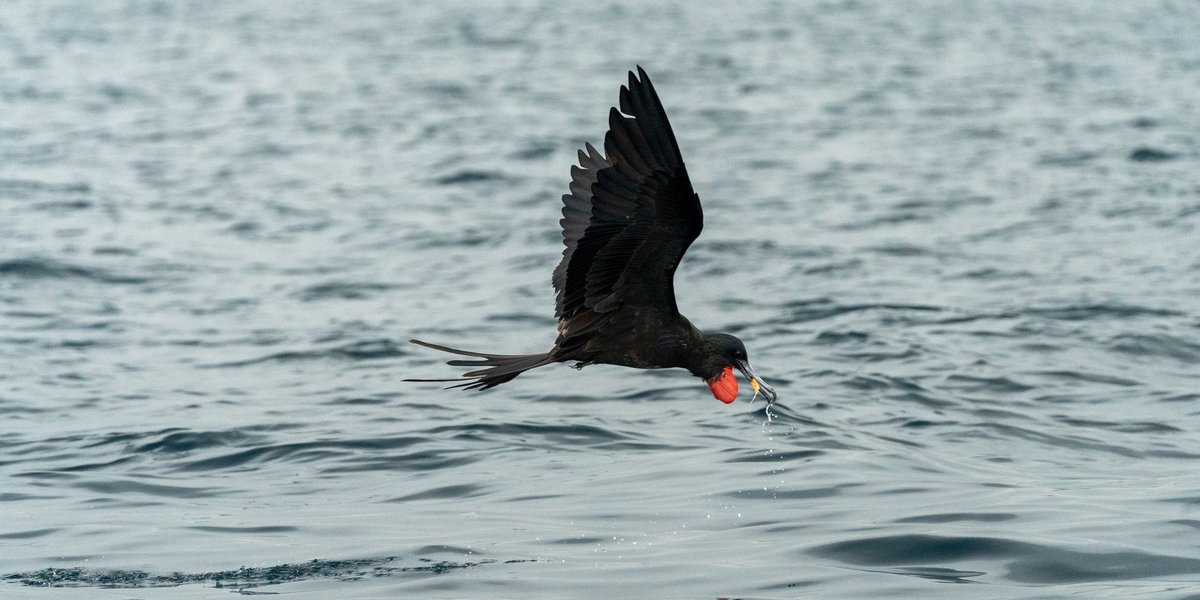
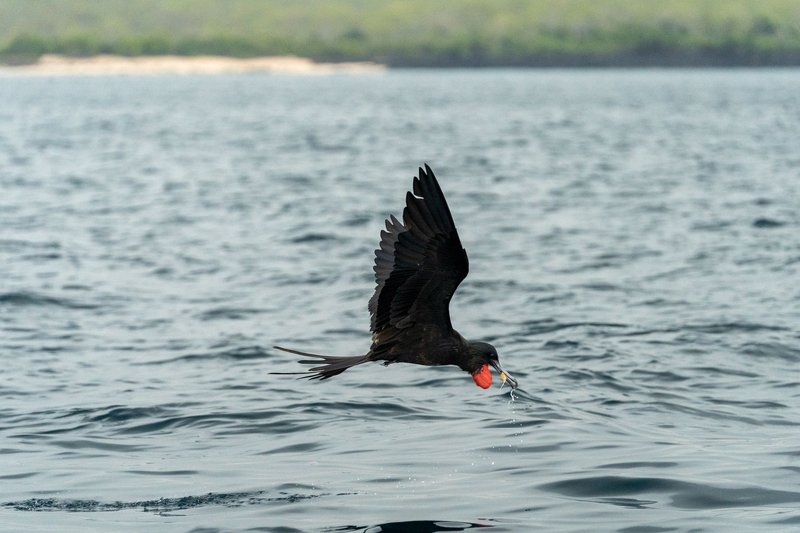
Great frigatebird — The unmistakable silhouette over every atoll: long angular wings, a deeply forked tail, and a habit of harassing other birds into dropping their catch mid-air. Males display a scarlet throat pouch they inflate like a balloon during breeding. Frigatebirds can’t take off from water — their feathers aren’t waterproof — so they snatch flying fish and squid from the surface or simply rob the boobies. Watch the sky over Funafuti lagoon at midday and you’ll see them riding the thermals for hours without a wingbeat.
Red-footed booby — The smallest of the boobies and the one most tied to the atolls, where it nests in shrubs and low trees rather than on bare ground. Adults come in a few color morphs, but the bright coral-red feet and pale blue bill are the giveaway. They’re plunge-divers, folding into a dart and hitting the water at speed for fish and squid.
Brown booby — Bigger, darker, and more of a ground-and-cliff nester. Chocolate-brown above with a clean white belly and a sharp dividing line across the chest, like it’s wearing a tucked shirt. Brown boobies often fish closer to shore than red-footeds, and they’ll trail boats — one of the easier seabirds to photograph from a lagoon crossing.
Black noddy and brown noddy — Two tern relatives that nest colonially around the atolls. Sooty-dark birds with pale caps, they’re the background hum of any seabird colony, swirling over the reef edge in loose flocks. The black noddy is slimmer with a finer bill; the brown noddy is bulkier. Telling them apart is the kind of small win that makes a birding morning.
White tern — The one that stops people mid-sentence. A small, pure-white tern with a black eye-ring and a translucent quality in bright sun. It lays a single egg balanced on a bare branch — no nest at all — and the chicks hatch with oversized feet to grip the perch. Common across Tuvalu’s wooded islets and genuinely lovely to watch.
The Shorebirds
Most of Tuvalu’s shorebirds are migrants, not residents. They breed in the Arctic or Siberia and winter across the Pacific, dropping onto the reef flats and lagoon edges to refuel. Your odds of seeing them spike during southward and northward migration.
Pacific golden-plover — Probably the shorebird you’ll see most. A medium plover spangled gold and black above, working the open ground and reef flats. In Tuvalu it’s a familiar winter visitor, and birds in breeding plumage — black face and belly bordered with white — are striking before they head north.
Bristle-thighed curlew — A genuine prize. This long-billed, mottled-brown curlew breeds only in a couple of remote Alaskan locations and winters on Pacific islands, with Tuvalu squarely in range. It’s one of the few shorebirds that can become flightless during molt, which is why isolated atolls suit it. According to the IUCN Red List, it’s classed as Near Threatened, with a small and declining population — so a sighting here matters. It’s one of a handful of rare animals in Tuvalu whose presence the atolls quietly safeguard.
Ruddy turnstone and wandering tattler — Two reliable reef-flat regulars. Turnstones do exactly what the name says, flipping pebbles and weed to grab what’s underneath, recognizable by their harlequin breeding pattern and orange legs. The wandering tattler is plainer — gray above, barred below in breeding dress — and gives a clear rippling call as it works the tide line. Both are migrants, both are easy on Funafuti’s flats at low tide.
Pacific reef-heron — The resident exception. This heron comes in two color morphs, a dark slate-gray and a clean white, and both can occur in the same population. It stalks the reef at low tide with the patient, hunched gait herons are known for, stabbing at small fish and crabs trapped in the pools. A permanent fixture rather than a passing visitor.
The Land Birds
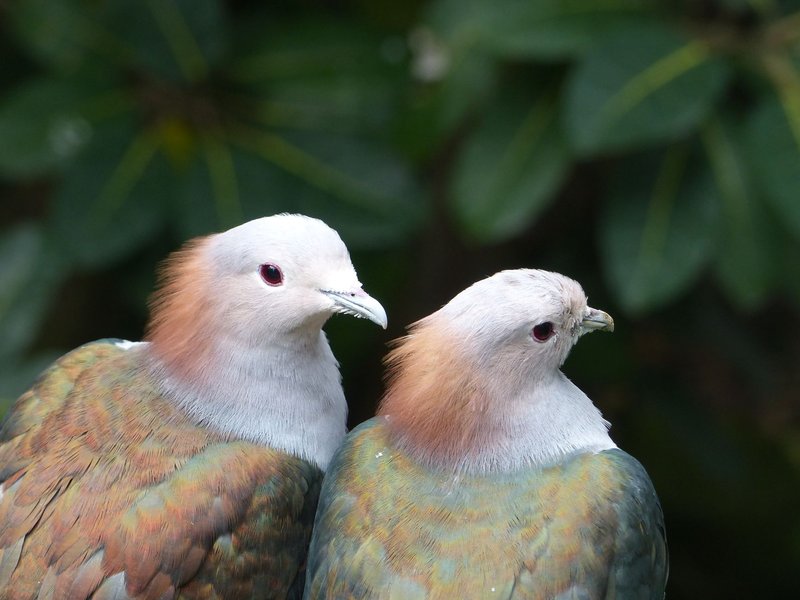
The shortest list, and the one that most rewards a slow walk through an islet’s interior.
Pacific imperial-pigeon — The flagship land bird. A large, handsome pigeon, blue-gray with a greenish sheen, that feeds on fruit in the canopy of the larger wooded islets. Across the Pacific it’s a culturally significant bird and a traditional food source, which makes its status a fair barometer of how intact an island’s vegetation is. Listen for its deep, resonant cooing.
Buff-banded rail — A secretive ground bird you’ll more often hear than see, slipping between scrub and garden edges. It’s beautifully marked once you get a look: a chestnut crown, gray face, fine black-and-white barring below, and a soft buff band across the chest. On smaller, predator-free islets it can be surprisingly bold, walking out into the open.
Introduced residents — Tuvalu’s land-bird list is rounded out by species that came with people, including the common myna and the Polynesian/jungle fowl found around settlements. They’re not why birders fly to a remote atoll, but they’re part of the honest picture of what lives on these islands today — and they sit alongside the rest of the animals of Tuvalu, from reef fish to land invertebrates, in the wider catalog of the country’s wildlife.
Where and When to Watch
You don’t need a 4×4 or a guide with a scope. Tuvalu birding is mostly a matter of being in the right few places at the right tide.
Funafuti Conservation Area — The single best target. This protected area on the western side of Funafuti’s atoll covers reef, lagoon, channel, and six uninhabited islets, reached by boat from the main island of Fongafale. The uninhabited islets are where seabirds nest in peace — frigatebirds, boobies, noddies, and white terns — and the reef flats pull in migrant shorebirds. A half-day boat trip out here is the core of any birding visit.
Nanumea and Nukufetau lagoons — On the outer atolls, the lagoon shallows and reef flats hold the same cast with fewer people around. Getting there takes more planning — inter-island transport in Tuvalu is irregular — but the seabird concentrations and the sense of remoteness reward the effort.
Timing — Aim for the dry season, roughly May to October, when conditions are calmer and boat trips to the islets are more reliable. The wet season (November to April) brings heavier rain and rougher water. For shorebirds, the migration windows on either side of the northern winter are best, when Pacific golden-plovers, turnstones, tattlers, and the occasional bristle-thighed curlew are on the flats. Low tide, any season, is when the reef-flat birds are most active and accessible. Check current entry and conservation-area rules through the Government of Tuvalu before you go.
The Climate Clock
Here’s the part no birding checklist tells you. Every species above depends on land that averages around two meters above the sea, in a country whose own government has spent years warning the world it may not survive the century.
The threat is concrete. Salt water pushing into the freshwater lens kills the vegetation that fruit-doves and pigeons feed in. King tides flood low-lying nesting islets. Rising seas shrink the reef flats where migrant shorebirds refuel on a journey that can span the entire Pacific. NASA’s analysis projects that much of Funafuti’s land could sit below the typical high-tide line within a few decades, with NASA sea-level research tracking the trend in detail. For ground- and shrub-nesting seabirds, “low-lying” isn’t a description — it’s the whole problem.
The endangered Phoenix petrel makes the stakes vivid. This dark-and-white gadfly petrel breeds on remote Pacific islands and ranges through Tuvalu’s waters, and it’s been pushed to the edge by invasive predators and habitat loss across its tiny island strongholds. Those same introduced rats and cats turn up across the broader list of invasive species in Tuvalu, and on ground-nesting islands they are exactly the kind of threat that vanishes a species quietly when the last safe islet goes under.
That’s the real differentiator of birding in Tuvalu. You’re not just ticking species. You’re seeing an avifauna assembled by isolation and the open ocean, on land that may be among the first to go. The frigatebirds will find another sky. The pigeons, rails, and petrels that need these specific atolls might not. Go while the going’s good, watch closely, and understand that the checklist you keep is also a record of a place under the clock.