Table of Contents
- TLDR
- One Country, Two Very Different Fisheries
- Nile River Fish: The Freshwater Lineup
- Red Sea and Mediterranean Fish: The Saltwater Lineup
- Egypt’s Fish at a Glance
- The Nile Perch Problem: Native Success, Ecological Wrecking Ball
- Which Fish Can Actually Hurt You
- What Ends Up on the Plate
- Fishing in Egypt: Why Anglers Fly In
- The Bottom Line
TLDR
Egypt runs two completely separate fish inventories that happen to share a border. The Nile gives you tilapia (bolti), catfish (karmout), and the outsized Nile perch — all freshwater, all edible, one of them ecologically controversial. The Red Sea and Mediterranean coastlines give you reef royalty: groupers, parrotfish, Napoleon wrasse, and a short list of species — lionfish and stonefish chief among them — that divers need to actually respect rather than just admire. If you only remember one thing: the fish on an Egyptian dinner plate almost never comes from the same water as the fish on a diving trip’s photo reel.
One Country, Two Very Different Fisheries
Most countries have one dominant fishery. Egypt has three coastlines worth of fish and none of them talk to each other biologically. The Nile runs the length of the country as a freshwater corridor stocked with African cichlids, catfish, and the occasional apex predator that shouldn’t be as big as it is. Then there’s roughly 1,800 miles of Red Sea coast on the east, and a slice of Mediterranean shoreline on the north — two saltwater systems with almost no species overlap with the river.
That’s the split most “fish of Egypt” content misses. Wikipedia’s species category lists them alphabetically with zero context on where they actually live or why anyone should care. The reference databases are worse for a casual reader — thousands of entries, no story. This guide sorts by habitat first, because that’s how the fish actually organize themselves, and then gets into the two things people searching this topic actually want to know: what’s dangerous, and what’s dinner.
Nile River Fish: The Freshwater Lineup
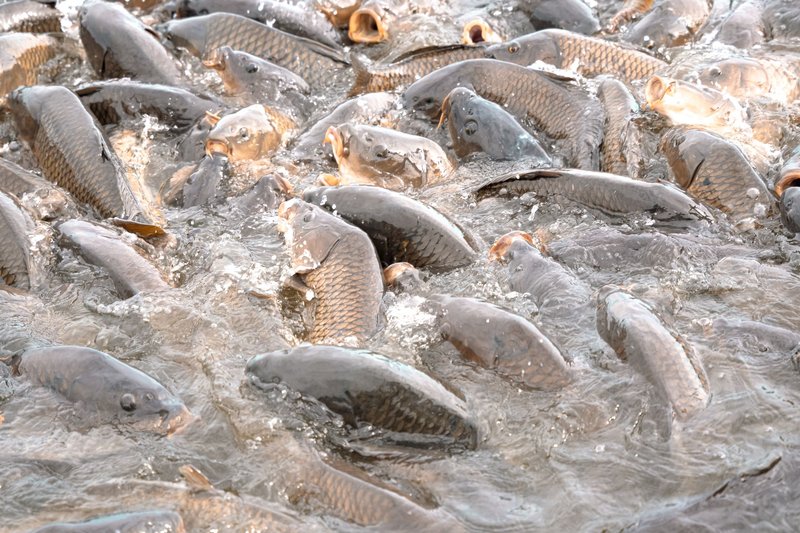
The Nile has supported fishing communities since before anyone was writing it down — the Greek historian Herodotus recorded Egyptians eating fish raw, sun-dried, or brined back in the 5th century BC, and the species doing the feeding haven’t changed much.
Bolti (Nile tilapia, Oreochromis niloticus) is the workhorse. Cheap, farmed extensively, and grilled or fried on nearly every riverside menu from Aswan to Cairo. It tolerates poor water quality better than almost any other food fish, which is exactly why it dominates Nile aquaculture — a trait that’s made it one of the most widely farmed fish on the planet, well beyond Egypt’s borders.
Karmout (catfish, genus Clarias) is the bottom-dweller of choice in Upper Egypt and among Nubian communities. It’s an air-breather, capable of surviving in oxygen-poor water that would kill most fish, which lets it thrive in irrigation canals and shallow backwaters the tilapia can’t handle.
Nile perch (Lates niloticus) is the one everyone eventually asks about, because it gets enormous — some specimens exceed six feet and 400 pounds. It’s native to the Nile basin and has been fished there for millennia without incident. Its reputation problem comes from somewhere else entirely (more on that below).
Bichir (Polypterus species) rounds out the lineup as the Nile’s living fossil — an eel-shaped fish with armored scales and lungs, essentially unchanged since the Cretaceous. It’s not commercial, but it’s the fish that makes ichthyologists’ trips to the Nile worthwhile.
Red Sea and Mediterranean Fish: The Saltwater Lineup
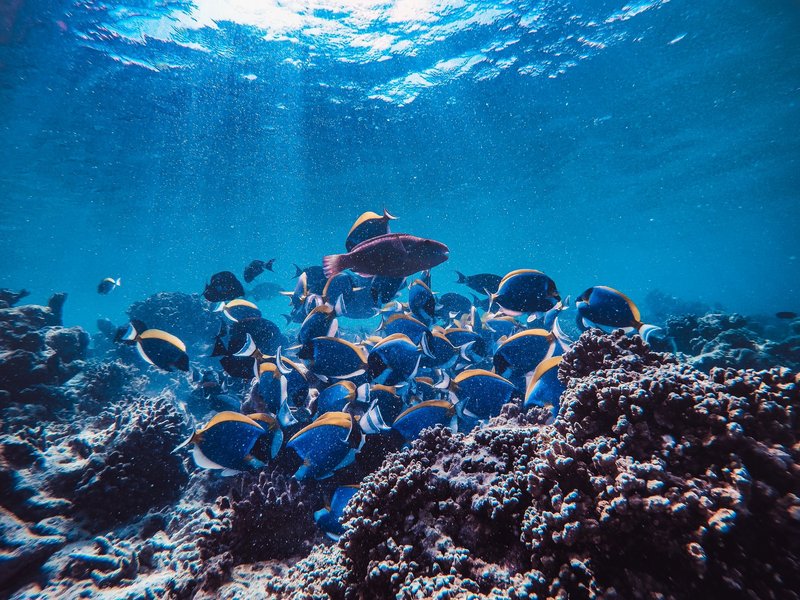
Cross to the coast and the entire cast changes. The Red Sea is one of the most biodiverse marine environments on the planet, partly because it’s nearly landlocked and unusually salty and warm, which pushed a high rate of endemic species — around 10% of Red Sea species exist nowhere else.
Groupers patrol the reef structure as the resident heavyweights, ambush predators that can sit motionless near a coral head for an hour. Parrotfish do the opposite job, grinding coral into the white sand that makes Red Sea beaches famous — a single parrotfish can produce hundreds of pounds of sand a year just by eating and excreting reef limestone. The Napoleon wrasse, with its bulbous forehead and near-human curiosity around divers, is the fish most likely to make a first-time snorkeler stop mid-stroke.
Along the Mediterranean coast, the lineup shifts again toward sea bream, mullet, and sole — cooler-water species that supply Alexandria’s fish markets rather than Red Sea dive boats.
Egypt’s Fish at a Glance
| Fish | Habitat | Why It Matters |
|---|---|---|
| Bolti (Nile tilapia) | Nile River, canals, farms | Egypt’s most-eaten freshwater fish |
| Karmout (catfish) | Nile River, Upper Egypt | Air-breathing, low-oxygen survivor |
| Nile perch | Nile River, native range | Trophy-sized, ecologically volatile elsewhere |
| Bichir | Nile River | Living fossil, scientific interest |
| Grouper | Red Sea reefs | Apex reef predator |
| Parrotfish | Red Sea reefs | Reef bioerosion, sand production |
| Napoleon wrasse | Red Sea reefs | Iconic diver encounter |
| Lionfish | Red Sea reefs | Venomous, invasive in the Atlantic |
| Stonefish | Red Sea reefs, sandy shallows | Most venomous fish encountered by divers |
| Grey mullet | Mediterranean, brackish estuaries | Source fish for fesikh |
The Nile Perch Problem: Native Success, Ecological Wrecking Ball
Here’s the nuance most Nile perch mentions skip entirely: in Egypt, it’s a native species that’s been part of the river’s ecosystem forever. The reputation it carries internationally comes from a different river system altogether — Lake Victoria, thousands of miles south, where British colonial administrators introduced it in the 1950s to boost commercial fishing.
The results there were catastrophic. With no natural predators and an enormous appetite, the introduced perch population exploded and drove roughly 200 native cichlid species toward extinction or severe decline within a few decades, reshaping the lake’s food web and the livelihoods built around it. The U.S. Fish and Wildlife Service rates it a “high risk” species for exactly this reason wherever it gets introduced outside its native range.
Back in the Nile itself, the perch’s IUCN Red List status sits at Data Deficient — not because it’s fine, but because nobody has run the population surveys needed to say for certain. What is documented is overfishing pressure and pollution stress on native populations, without the introduction-driven collapse seen at Lake Victoria. Same species, same predatory instincts, wildly different outcome depending on which water it’s swimming in.
Which Fish Can Actually Hurt You
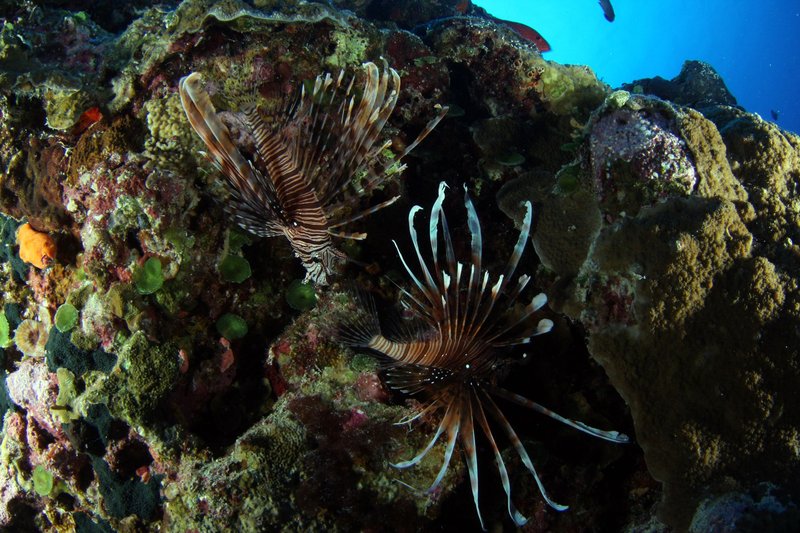
Red Sea diving and snorkeling attracts more visitors every year, and most of them will never have a bad encounter with a fish — but two species are worth knowing on sight.
Lionfish carry venomous spines along the dorsal fin and won’t chase you, but they won’t move out of your way either. They hover in the open, often at eye level near reef walls, banking on the fact that most predators already know to leave them alone. Touch one and the sting is intensely painful, though rarely dangerous to a healthy adult.
Stonefish are the real hazard, and precisely because they don’t look like a fish worth worrying about. They sit motionless on sand or rubble, camouflaged well enough to pass for a rock, and deliver venom through dorsal spines if stepped on. It’s considered among the most venomous fish encounters a diver can have, and the standard field treatment — immersing the wound in water as hot as tolerable, generally in the 42–45°C range, for up to 90 minutes — exists because the venom itself breaks down under heat.
The practical takeaway from Red Sea dive operators is almost identical everywhere: don’t put your hands or knees down on the reef or the sandy bottom, shuffle your feet if you’re wading, and wear reef shoes with a real sole. Neither species goes looking for a fight.
What Ends Up on the Plate
Egyptian fish culture runs through one dish more than any other: fesikh, salted and fermented grey mullet, eaten each spring during Sham El Nessim — a holiday with roots that predate Islam and Christianity in Egypt, tracing back to ancient harvest festivals. The preparation is not casual: mullet is sun-dried, then packed and cured in brine for weeks, a process specific enough that improperly fermented batches have caused fatal botulism poisoning, which is why Egyptian health authorities issue public reminders every year around the holiday about buying from trusted, licensed vendors.
Day-to-day eating skews toward the Nile’s steadier options. Bolti shows up grilled whole, head and all, at riverside restaurants along the Nile Corniche. Karmout gets stewed or fried, particularly in Upper Egypt where it’s cheap and reliably available. Neither carries fesikh’s ceremonial weight or its risk profile — they’re just what people actually eat on a Tuesday.
Fishing in Egypt: Why Anglers Fly In
The Nile and the Red Sea pull in two different kinds of angler. Nile fishing centers on landing a genuinely large Nile perch — a fish that rewards patience with a fight that can run twenty minutes or more once one takes the line. Red Sea sportfishing operates on an entirely different scale: charter boats out of Hurghada and Marsa Alam target dorado, marlin, and giant trevally in blue water well offshore, alongside reef species closer to shore for anglers who want volume over trophies.
The two trips share almost nothing — different boats, different tackle, different fish — which is part of why Egypt shows up on serious anglers’ lists twice, once for freshwater and once for saltwater, rather than as a single destination.
The Bottom Line
Egypt’s fish split cleanly along the water they live in, and that split explains almost everything else about them — what’s edible, what’s dangerous, and what’s worth a dedicated trip. The Nile gives the country its dinner staples and one outsized predator with a complicated reputation earned somewhere else. The Red Sea gives it reef biodiversity worth flying in for, plus two species — lionfish and stonefish — worth knowing before you put a hand down on the reef. Neither system needs the other to be interesting, which is probably why so much of what’s written about “fish of Egypt” ends up flattening two very different stories into one confused list.