Most “rare animals in Nepal” lists give you 20 species with a stock photo and a one-line description, then quietly funnel you toward a trek package. That’s not particularly useful if you’re trying to figure out what you’d actually see and when.
Nepal packs an outsized amount of biodiversity into a small country — it drops from 60-meter lowland jungle to 8,000-meter peaks over a horizontal distance you could drive in a day. That vertical range is why a single country has snow leopards, tigers, and gharials, none of which overlap in habitat. Here are 13 species worth knowing about, where they’re realistically spotted, and what time of year gives you a shot.
Quick answer
If you only remember three things: winter (December–March) is prime season for both snow leopards in Dolpo and tigers/rhinos in the lowland parks, Chitwan National Park is Nepal’s single best wildlife-viewing park for sheer density of sightings, and several species on this list — the Chinese pangolin and Bengal florican especially — are close to unspottable without a specialist guide and serious luck.
At a glance
| Species | IUCN Status | Best Park / Region | Best Season |
|---|---|---|---|
| Snow leopard | Vulnerable | Shey Phoksundo NP, Dolpo | Dec–Mar |
| Red panda | Endangered | Kanchenjunga Conservation Area, Ilam | Feb–Mar, Oct–Dec |
| Bengal tiger | Endangered | Chitwan / Bardia NP | Oct–Mar |
| Greater one-horned rhino | Vulnerable | Chitwan NP | Oct–Mar |
| Gharial | Critically Endangered | Chitwan NP (Rapti/Narayani rivers) | Winter, low water |
| Chinese pangolin | Critically Endangered | Gorkha, Udayapur mid-hills | Dusk/dawn, year-round |
| Himalayan musk deer | Endangered | Sagarmatha / Langtang NP | Spring, autumn |
| Clouded leopard | Vulnerable | Annapurna Conservation Area | Year-round, low odds |
| Dhole (Asiatic wild dog) | Endangered | Annapurna / Kanchenjunga | Winter |
| Assamese macaque | Near Threatened | Chitwan buffer zone, eastern hills | Year-round |
| Bengal florican | Critically Endangered | Koshi Tappu / Chitwan grasslands | Mar–Apr (breeding display) |
| Wild yak | Vulnerable | Upper Dolpo, Humla plateau | Jun–Sep |
| Himalayan tahr | Near Threatened | Sagarmatha / Annapurna | Oct–Dec |
Table of Contents
- Snow Leopard
- Red Panda
- Bengal Tiger
- Greater One-Horned Rhino
- Gharial
- Chinese Pangolin
- Himalayan Musk Deer
- Clouded Leopard
- Dhole (Asiatic Wild Dog)
- Assamese Macaque
- Bengal Florican
- Wild Yak
- Himalayan Tahr
- FAQ
Snow Leopard
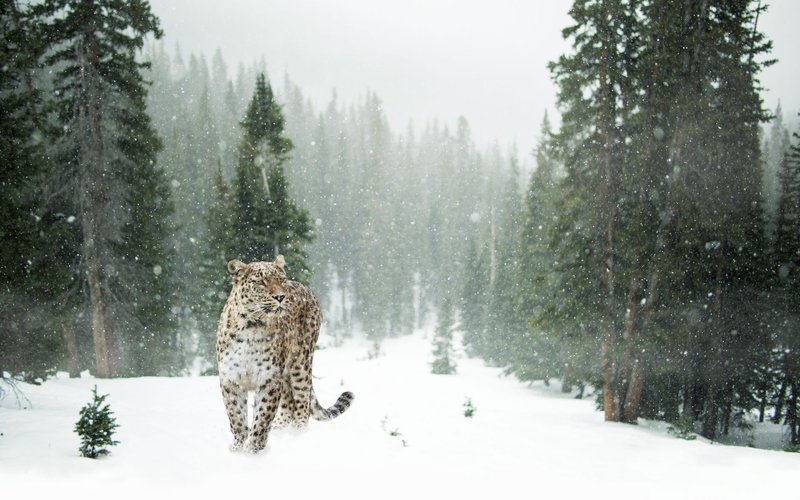
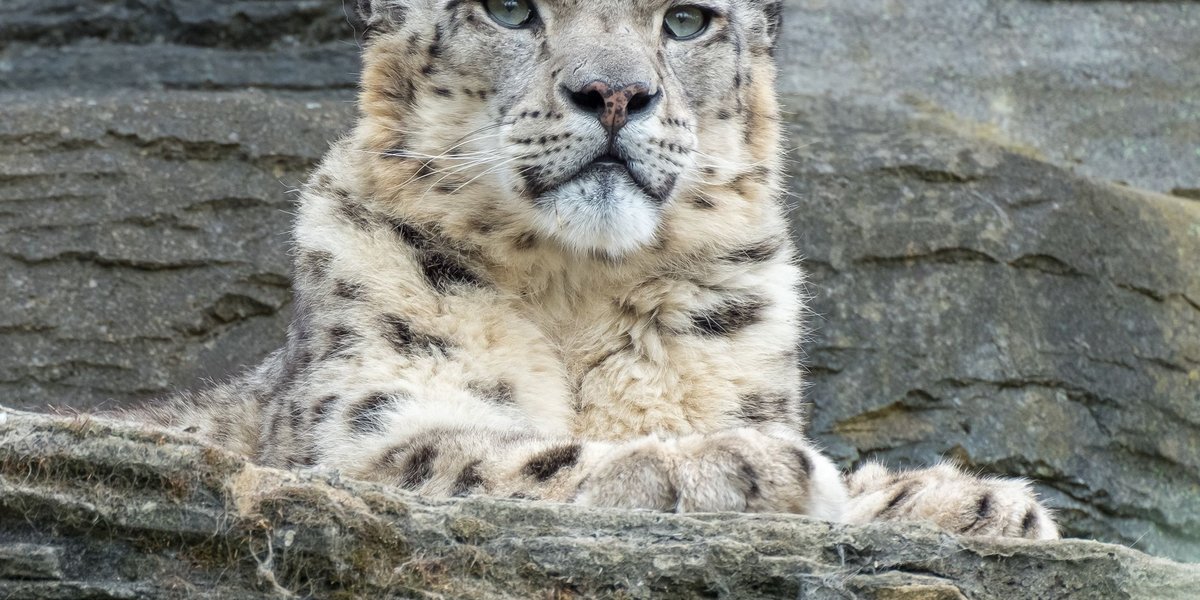
Camera-trap surveys in Dolpo have counted roughly 90 snow leopards inside Shey Phoksundo National Park and another 30 in the surrounding buffer terrain — about 120 total, the highest concentration anywhere in Nepal, according to IUCN Red List assessments of the species. That’s still a needle in a very large, very vertical haystack.
Winter is counterintuitively your best window: snow leopards follow blue sheep down to lower elevations as high passes snow in, which puts them within range of spotting scopes instead of scattered across ridgelines above 5,000 meters. Manang, along the Annapurna Circuit, has become a second viable option with easier logistics than Dolpo — you don’t need the restricted-area permit that Upper Dolpo requires, just a standard Annapurna Conservation Area permit. Dolpo treks run 18–25 days and require both a Dolpo Restricted Area Permit and Shey Phoksundo entry fees; budget accordingly, and go with an outfitter who works with the park’s tracking teams rather than one running a generic trek.
Red Panda
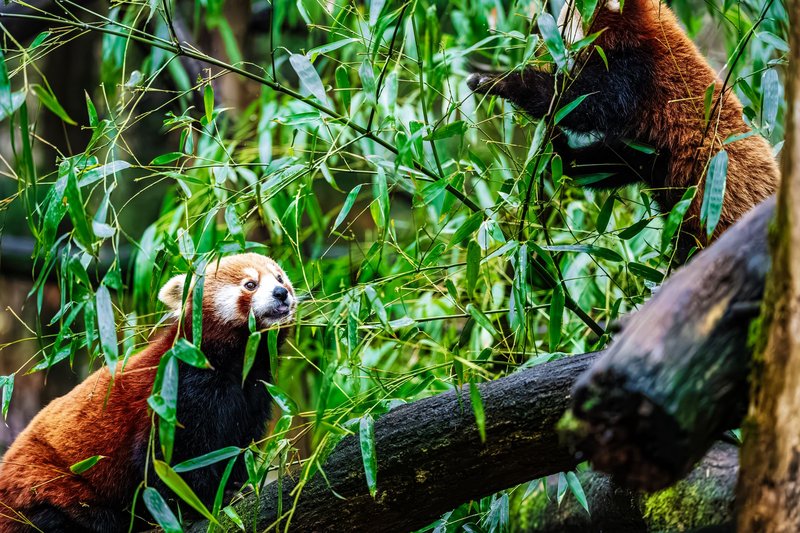
Red pandas aren’t the bears people assume from the name — they’re closer to a raccoon in a fox costume, and they spend most of the day curled up asleep in a tree fork, which is exactly why sightings are hard to schedule around. Ilam district, inside the Kanchenjunga Conservation Area, gives you the best odds, particularly the forests around Dobate village between February and March when foraging activity picks up before the spring bamboo shoots come in.
A second window opens in October–November: drier trails, clearer visibility, and pandas still active before winter torpor sets in. Sagarmatha, Langtang, and Makalu Barun National Parks all have resident populations too, but Ilam’s lower elevation (around 2,500–3,500 meters) means shorter, less technical trekking to reach panda habitat than the high-mountain parks.
Bengal Tiger
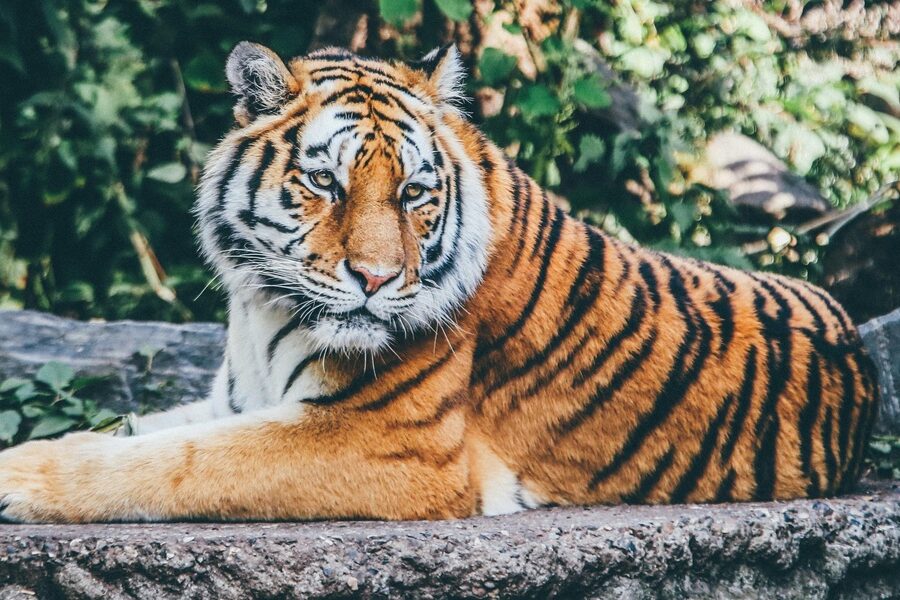
Nepal’s tiger population has grown substantially over the past decade through a mix of anti-poaching patrols and habitat corridors connecting Chitwan to Bardia and onward into India. Chitwan holds the highest density, but Bardia National Park in the far west sees fewer tourists and, per rangers who work both parks, comparable or better sighting odds because the grasslands are more open.
Cold-season mornings (October through March) are when tigers move to hunt and are easiest to track from a jeep or, in Chitwan’s core zone, on elephant-free walking safaris. Avoid the April–June pre-monsoon heat if a sighting matters to you — tigers go nocturnal and stay in dense cover.
Greater One-Horned Rhino
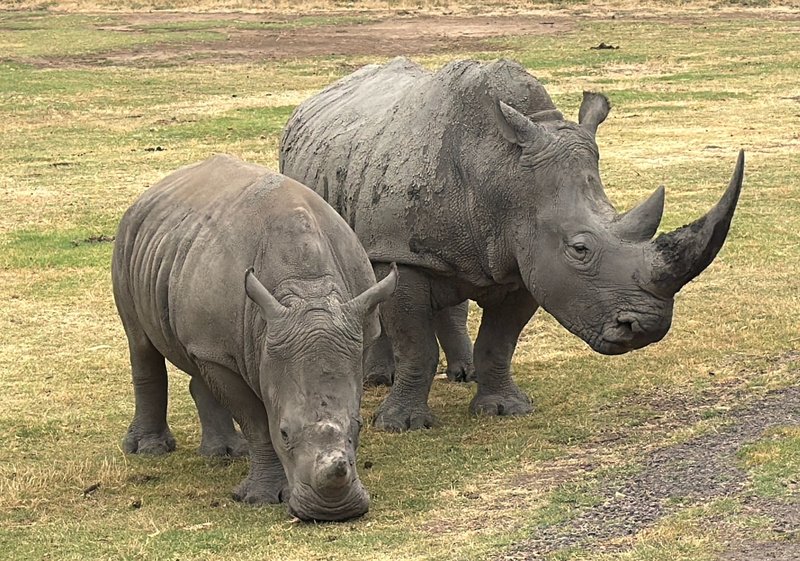
This is the closest thing to a guaranteed sighting on this list. Nepal’s rhino population reached 752 in the last full census, up 17% from 2015, and roughly 694 of those live in Chitwan alone — the second-largest population of the species on earth after India’s Kaziranga, according to WWF. Army-backed anti-poaching patrols and community buffer-zone programs get the credit for the rebound after the species nearly disappeared from the park in the 1960s.
Dawn canoe trips on the Rapti River or a jeep safari through Chitwan’s grasslands during the dry winter months, when vegetation is low and animals concentrate near water, give you the best shot. You’ll likely see several in a single outing — this isn’t the species you need luck for.
Gharial
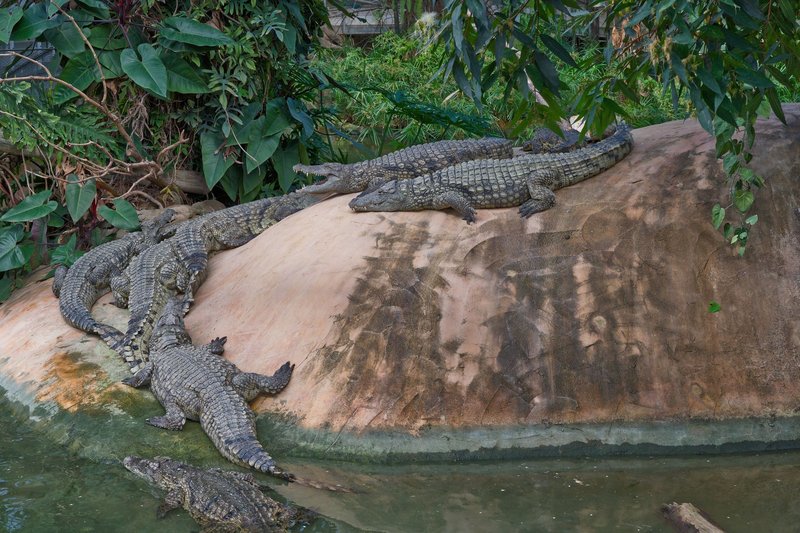
The gharial is the strangest-looking animal on this list: a fish-eating crocodilian with a narrow, elongated snout that makes it look assembled from spare parts. It’s also critically endangered, with wild populations reduced to a handful of river systems across South Asia, making it one of the world’s rarest wetland animals. Chitwan’s Rapti and Narayani rivers hold Nepal’s main population, bolstered by a captive breeding and release program run out of the park’s gharial conservation center near Kasara.
Winter’s low water levels concentrate gharials on exposed sandbanks, which is when the breeding center’s basking adults and the wild river population are both easiest to observe. A visit to the conservation center itself is worth building into any Chitwan itinerary — it’s the only place you’ll reliably see juveniles up close.
Chinese Pangolin
Pangolins are close to impossible to plan a trip around, and that’s worth saying plainly instead of overselling it. The Chinese pangolin is critically endangered, nocturnal, solitary, and a primary target of the illegal wildlife trade, which makes it both rare in nature and understandably wary of anything upright and moving — characteristics it shares with other endangered forest animals across the region. Camera-trap studies have confirmed populations in Gorkha, Udayapur, and Sunsari districts in Nepal’s mid-hills, including recent first-time evidence from Sunsari’s community-protected sacred forests documented in the journal Oryx.
If you want a real shot, it means joining a community-forest night walk with local rangers in one of those districts, not adding a stop to a standard itinerary. Most visitors who see one do it through conservation volunteer programs rather than tourism.
Himalayan Musk Deer
Male musk deer carry a scent gland that’s driven centuries of poaching for the perfume and traditional medicine trade — a big part of why the species is now endangered across its Himalayan range, joining numerous other endangered species in Asia threatened by similar pressures. They lack antlers entirely; males instead grow elongated canine tusks that curve down past the jaw, which is the giveaway if you spot one at a distance and aren’t sure what you’re looking at.
They favor steep, forested slopes between 2,500 and 4,000 meters, overlapping with red panda territory in Sagarmatha and Langtang National Parks. Spring and autumn treks through rhododendron forest give the best combination of visibility and deer activity; they’re crepuscular, so early morning or dusk sightings near forest edges are your best bet.
Clouded Leopard
The clouded leopard is arguably the hardest cat in Nepal to see on purpose. It’s smaller than a snow leopard, almost entirely arboreal, and hunts at night in the dense mid-hill forests of the Annapurna Conservation Area — habitat too thick and too vertical for the kind of spotting-scope viewing that works for snow leopards on open scree.
Realistically, this is a camera-trap species. Several conservation projects in the Annapurna region run camera-trap monitoring you can sometimes join or view footage from, which is a more honest way to “see” one than budgeting trip time around a live sighting.
Dhole (Asiatic Wild Dog)
Dholes hunt in coordinated packs of up to a dozen animals and can bring down prey several times their size, including young musk deer and blue sheep — a level of pack coordination that’s more commonly associated with wolves. They range through the Annapurna and Kanchenjunga Conservation Areas, generally at elevations between 3,000 and 4,500 meters, and are most active in winter when prey animals concentrate at lower altitudes.
They’re endangered rangewide, with Nepal’s population fragmented and under-studied compared to the country’s cats. A pack sighting is rare enough that trekking guides in Annapurna will often mention it as one of their career highlights rather than a routine trip note.
Assamese Macaque
Less charismatic than a snow leopard, more likely to actually cross your path: Assamese macaques are common enough in Chitwan’s buffer zone and the eastern hill forests that most visitors see them without trying. They’re currently listed as near threatened rather than endangered, but populations are declining from habitat fragmentation as forest corridors get cut by roads and agriculture.
They travel in troops of 10–50 and are diurnal, so daytime forest walks in Chitwan’s community forests or the hills around Ilam and Dhankuta are reliable viewing spots — no special trek or permit required beyond standard park access.
Bengal Florican
One of the rarest birds on the planet, not just in Nepal: the Bengal florican is critically endangered, with a global population estimated in the low hundreds. It depends on a habitat that’s nearly gone from South Asia — tall, undisturbed floodplain grassland — which puts Nepal’s Koshi Tappu Wildlife Reserve and parts of Chitwan’s grasslands among the last reliable sites anywhere.
March and April are the window that matters: males perform a leaping display flight above the grass to attract mates, which is by far the easiest way to spot one against the tall cover. Outside breeding season, they’re nearly invisible, camouflaged and grounded in grass taller than a person.
Wild Yak
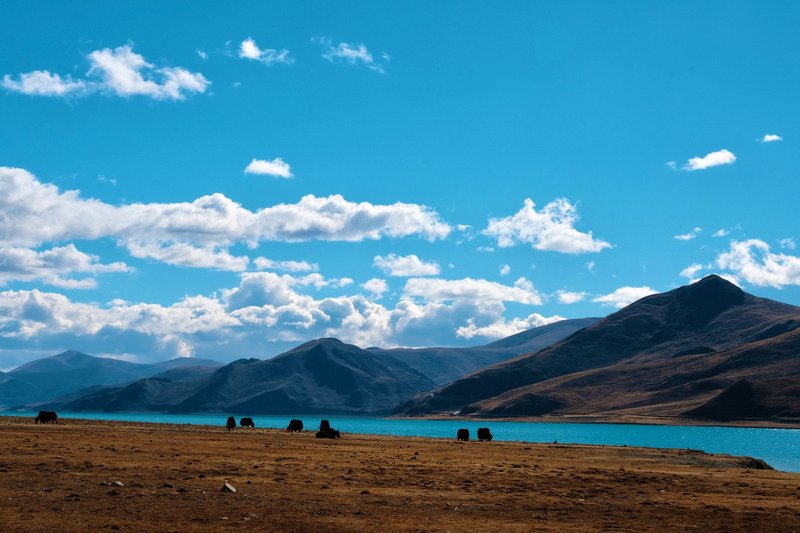
Wild yaks are a different animal from the domesticated yaks you’ll see loaded with gear on any trekking route — larger, darker, warier, and now restricted to a handful of remote high-altitude pockets after historic overhunting and interbreeding with domestic herds diluted wild populations across most of their range. Nepal’s last wild herds hold on in the trans-Himalayan plateau of Upper Dolpo and Humla, near the Tibetan border.
Summer (June–September) is the only realistic season — winter snow makes the high plateau inaccessible, and the animals themselves retreat to lower valleys. This is a genuinely remote add-on to an already remote trek, not a detour; expect several extra days of walking beyond standard Dolpo itineraries to reach herds.
Himalayan Tahr
Himalayan tahr are the wild goat you’ll actually see without trying if you’re trekking in Sagarmatha or Annapurna — shaggy, reddish-brown, and comfortable on cliff faces that would stop most other large mammals. They’re listed as near threatened, with numbers pressured by hunting in some regions and competition with domestic livestock for grazing.
Autumn (October–December) is rutting season, when males grow out their thick neck ruff and become more visible as they compete for mates on open slopes. You’ll often spot them from established trekking trails around 3,000–4,500 meters without needing to leave the route.
FAQ
Does Nepal have tigers and leopards?
Yes, and they’re different species with different ranges. Bengal tigers live in the lowland Terai parks — Chitwan and Bardia — while common leopards, clouded leopards, and snow leopards occupy the mid-hills and high mountains respectively. All four cats exist in Nepal, but you won’t find tigers and snow leopards in the same park; their habitats don’t overlap.
What’s the best time to see a snow leopard in Nepal?
December through March, when snow leopards follow blue sheep down from high passes to lower valleys as snow closes off the highest terrain. This makes them more concentrated and easier to spot with a scope than during summer, when they range across a much larger, more vertical territory.
How many endangered species does Nepal have?
Nepal’s National Red List counts one critically endangered mammal, eleven endangered mammal species, twenty vulnerable species, and four near threatened, and that’s mammals alone — birds like the Bengal florican and reptiles like the gharial add further critically endangered species outside that count.
Can I see all of these animals on one trip?
Not realistically. The habitats span river-level Terai grassland to 5,000-meter alpine plateau, and the travel time between them (plus permits for restricted areas like Upper Dolpo) makes a single-trip circuit impractical. Most visitors pick one region — lowland parks for tigers, rhinos, and gharials, or a high-mountain trek for snow leopards and red pandas — rather than chasing the full list at once.