Table of Contents
- Why an Island Has Mainland Wildlife
- The Bats: Nearly Two-Thirds of All the Mammals Here
- The Two Native Monkeys
- The Ocelot: Top of the Food Chain
- Deer and Peccary: The Forest Floor’s Big Grazers
- Agouti and Paca: The Rodents Worth Knowing
- Manatee and Otter: Life in the Swamps
- Trinidad vs. Tobago: Same Country, Different Mammal List
- Where to Actually See Them
Most Caribbean islands got their animals the hard way: rafting on storm debris, blown in as bats, or washing up as castaways that then evolved into something smaller and stranger over a few million years of isolation. Trinidad and Tobago skipped that process. Until roughly 10,000 years ago, at the tail end of the last glacial period, Trinidad was still attached to the South American mainland by a land bridge across what’s now the Gulf of Paria. When sea levels rose, the bridge drowned, and whatever was living on that stretch of land got stuck on an island. That’s why the mammals of Trinidad and Tobago look less like Caribbean fauna and more like a cross-section of the Venezuelan llanos and Amazon basin: ocelots, howler monkeys, peccaries, agoutis, and around 100 mammal species in total, packed into a country smaller than Rhode Island.
Tobago tells a different story, and we’ll get to why. But start with Trinidad, because that’s where almost all of the country’s mammal diversity lives.
Why an Island Has Mainland Wildlife
The distinction matters because it changes what you should expect to find. Jamaica, by comparison, has around two dozen native mammal species, most of them bats, because it’s been isolated for millions of years and never had a land connection to a continent. Trinidad has roughly 100, because its land bridge closed recently enough — in evolutionary terms, practically yesterday — that the mainland community came across mostly intact rather than being filtered down to whatever could survive an ocean crossing.
That’s the detail every generic “wildlife of the Caribbean” roundup misses: Trinidad isn’t a tropical island ecosystem, it’s a chunk of South America that got a saltwater moat. The practical upshot for anyone visiting is that you’re not looking for quirky island endemics so much as mainland Amazonian species living at unusually high density in a small, accessible space.
The Bats: Nearly Two-Thirds of All the Mammals Here
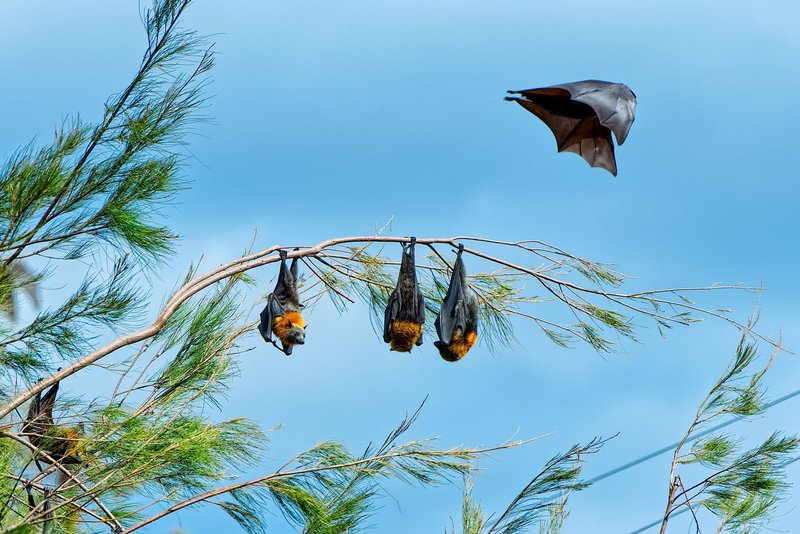
Roughly 70 of Trinidad and Tobago’s mammal species are bats, which makes them the dominant mammal group by a wide margin — more species than every other order combined. That diversity spans fruit bats, nectar-feeders, insectivores, and the animal most visitors have heard of and hope not to meet: the common vampire bat (Desmodus rotundus), which does exist here and does feed on livestock blood, though it’s a minor player ecologically compared to the fruit- and insect-eating majority.
The more interesting bat, biologically, is the fringe-lipped bat (Trachops cirrhosus), which hunts by homing in on the mating calls of túngara frogs — a predator that’s turned another species’ love song into a dinner bell. Trinidad’s caves and forest understory host enough bat diversity that bat researchers treat the island as a working laboratory, and Asa Wright’s Dunston Cave, home to a colony of oilbirds, draws its own visitors for exactly that reason (oilbirds aren’t mammals, but they nest alongside bat colonies in the same limestone caves).
The Two Native Monkeys
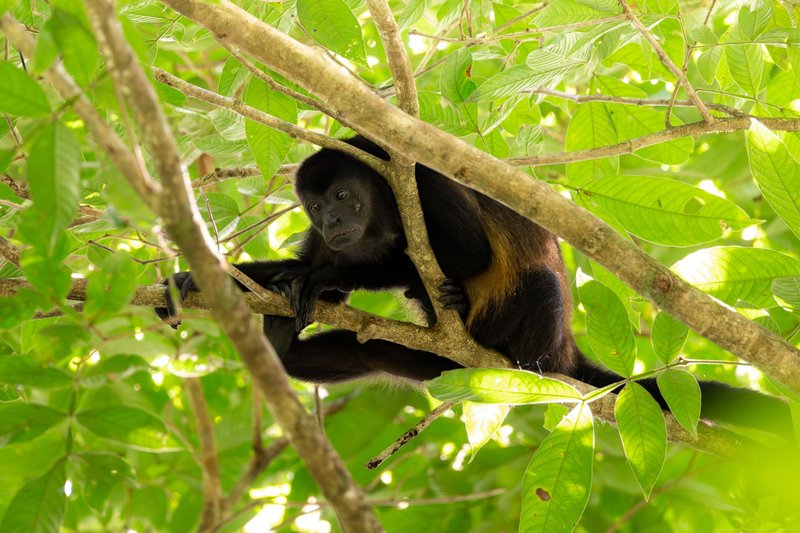
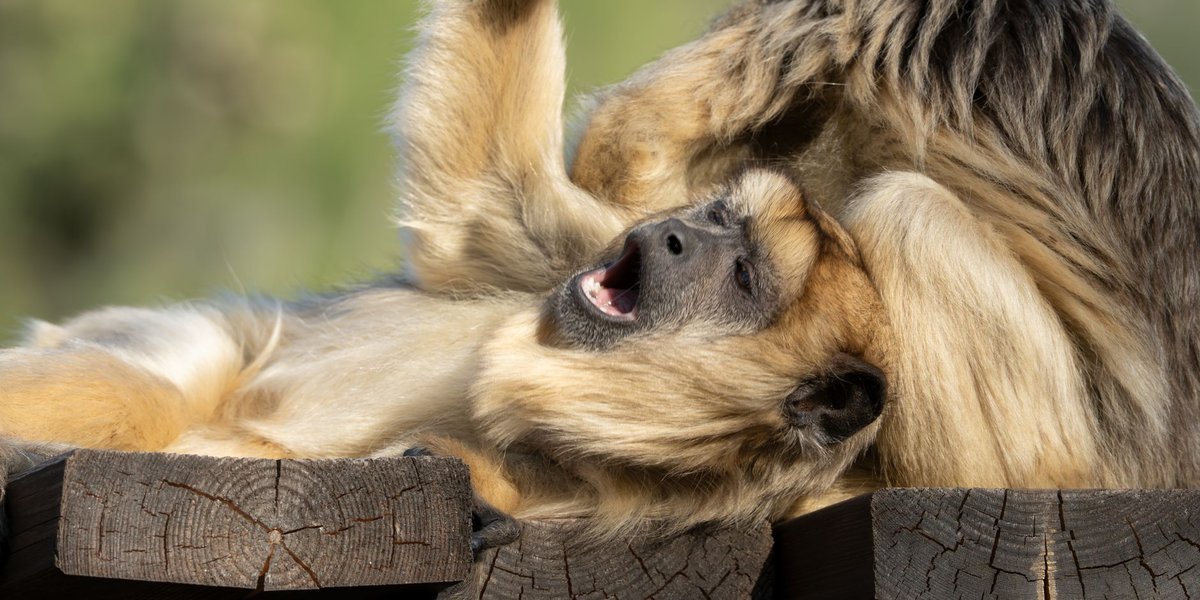
Trinidad has two resident primates, and neither occurs naturally on Tobago. The red howler monkey (Alouatta macconnelli) is the one you’ll hear before you see — its dawn chorus is a guttural roar that carries for miles through the canopy and gets mistaken by first-time visitors for something considerably larger and more dangerous. Troops move through the forest canopy in family groups, and Nariva Swamp and the Northern Range forests are reliable places to catch one calling at first light.
The Trinidad white-fronted capuchin (Cebus albifrons trinitatis) is the quieter, more elusive counterpart — smaller, more active during the day, and considerably harder to find, in part because its population has been hit hard by habitat loss and hunting pressure over the past few decades. Seeing one is a genuine highlight, not a given.
The Ocelot: Top of the Food Chain
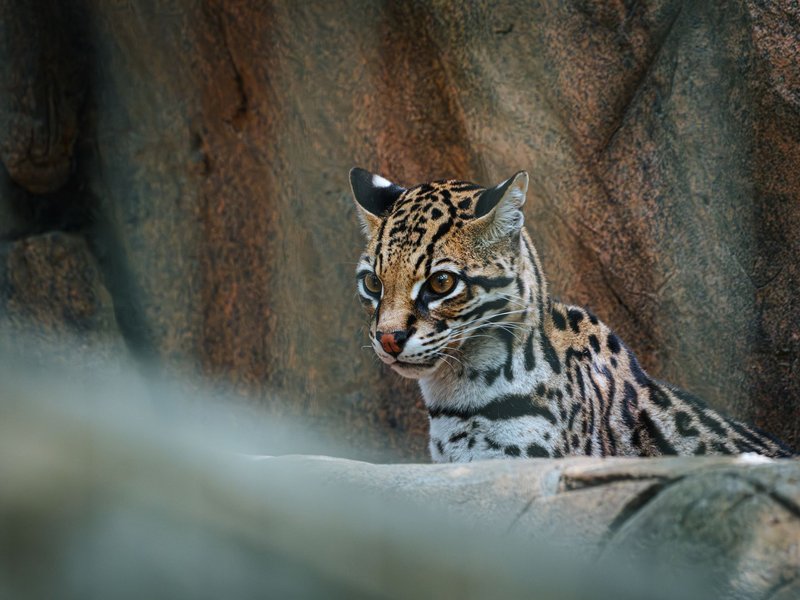
With jaguars and pumas absent from the islands, the ocelot (Leopardus pardalis) is the largest wild cat and de facto apex predator of Trinidad’s remaining forest. It’s spotted, roughly twice the size of a large house cat, and almost entirely nocturnal, which means most people who’ve lived in Trinidad their whole lives have never seen one outside a camera-trap photo. The IUCN Red List classifies the ocelot as a species of Least Concern globally, but locally in Trinidad it’s under real pressure from habitat fragmentation and, historically, the pelt trade — its populations here are healthier than the country-level threats to its habitat would suggest, but not something to take for granted.
Deer and Peccary: The Forest Floor’s Big Grazers
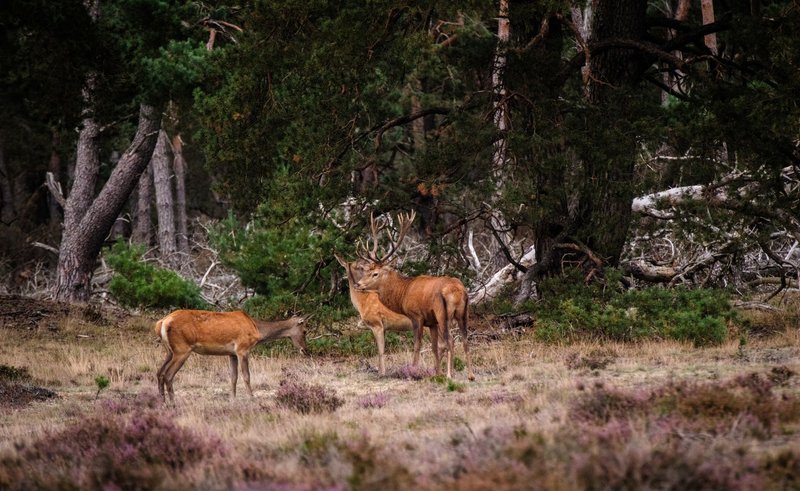
The red brocket deer (Mazama americana) is Trinidad’s only native deer species, a small, solitary forest-dweller that favors dense understory over open ground, which makes it far easier to hear rustling away than to actually photograph. The collared peccary (Pecari tajacu), known locally as “quenk,” travels in noisy family groups and has a reputation among hunters and hikers alike for standing its ground rather than fleeing — it’s not aggressive by nature, but a startled group at close range is not an animal to crowd.
Both species have been squeezed by hunting pressure over the years, enough that conservation groups on the island track their populations as an informal barometer of forest health.
Agouti and Paca: The Rodents Worth Knowing
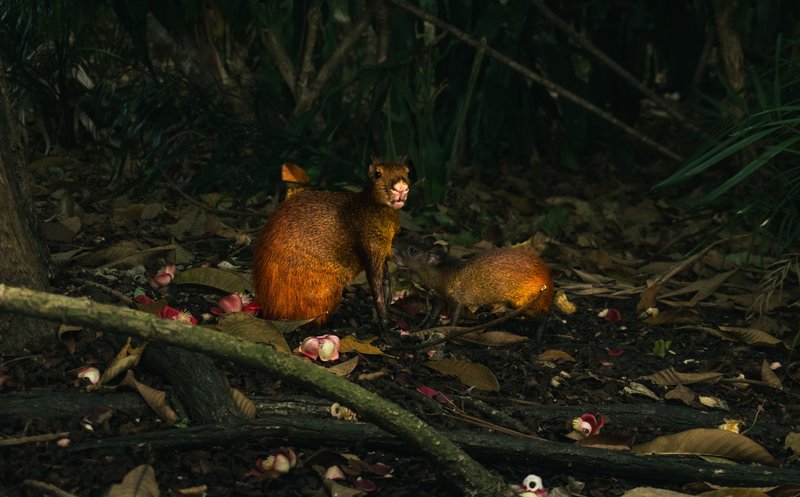
Trinidad’s large rodents don’t get the attention the monkeys and cats do, but they’re a bigger part of daily forest life than most visitors realize. The red-rumped agouti (Dasyprocta leporina) is diurnal, fast, and often the first mammal a visitor actually spots, since it forages in the open during the day and bolts in a straight line when disturbed. The lowland paca, called “lappe” locally (Cuniculus paca), is its nocturnal, spotted counterpart — larger, secretive, and historically one of the most hunted game animals on the island, prized enough as bushmeat that its populations have declined in areas with heavy hunting access.
Both species matter more ecologically than their size suggests: as seed dispersers and seed predators, they shape which tree species regenerate in Trinidad’s forests.
Manatee and Otter: Life in the Swamps
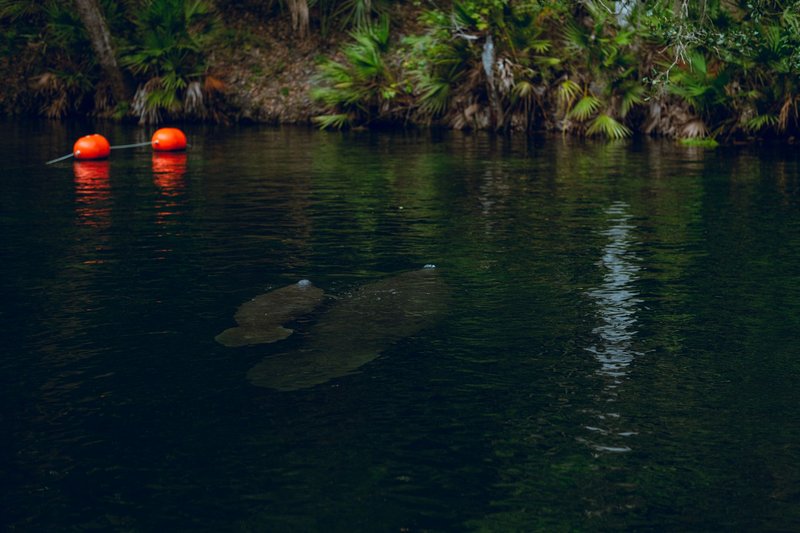
Nariva Swamp, the country’s largest freshwater herbaceous wetland, is the stronghold for Trinidad’s aquatic mammals and is itself home to an estimated 45 mammal species — nearly half the national total, concentrated in one protected wetland complex. The West Indian manatee (Trichechus manatus) lives in Nariva’s channels and lagoons, feeding on aquatic vegetation, and is the IUCN’s Vulnerable-listed flagship for the swamp’s conservation efforts. Sightings aren’t guaranteed — manatees are slow, submerged for long stretches, and easy to miss from a moving boat — but Nariva remains one of the more consistent places in the southern Caribbean to try.
Sharing the same waterways is the Neotropical otter (Lontra longicaudis), a sleeker, more active presence that hunts fish and crustaceans along the swamp’s edges and is more likely to be seen moving than the manatee, if you’re patient and quiet.
Trinidad vs. Tobago: Same Country, Different Mammal List
Tobago has no native monkeys, no ocelots, and a noticeably shorter mammal list than Trinidad, and the land bridge history explains why. Tobago separated from the mainland much earlier and more completely than Trinidad, and it never had the same continuous connection during the most recent glacial low-stand — so its mammal community was always closer to a typical small-island assemblage: mostly bats, a handful of smaller mammals, and nothing resembling Trinidad’s cross-section of Amazonian megafauna. A checklist that treats “Trinidad and Tobago” as one undifferentiated block misses this entirely, and it’s the reason a trip built around wildlife should weight time toward Trinidad’s forests and wetlands rather than split evenly between the two islands.
Where to Actually See Them
The Asa Wright Nature Centre, a 1,500-acre protected reserve in the Arima and Aripo valleys of the Northern Range, is the single best base for mammal spotting on the island — its trail network runs through primary and secondary rainforest where agoutis and, with real luck, ocelots turn up on camera traps and occasional daylight sightings. Caroni Swamp, best known for its scarlet ibis roost at dusk, also holds crab-eating raccoons and a healthy bat population along its mangrove channels. For the aquatic specialists — manatee, otter, and the two monkey species together in one place — Nariva Swamp on the east coast is the destination, ideally visited early morning by boat before the day heats up and the canopy goes quiet.
Timing matters more than most guides mention: the dry season, roughly January through May, brings clearer water and easier wildlife tracking in the swamps, while the wet season thickens the forest canopy and pushes howler troops to call more frequently at dawn. Neither season is wrong, but they reward different kinds of patience.