Most roundups of Malaysia’s native plants give you the same six photogenic species in a different order, then send you off with no idea whether you’re looking at something endemic to one mountain valley or a flower you could buy at a nursery two states away. That distinction matters more than it sounds. Malaysia’s native plants split into two very different stories: the roughly 15,000 vascular plant species spread across Peninsular Malaysia and Borneo, and the smaller, far more fragile slice of those that grow nowhere else on Earth.
This guide sorts them by type — flowers, trees and palms, carnivorous plants — and tells you which region each one calls home, where to actually go see it, and whether it’s the kind of plant you can keep alive in a pot.
Table of Contents
- Endemic vs. Native: The Distinction That Actually Matters
- Malaysia’s Signature Flowers
- The Trees and Palms That Built the Rainforest
- Malaysia’s Carnivorous Plants
- Where to See Them in the Wild
- Growing Malaysia’s Native Plants at Home
- A Word on Conservation
Endemic vs. Native: The Distinction That Actually Matters
“Native” means a plant evolved in Malaysia or arrived without human help, which describes thousands of species across the country. “Endemic” is a much narrower claim: the plant grows in Malaysia and nowhere else, sometimes confined to a single mountain slope. Peninsular Malaysia’s plant endemism sits around 30%. Cross over to Sabah and Sarawak on Borneo and that number roughly doubles — tree species endemism runs above 40% there, and close to half of all Borneo’s plants exist nowhere else on the planet.
That’s why this list keeps splitting Peninsular Malaysia from Sabah and Sarawak. A hibiscus grown in a Kuala Lumpur garden and a pitcher plant clinging to Mount Kinabalu’s summit ridge are both “native,” but only one of them disappears forever if its single hillside gets logged.
Malaysia’s Signature Flowers
Rafflesia
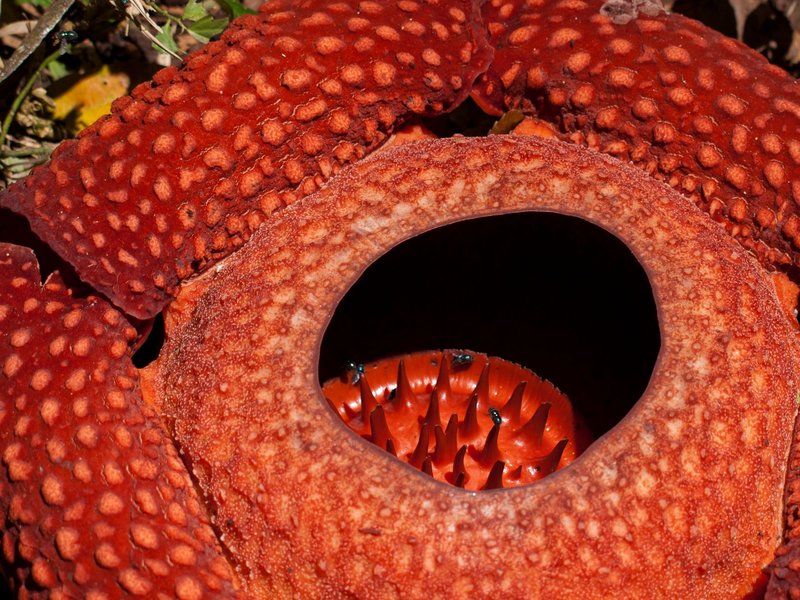
Rafflesia doesn’t have leaves, stems, or roots. It spends most of its life as a thread of tissue inside a jungle vine, invisible, then erupts into a flower that can hit 70 centimeters across and smells deliberately like rotting meat to pull in the carrion flies that pollinate it. Malaysia hosts at least thirteen confirmed species, more than anywhere else in Southeast Asia, and two are endemic: Rafflesia keithii, found only in Sabah’s Lohan Valley on the flank of Mount Kinabalu, and Rafflesia tuan-mudae, confined to Gunung Gading National Park in Sarawak.
The catch is timing. A bud takes roughly nine months to develop and the bloom lasts five to seven days before it collapses into a black, slumped mess. Sabah and Sarawak get blooms scattered through the year, weighted toward the wet season from October to May; in Perak, Pahang, and Kelantan on the peninsula, sightings cluster from October through March. Local park offices track active buds and post updates — that’s the only reliable way to time a visit, because there’s no fixed “Rafflesia season” the way there’s a cherry blossom season elsewhere.
Bunga Raya (Hibiscus rosa-sinensis)
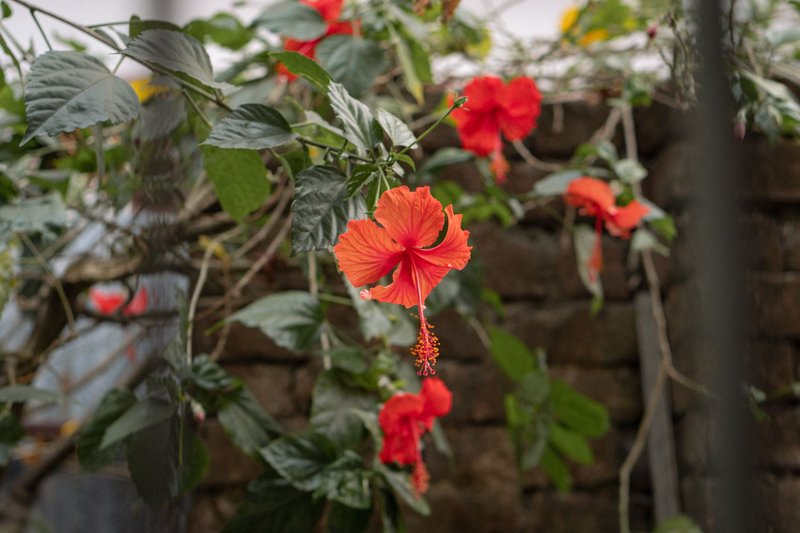
The Malaysia national flower hibiscus, locally called bunga raya, was picked from a shortlist that included jasmine, lotus, and rose before the government made it official on 28 July 1960. The five petals were read as matching the five principles of the Rukun Negara, Malaysia’s national philosophy, and the flower blooms nearly year-round — a detail that got folded into its symbolism of endurance. Unlike most entries on this list, bunga raya isn’t rare or hard to find. It’s planted in traffic circles, school compounds, and front yards across the entire country, which is arguably a stranger fact than if it were.
Rothschild’s Slipper Orchid
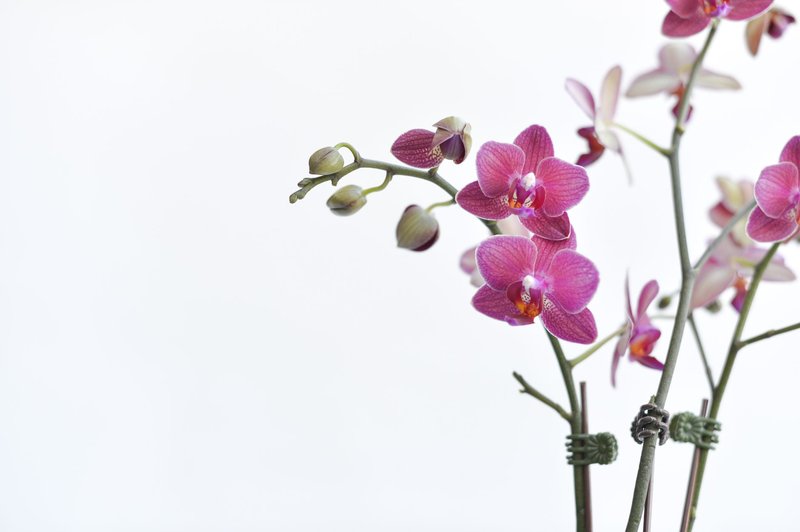
Paphiopedilum rothschildianum, nicknamed the Gold of Kinabalu, is endemic to the rainforest belt around Mount Kinabalu at 500–1,200 meters elevation, and it’s in genuine trouble: the IUCN lists fewer than 50 mature individuals left in the wild, driven down mostly by collectors, since a single wild plant has fetched up to US$5,000 on the black market. Orchid growers prize it for the striped, spider-legged petals that can span 15 centimeters. It’s been protected inside Kinabalu Park since the 1960s, and it’s still being poached — a fact worth sitting with before you buy any “wild collected” orchid from an unverified seller.
Pagoda Flower
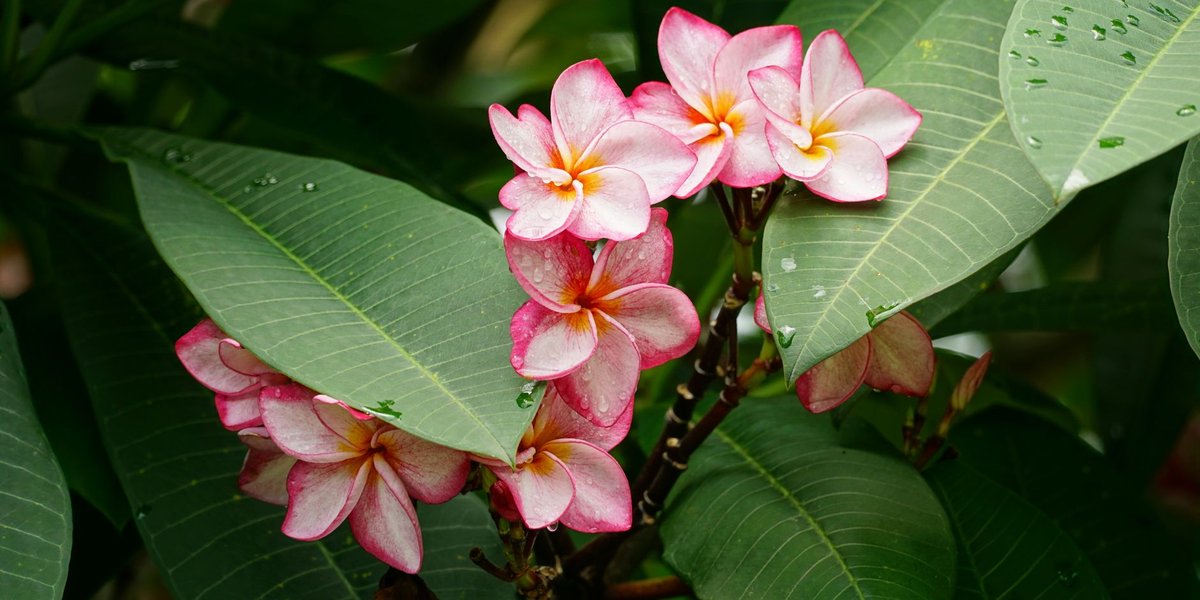
Clerodendrum paniculatum stacks its small red-orange blooms into pyramid-shaped clusters that look architectural rather than floral, hence the name. It’s native across Peninsular Malaysia’s lowland forest edges and thrives in the same hot, humid, partially shaded conditions found in most home gardens here — one reason it shows up constantly in kampung compounds.
Bougainvillea
Technically a South American import naturalized so thoroughly across Malaysian gardens for generations that most people assume it’s local. It isn’t native in the strict sense, but it’s included here because every competing list treats it as a fixture of Malaysian flora, and leaving it out would misrepresent what visitors actually see. What is genuinely Malaysian about it is the growing method: local nurseries have spent decades grafting multiple bougainvillea colors onto a single rootstock, producing the multi-hued specimens sold at roadside stalls nationwide.
For a more comprehensive look at Malaysia’s flowering plants, explore the List of Flowers of Malaysia.
The Trees and Palms That Built the Rainforest
Tualang (Koompassia excelsa)
The tualang is the tallest tropical tree species in Southeast Asia, regularly reaching 80 meters with a trunk too smooth and slick for most predators to climb — which is exactly why wild honeybees (Apis dorsata) build their combs on its highest branches, out of reach of sun bears. Indigenous Orang Asli communities in Peninsular Malaysia have harvested that honey for generations using nothing but bamboo pegs hammered into the bark as a ladder.
Meranti (Shorea species)
Meranti is the umbrella name for dozens of Shorea species in the dipterocarp family, the trees that form the actual canopy structure of Malaysian rainforest. They’re also the backbone of the country’s timber industry, which is the uncomfortable part of their story: heavy logging pressure has pushed a large share of Malaysia’s native tree diversity onto a threat category, with well over 100 endemic tree species now classified as Critically Endangered.
Sealing Wax Palm (Cyrtostachys renda)
Native to Borneo’s peat swamp forests, this palm’s crownshaft — the section just below the fronds — is a lacquered, almost unnaturally bright red, which is where the name comes from. It’s one of the few truly ornamental Malaysian natives that translates well into cultivated landscaping, and it’s become a fixture of resort and hotel grounds well beyond its native range.
For detailed information about Malaysia’s tree species with scientific names and habitat data, see the List of Trees of Malaysia.
Malaysia’s Carnivorous Plants
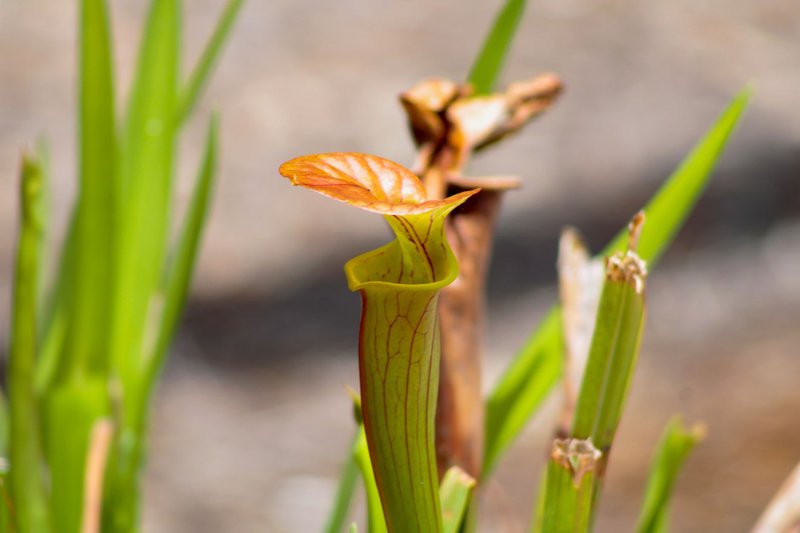
Malaysia’s pitcher plants (Nepenthes) cluster most densely on Mount Kinabalu, where altitude and nutrient-starved soil pushed several species to evolve pitchers large enough to catch more than insects.
Nepenthes rajah is the standout: endemic to Kinabalu and neighboring Mount Tambuyukon between 1,500 and 2,650 meters, its pitchers can hold nearly two liters of fluid and have been documented drowning small rodents. It’s listed as Endangered by the IUCN and sits on CITES Appendix I, the strictest international trade protection category that exists.
Nepenthes villosa grows even higher, past 3,200 meters — beyond where any other Bornean Nepenthes survives — and its pitcher rims are ringed with distinctive comb-like teeth.
Nepenthes edwardsiana, the splendid pitcher-plant, shares the same Kinabalu-Tambuyukon range and produces slender, elongated pitchers with a waxy red-orange finish.
Nepenthes × kinabaluensis is the natural hybrid of N. rajah and N. villosa, found only where their ranges overlap — a plant that, by definition, cannot exist anywhere else on the planet.
None of these travel well. They’re adapted to a narrow band of cool, misty, mineral-poor mountain air, and taking one off the mountain — legally or otherwise — is generally a death sentence for the plant.
Where to See Them in the Wild
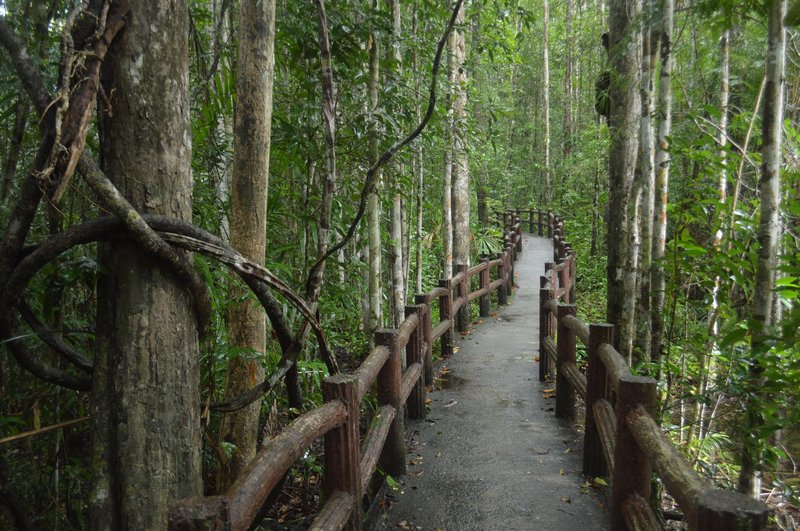
Kinabalu Park (Sabah) is the single best stop for endemic plants in one trip: Rothschild’s slipper orchid, Nepenthes rajah and villosa near the summit trail, and R. keithii in the adjacent Lohan Valley. It’s also a UNESCO World Heritage Site, so trail access is regulated and usually requires a park guide.
Tambunan Rafflesia Reserve (Sabah) exists specifically to protect flowering Rafflesia and post real-time bloom updates, which makes it the most reliable place to actually catch one open rather than gambling on a jungle trek with no guarantee.
Gunung Gading National Park (Sarawak), near the town of Lundu, is the type locality for Rafflesia tuan-mudae and runs the same kind of active-bud tracking system.
Taman Negara (Peninsular Malaysia), one of the world’s oldest rainforests at over 130 million years, gives you the lowland dipterocarp and meranti forest structure rather than the highland specialists — it’s the place to see what an intact peninsular forest canopy actually looks like, tualang trees included.
Growing Malaysia’s Native Plants at Home
Be realistic about what transplants to a garden. Rafflesia is parasitic on a specific jungle vine (Tetrastigma) and has never been successfully cultivated outside its native forest — no nursery sells it, and any claim otherwise is false. The Kinabalu Nepenthes species need cool nights and constant humidity that a lowland garden simply can’t replicate; lowland Nepenthes hybrids exist for home growers, but the mountain endemics on this list are not among them.
What actually works: bunga raya hibiscus tolerates full sun and average soil and flowers almost continuously once established. Pagoda flower does well in partial shade with regular watering and rewards you with blooms most of the year. Bougainvillea wants the opposite — dry soil and hard sun — and flowers harder when mildly stressed for water, which is counterintuitive advice that trips up a lot of first-time growers who overwater it out of good intentions.
A Word on Conservation
The pattern across this list is consistent: Peninsular Malaysia’s natives are mostly stable and gardenable, while Borneo’s endemics are narrow-range specialists under real pressure from logging, mining, and collection. Recent tree surveys found that more than half of Malaysia’s native tree diversity now carries some level of extinction threat, and new Nepenthes species are still being discovered in remote Bornean terrain even as older ones decline — researchers described a previously unknown pitcher plant species in North Kalimantan as recently as 2023, a reminder of how much of this flora hasn’t even been fully catalogued yet.
If you’re planning a trip built around Malaysia’s native plants, that’s the practical takeaway: the common ones will be blooming in a garden bed regardless of when you show up, but the endemics that make the trip worthwhile — the Rafflesia, the summit pitcher plants, the slipper orchid — are tied to a specific park, a specific elevation, and sometimes a specific week. Check with the park office before you book the flight.