Most “plants of Rwanda” results fall into two camps: herbarium checklists built for botanists, or gardening blogs written for someone in Minnesota trying to keep a tropical houseplant alive. Neither tells you what’s actually growing in Nyungwe, on the slopes of the Virungas, or along the Akagera floodplain — and why any of it matters beyond its Latin name.
This list fixes that. Twenty species, grouped by the three ecosystems that define Rwanda’s plant life: Nyungwe’s rainforest canopy, the bamboo and afro-alpine zones of Volcanoes National Park, and Akagera’s acacia savanna. Each one comes with where it grows, what it’s used for, and why conservationists care.
TLDR
Rwanda’s plant life splits cleanly by altitude and rainfall. Nyungwe’s mid-elevation rainforest holds the canopy giants and the orchids — over 1,000 recorded plant species, nearly a quarter of them found nowhere outside the Albertine Rift. Climb higher into Volcanoes National Park and the forest changes character entirely, moving through bamboo into gnarled Hagenia woodland and finally the otherworldly afro-alpine zone of giant lobelias. Drop back down to Akagera in the east and it’s a different country altogether: acacia and euphorbia savanna built for heat and long dry spells. The four species worth knowing by name before you go: giant lobelia, African cherry (Prunus africana), African mahogany (Entandrophragma excelsum), and the endemic, threatened Rhamnus mildbraedii.
Table of Contents
Nyungwe Rainforest: Mid-Altitude Canopy
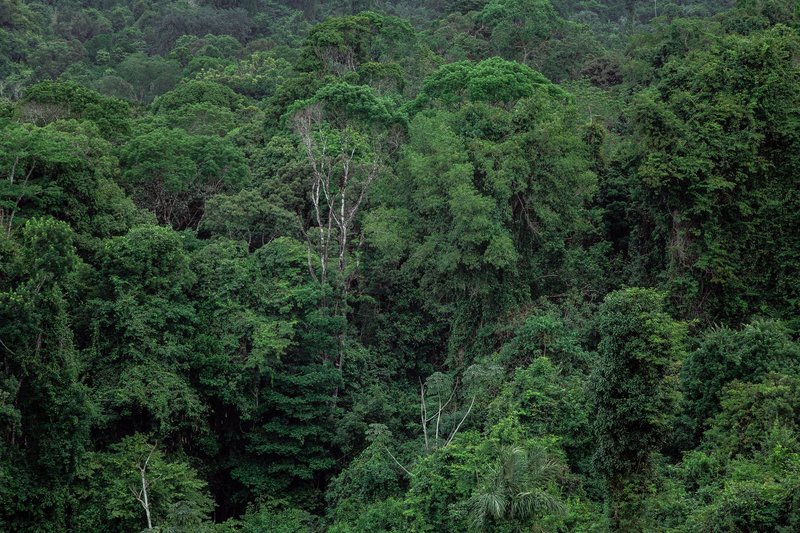
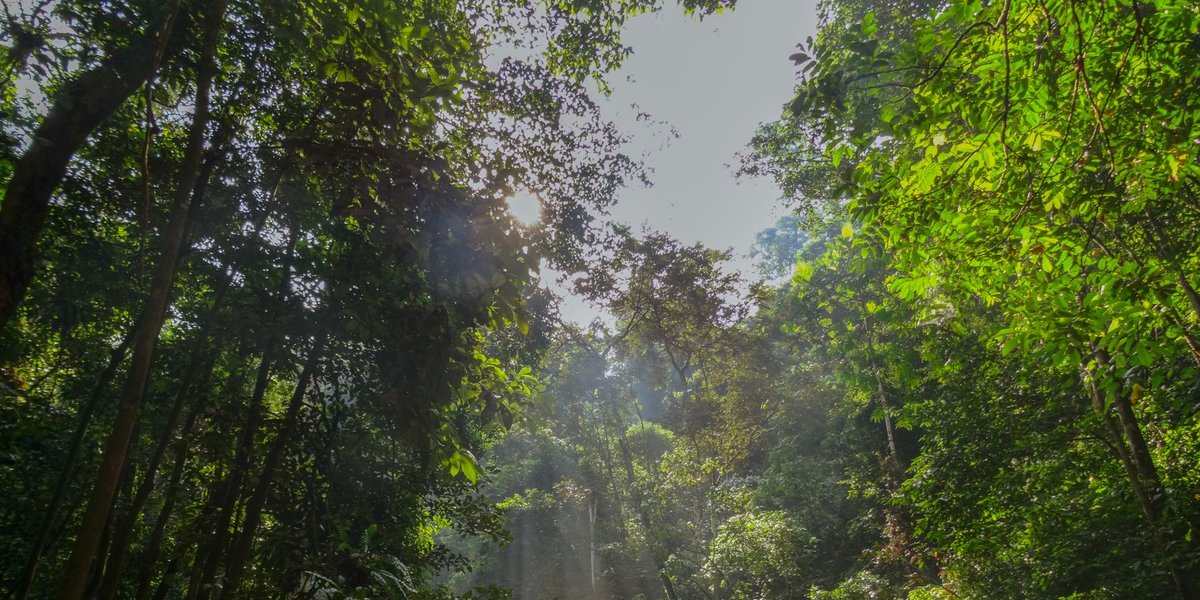
Nyungwe is the largest remaining block of montane rainforest in East or Central Africa, and it predates the last Ice Age. That age shows in the numbers: researchers have catalogued more than 1,000 vascular plant species inside the park, and roughly 234 of them are endemic or near-endemic to the Albertine Rift, according to a 2024 checklist published in Phytotaxa. This isn’t a forest you skim past — it’s one you have to look up, down, and sideways in.
1. African Mahogany — Entandrophragma excelsum
The tallest indigenous tree species on the continent belongs to this genus, and Nyungwe is well within its range across the eastern Albertine Rift. It’s a true emergent — a tree that punches through the canopy rather than filling it in, with a straight, buttressed trunk that timber traders have prized for over a century. Loggers call the wood “mahogany” for the color, though it’s botanically unrelated to the Central American mahogany the name usually conjures.
2. African Cherry (Pygeum) — Prunus africana
This one has a body count problem. The bark is harvested across East and Central Africa to treat benign prostatic hyperplasia, and demand exploded from roughly 200 metric tons a year in 1980 to over 3,500 tons by the late 1990s. Stripped trees often die. The IUCN now lists the species as Vulnerable and CITES restricts trade to licensed harvesters — one of the few Rwandan trees where the danger isn’t habitat loss but its own reputation as medicine.
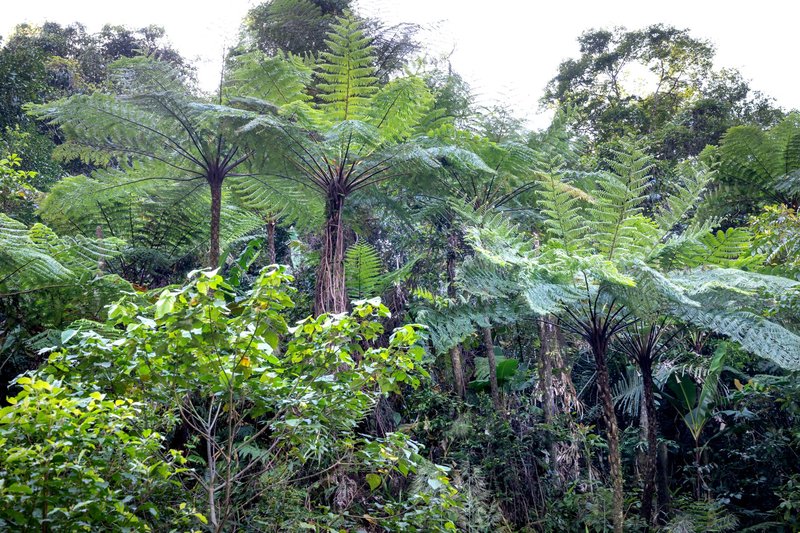
3. Tree Ferns — Cyathea manniana
Under Nyungwe’s canopy, these grow trunks — actual woody stems topped with fronds that can stretch several meters across, a growth form that looks prehistoric because it more or less is. They cluster along stream banks and ravine edges where the humidity never really drops, and they’re one of the easiest Nyungwe plants to identify without a field guide.
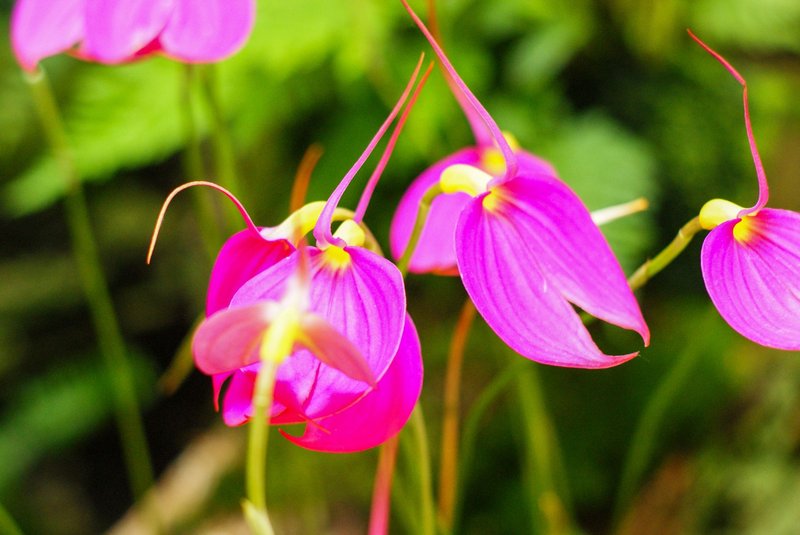
4. Nyungwe’s Orchids
No single species carries this entry — the point is the volume. Orchidaceae is Nyungwe’s most species-rich plant family, with close to 200 recorded species blooming on tree trunks, rock faces, and forest floor alike. Most are epiphytes, meaning they grow on other plants without parasitizing them, pulling moisture straight from Nyungwe’s near-constant mist.
5. Real Yellowwood — Podocarpus latifolius
One of Africa’s few native conifers, and a holdover from a much older forest lineage than the flowering trees around it. In Nyungwe it grows as a mid-canopy tree with flat, leathery needles rather than the broad leaves that dominate the rest of the rainforest — an easy tell if you’re trying to pick it out.
6. Water Berry — Syzygium guineense
A riverine specialist that lines Nyungwe’s streambanks and swamp margins, producing small dark fruit that draws birds and primates alike. Rural communities across the region have long used the bark medicinally for digestive complaints, though it’s the tree’s role holding stream banks together that matters most ecologically.
7. Nyungwe Crabwood — Carapa grandiflora
Grows thick along Nyungwe’s forest edges, particularly near the tea plantations that ring the park’s boundary — its seeds press into an oil used locally for skincare and, in some communities, as a natural insect repellent. It’s a shade-tolerant tree, which is why it does so well at the transition zone between deep forest and cleared land.
Volcanoes National Park: Bamboo to Afro-Alpine
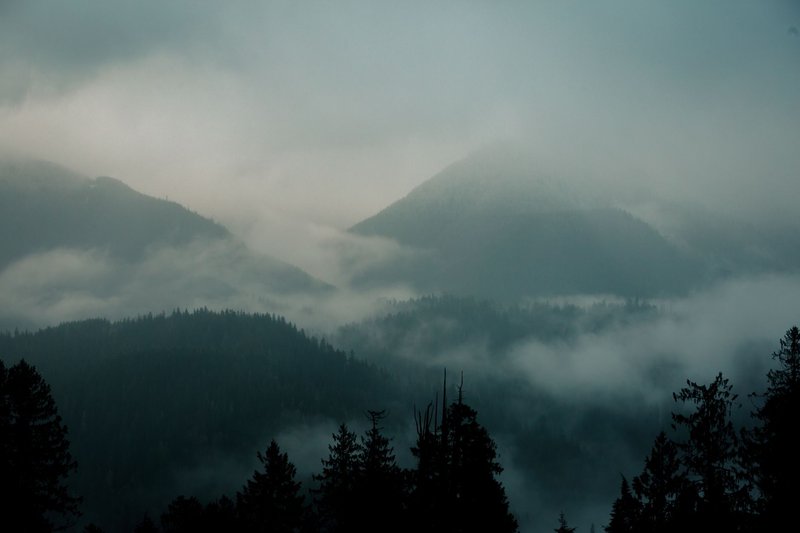
Volcanoes National Park climbs from roughly 2,500 meters to the 4,507-meter summit of Mount Karisimbi, and the vegetation changes almost as fast as the altitude does. Bamboo forest covers about 30% of the park and is the primary food source for the endangered mountain gorilla; above it, the forest shifts to gnarled Hagenia-Hypericum woodland, and higher still, into an afro-alpine zone that looks like nowhere else on the continent.
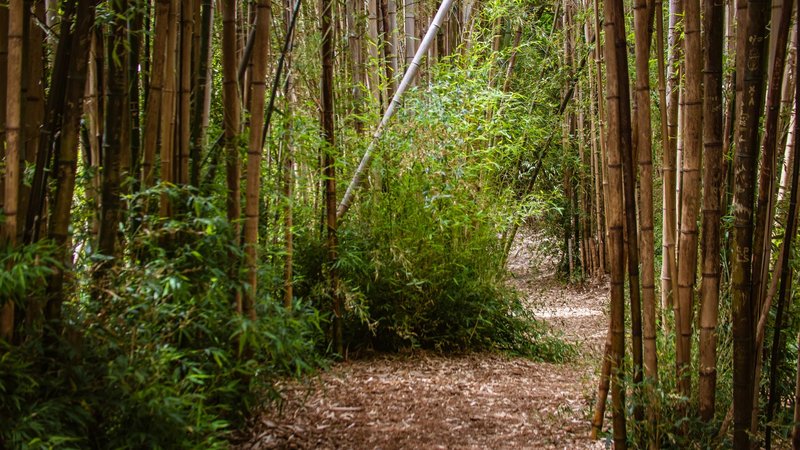
8. Mountain Bamboo — Yushania alpina
This is gorilla food, full stop. Bamboo shoots make up a huge share of the mountain gorilla diet during the growing season, and researchers tracking a decline in bamboo regeneration published in a study on PubMed Central have flagged it as a real conservation concern — fewer new shoots means less food for a species that’s already endangered. The bamboo zone sits between 2,500 and 3,200 meters and dominates roughly a third of the park.
9. Hagenia — Hagenia abyssinica
The tree that gives the Hagenia-Hypericum zone its name, and it looks the part: gnarled, moss-draped, with drooping clusters of reddish flowers. Highland communities across East Africa have used its dried flower clusters as a traditional dewormer for generations. In Volcanoes National Park it forms much of the mid-altitude canopy where gorilla groups build their night nests.
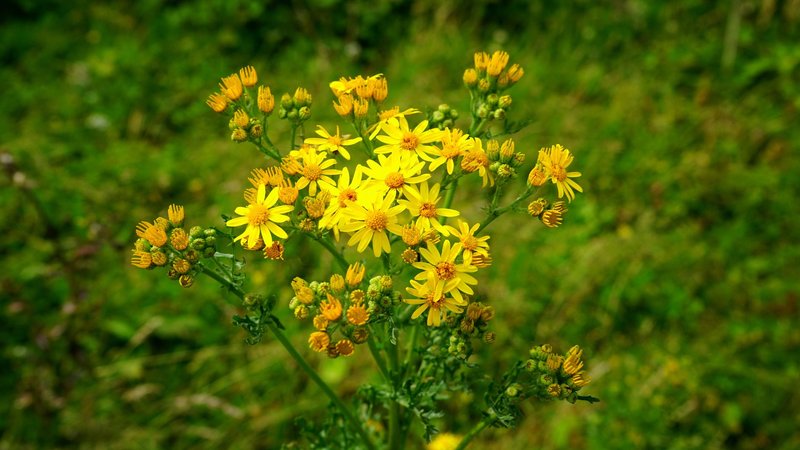
10. Giant St. John’s Wort — Hypericum revolutum
The other half of the Hagenia-Hypericum forest, distinguished by bright yellow flowers that look almost too cheerful for a cloud forest. It’s a shrubbier, denser plant than Hagenia, filling in the understory rather than the canopy.
11. Giant Lobelia
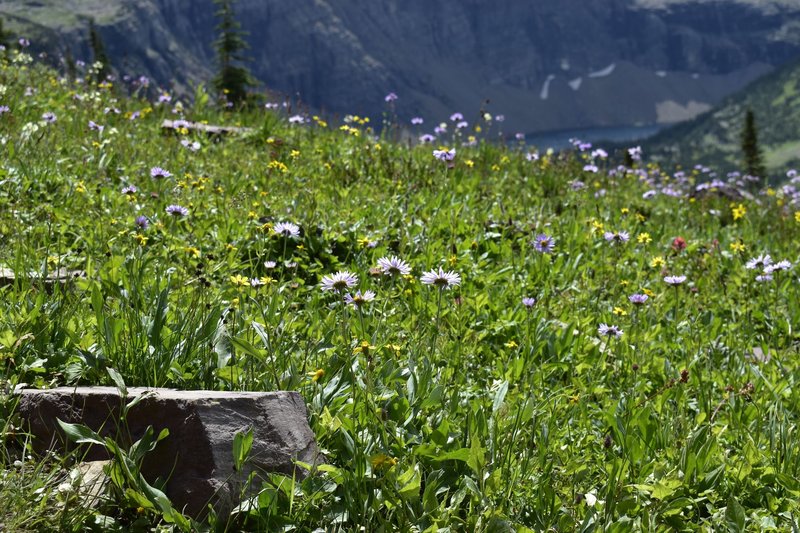
Above 3,600 meters, the forest gives way to open moorland, and this is where Volcanoes National Park stops looking like anywhere else on Earth, home to much of Rwanda’s highland flora. Giant lobelias grow rosettes of thick, waxy leaves atop stalks that can reach several meters, an adaptation to nights that regularly freeze even on the equator. They’re slow — some populations are estimated to flower only once every several decades before dying.
12. Giant Groundsel — Dendrosenecio species
Sharing the afro-alpine zone with the giant lobelias, these tree-sized relatives of the common garden groundsel can reach several meters tall, with a trunk of dead leaves insulating the living tissue inside — a trick that keeps the plant from freezing solid overnight. Together with the lobelias, they’re part of what botanists call Afroalpine gigantism: the tendency of certain plant lineages on East Africa’s high volcanoes to grow far larger than their lowland relatives.
13. Rhamnus mildbraedii
The rarest name on this list. This buckthorn relative is endemic to the Albertine Rift’s high-altitude forests, found in a narrow band that includes Rwanda’s volcanic highlands, and it’s considered threatened by habitat pressure at the margins of protected land. There’s no dramatic story here, no medicinal trade driving its decline — just a small range getting smaller, which is the quieter and more common way plants disappear.
14. Afromontane Heather — Erica species
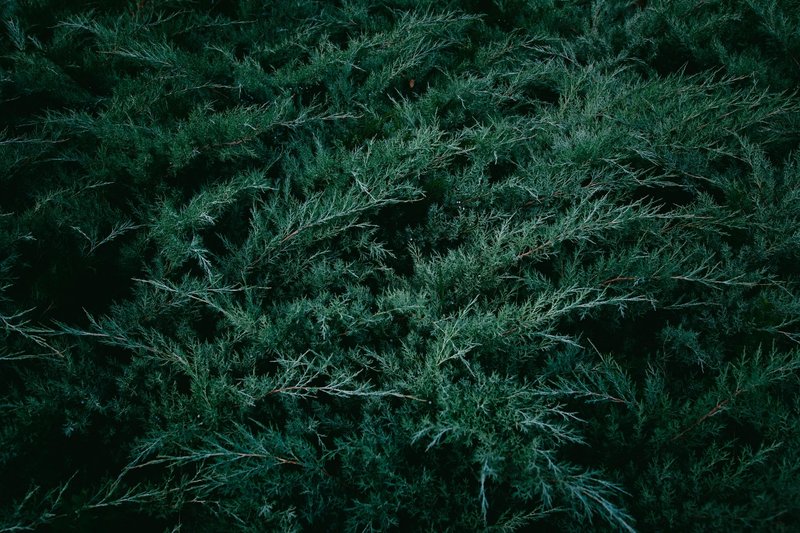
Near the upper tree line, heather takes over from Hypericum, forming dense, wind-shaped thickets that give way to open moorland. It’s a genus familiar to anyone who’s hiked in temperate mountains elsewhere, but the Rwandan populations are isolated by thousands of kilometers from their nearest relatives — an evolutionary island on top of a volcano.
Akagera Savanna: Acacia Country
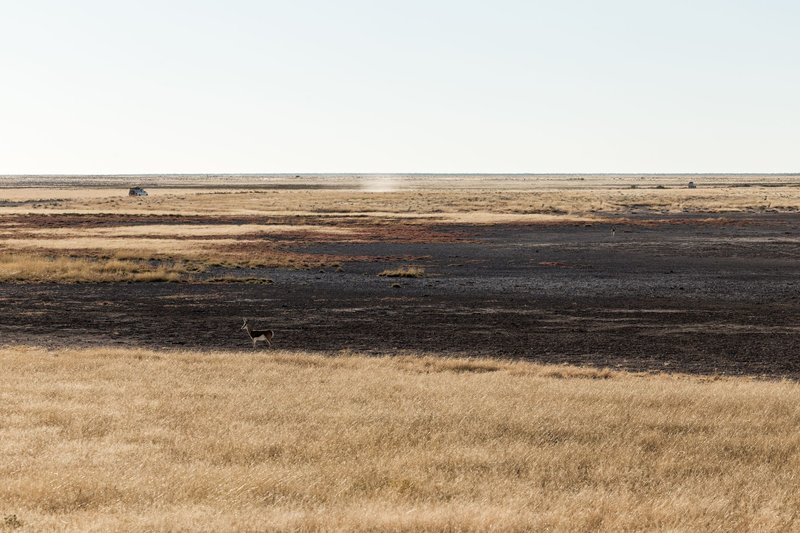
Akagera sits in Rwanda’s low, hot east, and its plant life has nothing in common with Nyungwe’s mist or the Virungas’ cold. This is savanna built for heat and a long dry season: acacia woodland, papyrus swamp, and open grassland that researchers have described as one of the most heterogeneous savanna ecosystems in the region, with more than 250 tree species recorded across the park.
15. Paperbark Acacia — Vachellia sieberiana
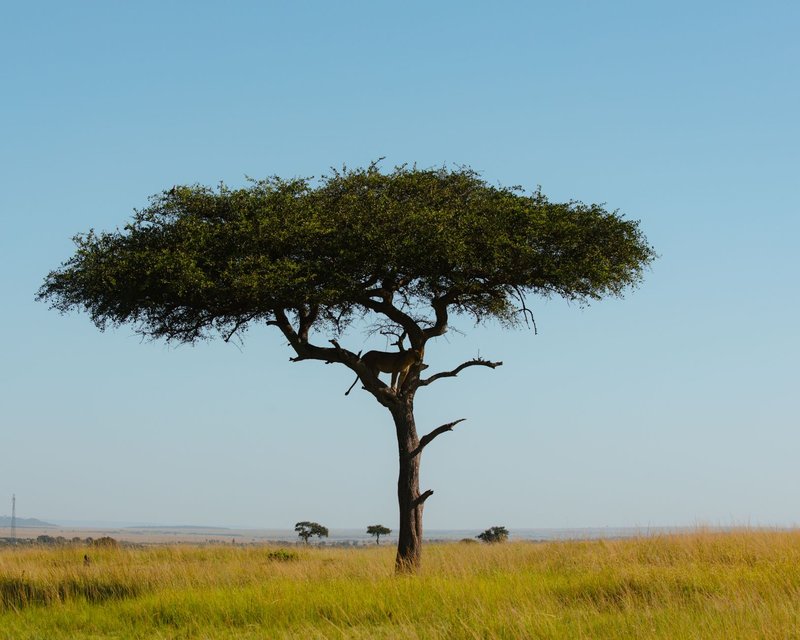
Recognizable by bark that peels in papery, yellowish sheets, this acacia is one of the dominant trees across Akagera’s open woodland. Its flat-topped crown provides shade that both wildlife and cattle herders have relied on for generations — a silhouette that shows up in nearly every savanna photograph taken in the park.
16. Candelabra Tree — Euphorbia candelabrum
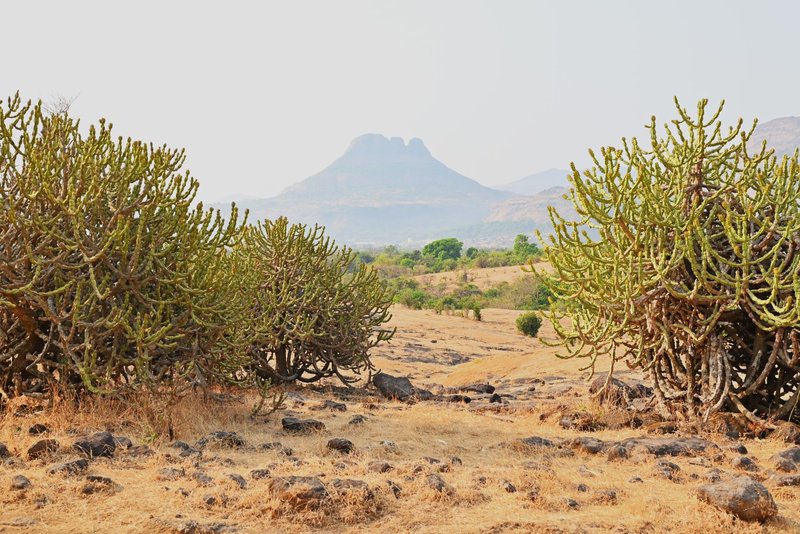
Shaped like its name suggests: a thick central trunk branching into upright, cactus-like arms full of caustic white latex. Elephants generally leave it alone, which is part of why it survives so visibly in heavily browsed savanna — most other vegetation at eye level doesn’t get that luxury.
17. Sausage Tree — Kigelia africana
Named for fruit that can grow to half a meter long and hang from long, rope-like stalks — genuinely startling the first time you see one dangling over a dirt road. The fruit isn’t edible raw, but it’s been used across the region in traditional treatments for skin conditions, and its heavy, waxy flowers open at night to attract bat pollinators.
18. Flame Tree — Erythrina abyssinica
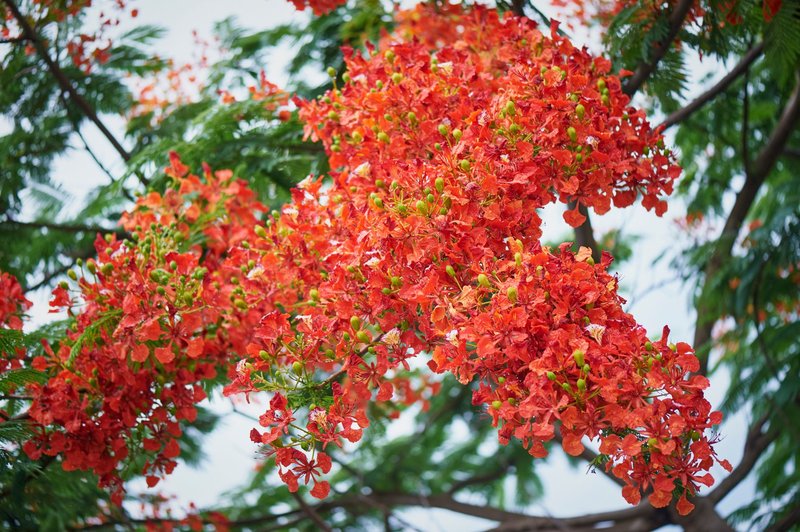
Bursts into dense clusters of red-orange flowers before its leaves fully emerge, turning entire hillsides orange for a few weeks each dry season. The bright red-and-black seeds inside its pods have long been strung into jewelry and used as counting tokens across East Africa, though they’re toxic if eaten.
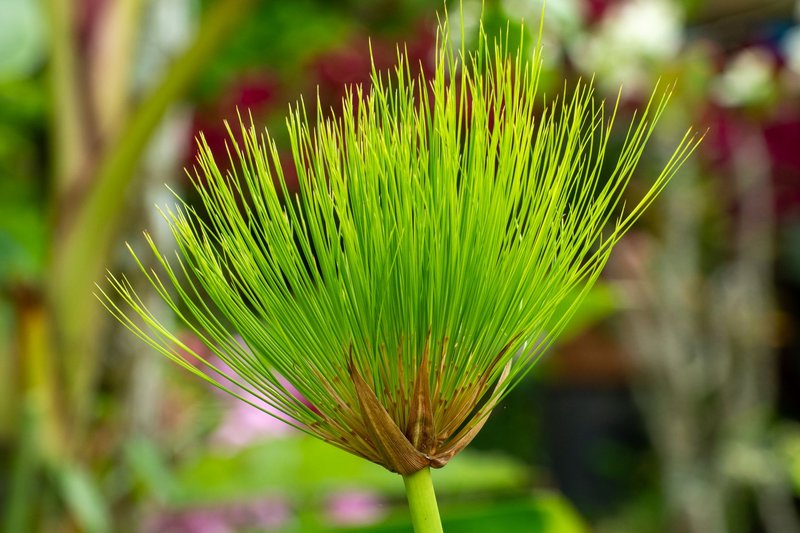
19. Papyrus — Cyperus papyrus
Akagera’s lakes and the Kagera River wetlands that feed them are lined with dense papyrus stands, some tall enough to close overhead and swallow a canoe. The plant does real ecological work here, filtering sediment and hosting species found nowhere else in the papyrus zone, including several endemic bird species that never leave the reeds.
20. Desert Date — Balanites aegyptiaca
A spiny, drought-tolerant tree that marks the driest, hottest corners of Akagera near the Tanzanian border. Its bitter fruit and oil-rich seed kernel have been used across arid Africa for soap-making and traditional medicine for centuries — a plant built for exactly the conditions most other trees on this list would never survive.
Where to See Them
Nyungwe’s canopy walkway puts you at eye level with the orchids and epiphytes that are otherwise invisible from the forest floor. Gorilla trekking permits in Volcanoes National Park route through the bamboo and Hagenia zones, though the giant lobelia moorland requires a summit hike — Karisimbi or Bisoke — that most day visitors skip. Akagera’s savanna species are visible from a standard game drive, no special permit needed, which makes it the easiest ecosystem on this list to cover in an afternoon.
None of these plants exist in isolation from the animals built around them. Lose the bamboo, and the mountain gorilla’s diet shrinks. Lose Rhamnus mildbraedii‘s narrow range, and there’s no second population to fall back on. Rwanda’s parks protect the wildlife everyone comes to see — but the plant list underneath is what makes any of it possible in the first place.