Ukraine has roughly 4,600 native vascular plant species, and they don’t live in one place. The country runs from flat black-earth steppe in the south to wet pine forest in the north-west, then up into the Carpathians and down to the Crimean coast. Each zone grows a different cast of plants.
Most online lists skip that and dump Latin names in alphabetical order. This guide sorts by where the plants actually grow, gives you common names, bloom seasons and habitat, and keeps one thing separate: the plants Ukrainians treat as symbols are not always the plants that evolved there. The sunflower is the obvious case.
Contents
- How rich is Ukraine’s flora?
- Steppe: feather grass and spring ephemerals
- Polesia: pine forest, bog and wet meadow
- The Carpathians: beech, dwarf pine and alpine meadow
- Crimea: the Mediterranean corner
- Symbols versus natives
- Endemic and Red Book species
- Threats: invaders, plough and war
- Can you grow them elsewhere?
- Summary
How rich is Ukraine’s flora?
The 4,600 figure covers wild vascular plants (ferns, conifers and flowering plants). Local surveys show how densely they pack in. A 2025 floristic study of Yelanetsky Steppe Nature Reserve counted 542 native species on a single reserve, 24 of them endemic. A checklist for a Kyiv botanical garden lists 281 native taxa from a much smaller area.
For a country with no true mountains outside the Carpathians and Crimea, that’s a lot. The reason is position. Ukraine sits where the European forest belt meets the Eurasian steppe, and the Carpathian and Crimean ranges add alpine and Mediterranean species on top.
Steppe: feather grass and spring ephemerals
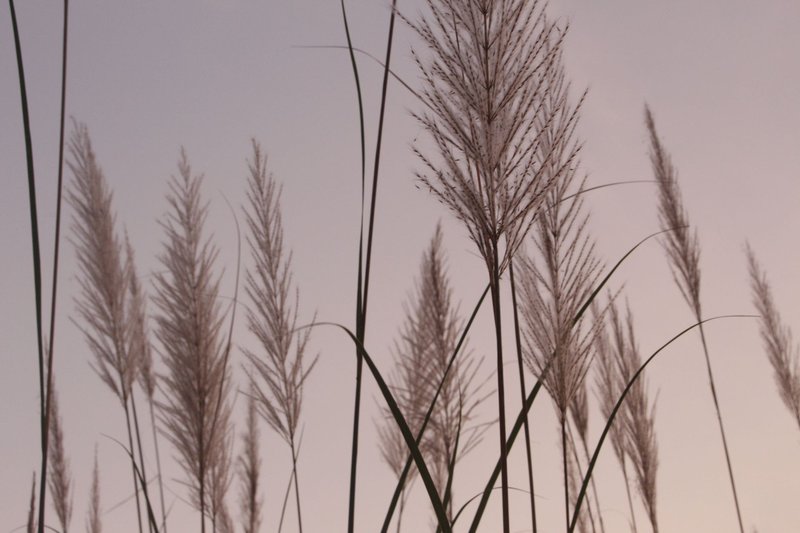
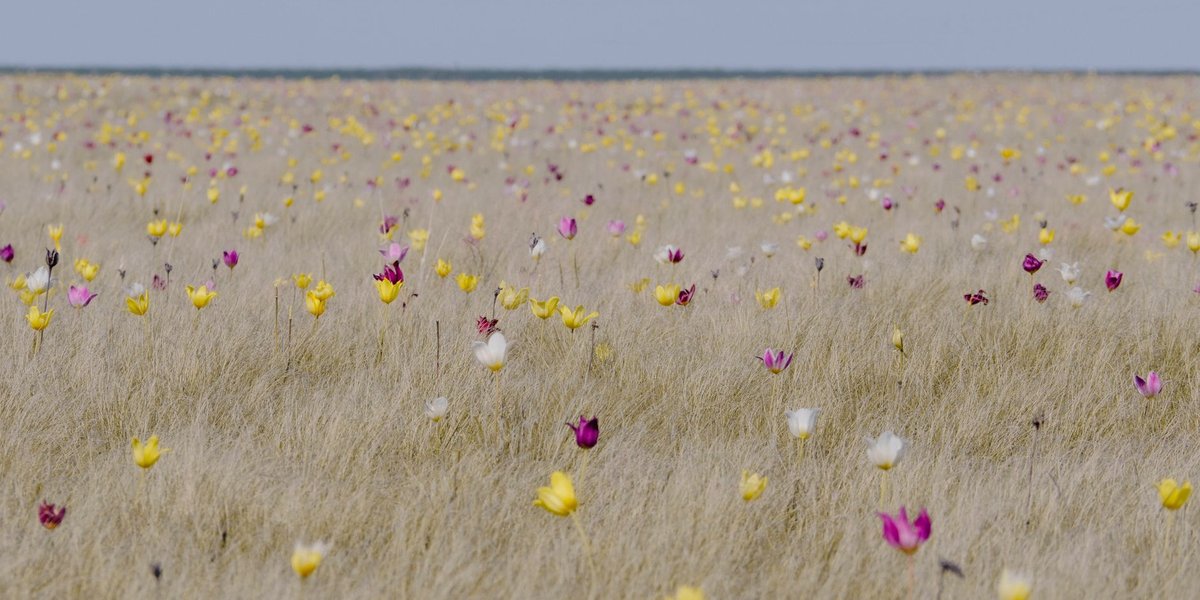
The steppe covers much of southern and eastern Ukraine, and what’s left of the uncultivated grassland is a patchwork of reserves, ravines and old burial mounds (kurhans) that the plough never reached. The famous look is the silver wave of feather grass in early summer, but the steppe’s best show is in April and May, when the short-lived flowers get their moment before the summer drought.
Feather grass (Stipa pennata, Stipa capillata and relatives). Bloom and seed: May to July. Long silky awns that ripple in the wind and give the steppe its silver sheen. Several species are Red Book listed. Habitat: dry open steppe on deep soil.
Pheasant’s eye (Adonis vernalis). Bloom: April to May. Bright yellow flowers up to 6 cm across on feathery foliage, usually the first big colour on the steppe. Habitat: grassy slopes and steppe meadows. It’s toxic, and it’s also been over-collected for herbal use.
Nodding sage (Salvia nutans). Bloom: May to June. Violet-blue flowers on arching, drooping spikes. Habitat: steppe and dry meadow edges.
Dwarf iris (Iris pumila). Bloom: April to May. A low iris, often purple, sometimes yellow, that grows in tight clumps. Habitat: dry, sunny, sandy or chalky slopes.
Fescue (Festuca valesiaca). Bloom: May to June. A fine, blue-grey bunchgrass and the quiet structural plant of the dry steppe. Habitat: dry grassland. It isn’t showy, but you can’t have a steppe without it.
Schrenk’s tulip (Tulipa schrenkii). Bloom: April. Wild tulips are the steppe’s headline act. This species has red, yellow or white flowers and grows in the southern grasslands. Habitat: undisturbed steppe, which is exactly why it’s rare.
Polesia: pine forest, bog and wet meadow
Polesia is the low, flat, forested wetland that stretches across the north of Ukraine along the Belarusian border. It’s all sand, peat, rivers that wander and bogs that refuse to drain. The plants here are northern European, not steppe.
Scots pine (Pinus sylvestris). The dominant tree of the sandy ground. Pollen flies in May. Habitat: dry sandy ridges and pine forest. Much of Polesia’s forest is pine.
Round-leaved sundew (Drosera rotundifolia). Bloom: July to August. A small carnivorous plant with sticky red-tipped leaves that catch gnats. Habitat: peat bogs and wet moss. It gets nitrogen from insects because bog peat has almost none.
Marsh Labrador tea (Rhododendron tomentosum). Bloom: May to July. An evergreen shrub with white flower clusters and a heavy resinous smell. Habitat: bog edges and wet pine forest.
Small cranberry (Vaccinium oxycoccos). Bloom: June. A creeping evergreen vine with pink, swept-back petals and tart red berries in autumn. Habitat: sphagnum bogs.
White water lily (Nymphaea alba). Bloom: June to August. Floating white flowers on slow, still water. Habitat: oxbow lakes, ponds and slow rivers.
The Carpathians: beech, dwarf pine and alpine meadow
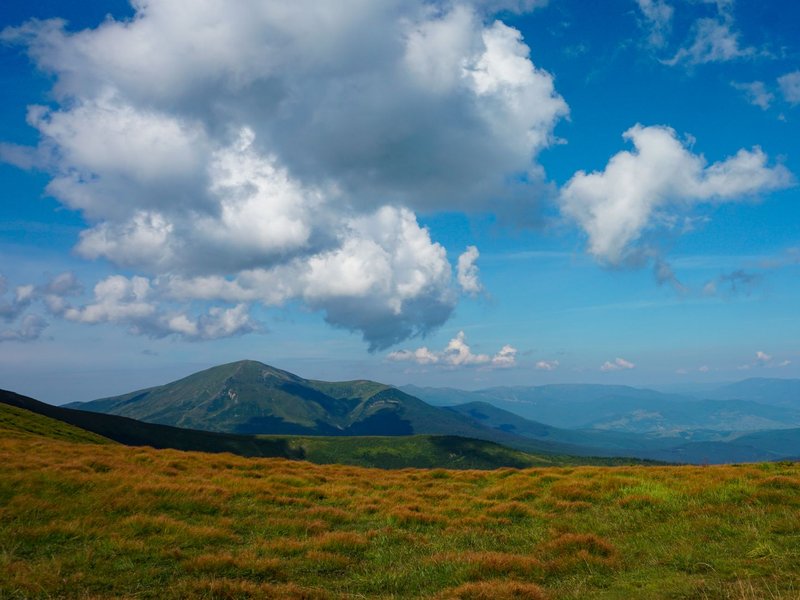
The Ukrainian Carpathians are the country’s only real mountain range, and they have the most distinctive vegetation. Beech and fir forest cover the lower slopes, spruce takes over higher up, and above that is a belt of dwarf pine and open alpine meadow called polonyna. This is where most of the Carpathian endemic plants live, with species found nowhere else on earth or only in a few ranges of the region.
European beech (Fagus sylvatica). The forest anchor. Old-growth beech in the Carpathians is a UNESCO World Heritage listing shared with other countries. Habitat: mid-elevation slopes, 400 to 1,200 m.
Mountain pine (Pinus mugo). Called kosodrevyna locally. A sprawling, low-growing pine that forms impenetrable thickets above the treeline. Habitat: 1,500 to 1,900 m ridges.
Carpathian rhododendron (Rhododendron myrtifolium). Bloom: June to July. Pink-purple flowers on a low shrub that carpets high slopes, often beneath dwarf pine. Locals call it zmiyevyk. Habitat: subalpine slopes and rocky ground.
Carpathian bellflower (Campanula carpatica). Bloom: June to August. Large upturned blue-violet bells on a small clump of leaves. Habitat: limestone crags and rocky ledges.
Edelweiss (Leontopodium alpinum). Bloom: July to August. Woolly white bracts shaped like a star. It’s tiny, rare here and protected. Habitat: alpine rock and calcareous ground on the highest massifs.
Crimea: the Mediterranean corner
The southern coast of the Crimean peninsula has mild winters, hot dry summers and a Mediterranean feel that doesn’t exist elsewhere in Ukraine. The mountains behind the coast add forests of Crimean pine and a long list of local endemics.
Crimean pine (Pinus pallasiana). A subspecies of the Black Pine, shaped by sea wind and limestone. Habitat: dry mountain slopes and coastal cliffs.
Strawberry tree (Arbutus andrachne). Bloom: spring. The smooth, peeling cinnamon-red trunk is the giveaway. A Red Book species and a relic of an older, warmer climate. Habitat: dry coastal slopes.
Greek juniper (Juniperus excelsa). A slow-growing tree that lives centuries, with scaly leaves and blue-black berries. Habitat: rocky southern slopes.
Crimean cyclamen (Cyclamen kuznetzovii). Bloom: late winter into early spring. A tiny pink-flowered cyclamen found only in Crimea. Habitat: shady rocky forest floors.
Crimean snowdrop (Galanthus plicatus). Bloom: February to March. A snowdrop with folded leaf edges, among the first flowers of the year. Habitat: beech and oak forest in the mountains.
Symbols versus natives
Ukrainian culture is full of plants that sit in songs, embroidery and wreaths. Some are wild natives. Others aren’t, and the difference matters if you’re asking what grows naturally in the country.
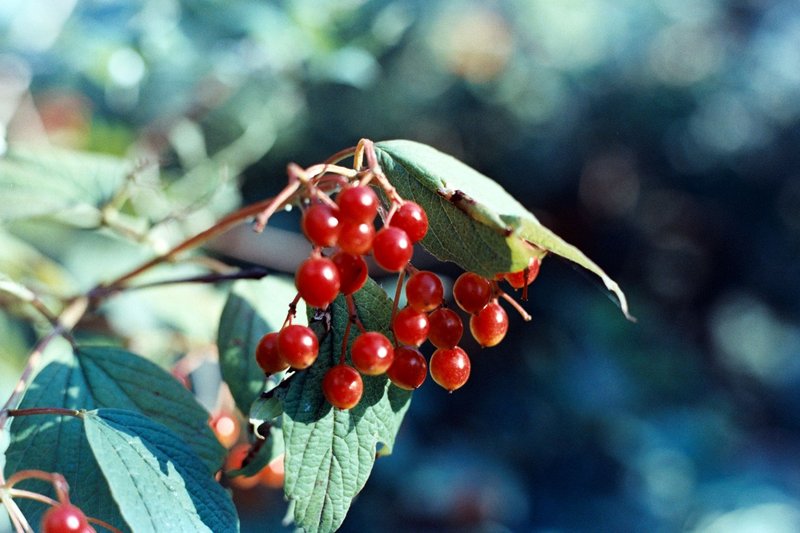
Viburnum (Viburnum opulus, kalyna). Native. The red berries ripen in autumn and show up in folk songs, on towels and, since 2022, on a lot of protest art. It grows wild in damp woodland edges and along rivers.
Lesser periwinkle (Vinca minor, barvinok). Native to southern and central Europe including Ukraine. An evergreen groundcover with blue flowers in April and May, long tied to weddings and remembrance in Ukrainian tradition.
Cornflower (Centaurea cyanus). Often woven into wreaths (vinky). It’s a cereal-field plant that came with early farming, so it counts as naturalised for thousands of years but not as a true wild native of the forest or steppe.
Sunflower (Helianthus annuus). Not native. It’s from North America and reached Ukraine only after Europeans brought it over in the 1700s. It became a crop, then a national emblem. A field of sunflowers is farmland, not wild flora.
Endemic and Red Book species
The Red Book of Ukraine lists plants at risk of disappearing from the country. Here are a few from the sections above.
| Species | Common name | Region | Why it’s at risk |
|---|---|---|---|
| Leontopodium alpinum | Edelweiss | Carpathians | Very small populations, past collecting |
| Tulipa schrenkii | Schrenk’s tulip | Steppe | Loss of uncultivated steppe |
| Stipa pennata group | Feather grass | Steppe | Ploughing, grazing and fire |
| Arbutus andrachne | Strawberry tree | Crimea | Tiny range, coastal development |
| Cyclamen kuznetzovii | Crimean cyclamen | Crimea | Endemic to one small area, picked for bouquets |
Threats: invaders, plough and war
Steppe is Ukraine’s most endangered habitat because it sits on the country’s best farmland. Most of it went under the plough long ago, and the remaining fragments are small.
Two North American trees make things worse: black locust (Robinia pseudoacacia) and box elder (Acer negundo). Both were planted widely for windbreaks and now spread into steppe ravines and edges, shading out grasses and fixing nitrogen that steppe plants don’t want.
War adds another layer. Reserves in the south and east, including areas around Askania-Nova, have been caught in fighting, fires and military digging. Researchers have had less access to many sites, and the damage to fragile steppe fragments is still being counted.
Can you grow them elsewhere?
Some are easy. Dwarf iris, pheasant’s eye and Carpathian bellflower take well to sunny rock gardens in temperate climates. Feather grass is a staple ornamental in dry gardens, although check which species you’re buying and don’t dig plants from the wild. Bog and alpine species like sundew and edelweiss need specific conditions and are better left to specialist nurseries.
Never take wild plants from a reserve or mountain slope. Buy nursery stock. Many of the species above are protected by law.
Summary
Ukraine’s native plants fall into four main groups: steppe grasses and spring ephemerals, northern bog and pine plants in Polesia, alpine and forest species in the Carpathians, and Mediterranean relics in Crimea. The national symbols are a separate list. Viburnum and periwinkle are natives, the sunflower isn’t, and the cornflower sits in between. The most threatened plants are the ones tied to uncultivated steppe, high alpine rock and small Crimean pockets.