
TLDR
The animals most likely to hurt a visitor in Italy are jellyfish, vipers, wild boar, wasps and hornets, and livestock guard dogs. Bears and wolves make the headlines, but they are rare and almost never a factor on a normal trip. In an emergency, call 112.
Table of Contents
- Risk Ranking at a Glance
- Jellyfish
- Vipers
- Wild Boar
- Hornets and Wasps
- Maremmano-Abruzzese Sheepdogs
- Brown Bears
- Italian Wolves
- Black Widow Spiders
- What to Pack
- When to Call for Help
- The Honest Summary
Italy has no lions, no crocodiles and nothing that hunts tourists. The dangerous animals in Italy are mostly small, ordinary and encountered by accident: a jellyfish drifting into a swimmer, a viper sunning itself on a hiking path, a dog guarding sheep. The scary ones get the news coverage. The common ones send people to the clinic.
This guide ranks the animals by how likely they are to hurt you, tells you where and when you meet each one, and says what to do if it goes wrong.
Risk Ranking at a Glance
| Animal | Where | Peak season | Likelihood of a problem | Severity |
|---|---|---|---|---|
| Jellyfish | Coastal waters, especially the south and islands | July to September | High | Painful, rarely serious |
| Vipers | Hills, Alps, Apennines, rocky trails | April to October | Low to moderate | Serious but rarely fatal |
| Wild boar | Central Italy, Tuscany, Lazio, edges of towns | Year-round, dusk and night | Low | Can be severe |
| Wasps and hornets | Countryside, terraces, fruit stalls | Late summer | Moderate | Dangerous if allergic |
| Sheepdogs | Alpine and Apennine pastures | June to September | Low to moderate | Bites, intimidation |
| Brown bears | Trentino, Abruzzo | May to October | Very low | Severe, rare |
| Wolves | Apennines, Alps, parts of the south | Year-round | Very low | Rare attacks on humans |
| Black widow spiders | Sardinia, Tuscany coast, scrubland | Summer | Very low | Painful bite |
Jellyfish

The mauve stinger (Pelagia noctiluca) is the one you will actually meet. It’s small, purplish and drifts into Italian bays in large numbers during warm summers, especially around Sicily, Sardinia, Calabria and Puglia. Swimmers feel it as a burning line across the skin, and the welts can last for days.
It is the most likely animal on this list to hurt you, mostly because swimming is the most common thing visitors do. It almost never causes anything worse than pain and a red mark.
What to do:
- Leave the water and rinse the area with seawater. Not fresh water, which can trigger more stinging cells.
- Pick off any visible tentacle fragments with tweezers or a gloved hand.
- Soak the area in hot water, as hot as you can tolerate, for 20 to 40 minutes.
- Skip the folk remedies. Urine and vinegar don’t help with this species.
- Get help if you have trouble breathing, swelling of the face, or the sting covers a large area.
How to avoid it: Check the beach for warning flags or a notice board, ask the lifeguard, and swim in the morning when the water tends to be calmer and clearer. A thin rash guard helps more than you’d expect.
Vipers
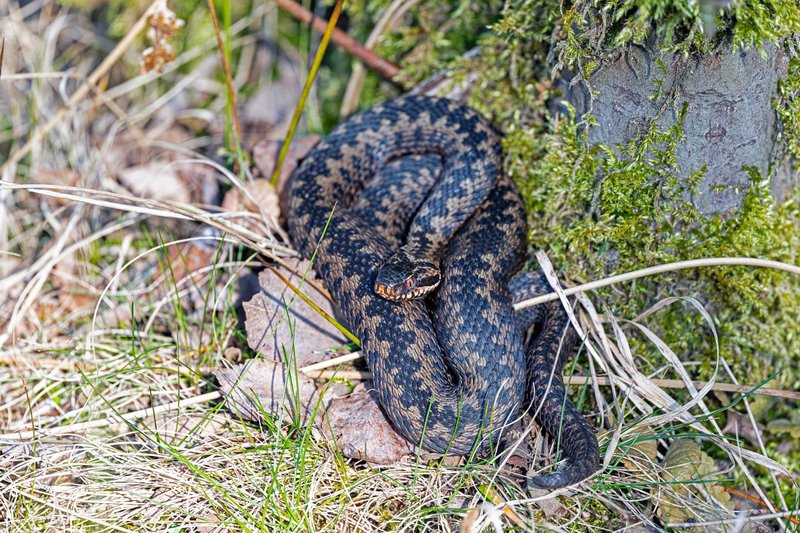
Italy has several venomous vipers and no other dangerous snakes. The common viper (Vipera aspis) is the one most hikers meet, from the foothills of the Alps down through the Apennines. The adder (Vipera berus) lives at higher altitudes in the Alps, and the nose-horned viper (Vipera ammodytes) sits in the northeast near Slovenia.
Vipers don’t chase anyone. They bite when stepped on, grabbed or cornered, which is why most bites land on feet, ankles and hands. A bite is serious, but the WHO notes that the great majority of snakebite deaths worldwide occur in regions with poor access to treatment. Italy is not one of them. Hospitals stock antivenom, and deaths are exceptionally rare.
What to do if bitten:
- Move away from the snake and stay calm. Panic raises your heart rate and spreads venom faster.
- Call 112. Describe where you are.
- Keep the bitten limb still and at roughly heart level. Remove rings and watches before swelling starts.
- Don’t cut the wound, suck it, apply a tourniquet or ice, or drink alcohol.
- Get to a hospital, even if the bite looks minor.
How to avoid it: Wear ankle-high boots and long trousers on overgrown trails, watch where you put your hands when climbing over rocks and dry-stone walls, and use a stick or your steps to make noise in tall grass. Vipers prefer sunny, stony slopes in spring and early autumn, and retreat from midday heat in summer.
Wild Boar
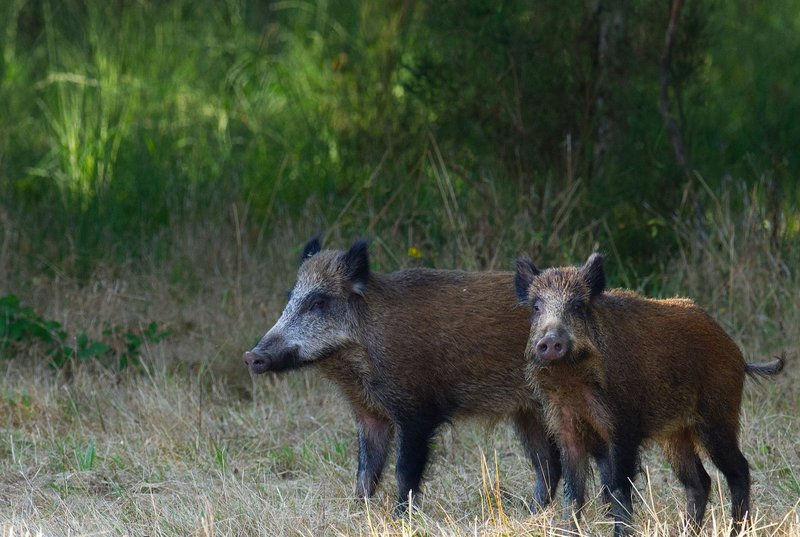
Italy has an estimated population of close to one million wild boar, and they have moved well beyond the forest. Boars show up on the outskirts of Rome, in Tuscan gardens and in beachside car parks. Most encounters involve a bin being tipped over, not a person getting hurt.
The rare serious incidents happen when a boar is cornered, wounded, surprised at night or protecting piglets. Reports of fatal attacks, such as a man killed in Lazio, are real but unusual. A full-grown boar can weigh well over 100 kg, and its tusks cut deeply.
What to do: Back away slowly and give it a clear exit. Don’t run, don’t feed it and never get between a sow and her young. If one charges, put something solid between you and it, such as a tree, a car or a wall. Never approach a boar to take a photo, even in a town where they look tame.
How to avoid it: Walk with noise in forests at dusk, keep dogs on a lead (dogs often provoke boars), and don’t leave food outside tents or on picnic tables.
Hornets and Wasps
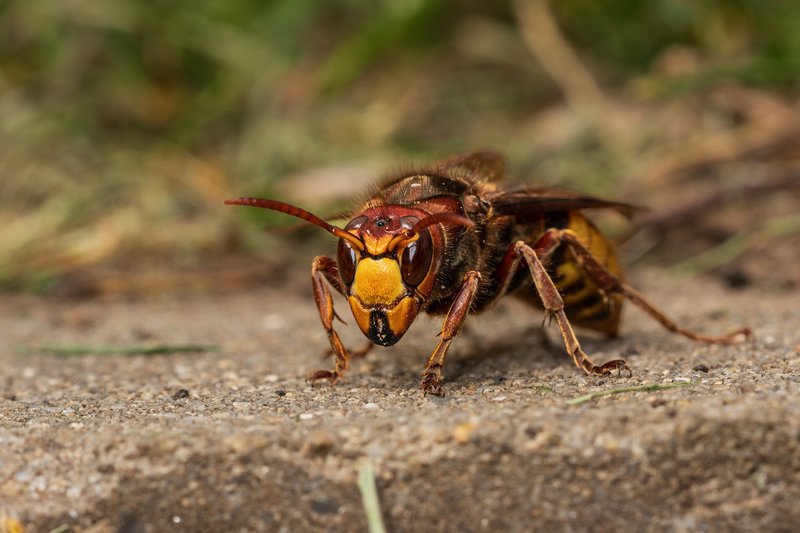
Italy’s common wasps are a nuisance at outdoor restaurants. Two hornets deserve more respect. The oriental hornet (Vespa orientalis) lives in the south and in Sicily, and builds its nests in the ground, in walls and in quiet corners of buildings. The invasive Asian hornet (Vespa velutina) has spread across the north and Liguria.
Hornet stings hurt more than wasp stings and the insects defend their nests aggressively. For most people it is a few bad hours. For anyone with an allergy, it can mean anaphylaxis within minutes, and stings in the mouth or throat can swell the airway. This is the one category where a tourist can die from a very small animal.
What to do: Walk away calmly from a nest, don’t swat, and cover sweet drinks and food outdoors. If you’re stung, remove the stinger if present, wash the area and apply cold. If you have a known allergy, carry your adrenaline auto-injector. Call 112 immediately if you develop breathing difficulty, hives, dizziness or swelling away from the sting site.
Maremmano-Abruzzese Sheepdogs
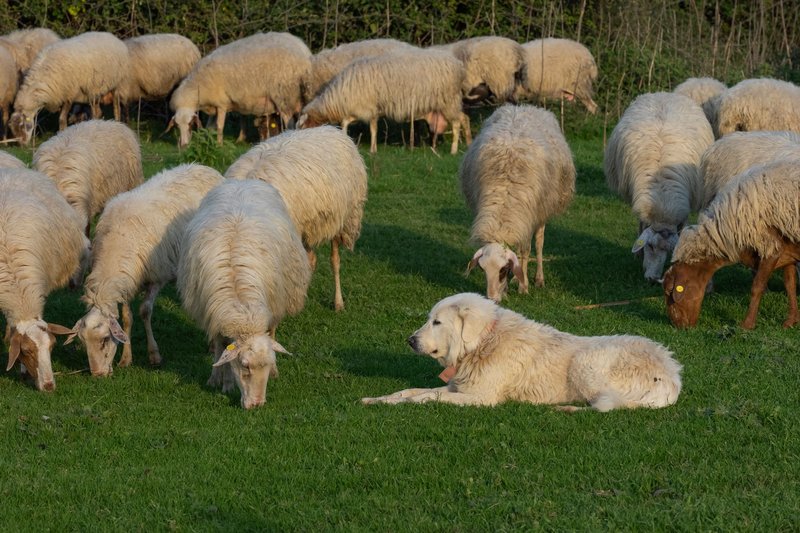
The big white dogs you meet on mountain pastures are not strays. They are livestock guardians, bred over centuries to stay with sheep and drive off wolves. A hiker walking straight through a flock looks, to the dog, like a predator.
These dogs are usually more about warning than biting, with barking, circling and charging that stops short. But bites happen, and a 40 kg dog that means business is frightening in the best case.
What to do:
- Stop and stay calm. Don’t run, wave your arms or stare at the dog.
- Walk around the flock at a wide distance rather than through it.
- If dogs approach, back away slowly and keep a trekking pole or backpack between you and them.
- Don’t pet them, and don’t bring your own dog close. Keep it on a lead and in line behind you.
Hikers on well-marked trails in Abruzzo, the Gran Sasso, and Alpine pastures like the Dolomites meet these dogs most often from June to September.
Brown Bears
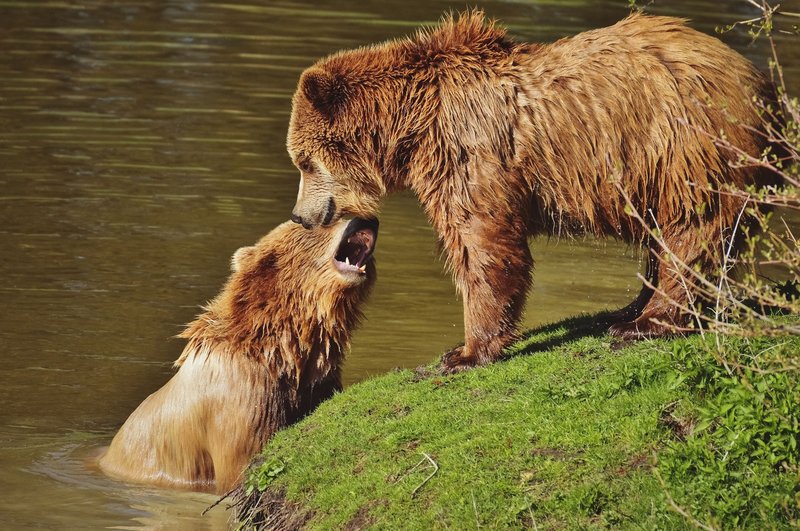
Two populations exist: a small Apennine subspecies in Abruzzo, and the Alpine bears of Trentino, reintroduced from Slovenia under a project that began in the late 1990s. The Trentino population has grown to roughly a hundred animals, and with it the number of encounters.
That has had consequences. In April 2023 a bear killed a runner in the Caldes valley in Trentino, the first fatal bear attack on a person in the Alps in modern times. In July 2024 a bear attacked a French tourist in the region. Those incidents are why bears dominate the discussion, and why the province has fought over culling.
Context matters. Millions of tourists hike in Trentino each year without a single encounter. Your odds of being injured by a bear are far smaller than your odds of being stung by a wasp.
What to do: Make noise on forest trails, particularly at dawn and dusk, and don’t hike alone with headphones on. If you see a bear, stay calm, speak in a low voice, back away and never run. Never approach cubs. Don’t approach for a photo, ever. Follow local park notices, as trails near recent sightings sometimes close.
Italian Wolves
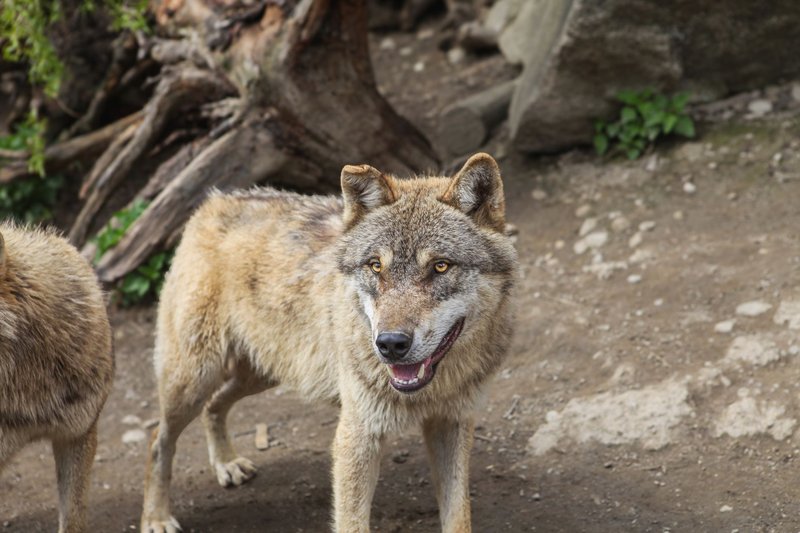
Italy has one of the largest wolf populations in Europe, with the Italian wolf (Canis lupus italicus) present across the Apennines and spreading through the Alps. Wolves attack sheep, not hikers, and they avoid people.
Recent reports suggest the picture may be changing at the edges. In August 2026, Euronews reported rising wolf sightings after suspected attacks near Bari and Gallipoli in Puglia. These were suspected cases, and investigators have been cautious about attribution. They are the exception, not a new pattern.
What to do: If you see a wolf, keep your distance, make yourself look large and back away calmly. Keep dogs on a lead, since wolves tend to react to dogs far more than to people, and don’t feed or approach them.
Black Widow Spiders
The Mediterranean black widow (Latrodectus tredecimguttatus) lives in dry scrubland and farmland, including Sardinia, the Tuscan coast and parts of the south. It’s shy, hides under stones and in crevices, and bites mainly when pressed against skin.
A bite is painful and can cause cramps, sweating and nausea. Deaths are not a realistic concern in a healthcare system like Italy’s. Seek medical care if you’re bitten, especially if you are a child, older, or pregnant.
How to avoid it: Shake out shoes and clothes left outdoors, wear gloves when gardening or moving stones, and don’t stick your hands into dry-stone walls.
What to Pack
- Ankle-high hiking boots and long trousers for overgrown trails
- Tweezers for jellyfish tentacles, ticks and splinters
- Antihistamines and, if you’re allergic, an adrenaline auto-injector
- A trekking pole, useful for sheepdogs and probing grass
- A phone with offline maps and 112 saved as your emergency number
- A rash guard or lightweight swim shirt for jellyfish season
- A bear bell or just your voice if you hike in Trentino or Abruzzo
When to Call for Help
Call 112, the single European emergency number that works across Italy. The operator will route you to ambulance, mountain rescue or police. You don’t need to speak Italian, and most operators handle English.
Call immediately for:
- Any viper bite
- A sting followed by trouble breathing, hives, dizziness, vomiting or facial swelling
- A jellyfish sting that spreads across a large area or comes with chest pain
- Any animal bite that breaks skin and bleeds heavily
- Any encounter with a bear or wolf that involves injury
For a hiker in the mountains, the mountain rescue team will arrive faster if you give coordinates. Most phone map apps will show them if you hold your finger on your location.
The Honest Summary
If you’re worried about dangerous animals in Italy, worry in this order: jellyfish, hornets and wasps, vipers, boar, sheepdogs. Bears and wolves are real, they have injured people, and they deserve respect. But they are the smallest part of the risk, and the places you’d meet them are easy to spot and easy to avoid.
Most visitors will go home with, at worst, a jellyfish welt and an insect bite. Pack sensibly, watch your feet on mountain paths, give the dogs room, and save 112 in your phone.