Table of Contents
- How the flora of Austria is organized
- The Pannonian east: steppe, salt flats and floodplains
- Montane forests: beech, fir and spruce
- The subalpine belt: dwarf pines and alpenrose
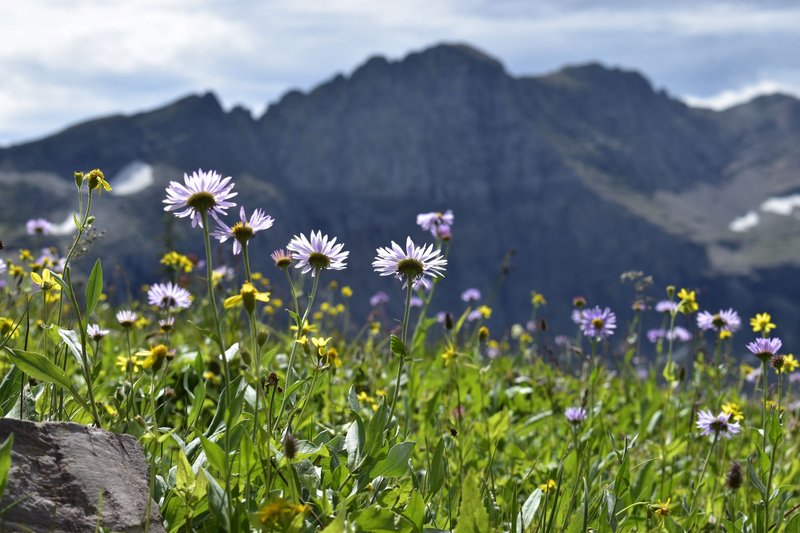
- Alpine meadows and screes
- Limestone versus siliceous Alps
- Endemics and protected species
- Native, archaeophyte or neophyte?
- When and where to see it: a seasonal calendar
- Where to go deeper
- Summary
Austria packs about 3,000 wild vascular plant species into a country smaller than South Carolina. The reason is vertical. The land climbs from roughly 115 meters at the Hungarian border to 3,798 meters at the Grossglockner, and the flora changes with every few hundred meters of elevation. The shortest way to understand the flora of Austria is to read it as a staircase: steppe at the bottom, forest in the middle, shrubs above that, and cushion plants clinging to rock at the top.
How the flora of Austria is organized
Three forces sort the plants. Climate runs from dry continental in the east to wet and cool in the Alps. Altitude stacks vegetation belts on top of each other, with the natural treeline sitting around 1,800 to 2,200 meters depending on the region. Bedrock splits the Alps in two: limestone in the northern and southern ranges, crystalline (siliceous) rock in the central chain.
The table below is the cheat sheet. The sections after it give the detail.
| Zone | Rough elevation | Character plants |
|---|---|---|
| Pannonian steppe and salt flats | 115-300 m | Feather grass, pheasant’s eye, glasswort |
| Lowland and floodplain forest | 150-500 m | Snowdrop, wild garlic, oak, white poplar |
| Montane forest | 500-1,500 m | Beech, silver fir, Norway spruce, cyclamen |
| Subalpine belt | 1,500-2,200 m | Mountain pine, larch, alpenrose, green alder |
| Alpine belt | 2,000-3,000 m | Edelweiss, gentians, moss campion, glacier buttercup |
The Pannonian east: steppe, salt flats and floodplains
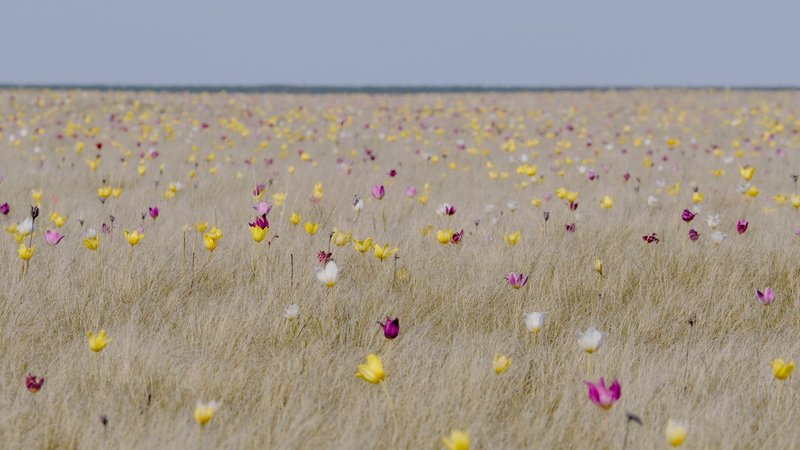
East of Vienna, around Lake Neusiedl, the climate is the driest and warmest in the country, and the plants come from the Hungarian plain rather than the Alps. The shallow lake is ringed by salt pans, and the plants there are the ones you would expect on a coast: glasswort (Salicornia) and sea aster (Tripolium pannonicum), hundreds of kilometers from any sea.
On dry grassland and the hills of the Burgenland and Lower Austria, look for:
- Feather grass (Stipa pennata and relatives), whose silver awns ripple in wind like water
- Pheasant’s eye (Adonis vernalis), a yellow, sun-shaped flower that opens in April
- Greater pasque flower (Pulsatilla grandis), purple and furry, one of the earliest blooms of the year
- Steppe sage (Salvia nemorosa), tall violet spikes along dry verges
- Sea aster (Tripolium pannonicum) on the salt flats
The Danube floodplain forest east of Vienna, protected as the Donau-Auen National Park, adds a second lowland habitat. White and black poplar, willows, oaks and elms form the canopy. In early spring the floor turns white with snowdrops and spring snowflake (Leucojum vernum), then green with wild garlic (Allium ursinum), which you can smell before you see it.
Montane forests: beech, fir and spruce
Most of Austria’s forest is montane, and it follows a predictable recipe. On the lower slopes, European beech (Fagus sylvatica) dominates, mixed with silver fir (Abies alba). Higher up, Norway spruce (Picea abies) takes over because it tolerates cold and snow load better than beech does.
The forest floor is where the photographable plants live, especially in spring before the canopy closes:
- Alpine cyclamen (Cyclamen purpurascens), magenta flowers in late summer, scattered across beech and spruce woods
- Liverleaf (Hepatica nobilis), blue-violet and among the first flowers of March and April
- Martagon lily (Lilium martagon), a tall, nodding turk’s-cap lily in June and July
- Wood anemone (Anemone nemorosa), carpets of white in April
- Daphne mezereum, pink flowers on bare twigs in early spring, and highly poisonous
The subalpine belt: dwarf pines and alpenrose
Above the closed forest, trees thin out and shrubs take over. This belt is where Austria’s most recognizable alpine scenery sits, and where the dwarf mountain pine (Pinus mugo) forms impenetrable thickets on limestone. European larch (Larix decidua) and Swiss stone pine (Pinus cembra) hold the treeline in the central Alps.
Characteristic species:
- Rusty-leaved alpenrose (Rhododendron ferrugineum), crimson flower clusters in June and July on acidic soils
- Hairy alpenrose (Rhododendron hirsutum), its pinker, limestone-loving cousin
- Green alder (Alnus viridis), the shrub that fills avalanche tracks
- Bilberry (Vaccinium myrtillus), ground cover and a favorite of every hiker with a free hand
- Arnica (Arnica montana), yellow daisy-like flowers on mountain pastures, used in traditional medicine
Alpine meadows and screes
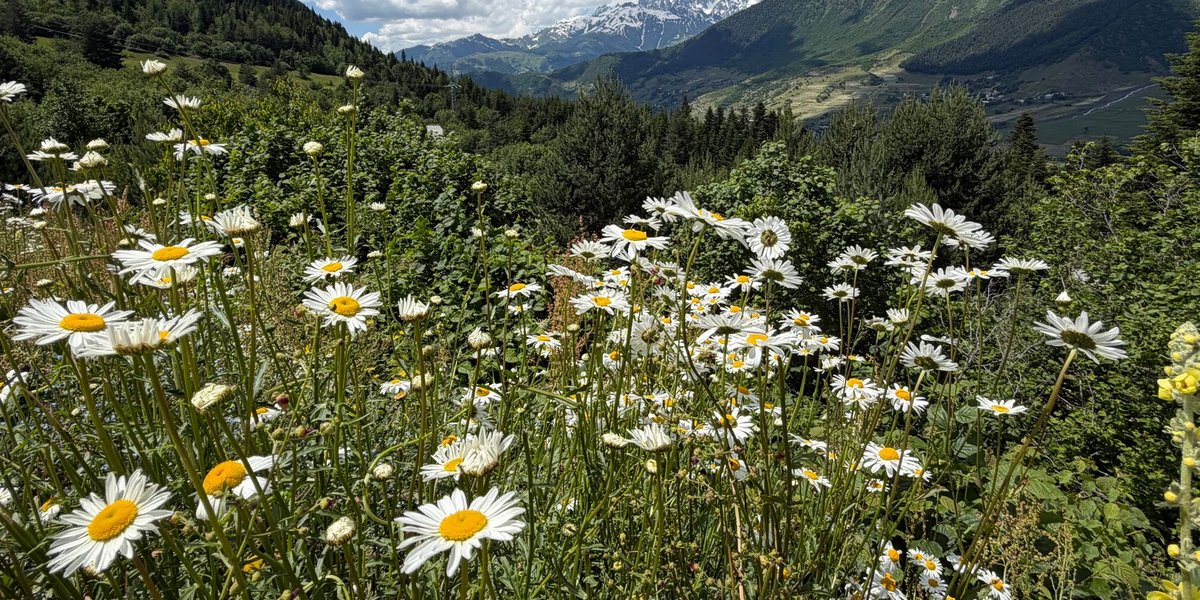
Above the treeline, plants stay small because wind, cold and a short growing season of a few months leave no room for anything else. Cushions, mats and rosettes dominate. The payoff is color: alpine flowers are proportionally large and intensely pigmented.
Six species that define this belt:
- Edelweiss (Leontopodium nivale subsp. alpinum), woolly white bracts on rocky limestone slopes
- Stemless gentian (Gentiana acaulis), a deep blue trumpet on acidic ground
- Clusius’ gentian (Gentiana clusii), almost identical, but on limestone
- Moss campion (Silene acaulis), a pink cushion that can be decades old
- Glacier buttercup (Ranunculus glacialis), found among the highest flowering plants in the Alps, white turning pink with age
- Alpine snowbell (Soldanella alpina), fringed purple bells that push through melting snow
Bare scree and rock faces hold specialists too: purple saxifrage (Saxifraga oppositifolia), auricula (Primula auricula) and rock jasmine (Androsace). They survive by rooting in cracks where almost nothing else can.
Limestone versus siliceous Alps
If you hike across Austria, you will notice the same genus switching species as the rock changes. Calcareous soils are alkaline and drain fast; siliceous soils are acidic and hold more humus. Plants have evolved to prefer one or the other.
| Plant group | Limestone (Northern and Southern Limestone Alps) | Siliceous (Central Alps, e.g. Hohe Tauern) |
|---|---|---|
| Alpenrose | Hairy alpenrose | Rusty-leaved alpenrose |
| Stemless gentian | Clusius’ gentian | Gentiana acaulis |
| Pines | Dwarf mountain pine | Swiss stone pine and larch |
| Typical rock plants | Auricula, edelweiss | Moss campion, glacier buttercup |
Learning one pair, the two alpenroses, is the quickest way to guess what rock you are standing on. Pink and hairy means limestone. Crimson and rust-backed means crystalline.
Endemics and protected species
Endemic species are the plants you cannot see anywhere else, and Austria has several in the Eastern Alps.
Carinthian wulfenia (Wulfenia carinthiaca) is the headline. Its violet flower spikes grow in the Carnic Alps, notably on the Nassfeld meadows near the Gartnerkofel, and nowhere else in Austria. The species has an odd split range, with other populations far away in the Balkans, a relic of an older climate. It flowers in June and July.
Alpine pink (Dianthus alpinus) is endemic to the northeastern Calcareous Alps. It forms a compact, rose-red carpet on high limestone meadows such as those on the Rax and the Schneeberg.
Edelweiss and many of the gentians are protected under provincial nature conservation laws, so picking them is prohibited or heavily restricted depending on the state. The rule of thumb is simple: photograph, don’t pick. The IUCN Red List of Threatened Species is the global reference for checking the status of a particular plant, and Austria also keeps its own national red list for vascular plants.
Native, archaeophyte or neophyte?
Botanists divide non-native plants by arrival date. Archaeophytes arrived before 1492, mostly with early agriculture. Cornflower (Centaurea cyanus) and corn poppy (Papaver rhoeas) are the classic examples, and many people assume they are native. Neophytes arrived after 1492, and some are invasive: Japanese knotweed (Reynoutria japonica), Himalayan balsam (Impatiens glandulifera) and common ragweed (Ambrosia artemisiifolia), the last one a major hay fever trigger in eastern Austria.
The distinction matters when you read a species list. A plant in Austria’s checklist is not automatically a plant that belongs in the landscape.
When and where to see it: a seasonal calendar
Timing is the hard part. Snow lingers at altitude, so the flowering season climbs the mountains as summer progresses.
| Month | What to look for | Where |
|---|---|---|
| March-April | Snowdrops, liverleaf, wood anemone, pheasant’s eye | Floodplain and lowland forest, eastern hills |
| May | Greater pasque flower, wild garlic, early orchids | Burgenland, Lower Austria, Wienerwald |
| June | Alpenrose begins, cyclamen on low slopes, gentians in montane meadows | Montane and subalpine belt |
| July | Peak alpine bloom: edelweiss, wulfenia, gentians, moss campion | Hohe Tauern, Carnic Alps, Rax and Schneeberg |
| August | High-alpine specialists, arnica, Alpine cyclamen | 2,000 m+ ridges |
| September | Autumn crocus, late gentians, cyclamen | Montane forest and pasture |
For most alpine species, July is the safe bet. Go earlier at lower elevations and later at high altitude.
Where to go deeper
If you want to identify a plant rather than just admire it, the standard reference is the Excursion Flora of Austria, supported by the Austrian Floristic Research Association, whose site also hosts an online identification forum and the journal Neilreichia. For distribution maps, the University of Vienna’s floristic mapping dataset on GBIF holds almost two million plant records. Research on the country’s plant diversity is also tracked through BOKU University.
Summary
The flora of Austria is easiest to remember as a staircase. The Pannonian east gives you steppe and salt-tolerant plants. Montane forest brings beech, fir, spruce and woodland flowers. The subalpine belt belongs to dwarf pine and alpenrose, and the alpine zone belongs to edelweiss, gentians and cushion plants. Rock type decides which species of a genus you get, and altitude decides when they flower. Plan around both, bring a macro lens, and leave the edelweiss where it grows.