The best filter for betta fish is usually an air-driven sponge filter sized to the tank. University of Florida researchers note that bettas prefer calm water and that heavy filtration may harm their health, so the first thing to compare is current, not cleaning power. A sponge moves water slowly, and the foam itself is the intake, which leaves no open slots on the filter.
The best betta filter still depends on the tank:
- Most tanks up to 10 gallons: AquaNeat Bio Sponge Filter, or the Pawfly kit if you need the pump too.
- Under 5 gallons: Pawfly Mini Sponge Filter, or the Tetra Whisper 4i for a filter with no bubbles.
- No air pump or waterfall: Fluval U1, with its motor under water.
- A 5-gallon tank with a rim: NICREW Slim Filter at 42 GPH.
- 11 to 20 gallons: hygger Air-Powered Sponge Filter, or the AquaClear 20 for more media.
-
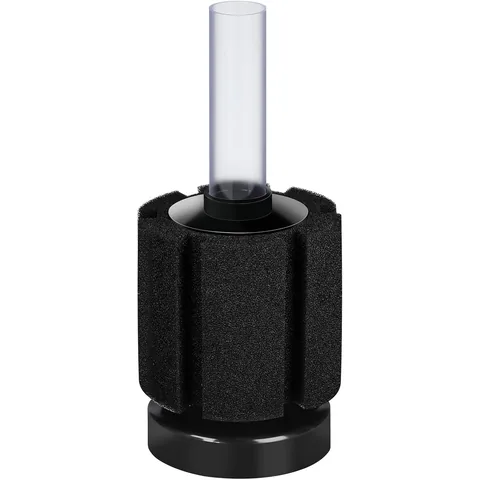 Best for most bettas AquaNeat Bio Sponge Filter, Small Tanks up to 10 gallons when you already own an air pump or will add one. Check on Amazon
-
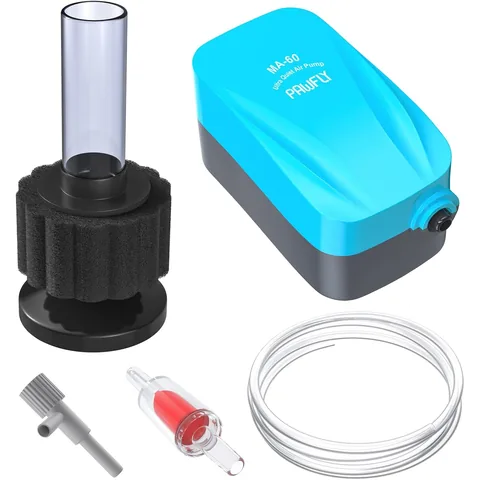 Best complete kit Pawfly Nano Sponge Filter + Air Pump Kit First-time keepers who want one box with the filter, pump and fittings. Check on Amazon
-
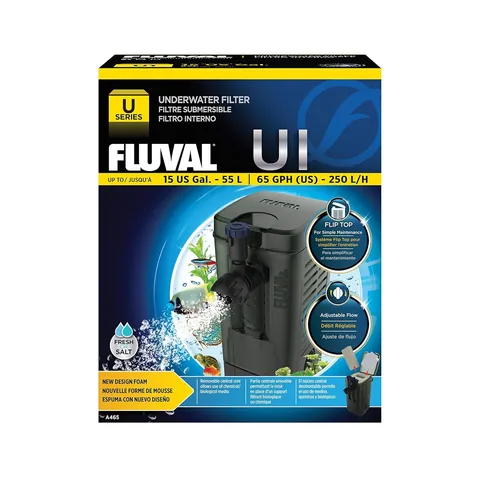 Best internal filter Fluval U1 Underwater Filter Rimless or tightly lidded tanks of 5 to 15 gallons that need a quiet filter. Check on Amazon
If you want one filter that suits most betta tanks
A sponge filter for betta tanks is an air pump, a length of airline and a block of foam on a lift tube. Bubbles rise through the tube and draw tank water through the foam, where nitrifying bacteria settle. Nothing in the tank spins, and the current stays low enough that Seriously Fish names a gently turning air-powered sponge as a good fit for the species.
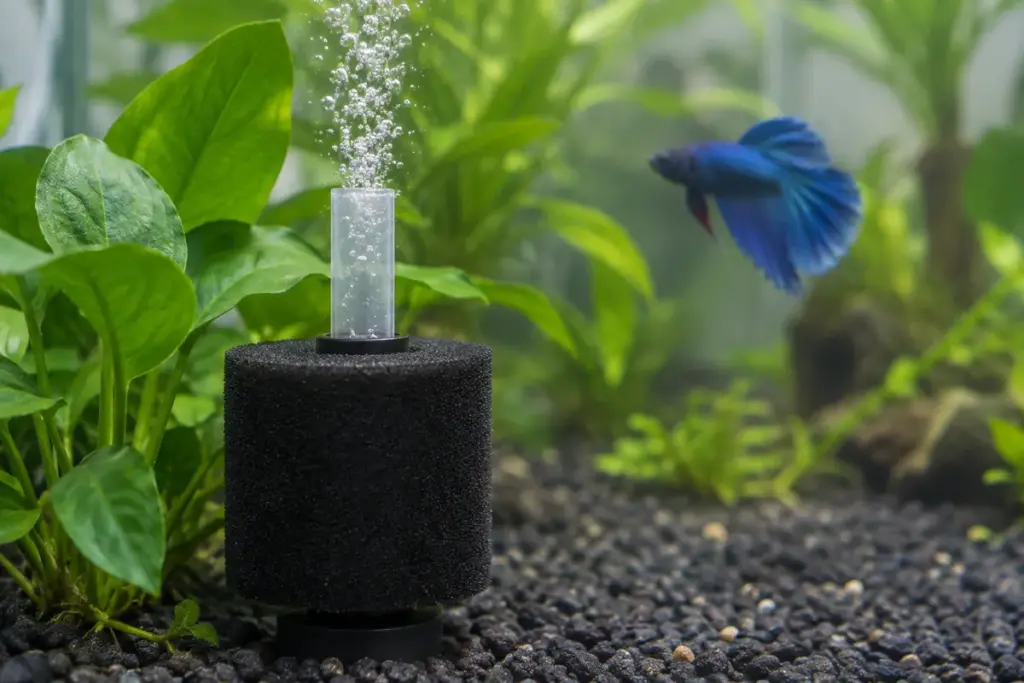
The two picks below differ in what comes in the box. Buy the AquaNeat if a spare pump is on the shelf. Buy the Pawfly kit if this is the first tank.
#1
- For tanks up to 10 gallons
- Runs from an air pump, sold separately
- Foam doubles as the home for filter bacteria
- No open intake
- No cartridges to buy
- Works in rimless and lidded tanks
- Needs an air pump and airline
- Listing suggests a new sponge every 3 to 6 months
- Takes up floor space in a small tank
#2
- For tanks of 3 to 10 gallons
- Air pump, control valve, check valve and airline in the box
- Valve trims the bubble stream
- Nothing extra to buy
- Adjustable air flow
- No cartridges
- The listing puts the pump at under 45 dB, which is audible in a silent room
- Pump sits outside the tank
A sponge bought alone needs a pump. This one ships with the check valve that stops water running back down the airline if the power cuts out.
 #13
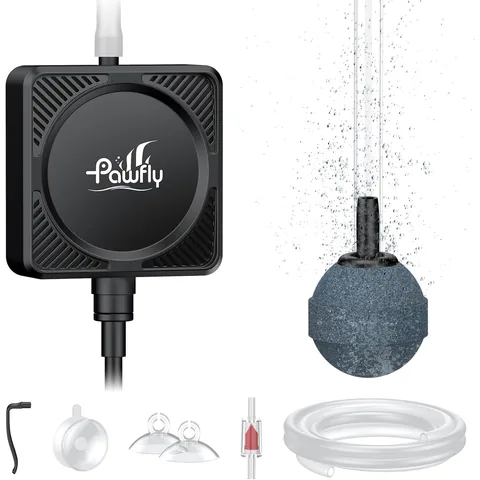
- For tanks of 1 to 15 gallons
- Check valve and tubing included
- About 450 mL of air per minute
- Check valve in the box
- Low power draw
- Too weak for large sponges
If your tank holds less than 5 gallons
A small tank holds little water, so waste concentrates faster and there is less open space for a betta to get away from the outlet. RSPCA Australia sets 10 litres (about 2.6 gallons) as the absolute minimum and calls 20 litres or more the ideal. A 2024 study of 13 male bettas found more activity and fewer abnormal behaviors in a 19.3-litre tank than in tanks of 1.5, 3.3 or 5.6 litres.
If a larger tank is possible, buy that first and size the filter to it. The aquarium calculator gives the volume of a tank from its dimensions. For a small tank already in place, these two are the smallest filters on the list.
 #7
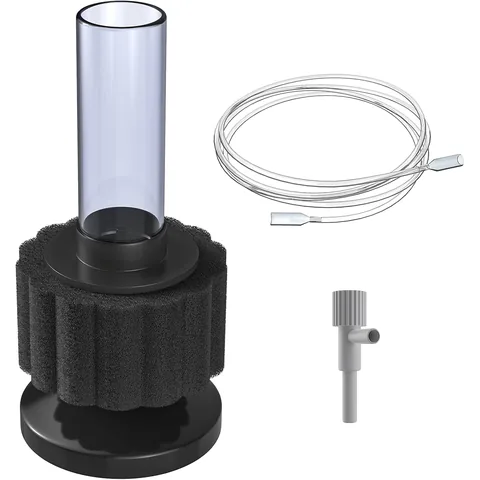
- For tanks of 1 to 3 gallons
- Sponge measures 1.5 by 3 inches
- Airline and control valve included
- Smallest footprint on this list
- Adjustable air flow
- No cartridges
- Air pump sold separately
- Too small for a 5-gallon tank
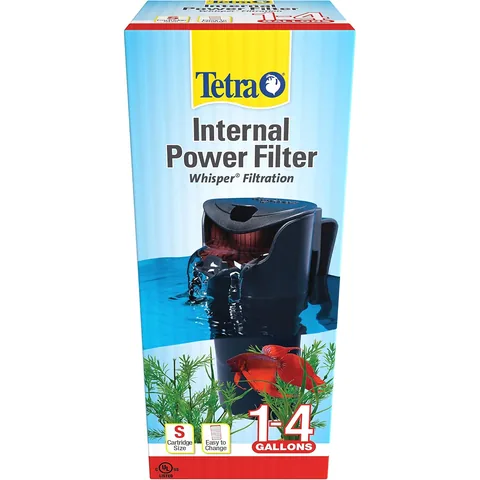 #9
- For tanks of 1 to 4 gallons
- 27 GPH with no control
- Sits inside the tank on a clip
- No air pump or waterfall
- Lowest fixed flow here
- Works without a rim
- No intake cover listed, so fit a foam sleeve for shrimp
- Uses cartridges
- Check the clip against thick glass
If the tank sits in a bedroom or office
A quiet filter for betta tanks depends on the type, since each design has different sound sources. A sponge filter has an external pump and bubbles that break at the surface. A hang-on-back has a motor and falling water. An internal filter keeps the motor submerged and has no pump outside the tank or waterfall.
The trade-off is space and intake design. Both picks sit inside the tank and no foam cover is listed for either, so add a sleeve if shrimp share the water. The Fluval U1 also suits rimless glass, because suction cups hold it to the wall and the paddle can point the outlet at the pane. Tetra lists no flow control on the 10i, so choose it only if you can place plants in the path of the outlet.
#4
- For tanks up to 15 gallons
- 65 GPH with a water control paddle
- Foam pad and BioMax media included
- Paddle aims the current
- No air pump or waterfall
- Reusable media
- No intake cover listed, so fit a foam sleeve
- Takes up space inside the tank
- Fluval publishes no noise figure
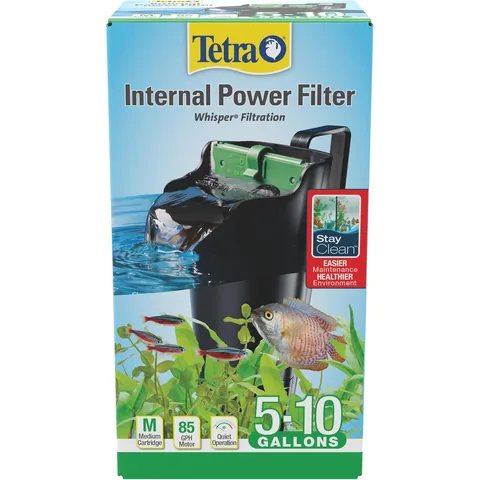 #6
- For tanks of 5 to 10 gallons
- 80 GPH with no flow control
- Bio-Bag cartridges
- No air pump or waterfall
- Drop-in cartridges
- Works without a rim
- No way to turn the flow down
- No intake cover listed
- Listing calls for a new cartridge each month
If you prefer a hang-on-back on a 5 to 10 gallon tank
A hang-on-back filter needs no air pump and takes no floor space. It has two drawbacks in a betta tank: water falls from the outlet, and the intake tube is often uncovered. The NICREW keeps its waterfall but has a low top flow, a valve and an intake sponge. The Tetra IQ 10 moves more water, and it is the one filter here whose maker says the flow control is there for bettas.
Check the running cost before buying either. Both use cartridges on a monthly schedule, and that replacement cost continues for the life of the tank. Foam needs rinsing and occasional replacement, not a monthly swap.
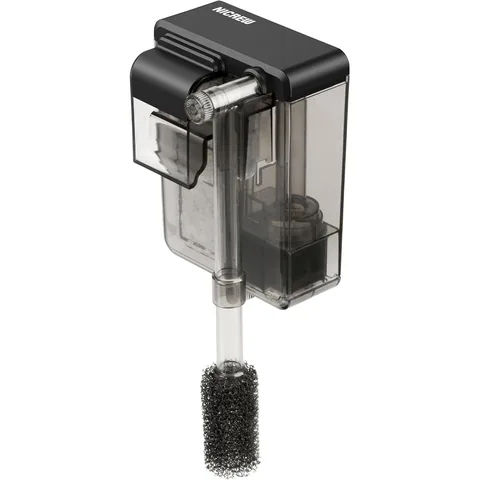 #3
- For tanks up to 5 gallons
- 42 GPH with a flow control valve
- Intake sponge included
- Lowest top flow among the hang-on-backs here
- Covered intake
- No air pump
- Needs a tank rim
- Manual calls for a new cartridge every 4 weeks
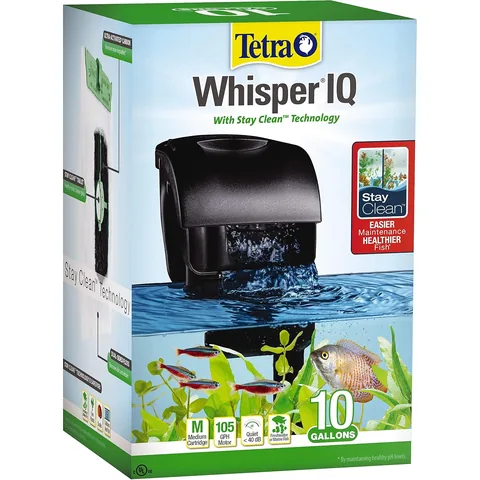 #10
- For tanks up to 10 gallons
- 105 GPH at full flow, with a flow control
- Sound shield and self-priming motor
- Tetra names bettas in the flow control
- Self-priming
- Drop-in cartridges
- Lowest flow setting is not published
- No intake cover listed
- Listing calls for a new cartridge each month
If you keep a betta in 11 to 20 gallons
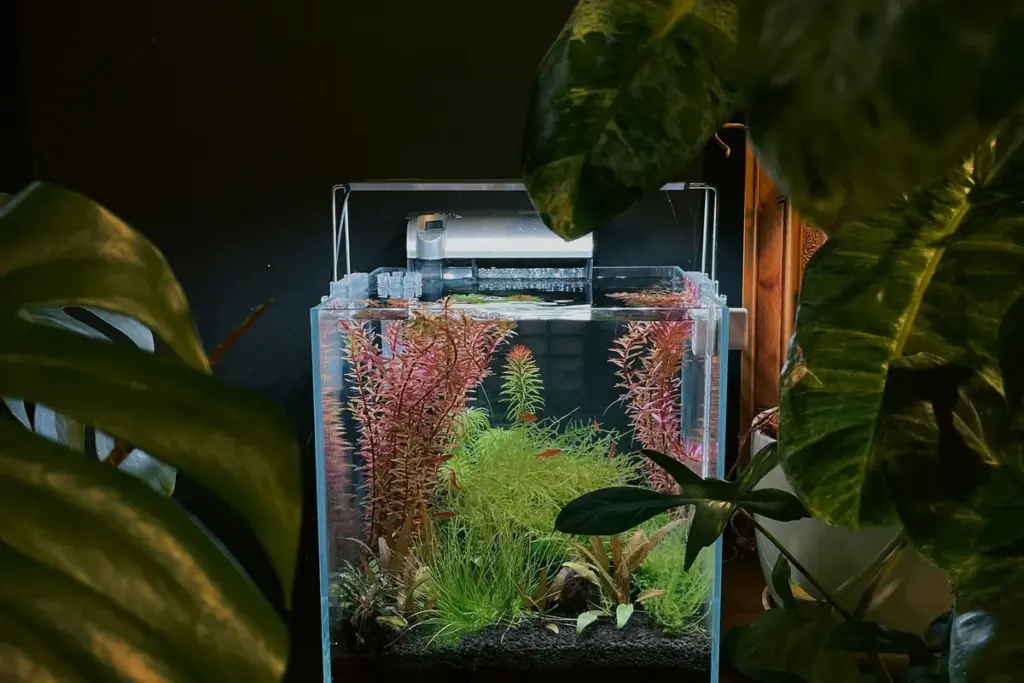
More water gives you more choice, since a larger tank dilutes waste and has room for quiet corners out of the current. Here the question is how much media you want and whether you mind an air pump. The hygger sponge is the gentle option. The AquaClear 20 (100 GPH) and Seachem Tidal 35 (130 GPH) have media baskets but high top flows, so both need turning down. Dense planting at the outlet end helps with either one.
The hygger HOB suits a shared tank, since its inlet sponge keeps shrimp out of the tube.
 #8
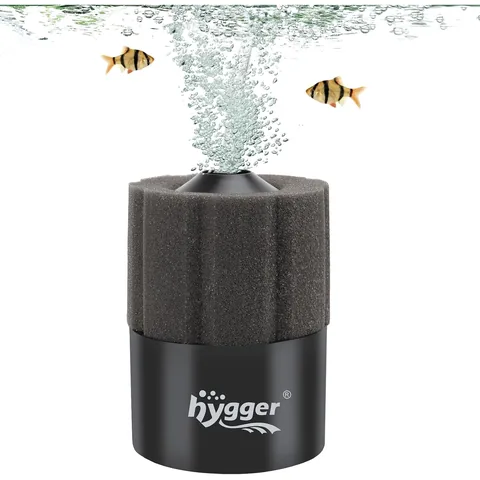
- For tanks of 8 to 20 gallons
- Two sponges plus ceramic media balls
- Listing calls for a rinse every 2 to 4 weeks
- No open intake
- Extra biological media
- No cartridges
- Air pump and airline sold separately
- Oversized for tanks under 8 gallons
 #5
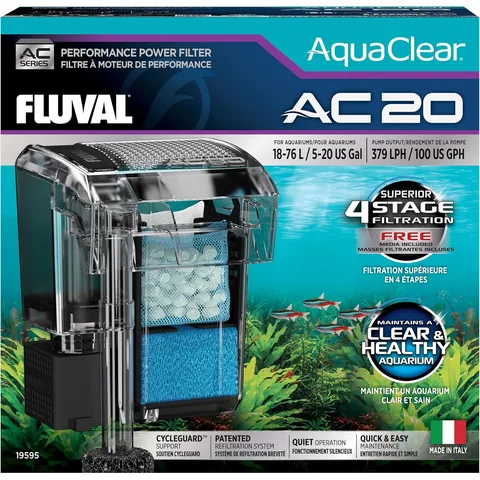
- For tanks of 5 to 20 gallons
- 100 GPH at full flow, with a lever
- Intake sponge, Bio-Foam, BioMax and carbon included
- Covered intake
- Media basket instead of cartridges
- Fluval says reduced flow recirculates through the media
- Needs a rim up to 0.9 inches
- Waterfall return
- Lowest flow setting is not published
 #12
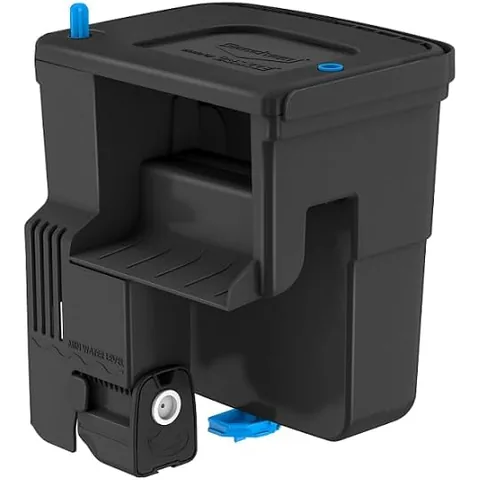
- Sold for tanks up to 35 gallons
- 130 GPH with a dial that cuts up to 80%
- Self-priming pump
- Widest flow range here
- No cartridges
- Self-priming
- No intake cover listed, so fit a foam sleeve
- Large for a small tank
- Needs a rim
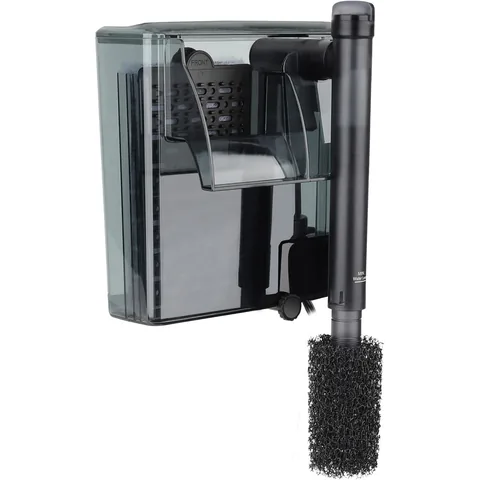 #11
- For tanks of 10 to 20 gallons
- Up to 105 GPH with a top knob
- Sponge on the inlet tube
- Covered intake
- Adjustable flow
- No air pump
- Mini-waterfall return
- hygger says to change cartridges every 2 to 4 weeks
- Lowest flow setting is not published
If the filter you already own is too strong
A new filter is not always needed. Aquarium Co-Op covers most of these fixes, and the cheapest ones take minutes:
- Turn the flow control to its lowest setting, if the filter has one.
- Slide a foam sleeve over the intake. It covers the slots and restricts flow a little more as it collects debris.
- Point the outlet at the nearest pane of glass so the current spreads before it reaches the open water.
- Place driftwood, a rock or tall plants in the path of the outlet.
- On a hang-on-back, fix a piece of filter pad under the spout so the water trickles down it.
If the current still pushes the betta sideways, the flow is too strong.
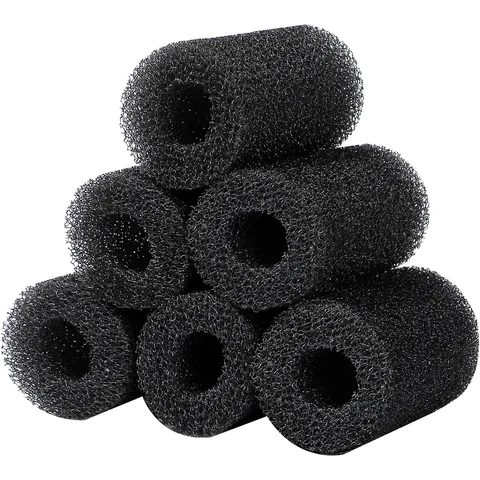 #14
- Six foam sleeves
- This size suits intakes of 0.8 to 1 inch
- Rinse in old tank water
- Fits many powered filters
- Spares for rotation
- Match the size to your intake
- The hole does not run all the way through
Find the best filter for your betta
Tank size, tankmates and rim space limit the list. Fins, noise and budget then sort what is left.
Betta fish filters side by side
Every filter and add-on on this page, with the maker’s or listing’s tank range and flow. Sponge filters show no GPH because the air pump sets their flow.
| Product | Type | Tank size | Flow | Covered intake | Air pump | Needs rim | Media | Tier | Amazon |
|---|---|---|---|---|---|---|---|---|---|
| AquaNeat Bio Sponge Filter, Small | Sponge filter | Up to 10 gal | Air-driven | Yes | not included | No | Sponge, rinse and reuse | Budget | Check on Amazon |
| Pawfly Nano Sponge Filter + Air Pump Kit | Sponge filter | 3 to 10 gal | Air-driven, valve included | Yes | included | No | Sponge, rinse and reuse | Budget | Check on Amazon |
| NICREW Slim Filter, 42 GPH (up to 5 gal) | Hang-on-back | Up to 5 gal | 42 GPH, adjustable | Yes | not needed | Yes | Cartridge + intake sponge | Budget | Check on Amazon |
| Fluval U1 Underwater Filter | Internal filter | Up to 15 gal | 65 GPH, adjustable | No | not needed | No | Foam pad + BioMax, rinse and swap | Premium | Check on Amazon |
| Fluval AquaClear 20 (AC20) | Hang-on-back | 5 to 20 gal | 100 GPH, adjustable | Yes | not needed | Yes | Bio-Foam, BioMax and carbon insert | Premium | Check on Amazon |
| Tetra Whisper 10i Internal Filter | Internal filter | 5 to 10 gal | 80 GPH, fixed | No | not needed | No | Cartridge | Mid-range | Check on Amazon |
| Pawfly Mini Sponge Filter, up to 3 gal | Sponge filter | Up to 3 gal | Air-driven, valve included | Yes | not included | No | Sponge, rinse and reuse | Budget | Check on Amazon |
| hygger Air-Powered Sponge Filter, 8-20 gal | Sponge filter | 8 to 20 gal | Air-driven | Yes | not included | No | Sponge + ceramic media balls, rinse | Budget | Check on Amazon |
| Tetra Whisper 4i Internal Filter | Internal filter | 1 to 4 gal | 27 GPH, fixed | No | not needed | No | Cartridge | Budget | Check on Amazon |
| Tetra Whisper IQ 10 Power Filter | Hang-on-back | Up to 10 gal | 105 GPH, flow control | No | not needed | Yes | Cartridge | Mid-range | Check on Amazon |
| hygger HOB Filter, 105 GPH (10-20 gal) | Hang-on-back | 10 to 20 gal | 105 GPH, adjustable | Yes | not needed | Yes | Cartridge + bio plate | Mid-range | Check on Amazon |
| Seachem Tidal 35 Power Filter | Hang-on-back | Up to 35 gal | 130 GPH, dial down to about 26 | No | not needed | Yes | Foam + Matrix, rinse and swap | Premium | Check on Amazon |
| Pawfly Mini Air Pump with Check Valve | Air pump | 1 to 15 gal | About 450 mL air per minute | No | This is the pump | No | None | Budget | Check on Amazon |
| AquaNeat Pre-Filter Sponge, 6 Pack | Pre-filter sponge | Any tank | Softens the intake | Yes | not needed | No | Foam sleeve | Budget | Check on Amazon |
How we chose these filters
We started from what the betta needs: low current, a covered or coverable intake and enough surface for bacteria. We read extension publications from the University of Florida, the Merck Veterinary Manual, RSPCA Australia guidance and one peer-reviewed welfare study. We screened 32 candidates on Amazon, then read maker pages and manuals where they exist and Amazon listings otherwise for the final 14. Tank ranges, flow numbers and included parts come from those sources, and we checked that every product was available on Amazon on November 5, 2026.
No lab test was run, and no filter here was set up on a tank. Noise notes follow the design of each filter, because most makers publish no comparable figure. A keyword search of CPSC recalls found no aquarium filter recall from Tetra, Fluval, Hygger or Seachem since 2016.
Does a betta fish need a filter?
Sources disagree. The Merck Veterinary Manual says betta tanks may not need filtration, provided water changes are larger and more frequent, perhaps as much as 50% a week. RSPCA Australia says bettas need efficient filtration. The University of Florida says male bettas do well in small containers if water quality is managed.
The practical answer is that a filter is the easier way to hold water quality, not the only way. The labyrinth organ lets a betta breathe air, but its gills still excrete ammonia into the water. Unionized ammonia above 0.05 mg/L can damage fish tissue and nitrite is toxic from 0.10 mg/L, and warm water raises the share of ammonia in its more toxic form. A betta tank runs warm, so the bacteria in a filter do useful work there.
A University of Florida survey of one Thai population found standing water about 5 cm deep at 29.9 C. That shows what the species tolerates, not a target for a home tank.
A filter does not replace the rest of the setup. RSPCA Australia advises a heater and thermometer at 24 to 26 C, since room temperature is generally too cold and can swing. Merck says to dechlorinate new water, because chlorine and chloramine harm both fish and filter bacteria. Fluval’s heater manual tells owners to leave a drip loop in the cord and to unplug equipment before cleaning, and the same habit suits a filter.
How to choose the best filter for betta fish
Four checks decide it, in this order.
Flow. A gentle filter for betta fish starts here. The common rule of four times the tank volume per hour comes from retail blogs and targets general tanks, not bettas. Look for air-driven flow or a control that turns the filter down. This guide treats a top rate under 50 GPH as low, which is an editorial cutoff, not a published limit.
Intake. Choose foam as the intake, or a filter that ships with an intake sponge. If the slots are open, buy a sleeve at the same time as the filter.
Tank range. Match the maker’s range to the tank, then stay near the lower end of it for a hang-on-back. A filter sold for 35 gallons on a 5-gallon tank relies entirely on its dial.
Media and upkeep. Foam and ceramic media go back in the filter after a rinse, while cartridges go in the trash. If you want fewer purchases, choose a basket or sponge. The pet fish quiz helps if the betta itself is still undecided.
What owners say about betta filters
In threads that surface for best filter for betta fish reddit searches, the top-voted answer on r/bettafish to a question about a six-gallon tank was simply a sponge filter. Commenters on r/bettafish say the longer the fins, the lower the flow should be. One owner found an Aqueon QuietFlow 15 too strong for a betta even when set to a 5-gallon flow rate. The AquaClear 20 is described as large and high-flow for a 5-gallon betta tank, though another owner kept an AquaClear 50 running for four years by moving its sponge and bio media to a new unit.
Betta filter FAQ
Is carbon needed in a betta filter?
No. No source here lists activated carbon as a requirement for a healthy betta tank. Aquarium Co-Op keeps it for specific jobs such as removing pollutants or tannins, because it depletes quickly and cannot be reused. In a filter with a media basket, that slot can hold foam or ceramic media instead, which stays in use after a rinse.
Should a filter run all night?
Yes, run it constantly. Nitrifying bacteria live on the media and depend on oxygenated water passing over them, so long shutdowns work against the reason for having a filter. If the sound bothers someone at night, the fix is a quieter model or a towel under the air pump, not a timer on the plug.
How long does a new filter take to cycle?
Plan on several weeks, and test the water instead of counting days. The University of Florida gives six to eight weeks for a new biofilter, the Merck manual says four to six and Aqueon says three to eight. Ammonia usually climbs first, then nitrite. The tank is ready once both read zero with nitrate present.
Does a filter stop a betta building a bubble nest?
It can. In a 2024 study of 13 males, fish hovered and built nests more without a filter and swam more with one, though the paper did not isolate filter type or flow. That is one small study, so it does not show that a filter helps or harms a betta.
How often should a betta filter be cleaned?
RSPCA Australia advises a light rinse in a bucket of tank water when the filter clogs or monthly, whichever comes first. Over-cleaning removes the bacteria that break down ammonia. Squeeze a sponge a few times during a water change, then pour that dirty water away. A flow that has visibly dropped is the sign that a rinse is due.
Where should an air pump go?
Put it on a shelf above the water line if there is one, since a pump lower than the tank can siphon water back through the airline when the power fails. If it has to sit lower, fit a check valve in the line. A soft mat underneath reduces vibration, and a small control valve lets you trim a strong pump to suit a tiny sponge.
How can a filter be replaced without losing the cycle?
Keep the bacteria by moving them. Run the old and new filters side by side for a few weeks, or transfer the used sponge or bio media into the new unit if it fits. Avoid swapping every piece of media on the same day, and test for ammonia during the following week. Rinse any media you keep in tank water, not tap water.