India’s varied habitats — from mangroves and wetlands to Himalayan foothills and dry scrub — make the country a rich place for birdwatching year-round. Whether you’re out for a single morning or planning a multi-day trip, a concise list helps focus where to look and what to expect.
There are 30 Birds of India, ranging from Asian Openbill to White-throated Kingfisher; each entry lists Scientific name,Length (cm),Range (states/regions) so you can compare identification details and likely locations quickly — you’ll find these details below.
Where are the Asian Openbill and White-throated Kingfisher most likely to be seen?
The Asian Openbill favors wetlands, rice paddies and riverine areas in eastern and southern states, while the White-throated Kingfisher turns up widely around ponds, rivers and gardens across many regions; check the Range column in the table below for state-level pointers and seasonal notes.
How should I use the Scientific name, Length (cm), and Range columns when planning a visit?
Use the Scientific name to avoid confusion with local names, Length (cm) to help judge size at a glance, and Range (states/regions) to narrow probable locations; combine those fields with photos, local checklists or recent sightings to plan where and when to go.
Birds of India
| Common name | Scientific name | Length (cm) | Range (states/regions) |
|---|---|---|---|
| Indian Peafowl | Pavo cristatus | 100 | Throughout India, common in forests and villages |
| Red Junglefowl | Gallus gallus | 60 | Northeast, Western Ghats, Eastern Ghats, forests |
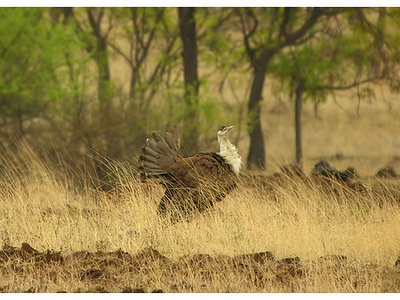
| Great Indian Bustard | Ardeotis nigriceps | 115 | Rajasthan, Gujarat, Maharashtra grasslands |
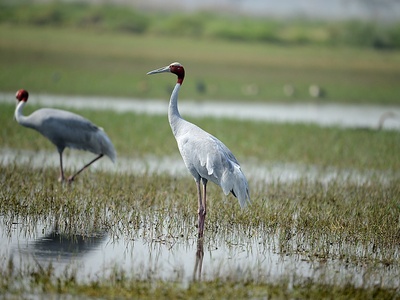
| Sarus Crane | Antigone antigone | 150 | Wetlands of northern and eastern India |
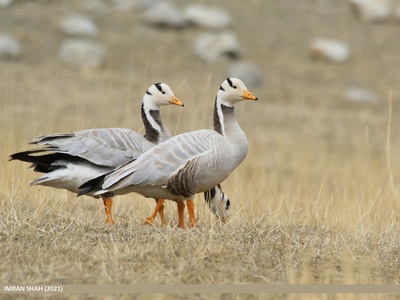
| Bar-headed Goose | Anser indicus | 60 | Ladakh high lakes and winter wetlands |
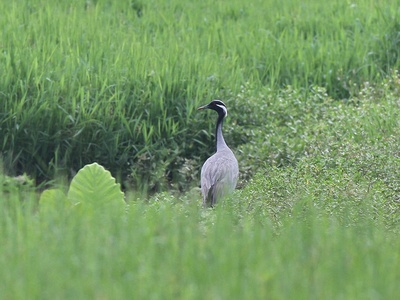
| Demoiselle Crane | Anthropoides virgo | 85 | Open country, winters in north and west India |
| Common Crane | Grus grus | 100 | Winter visitor in north India wetlands |
| Indian Roller | Coracias benghalensis | 29 | Wooded country, roadside trees, plains across India |
| White-throated Kingfisher | Halcyon smyrnensis | 28 | Across India near water and fields |
| Pied Kingfisher | Ceryle rudis | 28 | Rivers, reservoirs, wetlands across India |
| Oriental Magpie-Robin | Copsychus saularis | 20 | Gardens and forest edges across India |
| Indian Robin | Copsychus fulicatus | 17 | Open scrub and gardens across peninsular India |
| House Sparrow | Passer domesticus | 16 | Urban areas across India |
| Eurasian Tree Sparrow | Passer montanus | 14 | Villages and farmlands across India |
| Common Myna | Acridotheres tristis | 23 | Urban and rural across India |
| Jungle Myna | Acridotheres fuscus | 23 | Woodlands and gardens mainly northeast and east India |
| Rock Pigeon | Columba livia | 32 | Urban areas, cities across India |
| Eurasian Collared-Dove | Streptopelia decaocto | 32 | Towns, villages and farmland across India |
| Black Drongo | Dicrurus macrocercus | 28 | Open country and fields across India |
| Long-tailed Shrike | Lanius schach | 24 | Open fields, scrub and roadside habitats across India |
| Common Kestrel | Falco tinnunculus | 34 | Open country, widespread as resident and migrant |
| Peregrine Falcon | Falco peregrinus | 38 | Cliffs and cities across India, widespread |
| Barn Owl | Tyto alba | 34 | Open countryside, farmland and buildings across India |
| Spotted Owlet | Athene brama | 21 | Urban, rural and woodland across India |
| Indian Nightjar | Caprimulgus asiaticus | 24 | Dry scrub and open forests across India |
| Indian Vulture | Gyps indicus | 95 | Plains and scrub of peninsular India |
| White-rumped Vulture | Gyps bengalensis | 95 | Scattered across India, formerly widespread |
| Egyptian Vulture | Neophron percnopterus | 63 | Open country, cliffs, widely distributed in India |
| Painted Stork | Mycteria leucocephala | 95 | Wetlands and shallow lakes across India |
| Asian Openbill | Anastomus oscitans | 80 | Wetlands, paddy fields across India |
Images and Descriptions
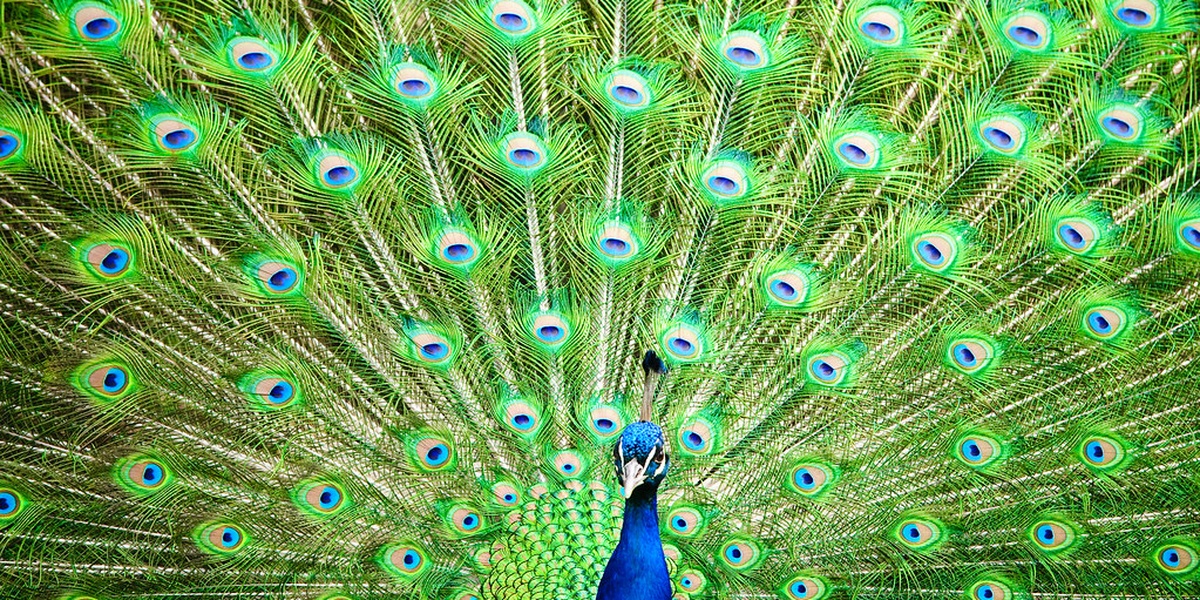
Indian Peafowl
India’s national bird with iridescent blue-green plumage and spectacular train in males. Often seen in open forests, farms and villages. Large, loud calls; males display ornate tailfans to attract females; commonly encountered across most of the subcontinent.
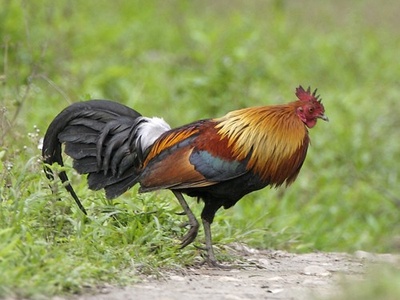
Red Junglefowl
Wild ancestor of domestic chickens, stocky and streaked with reddish-brown plumage. Shy forest bird of hills and lowland woodlands, especially in Northeastern states and Western Ghats. Males show bright facial skin and long tail.
Great Indian Bustard
Huge, ground-dwelling bird of arid grasslands with long legs and stout bill. Males have cryptic plumage and an imposing stance. Critically endangered, found in fragmented populations in Rajasthan, Gujarat and parts of Maharashtra and Madhya Pradesh.
Sarus Crane
The world’s tallest flying bird with striking red head and grey body. Lives in wetlands, marshes and agricultural fields; famed for acrobatic pair displays. Vulnerable due to habitat loss, still found in north and eastern India, particularly Uttar Pradesh and Odisha.
Bar-headed Goose
High-flying migrant known for Himalayan crossings, pale grey with black head bars. Breeds on Tibetan Plateau, winters on lakes and wetlands in Ladakh and northern India. Often seen in flocks at high-altitude reservoirs and lowland winter wetlands.
Demoiselle Crane
Slim, elegant crane with grey plumage and long hind plumes. Long-distance migrant that winters in northwest and central India, favouring open grasslands and agricultural fields. Notable for extensive migratory flights from Central Asia.
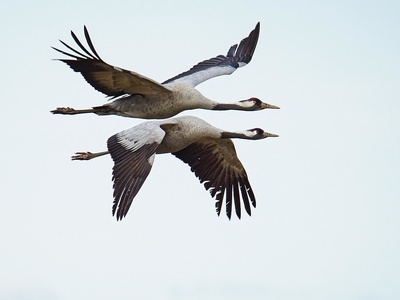
Common Crane
Large, grey migratory crane with black-and-white head pattern and trumpeting calls. Winters in northern India in wetlands and agricultural areas after breeding in Eurasian wetlands; seen in small flocks and roosts seasonally.
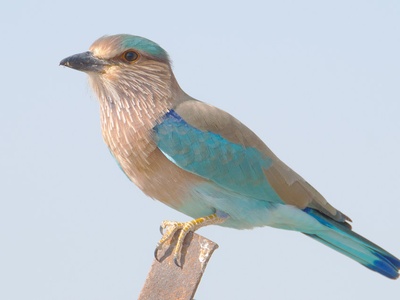
Indian Roller
Vivid blue and brown bird often seen perched on roadside trees and wires before spectacular aerial displays. Common across plains and open forest edges; shows flashing blue wings in flight, easy to spot in gardens and fields.
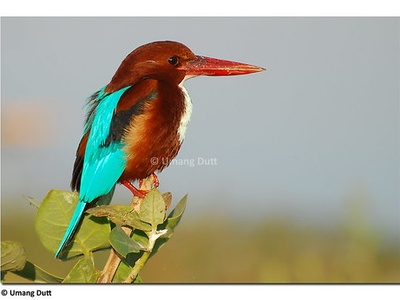
White-throated Kingfisher
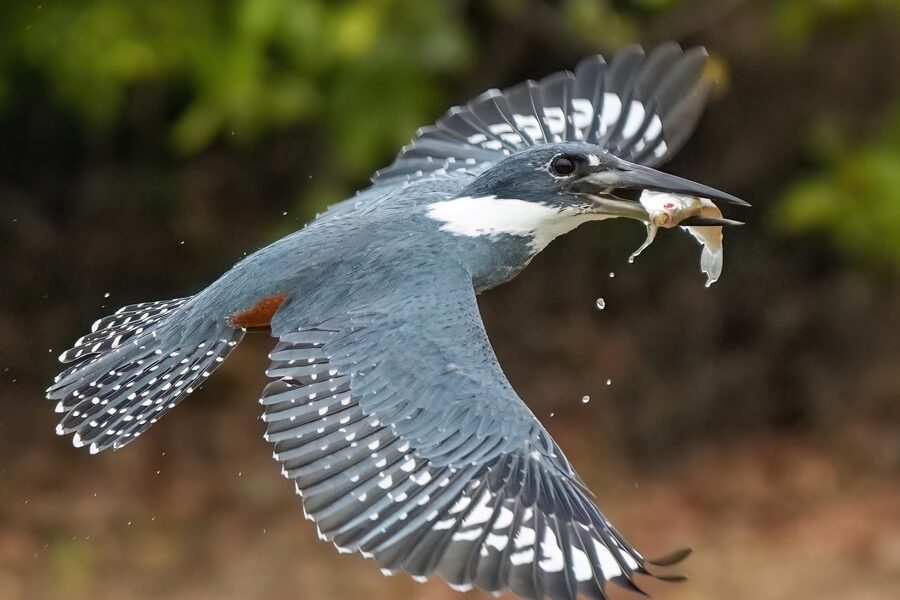
Bright turquoise-and-rust kingfisher with a large red bill and white throat. Versatile species found near rivers, fields, gardens and coasts across India; eats fish, frogs and insects and often perches conspicuously.
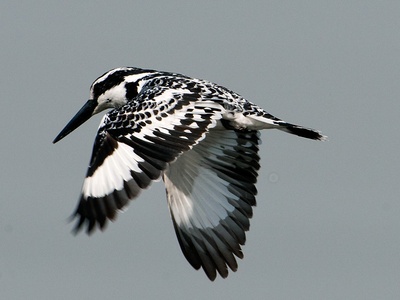
Pied Kingfisher
Black-and-white hovering fisher that dives to catch fish in rivers and reservoirs. Common across India’s wetlands, often seen in small groups above open water, signalling with a characteristic whirring wingbeat before diving.
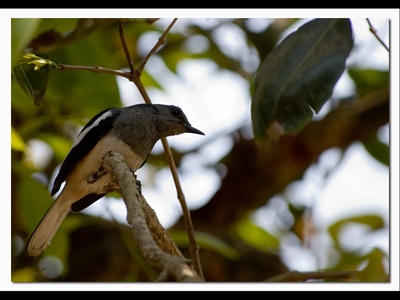
Oriental Magpie-Robin
Small, cheerful black-and-white songbird fond of gardens and forest edges. Males are glossy black while females are greyish; known for melodious singing and bold behaviour around people in towns and villages.

Indian Robin
Compact, upright songbird with glossy black males and rufous undersides in females. Prefers open scrub, gardens and rocky areas, common across peninsular India where it perches on low posts and barks a sharp song.
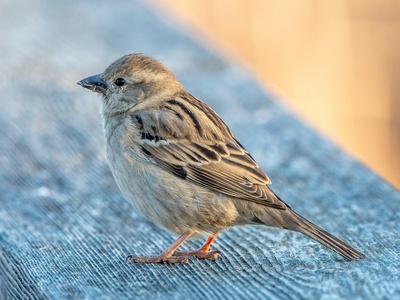
House Sparrow
Familiar, small brown-and-grey bird of human settlements. Ubiquitous in towns and cities across India, lives around houses, markets and farms; feeds on seeds and scraps and nests in buildings and roofs.
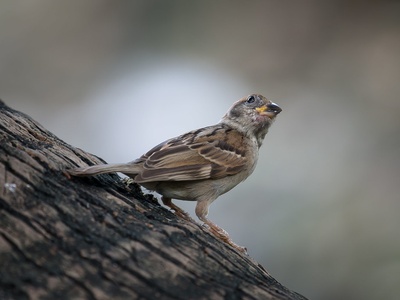
Eurasian Tree Sparrow
Small brown sparrow with chestnut crown and black cheek spot. Common in villages and farmland across India, often nesting in eaves and sharing fields with house sparrows but favouring rural areas.
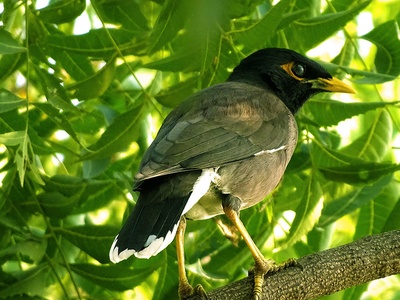
Common Myna
Bold, noisy brown bird with bright yellow eye-patch and strong feet. Thrives in urban and agricultural areas across India, omnivorous and opportunistic, known for mimicry and colonising gardens, parks and market places.
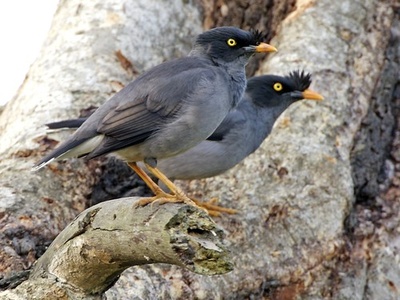
Jungle Myna
Glossy dark myna with tufted head and pale cheek patch, less urban than common myna. Found in woodlands, plantations and gardens, especially in eastern and northeastern India, often in small flocks.
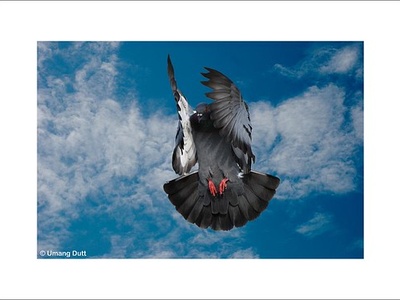
Rock Pigeon
Sturdy grey pigeon with iridescent neck and two wing bars, common in cities and towns. Feral populations thrive in urban India, nesting on buildings and feeding on scraps; many colour morphs occur in towns.
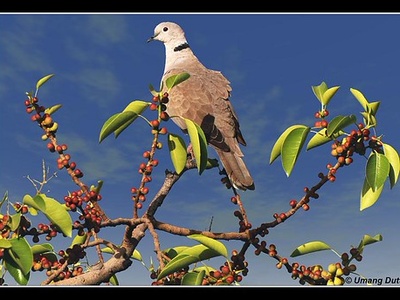
Eurasian Collared-Dove
Pale grey dove with a black neck collar and slender profile. Rapidly colonised towns and farmland across India, seen on rooftops, fields and gardens; feeds on grains and seeds in flocks.
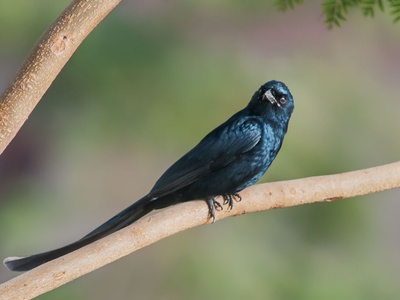
Black Drongo
Small glossy black flycatcher with deeply forked tail and aggressive behaviour. Common across open fields and villages, boldly mobbing predators and hawking insects from perches; distinctive shrill calls make it easy to identify.
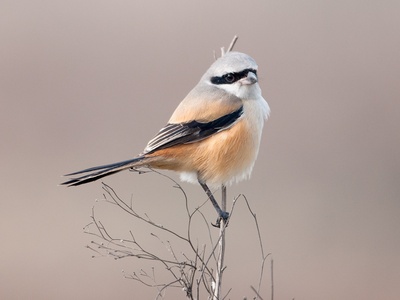
Long-tailed Shrike
Slender, grey-brown shrike with long tail and black facial mask. Widespread in open habitats, roadside scrub and agricultural land across India, hunts large insects and small vertebrates from exposed perches.
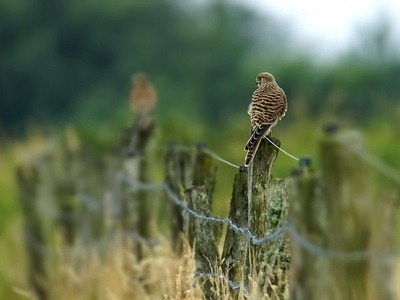
Common Kestrel
Small falcon hovering over fields before diving on rodents and large insects. Widespread as resident and migrant across India, perches on wires and poles; often seen in open countryside and farmlands.
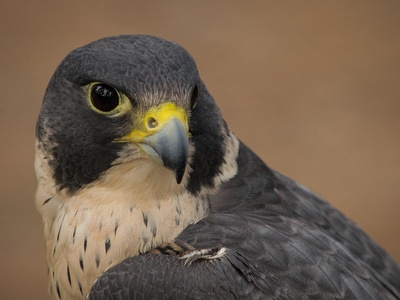
Peregrine Falcon
Powerful, compact falcon with dark head and barred underparts, famed for high-speed stoops. Breeds on cliffs and adapts to tall city buildings across India, preying on birds in flight with spectacular aerial skill.
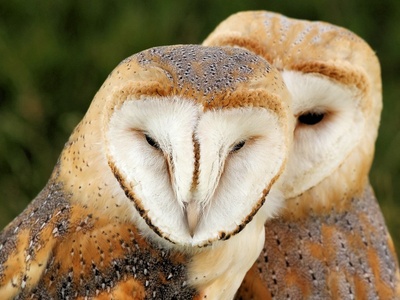
Barn Owl
Ghostly pale owl with heart-shaped face, silent flight and nocturnal hunting of rodents. Common near farms, grasslands and buildings across India; roosts in old trees and barns and rarely seen in daylight.
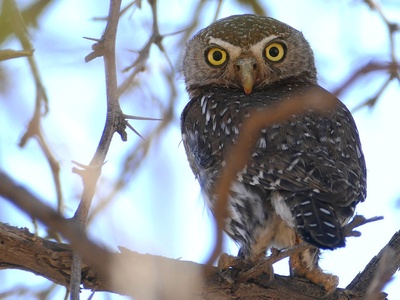
Spotted Owlet
Small, chunky daytime-tolerant owl with barred plumage and conspicuous white spots. Common in towns, villages and open woodland across India; bold, often roosting in tree hollows and buildings during the day.
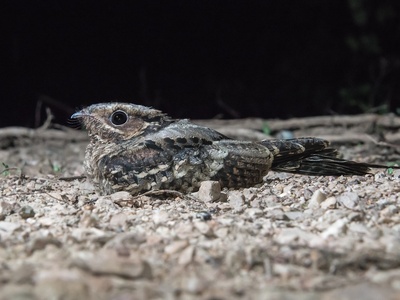
Indian Nightjar
Cryptically patterned nocturnal bird blending into dry ground and leaf litter. Active at dusk, feeds on moths and insects on the wing, commonly found in scrub, open forests and disturbed habitats across India.
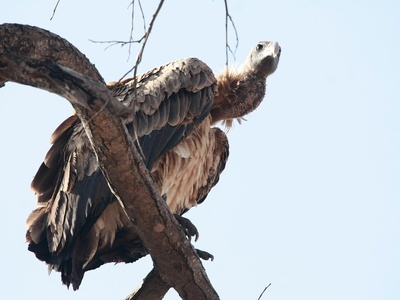
Indian Vulture
Large, dark vulture with bald head, slow-soaring flight and broad wings. Critically endangered due to poisoning from livestock drugs; formerly widespread across peninsular India, now in small fragmented populations and conservation sites.
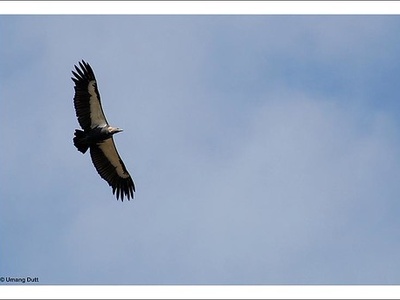
White-rumped Vulture
Heavy-bodied scavenger with pale rump and bare head, formerly abundant but catastrophically declined. Now rare across India; found at carcass sites and in protected areas where small colonies persist.
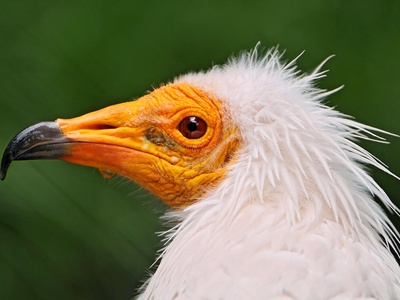
Egyptian Vulture
Small, slender vulture with white plumage and yellow face, uses tools to break eggs. Seen in open country, cliffs and towns across India; migratory and resident populations forage at carcasses and rubbish dumps.
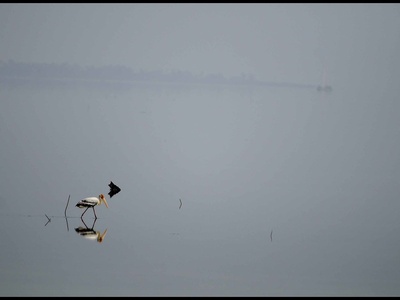
Painted Stork
Large, striking stork with pink tertials, bare red face and slightly curved bill. Feeds in shallow wetlands on fish, nests in colonies in trees; widespread in lowland wetlands across peninsular and eastern India.
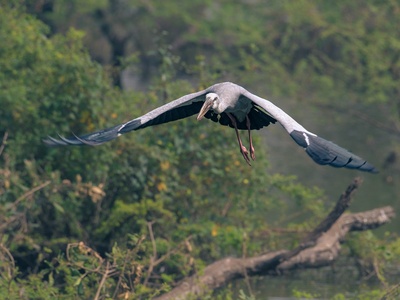
Asian Openbill
Medium-sized stork with gap between mandibles specialised for eating snails. Frequent in paddy fields and wetlands across India, often seen in flocks feeding in shallow water and roosting communally.