El Salvador packs more biodiversity per square kilometer than almost anywhere in Central America. It’s also the smallest country in the region — meaning you cover more territory faster, and wildlife encounters happen whether you plan for them or not. Most of the animals on this list won’t go looking for you. But “they only attack when provoked” doesn’t mean much if you don’t know what you’re looking at.
This covers the 15 most dangerous animals in El Salvador — not just the headline snakes, but the insects and disease vectors that cause far more actual harm.
Table of Contents
- Quick Danger Reference
- 1. Fer-de-Lance (Terciopelo)
- 2. Coral Snake
- 3. Central American Rattlesnake
- 4. Boa Constrictor
- 5. American Crocodile
- 6. Spectacled Caiman
- 7. Bull Shark
- 8. Puma
- 9. Coyote
- 10. Africanized Bees
- 11. Scorpions
- 12. Giant Centipede
- 13. Black Widow Spider
- 14. Mosquitoes
- 15. Bullet Ant
- Practical Safety Guide
Quick Danger Reference
| Animal | Primary Threat | Regions of Risk | Encounter Likelihood | Deadliness |
|---|---|---|---|---|
| Fer-de-Lance (Terciopelo) | Hemotoxic venom | Nationwide, esp. western forests | Moderate | Very High |
| Coral Snake | Neurotoxic venom | Lowland forests, coffee plantations | Low | High |
| Rattlesnake (Cascabel) | Hemotoxic + neurotoxic | Dry forests, northern highlands | Low | High |
| American Crocodile | Physical attack | Pacific coastal rivers, Jiquilisco Bay | Moderate | Very High |
| Spectacled Caiman | Physical attack | Lowland rivers, wetlands | Moderate | Moderate |
| Bull Shark | Physical attack | Pacific coast, Lempa River mouth | Low | Very High |
| Puma | Physical attack | Montecristo, El Imposible | Very Low | High |
| Coyote | Rabies | Rural, near settlements | Moderate | Low |
| Africanized Bees | Venom (mass stings) | Rural areas nationwide | Moderate | High |
| Scorpions | Venom sting | Nationwide | High | Moderate |
| Giant Centipede | Painful venom | Humid forests, dwellings | Moderate | Low |
| Black Widow | Neurotoxic venom | Nationwide (outbuildings) | Moderate | Moderate |
| Mosquitoes | Dengue, Zika, chikungunya | Lowlands, rainy season | Very High | High |
| Boa Constrictor | Bite + infection | Forests, near settlements | Low | Low |
| Bullet Ant | Intense sting | Forest edges, humid trails | Moderate | Low |
1. Fer-de-Lance (Terciopelo)
Bothrops asper — local name: terciopelo (“velvet”)
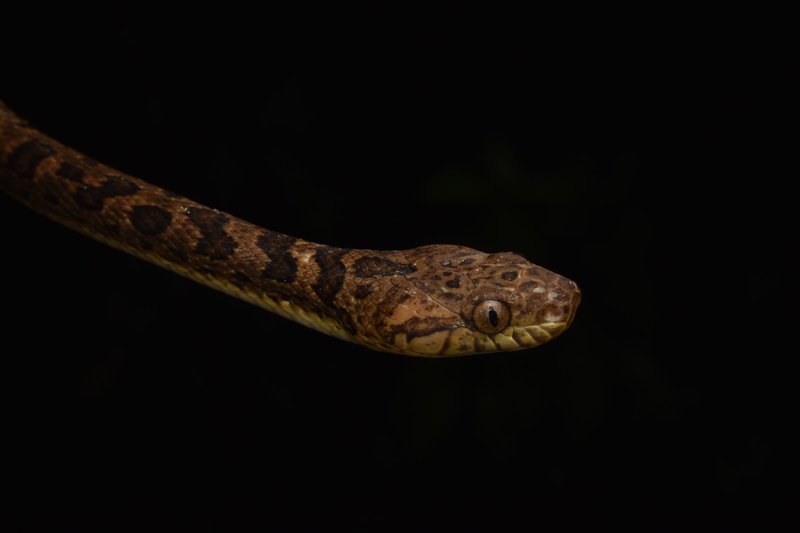
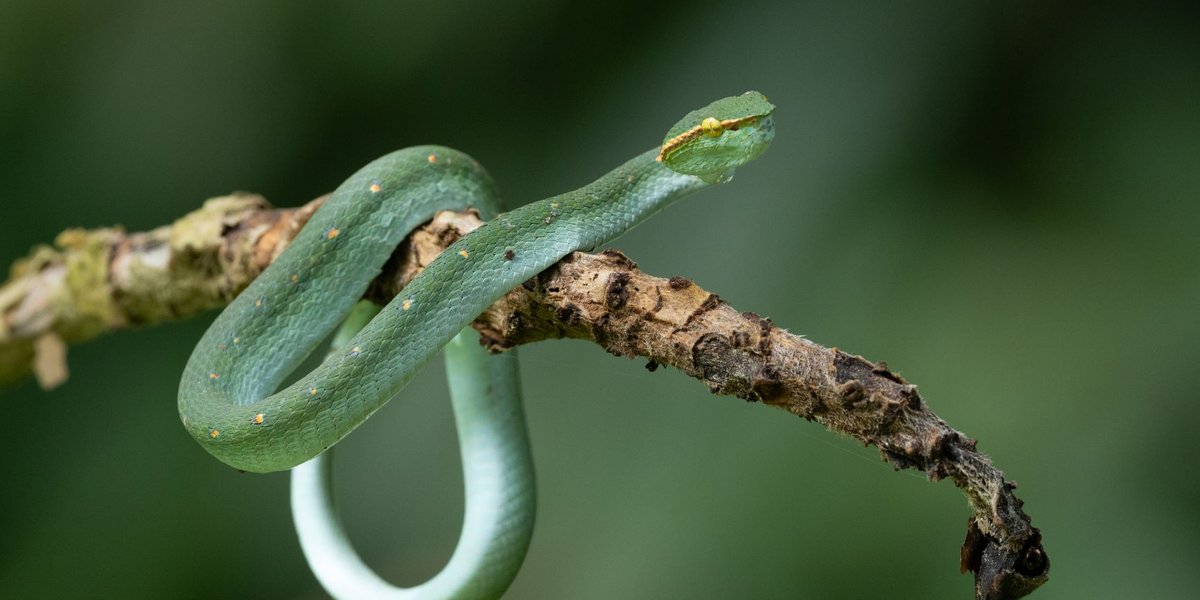
The terciopelo is the snake that defines snakebite mortality in Central America. The WHO identifies pit vipers of the Bothrops genus as responsible for more snakebite deaths in the Americas than any other group. In El Salvador, it lives in lowland tropical forests, agricultural zones, coffee and banana plantations, and increasingly near human settlements — which is exactly why encounters happen.
The venom is hemotoxic: it destroys tissue and disrupts blood clotting. A bite without prompt antivenom produces severe tissue necrosis, organ failure, and death. The snake itself is heavy-bodied, reaching up to 2.5 meters, with distinctive brown-and-tan diamond patterning. It’s nocturnal and superbly camouflaged in leaf litter — you can walk within half a meter of one without seeing it.
Where in El Salvador: Everywhere, but highest density in the humid western and northern forests, including areas around Parque Nacional El Imposible and the Apaneca-Ilamatepec highlands.
If bitten: Don’t cut, suck, or apply a tourniquet — all of those worsen outcomes. Immobilize the limb at heart level, remove rings and tight clothing from the affected area, and reach a hospital as fast as possible.
2. Coral Snake
Micrurus nigrocinctus — local name: coralillo
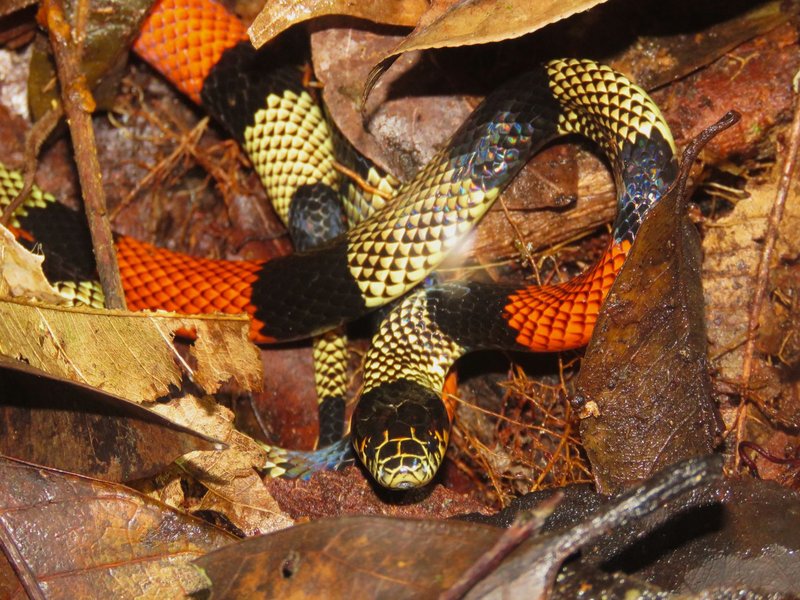
“Red touches yellow, kill a fellow” is the old rhyme for North American coral snakes. In Central America, the color patterns shift enough that you’re better off with a simpler rule: don’t touch any red-banded snake.
El Salvador’s coral snakes are slender, rarely exceeding 80 cm, and genuinely striking. Their venom is neurotoxic, causing progressive paralysis. The real danger is the delayed onset — symptoms can lag several hours after the bite, long enough for victims to assume they’re fine. By the time muscle weakness and breathing difficulty set in, the window for effective treatment is narrow.
Where in El Salvador: Lowland tropical forest, secondary growth, and coffee plantation edges. They shelter under logs, leaf litter, and loose soil — and are occasionally turned up during gardening.
If bitten: Hospital immediately. Neurotoxic envenomation can progress to respiratory failure. Antivenom must be administered before paralysis advances.
3. Central American Rattlesnake
Crotalus simus — local name: cascabel
El Salvador’s rattlesnake population concentrates in the country’s drier northern regions and deciduous forests. The rattle is usually audible before you see the snake — but hikers moving fast through dry scrub should watch where they step regardless.
What makes Crotalus simus particularly dangerous compared to other pit vipers in El Salvador is its venom composition: both hemotoxic and neurotoxic components, which complicates treatment. A bite that seems manageable based on local tissue damage can still progress to neurological symptoms. It’s considered one of the more dangerous snakes across Central America for this reason.
Where in El Salvador: Northern departments (Chalatenango, Cabañas), dry forest zones, and open rocky terrain. Less common in humid western forests.
4. Boa Constrictor
Boa imperator — local name: boa
The boa won’t inject venom. What it can do is bite hard — a large adult has roughly 100 backward-pointing teeth, all curved inward — and constrict with significant force. Adults in El Salvador typically reach 2–3 meters. They’re not hunting humans; they’re eating rodents, birds, and lizards. An encounter almost always ends with the snake retreating, unless you corner it or try to handle it.
The main risk from a boa bite is infection, not toxicity. Their teeth introduce bacteria, and tropical environments accelerate wound infections. Boas are also one of the species most likely to show up inside rural homes, drawn by rodent activity.
Where in El Salvador: Forests, agricultural land, and occasionally inside houses near rodent populations.
5. American Crocodile
Crocodylus acutus — local name: cocodrilo
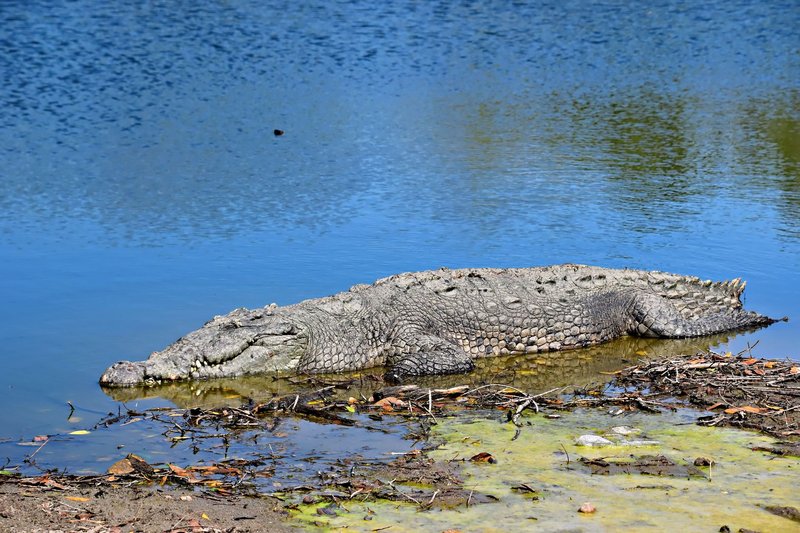
The American crocodile is generally calmer than its Nile or saltwater relatives — but “calmer” is relative for a 4-meter ambush predator that can lunge faster than human reaction time. The species is classified as Vulnerable by the IUCN Red List, and El Salvador’s coastal wetlands are among its remaining strongholds.
Crocodiles concentrate in the mangrove estuaries around Jiquilisco Bay, the Lempa River system, and the Pacific coastal lagoons. Attacks on humans are rare — they’re primarily hunting fish and waterbirds — but wading in murky coastal water at dawn or dusk removes most of the margin that keeps that rare. They’re also significantly harder to spot than most people assume: a 3-meter crocodile floating with only its eyes above the waterline takes up roughly the visual footprint of a coconut.
Where in El Salvador: Jiquilisco Bay (Usulután), Lempa River delta, Barra de Santiago lagoon (Ahuachapán), and other Pacific coastal estuaries.
6. Spectacled Caiman
Caiman crocodilus — local name: lagarto
Smaller than the American crocodile — rarely exceeding 2 meters in El Salvador — caimans are far more common and more likely to be encountered. They inhabit rivers, wetlands, and oxbow lakes throughout the lowlands. Caimans are more skittish than crocodiles but will defend themselves aggressively if cornered, stepped on, or separated from a nest.
They’re primarily a risk to children and small animals near water, and to swimmers who underestimate how common they are in lowland river systems.
Where in El Salvador: Lowland rivers and wetlands, particularly in Chalatenango, Sonsonate, and the Pacific coastal plain.
7. Bull Shark
Carcharhinus leucas — local name: tiburón toro
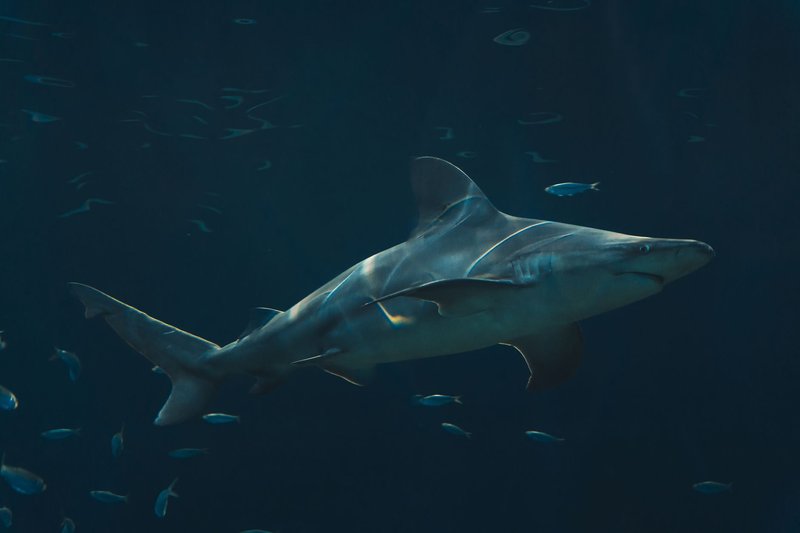
Bull sharks are a credible threat along El Salvador’s Pacific coast, particularly near river mouths where freshwater and salt water mix. Unlike most sharks, bull sharks tolerate and actively enter freshwater — they’ve been documented 2,000 km up the Amazon River. The mouth of the Lempa River is established bull shark habitat.
El Salvador’s surf scene is active, and the Pacific coast keeps large numbers of people in the water year-round. Bull sharks account for a significant share of unprovoked attacks globally because they combine aggression, coastal habitat preference, and large body size. NOAA identifies bull sharks, great white sharks, and tiger sharks as the three species most responsible for unprovoked attacks on humans worldwide.
Where in El Salvador: Pacific coast beaches, especially near river mouths (Lempa, Paz, Jiboa). Risk increases during turbid conditions after heavy rain, when visibility in the water drops.
8. Puma
Puma concolor — local name: puma, león de montaña
El Salvador’s puma population is small, confined to protected areas, and rarely seen — it’s among the most elusive of the country’s native mammals. The El Imposible and Montecristo ecosystems each support limited populations — Central American puma surveys estimate low double digits per protected area at most. Human-puma encounters exist (livestock predation is documented), but attacks on people are exceptional.
If you’re hiking deep trails in either national park and spot a puma, you’ve had the kind of encounter most naturalists wait years for. Back away slowly, make yourself appear large, and don’t run — running triggers pursuit instinct in big cats.
Where in El Salvador: Parque Nacional El Imposible (Ahuachapán) and Parque Nacional Montecristo (northwestern corner, bordering Honduras and Guatemala).
9. Coyote
Canis latrans — local name: coyote
Coyotes in El Salvador are more urban-adjacent than their North American counterparts — commonly sighted near agricultural land and small towns. The direct danger from a coyote isn’t really the bite itself; it’s rabies. El Salvador still documents rabies cases in wild animals, and any coyote behaving erratically, circling, or approaching humans without apparent fear should be treated as a potential rabies vector.
Healthy coyotes are shy and avoid people. The risk escalates near trash sources (which attract them), if one is cornered, or if there are young nearby.
If bitten or scratched: Clean the wound thoroughly and seek medical attention immediately. Post-exposure rabies prophylaxis must begin before symptoms appear.
10. Africanized Bees
Apis mellifera scutellata hybrid — local name: abejas africanizadas
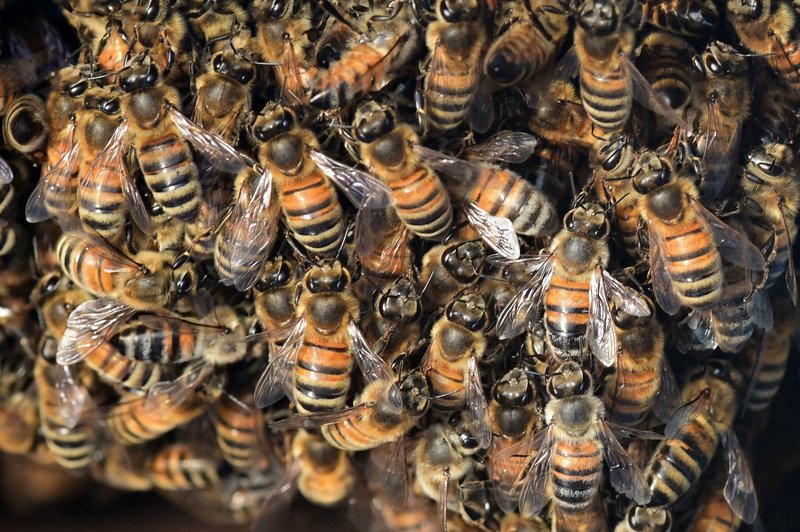
“Killer bees” overstates the venom toxicity (identical to European honeybees, sting for sting) and understates the actual threat: swarm size and pursuit distance. Africanized bees in Central America respond to perceived threats by mobilizing thousands of individuals and pursuing the target for up to a kilometer. For most healthy adults, even 200+ stings are survivable — painful, but survivable. For someone allergic, elderly, or unable to flee, a full swarm response can be fatal.
Agricultural and hiking areas throughout El Salvador carry this risk. Colonies nest in hollow trees, wall cavities, abandoned structures, and even in the ground. If you disturb a colony: run in a straight line, cover your face, and don’t stop to swat or flail. Swatting releases more alarm pheromones and draws more bees.
Where in El Salvador: Nationwide, particularly in rural areas, forest edges, and anywhere with significant tree cover.
11. Scorpions (Alacrán)
Centruroides spp. — local name: alacrán
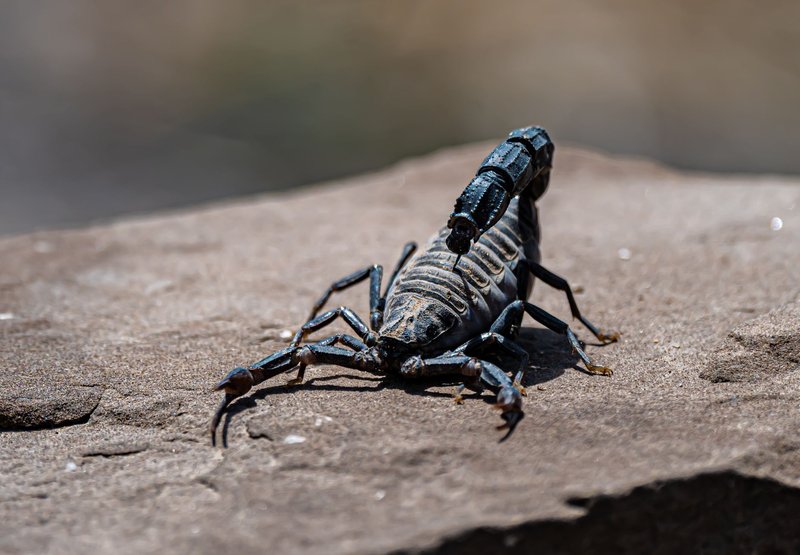
Scorpions are the most common dangerous encounter in El Salvador for most travelers — not because they’re hunting you, but because they share living space. They shelter in shoes, clothing, bedding, wood piles, and dark corners of houses. The habit of shaking out footwear before putting it on is not paranoia; it’s just what you do.
Most stings from El Salvador’s Centruroides species produce localized pain, swelling, and numbness. Children and elderly individuals face greater risk of systemic effects: muscle spasms, elevated heart rate, and in severe cases, breathing difficulty. Deaths are rare but documented, almost always in young children.
What to do if stung: Wash the site, apply a cool compress, take ibuprofen for pain. Seek medical care immediately for any child who is stung, for the elderly, or if symptoms spread beyond the immediate sting site.
Where in El Salvador: Nationwide. Risk is highest in rural areas, older construction, and anywhere with loose rock or stored wood.
12. Giant Centipede
Scolopendra subspinipes — local name: ciempiés
The giant centipede reaches 25–30 cm in humid tropical conditions and delivers venom through modified front legs, not its tail. The bite produces intense burning pain, pronounced swelling, and localized tissue damage. Fatalities are rare and mostly involve young children or individuals with severe allergic responses — but the experience of being bitten is memorable enough that it appears in medical literature as producing “the worst pain of my life” accounts.
Centipedes are nocturnal and fast. They shelter under rocks, logs, and leaf litter, and occasionally wander indoors. Same rule as scorpions: check footwear and clothing before wearing, particularly after leaving gear outdoors overnight.
13. Black Widow Spider
Latrodectus mactans — local name: viuda negra
The black widow occurs throughout El Salvador in low-traffic locations: outbuildings, wood storage, beneath outdoor furniture, in garden clutter. The female’s venom contains alpha-latrotoxin, which causes latrodectism — severe radiating pain from the bite site, muscle cramps, sweating, nausea, and elevated blood pressure. Rarely fatal in healthy adults; medically serious for children and the elderly.
The spider is unmistakable: jet black with a red hourglass on the abdomen. Bites almost always happen when the spider is accidentally compressed against skin — reaching into a wood pile, putting on a glove that’s been sitting outdoors, or brushing against webbing in a dark corner.
14. Mosquitoes
Aedes aegypti and Aedes albopictus — local name: zancudos
Mosquitoes kill more people in El Salvador than every other animal on this list combined — not through a single dramatic event but through dengue fever, Zika virus, and chikungunya. El Salvador experiences regular dengue outbreaks, severity peaking during and after the rainy season (May through October). The CDC advises travelers to El Salvador to take standard mosquito precautions against dengue and other arboviral diseases — and those precautions matter more than almost anything else in this list.
There’s no widely available dengue vaccine and no specific antiviral treatment. Prevention is the entire defense. Long sleeves, DEET-based repellent at ≥20% concentration, and lodging with screens or air conditioning are the practical measures. Seek medical care immediately for fever, severe headache, joint pain, or rash after potential mosquito exposure — dengue’s second infection is far more dangerous than the first, and early care changes outcomes significantly.
Where in El Salvador: Lowland urban and semi-urban areas carry the highest transmission risk. San Salvador itself has documented dengue transmission. Rainy season (May–October) is peak danger.
15. Bullet Ant
Paraponera clavata — local name: bala, hormiga bala
The bullet ant earns its name. The Schmidt Sting Pain Index — an entomologist’s systematic ranking of insect sting pain — places the bullet ant at its maximum level, described as “pure, intense, brilliant pain, like walking over flaming charcoal with a 3-inch nail embedded in your heel.” The pain lasts 12–24 hours. There’s typically no lasting damage.
Bullet ants aren’t aggressive by ant standards. They defend their colony, which nests at the base of large trees in humid forest. Walk off the main trails in El Imposible or the coastal forest reserves and you have a reasonable chance of meeting one. The sting is medically significant mainly for individuals with insect venom allergies — for everyone else, it’s an extremely unpleasant 24 hours and a story you’ll tell for years.
Where in El Salvador: Humid forest areas, primarily in the western national parks and coastal forest remnants.
Practical Safety Guide
Snakebite protocol
The most critical step after a snakebite: get to a hospital. Skip the tourniquets, the cutting and sucking, the ice, the attempts to catch or photograph the snake. Immobilize the bitten limb below heart level, remove constrictive clothing and jewelry from that area, and move fast. Antivenom is available at Hospital Nacional Rosales and Hospital de Diagnóstico in San Salvador. Most regional hospitals maintain snake antivenom stock — but call ahead if time allows.
Risk by region
- Western forests (El Imposible, Apaneca-Ilamatepec): Terciopelo, puma, bullet ants, Africanized bees
- Northwestern highlands (Montecristo): Cascabel, puma, scorpions
- Pacific coast and estuaries: American crocodile, spectacled caiman, bull sharks, Africanized bees
- Nationwide, all seasons: Scorpions, Africanized bees, mosquitoes, black widows, coyotes
- Urban and semi-urban: Mosquitoes (dengue), scorpions, black widows
Mosquito-borne disease
The rainy season (May–October) is peak risk. Use repellent with DEET ≥20%, wear long sleeves at dawn and dusk, and sleep with window screens or in air-conditioned rooms. If you develop fever, severe headache, or joint pain within two weeks of returning from El Salvador, tell your doctor where you’ve been — dengue is frequently misdiagnosed as flu in non-endemic countries.
Before you go remote
If you’re hiking in Montecristo or El Imposible, know the route and distance to the nearest hospital before you set out. Montecristo’s remote areas are several hours from Santa Ana; El Imposible’s interior trails put you 2–3 hours from Ahuachapán. That context matters if you’re planning a solo day hike and the terciopelo finds you before the trail ends.
El Salvador’s wildlife risk is real but proportionate. The country sees consistent visitor and hiking traffic, and serious wildlife incidents remain statistically rare. The practical priority order is straightforward: mosquitoes deserve the most sustained attention (they’re the most likely to actually harm you), snakes deserve the most situational respect (they’re the most likely to cause a single catastrophic outcome), and scorpions are the encounter you’ll probably have. Know the animals, know what to do, and don’t let the list stop you from walking into El Imposible when the mist is still on the canopy.