Most guides to the flowers of Malta give you the same five species and a sentence each. That’s not a field guide — that’s a postcard. The Maltese Islands pack roughly 1,000 wild plant species into 316 square kilometers, and a good chunk of them bloom in a tight window between the first autumn rains and the brutal heat of June. If you know when to look and where to stand, you can see a national flower that grows nowhere else on Earth, carpets of crimson clover on the Dingli Cliffs, and orchids hiding in the garigue.
This is the practical version: what blooms, when it blooms, and the specific spots on Malta, Gozo, and Comino where you’ll actually find it.
Table of Contents
- The National Flower: Maltese Rock Centaury
- Why Malta’s Flowering Calendar Is Backwards
- Autumn Bloomers (October–December)
- Winter & Early Spring (January–March)
- Peak Spring (April–May)
- Endemic Flowers Found Nowhere Else
- Where to See Wildflowers in Malta
- A Quick Note on Picking
The National Flower: Maltese Rock Centaury
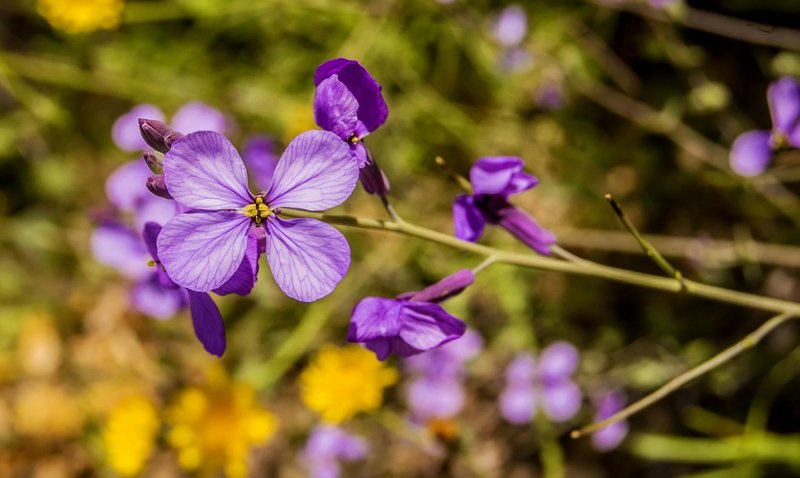
Start with the headliner. The Maltese Rock Centaury — Cheirolophus crassifolius, or Widnet il-Baħar in Maltese — has been the national plant of Malta since 1973. The Maltese name translates roughly to “ear of the sea,” a nod to the fleshy, ear-shaped leaves that cling to coastal cliffs.
Here’s the part that matters: it’s endemic. This plant grows wild on the cliffs of Malta and nowhere else on the planet. It clings to vertical limestone faces battered by salt spray, putting out lilac-pink, thistle-like flower heads from late spring into summer. The leaves are thick and waxy — survival gear for a plant that has decided to live somewhere with no soil, relentless sun, and a constant coating of sea salt.
You’ll find it along the southwestern cliffs, with reliable populations around Fomm ir-Riħ and the coast below Dingli. It flowers from May through July, peaking in June. Because it lives on sheer cliffs, the best viewing is from coastal paths looking down and across — bring decent shoes and don’t lean over the edge to photograph a flower.
Why Malta’s Flowering Calendar Is Backwards
If you’re coming from a northern European or North American mindset, throw out your instincts about when flowers bloom. Malta has a Mediterranean climate with hot, bone-dry summers and mild, wet winters. The growing season is driven by water, not warmth.
That means the land is brownest and most barren in July and August, when everything has gone dormant to survive the drought. The green explosion — and the wildflowers with it — starts with the first heavy rains in late September or October. Many species flower through the “winter,” and the grand finale lands in April and May, just before the heat shuts the whole show down.
So the worst time to chase Maltese wildflowers is high summer, exactly when most tourists arrive. The best time is February through May. Plan accordingly.
Autumn Bloomers (October–December)
After the first rains break the summer drought, the garigue and disturbed ground come alive faster than you’d expect.
- Autumn Squill (Prospero autumnale) — small spikes of pale lilac-pink flowers that often appear before their own leaves, pushing up through dry ground in October. Common across rocky habitats island-wide.
- Maltese Pyramidal Orchid (Anacamptis urvilleana) — actually a spring orchid, but worth flagging as an endemic taxon to watch the rocky steppe for once the rains return and growth restarts.
- Yellow-throated Crocus (Crocus longiflorus) — autumn-flowering crocus with fragrant lilac petals and a golden throat, scattered across garigue from October into November.
- Friar’s Cowl (Arisarum vulgare) — a quirky little arum with a hooded, striped spathe that looks like a tiny monk’s cowl peeking out of the leaf litter. Abundant under carob trees and on rubble walls.
This is the quiet season for flowers — fewer species, smaller blooms — but it’s when the islands shift from dead-brown to green, and it rewards anyone willing to look closely at the ground.
Winter & Early Spring (January–March)
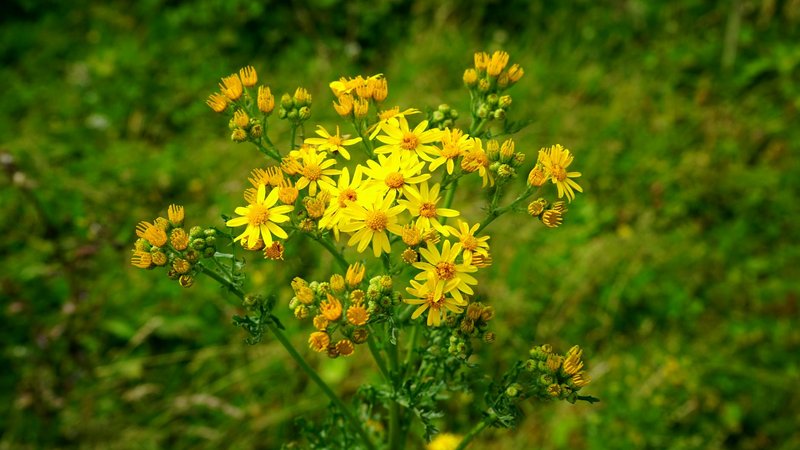
This is when Malta stops being subtle. Whole fields and roadside verges fill in with color.
- Cape Sorrel (Oxalis pes-caprae) — the bright yellow flower you’ll see absolutely everywhere from December onward, blanketing fields and walls. It’s gorgeous and it’s an invasive import from South Africa, so admire it but know it’s not a native. Locals call it Ħaxixa Ingliża.
- Crown Daisy (Glebionis coronaria) — knee-high yellow-and-white daisies that take over abandoned fields and roadsides in great drifts through spring.
- Borage (Borago officinalis) — startling true-blue, star-shaped flowers with a hairy stem, common on disturbed ground and edible too.
- Bermuda Buttercup, Wild Gladiolus (Gladiolus italicus) — magenta-pink spikes rising out of cereal fields and field margins from March, one of the prettiest wild flowers on the islands.
- Mandrake (Mandragora autumnalis) — the famous folklore plant, with violet bell flowers sitting in a flat rosette of crinkled leaves, found on garigue and field edges.
By March the garigue — Malta’s signature low, aromatic scrubland of thyme, spurge, and rockrose — is filling with bloom. The Mediterranean thyme (Thymbra capitata) carpets large areas and hums with bees.
Peak Spring (April–May)
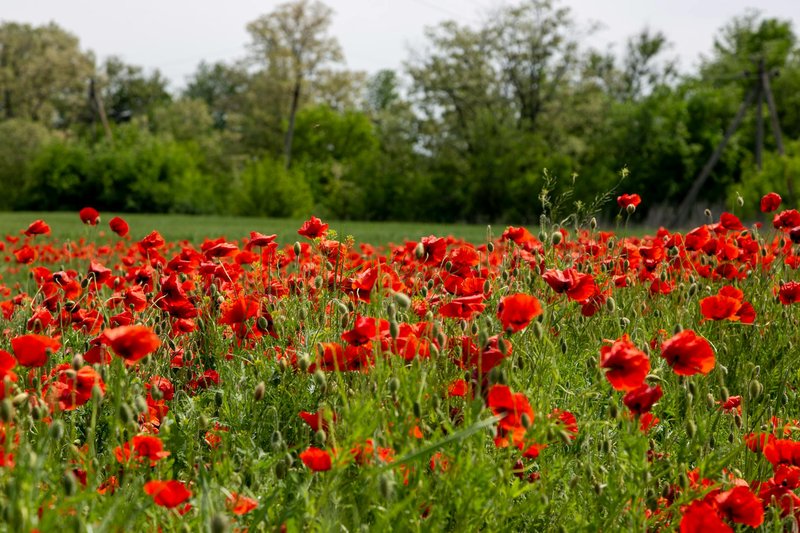
If you only visit once, come now. April and May are when the islands hit maximum color before the heat arrives.
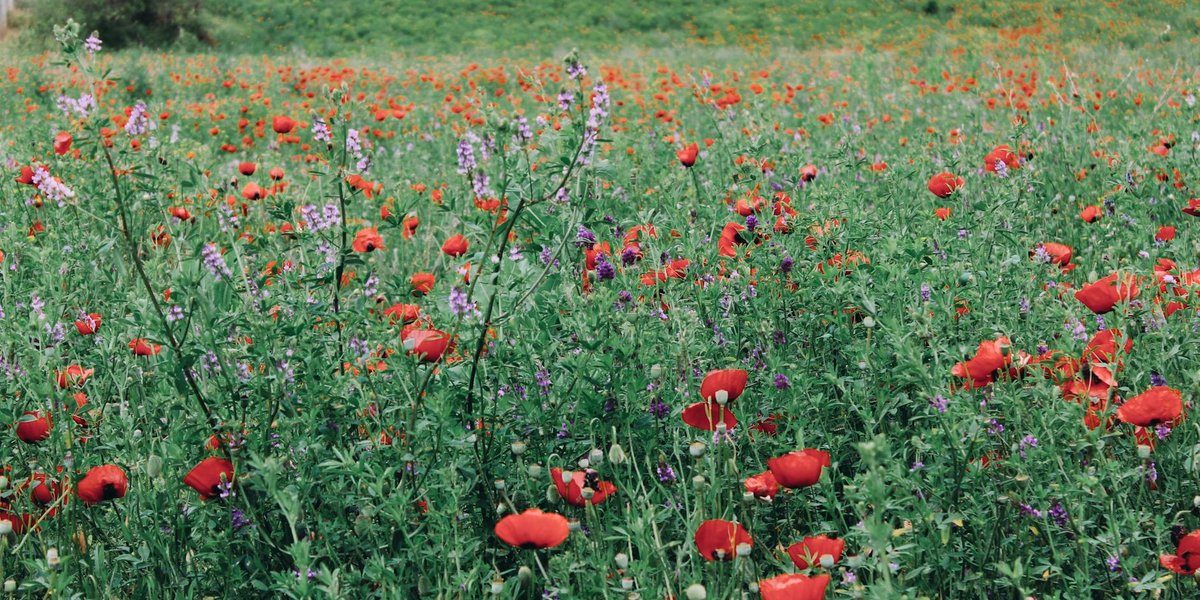
- Common Poppy (Papaver rhoeas) — the classic crimson poppy, scattered through cereal fields and along the Dingli Cliffs, where red blooms meet blue sea on a clear day.
- Crimson Clover & Sulla (Hedysarum coronarium) — Sulla throws up deep magenta-red flower spikes across fields and was historically grown as fodder; in full bloom it turns whole hillsides red.
- Southern Daisy and various orchids — Malta has more than a dozen wild orchid species. Look for the Pyramidal Orchid (Anacamptis pyramidalis), Bumblebee Orchid (Ophrys bombyliflora), and the endemic Maltese forms in undisturbed garigue and rocky steppe.
- Rockrose (Cistus species) — pink and white papery flowers covering the garigue, each bloom lasting barely a day before dropping its petals and being replaced the next morning.
- Paleocene Spurge and Spiny Caper (Capparis spinosa) — the caper bush erupts from rubble walls and bastions with extravagant white flowers and a starburst of purple stamens, often opening at dusk. Valletta’s fortification walls are full of them.
The caper detail is the one to remember: those huge white-and-purple blooms exploding straight out of the old Valletta bastion walls are wild capers, the same plant whose buds get pickled for your pasta.
Endemic Flowers Found Nowhere Else
Malta’s isolation has produced a small set of plants that exist only here. Beyond the national Rock Centaury, watch for these:
- Maltese Spider Orchid (Ophrys melitensis) — a small, intricate orchid endemic to the Maltese Islands, flowering on rocky steppe in March and April. Its lip mimics a female insect to lure pollinators.
- Maltese Salt Tree (Darniella melitensis / Salsola melitensis) — a rare endemic shrub of coastal saline habitats.
- Maltese Everlasting (Helichrysum melitense) — a silvery, woolly-leaved shrub with yellow flower clusters, endemic to Gozo’s western cliffs around Dwejra and protected by law.
- Maltese Hyoseris (Hyoseris frutescens) — a yellow, dandelion-like endemic clinging to coastal cliffs.
These are the plants that make Malta a genuine botanical destination rather than just a sunny one. Several are legally protected, and the IUCN tracks the Rock Centaury and Maltese Everlasting as species of conservation concern. If you want to put names to everything you spot, a complete catalog of Malta’s plants lays out the scientific names, conservation status, and habitats side by side. Look, photograph, leave them be.
Where to See Wildflowers in Malta
You don’t need a car and a botanist to find good blooms, but a few spots consistently deliver:
- Dingli Cliffs (Malta) — the highest point on the islands. Poppies, clover, and coastal garigue species with a clifftop walk that runs for kilometers. Spring is unbeatable here.
- Buskett Gardens (Malta) — the islands’ only semi-woodland, dominated by Aleppo pine and holm oak, with shade-loving species, cyclamen, and orchids in the undergrowth. The cooler, greener counterpoint to the open garigue.
- Għadira & Majjistral Nature Park (Malta) — protected garigue on the northwest coast, excellent for orchids and aromatic scrub. Marked trails make it easy.
- Ta’ Ċenċ Cliffs (Gozo) — wide stretches of undisturbed garigue and steppe, strong for endemics and orchids, with dramatic sea cliffs.
- Dwejra (Gozo) — coastal cliffs and the home turf of the Maltese Everlasting.
- Comino — small, largely undeveloped, and bright with Cape sorrel and crown daisies in spring between the tourist boats.
General rule: head for garigue and steppe (low, rocky, aromatic scrubland) rather than manicured parks. The wild flowers live where the soil is thin and the ground hasn’t been built on. The cliff edges and nature reserves are your best bet, and the Natura 2000 protected sites across the islands cover most of the richest habitats.
A Quick Note on Picking
Don’t. Several of Malta’s wild flowers — including the national Rock Centaury and a number of orchids and endemics — are protected under Maltese and EU law, and picking or uprooting them can carry fines. Beyond the legal side, these are small populations on a small set of islands. A photographed flower seeds next year’s bloom; a picked one doesn’t.
Come in spring, walk the garigue and the cliffs, and you’ll see more genuine variety in an afternoon than any florist could ever box up. Malta’s wild flowers reward the people who show up at the right time and look down at the ground instead of up at the next church dome.