Burundi is one of Africa’s smallest countries, and most of it stopped being forest a long time ago. What’s left isn’t a single jungle but a patchwork: dry savanna woodland sliding down toward Lake Tanganyika, scraps of miombo on the higher ground, and a thin green ribbon of montane forest clinging to the ridges near Kibira National Park. The trees that define the place are the ones tough enough to survive both the dry season and the axe.
This is a species guide. You’ll get common and scientific names, what each tree actually looks like in the field, and where it grows — plus an honest look at why so few old trees are still standing.
Table of Contents
- The Lay of the Land
- Key Tree Species of Burundi
- Vegetation Zones at a Glance
- Deforestation and the Replanting Push
- Quick-Reference Table
The Lay of the Land
Burundi sits on the western arm of the East African Rift, and altitude does most of the work in deciding what grows where. The land tilts from the Imbo plain along Lake Tanganyika — hot, dry, around 770 meters — up to the Congo-Nile Divide, where ridges top 2,600 meters and the air turns cool and damp.
That gradient gives you three broad pictures. Down low and across the central plateau, it’s Acacia–Combretum savanna and patches of palm woodland. On the better-drained slopes you find miombo, the Brachystegia–Julbernardia woodland that blankets much of south-central Africa. And up on the divide, the last real closed-canopy forest survives inside protected areas, most famously Kibira.
The catch: very little of this is untouched. Burundi has one of the highest rural population densities in Africa, and farmland has eaten into nearly every accessible zone. The “natural” vegetation you read about often describes what should be there more than what you’ll actually walk through.
Key Tree Species of Burundi
Here are the trees you’re most likely to encounter, whether you’re hiking a reserve, driving the central plateau, or just looking at a Burundian woodlot.
Moringa (Moringa oleifera)
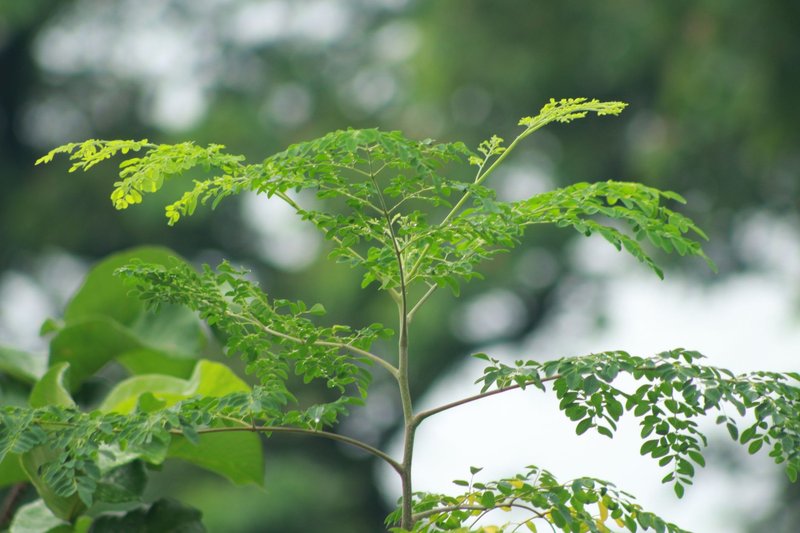
Often cited as Burundi’s national tree, moringa is a fast-growing, slender species with feathery, fern-like leaves and long seed pods that hang like drumsticks — hence the nickname “drumstick tree.” It’s not a forest giant; it’s a useful tree, planted around homes and gardens.
The reason it gets so much attention is nutrition. Moringa leaves are eaten as a vegetable and dried into powder, and they’re genuinely dense in vitamins and minerals. In a country where food security is a daily concern, a tree that produces edible, nutrient-rich leaves nearly year-round earns its keep — much like the native and cultivated fruits of Burundi that fill out home gardens and roadside stalls. You’ll spot it less in the wild and more wherever people live.
Brachystegia (Brachystegia spp.)
The signature tree of miombo woodland. Brachystegia species form the open, dappled canopy that gives miombo its character — tall, spreading crowns over a grassy understory. The new leaves flush in striking reds and coppers before the rains, one of the more beautiful sights in the African dry season.
Miombo trees are slow growers adapted to poor, acidic soils and seasonal fire. The wood is hard and used for charcoal and timber, which is exactly why intact miombo is getting harder to find in Burundi. Where you see it, you’re looking at the closest thing the region has to a natural climax woodland on the plateau.
Acacia (Vachellia and Senegalia spp.)
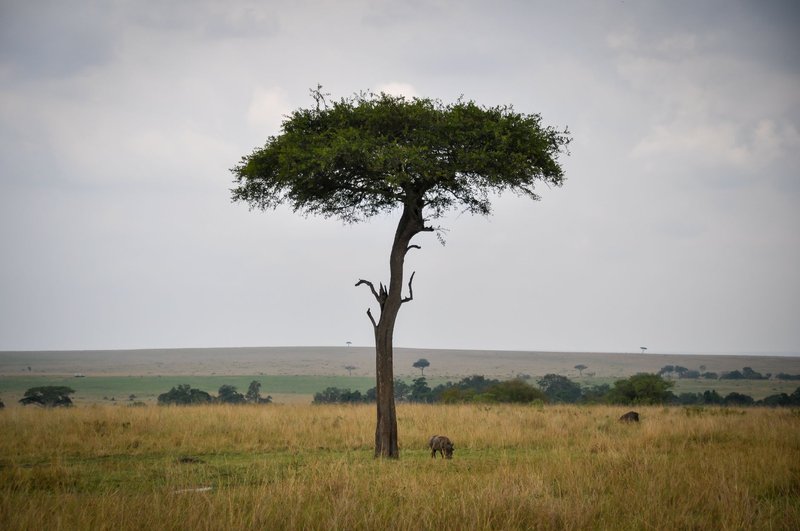
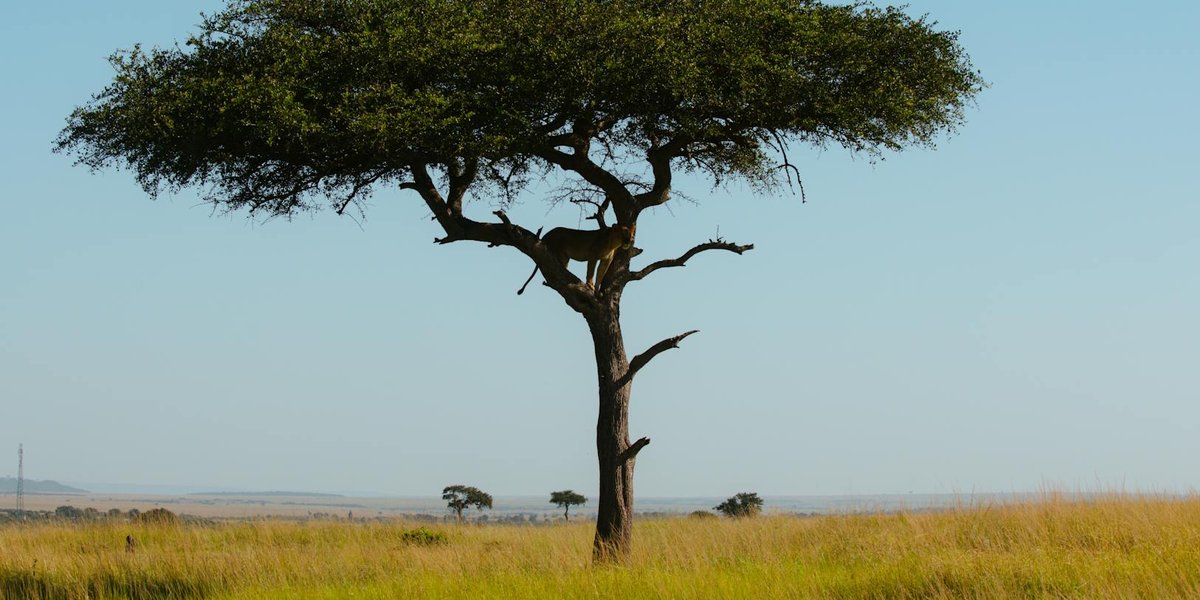
The classic flat-topped silhouette of African savanna. What older books call “Acacia” has been split by botanists into Vachellia (the thorny, often flat-topped species) and Senegalia. Across Burundi’s drier Acacia–Combretum savanna, these are the defining trees: thorns, small compound leaves, and pods that feed livestock and wildlife.
Acacias fix nitrogen, which means they improve the soil around them — useful in a landscape that’s been farmed hard. They’re drought-tough and fire-tolerant, the kind of tree that holds on where softer species give up.
Oil Palm (Elaeis guineensis)
Down in the warm, humid Imbo lowlands near Lake Tanganyika and the Rusizi plain, the African oil palm comes into its own. Tall, single-trunked, crowned with a burst of long fronds, it’s both a wild component of lakeshore woodland and a cultivated crop. Burundians press the fruit for red palm oil, a staple cooking fat.
If you’re picturing the dry, thorny interior of the country, the oil palm is the surprise — proof that Burundi’s lowest, wettest corner plays by different rules.
Combretum (Combretum spp.)
The other half of the Acacia–Combretum partnership, and easy to overlook because it’s rarely dramatic. Combretum species are typically small to medium trees and shrubs with simple, opposite leaves and distinctive four-winged fruits that spin as they fall. They’re everywhere in the savanna mix, knitting together the spaces between the showier acacias and providing browse, firewood, and traditional medicine.
Eucalyptus (Eucalyptus spp.)
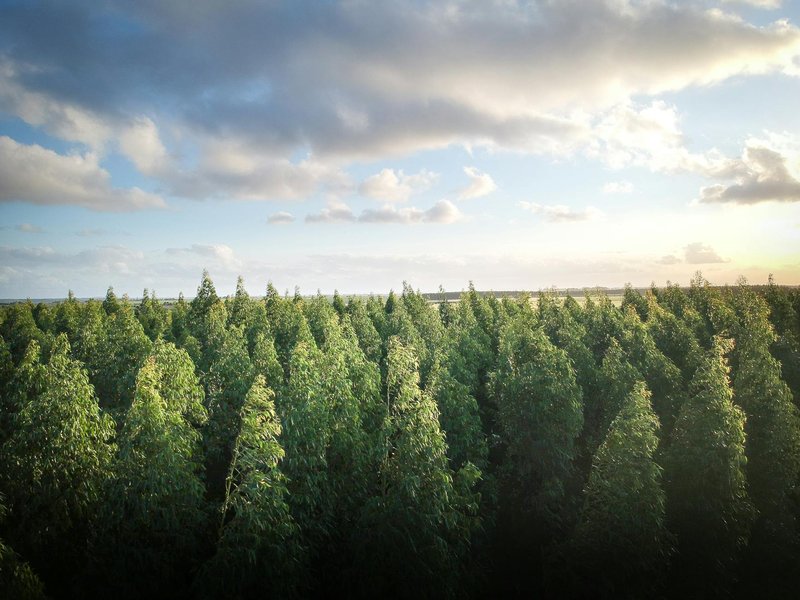
Not native — but you cannot describe the trees of Burundi honestly without it. Australian eucalyptus is the workhorse of Burundian woodlots, planted in tidy rows across hillsides because it grows fast and gives straight poles, firewood, and charcoal in a few years.
That speed is also the problem. Eucalyptus is thirsty and its leaf litter suppresses undergrowth, so heavy planting can dry soils and crowd out native regeneration. The country leans on it because the demand for wood is relentless and slow native trees simply can’t keep pace. It’s a practical compromise, not an ecological win.
Grevillea / Silky Oak (Grevillea robusta)
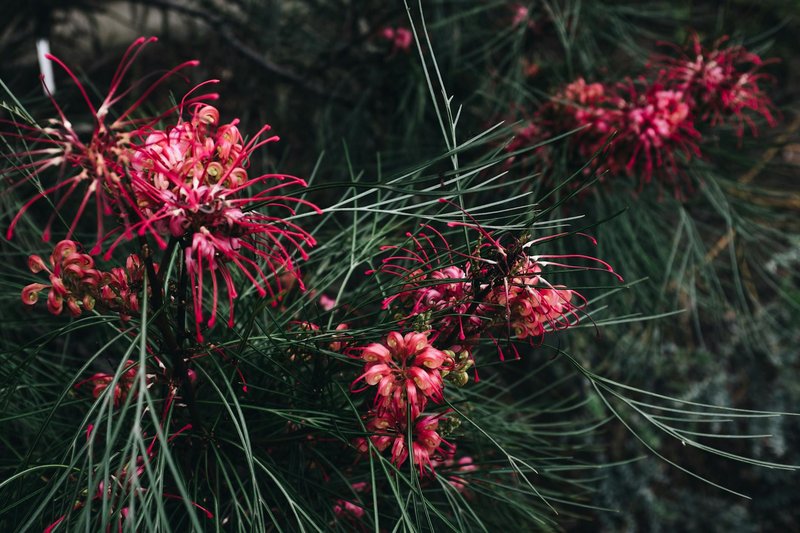
Another import that’s become part of the everyday landscape. Grevillea robusta, the silky oak, is the agroforestry favorite — tall, with finely divided fern-like leaves and showy orange flower spikes when it blooms. Farmers plant it along field edges and through coffee plots because it gives light shade, drops leaf litter that feeds the soil, and yields decent timber and firewood without competing too hard with crops.
In a country built on smallholder farming and coffee, grevillea threads through more hillsides than most native species do now.
Bamboo (Yushania alpina)
Up in the cool, wet montane zone of the Congo-Nile Divide, African mountain bamboo forms dense stands. Yushania alpina (often listed under the older name Arundinaria alpina) is technically a giant grass, not a tree, but it grows like one — tall, woody canes packed into thickets along the upper edges of forests like Kibira.
These bamboo belts matter out of proportion to their size. They’re prime habitat in the mountain ecosystem — sheltering many of Burundi’s native animals — and the canes are harvested for construction and crafts. Where the forest meets the high grassland, bamboo is what fills the gap.
Vegetation Zones at a Glance
The species above don’t grow randomly — they sort themselves by altitude and moisture into a few recognizable bands.
Lakeshore and lowland (Imbo plain, ~770–1,000 m). Hot and humid near Lake Tanganyika. Oil palm woodland, Hyphaene doum palms in places, and gallery forest along rivers. This is the most tropical face of Burundi.
Savanna and plateau (~1,000–1,800 m). The central heartland. Acacia–Combretum savanna woodland dominates, grading into farmland almost everywhere accessible. Open canopy, grassy ground, scattered fire-adapted trees.
Miombo woodland. On the better-drained plateau soils, Brachystegia–Julbernardia miombo takes over — denser and more closed than the acacia savanna, with that famous red leaf-flush before the rains.
Montane forest and bamboo (Congo-Nile Divide, up to ~2,600 m). The last closed-canopy forest, protected mainly inside Kibira National Park. Cool, wet, layered — broadleaf montane trees below, bamboo thickets above. This zone holds most of Burundi’s surviving forest biodiversity.
Deforestation and the Replanting Push
The hard truth: Burundi has lost most of its original forest cover. Centuries of farming on steep, crowded land, plus an unending need for firewood and charcoal — the primary cooking fuel for most households — have stripped the hills. Global Forest Watch tracks continued tree-cover loss across the country, and the FAO has repeatedly flagged Burundi among the more deforested nations in the region.
The consequences are physical. Bare slopes erode, landslides follow heavy rain, and soil that should grow food washes into the rivers and down to Lake Tanganyika. The loss is biological too: shrinking forest squeezes the habitat that the country’s mammals of Burundi depend on, pushing forest-dependent species into ever-smaller refuges.
The response has leaned heavily on planting. Government and NGO programs push tree-planting campaigns, and fast-growing species — eucalyptus, grevillea, pine — dominate because they deliver fuel and poles quickly. That helps with wood supply and some erosion control. What it doesn’t do is rebuild native forest; a hillside of even-aged eucalyptus is a tree farm, not an ecosystem. The genuinely valuable work is protecting what remains in places like Kibira and restoring native miombo and montane species, which is slower and far less visible than a planting-day photo op.
Quick-Reference Table
| Tree | Scientific name | Native? | Where you’ll find it | Main use |
|---|---|---|---|---|
| Moringa | Moringa oleifera | Naturalized | Homes, gardens | Edible leaves, nutrition |
| Brachystegia | Brachystegia spp. | Native | Miombo woodland | Timber, charcoal |
| Acacia | Vachellia / Senegalia spp. | Native | Savanna, plateau | Fodder, soil fixing, firewood |
| Oil palm | Elaeis guineensis | Native | Imbo lowlands, lakeshore | Palm oil |
| Combretum | Combretum spp. | Native | Savanna mix | Firewood, medicine |
| Eucalyptus | Eucalyptus spp. | Introduced | Woodlots, hillsides | Poles, firewood, charcoal |
| Silky oak | Grevillea robusta | Introduced | Farm edges, coffee plots | Shade, timber, firewood |
| Mountain bamboo | Yushania alpina | Native | Montane zone, Kibira | Construction, crafts |
The trees of Burundi tell two stories at once. One is botanical — a clean altitude gradient from oil palm lowlands through acacia savanna and miombo up to bamboo and montane forest. The other is human: a small, crowded country that has cut down most of its old trees and is now planting fast-growing replacements as quickly as it can. To actually find Burundi’s native forest in full, you go where the people aren’t — up the ridges of the Congo-Nile Divide, inside the park boundaries, where the last canopy still closes overhead.