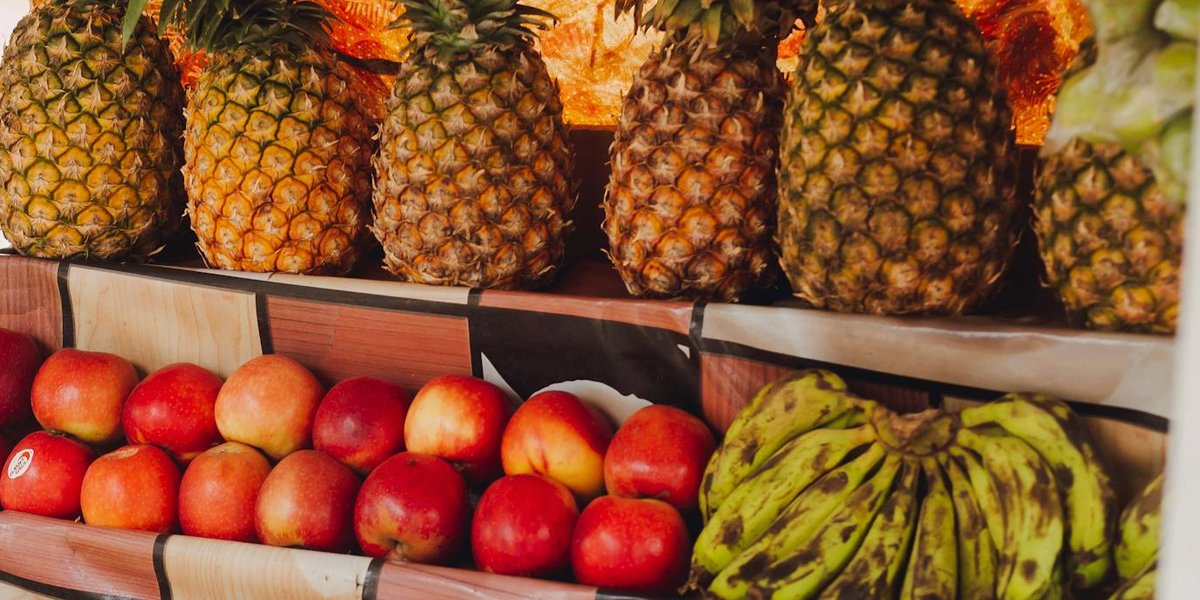
Most lists you find for “fruits of South Sudan” are actually about Sudan — the country to the north, with a different climate and a different plate. The two split in 2011, and the food maps never caught up. South Sudan sits lower and wetter: the Green Belt along the Congo and Central African borders gets real rainfall, the Nile basin floods on a schedule, and the southwest edges into tropical forest. That mix grows things you won’t find in Khartoum’s markets.
So this is the South Sudan list — the cultivated fruits people grow in compounds and sell along the Juba roads, plus the wild ones that feed cattle camps and get pounded into porridge when the harvest is thin. Where a fruit has a Dinka, Bari, or Arabic name worth knowing, it’s here.
Table of Contents
- Quick reference table
- The everyday fruits
- The wild and indigenous fruits
- When fruits are in season
- Frequently asked questions
Quick reference table
| Fruit | Local name | Scientific name | Main season | Where it grows |
|---|---|---|---|---|
| Mango | manga (Ar.) | Mangifera indica | Mar–Jul | Countrywide, dense in Equatoria |
| Banana / plantain | mauz (Ar.) | Musa spp. | Year-round | Green Belt, riverbanks |
| Pineapple | ananas | Ananas comosus | Dec–Mar | Western Equatoria |
| Guava | jawafa (Ar.) | Psidium guajava | Aug–Nov | Compounds, roadsides |
| Papaya | papaya / babai | Carica papaya | Year-round | Homesteads countrywide |
| Citrus (orange, lime) | mōz / lamun | Citrus spp. | Nov–Feb | Equatoria, Nile towns |
| Watermelon | batikh | Citrullus lanatus | Dry season | Nile basin, sandy soils |
| Lala / Borassus palm | agany (Dinka) | Borassus aethiopum | Apr–Jul | Floodplains, Bahr el Ghazal |
| Baobab | gunglez / tabaldi | Adansonia digitata | Dry season | Savanna, scattered |
| Tamarind | aradeib | Tamarindus indica | Dec–Mar | Savanna, riverine |
| Desert date (lalob) | thou (Dinka) | Balanites aegyptiaca | Dry season | Drier north, cattle land |
| Doum palm | dolib | Hyphaene thebaica | Year-round | Nile banks, arid zones |
| Shea fruit | lulu | Vitellaria paradoxa | May–Aug | Eastern Equatoria, Bahr el Ghazal |
| Jackfruit | — | Artocarpus heterophyllus | Jun–Sep | Green Belt, Yei area |
The everyday fruits
These are the ones stacked in pyramids on market tables and sold by kids at junctions. Most are introduced species that took to South Sudan’s climate centuries ago and now read as local.
Mango
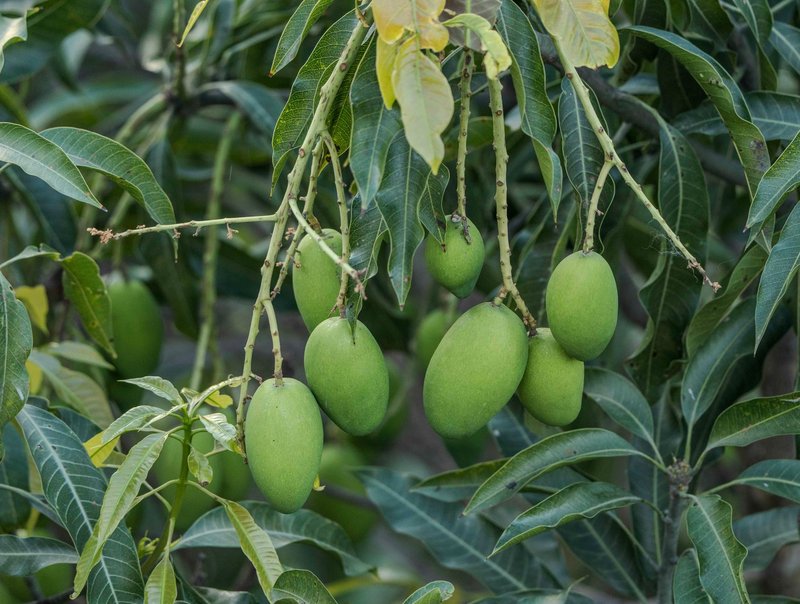
Mango is the fruit South Sudan runs on. When the rains break around March and the trees in Yei, Maridi, and Juba start dropping fruit, mango stops being a treat and becomes a meal — people eat through the glut, kids climb for the high ones, and the surplus rots under the trees because there’s more than anyone can sell. The common roadside types are stringy and turpentine-tangy, the kind you suck off the seed rather than slice. Grafted varieties exist in town markets but the wild-grown compound trees are the backbone.
Nutritionally it’s a vitamin-A and vitamin-C heavyweight, which matters in a season when other fresh produce is scarce. The mango glut lines up with the start of the wet season, so for a few months it fills a real gap.
Banana and plantain
Bananas grow wherever there’s reliable moisture — the Green Belt, irrigated patches, the edges of seasonal streams. Sweet bananas get eaten fresh; the starchier plantain (cooking banana) gets boiled or fried and treated like a staple carb rather than a fruit. Both crop year-round, which makes them one of the few dependable fresh foods between the seasonal peaks of everything else.
Pineapple
Western Equatoria, with its forest-edge rainfall, is the pineapple zone. The fruit here tends to be smaller and sharper than the supermarket-perfect ones grown for export elsewhere, with more acid bite. Peak supply runs through the dry months from December into March, when you’ll see them hauled to Juba by the truckload and sold whole.
Guava
Guava is the opportunist — it seeds itself in compounds and along roadsides and fruits heavily with almost no help. The common type has pink-to-salmon flesh packed with hard seeds and a smell you catch before you see the tree. It carries more vitamin C per gram than most citrus, which is part of why it shows up as a casual everyday snack rather than a market headliner. Season peaks in the back half of the year, roughly August through November.
Papaya
Papaya (called babai in much of the region) grows fast and fruits within a year, so it’s the fruit you plant when you want something quick behind the house. It crops more or less continuously, the soft orange flesh is easy food for kids and the elderly, and the unripe green fruit gets cooked as a vegetable. The seeds have a peppery bite and a folk reputation as a digestive aid.
Citrus
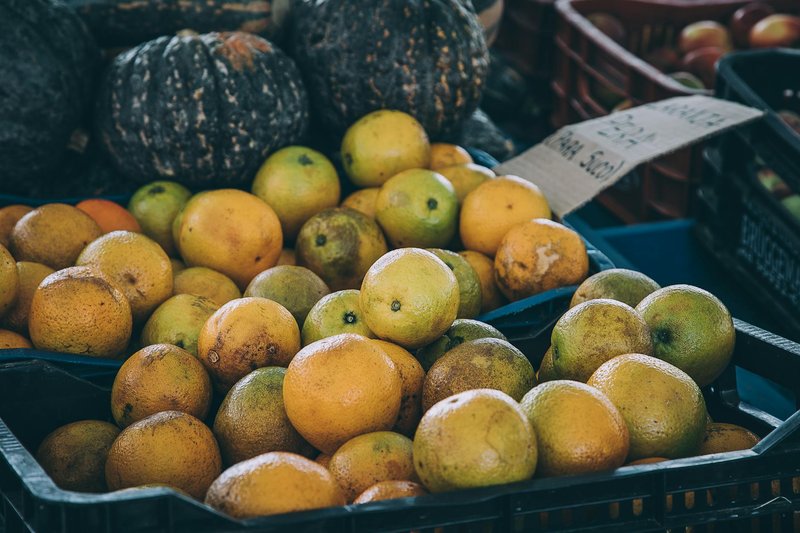
Oranges, limes, and lemons grow through Equatoria and the Nile towns, peaking in the cooler dry stretch from November into February. South Sudanese oranges often stay green-skinned even when ripe — skin color tracks night temperature, not sweetness, so a green orange here can be perfectly sweet inside. Limes get squeezed over grilled fish and into tea constantly.
Watermelon
Watermelon belongs to the drier, sandier ground of the Nile basin and the north, where it ripens through the dry season as a water-rich relief crop. This is the one fruit on the list that overlaps cleanly with greater Sudan — Citrullus lanatus traces its wild ancestors to this part of Africa, and desert-edge communities have grown both sweet and seed types for a very long time.
The wild and indigenous fruits
Here’s where South Sudan separates itself from every generic tropical-fruit list. These are mostly uncultivated trees of the savanna and floodplain — drought-hardy, often spiny, and tied to specific local foods and customs. They’re also what carries communities through the hungry gap before the harvest. Most of them double as the region’s most important trees of South Sudan, valued for shade, timber, and fencing as much as for the fruit they drop.
Lala palm (Borassus / African fan palm)
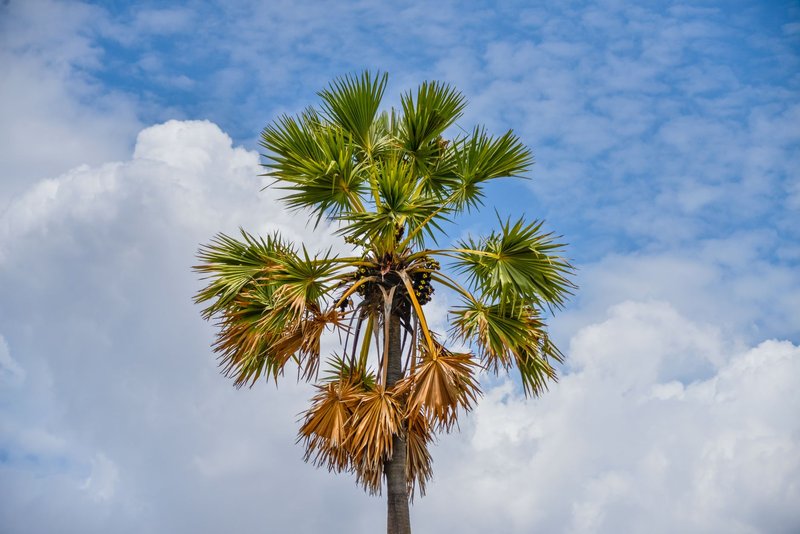
The lala palm is the one outsiders fixate on, sometimes nicknamed the “coconut of South Sudan.” The tree is a tall fan palm with a bulging trunk; the fruit is a heavy, fibrous, orange-fleshed thing the size of a grapefruit or bigger. You don’t eat it like an apple — the ripe pulp is squeezed and the juice strained, with a flavor somewhere between mango and dates. The more prized food is actually the germinating seedling: when a fallen seed sprouts, it pushes down a fleshy, hollow tuber (the “hypocotyl”) that’s dug up, roasted, and eaten, tasting faintly of water chestnut. In Dinka cattle-camp country across Bahr el Ghazal, agany is genuine food, not a curiosity. The IUCN tracks Borassus aethiopum across its African range, where the same fan palms anchor floodplain ecosystems.
Baobab
The baobab — the upside-down tree — drops a hard, gourd-like pod full of chalky white pulp clinging to the seeds. That dry pulp dissolves into a tart, lemony drink and gets stirred into porridge; it’s one of the densest plant sources of vitamin C going, which is why it’s earned the “superfruit” label in export markets. In South Sudan it’s plain food and medicine, no marketing required. The young leaves get cooked as greens, and the seeds get pressed for oil. Locally you’ll hear it called gunglez or, in the Arabic-influenced north, tabaldi. The baobab is one of the signature African savanna trees, spread thinly across the same dry grasslands from West Africa to the Nile.
Tamarind
Tamarind grows as a big shade tree across the savanna, and the brittle brown pods hold a sticky, sour-sweet pulp around the seeds. That pulp (aradeib) is the engine of a beloved cold drink — soaked, strained, sweetened — and it goes into sauces and stews to add sourness the way a cook elsewhere might reach for vinegar or lime. It also doubles as a folk remedy for upset stomachs. The pulp keeps for months, which made it a portable food long before refrigeration.
Desert date (lalob)
The desert date, called lalob in Arabic and thou in Dinka, comes off Balanites aegyptiaca, a thorny tree that shrugs off drought and grows where almost nothing else fruits. The yellow-brown fruit has a thin, bittersweet edible layer over a very hard stone, and the kernel inside yields an edible oil. This is a hunger-season fruit above all — it ripens in the dry months and feeds people and livestock when the green fruits are long gone. Nearly every part of the tree gets used, from the fruit to the bark to the spiny branches for fencing. It’s a classic example of the hardy savanna plants that hold the landscape together precisely because they thrive where softer species fail.
Doum palm
The doum palm is the odd palm that branches, splitting into a forked silhouette you won’t mistake. Its fruit is woody and shiny-brown, and the part you eat is the dry, fibrous outer rind — gnawed off in pieces, it tastes like gingerbread, genuinely. It’s less a meal than a chew, popular with kids and travelers, and the hard kernel inside has even been carved as a vegetable-ivory substitute. The trees line stretches of the Nile and push into the arid country where date palms thin out.
Shea fruit
People know shea for the butter pressed from its nut, but the tree fruits first. The shea fruit (lulu) is a green, plum-sized berry with sweet, sticky pulp that gets eaten fresh during the rains — a genuine seasonal treat in Eastern Equatoria and parts of Bahr el Ghazal. Only after the pulp is gone does the nut get cracked, dried, and processed into the fat used for cooking and skin care. So the same tree gives a fruit in one season and a cooking oil that lasts the year.
Jackfruit
Jackfruit is the newcomer and the giant — a single fruit can outweigh a small child, the largest tree-borne fruit in the world. It’s not native, but it’s taken hold in the humid Green Belt around Yei and the southwest forest edge, where the climate suits it. The ripe yellow bulbs inside are intensely sweet and gummy; the unripe fruit gets cooked as a starchy vegetable. It’s still a relative rarity in northern markets, which makes it a southwest specialty more than a national fruit.
When fruits are in season
South Sudan’s fruit calendar tracks the rains, which generally run April through October in the south and shorter in the north. The pattern, roughly:
- Late dry season into early rains (Mar–Jul): mango glut, lala palm, shea fruit. The big eating window.
- Mid-to-late rains (Aug–Nov): guava, jackfruit tailing off, early citrus.
- Dry season (Dec–Mar): pineapple, citrus, watermelon, tamarind, baobab, desert date — the hardy and stored fruits that carry through the dry stretch.
- Year-round: banana, plantain, papaya, doum palm.
The wild savanna fruits — baobab, tamarind, desert date, doum — matter most precisely because they ripen or keep through the dry season, bridging the gap when the cultivated trees have finished. That’s not a quirk; it’s the whole reason these trees stay protected on the landscape instead of being cleared. A 2018 FAO field guide to South Sudan’s food plants catalogs dozens more of these indigenous species, most of them barely known outside the communities that rely on them.
Frequently asked questions
What fruits are native to South Sudan? Genuinely indigenous fruits include the lala palm (Borassus aethiopum), baobab, tamarind, desert date (lalob), doum palm, and shea fruit. Mango, banana, pineapple, papaya, and citrus are introduced but now grow widely and feel local.
What is the “coconut of South Sudan”? That nickname belongs to the lala palm — the Borassus or African fan palm. Its fibrous orange fruit and the fleshy sprouted seedling are both eaten, though it’s botanically unrelated to the true coconut.
Are fruits of Sudan and South Sudan the same? Mostly no. South Sudan is wetter and more tropical, so it grows pineapple, jackfruit, and lush mango that the drier north can’t. The overlap is in hardy savanna fruits like tamarind, baobab, watermelon, and desert date.
When is mango season in South Sudan? Roughly March through July, peaking with the first rains. During the glut, mango shifts from snack to staple, especially around Equatoria.
Which South Sudanese fruit is the most nutritious? Baobab pulp is the standout for vitamin C and fiber, often ranking among the richest plant sources of vitamin C measured. Guava and mango also pull serious weight for vitamins A and C during their seasons.