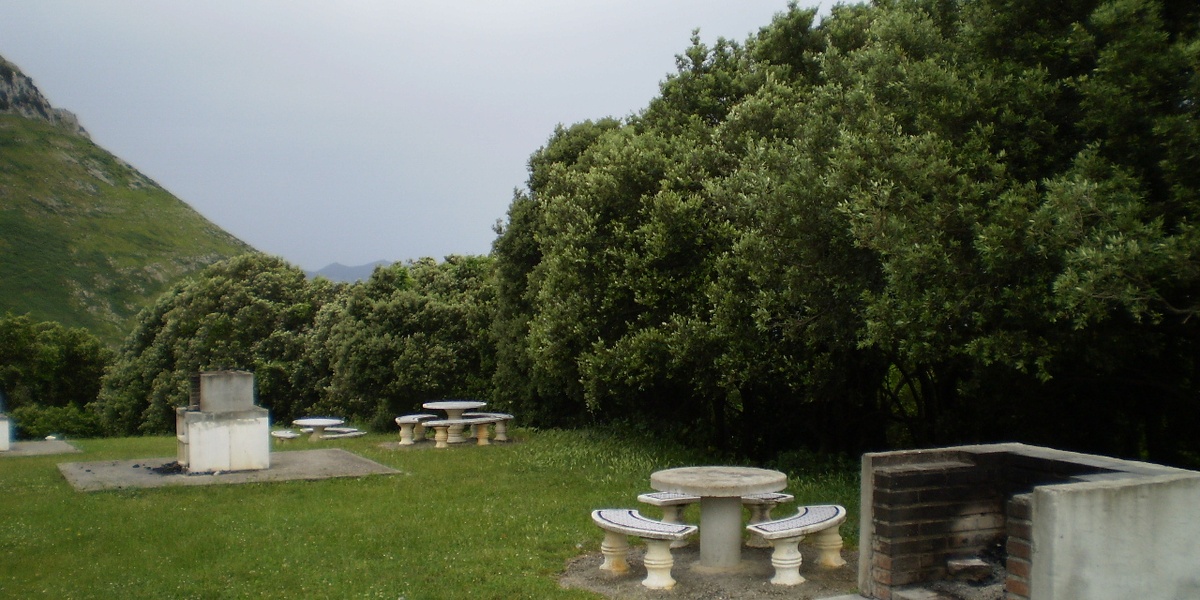
Perched on a rocky ridge with mixed woodland and scrub, San Marino hosts a variety of habitats that support an interesting mix of flora. Walks around its hills reveal hedgerows, meadows and shaded banks where native species quietly persist.
There are 25 San Marino’s native plants, ranging from Blackthorn to Wood violet. For each species, you’ll find below the columns Scientific name,Typical height (cm),Where found to help identify and compare them — you’ll find below.
When is the best time to see these native plants in San Marino?
Spring and early summer are prime for spotting blooms (many shrubs and wildflowers flower then), while late summer and autumn show fruit and seed stages; check shaded valleys for early spring violets and hedgerows for spring-flowering Blackthorn.
Can I collect or cultivate these species in my garden?
Cultivation of native species is usually encouraged for habitat value, but collecting wild plants or seeds may be regulated—use reputable nurseries or seed sources and consult local rules before removing plants from the wild.
San Marino’s Native Plants
| Common name | Scientific name | Typical height (cm) | Where found |
|---|---|---|---|
| Downy oak | Quercus pubescens | 800-1,500 | dry limestone slopes, Mount Titano woodlands |
| Turkey oak | Quercus cerris | 1,000-2,000 | mixed deciduous forests, valley slopes |
| European beech | Fagus sylvatica | 1,500-3,000 | cooler, higher woodland on Titano ridge |
| Hornbeam | Carpinus betulus | 600-1,800 | mixed forests, hedgerows, rocky slopes |
| Hop-hornbeam | Ostrya carpinifolia | 700-1,800 | limestone woods, rocky slopes |
| Field maple | Acer campestre | 500-1,500 | woodland edges, hedgerows, clearings |
| Common alder | Alnus glutinosa | 600-1,500 | streamsides, damp valleys |
| Hazel | Corylus avellana | 200-600 | woodland understory, hedgerows |
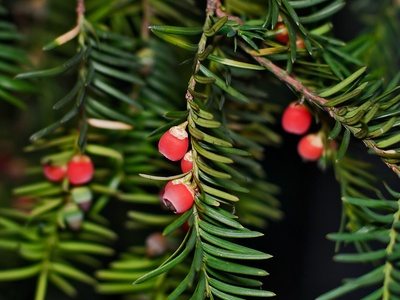
| European yew | Taxus baccata | 1,000-2,500 | shady limestone woods, old churchyards |
| Common box | Buxus sempervirens | 100-1,000 | shady limestone outcrops, maquis |
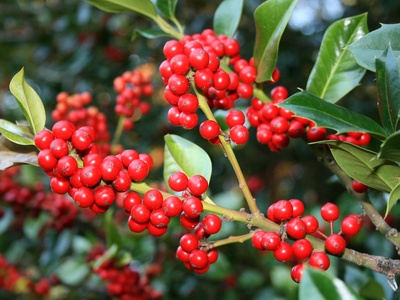
| Holly | Ilex aquifolium | 200-800 | woodland understory, shaded ravines |
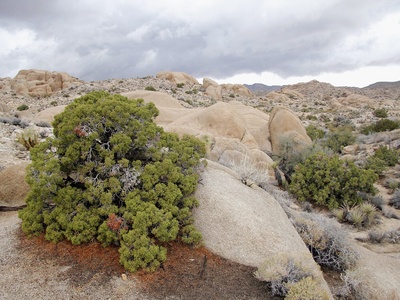
| Juniper | Juniperus communis | 100-800 | rocky slopes, open scrub |
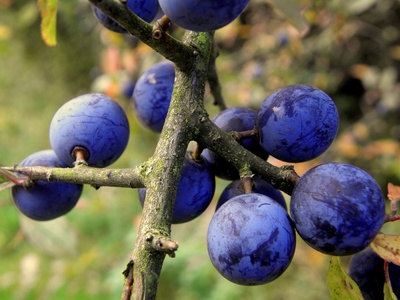
| Blackthorn | Prunus spinosa | 150-400 | hedgerows, scrub, forest edges |
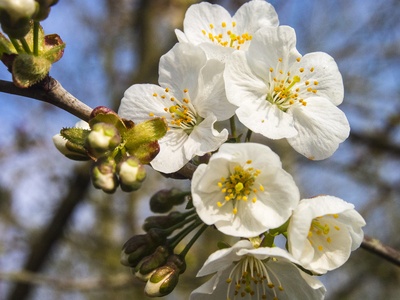
| Wild cherry | Prunus avium | 800-1,200 | mixed woodlands, hedgerows |
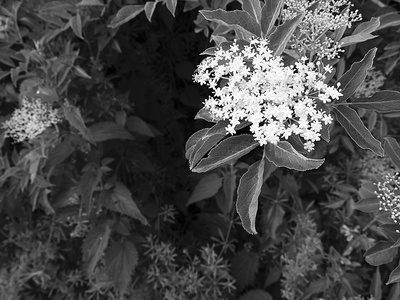
| Elder | Sambucus nigra | 200-600 | woodland edges, hedgerows, clearings |
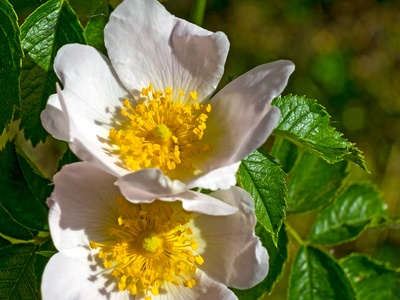
| Dog rose | Rosa canina | 100-300 | hedgerows, scrubby slopes |
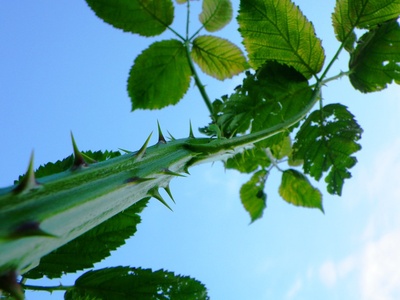
| Bramble | Rubus ulmifolius | 50-300 | hedgerows, forest edges, clearings |
| Common ivy | Hedera helix | 20-300 | woodland trunks, rocky cliffs, hedges |
| Traveller’s-joy | Clematis vitalba | 100-400 | hedgerows, scrub, woodland edges |
| Common broom | Cytisus scoparius | 50-300 | open slopes, disturbed ground, scrub |
| Wood anemone | Anemone nemorosa | 5-20 | beech and mixed woods, shaded ground flora |
| Early-purple orchid | Orchis mascula | 20-40 | meadows, grassy clearings, woodland edges |
| Cowslip | Primula veris | 10-30 | unimproved meadows, grassy slopes, open woodland |
| Red fescue | Festuca rubra | 10-60 | grassland, roadside verges, clearings |
| Wood violet | Viola reichenbachiana | 5-15 | woodland floor, shaded hedgerows |
Images and Descriptions
Downy oak
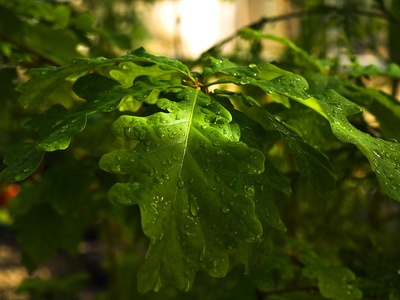
Small to medium oak with greyish, softly hairy leaves and acorns. Forms open woodland on sunny, dry slopes; a key species of San Marino’s oak forests, supporting insects, birds and the familiar warm-coloured canopy.
Turkey oak
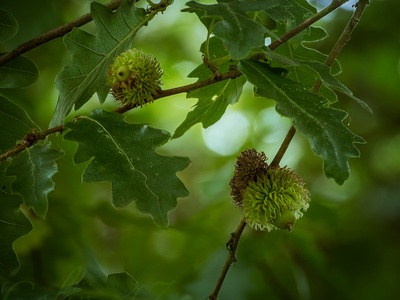
Distinctive oak with rough, shaggy bark and long, bristled acorns. Common in mixed woods around San Marino, tolerates poorer soils and helps form the diverse oak-dominated stands of the central Apennines.
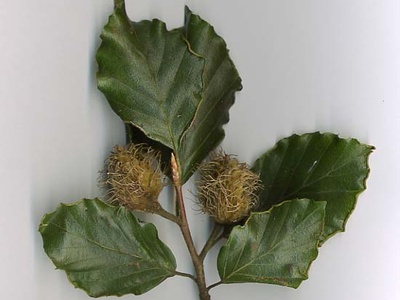
European beech
Tall, smooth-barked tree forming dense, shady stands. Recognizable by smooth grey bark and simple ovate leaves; creates cool, humid beechwood habitats that host shade-loving plants and many fungi.
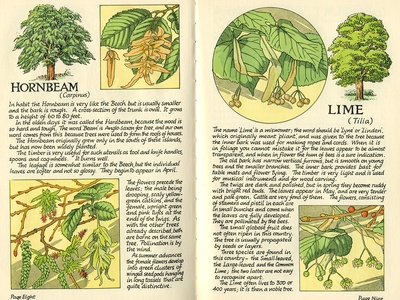
Hornbeam
Small to medium tree with fluted bark and serrated leaves. Common on slopes and in hedgerows, often coppiced historically; its strong wood and distinctive fruit make it an obvious part of native woodland structure.
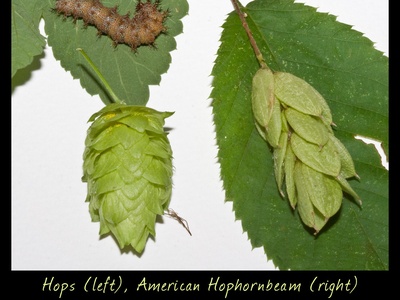
Hop-hornbeam
Slender tree with flaky bark and dangling papery fruit clusters resembling hops. Prefers dry, calcareous soils and forms part of warm oak-hornbeam communities; fruit clusters help with easy identification in summer.
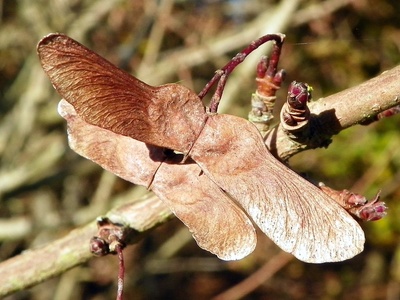
Field maple
Small maple with usually five-lobed leaves and paired winged samaras. Common in hedgerows and woodland edges, its golden autumn colour and distinctive paired seeds make it easy to spot across the landscape.

Common alder
Water-loving tree with rounded serrated leaves and small woody cones. Grows along streams and damp hollows; nitrogen-fixing roots improve soils and its catkins and cones are diagnostic features in early spring and autumn.
Hazel
Multi-stemmed shrub with rounded leaves and edible nuts borne in leafy husks. Produces yellow catkins before leaves; common in understories and hedgerows, historically coppiced and valuable for wildlife and human use.
European yew
Long-lived evergreen tree with flat dark needles and red arils. Extremely shade-tolerant and often ancient where found; foliage and seeds are toxic yet its dark form and berries are locally notable in old woodlands and cemeteries.
Common box
Dense evergreen shrub with small glossy leaves and inconspicuous yellow flowers. Prefers calcareous soils and rocky sites; forms dense stands that provide year-round shelter for birds and characteristic evergreen structure on rocky ridges.
Holly
Evergreen shrub with glossy, spiny leaves and conspicuous red berries in autumn and winter. Stands out when berries remain on bare branches; provides important winter food for birds and evergreen shelter in shady woodland areas.
Juniper
Coniferous shrub with needle-like leaves and small fleshy cones that look like berries. Thrives in exposed, rocky situations and open scrub, offering fragrant berries used historically and shelter for birds on windswept slopes.
Blackthorn
Dense, thorny shrub with profuse white flowers in early spring and bluish-black sloes in autumn. Flowers appear before leaves, making spring displays vivid; forms important nesting and protective thickets for wildlife.
Wild cherry
Medium tree with glossy leaves, clusters of white spring blossom and red-to-black cherries. Striking in spring blossom; fruits attract birds and mammals and the species commonly regenerates naturally in woodland openings and edges.
Elder
Large multi-stemmed shrub with pinnate leaves, flat umbels of white flowers and dark purple berries. Flowers used traditionally in cordials; berries feed wildlife and the plant is frequent in disturbed ground and sunny hedgerow margins.
Dog rose
Arching thorny shrub with pale pink to white flowers and bright red hips. Common in hedgerows and scrub, hips persist into winter providing food for birds; flowers and hips are easy to recognise and popular with walkers.
Bramble
Sprawling, thorny shrub with compound leaves, white to pink flowers and blackberries. Rapidly colonises disturbed ground and margins; prolific fruiting attracts wildlife and people alike, and its cane habit and thorns make it unmistakable.
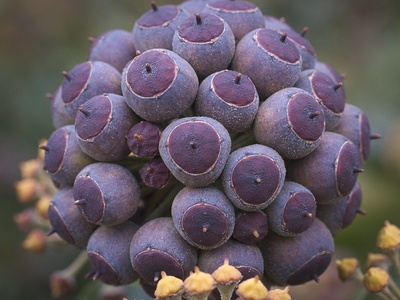
Common ivy
Evergreen climber with lobed juvenile leaves and glossy adult foliage; produces yellow-green flowers and black berries. Climbs trees and walls or forms groundcover; valued for late-season nectar and year-round shelter for invertebrates and birds.
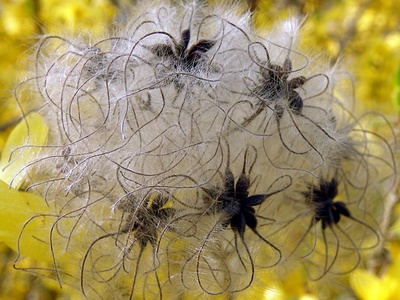
Traveller’s-joy
Woody climber with panicles of small cream flowers and distinctive feathery seedheads. Common on hedges and field margins; fluffy seedheads in late summer and autumn are very noticeable and help with quick identification.
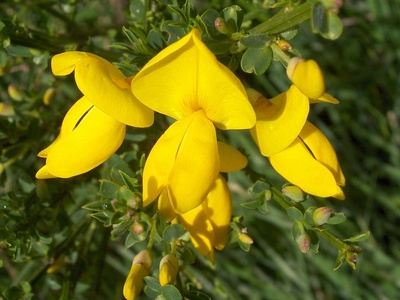
Common broom
Slender green-stemmed shrub with bright yellow pea-like flowers in spring. Colonises sunny, open places and disturbed soils; showy floral displays attract bees and add a splash of colour to scrubby hillsides.
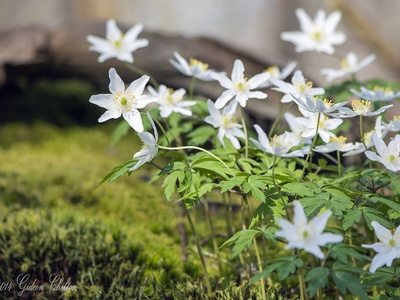
Wood anemone
Delicate spring perennial with white star-like flowers and divided basal leaves. Often carpets the woodland floor in early spring before leaf-out; a good indicator of long-established, semi-natural woods in San Marino.
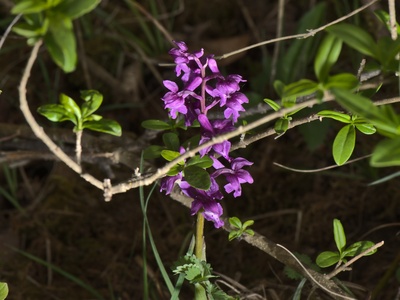
Early-purple orchid
Showy spring orchid with dense spike of pink-purple flowers above a rosette of spotted leaves. An attractive and eye-catching plant in grassy clearings and light wood margins, appreciated by walkers and orchid enthusiasts.
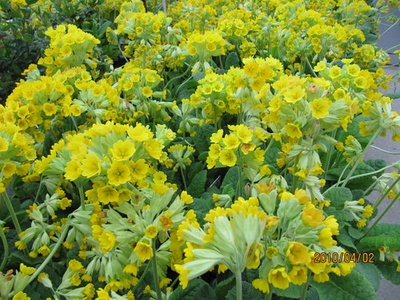
Cowslip
Nodding clusters of yellow flowers on slender stalks above a basal rosette. A classic indicator of species-rich calcareous grassland, blooming in spring and easily found on traditional meadows and open limestone slopes.
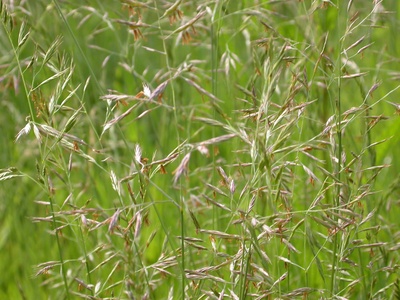
Red fescue
Fine-leaved perennial grass forming dense tufts and tolerant of dry calcareous soils. Common across meadows and verges, it provides important groundcover and structural diversity in grassland habitats around San Marino.
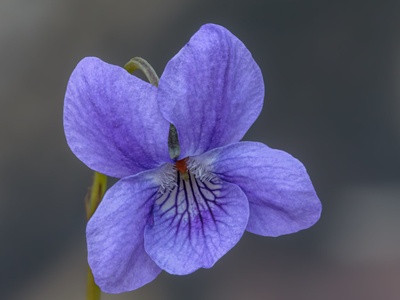
Wood violet
Low perennial with heart-shaped leaves and delicate purple flowers in spring. Subtle but widespread in moist shaded spots, its small flowers carpet the ground and are a quiet sign of healthy woodland understorey vegetation.