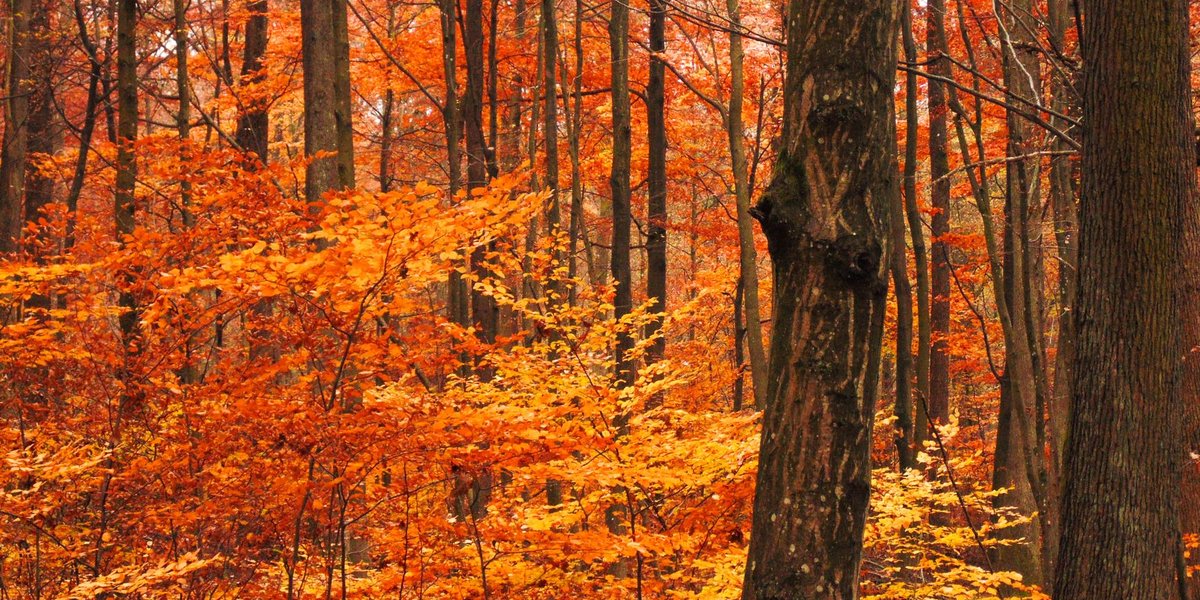
Temperate forests grow wild apples, pears, plums, cherries, persimmons, pawpaws, hawthorn haws, elderberries, blueberries, raspberries and blackberries, plus nuts like acorns, chestnuts and hazelnuts. Most ripen between late summer and first frost, and most of them feed animals long before they feed people.
This guide sorts them by type, gives you a ripening calendar, and covers the two questions people usually have next: which ones are safe to eat, and what the forest gets out of producing them.
Contents
- The short answer: a quick-reference table
- Why temperate forest fruit peaks in autumn
- Berries and small fruits
- Pome and stone fruits
- Nuts and hard mast
- Deciduous vs. coniferous temperate forests
- What the fruit does for the forest
- Foraging safety and toxic look-alikes
- Summary
The short answer: a quick-reference table
Regions below are where each fruit is native or long established in the wild. Ripening months are for the Northern Hemisphere and shift a few weeks with elevation and latitude.
| Fruit | Typical regions | Ripens | Edible for people? |
|---|---|---|---|
| Wild blueberry / bilberry | North America, Europe | Jul to Sep | Yes, raw |
| Wild raspberry | North America, Europe, East Asia | Jun to Aug | Yes, raw |
| Blackberry (bramble) | Europe, North America | Aug to Oct | Yes, raw |
| Elderberry | North America, Europe | Aug to Oct | Only cooked |
| Hawthorn (haws) | North America, Europe, East Asia | Sep to Nov | Yes, bland raw; better cooked |
| Wild cherry | Europe, East Asia, North America | Jun to Aug | Yes (pits are toxic) |
| Wild plum / sloe | Europe, North America | Aug to Oct | Yes; sloes are very tart |
| Crab apple / wild apple | Europe, Central Asia, North America | Sep to Nov | Yes; sour |
| Wild pear | Europe, Asia | Sep to Oct | Yes, often after softening |
| American persimmon | Eastern North America | Oct to Dec | Yes, only when fully soft |
| Pawpaw | Eastern North America | Sep to Oct | Yes, raw |
| Acorns | All three regions | Sep to Nov | Yes, after leaching tannins |
| Sweet chestnut | Europe, East Asia, eastern North America | Sep to Nov | Yes, cooked |
| Hazelnut | Europe, North America, East Asia | Aug to Oct | Yes, raw or roasted |
Why temperate forest fruit peaks in autumn
Tropical forests fruit all year somewhere. Temperate forests don’t have that luxury. Trees here run on a short growing season, so most species time their seed crop for late summer through autumn, when animals are fattening up for winter and will carry or bury seeds before the ground freezes.
Research on fruiting seasonality in East Asian forests, such as this Kyoto University study comparing temperate and tropical sites, finds exactly this pattern: fruiting in temperate stands clusters into a narrow seasonal window, while tropical stands spread it out. Berries and cherries come first, apples and nuts follow, and persimmons and hawthorn hang on into the cold.
For a forager, that means a calendar with a clear order: brambles and blueberries in summer, plums and elderberries in late summer, then the big autumn wave.
Berries and small fruits
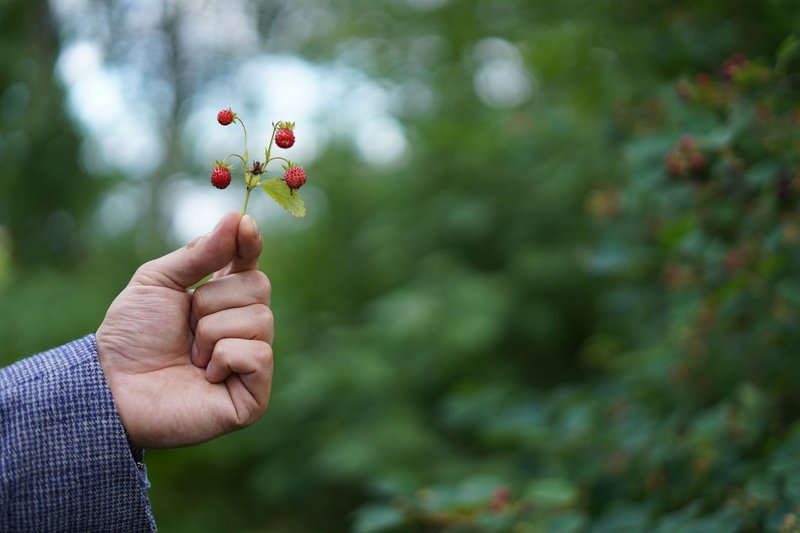
Blueberries and bilberries. Wild blueberries (North America) and bilberries (Europe) grow low in acidic soil under pines and oaks. They’re smaller and more intensely flavored than store-bought, and they stain your fingers because the pigment runs all the way through the fruit. Bilberries are dark inside; most cultivated blueberries are pale.
Raspberries and blackberries. Both are brambles that colonize forest edges and clearings after a tree falls or a path is cut. Raspberries pull off the plant leaving a hollow core. Blackberries keep their core. That one difference is the standard way to tell them apart in the field.
Elderberries. Heavy purple-black clusters on a shrub that likes damp edges. Raw berries, stems and leaves contain compounds that cause nausea and vomiting. Cooked berries are safe and are the basis of syrups, jams and wines.
Hawthorn. The small red haws are mealy and mild when raw. They’re high in pectin, which is why they’ve long been turned into jellies and sauces. The tree is easy to recognize by its thorns and lobed leaves. Plenty of less familiar forest fruits are worth knowing too, and this roundup of 21 unusual berries covers several.
Pome and stone fruits
Wild apples and crab apples. Europe’s wild apple (Malus sylvestris) and the many North American crab apples bear small, hard, sour fruit. They’re useless in a lunchbox and excellent in cider, jelly and baked dishes. Deer, bears and foxes eat them well into winter.
Wild pears. Hard and gritty until they soften off the tree. Foragers often pick them just ahead of the animals and let them ripen indoors.
Wild cherries and plums. Bird cherries, sweet wild cherries and blackthorn (sloe) are the main players in Europe; chokecherries and wild plums fill the same niche in North America. Flesh is edible. The pits contain cyanogenic compounds, so don’t crack and eat them.
American persimmon. A tree of eastern North American woodlands, with orange fruit about the size of a golf ball. Unripe persimmons are so astringent they pucker your whole mouth. Ripe ones, wrinkled and soft, taste like dates and honey. The old rule that you need a frost is a myth: the fruit ripens when it ripens, and softness is the test.
Pawpaw. The largest edible fruit native to the United States. Pawpaws grow in the understory of eastern deciduous forests, where the trees form dense patches. The custard-textured flesh tastes somewhere between banana and mango. Ripe fruit drops or comes off with a gentle tug, and bruises easily, which is the reason you almost never see them in supermarkets.
Nuts and hard mast
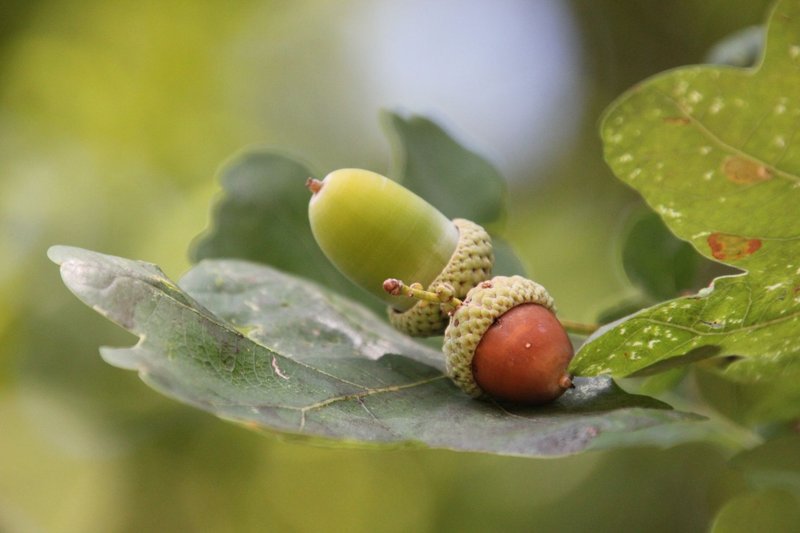
Foresters call tree seeds and nuts eaten by wildlife “mast.” Hard mast (acorns, chestnuts, hazelnuts, beechnuts, hickory nuts) is the backbone of the temperate forest food web. Soft mast is the fleshy fruit above.
Acorns. Oaks produce more edible calories in a temperate forest than almost any other tree. The FAO’s work on non-wood forest products from temperate broad-leaved trees lists acorns among the most widely used traditional foods across Europe, Asia and North America. They’re too bitter to eat raw because of tannins. Shell them, grind or chop them, and leach in cold water until the water runs clear. White oak acorns need less leaching than red oak acorns. Browsers use them too: the Japanese serow eats acorns alongside leaves and shoots.
Sweet chestnuts. Native to southern Europe and Asia Minor, with relatives in East Asia. American chestnuts once dominated the Appalachian forests until chestnut blight wiped out most mature trees in the early 1900s. Roast them with a slit cut in the shell so they don’t burst.
Hazelnuts. Hazel shrubs fill the understory of mixed woodland from Britain to Japan. Squirrels and jays usually beat people to them. Pick when the husk turns brown and the nut slips easily out.
Beechnuts and hickory nuts. Beech trees mast heavily only every few years, and when they do, mice, deer and turkeys all benefit. Hickory nuts are among the sweetest wild nuts in eastern North America but take a hammer and patience.
Deciduous vs. coniferous temperate forests
Almost everything above belongs to temperate deciduous forest: oak, beech, maple, hickory, hazel, cherry. The broadleaf canopy lets enough light through in spring and autumn for shrubs and understory trees to fruit. Moldova is a good regional example of this zone, and its native trees and forests show how the species above fit together on the ground.
Temperate coniferous forest (think Pacific Northwest, parts of the Alps and Japan) works differently. Dense evergreen shade limits berries, so fruit shows up in gaps, edges and along streams: huckleberries, salal, salmonberry, thimbleberry and wild currants in the Pacific Northwest. Instead of fruit, the main food from the trees themselves is pine nuts and conifer seeds, which squirrels, crossbills and nutcrackers harvest straight from the cones.
What the fruit does for the forest
The fruit isn’t there for us. It’s a bribe.
- Seed dispersal. Birds swallow berries and haws whole and drop the seeds far from the parent tree. Mammals move larger seeds. Jays are famous for caching acorns, and the ones they forget become new oaks.
- Winter fat. Bears, badgers, deer and wild boar gain much of their winter weight in autumn mast. A poor acorn year can mean leaner animals and more wandering into farmland.
- Population cycles. Heavy mast years are followed by booms in mice and squirrels, which in turn affect owls, foxes and even tick numbers.
- Nutrient cycling. Fruit and nuts that go uneaten rot into the soil and feed fungi and insects.
For wildlife, the dividing line between “edible” and “inedible” is much looser than for people. Deer eat plenty of fruit we’d spit out. Sour crab apples and bitter acorns are standard fare for them.
Foraging safety and toxic look-alikes
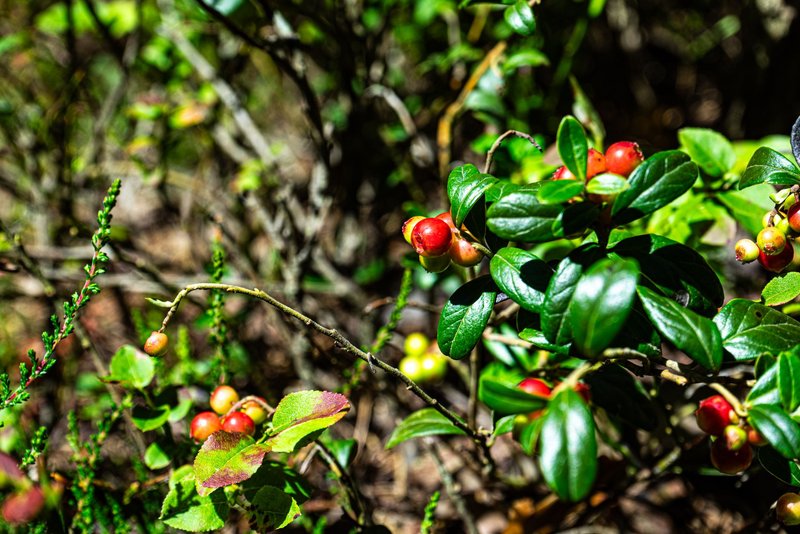
Wild fruit is only as safe as your identification. A few rules cover most mistakes:
- Never eat a fruit you can’t name to species. “Looks like a blueberry” is not an ID. Confirm with leaves, bark, growth habit and a regional field guide. The USDA PLANTS Database is a good place to check species ranges in the United States.
- Check the whole plant, not just the fruit. Berries are the worst feature to identify by alone.
- Know the dangerous ones in your region. In temperate forests, the most common culprits are:
- Baneberry (Actaea). Glossy red or white berries on a stalk, highly toxic.
- Pokeweed. Dark purple berries in drooping clusters, poisonous when raw.
- Moonseed. Looks like a wild grape but has a single crescent-shaped seed. Wild grapes have several round seeds.
- Bittersweet nightshade. Red, oval berries that look edible and aren’t.
- Virginia creeper. Blue-black berries that irritate and can poison.
- Yew. The red aril is sweet, but the seed inside is deadly, and every other part of the tree is toxic.
- Lily-of-the-valley and holly. Common red berries in gardens and woods that cause illness.
- Horse chestnuts are not sweet chestnuts. Horse chestnuts (conkers) are bitter and toxic. Sweet chestnuts have a spiky, hedgehog-like husk with long, fine spines. Horse chestnut husks have short, stubby spikes.
- Avoid roadsides, sprayed fields and polluted ground. Fruit absorbs what the plant takes up.
- Start small. Even edible wild foods can upset your stomach the first time.
- Get permission and follow local rules. Many parks and reserves prohibit foraging.
If you suspect you or someone else has eaten a toxic plant, contact your local poison control center immediately.
Summary
Temperate forest fruits fall into three groups: soft summer berries, autumn pome and stone fruits, and nuts that carry the forest through winter. Blueberries, raspberries, blackberries, wild cherries, pawpaws and hazelnuts can be eaten with little preparation. Elderberries, chestnuts and acorns need cooking or leaching first. Persimmons wait until they’re soft.
The same fruits that make a good foraging trip are also the forest’s seed-dispersal system and its winter pantry. Take a share, leave plenty behind, and be sure of the name before anything goes in your mouth.