Table of Contents
- Why Tonga’s Plants Look Different From the Rest of the Pacific
- Heilala: The Flower on Every Garland
- Vava’u’s Vanilla Boom and Bust
- The Real Natives: Plants You Won’t Find on a Postcard
- Common Tropical Plant or True Tongan Native? A Quick Reference
- What’s Actually Threatening These Plants
- The Short List Worth Knowing
Most “plants of Tonga” pages give you a Latin species list or a single photo of a hibiscus and call it a day. Neither tells you much. Tonga’s real botanical story is a 170-island archipelago where the flora splits cleanly into three camps: things Polynesian voyagers brought with them a thousand years ago, things that arrived on their own by wind, wave, and bird, and a small, cornered-off group that exists nowhere else on the planet. That third group is the one worth knowing.
Why Tonga’s Plants Look Different From the Rest of the Pacific
Tonga isn’t one landmass — it’s a scattered chain running from the raised limestone islands of Tongatapu and Vava’u to the still-active volcanic cones further north and west. That geological split matters more than it sounds like it should. Flat, low coral islands like Tongatapu support scrubby coastal forest and salt-tolerant strand vegetation. ‘Eua, by contrast, sits higher and catches more rain, and its interior holds one of the last substantial stretches of native rainforest left in the kingdom — the closest thing Tonga has to an ark for species that vanished elsewhere in the group.
That unevenness is why ‘Eua shows up again and again in this list. It’s a small island doing an outsized amount of ecological work.
Heilala: The Flower on Every Garland
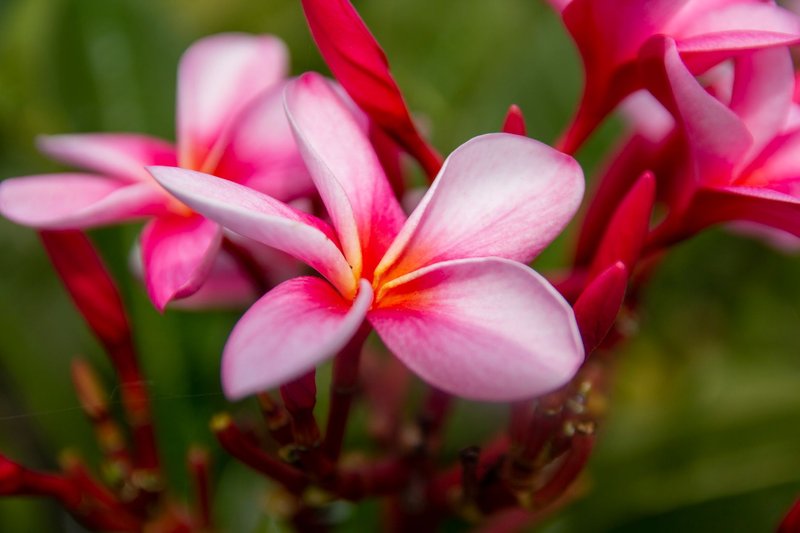
Heilala (Garcinia sessilis) is Tonga’s national flower, and it earns the title through use, not just symbolism. The tree produces small, waxy, cream-to-orange blossoms that Tongans thread into kahoa (garlands) for weddings, graduations, and the King’s birthday. The scent is part of the appeal — sweeter and less cloying than frangipani, which is why it’s the flower brides actually ask for rather than the one tourism boards just photograph.
It’s not unique to Tonga — related Garcinia species turn up elsewhere in the western Pacific — but Tonga adopted it the way Scotland adopted the thistle, and the plant’s cultural weight there outstrips its botanical rarity. The Heilala Festival, Tonga’s largest annual cultural event, is named after it, held every July around the King’s birthday in Nuku’alofa.
Vava’u’s Vanilla Boom and Bust
Vanilla isn’t native to Tonga — the vine originated in Mesoamerica and arrived in the Pacific via colonial trade routes — but its economic history there is distinctly Tongan. In the 1970s and 80s, Vava’u became one of the South Pacific’s more promising vanilla-growing regions, with smallholder farmers curing beans for export at a time when Madagascar’s supply was politically unstable and prices spiked.
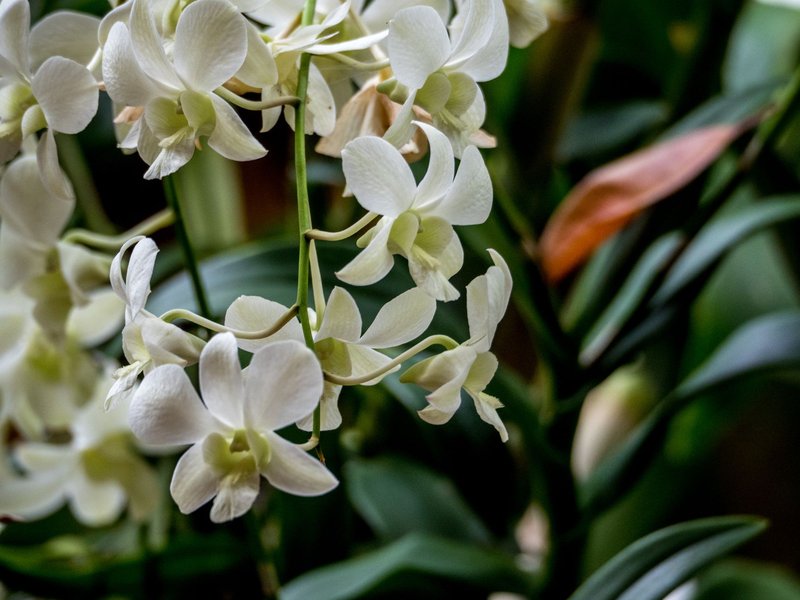
The industry never scaled the way coffee did in similar climates, partly because vanilla curing is slow and labor-intensive and partly because global prices crashed hard in the 2000s when Madagascar’s production recovered. What’s left today is a smaller but still-active cottage industry, mostly in Vava’u’s interior villages, producing beans sold as a premium, hand-cured product rather than a bulk commodity. It’s a good case study in why “grows well here” and “makes economic sense here” are different questions.
The Real Natives: Plants You Won’t Find on a Postcard
This is the part most Tonga travel pages skip, because these species don’t photograph as easily as a beach sunset and nobody’s selling them as souvenirs. They’re also the plants doing the actual ecological work.
Tongan Fan Palm
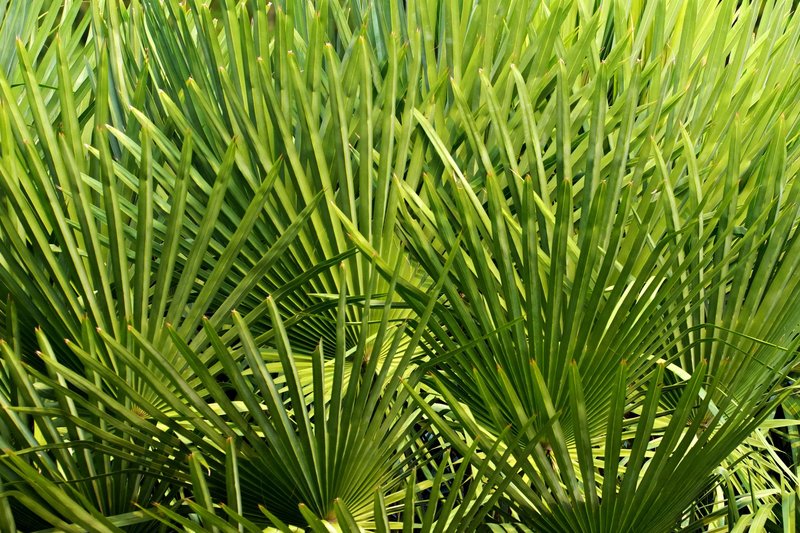
Pritchardia pacifica produces fronds that fold out into near-perfect circles, which is why it’s been exported worldwide as an ornamental palm under the name “Fiji fan palm” — a naming accident, since its range includes Tonga as much as Fiji. In its native range it grows as an understory palm in lowland forest on ‘Eua and parts of Vava’u. Traditionally, the stiff fronds were woven into fans and thatch panels before corrugated roofing became standard.
Fetau (Tamanu)
Calophyllum inophyllum is a coastal tree found throughout the tropical Indo-Pacific, Tonga included, and it’s one of the more genuinely useful plants on this list. The nuts produce a thick, greenish oil — called tamanu oil regionally — that’s been used for generations on cuts, burns, and skin conditions, and it’s now sold internationally in cosmetics for the same reason. The wood was historically prized for canoe hulls because it resists rot in salt water better than most local timber.
Toi
Alphitonia zizyphoides is a mid-canopy hardwood tree found across Tonga’s remaining forest patches, valued for timber that’s dense enough for tool handles and house posts. The crushed leaves have a soapy quality in water, which is the reason older generations used them as a washing agent before imported soap was common — a detail that shows up in a lot of oral histories from ‘Eua.
Pua (Kafika)
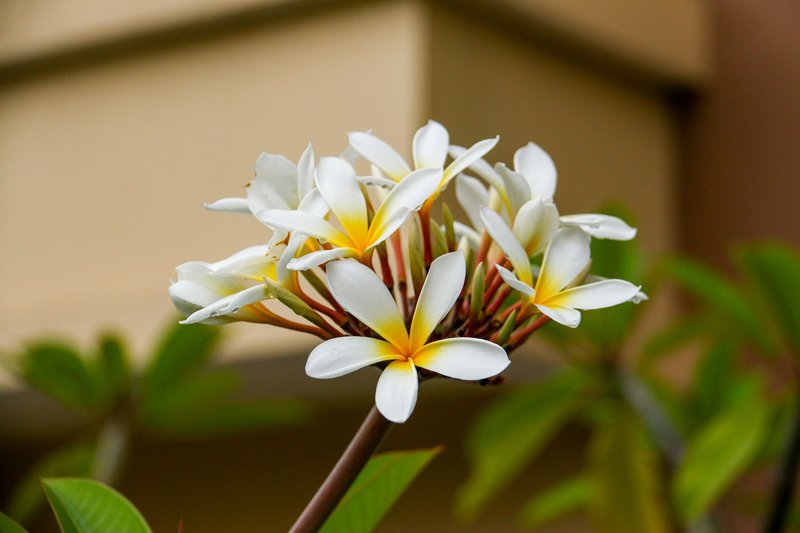
Fagraea berteroana produces a fragrant, trumpet-shaped white flower that opens at dusk and is strung into leis alongside heilala. It grows as a small tree at forest edges and is one of the more reliably fragrant native flowers in the kingdom — strong enough that a single tree can scent a yard after sunset.
Fala (Pandanus)
Pandanus tectorius lines Tonga’s coastlines and is arguably the most economically important plant on this list that nobody outside the Pacific has heard of. Its long, serrated leaves are stripped, dried, and woven into the mats that underpin nearly every formal occasion in Tongan life — the ta’ovala waist mats worn at church and ceremonies, and floor mats used in homes for generations before furniture arrived. The plant is indigenous rather than strictly endemic; related Pandanus species spread across the Pacific by ocean-dispersed seed pods long before humans did.
‘Eua’s Cloud Forest Understory
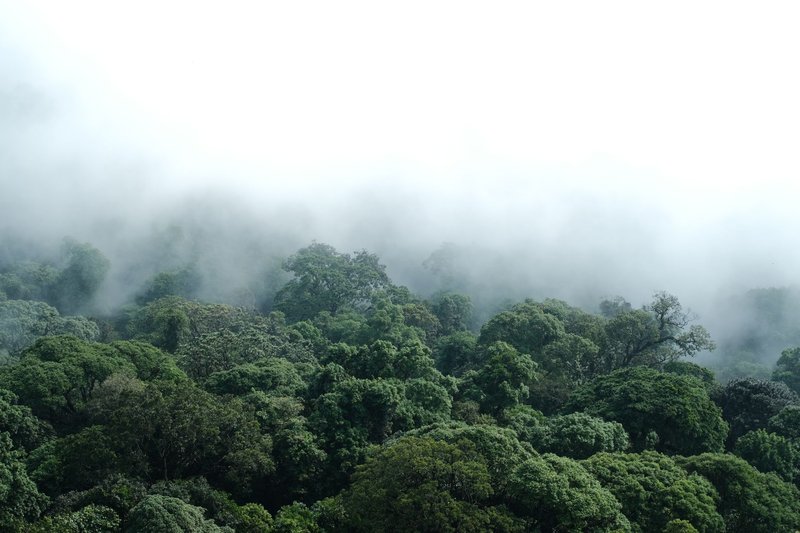
The highest, wettest section of ‘Eua’s national park holds the kingdom’s densest concentration of true endemics — species found nowhere outside this single island, mostly small understory shrubs, a handful of native orchids, and forest-floor herbs that never made it into general field guides because so few botanists have surveyed the interior closely. It’s the section of Tonga’s flora that’s hardest to put a name to and most in need of it: species can’t be protected if nobody has finished counting them.
Common Tropical Plant or True Tongan Native? A Quick Reference
Plenty of plants that feel like quintessential Tonga arrived with people, not on their own.
| Plant | Status in Tonga | Origin |
|---|---|---|
| Coconut palm (niu) | Naturalized, ubiquitous | Introduced by Polynesian voyagers; coastal forms may pre-date human arrival |
| Banana / plantain | Cultivated | Introduced by Polynesian voyagers from Southeast Asia |
| Breadfruit (‘ulu) | Cultivated | Introduced by Polynesian voyagers |
| Vanilla orchid | Cultivated, naturalized in places | Introduced via colonial-era trade |
| Heilala (Garcinia sessilis) | Native | Indigenous to Tonga and nearby island groups |
| Tongan fan palm (Pritchardia pacifica) | Native | Indigenous to Tonga, Fiji, Samoa |
| Fetau / tamanu | Native | Indigenous, wide Indo-Pacific coastal range |
| ‘Eua cloud forest understory species | Endemic | Found only on ‘Eua |
The pattern holds across most of Polynesia: the plants that look most “native” to an outside eye — coconut palms, banana groves — are usually the ones people carried in canoes. The ones that were already there tend to be quieter, smaller, and confined to whatever patch of forest never got cleared.
What’s Actually Threatening These Plants
Land clearing for agriculture and settlement has done more damage to Tonga’s native forest than any single event, simply because it’s been continuous for centuries. What’s newer, and harder to reverse, is climate pressure stacking on top of that. Rising sea levels are pushing saltwater into the freshwater lens that low coral islands like Tongatapu depend on, and coastal native species that evolved to tolerate occasional salt spray are increasingly sitting in soil that stays saline. The NOAA sea level trends dataset shows Pacific island tide gauges tracking at or above the global average rate of rise, which is the kind of slow-moving number that doesn’t make headlines until a storm surge turns it into one.
Cyclones compound the problem. Tonga sits in an active cyclone corridor, and a single severe storm can strip a forest canopy in hours — recoverable for fast-growing coastal species, much less so for slow-growing ‘Eua endemics that may take decades to re-establish a reproductive population. The IUCN Red List tracks conservation status for a growing number of Pacific island plants, though data gaps remain large precisely because islands like ‘Eua haven’t been comprehensively surveyed.
Regional conservation work is happening through bodies like SPREP, the Secretariat of the Pacific Regional Environment Programme, which coordinates invasive species control and habitat protection across island nations that individually don’t have the budget to run full botanical surveys. Taxonomic reference work — confirming which Pacific species are genuinely distinct versus regional variants of the same plant — increasingly runs through resources like Kew’s Plants of the World Online, which matters more than it sounds like it should: you can’t protect a species whose boundaries nobody’s confirmed.
The Short List Worth Knowing
If you take one thing from this: Tonga’s flora isn’t one undifferentiated wall of green. It’s a layered history — Polynesian food crops, colonial-era cash crops, and a shrinking pocket of true natives holding on mostly in ‘Eua’s interior. The heilala and the vanilla vine get the cultural spotlight, and they’ve earned it. But the plants worth actually worrying about are the quiet ones in the cloud forest that don’t have a festival named after them and won’t get a second chance if that forest goes.