Kenya’s landscapes—from coastal dunes and savannas to montane forests—support a wide variety of trees that shape habitats and local livelihoods. A straightforward list makes it easier to explore species whether you’re studying, gardening, or just curious about the plants around you.
There are 97 Trees of Kenya, ranging from African Canarium to Wild Pear; entries include Scientific name,Height (m),Native status & regions — you’ll find below.
How can I use this list to identify trees when I’m out in the field?
Start by matching leaves, bark and habit to the Scientific name and Height (m) in the list, then check the Native status & regions to see if a species is expected where you are; take photos of key features and compare with local guides or apps for confirmation.
Does the list include non-native or invasive species, and how is that indicated?
Yes—each entry notes native status and regions so you can spot introduced species; use that column to flag plants unfamiliar to an area, and consult local conservation resources before planting or removing trees.
Trees of Kenya
| Common name | Scientific name | Height (m) | Native status & regions |
|---|---|---|---|
| Baobab | Adansonia digitata | 25 | Native to savanna and coastal regions, especially Tsavo and the coast. |
| Sausage Tree | Kigelia africana | 20 | Native to riverine and open woodland habitats across Kenya. |
| Fever Tree | Vachellia xanthophloea | 25 | Native to swampy, riverine areas in eastern and southern Kenya. |
| Jacaranda | Jacaranda mimosifolia | 15 | Introduced from South America; widely planted in Nairobi and the highlands. |
| Nandi Flame | Spathodea campanulata | 25 | Native to tropical Africa; common in western Kenya and highland forests. |
| African Pencil Cedar | Juniperus procera | 40 | Native to highland forests like the Aberdares, Mt. Kenya, and Mau. |
| Podo | Podocarpus milanjianus | 35 | Native to Afromontane forests in the highlands of Kenya. |
| Cape Chestnut | Calodendrum capense | 20 | Native to highland forests and riverine areas throughout Kenya. |
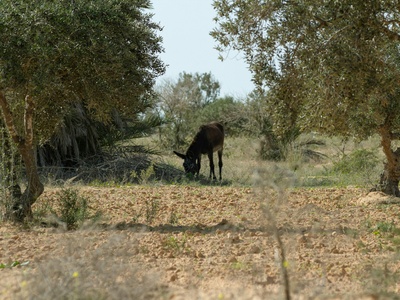
| Wild Olive | Olea europaea subsp. cuspidata | 15 | Native to dry upland forests and bushland across Kenya. |
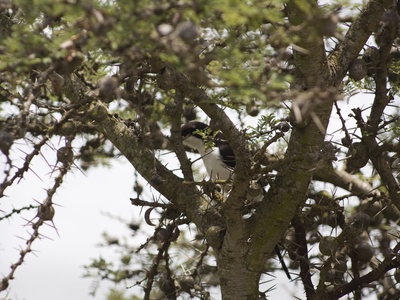
| Whistling Thorn | Vachellia drepanolobium | 6 | Native to black cotton soils in East African savannas, like Athi-Kapiti plains. |
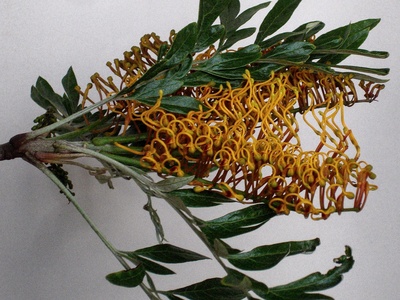
| Silky Oak | Grevillea robusta | 30 | Introduced from Australia; widely planted in agricultural areas and highlands. |
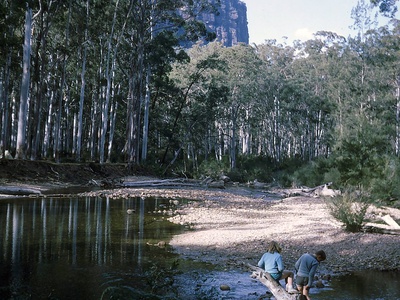
| Blue Gum | Eucalyptus saligna | 55 | Introduced from Australia; widely grown in highlands for timber and fuel. |
| Meru Oak | Vitex keniensis | 35 | Endemic to moist forests on the slopes of Mt. Kenya and Nyambene Hills. |
| Croton | Croton megalocarpus | 35 | Native to highland forests and agricultural lands across Kenya. |
| Muringa | Moringa oleifera | 10 | Introduced from Asia; widely cultivated in arid and semi-arid lands. |
| Desert Date | Balanites aegyptiaca | 10 | Native to arid and semi-arid bushland and savanna throughout Kenya. |
| Cordia | Cordia africana | 25 | Native to mid-altitude and highland areas of Kenya. |
| Sycamore Fig | Ficus sycomorus | 20 | Native to riverine areas and savanna woodlands across Kenya. |
| Mango | Mangifera indica | 30 | Introduced from Asia; widely cultivated in coastal and warmer inland areas. |
| Umbrella Thorn | Vachellia tortilis | 21 | Native to arid and semi-arid savanna and bushland across Kenya. |
| Mvule | Milicia excelsa | 50 | Native to lowland forests in western and coastal Kenya. |
| Red Stinkwood | Prunus africana | 40 | Native to Afromontane forests in the highlands. |
| East African Greenheart | Warburgia ugandensis | 30 | Native to upland evergreen forests and riverine areas. |
| Neem | Azadirachta indica | 20 | Introduced from India; widely planted in arid, semi-arid and coastal areas. |
| Marula | Sclerocarya birrea | 18 | Native to woodlands and savannas in various parts of Kenya. |
| Tamarind | Tamarindus indica | 25 | Native and naturalized in dry savanna and coastal bushland. |
| Coconut Palm | Cocos nucifera | 30 | Naturalized; dominant along the entire Kenyan coast. |
| Whistling Pine | Casuarina equisetifolia | 35 | Introduced from Australia; widely planted along the coast and lakeshores. |
| Red Mangrove | Rhizophora mucronata | 25 | Native to intertidal zones and estuaries along the Kenyan coast. |
| Red-hot Poker Tree | Erythrina abyssinica | 15 | Native to savanna woodlands and grasslands, especially in western Kenya. |
| Markhamia | Markhamia lutea | 15 | Native to forest edges and riverine areas in western and central Kenya. |
| Avocado | Persea americana | 20 | Introduced from Central America; widely cultivated in the highlands. |
| Flamboyant Tree | Delonix regia | 18 | Introduced from Madagascar; widely planted as an ornamental in towns. |
| Guava | Psidium guajava | 10 | Introduced from the Americas; naturalized and cultivated across Kenya. |
| African Redwood | Hagenia abyssinica | 25 | Native to high-altitude Afromontane forests and moorlands. |
| Candelabra Tree | Euphorbia candelabrum | 20 | Native to rocky outcrops and dry hillsides in savanna regions. |
| Frankincense Tree | Boswellia neglecta | 8 | Native to the arid and semi-arid bushlands of northern Kenya. |
| Myrrh Tree | Commiphora myrrha | 5 | Native to the arid thorn-scrub of northern Kenya and Somalia. |
| Doum Palm | Hyphaene compressa | 20 | Native to riverbanks and coastal plains, especially in northern and eastern Kenya. |
| Stinkwood | Ocotea usambarensis | 45 | Native to moist Afromontane forests like the Cherangani Hills and Mt. Kenya. |
| Elgon Teak | Olea welwitschii | 35 | Native to moist forests in western Kenya, including Kakamega and Mt. Elgon. |
| Wild Date Palm | Phoenix reclinata | 12 | Native to riverbanks, swamps, and groundwater-fed areas across Kenya. |
| Paperbark Thorn | Vachellia sieberiana | 25 | Native to woodlands and grasslands in higher rainfall savanna areas. |
| Cycad | Encephalartos hildebrandtii | 6 | Native to coastal bushland and forests of Kenya and Tanzania. |
| Leleshwa | Tarchonanthus camphoratus | 9 | Native to dry highlands and bushland, a dominant species in some areas. |
| African Holly | Ilex mitis | 20 | Native to riverine and swamp forests in the highlands. |
| Mugumo | Ficus thonningii | 30 | Native to a wide range of habitats from forest to savanna. |
| Blackwood | Dalbergia melanoxylon | 15 | Native to dry woodlands and savannas in eastern and southern Kenya. |
| Pod Mahogany | Afzelia quanzensis | 20 | Native to coastal woodlands and dry forests. |
| White Stinkwood | Celtis africana | 25 | Native to forests and riverine areas across a wide range of altitudes. |
| Apple-ring Acacia | Faidherbia albida | 30 | Native to riverine areas and seasonal floodplains in dry regions. |
| Kei Apple | Dovyalis caffra | 9 | Native to bushland and forest margins, particularly in drier areas. |
| Rough-leaved Elm | Chaetacme aristata | 15 | Native to forests and thickets, from the coast to the highlands. |
| Quiver Tree | Aloidendron barberae | 18 | Native to dry, rocky areas; rare in Kenya but found in specific locales. |
| Bush-willow | Combretum molle | 12 | Native to wooded grasslands and savannas across Kenya. |
| Terminalia | Terminalia brownii | 20 | Native to dry savanna, woodlands, and rocky hillsides. |
| Muna | Acalypha fruticosa | 4 | Native to bushland, forest edges, and disturbed areas. |
| Wild Gardenia | Gardenia volkensii | 8 | Native to dry bushland and wooded grassland, often on termite mounds. |
| African Teak | Tectona grandis | 40 | Introduced from Asia; grown in plantations in wetter areas like the coast. |
| Flame Tree | Erythrina crista-galli | 8 | Introduced from South America; planted in gardens and parks. |
| Candle-nut Tree | Aleurites moluccanus | 20 | Introduced from Southeast Asia; found in some coastal and Afromontane areas. |
| Cassia | Senna siamea | 20 | Introduced from Southeast Asia; widely planted for fuel and as a windbreak. |
| African Cherry | Englerophytum magalismontanum | 15 | Native to riverine forests and rocky outcrops. |
| Jumping Seed Tree | Sapium ellipticum | 25 | Native to forest margins and riverine woodland. |
| Sandpaper Tree | Ficus exasperata | 20 | Native to forests and riverine areas. |
| Lavender Tree | Heteropyxis natalensis | 10 | Native; rare in Kenya, found in specific grassland and forest margin habitats. |
| Strangler Fig | Ficus stuhlmannii | 25 | Native to forests and savanna woodlands. |
| Weeping Boer-bean | Schotia brachypetala | 18 | Introduced from Southern Africa; planted as an ornamental tree. |
| Wild Pear | Dombeya torrida | 20 | Native to highland forests and forest edges. |
| Green-thorn | Balanites orbicularis | 8 | Native to arid and semi-arid bushlands of northern Kenya. |
| Bird Plum | Berchemia discolor | 18 | Native to riverine woodlands and dry forests. |
| Natal Mahogany | Trichilia emetica | 20 | Native to riverine forests and coastal regions. |
| Sausage-fruit | Blighia unijugata | 15 | Native to lowland and riverine forests. |
| Jackfruit | Artocarpus heterophyllus | 20 | Introduced from Asia; cultivated in warmer, wetter areas like the coast. |
| Tamarisk | Tamarix aphylla | 15 | Native to arid riverbeds in northern Kenya. |
| Wild Custard-apple | Annona senegalensis | 10 | Native to savanna woodlands and grasslands. |
| Forest Long-bean | Tapura fischeri | 25 | Native to East African coastal forests, including Arabuko-Sokoke. |
| Toothbrush Tree | Salvadora persica | 7 | Native to arid and semi-arid bushland, often on saline soils. |
| Buffalo Thorn | Ziziphus mucronata | 17 | Native to bushland and savanna, often along watercourses. |
| Waterberry | Syzygium cordatum | 20 | Native to riverbanks and swampy areas. |
| Flat Crown | Albizia adianthifolia | 30 | Native to forests and wooded grasslands. |
| River Bean | Sesbania sesban | 8 | Native to wetlands and riverbanks across Kenya. |
| Drumstick Tree | Cassia fistula | 20 | Introduced from India; planted as a highly ornamental tree. |
| Black Ironwood | Olea capensis | 30 | Native to Afromontane and coastal forests. |
| False Ash | Maesopsis eminii | 40 | Native to rainforests of western Kenya (e.g., Kakamega). |
| Bischofia | Bischofia javanica | 35 | Introduced from Asia/Australia; planted in some highland areas. |
| Loquat | Eriobotrya japonica | 10 | Introduced from China; cultivated in highland gardens. |
| Traveler’s Palm | Ravenala madagascariensis | 15 | Introduced from Madagascar; planted as a striking ornamental. |
| Pigeonwood | Trema orientalis | 18 | Native; a fast-growing pioneer species in forest clearings and disturbed land. |
| Wild Mango | Irvingia gabonensis | 40 | Native to West and Central African rainforests, with some presence in Kenya. |
| Strychnos | Strychnos henningsii | 25 | Native to coastal and riverine forests. |
| Macadamia | Macadamia integrifolia | 15 | Introduced from Australia; a major commercial crop in the central highlands. |
| African Canarium | Canarium schweinfurthii | 45 | Native to rainforests in western Kenya. |
| Red Ivory | Berchemia zeyheri | 15 | Native to dry woodlands; rare in Kenya, more common in Southern Africa. |
| Bush Cherry | Maerua angolensis | 10 | Native to savanna and woodland. |
| Moroccan Cypress | Cupressus atlantica | 25 | Introduced from Morocco; planted in highlands for forestry and hedges. |
| Mexican Cypress | Cupressus lusitanica | 30 | Introduced from Mexico; widely planted in the highlands for timber and hedges. |
Images and Descriptions
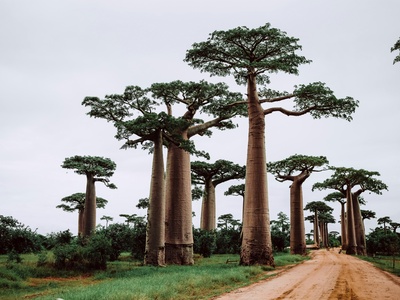
Baobab
An iconic tree with a massive, swollen trunk and sparse, finger-like branches. Its fruit pulp is edible and rich in vitamin C. The hollow trunks can store water and provide shelter. It is culturally significant and known as the “upside-down tree”.
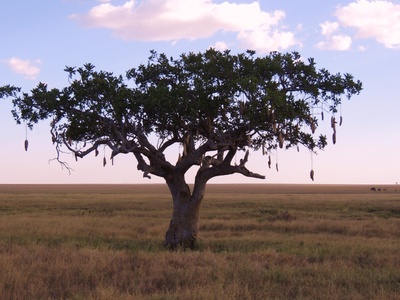
Sausage Tree
Easily recognized by its large, sausage-shaped fruits that hang from long stalks. The deep red, trumpet-shaped flowers open at night and are pollinated by bats. The fruit is used in traditional medicine but is poisonous if eaten raw.
Fever Tree
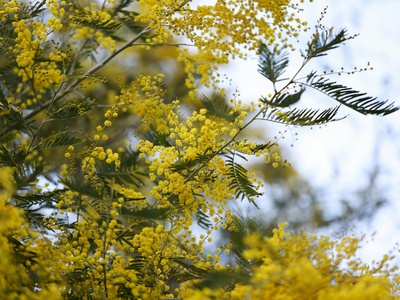
A striking acacia known for its smooth, powdery, yellow-green bark. Early settlers linked it with malaria, as it grew where mosquitoes bred. It has feathery leaves and fragrant, fluffy yellow flower balls, providing a valuable nectar source for bees.
Jacaranda
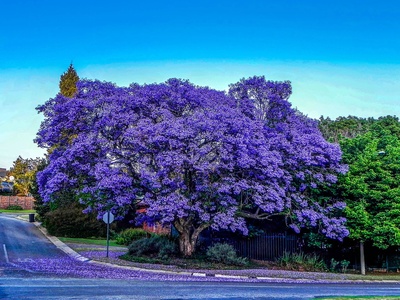
Famous for its spectacular display of vibrant purple-blue, bell-shaped flowers that carpet the streets in spring. This fast-growing ornamental tree has fern-like leaves, providing light, dappled shade. It is a beloved feature of many Kenyan urban landscapes.
Nandi Flame
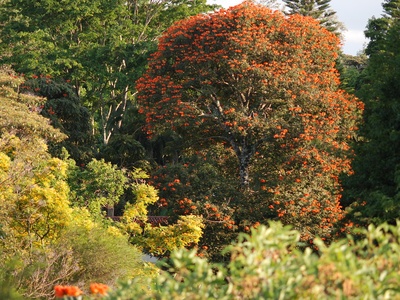
Also known as the African Tulip Tree, it produces huge, fiery red-orange, cup-shaped flowers. The buds contain a watery sap that squirts when squeezed. It’s a fast-growing but can be invasive in some parts of the world.

African Pencil Cedar
Africa’s only native juniper, this conifer has a straight trunk and aromatic, durable timber used for construction and pencils. Its bluish-green, scale-like leaves and berry-like cones are characteristic. It is a key species in montane “cedar” forests.
Podo
An emergent canopy tree in highland forests, valued for its pale, easy-to-work timber. It features long, narrow, dark green leaves and small, fleshy, purple fruits that are eaten by birds and monkeys. It’s a key species for forest biodiversity.
Cape Chestnut
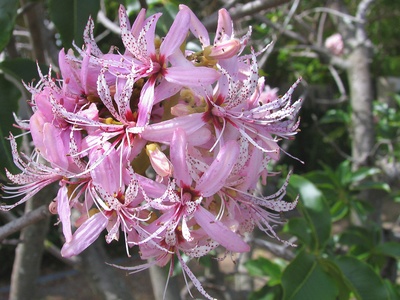
A magnificent tree famous for its stunning mass of large, fragrant, pinkish-mauve flowers that cover the entire crown. Its seeds are contained in a rough, warty capsule. It is widely planted as a beautiful ornamental tree in gardens.
Wild Olive
A hardy, slow-growing tree with a gnarled trunk and a dense crown of grey-green leaves. It produces small, purple-black, edible (but bitter) fruits. Its hard, beautifully grained wood is highly prized for carving, flooring, and fence posts.
Whistling Thorn
A small acacia famous for its swollen, bulbous thorns inhabited by stinging ants. Wind blowing over holes made by ants creates a whistling sound. This symbiotic relationship protects the tree from herbivores like giraffes and elephants.
Silky Oak
This fast-growing tree is used for shade, timber, and as a boundary marker on farms. It has fern-like leaves, silvery underneath, and produces showy, golden-orange, toothbrush-like flowers that are rich in nectar for birds and bees.
Blue Gum
A very tall, fast-growing tree with smooth, greyish-white bark that sheds in long ribbons. It is extensively planted in commercial forestry for poles and firewood but is criticized for its high water consumption and impact on local biodiversity.
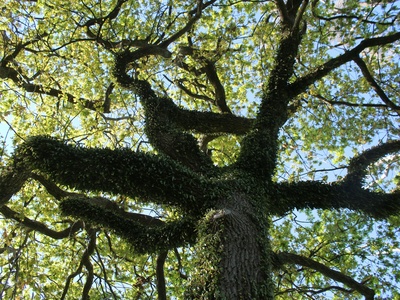
Meru Oak
A critically endangered and valuable hardwood tree, not a true oak. It has a straight trunk and large, hand-shaped compound leaves. Its timber is highly sought after, leading to over-exploitation. Conservation efforts are underway to protect this species.
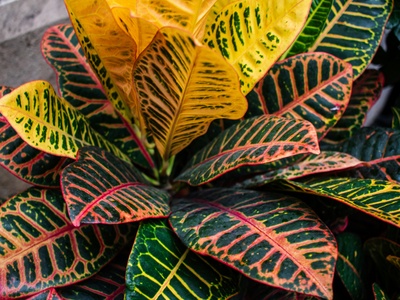
Croton
A fast-growing pioneer species with a silvery-green canopy, often used for reforestation and as a shade tree in coffee plantations. Its nuts can be pressed to produce biofuel, and its bark and leaves have various traditional medicinal uses.
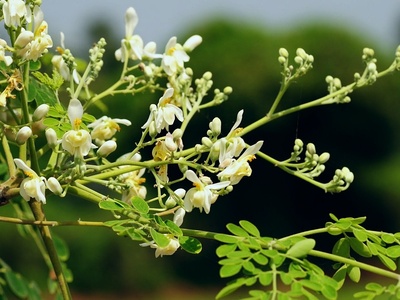
Muringa
Known as the “miracle tree,” nearly all parts are edible and highly nutritious. The leaves are rich in vitamins and protein, and the seeds can purify water. It’s a fast-growing, drought-resistant tree promoted for nutrition and agroforestry.
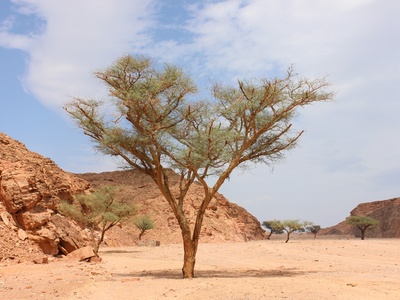
Desert Date
A spiny, slow-growing, and extremely drought-resistant tree. It produces a bitter-sweet, date-like fruit that is edible. The seed kernel yields a valuable oil used for cooking and medicinal purposes. It is a vital resource in drylands.
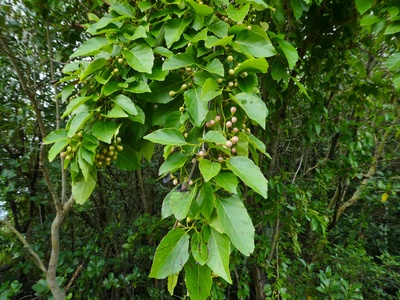
Cordia
A medium-sized tree with a wide, spreading crown, making it an excellent shade tree. It has large, heart-shaped leaves and produces clusters of fragrant white flowers. The high-quality timber is used for furniture, beehives, and construction.
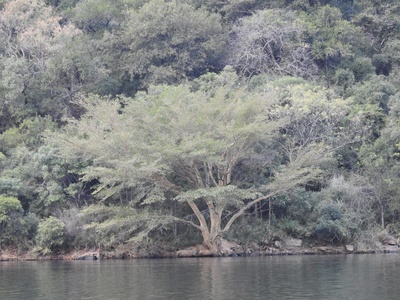
Sycamore Fig
A large, spreading fig tree with distinctive yellow-barked stems. It produces clusters of figs directly on the trunk and main branches. It is a keystone species, providing food for a wide variety of birds, bats, and other animals.
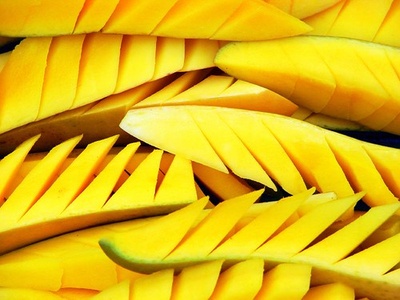
Mango
A large, evergreen tree with a dense, rounded canopy, famous for its delicious fruit. Mango cultivation is a major economic activity in many parts of Kenya. The tree provides excellent shade, and its wood can also be used for timber.
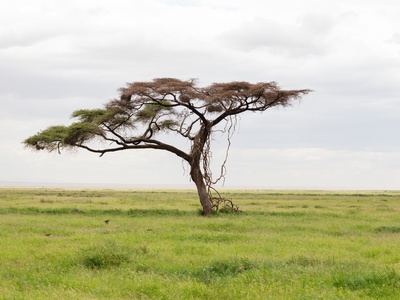
Umbrella Thorn
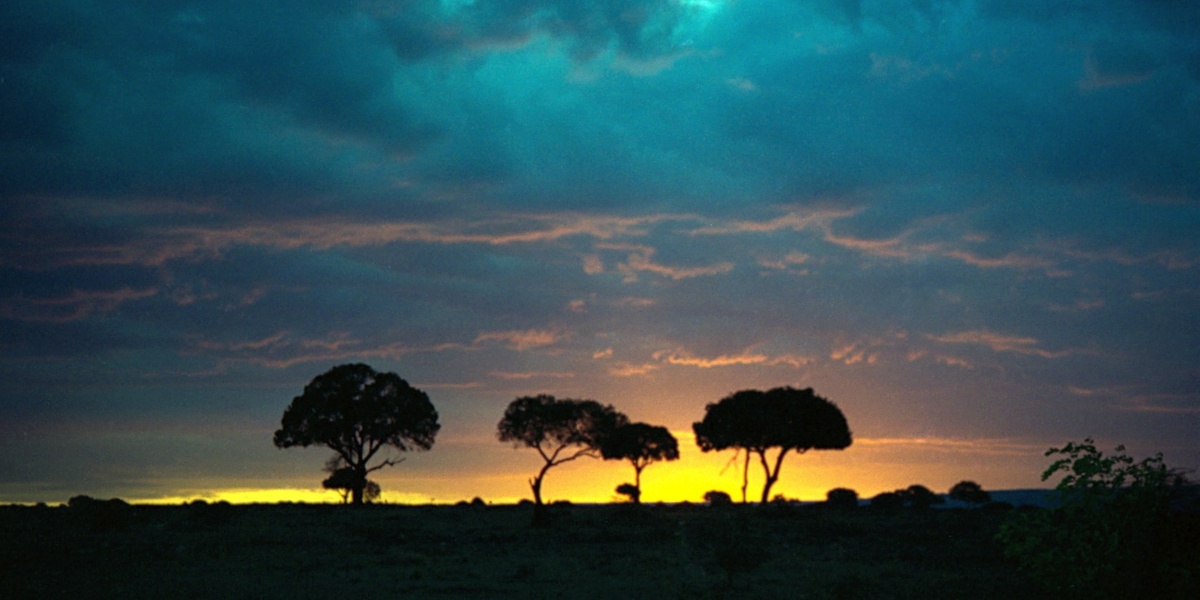
The classic flat-topped acacia of the African savanna, providing iconic silhouettes at sunset. It is extremely drought-resistant, with both long straight thorns and smaller hooked ones. Its pods are a vital source of fodder for wildlife and livestock.
Mvule
A large, deciduous tree yielding a highly durable and termite-resistant hardwood timber known as iroko. It is culturally significant in many communities. Due to over-logging, it is now a threatened species in many parts of its range.

Red Stinkwood
Valued for its bark, which is harvested for medicinal extracts used to treat prostate conditions. This has led to unsustainable exploitation, making the species vulnerable. It has glossy leaves and small, bitter, cherry-like fruits, attracting many birds.
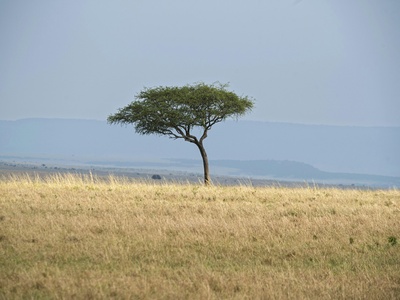
East African Greenheart
A medicinal tree whose bark, leaves, and roots are highly pungent and used to treat a wide range of ailments. It has a dense crown of glossy, dark green leaves. Over-harvesting for medicine threatens its populations in the wild.
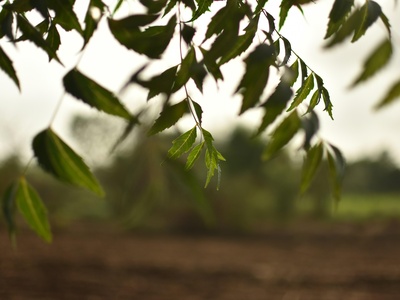
Neem
A fast-growing, drought-resistant tree known for its powerful insecticidal and medicinal properties. Its leaves, seeds, and oil are used in organic farming and traditional healthcare. It’s planted for shade, fuel, and land reclamation in dry areas.
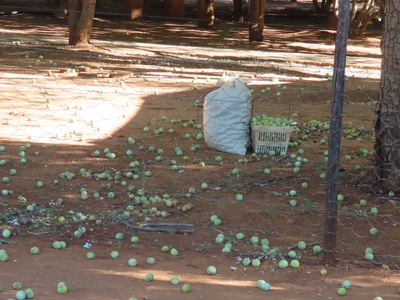
Marula
Famous for its pale yellow, vitamin C-rich fruits, which are eaten by animals and humans and used to make a popular alcoholic beverage. The oil-rich kernels are also a valuable food source. The tree has a grey, mottled bark.
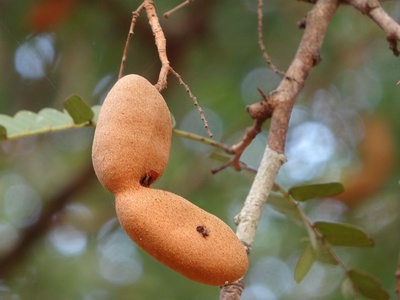
Tamarind
A long-lived tree with a dense canopy of feathery leaves. It produces brown, pod-like fruits containing a sweet and sour pulp used in foods, drinks, and traditional medicine. The hard, dark wood is valued for furniture and carvings.
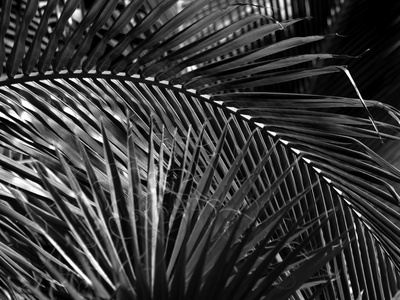
Coconut Palm
The quintessential coastal tree, providing food, drink, oil, fiber, and building materials. Every part of the palm is useful, making it a cornerstone of coastal economies and lifestyles. It thrives in sandy, saline soils.
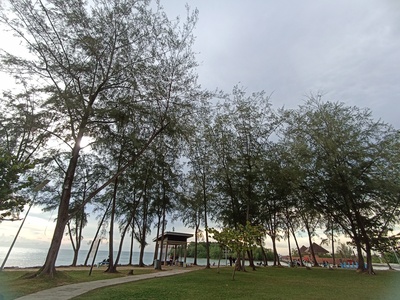
Whistling Pine
Not a true pine, this tree has drooping, needle-like branchlets that create a whistling sound in the wind. It is salt-tolerant and fast-growing, making it ideal for stabilizing sand dunes and providing shade and windbreaks in coastal areas.
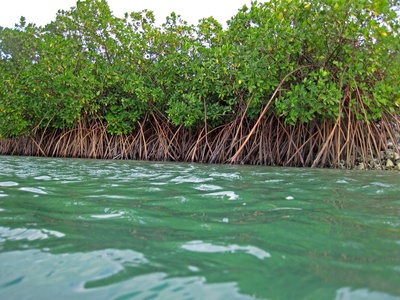
Red Mangrove
A key mangrove species, easily identified by its distinctive prop and stilt roots that anchor it in the mud. These roots create complex habitats for fish and invertebrates and protect the coastline from erosion. It is vital for coastal ecology.
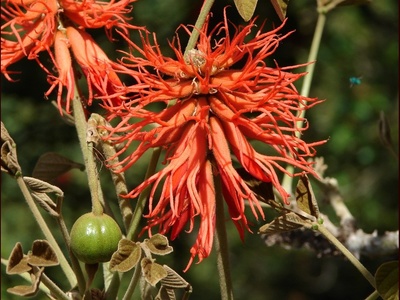
Red-hot Poker Tree
A deciduous tree that produces spectacular spikes of brilliant red or orange flowers on bare branches before the new leaves emerge. It has thorny bark and trifoliate leaves. It is often planted as a living fence post and has medicinal uses.
Markhamia
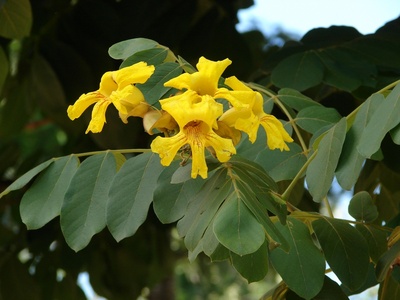
A small, fast-growing tree with large, compound leaves and beautiful, large, yellow, trumpet-shaped flowers. Its light, soft timber is used for poles, tool handles, and furniture. It is also planted for ornamental purposes and bee forage.
Avocado
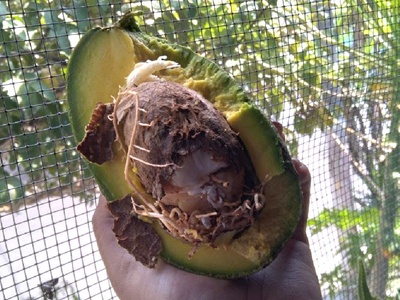
A popular fruit tree grown commercially and in home gardens for its nutritious, oily fruit. The tree has large, leathery, dark green leaves and a spreading canopy. Avocado farming is a major agricultural industry in Kenya’s highlands.
Flamboyant Tree
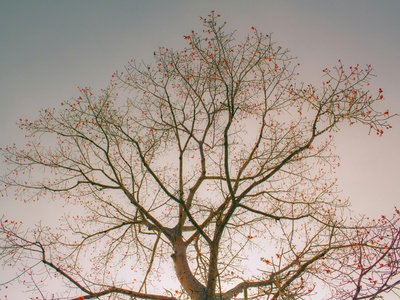
Also known as the Flame Tree, it is famous for its profuse display of fiery red-orange flowers in the dry season. Its wide, umbrella-like canopy provides excellent shade, and its long, dark seed pods are a distinctive feature.
Guava
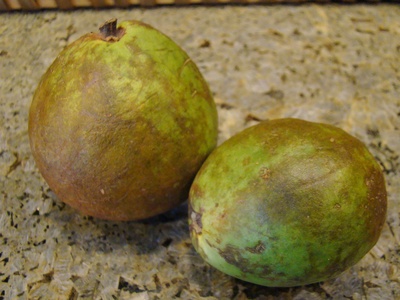
A small tree or large shrub that produces aromatic, sweet fruits, which are eaten fresh or made into juice. It is a hardy, fast-fruiting plant that can become weedy in some areas. The leaves are used in traditional medicine.
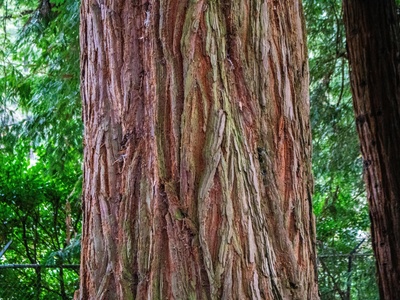
African Redwood
A distinctive tree with a gnarled trunk, peeling reddish-brown bark, and a spreading, umbrella-shaped crown. It has large, feathery leaves and produces drooping clusters of small, pinkish-white flowers. It is a key indicator of high-altitude forest zones.
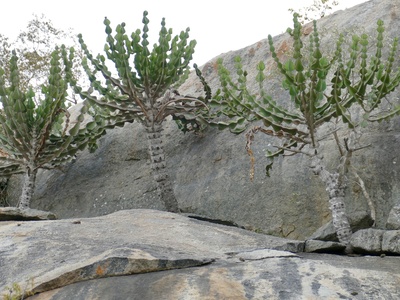
Candelabra Tree
A large, succulent tree with a massive, cylindrical trunk and a crown of repeating, upward-curving branches, resembling a candelabra. Its milky latex is highly toxic and was traditionally used as a potent arrow poison.
Frankincense Tree
A small, multi-stemmed tree that yields a fragrant resin known as frankincense. The resin is harvested by making incisions in the bark and is used for incense and traditional medicine. It is a key economic resource for pastoralist communities.
Myrrh Tree
A small, spiny, and gnarled tree that exudes a fragrant, bitter gum-resin known as myrrh. The resin has been used for millennia in perfumes, incense, and medicine. The tree is well-adapted to harsh, dry conditions.
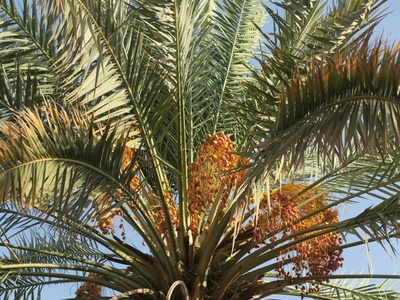
Doum Palm
A distinctive palm tree that is easily recognized by its branched trunk, a rare feature among palms. It produces large, edible, ginger-flavored fruits. The leaves are used for weaving mats, baskets, and thatching roofs.
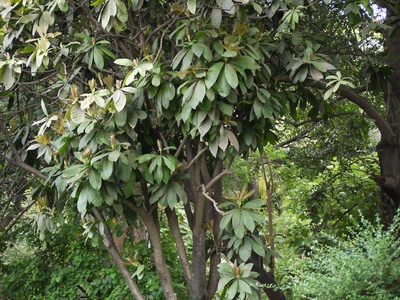
Stinkwood
A giant forest tree, also known as East African Camphorwood, with a massive trunk and a large crown. Its timber is highly valued for its beautiful grain, durability, and distinct camphor smell, which has led to severe over-exploitation.
Elgon Teak
Not a true teak, this large olive relative produces a very hard, durable, and valuable timber. It has a tall, straight trunk and opposite, simple leaves. It is heavily logged and considered a threatened species in its natural habitat.
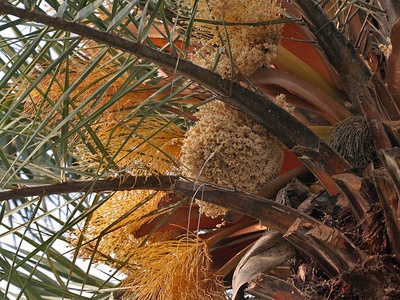
Wild Date Palm
A clustering palm that forms dense clumps with several leaning stems. It produces small, edible, date-like fruits. The leaves are used for weaving, and the sap can be tapped to make palm wine. It is a common sight in wetlands.
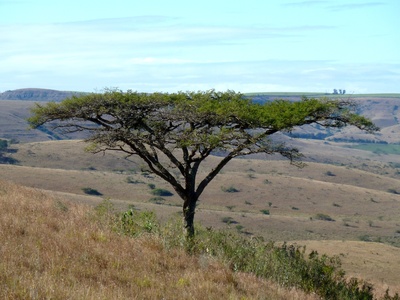
Paperbark Thorn
A large, flat-topped acacia with a rough, corky, yellowish-brown bark that peels in papery layers. It has feathery foliage and creamy-white flower balls. The pods and leaves provide important fodder for livestock and wildlife.
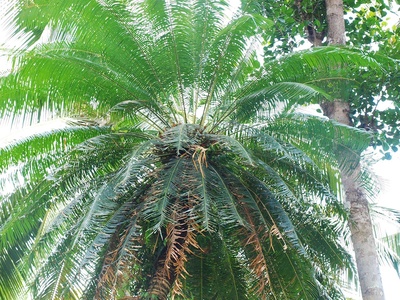
Cycad
A primitive, palm-like plant, often considered a living fossil. It has a stout, woody trunk topped with a crown of stiff, pinnate, spiny leaves. It produces large cones, and its populations are threatened by habitat loss and illegal collection.
Leleshwa
A multi-stemmed tree or large shrub with aromatic, grey-green leaves that smell strongly of camphor when crushed. It is fire-resistant and often colonizes overgrazed land. Its wood is termite-resistant and used for fence posts and fuel.
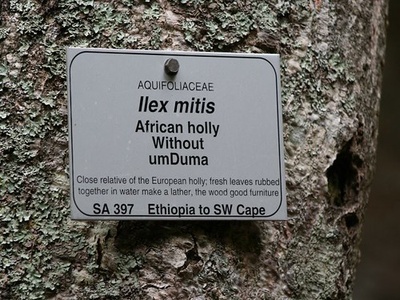
African Holly
An evergreen tree with smooth grey bark and glossy, dark green leaves similar to European holly but without spines. It produces small, inconspicuous white flowers followed by red or black berries that are eaten by birds.
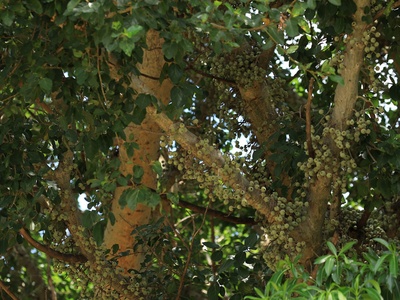
Mugumo
A large fig tree, often starting as an epiphyte, that is sacred to many communities, especially the Kikuyu. It has a massive, spreading crown and is a focal point for traditional ceremonies. It is considered bad luck to cut it down.
Blackwood
A small, spiny, and slow-growing tree that yields one of the world’s most valuable timbers, mpingo or African blackwood. The dense, dark heartwood is used for making musical instruments like clarinets and oboes. It is heavily over-exploited.
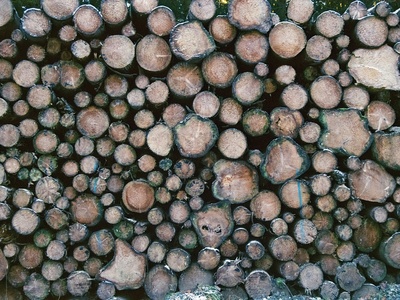
Pod Mahogany
A deciduous tree with a wide, spreading crown, valued for its hard, reddish-brown timber used in construction and furniture. It produces large, woody pods that split open to reveal black seeds with a distinctive, bright red aril.
White Stinkwood
A graceful deciduous tree with a smooth, pale grey trunk that is often blotched. Its light green leaves have a characteristic uneven base. It produces small, berry-like fruits that attract birds. A popular and fast-growing shade tree.
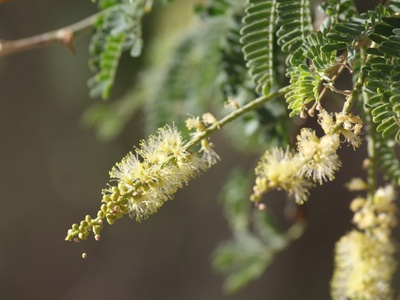
Apple-ring Acacia
A large acacia unique for its reverse leaf phenology—it is green in the dry season and leafless in the rainy season. This makes it an excellent agroforestry tree, as it doesn’t compete with crops for light. Its pods are valuable livestock fodder.
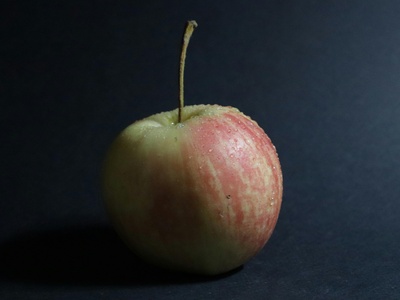
Kei Apple
A small, thorny tree often used to create impenetrable, spiny hedges. It produces round, yellow, apricot-sized fruits that are very acidic but can be used to make jams and jellies. It is drought and salt-tolerant.
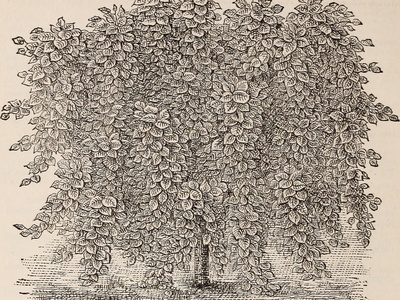
Rough-leaved Elm
A spiny, scrambling tree or shrub with rough, sandpaper-like leaves. Its strong, flexible branches were traditionally used to make bows. It provides good security as a hedging plant due to its dense, thorny nature.
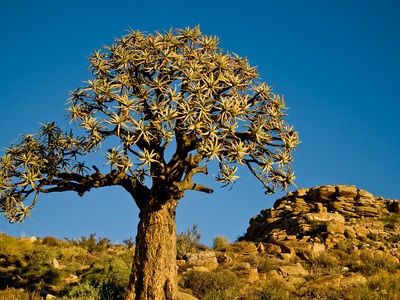
Quiver Tree
Formerly *Aloe bainesii*, this is Africa’s largest aloe, forming a tree with a thick, succulent trunk and a rounded crown of branching rosettes. Its striking architectural form makes it a prized ornamental, but it is a protected species.
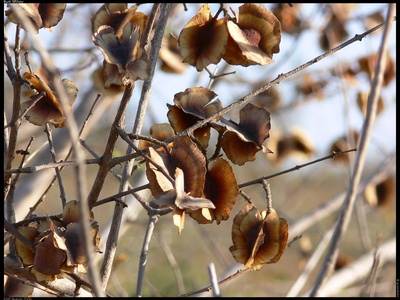
Bush-willow
A common savanna tree with a rough, dark grey, “crocodile-skin” bark. Its leaves are soft and velvety to the touch. It produces distinctive four-winged papery fruits that are light brown when dry. The wood is used for fuel and construction.
Terminalia
A drought-resistant, deciduous tree with a layered, pagoda-like branching structure. Its leaves are clustered at the ends of branches and turn coppery-red before falling. The wood is termite-resistant and used for construction and charcoal.
Muna
A small, fast-growing tree or shrub whose leaves are widely used as a traditional vegetable (murenda) in western Kenya. It is also used in traditional medicine to treat various ailments. It is easily propagated from cuttings.
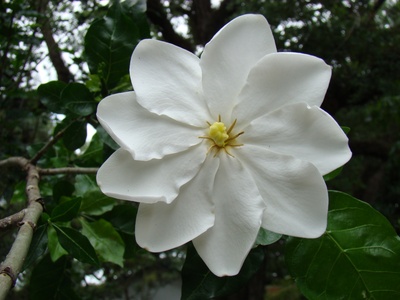
Wild Gardenia
A small, rigid-branched tree with a gnarled appearance. It produces large, fragrant, white, trumpet-shaped flowers that open at night and fade to yellow. The hard, woody, grey fruits persist on the tree for a long time.
African Teak
This is the true teak, a large deciduous tree prized globally for its high-quality, durable, water-resistant timber. Plantation forestry in Kenya aims to supply this valuable wood for furniture, boat-building, and construction.
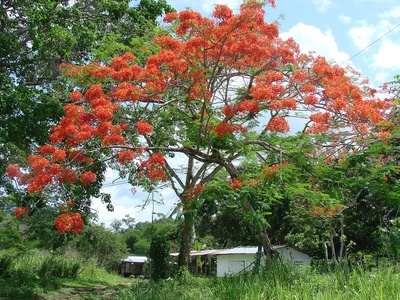
Flame Tree
Not to be confused with the Flamboyant Tree, this smaller tree has distinctive, dark red flowers shaped like a cock’s comb. It has a corky, fissured bark and trifoliate leaves with small spines on the petiole. It is a popular ornamental.
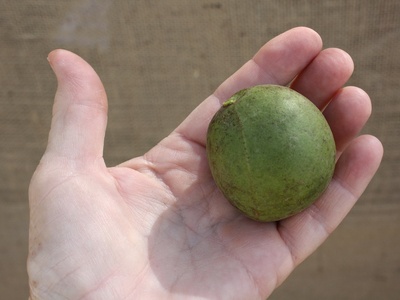
Candle-nut Tree
A fast-growing tree with a spreading canopy and pale, maple-like leaves. It produces a round, hard-shelled nut whose oil-rich kernel can be burned like a candle, hence the name. The oil has various industrial and traditional uses.
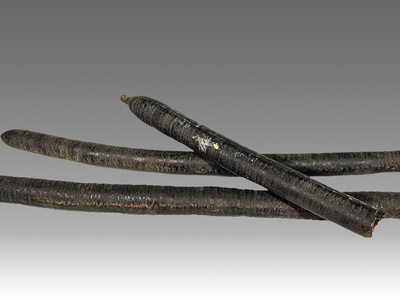
Cassia
A medium-sized, evergreen tree with compound leaves and dense clusters of bright yellow flowers. It is fast-growing and drought-tolerant, making it popular in agroforestry, though it can become invasive. It is not a good source of fodder.
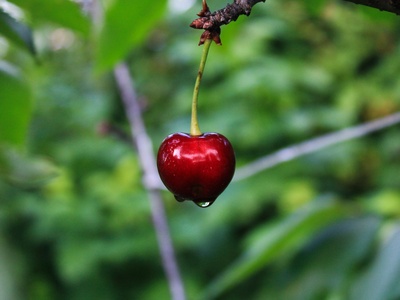
African Cherry
Also known as Stamvrug, it produces its fruit directly on the old wood and trunk (cauliflory). The red, plum-like fruits are edible and have a sweet, tangy flavor. It has leathery, dark green leaves with a rusty-brown felt underneath.
Jumping Seed Tree
A deciduous tree whose seeds are known for “jumping.” A moth lays its eggs in the developing fruit, and the larva’s movements inside the fallen seed segments cause them to twitch and jump. The tree has a milky, poisonous latex.
Sandpaper Tree
This fig tree is named for its extremely rough leaves, which feel like sandpaper and are traditionally used for smoothing wood and scouring pots. It is a fast-growing pioneer species with a smooth, pale grey bark.
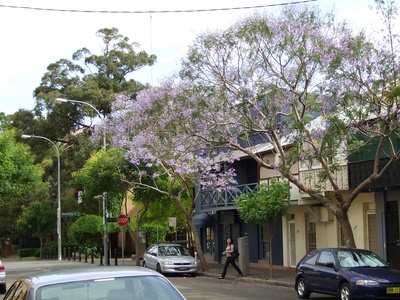
Lavender Tree
A small, slender tree with glossy leaves that release a strong lavender scent when crushed. The bark is pale and peels off in flakes, revealing a smooth, whitish under-bark. It produces small, fragrant, yellowish-green flowers.
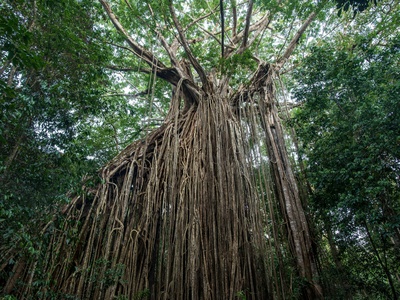
Strangler Fig
This fig often begins life as an epiphyte on a host tree. It sends down aerial roots that eventually surround and “strangle” the host, forming a massive, free-standing tree with a hollow core after the host dies. It’s a keystone ecological species.
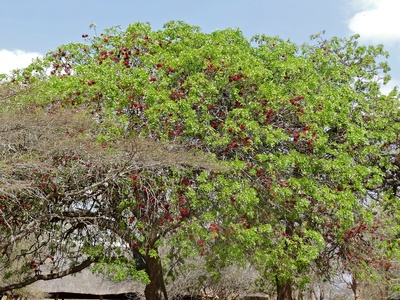
Weeping Boer-bean
A beautiful, dense tree known for its spectacular display of deep red flowers in spring. The flowers produce copious amounts of nectar, which drips down, attracting a multitude of birds and insects. It is semi-deciduous.
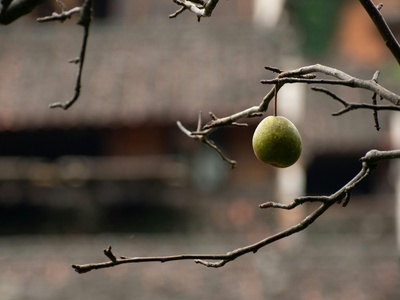
Wild Pear
Not a true pear, this tree is known for its beautiful, dense clusters of white to pink, bell-shaped flowers that appear in profusion. It has large, heart-shaped leaves. The wood is used for general purposes and firewood.
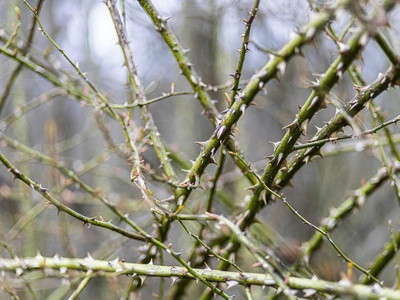
Green-thorn
A multi-stemmed, spiny shrub or small tree that is a critical resource in drylands. Its branches are green and photosynthetic. It is an important source of browse for camels and goats during dry seasons, surviving in very harsh conditions.
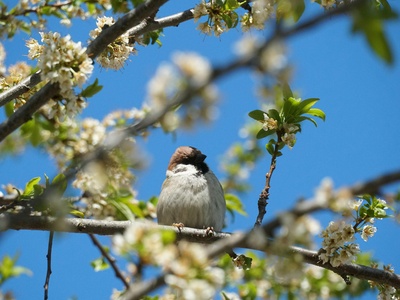
Bird Plum
A medium-sized tree with a dense, rounded crown, producing sweet, edible, yellow-brown fruits that taste like dates. The fruits are rich in sugar and are eaten by people, birds, and mammals. The wood is hard and used for furniture.
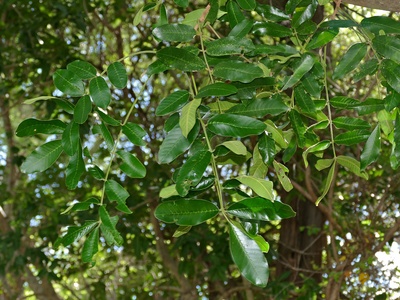
Natal Mahogany
A large, evergreen tree with a dense, dark green canopy, providing deep shade. It produces woody capsules that split to reveal black seeds with a bright red aril. An oil (mafura oil) is extracted from the seeds for cosmetic and cooking use.
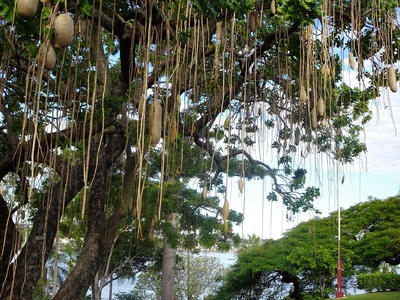
Sausage-fruit
Not to be confused with the Sausage Tree, this species produces a three-lobed, reddish fruit. It is related to the Ackee (*Blighia sapida*), but its fruit is generally not eaten. It’s a shade-providing tree with glossy compound leaves.
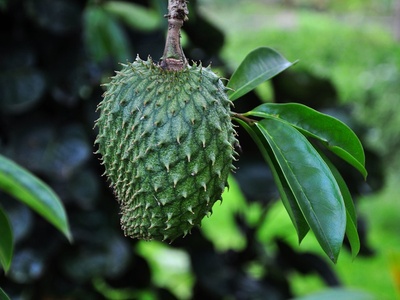
Jackfruit
A large tree known for producing the largest fruit of any tree, which can weigh up to 50 kg. The fruit grows directly from the trunk and main branches. The sweet, yellow flesh is eaten fresh, while the seeds can be cooked.
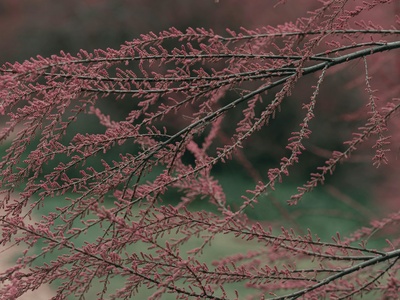
Tamarisk
A salt-tolerant tree with fine, grey-green, scale-like leaves on drooping branchlets, giving it a feathery appearance. It is well-adapted to arid, saline environments and is often found along seasonal watercourses, helping to stabilize banks.
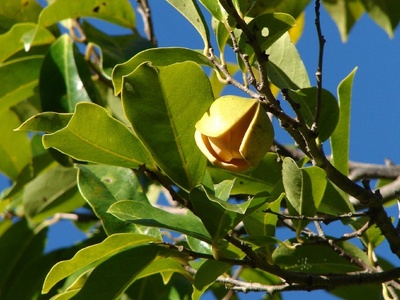
Wild Custard-apple
A small, deciduous tree or shrub with blue-green, leathery leaves. It produces an edible, aromatic, orange fruit that resembles a small custard apple. The fruit, leaves, and roots are widely used in traditional medicine.
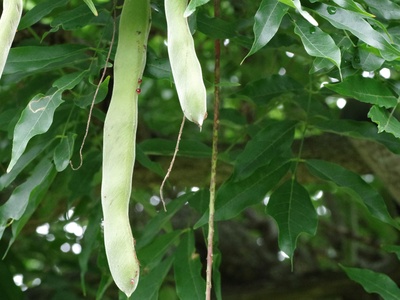
Forest Long-bean
A medium-sized forest tree. Its timber is used locally for construction and tool handles. It’s an important component of the coastal forest ecosystem, contributing to the rich biodiversity of these threatened habitats.
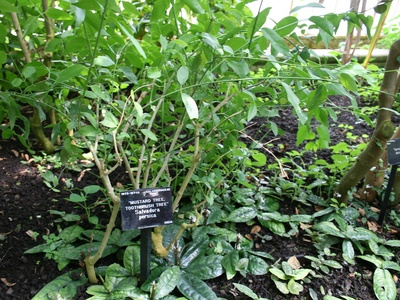
Toothbrush Tree
A small, evergreen tree whose twigs and roots are widely used as a natural toothbrush (miswak). The plant has antiseptic properties. Its small, fleshy, red berries are edible and are eaten by birds and people.
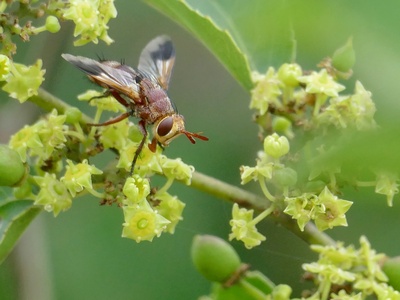
Buffalo Thorn
A spiny tree with glossy green leaves and a distinctive zig-zag pattern to its branchlets. It bears pairs of thorns, one hooked and one straight. The small, reddish-brown, edible fruits are used to make a type of beer.
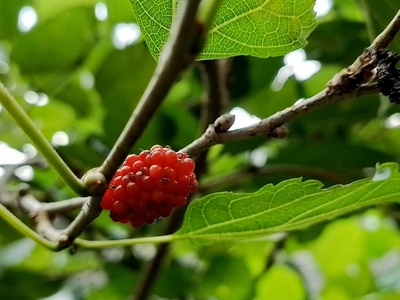
Waterberry
An evergreen, water-loving tree with a dense, rounded crown. It has thick, blue-green, leathery leaves and produces clusters of fragrant, creamy-white, fluffy flowers, followed by edible, purple, fleshy berries that attract birds and bats.
Flat Crown
A large, fast-growing tree with a distinctive, spreading, flat-topped crown. It has feathery, bipinnate leaves and fluffy, white to greenish-yellow flowers. It is a pioneer species that quickly colonizes forest clearings.
River Bean
A fast-growing, short-lived, small tree or large shrub. It is widely used in agroforestry for soil improvement due to its nitrogen-fixing ability. Its leaves and pods provide high-protein fodder for livestock. Flowers are often yellow.
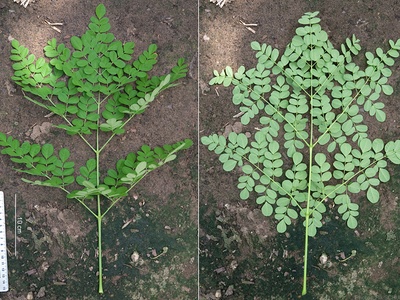
Drumstick Tree
Known for its stunning, long, drooping clusters of bright yellow flowers that appear in spring and summer. It produces very long, cylindrical, dark brown pods that persist on the tree. It has medicinal uses but seeds can be toxic.
Black Ironwood
A large forest tree that produces one of the hardest and heaviest timbers in the world. The wood is extremely durable but very difficult to work. It has glossy, dark green leaves and produces small, purple-black, olive-like fruits.
False Ash
A very tall, fast-growing pioneer tree with a long, straight trunk and a relatively small, layered crown. Its timber is a light, general-purpose hardwood. It is also grown in plantations but can become invasive outside its native range.
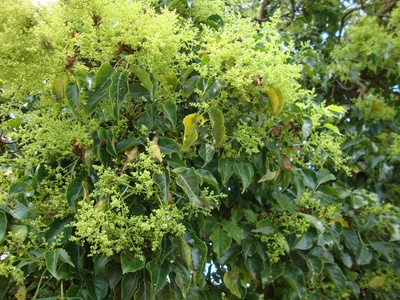
Bischofia
A large, fast-growing shade tree with trifoliate leaves that turn red before falling. It produces small, berry-like fruits. The timber is reddish, hard, and durable in water, used for construction and bridges.
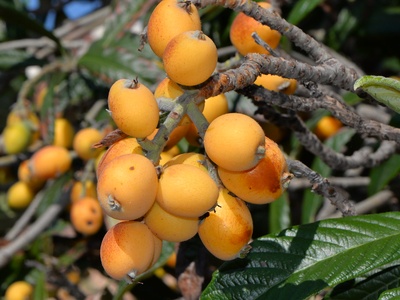
Loquat
A small evergreen tree grown for its sweet, tangy, yellow-orange, pear-shaped fruits, which grow in clusters. It has large, stiff, dark green leaves with a woolly underside. It fruits in the cool season.
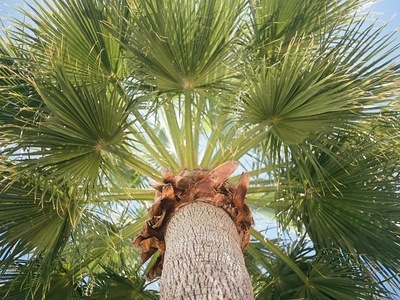
Traveler’s Palm
Not a true palm, it is related to the banana family. It is known for its magnificent, fan-like arrangement of large leaves. It stores water in the leaf bases, which could be drunk by thirsty travelers. Requires moist, sheltered locations.
Pigeonwood
A short-lived tree with a light, spreading crown and soft, serrated leaves. It produces abundant small, black berries that are a favorite food for many bird species, including pigeons and turacos, aiding in seed dispersal for forest regeneration.
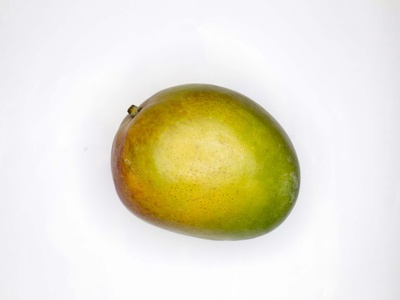
Wild Mango
A large forest tree producing an edible, mango-like fruit. The seed, known as dika nut, is of great economic importance in other parts of Africa, where it is used as a soup thickener. Its conservation in Kenya is important.
Strychnos
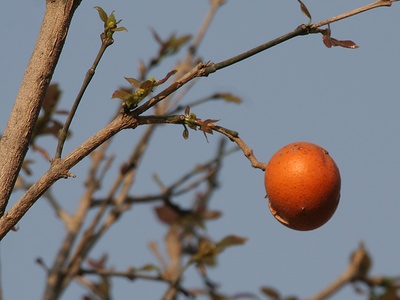
A medium-sized tree whose bark is well-known in traditional medicine as a treatment for snakebites and other ailments. Like other members of its genus, some parts of the plant can be toxic. It has glossy leaves and small, orange fruits.
Macadamia
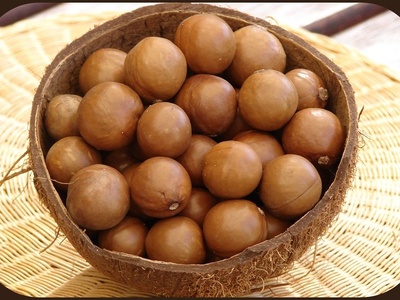
A medium-sized evergreen tree cultivated for its highly prized, edible nuts. It requires fertile soils and good rainfall. The nuts have a hard shell enclosing a rich, buttery kernel. Kenya is a leading global producer of macadamia nuts.
African Canarium
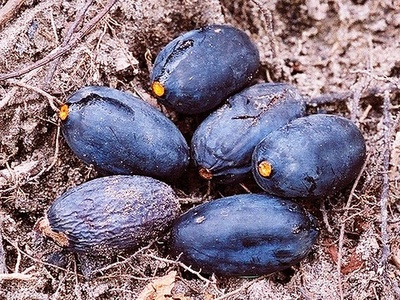
A very large emergent forest tree with a straight, buttressed trunk. It produces an aromatic resin, and its edible, purple, olive-like fruits contain an oil-rich kernel. The timber is a light, general-purpose hardwood.
Red Ivory
A small to medium-sized tree that produces a beautiful, dense, pinkish-red heartwood that is highly valued for carving and luxury items. It also bears small, sweet, edible red fruits. It is a protected species in many areas due to its value.
Bush Cherry
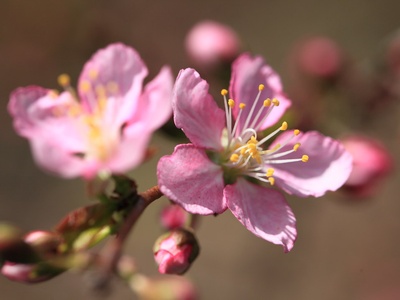
A small, often multi-stemmed, evergreen tree with leathery, grey-green leaves. It is very drought-resistant. It produces distinctive flowers with a mass of white to yellowish stamens but no petals, followed by bean-like, constricted pods.
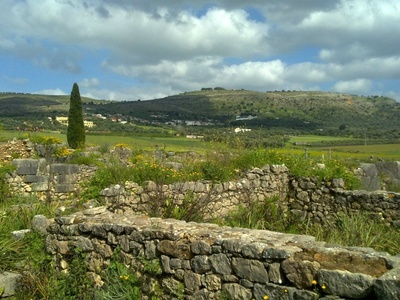
Moroccan Cypress
Actually, the more common cypress in Kenya is *Cupressus lusitanica* (Mexican Cypress). Let’s use that.
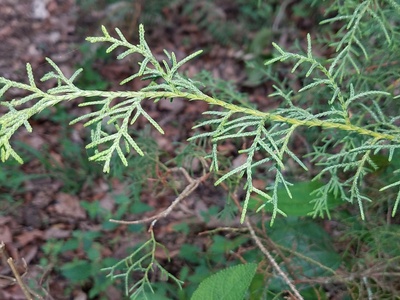
Mexican Cypress
A fast-growing conifer that is a major commercial forestry species in Kenya, used for timber, pulp, and as ornamental or hedge plants. It has feathery, bluish-green foliage and small, round cones. It has naturalized in many highland areas.