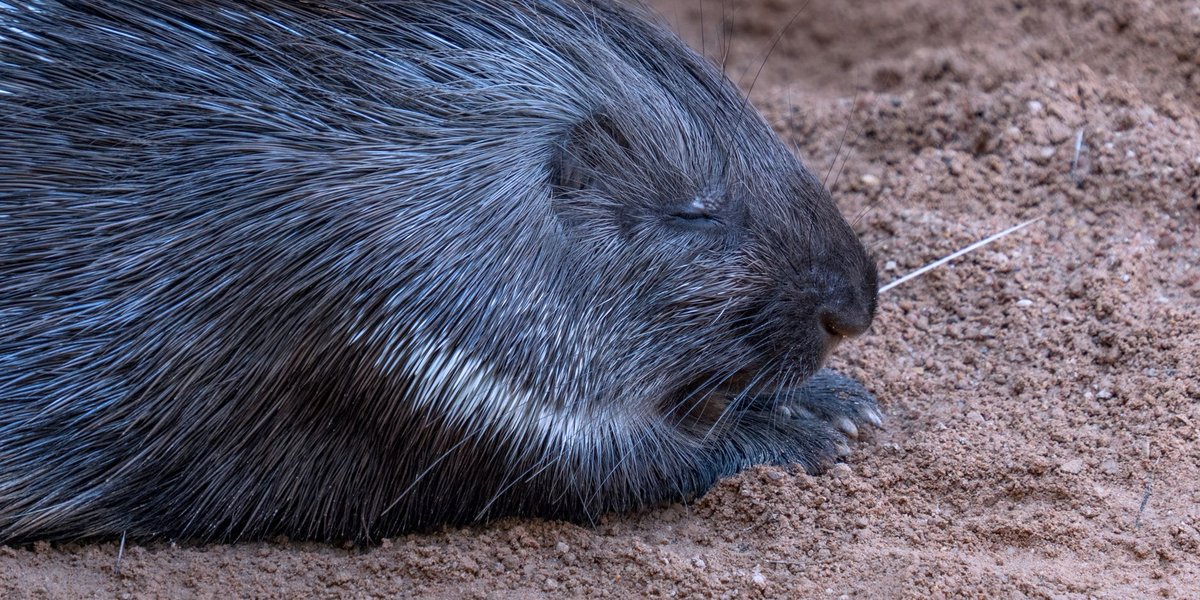
A Philippine porcupine (Hystrix pumila) eats fruit, roots, tubers, bark, bulbs, and seeds, gathered on nighttime foraging walks that can cover up to 16 kilometers. It’s a picky-looking but opportunistic herbivore, one that will gnaw bone and strip bark when its usual menu runs short, and occasionally take insects or carrion.
That single fact — what’s on the menu — turns out to connect to almost everything else worth knowing about this species: why it’s called an ecosystem engineer, why farmers on Palawan and its surrounding islands don’t love having one nearby, and why its digestive tract has made it a poaching target.
Contents
- What Philippine Porcupines Actually Eat
- Nocturnal Foragers: How They Find Food
- Teeth Built for a Fibrous Diet
- Seed Disperser and Ecosystem Engineer
- When Porcupines Raid the Farm
- The Bezoar Problem: Diet Meets Poaching
- Seasonal Shifts and Captive Diets
TL;DR
- Core diet: fruits, roots, tubers, bark, bulbs, and seeds.
- Occasional extras: insects, carrion, and gnawed bone for minerals.
- Foraging style: nocturnal, guided by smell, ranging up to 16 km a night.
- Why it matters: its foraging shapes forest regrowth, and undigested plant fiber in its gut forms bezoar stones that fuel illegal trafficking.
What Philippine Porcupines Actually Eat
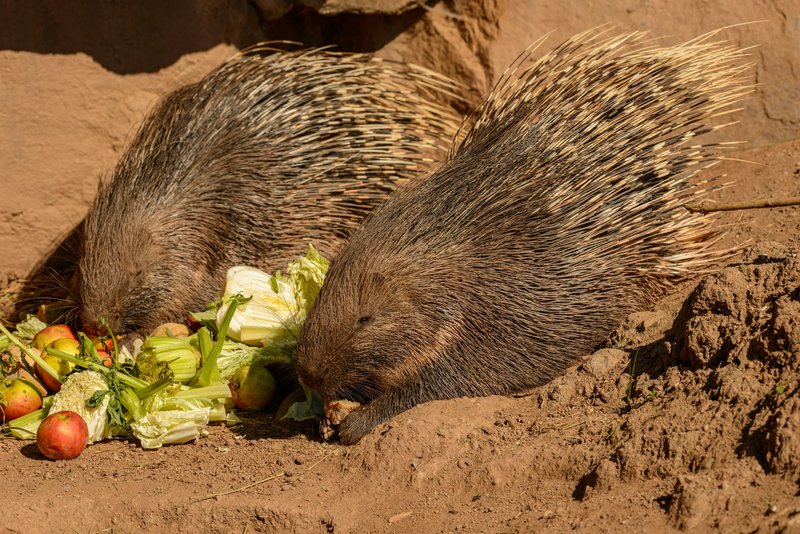
Strip away the spines and the Philippine porcupine is a straightforward herbivore, built around whatever the forest floor of Palawan, Balabac, and the Calamian Islands puts within reach. Fruits and root vegetables make up the bulk of it — tubers and bulbs dug up with the same claws it uses to climb, plus bark peeled from young trees and seeds picked off the ground rather than off the branch, since this species doesn’t climb high into canopy the way some rodents do.
It’s not a strict vegetarian, though. Insects and carrion show up in the diet when they’re easy to find, and there’s a stranger habit worth calling out directly: gnawing on discarded bones and antlers. This isn’t scavenging for meat. Porcupines lack enough calcium and other minerals in a plant-heavy diet, and bone works as a mineral supplement — the same reason deer and other herbivores will chew on shed antlers when they find them.
Nocturnal Foragers: How They Find Food

Philippine porcupines are almost entirely nocturnal, spending daylight hours denned up in burrows, rock crevices, or hollow logs and only emerging after dark to forage. According to the Animal Diversity Web, individuals can travel as far as 16 kilometers in a single night hunting for food — a serious distance for an animal that tops out around 25 to 30 inches long.
Vision isn’t doing much of the work on those foraging trips. Like most porcupines, Hystrix pumila relies heavily on smell to locate buried tubers and ripe fruit, which is also why bait traps laced with something pungent are so effective against them — a fact that matters later, once poaching enters the picture.
Teeth Built for a Fibrous Diet
Bark, tubers, and hard seed coats are abrasive, and the porcupine’s front incisors wear down fast from that kind of grinding. The fix nature landed on: incisors that never stop growing, kept at a usable length only by constant gnawing. That’s the real reason behind the bark-stripping — it’s not just a food source, it’s dental maintenance, and a porcupine that stopped gnawing entirely would eventually have teeth too long to eat with.
Seed Disperser and Ecosystem Engineer
A porcupine digging for bulbs and tubers is, incidentally, tilling soil and moving seeds around a forest it didn’t ask to manage. Seeds that pass through its gut undigested get deposited well away from the parent plant, and the digging itself aerates soil and creates microhabitats other small species use. That combination — seed dispersal plus physical disturbance of the habitat — is why conservationists studying Palawan’s forests describe the species as an ecosystem engineer rather than just another forager on the food web. Lose the porcupine population, and the ripple effect on plant regeneration isn’t hypothetical.
When Porcupines Raid the Farm
The same appetite for tubers and root crops that makes porcupines useful in intact forest makes them a nuisance at the forest edge. As logging and agricultural expansion shrink Palawan’s forest cover, porcupines increasingly forage in coconut groves and root-crop plantations bordering their remaining habitat, and farmers respond the way farmers everywhere respond to crop losses: traps, poison, and retaliatory killing. It’s a habitat-shrinkage problem wearing a pest-control costume, and it’s compounding a population that’s already under separate pressure from hunting.
The Bezoar Problem: Diet Meets Poaching
Here’s the part almost no general “facts” page connects back to diet: that fibrous, hard-to-digest plant matter — bark fragments, seed husks, tough root material — doesn’t always pass cleanly through the gut. Sometimes it compacts into a hard mass called a bezoar, lodged in the digestive tract.
In several cultures across Southeast Asia, these porcupine bezoars are believed to have medicinal properties and can fetch enormous sums on the black market. Reporting from Mongabay documented Philippine porcupines being trafficked specifically for these stones, with traders processing porcupine carcasses to extract them for buyers who believe the material treats everything from cancer to diabetes — claims with no clinical backing. The demand is severe enough that it now ranks among the more direct threats to the species, on top of habitat loss and the retaliatory killings already happening near farmland.
The diet that makes the bezoar in the first place is the same diet driving the ecological benefits described above. It’s a strange thing for a poaching crisis to hinge on: an animal is being killed for a byproduct of the exact foraging behavior that helps its forest regenerate.
Seasonal Shifts and Captive Diets
Diet composition isn’t fixed year-round. Fruit availability on Palawan shifts with the wet and dry seasons, and porcupines lean harder on roots, tubers, and bark during leaner stretches when fruiting trees aren’t producing — the same seasonal flexibility seen in most opportunistic foragers rather than strict specialists.
In zoos and rescue facilities, keepers typically replicate this with a rotating mix of sweet potato, carrot, squash, leafy greens, and browse (branches with bark still attached, specifically to satisfy the gnawing requirement), supplemented with occasional protein sources like boiled egg. Facilities holding the species as part of conservation breeding programs pay particular attention to that browse component — a captive porcupine denied anything to gnaw will still need its incisors managed some other way, usually by a vet.