Haiti’s landscapes and coastal waters are shaped by a mix of native species and arrivals carried by trade, travel and changing land use. From rural farms to urban neighborhoods and mangrove-lined coasts, non-native plants, insects and animals can quickly alter livelihoods, water access and biodiversity.
There are 21 Invasive Species in Haiti, ranging from Aedes aegypti to Water hyacinth. Each entry is organized so you can compare details at a glance — Scientific name,Habitat/where found,Origin and pathway (region/pathway) — giving a quick view of where they live and how they likely arrived; details you’ll find below.
How do these invasive species affect local communities and ecosystems?
Impacts vary: species like Aedes aegypti pose direct public‑health risks by spreading dengue and other viruses, while plants such as Water hyacinth clog waterways, reduce fish habitat and hinder irrigation. Together they can cut crop yields, increase disease burden, alter freshwater systems and raise costs for control and restoration.
What practical actions help manage and prevent invasions?
Effective steps combine surveillance, community engagement and targeted control: remove mosquito breeding sites, prioritize early detection and rapid response, mechanically or biologically control invasive plants, strengthen biosecurity at ports, and coordinate across agencies and neighbors to share data and resources.
Invasive Species in Haiti
| Name | Scientific name | Habitat/where found | Origin and pathway (region/pathway) |
|---|---|---|---|
| Black rat | Rattus rattus | Urban, agricultural, forest edges | Old World via ships and trade |
| Brown rat | Rattus norvegicus | Ports, sewers, farms, urban areas | Eurasia via shipping and trade |
| House mouse | Mus musculus | Homes, storage, fields | Eurasia via trade and human settlement |
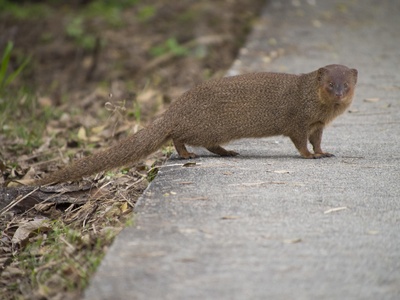
| Small Asian mongoose | Herpestes javanicus | Agricultural lands, scrub, forest edges | South/SE Asia via deliberate introduction |
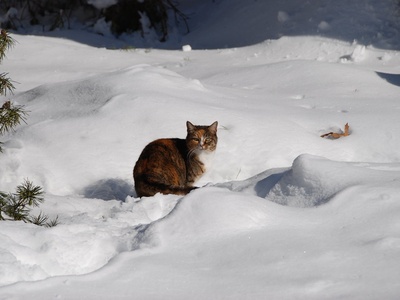
| Feral cat | Felis catus | Urban, rural, forest margins | Eurasia via domestic introduction |
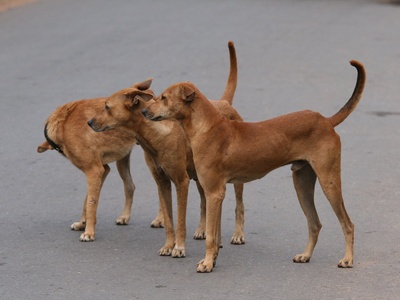
| Feral dog | Canis familiaris | Urban, rural, villages, forests | Worldwide via human settlement |
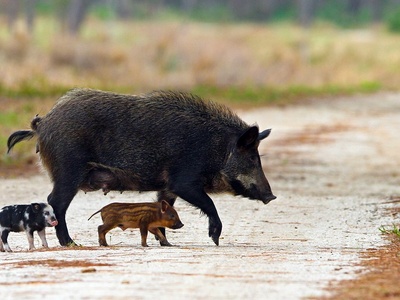
| Feral pig | Sus scrofa | Forests, wetlands, agricultural lands | Eurasia via domestic introductions |
| Goat | Capra hircus | Hillsides, scrublands, degraded forests | Asia/Europe via early introductions |
| Cattle | Bos taurus | Deforested slopes, pastures, farms | Europe/Asia via colonial introductions |
| Nile tilapia | Oreochromis niloticus | Rivers, lakes, irrigation canals | Africa via aquaculture and stocking |
| Lionfish | Pterois volitans | Coral reefs, rocky reefs, shallow coastal waters | Indo‑Pacific via aquarium releases |
| Water hyacinth | Eichhornia crassipes | Rivers, lakes, irrigation canals | South America via ornamental trade |
| Lantana | Lantana camara | Roadsides, disturbed lands, scrub | Central/South America via ornamental trade |
| Siam weed | Chromolaena odorata | Secondary forest, roadsides, pastures | Central/South America via contaminated seed/planting |
| Leucaena | Leucaena leucocephala | Dry forests, disturbed slopes, farms | Mexico/Central America via agroforestry plantings |
| Australian pine | Casuarina equisetifolia | Coastal dunes, beaches, shorelines | Australia via ornamental and coastal plantings |
| Giant African snail | Achatina fulica | Gardens, farms, waste areas | Africa via accidental transport and trade |
| Aedes aegypti | Aedes aegypti | Urban containers, peri‑urban areas | Africa via global trade and human movement |
| Aedes albopictus | Aedes albopictus | Peri‑urban, vegetated areas, containers | Asia via used tires and trade |
| Coffee berry borer | Hypothenemus hampei | Coffee plantations and farms | Africa via trade and contaminated seed/beans |
| Feral pigeon | Columba livia | Urban centers, markets, buildings | Eurasia via domestic introduction |
Images and Descriptions

Black rat
Widespread across Haiti, black rats raid crops, prey on bird and reptile eggs, and transmit disease. Persistent in towns and farms, control relies on trapping and rodenticide campaigns that are sporadic and logistically difficult.
Brown rat
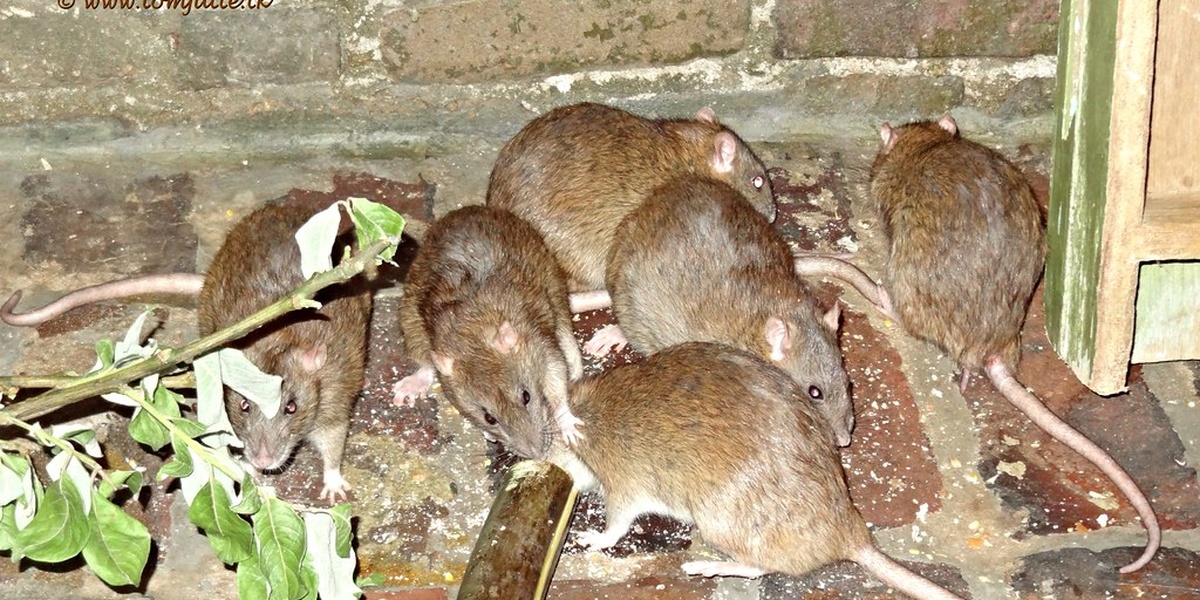
Established in ports and urban neighborhoods, brown rats damage stored food, infrastructure, and spread pathogens. Local control uses baiting and sanitation but infestations reoccur where resources and coordination are limited.
House mouse
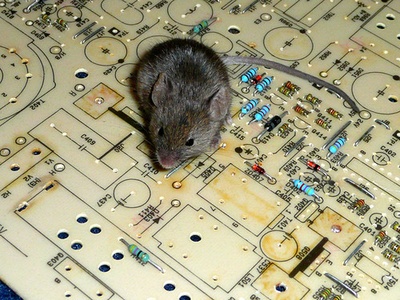
Common in dwellings and granaries, house mice cause post‑harvest losses and carry disease. Management is mostly ad hoc trapping and rodenticide use; long‑term sanitation and storage improvements are limited.
Small Asian mongoose
Introduced decades ago to control rodents, the mongoose now preys on native birds, reptiles and amphibians. It remains widespread; eradication is infeasible and control is minimal, with conservationists focusing on protecting key sites.
Feral cat
Feral and free‑roaming cats are common and hunt native birds, reptiles and small mammals. They also spread disease. Some NGOs run trap‑neuter‑release or removal programs, but populations remain high and impacts persist.
Feral dog
Stray dogs attack livestock and wildlife, create public‑safety concerns, and transmit rabies. Periodic vaccination and culling campaigns occur, but stray populations and human–dog conflicts continue across Haiti.
Feral pig
Feral pigs root soils, damage crops, spread invasive plant seeds and disturb wetlands. They are locally hunted but populations are resilient; formal management programs are limited.
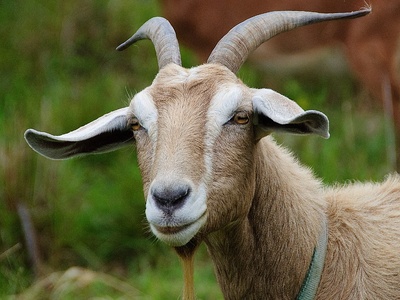
Goat
Goats are a major driver of overgrazing and deforestation in Haiti, worsening erosion and loss of native plants. They are managed as livestock, but grazing pressure remains a central environmental problem with few effective large‑scale controls.
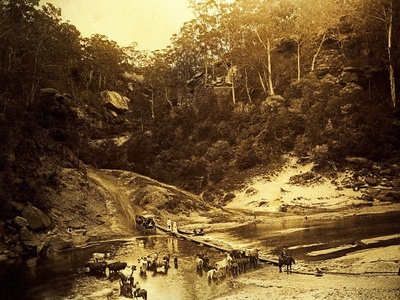
Cattle
Cattle grazing and tethering contribute to habitat conversion, soil compaction and erosion. Treated as livestock central to livelihoods, their ecological impacts persist where pasture management and reforestation incentives are weak.
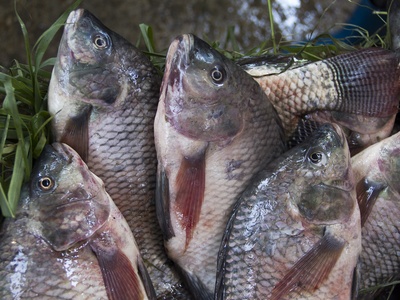
Nile tilapia
Introduced for food production, tilapia have established feral populations that compete with and alter habitats of native freshwater fishes. They are widespread; management focuses on aquaculture practices rather than eradication.
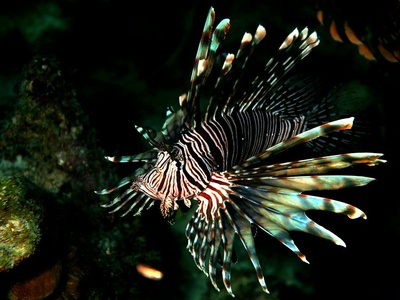
Lionfish
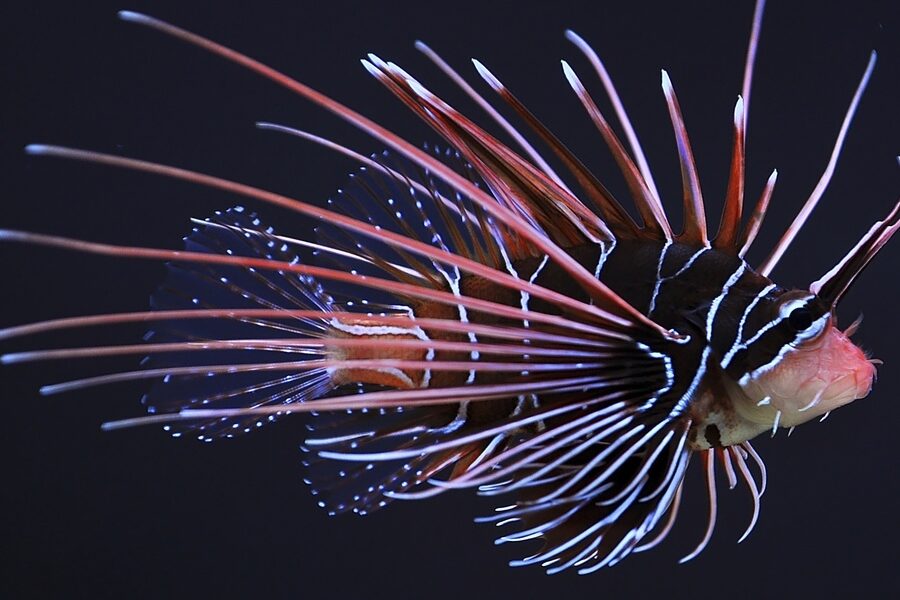
Now abundant on Haitian reefs, lionfish consume reef fish and invertebrates, harming reef resilience and fisheries. Removal by spearfishing, derbies and NGO efforts help locally but broad control is difficult.
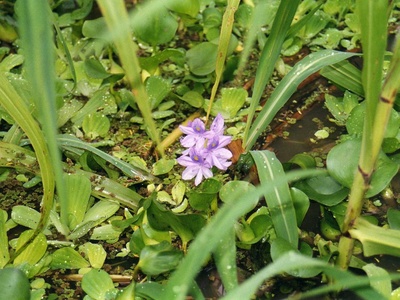
Water hyacinth
Forms dense floating mats that clog waterways, impede fishing and transport, lower oxygen and damage aquatic life. Local removal and manual clearing occur, but re‑invasion is common without sustained programs.
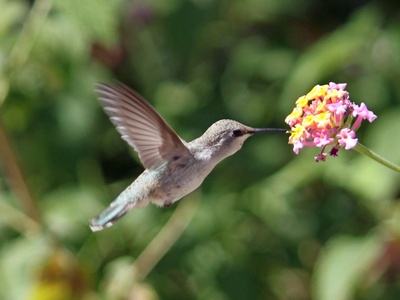
Lantana
Lantana forms dense thickets that outcompete native plants, reduce grazing value and can be toxic to livestock. Control is labor‑intensive (cutting, herbicide); limited local clearing projects exist but distribution remains widespread.
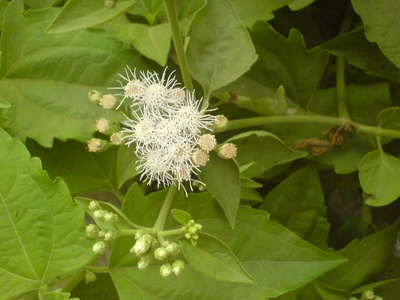
Siam weed
Fast‑growing shrub that suppresses native regeneration and increases fire risk. Widespread in disturbed areas; management relies on manual removal and grazing where feasible, with limited national coordination.
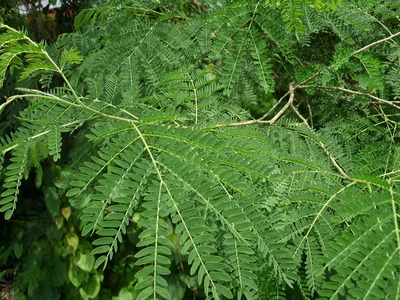
Leucaena
Planted for fodder and shade, leucaena invades dry and coastal habitats, altering soils via nitrogen fixation and outcompeting natives. Local removal and reforestation initiatives are used in some sites.
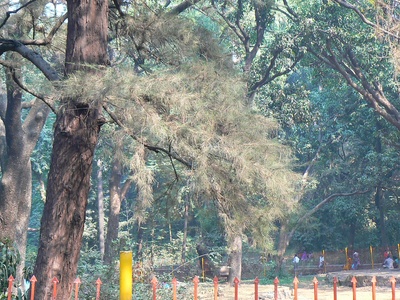
Australian pine
Colonizes beaches and dune systems, displacing native coastal vegetation and changing sand dynamics. Removal occurs in priority conservation areas, but trees regenerate from seed and rootstocks.
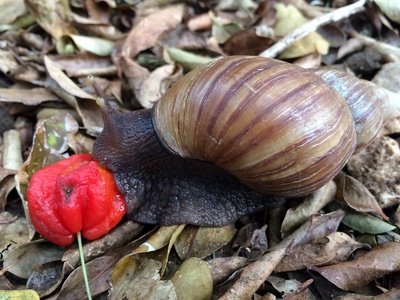
Giant African snail
Damages crops and ornamentals, can carry human parasites and is a quarantine pest. Control campaigns (collection, molluscicides, public outreach) have been implemented locally, though infestations persist in some areas.
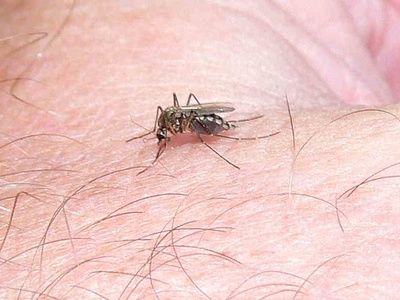
Aedes aegypti
Primary vector of dengue, Zika and chikungunya in Haiti; abundant in towns. Vector control (source reduction, larviciding, occasional focal spraying) is a public‑health priority with variable success.
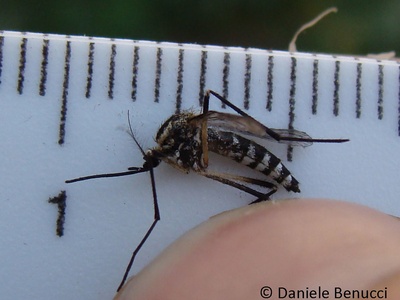
Aedes albopictus
Established and expanding, this mosquito contributes to arbovirus transmission and competes with Aedes aegypti. Surveillance and integrated vector control target both species in outbreak responses.
Coffee berry borer
Serious pest of coffee in Hispaniola, reduces yields and farmer income. Management includes cultural controls, insecticides and biocontrol research; smallholder capacity limits full control.
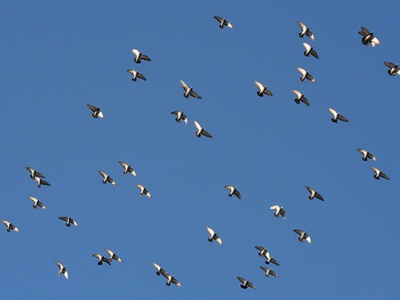
Feral pigeon
Common in cities, pigeons cause building soiling and can spread pathogens. Local nuisance control is occasional and largely unmanaged at scale.