Shallow reef flats and fore-reef slopes brim with life driven by sunlight and algae; tiny grazers and invertebrates keep algal growth in check and pass energy up the food web. Knowing which species fill that primary-consumer role helps explain how reefs stay balanced and which animals you might spot while snorkeling or surveying.
There are 26 coral reef primary consumers, ranging from Algal farming urchin (Echinothrix) to Unicornfish. For each species you’ll find below the data organized as Scientific name, Typical length (cm), Where found, so you can compare ranges and sizes at a glance — you’ll find below the complete list and details.
How do primary consumers influence reef health?
Primary consumers — grazers like urchins and herbivorous fish — control algal cover so corals can settle and grow. Their feeding rates, abundance, and grazing patterns directly affect reef recovery after disturbance, so monitoring these species gives practical insight into ecosystem resilience.
Where and when am I most likely to see Algal farming urchin or a Unicornfish?
Algal farming urchins are usually found on shallow reef crests and rubble where they tend algae patches; Unicornfish frequent reef slopes and outer reef zones, often in small schools during daylight. Visit shallow reefs at low to mid tide and outer slopes in daylight for the best chances.
Coral Reef Primary Consumers
| Common name | Scientific name | Typical length (cm) | Where found |
|---|---|---|---|
| Parrotfish | Scaridae (various spp.) | 40 | Indo-Pacific, Caribbean |
| Surgeonfish (Tangs) | Acanthuridae (Acanthurus, Zebrasoma spp.) | 30 | Global tropical reefs |
| Rabbitfish | Siganidae (Siganus spp.) | 30 | Indo-Pacific, Red Sea |
| Parrotfish (Scarus) | Scarus spp. | 50 | Tropical Indo-Pacific, Caribbean |
| Unicornfish | Naso unicornis (and Naso spp.) | 75 | Indo-Pacific reefs |
| Combtooth blennies | Ecsenius, Salarias spp. | 10 | Indo-Pacific, Red Sea |
| Damselfish (algal farmers) | Pomacentridae (Stegastes spp.) | 12 | Indo-Pacific, Caribbean |
| Rock-boring urchin | Echinometra mathaei | 10 | Indo-Pacific reefs |
| Long-spined urchin | Diadema antillarum | 25 | Caribbean, eastern Pacific analogs |
| Collector urchin | Tripneustes gratilla | 20 | Indo-Pacific reefs |
| Turbo snails | Turbo spp. | 8 | Indo-Pacific, Indo-West Pacific |
| Trochus snail | Trochus niloticus | 10 | Indo-Pacific reefs |
| Nerite snails | Nerita spp. | 3 | Global tropical reefs |
| Limpets (reef) | Siphonaria, Cellana spp. | 5 | Tropical reef flats |
| Sea hares | Aplysia spp. | 30 | Tropical and subtropical reefs |
| Sacoglossan sea slugs | Elysia spp. | 5 | Caribbean, Indo-Pacific reefs |
| Giant clams | Tridacna spp. | 80 | Indo-Pacific coral reefs |
| Reef mussels and bivalves | Various (Mytilidae, Spondylidae) | 10 | Tropical reef flats and lagoons |
| Porcelain crabs | Petrolisthes spp. | 3 | Indo-Pacific, Caribbean reefs |
| Reef barnacles | Tetraclita, Megabalanus spp. | 2 | Global tropical reefs |
| Reef copepods | Various harpacticoid and calanoid spp. | 0.1 | Global reefs, reef plankton |
| Mysid shrimps | Mysidae (reef-associated spp.) | 1.5 | Reef lagoons, seagrass edges |
| Green sea turtle | Chelonia mydas | 100 | Tropical and subtropical reefs worldwide |
| Algal farming urchin (Echinothrix) | Echinothrix spp. | 15 | Indo-Pacific reefs |
| Tegula top shells | Tegula, Monodonta spp. | 4 | Tropical rocky reefs and coral edges |
| Microherbivorous amphipods | Ampithoidae and related families | 0.5 | Seagrass and algal beds near reefs |
Images and Descriptions
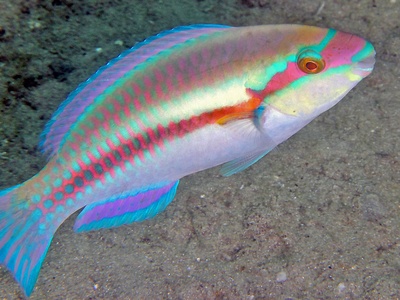
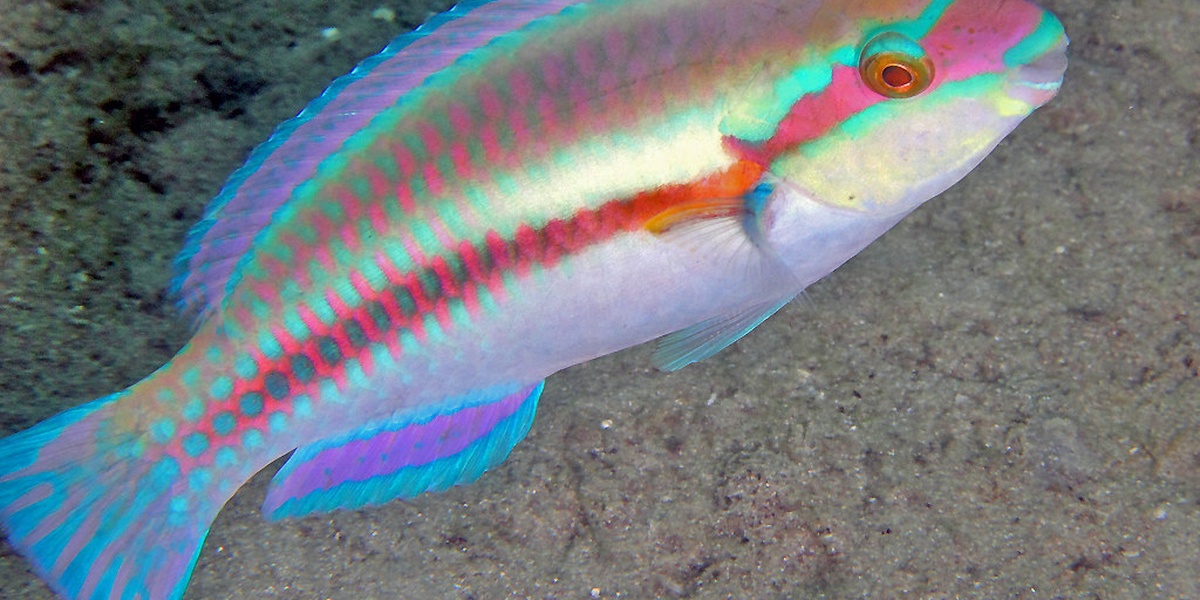
Parrotfish
Colorful reef fishes that scrape and graze hard and turf algae from coral and rock. They help control algal growth, bioerode dead coral into sand, and often form sleeping schools by night.
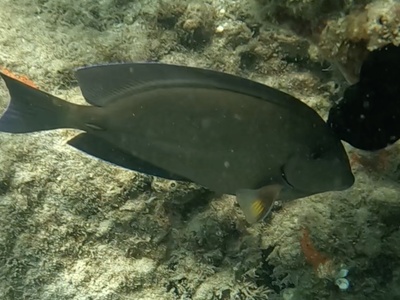
Surgeonfish (Tangs)
Tangs are fast, reef-grazing fishes that crop turf algae and microalgae from coral surfaces. They maintain open space for coral recruitment and display territorial schooling and reef-wide grazing patterns.
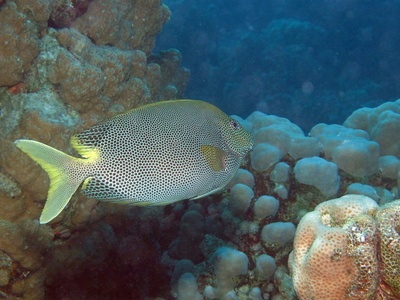
Rabbitfish
Herbivorous fishes that feed heavily on macroalgae and seagrass, often in pairs. They reduce algal overgrowth on reefs, can form feeding schools, and some species are important in fisheries.
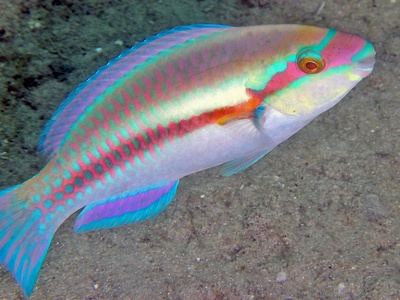
Parrotfish (Scarus)
Large parrotfish species that rasp algae and dead coral with beak-like teeth. They are major bioeroders, recycling carbonate into sand while keeping algal turf in check across reef slopes.
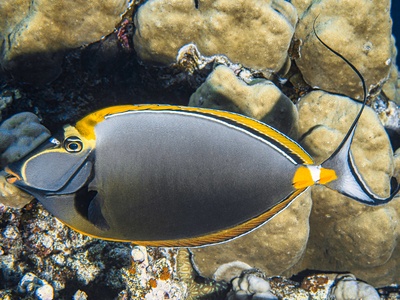
Unicornfish
Large surgeonfish relatives that graze on macroalgae and turf, often feeding on outer reef slopes. They travel between reefs and algal beds, linking habitats while removing bulky seaweeds.
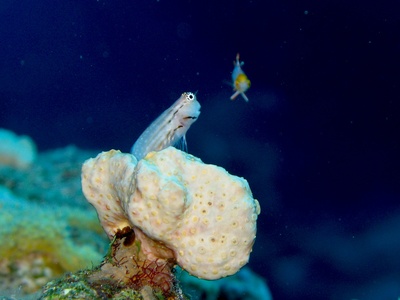
Combtooth blennies
Small, cryptic blennies that scrape filamentous algae and turf from rocks and coral crevices. They defend tiny algal territories, contributing to fine-scale control of microalgal growth on reefs.

Damselfish (algal farmers)
Some damselfish cultivate and fiercely defend patches of turf algae, pruning competitors and excluding grazers. Their gardening creates small but persistent algal gardens that alter local community structure.
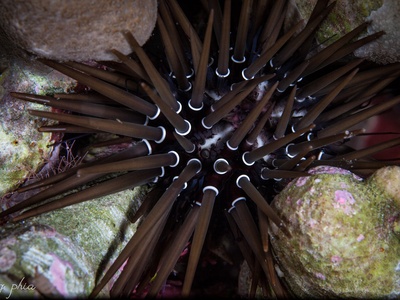
Rock-boring urchin
Small, robust urchin that grazes turf algae on reef rock and can bore into coral skeletons. Their grazing opens surfaces for settlement but heavy grazing can damage substrates locally.
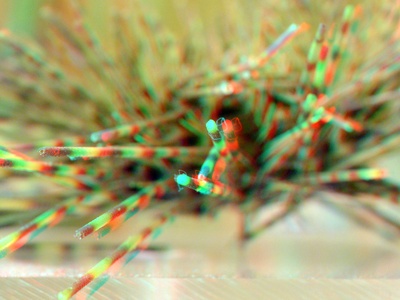
Long-spined urchin
Slim, long-spined urchin that efficiently clears macroalgae and turf, promoting coral recruitment. Mass die-offs dramatically changed reef algal cover, showing their keystone herbivore role.
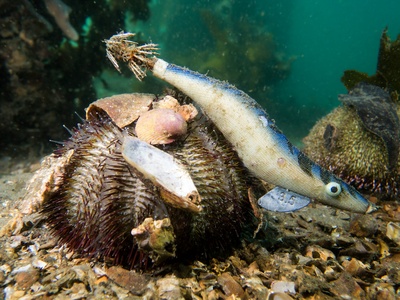
Collector urchin
Round, grazing urchin that feeds on macroalgae and algal turf across reef flats and lagoons. It helps keep algae down and is often abundant after coral disturbance.
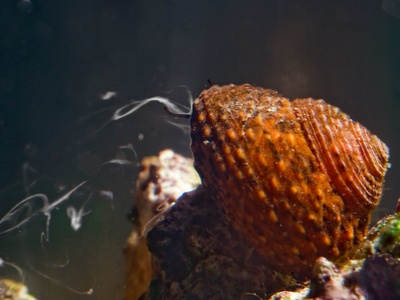
Turbo snails
Conical gastropods that scrape microalgae and film from rock and coral surfaces with a rough radula. They are common reef cleaners, especially on shallow reef flats and crests.
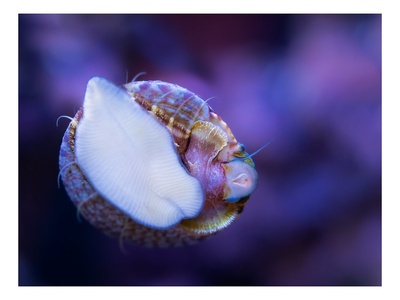
Trochus snail
Large top shell snail that grazes algae on reef flats and seagrass edges. Valued in aquaculture, Trochus recycles algae and helps maintain grazed surfaces important for juvenile reef species.
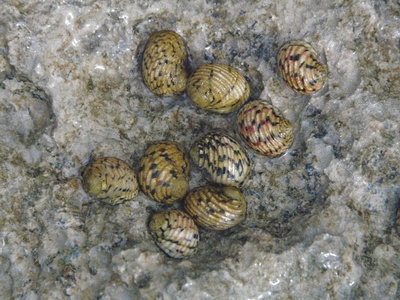
Nerite snails
Small, strong-shelled snails that scrape biofilm and microalgae from intertidal and shallow reef surfaces. They tolerate wave action and help prevent algal buildup in crevices and tide pools.
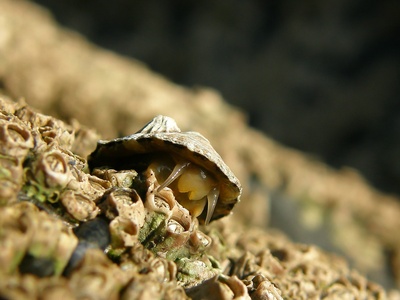
Limpets (reef)
Flattened gastropods that cling to rock and coral, grazing microalgae and biofilms. Their patterned foraging creates distinct cleared patches and they tolerate desiccation and heavy surf in shallow reefs.
Sea hares
Large opisthobranchs that consume macroalgae and turf, sometimes causing visible browsed patches. They store algal toxins for defense and can be locally abundant after algal blooms.
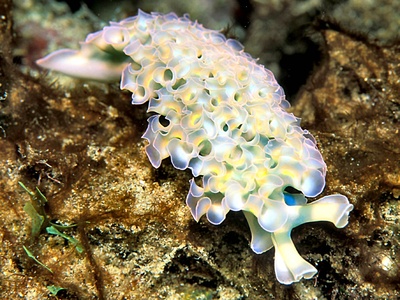
Sacoglossan sea slugs
Small slugs that pierce algal cells to suck chloroplasts, often retaining them for photosynthesis (kleptoplasty). They specialize on specific algae and are intriguing microherbivores on reefs.
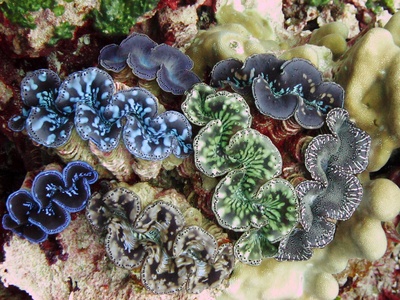
Giant clams
Massive reef clams that host photosynthetic symbionts and also filter phytoplankton. They’re stationary primary consumers, contributing to reef productivity and providing structure for small reef organisms.
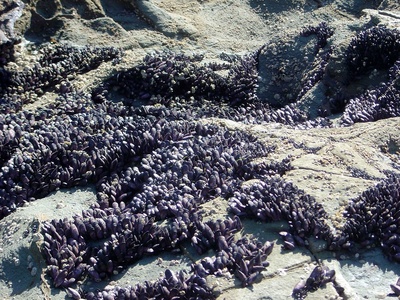
Reef mussels and bivalves
Attached bivalves that filter phytoplankton and suspended algae from seawater. They concentrate primary production, provide habitat complexity, and link planktonic production to reef food webs.
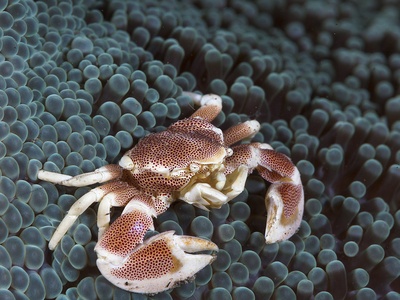
Porcelain crabs
Small reef crabs that use fan-like setae to filter plankton, including phytoplankton, from the water. They live under rocks and coral, feeding at night and linking plankton to reef benthos.
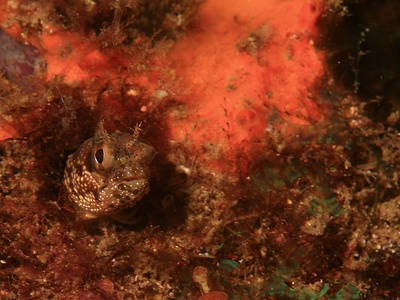
Reef barnacles
Sessile crustaceans that filter phytoplankton from flowing water. Though small, they are abundant on reef surfaces and contribute to local plankton removal and microhabitat complexity.
Reef copepods
Tiny crustaceans in reef water and algal mats that feed on microalgae and phytoplankton. They are crucial plankton grazers and an important energy transfer to small fish and invertebrates.
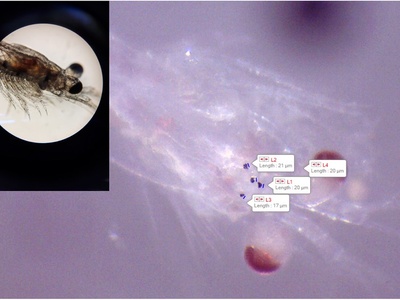
Mysid shrimps
Small, shrimp-like planktonic grazers that consume phytoplankton and microalgae at night. They form swarms above reefs and are a key link to fish that feed on zooplankton.
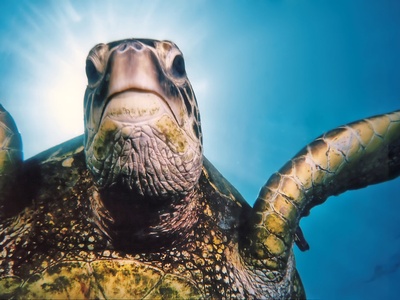
Green sea turtle
Large marine herbivore that grazes seagrass beds and algae on reef fore- and back-reefs. By cropping seagrass and algae, they shape habitats and nutrient cycling across reef-seagrass systems.
Algal farming urchin (Echinothrix)
Spiny urchins that graze turf and short macroalgae, often in crevices and under ledges. Their feeding patterns influence microhabitat algal composition and provide grazing pressure on shaded surfaces.
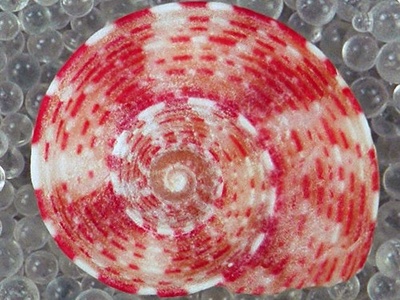
Tegula top shells
Small gastropods that scrape microalgae and diatoms from rock and coral surfaces. They are common grazers in shallow reef zones and tide pools, controlling film-forming algae.
Microherbivorous amphipods
Small crustaceans that graze on macroalgal surfaces and epiphytes. They live within algal fronds and seagrass, making them important, often overlooked herbivores in reef-adjacent habitats.