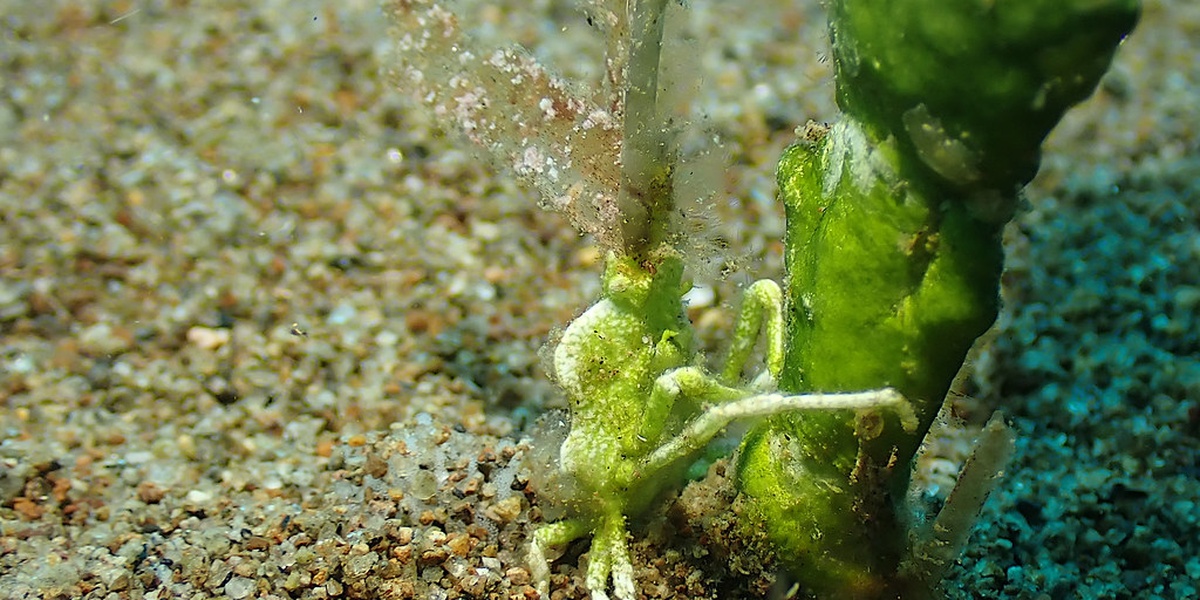
Along tropical coastlines and around fringing reefs, a mix of algae, seagrasses and shoreline plants creates the foundation for reef food webs and shelter for many marine species. These plants and algae shape water clarity, nutrient cycling and habitat structure in ways divers and coastal managers notice every day.
There are 46 coral reef vegetation entries, ranging from Acanthophora to White mangrove. For each species you’ll find below the Scientific name,Category,Distribution so you can compare identity, role and range at a glance.
How can I tell Acanthophora apart from other reef algae?
Look for a branching, often reddish thallus with fine lateral branches—Acanthophora is a red alga with a distinctive texture compared with green or brown seaweeds. Habitat (shallow, wave-sheltered zones), color and branching patterns are quick field cues; use the Scientific name and Distribution columns below to confirm likely species in your area.
How is this list useful for monitoring reef health?
Tracking presence, absence and shifts in the Category and Distribution fields gives a practical baseline for detecting changes (e.g., algal blooms, seagrass loss or mangrove encroachment). Use repeated surveys against the list to spot trends, prioritize sites and guide conservation or restoration actions.
Coral Reef Vegetation
| Name | Scientific name | Category | Distribution |
|---|---|---|---|
| Turtlegrass | Thalassia testudinum | seagrass | Caribbean & western Atlantic |
| Manatee grass | Syringodium filiforme | seagrass | Caribbean & western Atlantic |
| Shoal grass | Halodule wrightii | seagrass | Western Atlantic & Gulf of Mexico |
| Paddlegrass | Halophila ovalis | seagrass | Indo-Pacific tropical coasts |
| Tropical tape seagrass | Enhalus acoroides | seagrass | Indo-Pacific shallow reefs |
| Cymodocea seagrass | Cymodocea rotundata | seagrass | Indo-Pacific reef flats |
| Halimeda padalike | Halimeda opuntia | macroalgae | Circumtropical reefs |
| Halimeda tuna | Halimeda tuna | macroalgae | Circumtropical reefs |
| Peacock’s tail | Padina pavonica | macroalgae | Tropical & subtropical seas |
| Green salad seaweed | Ulva lactuca | macroalgae | Global temperate & tropical coasts |
| Caulerpa meadow | Caulerpa racemosa | macroalgae | Indo-Pacific; invasive Atlantic occurrences |
| Caulerpa featherweed | Caulerpa sertularioides | macroalgae | Circumtropical shallow reefs |
| Sargassum weed | Sargassum polycystum | macroalgae | Tropical Indo-Pacific reefs |
| Dictyota brownweed | Dictyota menstrualis | macroalgae | Western Atlantic & Caribbean |
| Lobophora | Lobophora variegata | macroalgae | Caribbean & tropical Atlantic reefs |
| Gracilaria seaweed | Gracilaria salicornia | macroalgae | Indo-Pacific; invasive Hawaii reports |
| Turbinaria | Turbinaria ornata | macroalgae | Indo-Pacific tropical reefs |
| Dictyosphaeria bubbleweed | Dictyosphaeria cavernosa | macroalgae | Indo-Pacific reefs |
| Chlorodesmis | Chlorodesmis fastigiata | macroalgae | Indo-Pacific coral reefs |
| Acanthophora | Acanthophora spicifera | macroalgae | Tropical Indo-Pacific & Atlantic areas |
| Gracilaria turf | Gracilaria tikvahiae | macroalgae | Caribbean shallow reefs & seagrass beds |
| Sargassum raft | Sargassum fluitans | macroalgae | Western Atlantic, pelagic & coastal |
| Porolithon crust | Porolithon onkodes | crustose coralline | Indo-Pacific shallow reefs |
| Sporolithon | Sporolithon durum | crustose coralline | Tropical seas worldwide |
| Lithophyllum | Lithophyllum prototypum | crustose coralline | Indo-Pacific coral reefs |
| Neogoniolithon | Neogoniolithon fosliei | crustose coralline | Tropical & subtropical reefs |
| Filamentous turf algae | mixed filamentous algae | turf | Widespread tropical reefs |
| Lyngbya mats | Lyngbya majuscula | cyanobacteria | Tropical reefs worldwide |
| Moorea cyanobacteria | Moorea producens | cyanobacteria | Tropical Indo-Pacific & reports elsewhere |
| Oscillatoria mats | Oscillatoria spp. | cyanobacteria | Tropical reefs and sheltered lagoons |
| Red mangrove | Rhizophora mangle | mangrove | Tropical Americas & Caribbean |
| Black mangrove | Avicennia germinans | mangrove | Tropical Americas |
| Grey mangrove | Avicennia marina | mangrove | Indo-Pacific & Australia |
| White mangrove | Laguncularia racemosa | mangrove | Tropical Americas |
| Bruguiera mangrove | Bruguiera gymnorhiza | mangrove | Indo-Pacific mangrove fringes |
| Mangrove apple | Sonneratia alba | mangrove | Indo-Pacific tropical coasts |
| Polysiphonia epiphyte | Polysiphonia sp. | epiphyte | Worldwide on seagrass & macroalgae |
| Ceramium epiphyte | Ceramium sp. | epiphyte | Tropical & temperate coasts |
| Microdictyon | Microdictyon umbilicatum | epiphyte | Indo-Pacific shallow reefs |
| Rhodolith beds | Various coralline algae | crustose coralline | Tropical reef-adjacent areas |
| Encrusting red algae | Corallinaceae sp. | crustose coralline | Worldwide tropical reefs |
| Green filamentous epiphyte | Cladophora sp. | epiphyte | Tropical reef flats worldwide |
| Red turf algae | Rhodophyta turf assemblage | turf | Widespread tropical reefs |
| Sargassum attached | Sargassum natans | macroalgae | Tropical Atlantic & Caribbean |
| Calcareous green turf | Padina/Halimeda mixed | turf | Tropical reef flats |
| Coralline rhodolith | Sporolithon/Goniolithon spp. | crustose coralline | Tropical reef-adjacent shelves |
Images and Descriptions
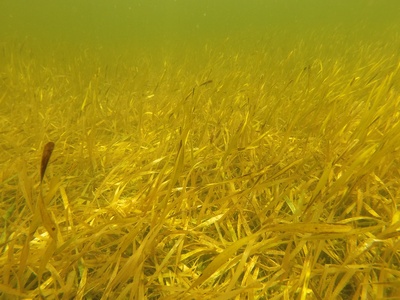
Turtlegrass
A dominant reef-adjacent seagrass forming dense beds in shallow, sandy lagoons. Provides nursery habitat, stabilizes sediment and stores carbon. ID tip: broad, stiff, strap-like leaves in dense carpets often with epiphytic algae.
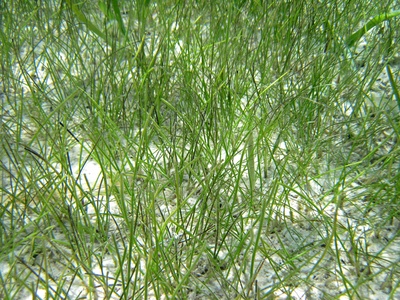
Manatee grass
Fine, cylindrical leaves form sparse to dense beds in shallow reef lagoons and seagrass meadows. Important forage and nursery habitat; helps trap sediment. ID tip: thin, tube-like leaves distinguish it from flat-leaved seagrasses.
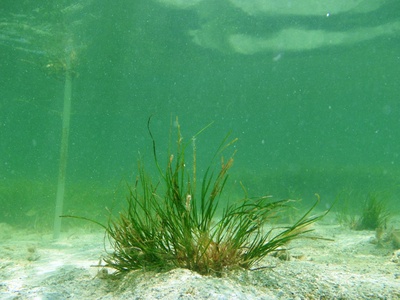
Shoal grass
A small, fast-growing seagrass occupying shallow sandy patches near reefs. Quick colonizer that stabilizes substrate and feeds herbivores. ID tip: narrow, flattened leaves with a distinct midrib and often short stature.

Paddlegrass
A small, patchy seagrass on sandy reef flats and lagoon bottoms. Supports invertebrates and young fishes, tolerates disturbance. ID tip: tiny, round to oval leaves on thin stalks, often in scattered patches.
Tropical tape seagrass
Large, robust seagrass with long strap-like leaves in sheltered reef flats. Produces significant leaf litter and habitat for fish and invertebrates. ID tip: long, wide leaves with a distinctive pseudo-stem at base.
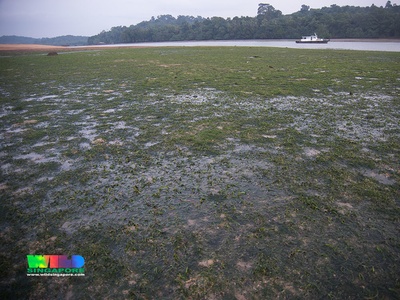
Cymodocea seagrass
Forms meadows in shallow reef lagoons and sand channels, important nursery habitat and sediment stabilizer. ID tip: narrow, curved leaves often in loose patches near coral edges.
Halimeda padalike
Calcareous green alga that forms segmented, disk-like thalli contributing to reef sand and carbonate production. Supports herbivores and cementation of reef framework. ID tip: jointed, coin-shaped segments; will crumble into white sand when broken.
Halimeda tuna
A widespread calcified green alga that builds sediment and offers microhabitat on reef flats. Major contributor to tropical carbonate budgets. ID tip: thick, articulated segments with plate-like or fan shapes.
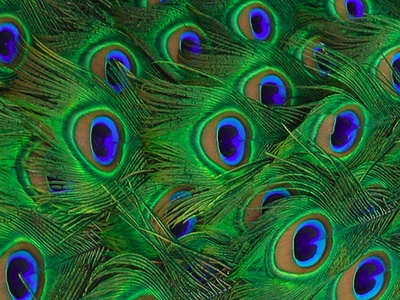
Peacock’s tail
Brownish, fan-shaped alga often on shallow reef rock and rubble. Provides surface area for small invertebrates and detritus capture. ID tip: thin, rolled fan fronds with concentric growth rings and a whitish underside.
Green salad seaweed
Thin, bright green blades on reef margins and seagrass edges; rapid grower after disturbances. Important food for herbivores and nutrient uptake. ID tip: broad, sheet-like, fragile blades resembling lettuce.
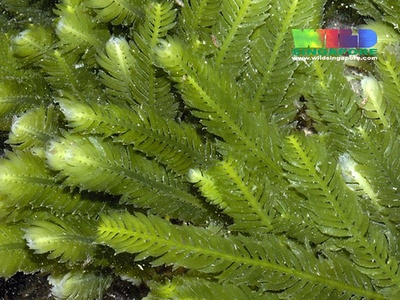
Caulerpa meadow
A fast-growing stoloniferous green alga forming mats on reef sand and rubble; alters habitats and competes with corals. ID tip: creeping stolons with upright grape-like or feathered fronds, bright green color.
Caulerpa featherweed
Forms low mats on sandy reef flats and seagrass margins, stabilizing sediment and providing microhabitat. ID tip: delicate feather-like fronds arising from horizontal runners.
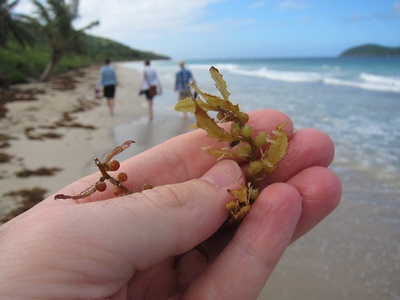
Sargassum weed
Bushy brown alga that attaches to reef rock and provides vertical structure for fishes and invertebrates. Common in tidepools and lagoon margins. ID tip: leathery, branched fronds with small air vesicles and holdfasts.
Dictyota brownweed
Flattened, branching brown alga common on reef walls and rubble; chemically defended against grazing. Contributes to algal turf and habitats. ID tip: simple, dichotomous branching with blunt tips and smooth surfaces.
Lobophora
Low, sheet-like brown alga often forming mats over coral rubble and dead coral; significant competitor with corals. ID tip: thin, lobed blades often patterned with different colors.
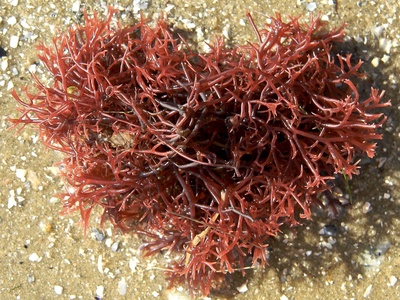
Gracilaria seaweed
Red alga forming dense mats on shallow reef flats and seagrass beds; used in agar production and as habitat. ID tip: fleshy, cylindrical branches often forming tangled clumps.
Turbinaria
Robust brown alga forming plates or whorls on reef crest and upper reef slope; provides habitat and attenuates wave energy. ID tip: rigid, ladder-like or whorled blades often stacked in layers.
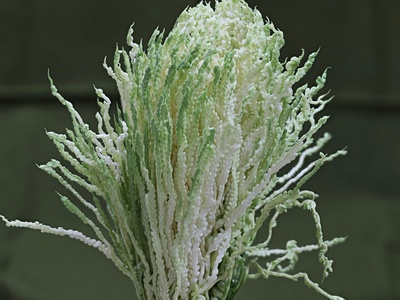
Dictyosphaeria bubbleweed
Green alga with hollow, bubble-like vesicles forming mats on shallow reef flats and crests. Quickly occupies disturbed areas and provides shelter. ID tip: small, round to oval inflated vesicles connected by short stalks.
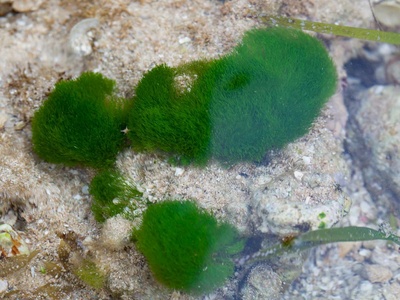
Chlorodesmis
Toxic green alga forming small tufts on reef surfaces; deters herbivores and can overgrow corals locally. ID tip: bright green, tufted filaments with a coarse texture.
Acanthophora
Red alga that forms dense carpets on reef flats and lagoons; invasive in some areas and a common herbivore food source. ID tip: branching, thorny-looking red filaments that form mats.
Gracilaria turf
Red algal strands forming mats on rubble and seagrass; important for invertebrate habitat and detritus pathways. ID tip: flexible cylindrical branches in tangled mats.
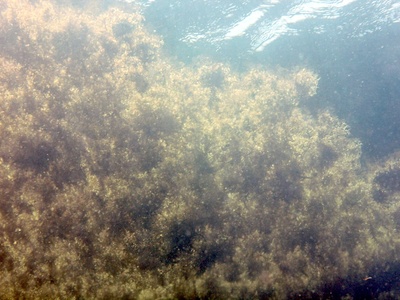
Sargassum raft
Free-floating or attached Sargassum that can wash near reefs, providing rich floating habitat for juvenile fishes and invertebrates. ID tip: floating mats of brown branching algae with air bladders.
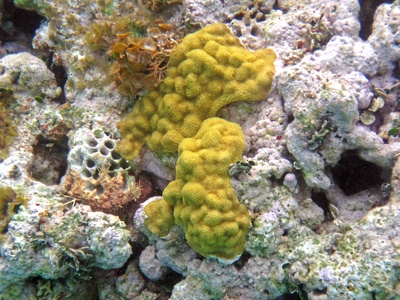
Porolithon crust
Hard, pink to purple encrusting calcareous algae that cements reef framework, encourages coral larvae settlement and strengthens substrate. ID tip: thin, hard encrustations with pink-purple hues on rock or dead coral.
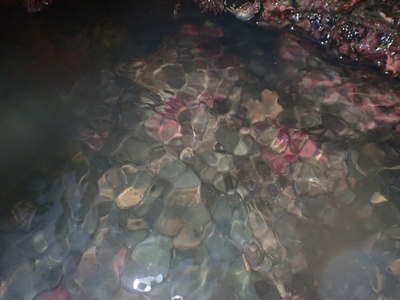
Sporolithon
Encrusting coralline algae forming hard nodules or crusts on reef surfaces; important in reef building and lithification. ID tip: tough, bumpy encrustations often with small reproductive structures visible as bumps.
Lithophyllum
Encrusting coralline that forms thin pink to reddish crusts on reef rock and dead coral, aiding settlement and stabilization. ID tip: flat crusts with smooth to slightly papillate surface and pink to reddish color.
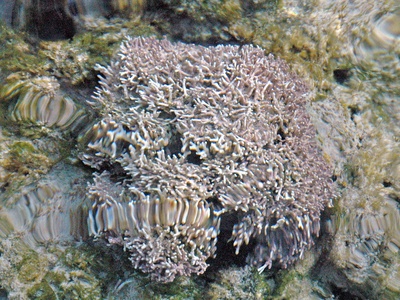
Neogoniolithon
Crustose coralline algae commonly forming hard crusts and small nodules on reef flats and slopes, supporting reef cementation. ID tip: hard encrusting surface often light pink to purple, sometimes forming nodules.
Filamentous turf algae
A dense assemblage of short, filamentous red, green and brown algae forming carpets on reef surfaces; primary producer and fast colonizer that competes with corals. ID tip: low, fuzzy mats of tiny filaments covering hard substrate.
Lyngbya mats
Blue-green filamentous mats on reef tops and lagoons that can smother corals and produce toxins; bloom-forming under high nutrients. ID tip: slimy, rope-like dark mats that can be pulled up in strands.
Moorea cyanobacteria
Thick, mucilaginous mat-forming cyanobacterium on reef flats producing potent toxins and covering substrate, harming corals and fishes. ID tip: bright blue-green to dark mats that form cohesive, slippery sheets.
Oscillatoria mats
Thin to thick filamentous mats on reef sand and rock; oxygen producers but can form nuisance blooms under eutrophication. ID tip: smooth, dark, filamentous layers that slide off rocks when disturbed.
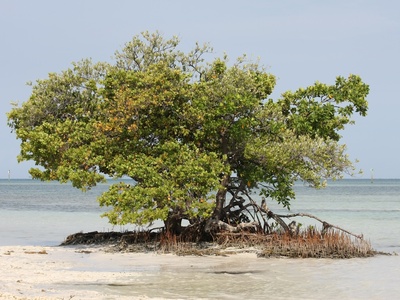
Red mangrove
Fringe mangrove tree often bordering reef lagoons; roots trap sediment, supply nutrients and provide nursery habitat linking mangroves and reefs. ID tip: distinctive prop roots extending into water from trunk and lower branches.
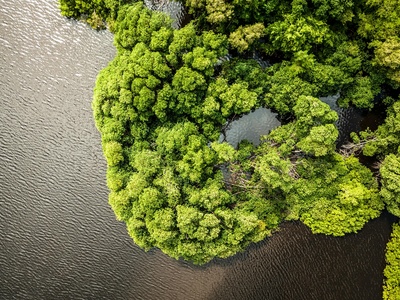
Black mangrove
Common fringe mangrove providing organic matter and nursery habitat for reef-associated species; tolerates salt and occasional flooding. ID tip: pneumatophores (vertical breathing roots) protrude from muddy substrate near trees.
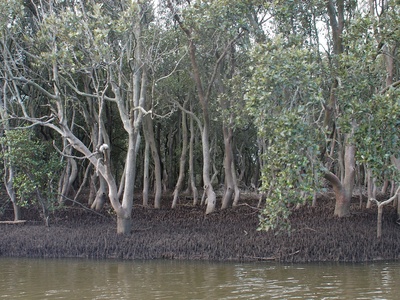
Grey mangrove
Widespread mangrove species on tropical coasts interfacing with reefs; stabilizes shorelines and filters runoff. ID tip: grey-green leaves with salt-excreting glands and pencil-like pneumatophores.
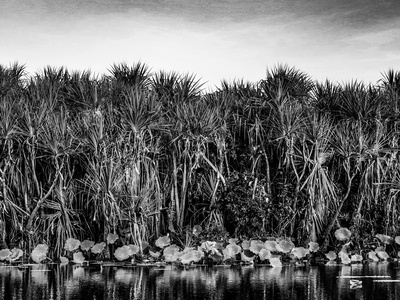
White mangrove
Occurs at higher shore elevations near reefs, contributes leaf litter and organic subsidies to nearby reef systems. ID tip: opposite rounded leaves with two small nectar glands at the base of each leaf stalk.
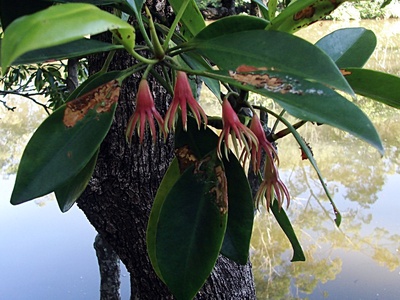
Bruguiera mangrove
Sturdy fringe mangrove forming dense root networks that protect reefs from sediment and deliver nutrients to lagoon systems. ID tip: knee-like lower trunks and robust viviparous propagules (seedlings).
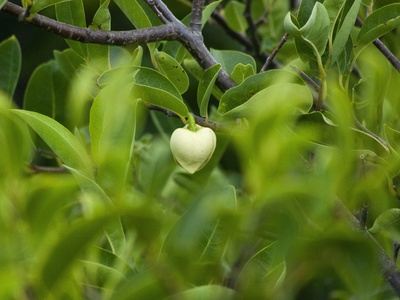
Mangrove apple
Pioneer fringe mangrove often found at reef mouths and lagoon edges; supplies detritus and nursery space for reef fish. ID tip: broad, glossy leaves and distinctive conical breathing roots in muddy substrates.
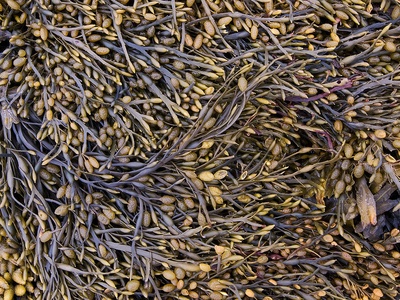
Polysiphonia epiphyte
Small filamentous red algae commonly growing as epiphytes on seagrass blades and macroalgae; provide microhabitat and food for grazers. ID tip: fine, branching red filaments tightly attached to host surfaces.
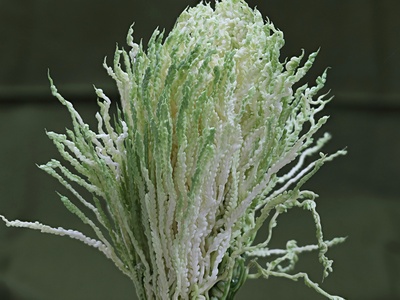
Ceramium epiphyte
Fine red filamentous algae that frequently coat seagrass and macroalgal surfaces, contributing to turf complexity and food webs. ID tip: delicate, feathery red branches with hooked tips on some species.
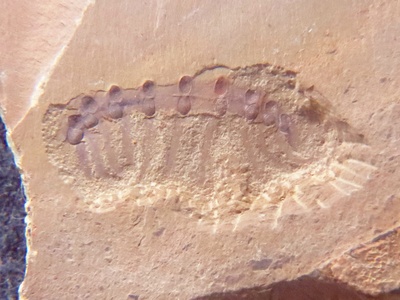
Microdictyon
Green, net-like alga often growing on seagrass and macroalgae providing shelter to small invertebrates and fishes. ID tip: distinctive flattened, net- or fan-like blades forming thin mats on host surfaces.
Rhodolith beds
Loose, free-living nodules of coralline algae that create complex habitats and contribute heavily to carbonate sediments and biodiversity. ID tip: hard, rounded nodules on sandy bottoms composed of pink to purple coralline algae.
Encrusting red algae
Thin, pink to red encrusting algae that cement reef framework, promote coral larval settlement and resist erosion. ID tip: hard, encrusting patches often scraped to reveal calcareous white interior.
Green filamentous epiphyte
Tufted green filaments growing on seagrass and macroalgae; quick colonizer and food for herbivores. ID tip: coarse, bright green tufts of branching filaments attached to leaves or rock.
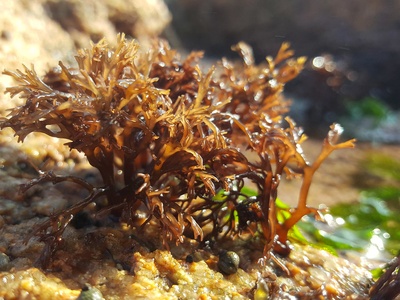
Red turf algae
Mixed small red algae forming dense carpets atop reef surfaces and seagrass blades; primary producers and competitors with corals. ID tip: low mats of fine red filaments that ripple in water flow.
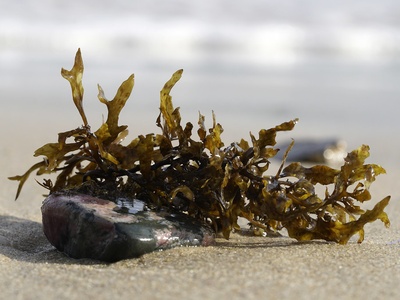
Sargassum attached
Attached and free-floating brown alga that can drift near reefs providing shelter and food for juvenile fishes and invertebrates. ID tip: branching brown fronds with small air bladders; often forms rafts.
Calcareous green turf
Mixed small calcareous green algae in turf form contribute carbonate sediment and microhabitats while quickly occupying cleared substrate. ID tip: mix of tiny calcified segments and filaments forming gritty, greenish mats.
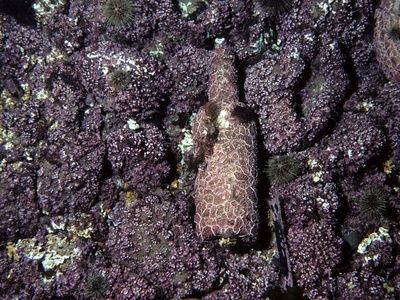
Coralline rhodolith
Free-living coralline nodules that form rhodolith beds supporting unique biodiversity and buffer adjacent reefs. ID tip: hard, rounded pink to purple nodules on sandy bottoms, often forming dense carpets.