Food scraps and yard trimmings make up about 30% of what households throw away (U.S. EPA).
Most cities cannot process all that organic waste, so a lot of it ends up in landfills where it creates methane. Composting at home cuts that waste stream, improves garden soil, and saves money on fertilizers and bagged amendments.
There are at least eight practical ways to do it, depending on your space, budget, and time. Below you’ll find methods grouped by setting: classic outdoor systems, indoor and small-space setups, and simple or accelerated alternatives. Pick one that fits your routine and try it for two weeks to see how it goes.
Classic Outdoor Methods
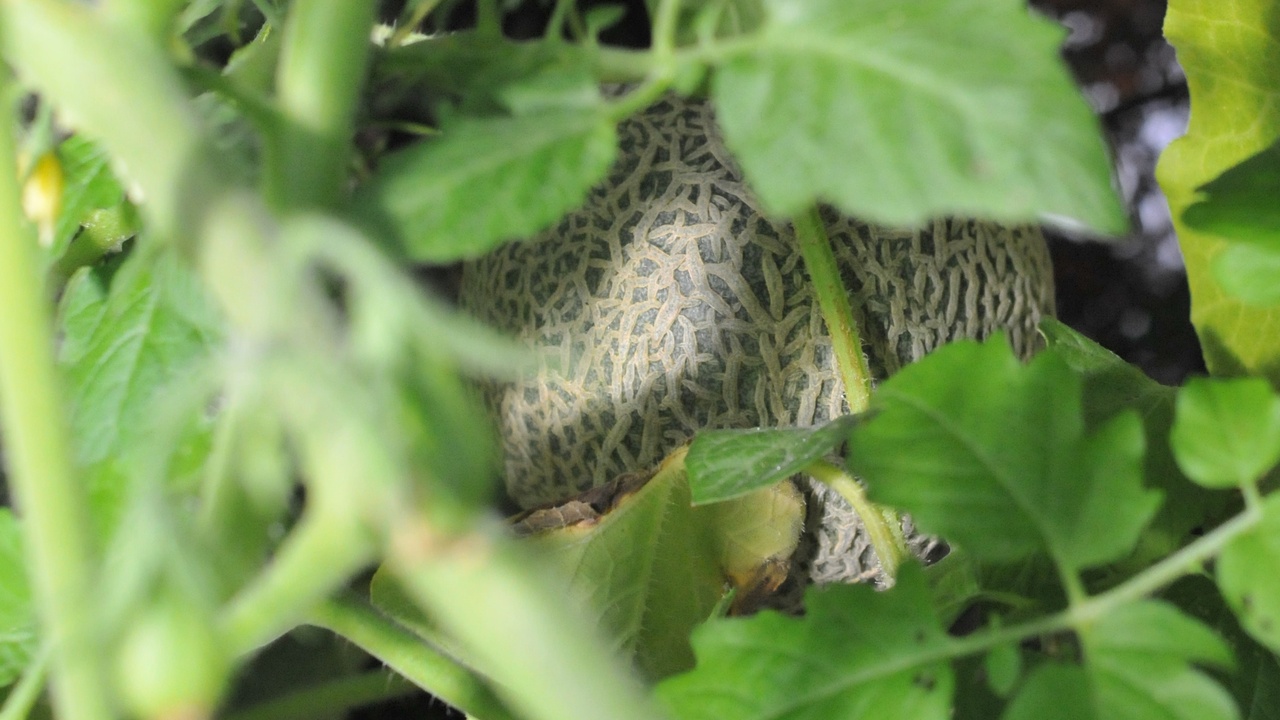
Outdoor composting is the traditional choice for anyone with a yard, access to leaves and grass clippings, and room to turn a pile. It’s ideal when you produce regular yard waste and want large volumes of finished compost.
Hot piles reach high temperatures—about 55°C (131°F)—which speeds breakdown and helps kill weed seeds and pathogens. Cold, no-turn heaps take much longer but require less work.
Basic maintenance is simple: balance moist “greens” (kitchen scraps, fresh grass) with dry “browns” (leaves, straw, shredded cardboard), keep the pile damp but not soggy, and aerate by turning or using an aeration tool. Below are three common outdoor approaches to match different needs.
1. Hot (Turned) Composting
Hot composting builds a large, actively managed pile that you turn to maintain high temperatures. The goal is to hold an internal temperature near 55°C (131°F) for days to weeks so thermophilic microbes break material down fast and reduce pathogens and weed seeds.
Households using this method often layer kitchen greens with yard browns, monitor temperature with a compost thermometer, and turn the pile every few days to supply oxygen. A pitched aerator or a garden fork makes turning easier.
When the pile is well managed you can finish compost in as little as 2–8 weeks during the active thermophilic phase. Troubleshooting is straightforward: too wet and it smells—add more dry browns; too dry and decomposition stalls—add water and more greens.
2. Cold (No-Turn) Composting
Cold composting is a low-effort method where organic matter decomposes slowly without regular turning. It’s a set-and-forget approach that suits people with limited time or physical ability.
Timelines run longer—typically 3–12 months—because temperatures stay lower and microbial activity is slower. Use a static bin or a simple backyard heap and layer coarser material to reduce compaction and improve airflow.
The main benefits are minimal labor and a steady supply of finished compost for beds over the season. It also preserves more habitat for earthworms and beneficial organisms than intense hot piles.
3. Tumblers and Enclosed Bins
Tumblers and enclosed bins offer a tidy, rodent-resistant option that speeds aerobic decomposition through easy mechanical turning. They work well for small-to-medium yards or patios where you want a neater setup.
Tumblers often finish material faster than static bins because you can mix contents frequently without heavy lifting. Typical products include the FCMP Outdoor Tumbler and insulated designs like the Jora Composter for colder climates.
These units are convenient but have limited capacity, so they suit households that produce moderate scrap volumes. Rotate the tumbler every few days, balance greens and browns, and avoid overfilling to keep airflow steady.
Indoor and Small-Space Systems
Indoor systems let apartment dwellers, balcony gardeners, and anyone without yard space divert kitchen scraps without outdoor piles. These setups are made to control odor and pests while still producing useful amendments.
Startup cost, odor risk, and maintenance vary: worm bins need regular feeding and moisture checks, Bokashi requires bran and occasional drainage of liquid, and electric units cost more but demand the least hands-on time.
Below are three popular indoor options, listed from biological systems that produce high-value material to mechanical choices that prioritize speed and convenience.
4. Vermicomposting (Worm Bins)
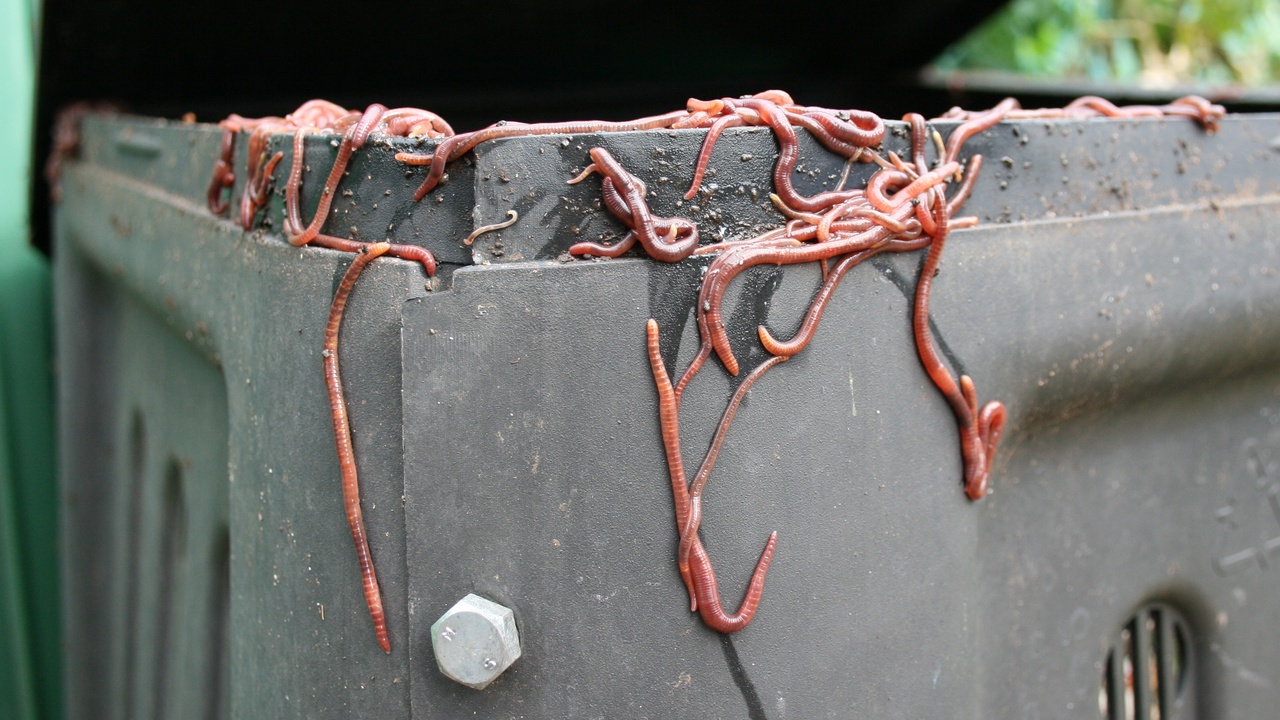
Vermicomposting uses red wiggler worms (Eisenia fetida) to convert kitchen scraps into nutrient-rich castings. The result is a dark, earthy product that feeds plants and soil microbes.
Set up a plastic or wooden bin (commercial units like Worm Factory work well), add bedding such as shredded cardboard or coconut coir, and introduce worms. Keep the bin moist like a wrung-out sponge and feed a modest amount of soft kitchen waste a few times a week.
Avoid large amounts of citrus, onion, meat, and dairy, which can sour the bin. Harvest castings by migrating worms to fresh bedding or using the “light separation” method, then mix the castings into potting soil or topdress houseplants and vegetable beds.
5. Bokashi (Anaerobic Fermentation)
Bokashi is an anaerobic fermentation process that pre-treats kitchen waste—including meat and dairy—using bran inoculated with beneficial microbes (often called EM or EM-1). It’s fast and compact.
Fill a sealed Bokashi bucket with scraps and a light sprinkle of bran, press down to remove air, and let it ferment for about two weeks. Drain off the liquid occasionally; diluted Bokashi tea can be used as a fertilizer if applied cautiously.
After fermentation, bury the material in soil or add it to a compost pile to finish decomposition. This method suits apartment cooks who want to accept a wider range of food scraps without attracting pests.
6. Countertop Electric Composters
Electric countertop composters dry, grind, or heat food scraps into a dry soil amendment in a matter of hours. Manufacturers often advertise processing times of about 24 hours and 70–90% volume reduction.
Units like the FoodCycler FC-30 are popular examples. They’re nearly odor-free and require minimal hands-on work, making them ideal for busy households and people without outdoor space.
The tradeoffs are cost and electricity use, plus limited daily capacity. Use the dried output as a soil amendment or mix it into a backyard compost pile to enrich garden beds.
Simple Alternatives and Faster Finishes
For gardeners who want minimal intervention or quicker volume reduction, there are low-tech and accelerated options. These methods suit people who want nutrients returned to soil without large piles or heavy turning.
Two practical choices are trench or in-ground composting and the use of accelerators or electric units to speed breakdown. Both reduce hauling and make it easy to feed soil life directly.
7. Trench or In-Ground Composting
Trench composting means burying kitchen scraps directly in garden beds or shallow trenches so soil organisms finish them in place. It prevents odors and deters pests because the scraps are underground.
Bury material 6–12 inches deep and space trenching around your beds so nutrient release is staggered. This is a great technique during spring bed prep or in an established vegetable plot.
Avoid diseased plant material and large animal bones that take too long to break down. Over the season you’ll add organic matter right where plants can access it, improving structure and moisture retention.
8. Accelerated Home Composting (Enzymes, Starters, and Electric Accelerators)
Accelerators—from enzyme blends and microbial “starters” to electric units—can reduce decomposition time and shrink finished volume. Electric countertop machines often claim major reduction within 24–72 hours.
Options include compost starters for jump-starting hot piles, Bokashi EM products for fermentation, and electric processors for rapid drying. These tools help when you need faster turnover or smaller finished volumes for indoor use.
Be cautious: starters don’t replace the need for proper carbon:nitrogen balance, moisture, and aeration in large piles. Results vary by product, so treat accelerators as helpful aids rather than magic solutions.
Summary
- Households can choose from many approaches—hot piles for speed, cold heaps for low effort, and indoor systems like worm bins, Bokashi, or electric units to suit apartment life.
- Hot composting reaches about 55°C (131°F) and finishes in weeks with active turning; cold or no-turn systems take months but need far less labor.
- Vermicomposting and Bokashi accept a wide range of kitchen scraps and produce high-value amendments for houseplants and vegetable beds.
- Even simple tactics—trench burying or a modest tumbler—can divert a significant share of that 30% of household waste and improve soil health.
- Pick one method that matches your space and schedule and try it for two weeks. Small experiments lead to lasting habits and healthier gardens.