The Sonoran and Chihuahuan deserts look empty from a car window. Walk into them and you’re surrounded by a pharmacy that Indigenous peoples cataloged over thousands of years. Creosote that smells like rain. A scrubby gray bush the Hopi brewed for sore throats. A cactus pad people still eat for breakfast in Tucson.
This list covers 15 true desert herbs that grow across the American Southwest. For each one you get how to identify it, what it was traditionally used for, and where it bites back, because several of these plants have toxic look-alikes or doses that turn medicine into poison. At the bottom there’s a section on foraging ethics and one on growing a few of these in your own yard if you live somewhere hot and dry.
A flat warning before the fun part: traditional use is not medical clearance. Some of these plants interact with medications, some are unsafe in pregnancy, and a couple are flat-out dangerous in the wrong hands. Treat this as a field guide and a history lesson, not a prescription.
Table of Contents
- What counts as a desert herb
- The 15 herbs
- 1. Creosote Bush (Chaparral)
- 2. Prickly Pear
- 3. Mormon Tea
- 4. White Sage
- 5. Sagebrush
- 6. Desert Lavender
- 7. Yerba Mansa
- 8. Jojoba
- 9. Cliffrose
- 10. Brittlebush
- 11. Chuparosa
- 12. Desert Marigold
- 13. Ocotillo
- 14. Yucca
- 15. Globe Mallow
- Foraging ethics and identification safety
- How to dry and brew desert herbs
- Growing desert herbs at home
What counts as a desert herb
“Herb” gets used loosely out here. Botanically, an herb is a soft-stemmed plant with no woody growth, but in the desert-medicine tradition the word covers anything you’d harvest for tea, salve, food, or ceremony, including some genuinely woody shrubs. That’s the definition this list uses, because that’s how foragers and herbalists actually talk. So you’ll find a few shrubs and one cactus alongside the leafy stuff. What they share: they’re native or naturalized to the arid Southwest, and people have a documented history of using them. The Southwest is only one corner of the story, too; a broader list of desert medicinal plants shows how many arid-land species worldwide have earned the same kind of attention.
A quick reference before the detail:
| Herb | Main traditional use | Caution level |
|---|---|---|
| Creosote bush | Skin, antimicrobial wash | High (liver) |
| Prickly pear | Food, blood sugar | Low (glochids) |
| Mormon tea | Stimulant tea | Medium |
| White sage | Ceremony, sore throat | Low (over-harvested) |
| Sagebrush | Cold steam, antiseptic | Medium |
| Desert lavender | Calming tea | Low |
| Yerba mansa | Wound wash, mucous | Low |
| Jojoba | Topical oil only | Low (don’t eat seeds) |
| Cliffrose | Wound poultice | Low |
| Brittlebush | Sap for gum/pain | Low |
| Chuparosa | Edible flowers | Low |
| Desert marigold | Topical only | High (toxic) |
| Ocotillo | Flower tea, bark salve | Medium |
| Yucca | Root soap, food | Low |
| Globe mallow | Skin soother | Low |
The 15 herbs
1. Creosote Bush (Chaparral, Larrea tridentata)
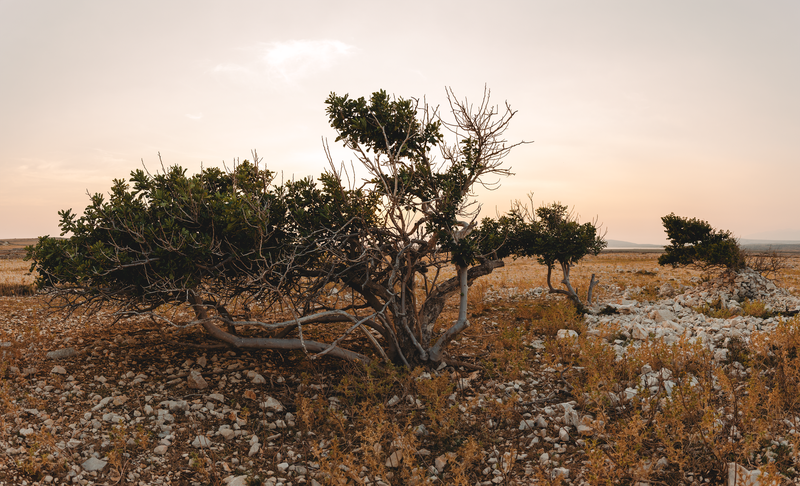
If you’ve ever smelled the desert “after rain” before any rain fell, that’s creosote. The resin on its tiny olive-green leaves releases that signature smell when humidity rises. The bush grows in spreading rings of yellow-flowered branches, and some clonal rings in the Mojave are estimated to be over 11,000 years old, making creosote one of the oldest living organisms on Earth.
Tohono O’odham and other desert peoples used creosote (called gobernadora in Spanish, “the governess,” because it governs the spacing of other plants) as an antimicrobial wash for cuts, a steam for congestion, and a remedy for just about everything. Modern interest centers on its resin compound NDGA.
Caution: This is the big one. Internal use of chaparral has been linked to serious liver damage, and the FDA has issued warnings about chaparral supplements. Topical use is the traditional norm; drinking strong creosote tea is where people get hurt. Identify it by the resinous smell and paired leaflets joined at the base.
2. Prickly Pear (Opuntia spp.)
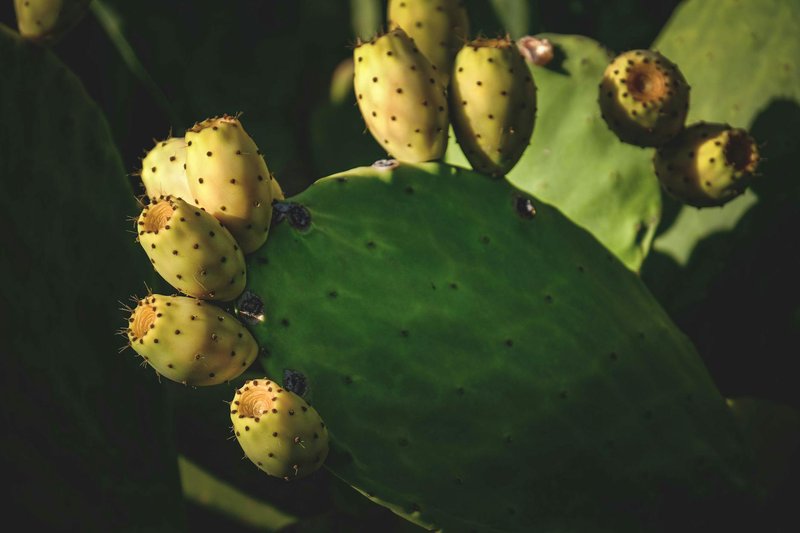
The flat green pads (nopales) and magenta fruit (tunas) are still grocery-store staples across the Southwest and Mexico. Young pads taste like green beans crossed with okra; the fruit is sweet and faintly watermelon-ish. Beyond food, the mucilage inside the pad is a traditional skin soother and has been studied for blood-sugar effects, with some research on prickly pear and glucose metabolism showing modest results.
Caution: The obvious spines aren’t the problem, it’s the glochids, those fuzzy clusters of tiny hair-like barbs at each spine cluster. They embed in skin and are miserable to remove. Singe them off over a flame or scrape with a knife before handling. Otherwise this is one of the safest, most forgiving desert plants to harvest.
3. Mormon Tea (Ephedra spp.)
A leafless cluster of jointed green stems that looks like a bundle of straws stuck in the ground. Settlers brewed the stems into a tan, slightly astringent tea, hence the name. Native peoples used it for kidney and urinary complaints and as a mild stimulant.
Caution: North American Ephedra (E. viridis, E. nevadensis) contains little to no ephedrine, so it’s milder than the Asian ma huang that got banned in supplements. Still, it’s a stimulant tea, not something to drink by the quart. Skip it if you have heart issues or high blood pressure.
4. White Sage (Salvia apiana)
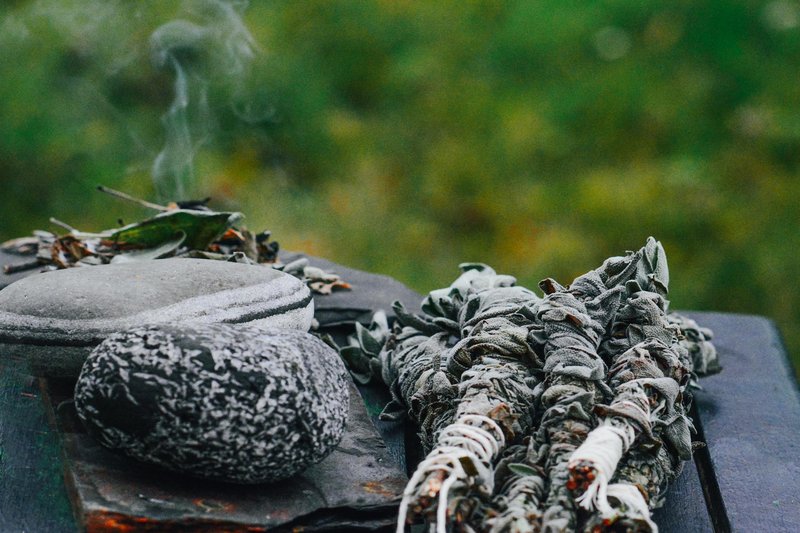
Silvery-white leaves with a sharp, clean, resinous smell, native to the chaparral edges of Southern California. Cahuilla and other tribes used it ceremonially and as a remedy for colds and sore throats, chewing the leaves or brewing them weak.
Caution: The plant itself is gentle, but white sage is genuinely over-harvested. Commercial smudge-stick demand has stripped wild populations and stepped on the cultural toes of the tribes it’s sacred to. If you want white sage, grow your own or buy from a cultivated source, and leave the wild stands alone.
5. Sagebrush (Big Sagebrush, Artemisia tridentata)
Not a true sage. This is the silvery, three-toothed-leaf shrub that carpets the Great Basin and gives the high desert its smell. Crush a leaf and you get a bitter, camphor-pine punch. Numerous tribes used sagebrush as an antiseptic wash, a cold-fighting steam, and a smudge.
Caution: It’s an Artemisia, the same genus as wormwood, and it’s bitter and strong. Traditional internal use was sparing and short-term. Pregnant women should avoid it. Tell it from culinary sage by the three little teeth on each leaf tip and the brush-like growth.
6. Desert Lavender (Condea emoryi)
A gangly gray-green shrub of the Sonoran Desert with small, soft, fuzzy leaves and tiny lavender flowers that bees swarm. Crushed leaves smell like a milder, dustier version of true lavender. It was brewed as a calming tea and used to settle the stomach.
Caution: Low-risk and pleasant. The main “danger” is misidentification, since it doesn’t look much like the lavender people expect. Confirm by the soft woolly leaves and the desert-lavender scent before brewing.
7. Yerba Mansa (Anemopsis californica)
A wetland desert plant, found around springs, seeps, and ditches, with white cone-shaped flower clusters and broad leaves that redden in fall. The whole plant, especially the root, smells spicy and medicinal. It’s one of the most respected Southwestern herbs, used as a wound wash, a gargle for sore throats, and a remedy for excess mucous.
Caution: Generally well-tolerated, but because it grows in water it can concentrate pollutants from contaminated runoff. Harvest only from clean sources. The reddish leaves in autumn are a good late-season ID cue.
8. Jojoba (Simmondsia chinensis)
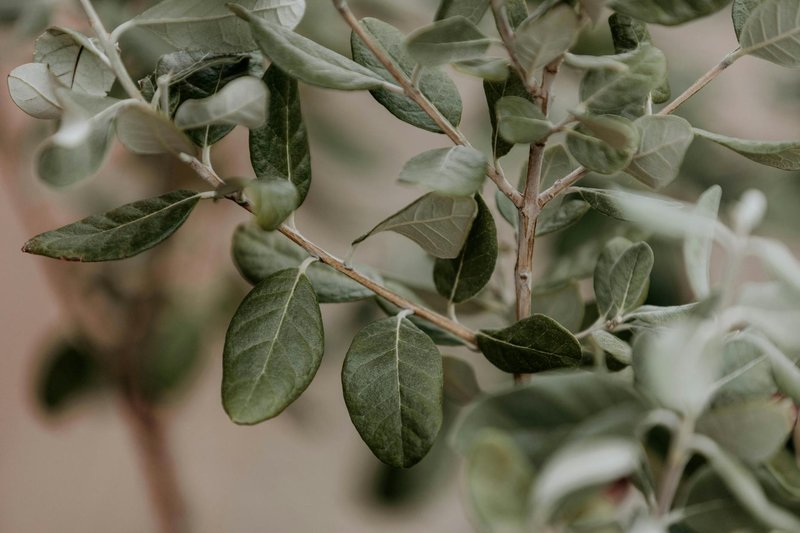
A leathery-leaved Sonoran shrub whose seeds produce a liquid wax (sold as “jojoba oil”) that’s chemically close to human skin sebum, which is why it’s in half the products on the cosmetics aisle. Indigenous peoples ground the seeds into a salve for skin and hair.
Caution: Jojoba oil is topical only. The seeds contain simmondsin, which is toxic and causes digestive distress if eaten, so this is a “use the oil, don’t snack on the nuts” plant. Identify it by the thick, gray-green, upward-pointing oval leaves.
9. Cliffrose (Purshia stansburiana)
A shrub of the Colorado Plateau and high desert with small, sticky, lobed leaves and creamy-yellow rose-like flowers that smell faintly sweet. The Hopi and Navajo used cliffrose as a wound dressing and an emetic wash, and the shaggy inner bark was twisted into cordage and padding.
Caution: Mild bitterness signals tannins; traditional internal use was external-leaning and occasional. The feathery seed plumes and sticky resinous leaves make it easy to distinguish from true roses.
10. Brittlebush (Encelia farinosa)
The round silver-gray shrub that erupts in yellow daisy-like flowers across Arizona hillsides every spring. Snap a stem and it oozes a resin that hardens into a gum. Spanish missionaries called it incienso and burned the resin as incense; the Seri and others chewed the gum and packed warmed resin onto aching teeth and joints.
Caution: Low-risk for its traditional topical and resin uses. The white, almost felt-like fuzz on the leaves (that’s what farinosa, “mealy,” refers to) is the giveaway.
11. Chuparosa (Justicia californica)
A sprawling, nearly leafless green shrub covered in tubular red-orange flowers that hummingbirds drain, which is what chuparosa (“rose sucker”) means. The flowers are edible, mildly sweet and cucumber-like, and were eaten fresh or tossed into food by the Cahuilla.
Caution: One of the friendliest desert plants, edible flowers and a hummingbird magnet. Just make sure you’ve got the right shrub; the green photosynthetic stems and red tube flowers are distinctive.
12. Desert Marigold (Baileya multiradiata)
A low plant with woolly silver foliage and bright, long-lasting yellow daisy flowers on bare stalks, common along Southwest roadsides. It was used externally in some traditions, but it earns its place here as a warning as much as a remedy.
Caution: This one is toxic. Desert marigold is poisonous to livestock and is not a plant for internal use, full stop. It’s listed because foragers confuse yellow desert daisies, and you need to know which yellow flowers to leave alone. Admire it, photograph it, don’t brew it.
13. Ocotillo (Fouquieria splendens)
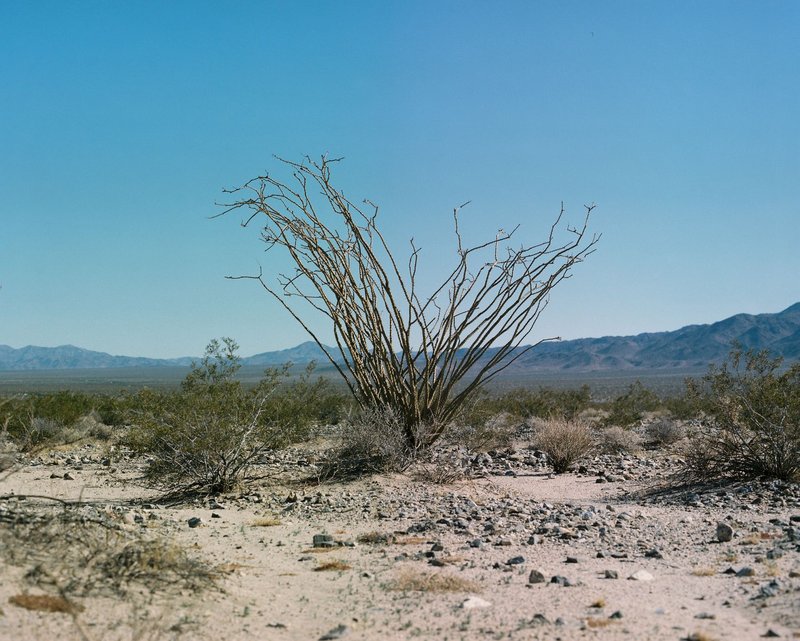
Those dramatic clusters of tall, spiny, whip-like canes that flush green after rain and tip with scarlet flame-shaped flowers. Not a cactus, despite appearances. The flowers were brewed into a tart tea, and the bark was made into a salve and bath for sore muscles and circulation complaints.
Caution: Moderate. The flower tea is the gentle traditional use; bark preparations are stronger and were used more carefully. The towering thorny canes and red flower tips make it unmistakable, which is half the safety battle.
14. Yucca (Yucca spp.)
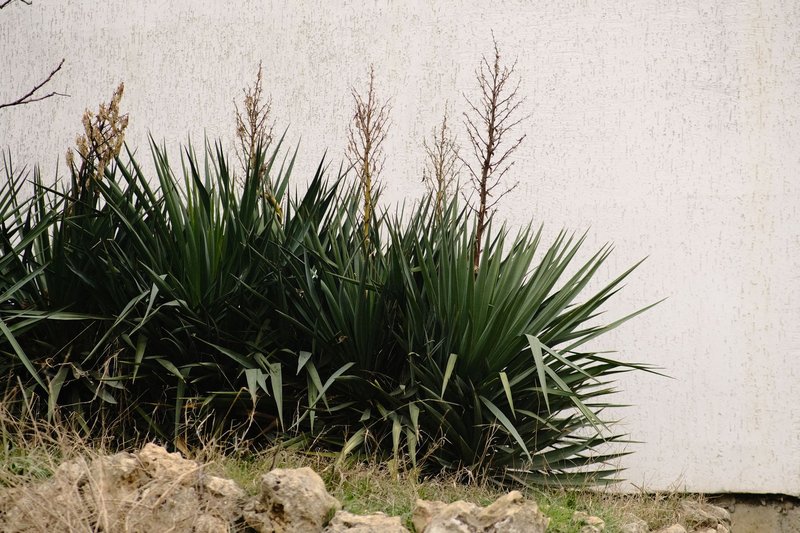
The rosette of stiff, sword-shaped leaves topped by a tall stalk of waxy cream flowers. Yucca was a Swiss Army plant: the roots are full of saponins and were pounded into soap and shampoo (try it, the suds are real), the flowers and fruit of some species are edible, and the leaf fibers were woven into rope and sandals.
Caution: The saponin-rich root is a soap, not a snack, since saponins irritate the gut in quantity. Stick to the documented food parts (flowers, fruit of edible species) and use the root externally. Don’t confuse yucca with the unrelated, toxic agave.
15. Globe Mallow (Sphaeralcea ambigua)
A gray-green shrublet covered in cupped flowers, usually a warm apricot-orange, sometimes pink or red. The whole Malvaceae family runs to mucilage, and globe mallow leaves were chewed or mashed into a soothing poultice for skin irritation, scrapes, and inflamed eyes.
Caution: Gentle and mild. The fine star-shaped hairs on the leaves can irritate eyes if you rub them in carelessly (one old common name is “sore-eye poppy”), so handle and rinse before any eye use. Otherwise this is a soft, forgiving plant.
Foraging ethics and identification safety
The desert recovers slowly. A creosote ring takes centuries; a single white sage plant might be decades old. So the rules are stricter here than in a temperate forest.
Never harvest unless you can identify the plant three ways. Smell, leaf shape, and growth habit together, not one feature alone. Desert marigold and several other toxic yellow daisies look enough alike to a casual eye that “it’s a yellow desert flower” is not an ID.
Harvest the rule of tens. Take no more than one in ten of any stand, never the parent plant, never the only specimen around. For roots, you’re killing the plant, so be certain it’s abundant first.
Know whose land you’re on. Much Southwest desert is public BLM or tribal land, and harvesting rules vary, some plants are protected outright. The U.S. Bureau of Land Management sets collection rules on the land it manages, and many native cacti and yuccas are protected by state law (Arizona’s native plant law is strict). White sage in particular carries cultural weight for the tribes it’s sacred to; cultivated sources exist for a reason.
Avoid contaminated ground. Roadsides, old mine sites, and ditches near agriculture concentrate heavy metals and herbicide. Yerba mansa growing in a runoff ditch is not the same medicine as yerba mansa from a clean spring.
How to dry and brew desert herbs
Most desert herbs are resinous or aromatic, which means low and slow drying preserves the volatile oils that do the work.
Drying. Bundle small handfuls loosely with twine and hang stem-up in a shaded, ventilated spot. Direct desert sun cooks off the aromatics, so shade matters more here than in humid climates. Leaves are dry when they crumble cleanly, usually three to seven days in arid air. Store in glass jars away from light.
Tea (infusion) for leaves and flowers. Use roughly 1 tablespoon dried (or 2 tablespoons fresh) herb per 8 ounces of just-off-boil water. Cover and steep 8 to 10 minutes; covering traps the aromatic oils that would otherwise float off as steam. Desert lavender, ocotillo flower, and Mormon tea all do well this way.
Decoction for bark and roots. Tougher material like ocotillo bark or yucca root needs simmering, not steeping. Add about 1 tablespoon per cup of water, bring to a low simmer for 15 to 20 minutes, then strain.
Start weak. These plants are concentrated. Brew lighter than you think you need, especially with bitter Artemisia species, and never make a habit of strong daily doses of anything on this list.
Growing desert herbs at home
If you live somewhere hot and dry, several of these are easier to grow than basil, because they’re built for neglect. The trick is fighting your instinct to baby them.
Drainage over everything. Desert herbs rot in wet feet. Plant in gritty, fast-draining soil or raised beds, and if your soil holds water, amend heavily with pumice or coarse sand. More desert plants die from overwatering than drought.
Easiest starters. Desert lavender, brittlebush, globe mallow, and chuparosa transplant well from a native-plant nursery and need almost no care once established. They also feed pollinators, so they earn their water twice. White sage grows happily in a pot, which lets you have it without touching wild stands.
Water like the desert does. Deep and infrequent beats shallow and daily. Soak the root zone, then let it dry out completely before the next watering. Once established, most of these survive on rainfall plus the occasional deep soak in the hottest months.
Buy native, buy local. Get plants from a regional native-plant nursery rather than mail-order. They’ll be acclimated to your conditions and you won’t be importing a stressed plant that sulks for a year. The Lady Bird Johnson Wildflower Center’s native plant database is a solid way to confirm what’s actually native to your specific area before you buy.
The desert isn’t barren. It’s just selective about who’s paying attention. Learn fifteen of these plants and the next walk you take through the scrub stops being a beige blur and starts being a place you can read.