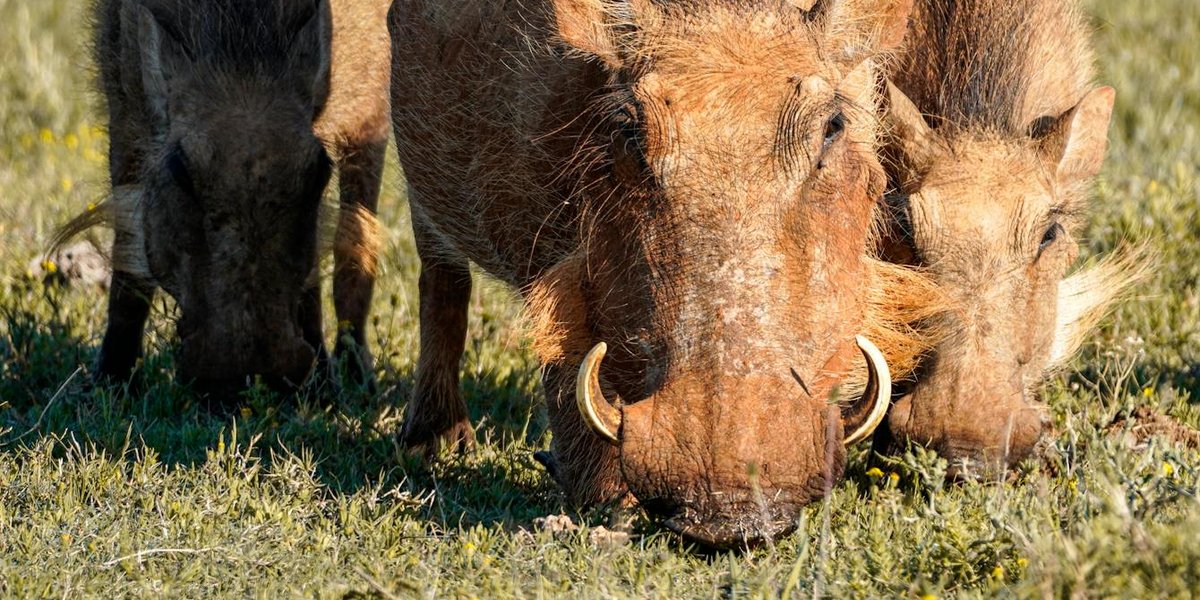
Common warthogs eat mostly grass. That’s the short answer, and for most of the year it’s true down to the blade. But “mostly grass” hides a more interesting animal: one that drops to its wrists to mow a lawn, digs bulbs out of sun-baked dirt with the tip of its snout, and will absolutely eat meat if a carcass turns up.
So here’s the real answer to what a common warthog (Phacochoerus africanus) eats, broken down by category, by season, and by life stage.
Table of Contents
- The quick answer
- Are warthogs herbivores or omnivores?
- What common warthogs eat, by category
- Wet season vs. dry season
- The knee-walking graze
- What baby warthogs eat
- What warthogs eat in zoos
The quick answer
If you just want the bullet list:
- Grasses — the bulk of the diet, especially short green growth
- Roots, tubers, rhizomes, and bulbs — dug up with the snout, critical in the dry season
- Fruits and berries — fallen fruit when it’s available
- Bark, fungi, and sedges — minor but regular additions
- Insects, earthworms, and the occasional egg — small animal protein
- Carrion — they’ll scavenge a carcass when they find one
Warthogs are opportunistic grazers first, omnivores second. They graze like an antelope but eat like a pig.
Are warthogs herbivores or omnivores?
This is the question most fact sheets dance around, so let’s settle it: common warthogs are omnivores, but functionally they behave like grazing herbivores most of the time.
Day to day, you’ll see a warthog cropping grass and rooting for bulbs. The plant material does the heavy lifting. But the same animal will eat earthworms, insects, eggs, and scavenged meat without hesitation. They’ve even been recorded eating carrion and, occasionally, the carcasses of other animals. That meat-eating capacity is exactly why “herbivore” undersells them — and why warthogs show up on any list of African savanna omnivores alongside baboons, jackals, and other animals that play both sides of the diet.
A useful way to hold both facts in your head: a warthog is a herbivore by habit and an omnivore by capability. When good grazing is everywhere, the meat barely matters. When it isn’t, that flexibility keeps them alive.
What common warthogs eat, by category
The diet sorts into a handful of food groups. Here’s what each one actually means on the ground.
Grasses. The foundation. Warthogs are selective grazers and have been recorded feeding on a wide range of grass species — researchers have documented them grazing dozens of different grasses across their range. They prefer short, green grass, which is why you’ll often see them on recently burned ground or grazed-down areas where fresh shoots come up. In this respect they feed much like the other savanna herbivores they share the grassland with, from antelope to elephants.
Roots, tubers, rhizomes, and bulbs. When the green stuff dries out, warthogs go underground. They use the hard upper edge of the snout to dig, exposing the energy-dense roots and rhizomes that grasses store below the surface. This is their dry-season insurance policy.
Fruits and berries. Seasonal and opportunistic. Fallen fruit gets eaten where it drops — warthogs aren’t climbing for it.
Bark, fungi, and sedges. Minor but real. Bark gets stripped in lean periods, and fungi and sedges round out the menu when other food is scarce.
Insects, eggs, and worms. The small-protein tier. Earthworms surface after rain, insects are everywhere, and a ground nest of eggs is an easy meal. None of this is the main course, but it adds up.
Carrion and meat. The part that surprises people. Warthogs will scavenge carcasses, and there are field reports of them eating meat and even bone. It’s not their go-to, but the option is on the table — literally.
One thing worth clearing up: warthogs dig with the snout, not the tusks. The tusks are for defense and display. The digging tool is that flat, tough disc of cartilage and bone at the end of the nose.
Wet season vs. dry season
The single biggest driver of a warthog’s diet isn’t preference — it’s rainfall. Their menu swings hard between the wet and dry seasons.
| Wet season | Dry season | |
|---|---|---|
| Main food | Short green grasses | Roots, rhizomes, bulbs, tubers |
| Feeding method | Grazing (knee-walking) | Digging with the snout |
| Availability | Abundant surface forage | Surface forage dried out |
| Backup foods | Fruits, insects, eggs | Bark, fungi, carrion |
In the wet season, the savanna is a buffet. Fresh grass is everywhere, and warthogs spend most of their feeding time grazing on it. Insects and fallen fruit come along for the ride.
In the dry season, the grass browns and shrivels, so warthogs pivot underground. They dig out the rhizomes and bulbs that plants use to survive the drought — the same survival strategy, just eaten instead of stored. This is when that snout earns its keep and when scavenging becomes a more useful backup.
The seasonal flexibility is the whole point. An animal locked into grass-only would starve when the rains failed. The warthog just changes tactics.
The knee-walking graze
Watch a warthog feed and you’ll notice something odd: it kneels. It folds its front legs and shuffles along on its wrists while it grazes, rump in the air.
This isn’t a quirk — it’s an adaptation. A warthog has a short, stiff neck and relatively long legs, which makes reaching short grass at ground level awkward. Dropping onto the wrists (the carpal joints) closes the gap between mouth and turf. To make it sustainable, warthogs develop thick, calloused pads on those wrists — basically built-in kneepads. The San Diego Zoo Wildlife Alliance notes these calloused wrist pads as a hallmark of how warthogs feed.
You’ll see it most during heavy grazing in the wet season, when there’s a lot of short grass to work through. It looks ungainly. It’s actually efficient — they can graze for long stretches without the strain of bending an unbending neck.
What baby warthogs eat
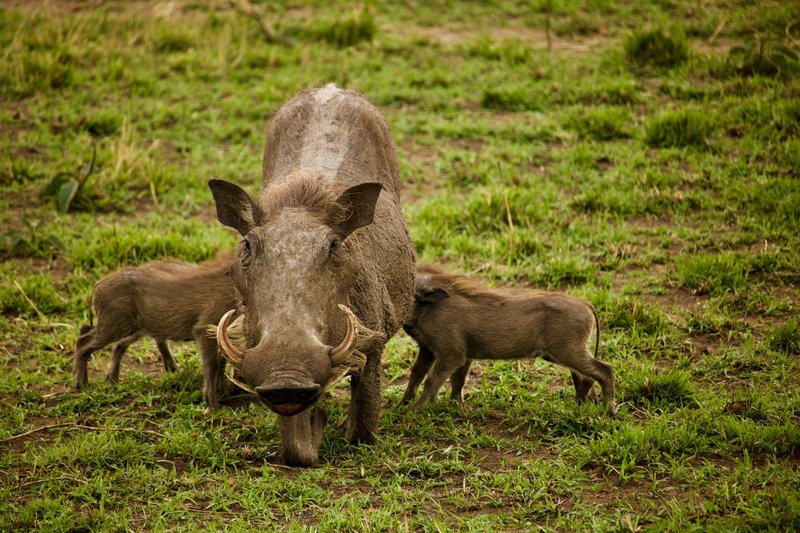
Warthog piglets start on milk. A sow gives birth to a litter of two to four (sometimes more), and for the first several weeks the piglets nurse in the safety of a burrow, usually an abandoned aardvark hole.
The transition to solid food is fast. Piglets begin nibbling grass within a few weeks and are typically weaned by around six months, though they’ll keep grazing alongside the sow well before that. By the time they’re independent, they’re eating the same grasses, roots, and incidental protein as the adults — just smaller portions. According to the IUCN, the common warthog is widespread and listed as Least Concern, in part because this quick, flexible feeding strategy lets young animals adapt to whatever the landscape offers.
What warthogs eat in zoos
Captive warthogs can’t graze a savanna, so keepers rebuild the diet from the parts that matter: fiber and variety.
A typical zoo diet leans on herbivore pellets and grass hay as the base, supplemented with root vegetables, leafy greens, and assorted produce — carrots, sweet potatoes, and similar dig-friendly foods that echo what a wild warthog would root for. Some facilities scatter or bury food to trigger natural foraging and rooting behavior, which keeps the animal busy and the snout doing what it evolved to do.
What you won’t see much of is meat. Even though wild warthogs scavenge, captive diets stay plant-forward because it’s healthier and easier to balance. The occasional insect or protein supplement covers the omnivore side without turning the warthog into a carnivore it was never meant to be.
So, what do common warthogs eat? Grass when they can get it, roots when they can’t, and pretty much anything else the moment it makes sense — eggs, worms, fruit, even carrion. Call them grazers who kept their omnivore options open. That flexibility, more than any single food, is why you’ll find them rooting across half of Africa.