You spotted something skating across your pond, or twitching at the bottom of your pool skimmer, and now you want a name. Here’s the first thing to sort out, because it tells you almost everything: is the bug on the water or in it?
Insects that ride the surface film — water striders, some beetles — are predators and scavengers cruising the buffet line. Insects that live under the surface fall into two groups: true bugs that swim and hunt as adults (backswimmers, giant water bugs), and the larvae of insects that will eventually fly away (mayflies, dragonflies, caddisflies). That single distinction narrows your suspect list before you’ve read a single description.
Below are 16 of the most common water insects you’ll actually run into in North America and Europe, with the practical stuff up front: how big, where you’ll see it, and whether it bites. A few of these can deliver a jab you’ll remember. Most are harmless. And several are quietly telling you your water is clean.
Table of Contents
- Quick Decision Aid: On the Water or In It?
- TLDR: The Ones That Bite
- Insects On the Water Surface
- True Bugs That Swim Underwater
- Aquatic Larvae and Nymphs
- Comparison Table
- Are Water Insects in My Pool or Home Dangerous?
- Water Insects as a Sign of Clean Water
- How to Get Rid of Water Bugs
Quick Decision Aid: On the Water or In It?
Watch it for ten seconds. That’s usually all you need.
On top, skating or rowing across the surface: water strider, whirligig beetle, water boatman (the boatman feeds below but surfaces constantly). These dent the surface tension without breaking it.
Below the surface, swimming actively: backswimmer (swims belly-up), predaceous diving beetle, water boatman. These dart and dive.
Below the surface, crawling or clinging to plants and rocks: giant water bug, water scorpion, and the nymphs — dragonfly, damselfly, mayfly, stonefly, caddisfly. These are the slow movers, the ambushers, and the bottom-dwellers.
Got a rough category? Now find your bug.
TLDR: The Ones That Bite
If you only want to know what can hurt you, here’s the short list. Everything else on this page is harmless to humans.
- Giant water bug — the “toe-biter.” A genuinely painful stab, sometimes called one of the worst insect bites in North America. Not venomous to the point of danger, but you’ll yelp.
- Backswimmer — a sharp, bee-sting-like jab if you handle one. Earns its nickname “water bee.”
- Water boatman — rarely bites, and when it does it’s mild. Often confused with the backswimmer, which is the actual culprit.
- Predaceous diving beetle — can pinch with its jaws if grabbed. More startling than serious.
None of these will chase you. Every bite on this list happens because a human picked the bug up or stepped on it. Leave them be and they leave you be.
Insects On the Water Surface
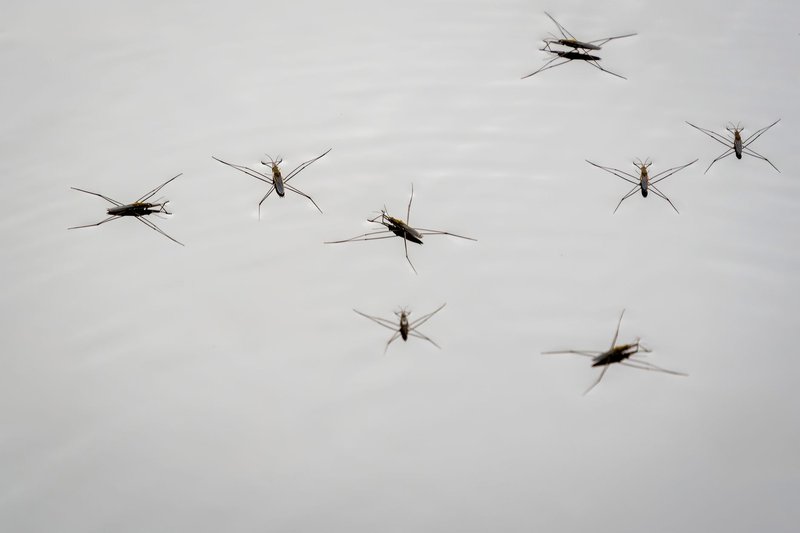
These are the ones you notice first, because they’re up where you can see them.
1. Water Strider
Size: 8–15 mm body, long sprawling legs that double its apparent size Where: Still and slow water everywhere — ponds, lake edges, quiet stream pools Bites? No
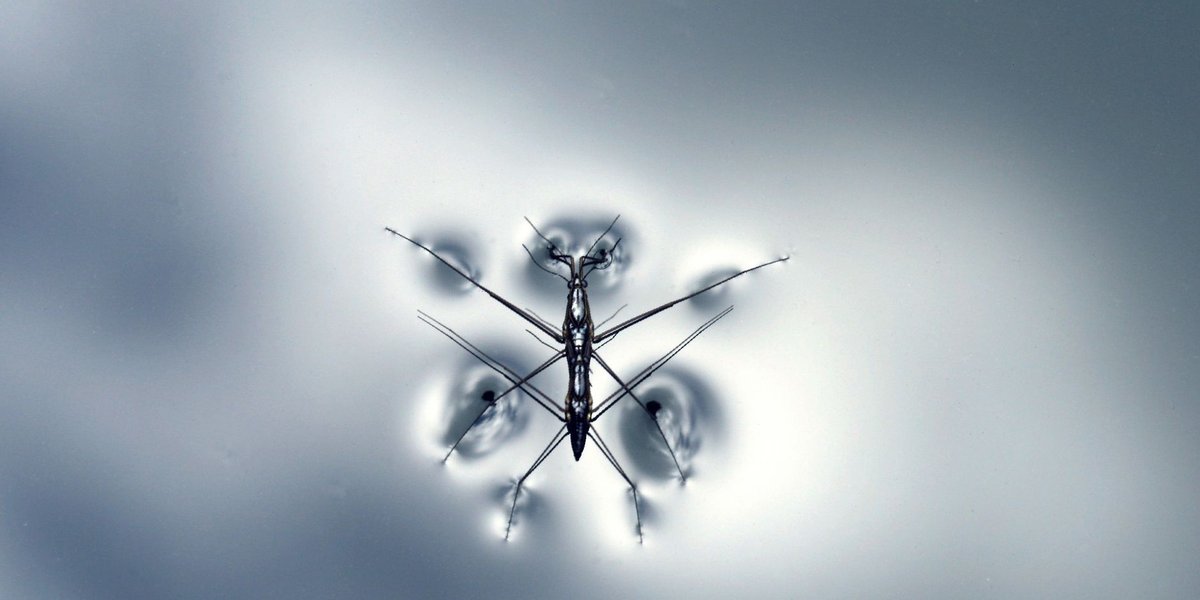
The pond-skater. Water striders stand on the surface film using thousands of tiny water-repellent hairs on their legs, spreading their weight so they never break through. They row with the middle pair of legs and steer with the back pair, hunting any small insect that falls in. Watch one feed and you’ll see it grip prey with the short front legs and drink it dry. Completely harmless, and a sign of calm, healthy water.
2. Whirligig Beetle
Size: 5–15 mm Where: Surface of ponds and slow streams, often in spinning clusters Bites? No
If you see a cluster of small black beetles spinning in tight, frantic circles on the surface, those are whirligigs. They have divided eyes — the top half watches the air, the bottom half watches the water — so they see above and below the surface at once. When alarmed they secrete a milky fluid that smells faintly of apples, which is where the nickname “apple bug” comes from. Harmless, fast, and weirdly mesmerizing to watch.
True Bugs That Swim Underwater
These are the actual “water bugs” in the strict sense — members of the order Hemiptera that live their adult lives in the water, breathing air they carry down with them.
3. Giant Water Bug (Toe-Biter)
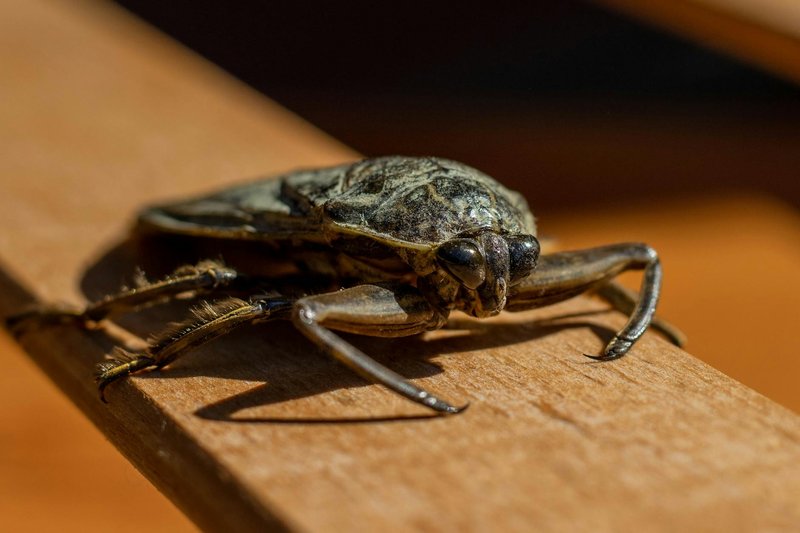
Size: 5–10 cm — yes, centimeters; some species are as long as your thumb Where: Ponds, ditches, slow water; also shows up under lights at night Bites? Yes — painful
The heavyweight. Giant water bugs (family Belostomatidae) are among the largest insects in North America and ambush predators that take down tadpoles, small fish, and even baby snakes by injecting digestive enzymes through a sharp beak. That same beak delivers the infamous “toe-biter” stab if you step on one or pick it up. It hurts a lot for a few hours but isn’t medically dangerous to a healthy adult. In many of these species the male carries the eggs glued to his own back until they hatch — one of the more devoted bits of parenting in the insect world, documented in studies summarized by Smithsonian Magazine. They’re also strong fliers, which is why they turn up at porch lights and earn another nickname: “electric light bug.”
4. Backswimmer
Size: 5–15 mm Where: Ponds, pools, still water — swims through open water Bites? Yes — sharp
The one most people actually get bitten by, then blame on something else. Backswimmers swim upside down, belly to the sky, rowing with oar-like hind legs and carrying a silvery bubble of air on their underside. That belly-up swimming is the giveaway. They’re aggressive predators, and they’ll stab a finger that traps them with a jab people compare to a bee sting — hence the name “water bee.” Pale belly, dark back, always inverted. If you got “stung” in a pond, this is your prime suspect.
5. Water Boatman
Size: 5–11 mm Where: Ponds, pools, slow streams; clings to bottom debris Bites? Rarely, and mildly
The backswimmer’s look-alike and the reason it takes the blame. Water boatmen swim right-side up (dark back on top, the normal way), and unlike their carnivorous cousins most species feed on algae and plant detritus rather than hunting. They’re one of the few aquatic insects that’s largely vegetarian. Telling them apart is simple once you know the trick: boatman swims back-up, backswimmer swims belly-up. The males of some species “sing” underwater by rubbing body parts together, producing one of the loudest sounds relative to body size in the animal kingdom.
6. Water Scorpion
Size: 2–5 cm, plus a long tail filament Where: Weedy pond and stream margins, clinging to vegetation Bites? Can, but rarely does
Not a true scorpion, despite the pincer-like front legs and the long thin “tail.” That tail isn’t a stinger — it’s a breathing tube, a snorkel the bug pokes above the surface to grab air while it waits motionless among the weeds. Water scorpions are slow, deliberate ambush hunters that grab passing prey with those raptorial front legs. They can give a mild jab if mishandled, but they’re so sluggish and well-camouflaged you’ll rarely encounter one, let alone provoke it.
7. Predaceous Diving Beetle
Size: 1.5–40 mm depending on species Where: Ponds, slow water; surfaces to refill its air supply Bites? Can pinch
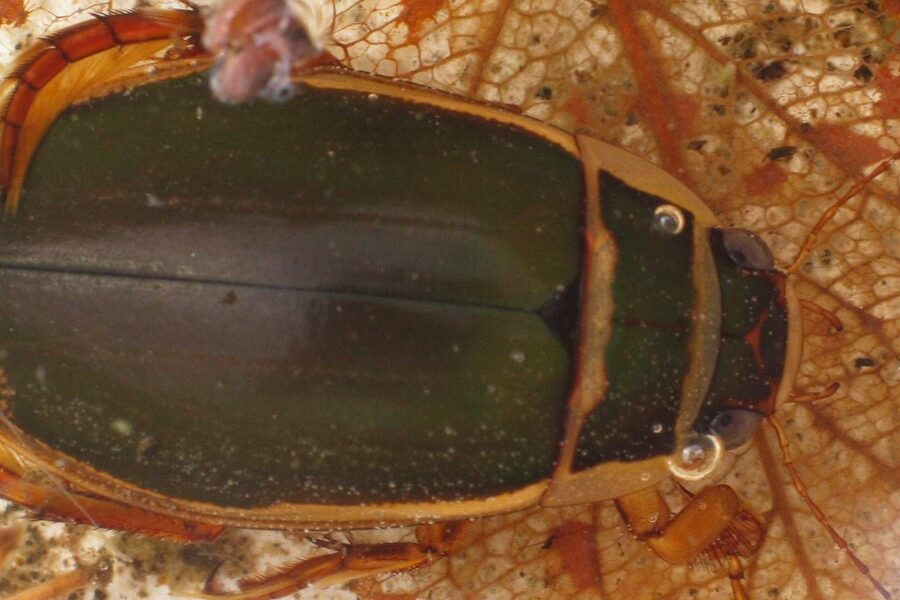
Smooth, oval, and a strong underwater swimmer using fringed hind legs that kick in unison like tiny paddles. The adults carry an air bubble under their wing covers and surface tail-first to replenish it. Both the adults and their fierce larvae (nicknamed “water tigers”) are voracious predators of insects, tadpoles, and small fish. They don’t have a stabbing beak, but a large one can pinch with its jaws if you grab it. Mostly they’re a sign of a productive, prey-rich pond — and a reminder that aquatic beetles and their larvae are a staple meal for many bug-hunting animals, from bats to desert foxes like Blanford’s fox, whose diet leans heavily on beetles and grasshoppers.
8. Creeping Water Bug
Size: 5–15 mm Where: Shallow, weedy ponds and stream edges Bites? Yes — surprisingly sharp for its size
Small, flat, oval, and easy to overlook, the creeping water bug crawls along the bottom rather than swimming gracefully. For such a little insect it packs a disproportionately sharp jab, so don’t let the size fool you into handling one bare-handed. Otherwise harmless to people and a normal resident of healthy shallow water.
Aquatic Larvae and Nymphs
Here’s where most identification guides quietly fall apart. Many “water insects” aren’t adults at all — they’re the juvenile stages of insects that will crawl out, sprout wings, and leave the water behind. None of these bite. And several are the best free water-quality test you’ll ever get.
9. Dragonfly Nymph
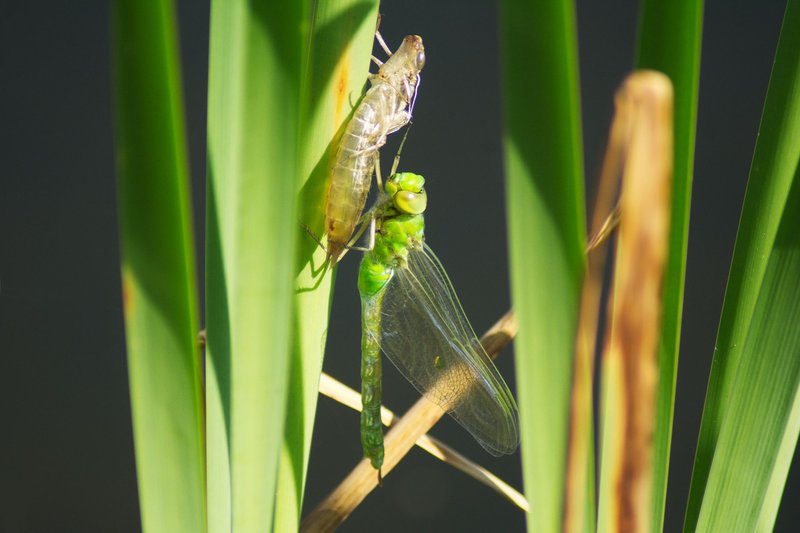
Size: 1.5–5 cm Where: Pond and stream bottoms, clinging to plants Bites? No
Stout, drab, and armed with a hinged lower jaw it shoots forward to snatch prey — a built-in harpoon that’s been called one of the fastest predatory strikes in the insect world. Dragonfly nymphs are top predators of small ponds, eating mosquito larvae, tadpoles, and even small fish. They breathe through gills inside their rectum and can jet backward by squirting water out the same opening. After months or years underwater, one climbs a reed at dawn, splits its skin, and becomes the adult dragonfly you know. Entirely harmless to you, and a quiet ally against mosquitoes.
10. Damselfly Nymph
Size: 1–3 cm Where: Weedy pond and stream margins Bites? No
The dragonfly nymph’s slender cousin, easy to tell apart by the three leaf-shaped gills fanning out from the tip of its tail like a tiny three-pronged tail fin. Same hinged-jaw hunting style, gentler build. When it emerges it becomes the delicate, needle-bodied damselfly that perches with wings folded over its back. Harmless, and another good sign for a pond.
11. Mayfly Nymph
Size: 3–30 mm Where: Clean streams, rivers, lake edges; under rocks Bites? No
Three long tail filaments and rows of feathery gills along the abdomen mark the mayfly nymph. They graze algae and detritus and are famously sensitive to pollution — find them in numbers and your water is genuinely clean. The adults are the ones that hatch in legendary swarms and live a day or less, never eating, existing only to mate. The U.S. Environmental Protection Agency uses mayflies and their kin as standard indicators in national stream surveys precisely because they vanish the moment water quality drops.
12. Stonefly Nymph
Size: 6–40 mm Where: Cold, fast, clean streams; under stones Bites? No
Two tail filaments (not three, which separates it from the mayfly) and two claws on each foot for gripping current-swept rocks. Stoneflies are the pickiest of all the major aquatic insects about water quality — they need cold, well-oxygenated, clean water and disappear at the first hint of pollution or warming. If you flip a streambed rock and find stonefly nymphs, you’ve got some of the cleanest water around. They’re a cornerstone of the bioindicator system explained on Wikipedia’s aquatic insect overview.
13. Caddisfly Larva
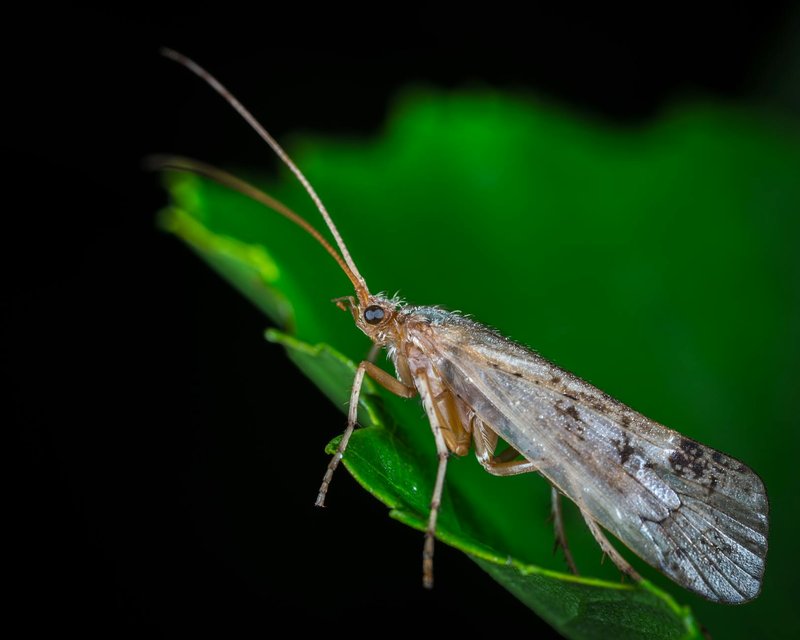
Size: 2–40 mm Where: Streams and lakes; on the bottom Bites? No
The architect. Most caddisfly larvae build a portable case around their soft bodies, cementing together sand grains, tiny pebbles, or bits of leaf and twig with silk, then drag it everywhere like a mobile home. Each species builds in a characteristic style, so the case itself helps identify them. Some artists even raise caddisfly larvae with gold flakes and gemstones to produce tiny jeweled cases. Harmless, fascinating, and — like mayflies and stoneflies — a marker of decent water quality.
14. Alderfly Larva
Size: 1–2.5 cm Where: Muddy stream and pond bottoms Bites? No
A fierce-looking but harmless predatory larva with a single long tail filament and a fringe of feathery gills down each side of the abdomen. Alderfly larvae crawl through bottom sediment hunting other small invertebrates, then leave the water to pupate in damp soil along the bank — unusual among aquatic insects. The short-lived adults look like dark, smoky-winged relatives of lacewings.
15. Phantom Midge Larva
Size: 5–15 mm Where: Open water of ponds and lakes Bites? No
Nearly transparent — you can see straight through it, which is exactly why it’s called the “phantom.” The only clearly visible parts are two pairs of silvery air sacs it uses to hover at any depth like a tiny submarine adjusting ballast. It’s a predator of water fleas and other plankton, and a favorite food of fish. Adults are harmless, non-biting midges, not mosquitoes.
16. Mosquito Larva (Wriggler)
Size: 4–12 mm Where: Stagnant, still water — buckets, birdbaths, neglected pools, ponds Bites? No as a larva — but it becomes the adult that does
The one you do want to deal with. Mosquito larvae, or “wrigglers,” hang head-down from the surface with a breathing siphon poking through the film, thrashing into a dive when disturbed. They filter-feed on microbes in stagnant water and can go from egg to flying adult in about a week in warm weather. The larva itself can’t hurt you, but it’s the only insect on this list whose adult form is a genuine human health concern — mosquitoes are the deadliest animal to humans on the planet, per the World Health Organization. Standing water full of wrigglers is a problem to fix, not a curiosity to admire.
Comparison Table
| Species | Where you’ll see it | Bites? | Beneficial / clean-water sign? |
|---|---|---|---|
| Water strider | On the surface | No | Calm, healthy water |
| Whirligig beetle | Spinning on surface | No | Harmless predator |
| Giant water bug | Underwater, also at lights | Yes — painful | Top predator |
| Backswimmer | Swims belly-up | Yes — sharp | Predator |
| Water boatman | Swims back-up | Rarely, mild | Mostly algae-eater |
| Water scorpion | Clinging to weeds | Rarely | Ambush predator |
| Diving beetle | Underwater swimmer | Can pinch | Eats mosquito larvae |
| Creeping water bug | Shallow bottoms | Yes — sharp | Harmless otherwise |
| Dragonfly nymph | Pond bottom | No | Eats mosquito larvae |
| Damselfly nymph | Weedy margins | No | Beneficial predator |
| Mayfly nymph | Clean streams | No | Clean-water indicator |
| Stonefly nymph | Cold clean streams | No | Strong clean-water indicator |
| Caddisfly larva | Streams, lakes | No | Clean-water indicator |
| Alderfly larva | Muddy bottoms | No | Beneficial predator |
| Phantom midge larva | Open water | No | Fish food |
| Mosquito larva | Stagnant water | No (adult does) | Problem to remove |
Are Water Insects in My Pool or Home Dangerous?
Short answer: almost never, and the fix is usually about the water, not the bug.
Those tiny bugs skittering on top of your pool are most often water boatmen or backswimmers that flew in looking for water and laid eggs in algae. They don’t damage the pool or the structure, and they’re not interested in you. The only one worth caution is the backswimmer, which can give that bee-sting jab if you accidentally trap it against your skin. Water boatmen are essentially harmless.
Here’s the useful part: backswimmers are hunting something, and water boatmen are eating something — and that something is usually algae. A pool with water bugs is a pool with an algae problem. Clear the algae and the food source vanishes, and the bugs leave on their own within days. They came for the buffet, not for you.
Inside the home, the term “water bug” gets confusing because some people use it for large cockroaches (like the American or Oriental cockroach). Those are a completely different problem — actual aquatic insects don’t live in your house. If something the size of your thumb is scuttling across the bathroom floor at night, that’s a roach, not a toe-biter.
Water Insects as a Sign of Clean Water
This is the part the species lists usually skip, and it’s genuinely useful. Some aquatic insects are so sensitive to pollution that their mere presence grades your water for free.
The gold standard trio — mayfly, stonefly, and caddisfly larvae — need cold, oxygen-rich, unpolluted water. Find them in numbers and your stream is in excellent shape. They’re so reliable that environmental agencies build official monitoring programs around them, sampling streambeds and counting the sensitive species. Stoneflies are the strictest; they’re the first to vanish when water warms or fouls.
On the other end, an explosion of mosquito larvae and not much else usually points to stagnant, low-oxygen, nutrient-loaded water. The composition of insects tells the story: a diverse mix leaning toward the sensitive species means health, while a monoculture of pollution-tolerant ones means trouble. The insects are also the bottom of a much larger food chain — these same larvae feed everything from fish to insectivorous mammals like Raffray’s bandicoot, which eats mostly insects and their larvae — so a healthy bug community quietly supports a lot more life than you’d guess. You don’t need a lab. You need a rock to flip and a few minutes to look.
How to Get Rid of Water Bugs
Most of the insects on this list don’t need removing — they’re beneficial or harmless, and a pond with a healthy insect community is a pond doing its job. But for the cases where you genuinely want them gone:
In a pool: Skim out the adults, then attack the algae they’re feeding on. Shock the pool, brush the walls, and run the filter. Cut off the food and the boatmen and backswimmers move on within a few days. Chemical bug treatments are unnecessary and won’t keep new ones from flying in if the algae’s still there.
In a pond you want to keep natural: Mostly, don’t. Diving beetles and dragonfly nymphs are eating your mosquito larvae for free. If the balance is off, the usual culprit is excess nutrients — fewer fish food pellets, less runoff, and some surface plants for shade will calm an over-fertile pond.
Mosquito larvae specifically: This is the one worth acting on. Eliminate standing water — empty buckets, refresh birdbaths weekly, clear clogged gutters. For ponds you’re keeping, mosquito-eating fish or a Bacillus thuringiensis israelensis (Bti) dunk targets the larvae without harming the beneficial insects.
The pattern across all of it: water bugs follow the conditions. Change what they’re living on, and they sort themselves out — no spray required. Identify the bug first, decide whether it’s actually a problem, and most of the time you’ll find the answer is to leave it be and enjoy the surprisingly busy little ecosystem in your own backyard.