Table of Contents
- TLDR
- Breed Is Only Half the Answer
- If You Already Have a Dog
- Bringing Baby Home: The First Weeks
- Choosing a Breed Before Baby Arrives
- Breed Comparison Table
- Breeds That Need Extra Thought
- Rescues, Mixed Breeds, and Cost
- Pre-Baby Checklist
- FAQ
TLDR
No single breed guarantees a safe household — supervision and training do the heavy lifting. That said, if you’re starting from zero: Labrador Retrievers and Golden Retrievers top most vets’ lists for soft mouths and patience, Newfoundlands and Collies do well in homes with more space, and Cavalier King Charles Spaniels or Beagles suit apartments. If you already own a dog, the breed question is moot — what matters is a four-month prep window before the baby arrives, not a breed swap.
Breed Is Only Half the Answer
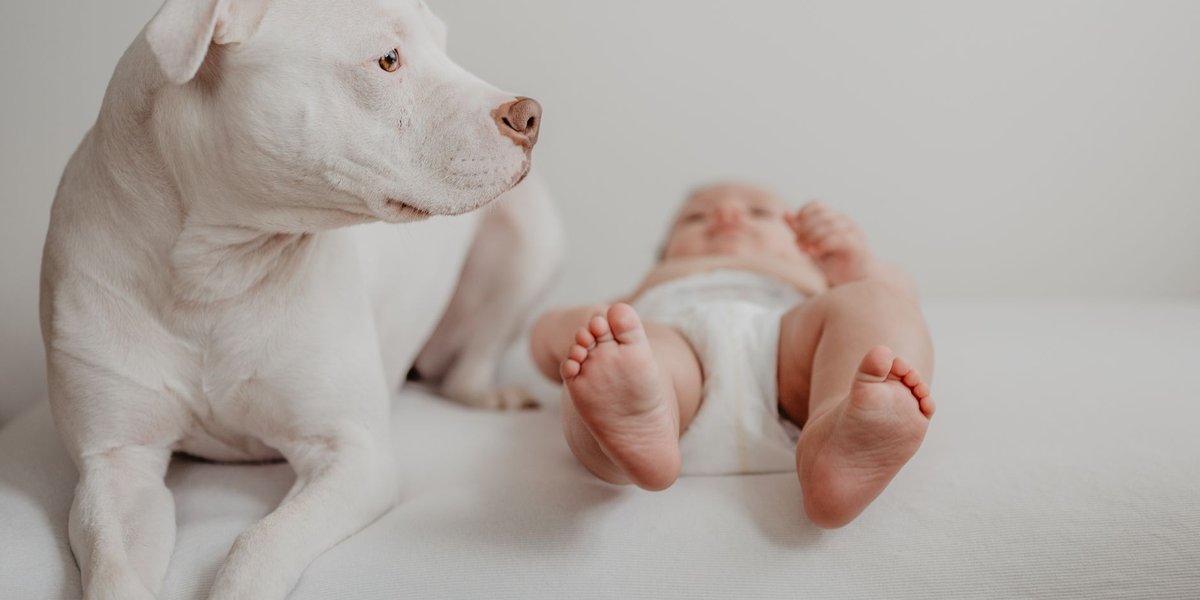
Search “best dog breeds for babies” and you’ll get the same eight names in a different order: Golden Retriever, Labrador, Beagle, Newfoundland, Cavalier King Charles Spaniel, Bulldog, Pug, Collie. They’re on the list for real reasons — bite inhibition, low reactivity, a track record with kids. But breed temperament is a tendency, not a guarantee, and the households that end up in the news aren’t usually the ones with the “wrong” breed. They’re the ones with no plan.
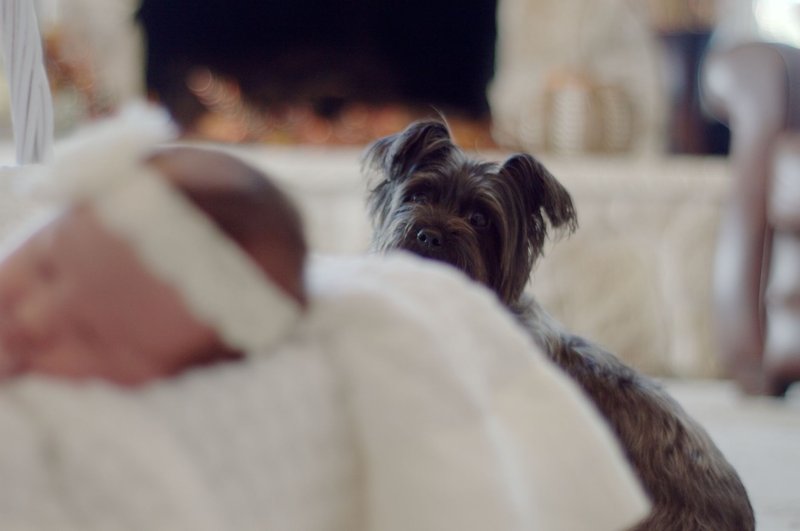
Here’s the question that actually determines your risk: do you already have a dog, or are you choosing one? Those are two completely different projects, and most articles on this topic collapse them into one list.
If You Already Have a Dog
If there’s already a dog in the house, breed selection isn’t on the table — preparation is. The ASPCA recommends starting about four months before the due date, which sounds early until you realize how much has to change: nursery smells, a swing that clicks and whirs, a car seat carrier taking up floor space, a schedule that no longer bends around a 3pm walk.
Four months out, start desensitizing your dog to baby-adjacent sounds and objects. Play recordings of a crying infant at low volume during calm moments — feeding time, a nap — and pair it with something good, not something tense. Set up the nursery furniture early so it stops being novel. If your dog reacts to the stroller, walk her with an empty one around the block before there’s ever a baby in it.
One to two months out, shift the routine itself. If the dog sleeps on your bed and won’t after the baby comes, move her to a dog bed now — not the week you bring the baby home, when everyone’s exhausted and patience is thin. If you’re changing who walks her, when she eats, or which rooms she’s allowed in, make those changes while you still have the bandwidth to be consistent about them.
Obedience basics matter more than tricks. Stay, leave it, and a solid settle on a mat are the commands that will actually get used at 2am when the dog wants attention and you have a screaming infant in your arms. A dog that already knows how to lie down and stay put on cue is a dog you can manage one-handed.
Bringing Baby Home: The First Weeks
The homecoming itself deserves less drama than most guides give it. Let your dog sniff a blanket the baby has been wrapped in before you all arrive together — it’s a small thing, but it turns a stranger’s scent into something familiar. When you walk in, greet the dog first and calmly, without the baby in your arms, so the reunion isn’t tangled up with the new arrival.
From there, supervision is not a phase — it’s a permanent household rule until the child is old enough to understand boundaries, which is later than most parents assume. A study on pediatric dog bite injuries found that children under three accounted for 30 percent of bite cases reviewed, and just over half of injuries to babies and toddlers landed on the face — because a crawling child’s face is at exactly dog-head height. The dogs involved were usually not strays. Most belonged to the family or a close friend.
That’s not a reason to panic. It’s a reason to never leave a dog and an infant alone in a room, full stop, regardless of how gentle the breed is supposed to be. Baby gates, exercise pens, or simply closing a door during unsupervised moments cost nothing and prevent the incidents that “good breed” doesn’t.
Choosing a Breed Before Baby Arrives
If you’re starting from scratch, the honest way to choose is by household context, not by breed popularity.
No dog yet, baby already here or very close: this is not the time to add a puppy. Puppies need more supervision than a newborn does, and you don’t have hands for both. Wait until the baby is mobile and sleeping through most nights, then look at adult dogs with known temperaments — a rescue with a documented history around kids beats a puppy that’s still a personality in progress.
Apartment, no yard: look at lower-energy, smaller-to-mid breeds that don’t need acreage to be content — Cavalier King Charles Spaniel, Beagle, or French Bulldog. A high-drive working breed in 700 square feet is a recipe for a bored, frustrated dog, and a bored dog is a less patient dog.
House with a yard, active family: Labrador Retrievers, Golden Retrievers, and Collies do well here because they have somewhere to burn the energy that, left unspent, turns into jumping, mouthing, or general chaos around a toddler.
Toddler already walking versus newborn still swaddled: a toddler grabs, pokes, and startles a dog in ways an infant physically can’t yet. For a household with a mobile toddler, prioritize a breed with documented tolerance for rough handling — Newfoundlands and Beagles are frequently cited for this — over one that’s merely calm around quiet adults.
Breed Comparison Table
| Breed | Size | Energy | Shedding | Lifespan | Trainability |
|---|---|---|---|---|---|
| Labrador Retriever | Large | High | High | 10–12 yrs | High |
| Golden Retriever | Large | High | High | 10–12 yrs | High |
| Newfoundland | Giant | Low–Moderate | High | 9–10 yrs | Moderate |
| Beagle | Small–Medium | Moderate | Moderate | 12–15 yrs | Moderate |
| Cavalier King Charles Spaniel | Small | Low–Moderate | Moderate | 12–15 yrs | High |
| Collie | Large | Moderate | High | 12–14 yrs | High |
| Bulldog | Medium | Low | Low–Moderate | 8–10 yrs | Moderate |
| Boston Terrier | Small | Moderate | Low | 11–13 yrs | High |
| Vizsla | Medium–Large | Very High | Low | 12–14 yrs | High |
The Vizsla is on here deliberately, as the outlier. It shows up on “family dog” lists constantly for its affectionate, velcro-dog temperament, but its exercise needs are closer to a working gundog than a Labrador’s. A Vizsla that doesn’t get 60-plus minutes of real exercise a day gets anxious, and an anxious dog is not the temperament you want around a baby who’s just starting to crawl toward it.
Breeds That Need Extra Thought
No credible source lists breeds that are unsafe around children as a rule — behavior is shaped far more by individual training, socialization, and management than by breed alone, and any list claiming otherwise is oversimplifying a real issue. What responsible breed guides do flag are tendencies worth planning around rather than ignoring.
High prey-drive breeds bred for chasing — many terriers, sighthounds — can react fast to a baby’s sudden movement or high-pitched cry in ways that look like predation but usually aren’t; the fix is management and desensitization, not exclusion. Breeds bred for guarding or territorial behavior need earlier, more deliberate socialization around strangers and visitors, since a new baby brings a steady stream of both. And brachycephalic breeds like Bulldogs and Pugs, while famously patient, run heat and breathing risk during rough play, which matters once a toddler starts trying to ride the dog like a pony.
The pattern across all of these: it’s not the breed that decides the outcome, it’s whether the owner did the work the breed actually requires.
Rescues, Mixed Breeds, and Cost
Purebred puppies from reputable breeders commonly run $1,500 to $3,000 depending on breed and region, sometimes more for in-demand lines. A rescue adoption typically costs $50 to $400 and usually includes spay/neuter, vaccinations, and a microchip already done — which closes most of the price gap once you account for what a puppy needs in its first year anyway.
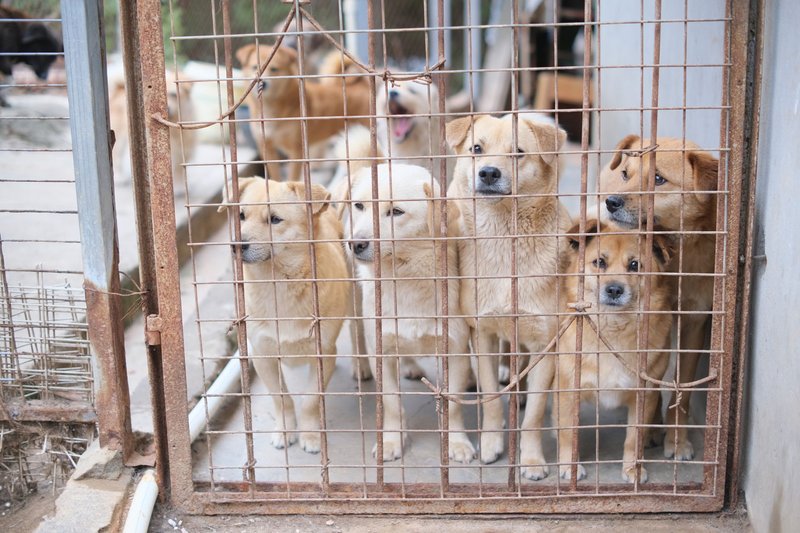
The bigger advantage isn’t price. It’s information. A shelter or rescue that’s fostered an adult dog can usually tell you, from direct observation, how it behaves around children, loud noises, and other animals — data a breeder can’t give you about a wide-eyed eight-week-old puppy. Mixed breeds get overlooked in “best breeds” content because they don’t fit neatly into a list, but a mixed-breed adult with a known temperament history is often a safer bet than a purebred puppy with pedigree but no track record.
Pre-Baby Checklist
- Four months out: begin sound and scent desensitization (recorded crying, baby lotion, nursery setup)
- Two to three months out: change any household rules that will shift after baby arrives (furniture access, sleeping spot, feeding schedule)
- One month out: reinforce stay, leave it, and settle daily, in short sessions
- Before homecoming: arrange for someone to walk and feed the dog during hospital days
- Homecoming day: let the dog sniff a worn baby blanket before the full introduction; greet the dog baby-free first
- Ongoing: never leave dog and infant alone in a room, even for a minute, even with a “good” breed
- Ongoing: give the dog a reliable retreat space — a crate or bed in a low-traffic room — where the baby doesn’t follow
FAQ
Can dogs sense pregnancy? Dogs almost certainly pick up on the physical and behavioral changes that come with pregnancy: shifts in hormone-driven scent, gait changes, altered routines. There’s no evidence dogs “know” in any cognitive sense, but they clearly notice and often respond with increased attentiveness or clinginess.
Is my dog jealous of the baby? What looks like jealousy is usually attention-seeking behavior from a routine disruption, not a human-style emotion. A dog that’s used to being the only “kid” in the house and suddenly gets less walking, less lap time, and less one-on-one attention will act out to get some of that back. The fix is scheduled one-on-one time with the dog, not less time with the baby.
What breeds should be avoided with babies? No reputable veterinary or behavioral source publishes a blanket “avoid these breeds” list, because outcomes are driven far more by training, socialization, and supervision than by breed. What matters more than the breed name on paper is the individual dog’s documented temperament, especially for adult rescues, and whether the household is prepared to do the management work every dog around a baby requires.
Breed research is worth doing. But the CDC estimates 4.7 million dog bites happen in the U.S. every year, and the overwhelming majority involve a familiar, generally well-regarded family dog — not a “dangerous breed.” The AKC’s own family dog guidance leads with temperament and training, not breed alone, for exactly that reason. Pick a breed that fits your space and energy level, then put in the four months of prep work that actually keeps a baby safe.