TLDR
Libya’s amphibian list is short: the Sahara frog (Pelophylax saharicus) along the northern coast, the African green toad (Bufotes boulengeri) almost everywhere there’s seasonal water, and the subdesert toad (Sclerophrys xeros, formerly Amietophrynus xeros) hanging on around a single oasis town in the southwest. A fourth species, the African groove-crowned bullfrog, shows up in one old record that most herpetologists treat as unconfirmed. Every one of them survives by sticking close to a handful of oases, wadis, and springs in a country that’s over 90% desert.
Table of Contents
- Why Libya Has So Few Amphibians
- Sahara Frog (Pelophylax saharicus)
- African Green Toad (Bufotes boulengeri)
- Subdesert Toad (Sclerophrys xeros)
- The Disputed Fourth Species
- What’s Actually Threatening Them
Why Libya Has So Few Amphibians
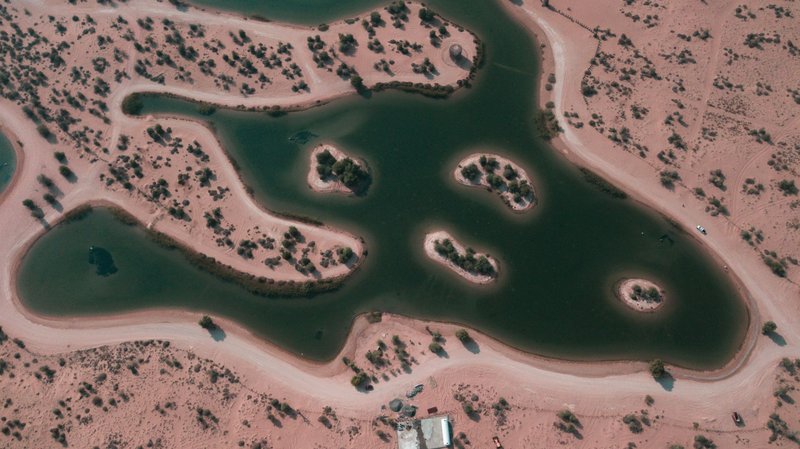
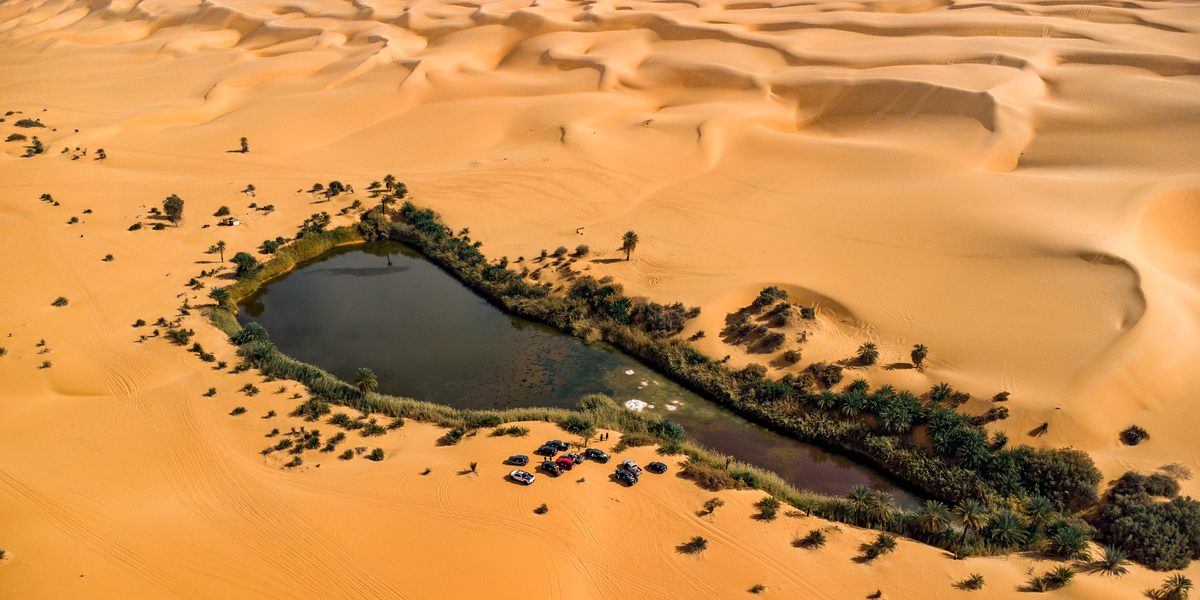
Amphibians need standing or slow-moving fresh water to breed, and Libya doesn’t have much of it. No permanent rivers cross the country. What water exists shows up as coastal springs, mountain wadis that run for a few weeks after rain, and oases fed by fossil aquifers left over from a much wetter past. That’s the whole amphibian habitat budget for a country roughly the size of Alaska.
It wasn’t always this dry. Rock engravings at Tadrart Acacus in the southwest, dated to the Holocene African Humid Period, show hippos and crocodiles living where sand dunes now sit. When the monsoon rains that watered the Sahara retreated around 7,000 years ago, most of that aquatic life vanished with the wetlands. What’s left today are relict populations that found permanent refuges — the handful of oases and springs where groundwater still reaches the surface — and stayed put while the desert closed in around them.
That history explains the pattern researchers keep finding: Libya’s amphibians aren’t spread evenly across the map. They cluster at named, mappable water sources, and a species’ entire national range can amount to one wadi system or one oasis town.
Sahara Frog (Pelophylax saharicus)
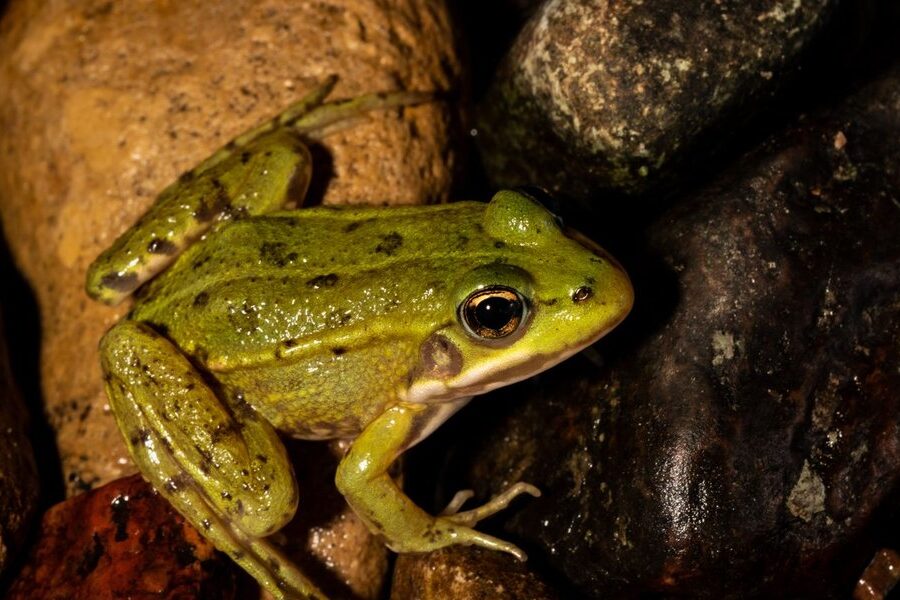
The Sahara frog is the one true water frog on this list — a proper green frog, not a toad wearing a frog’s name. It needs permanent or near-permanent water to survive as an adult, which limits it to Libya’s northern strip, where Mediterranean-fed springs and coastal wetlands give it enough moisture to get through the dry season.
Across North Africa the species ranges from Morocco to northwestern Egypt, including an introduced population at Egypt’s Siwa Oasis. In Libya it’s confined to the north, and its populations are patchy rather than continuous, following whichever springs and irrigation channels still hold water year-round. The IUCN lists it as Least Concern at the regional level, but that broad-range status glosses over how fragile any single Libyan population can be — pull the water out of one spring and the local frogs don’t have a next-nearest option a short hop away.
African Green Toad (Bufotes boulengeri)
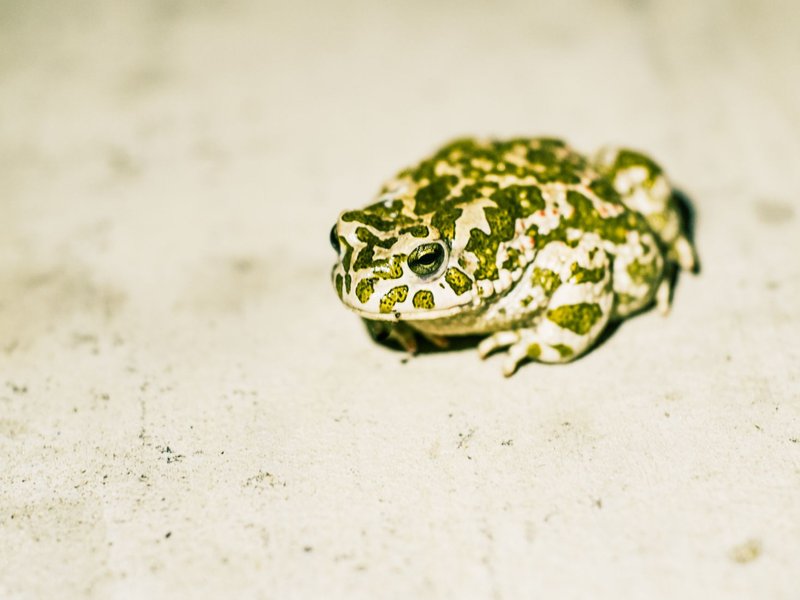
If Libya has an amphibian success story, it’s this one. The African green toad shows up nearly everywhere the other two species don’t — it’s the generalist, tolerant of the arid conditions that keep true frogs pinned to permanent water. Its skin carries the mottled olive-and-cream pattern typical of green toads, camouflage that works as well on cracked desert ground as it does in scrub.
The trick is timing, not toughness. Green toads breed explosively in temporary pools that form after rain, sometimes in a matter of days, then spend most of the year buried and dormant, waiting for the next downpour. That strategy — burn through the breeding cycle fast, then disappear underground — is what lets a toad occupy a country where standing water might not exist for months at a stretch. It’s rated Least Concern by the IUCN, and it’s the species most likely to turn up if you’re looking for amphibians almost anywhere in Libya outside the deep Sahara.
Subdesert Toad (Sclerophrys xeros)
Formerly classified as Amietophrynus xeros, this is Libya’s most geographically cornered amphibian. Its entire known Libyan range is the area around Ghat, an oasis town in the Fezzan region near the Algerian border, roughly 1,300 kilometers south of Tripoli. Surveys have recorded it in swampy, densely vegetated patches on local farms, with researchers documenting an active breeding chorus there in July 2006.
That’s a striking amount of specificity for a national amphibian record — most of Libya doesn’t have a subdesert toad population at all; one oasis does. The species tolerates dry savanna and hot desert conditions elsewhere in its African range, but in Libya it depends entirely on the irrigation and farm runoff around Ghat holding steady. It’s currently assessed as Least Concern, though that status reflects its range across the wider Sahel, not the precariousness of a single edge-of-range outpost.
The Disputed Fourth Species
One more name turns up in older Libyan herpetology records: the African groove-crowned bullfrog (Hoplobatrachus occipitalis), a species otherwise found well south, across the Sahel and sub-Saharan Africa. A status report published in Basic and Applied Herpetology treats the Libyan record as unconfirmed — no recent voucher specimens, no repeat sightings, and a range gap of well over a thousand kilometers between Libya and the species’ nearest confirmed populations. Most working lists of Libyan fauna now flag it rather than count it, which is why the honest species count sits at three confirmed, one disputed, rather than a clean four.
What’s Actually Threatening Them
None of Libya’s amphibians are currently rated above Least Concern, but that classification is measuring the species across their full African ranges, not the narrow slice that survives inside Libya’s borders. Locally, the pressure is consistent across all three: groundwater extraction and drought are drying out the springs and oases these populations depend on, and there’s no backup water source nearby if one does dry out.
Habitat degradation compounds it — farms and settlements draw down the same aquifers the toads and frogs need, and years of civil conflict since 2011 have made systematic monitoring difficult, so population trends inside Libya are thinly documented compared to populations elsewhere in North Africa. For a group of animals that already survive on the narrowest of margins — one oasis, one wadi, one spring — that lack of monitoring is its own kind of risk. Nobody would necessarily notice a population blink out until the next survey turned up nothing.