TLDR
Swamp herbivores are the plant-eaters built to live half-submerged: webbed or splayed feet for walking on mud, buoyant bodies for swimming, and a diet of cattails, water lilies, and marsh grass instead of the leaves and shoots land herbivores rely on. The main players, by region:
- North America: nutria, muskrat, moose, manatee
- South America: capybara
- Africa: hippopotamus
- South Asia: swamp deer (Barasingha)
Keep reading for size, diet, and adaptation details on each, plus a comparison table and a look at where they sit in the swamp food chain.
Table of Contents
- What Makes an Animal a Swamp Herbivore
- North American Wetlands
- South American Wetlands
- African Swamps
- South Asian Wetlands
- The Smaller Grazers
- Swamp Herbivores at a Glance
- How the Swamp Food Chain Works
What Makes an Animal a Swamp Herbivore
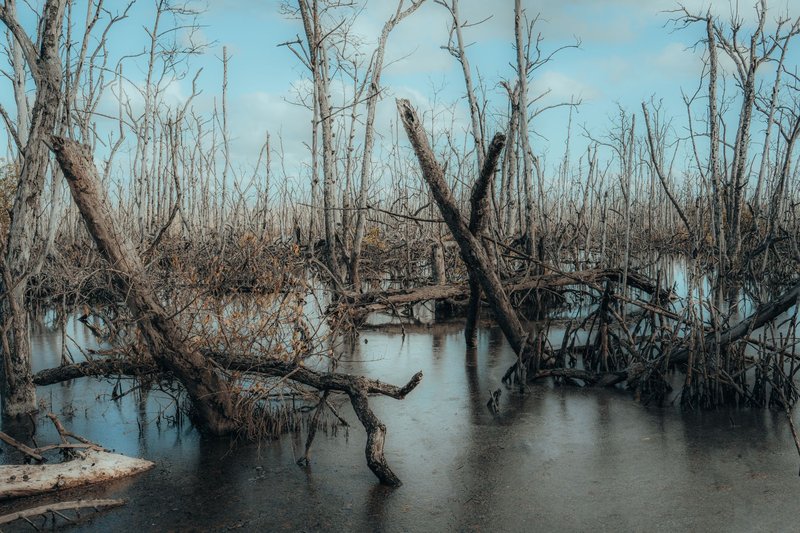
A swamp isn’t a lake and it isn’t dry land — it’s somewhere in between, and the animals that thrive there are built for that in-between state. Three adaptations show up again and again.
Webbed or splayed feet distribute weight across soft mud instead of sinking into it, the same principle behind a snowshoe. Buoyant, often barrel-shaped bodies let an animal float with minimal effort, which matters when you’re moving through water for hours a day. And a digestive system tuned to fibrous aquatic plants — cattails, water hyacinth, duckweed, marsh grass — because that’s what’s actually on the menu when your habitat is mostly water.
None of this is decorative. A deer with regular hooves would exhaust itself crossing a mile of bayou mud. A swamp deer’s splayed hooves make that same mile routine.
North American Wetlands
The Gulf Coast bayous, the Great Lakes marshes, and the Everglades each host a different herbivore, and the differences are mostly about scale.
Nutria
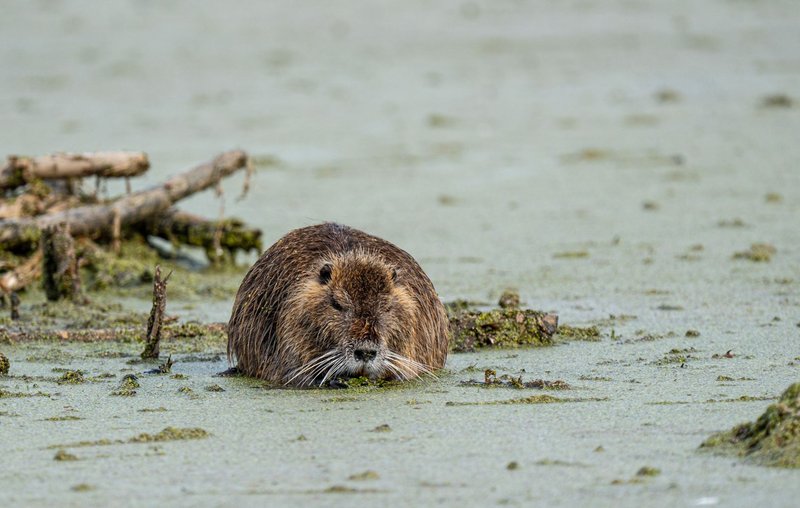
Nutria are large, semi-aquatic rodents — beaver-sized, with a rat-like tail instead of a paddle-shaped one — that graze on marsh grasses, roots, and sedges. They’re not native to North America; nutria were brought from South America in the 1930s for the fur trade, and when that market collapsed, escaped and released animals established wild populations across Louisiana, the Chesapeake, and the Pacific Northwest. Their eating habit is the problem: nutria pull plants out by the roots rather than just cropping the tops, which kills the vegetation that holds marsh soil together. The U.S. Department of Agriculture classifies them as an invasive species responsible for measurable wetland loss in Louisiana.
Muskrat
Muskrats look like a scaled-down nutria but are a native North American species, and their impact on a marsh is closer to landscaping than damage. They build dome-shaped lodges out of cattails and build feeding platforms nearby, and their foraging actually opens up channels that benefit waterfowl. A muskrat’s diet is almost entirely cattail roots and stems, with valved nostrils and lips that seal behind their front teeth so they can gnaw on plants underwater without swallowing it.
Moose
Moose aren’t the animal most people picture in a swamp, but boreal bogs and wetland edges are exactly where they spend summer. Aquatic plants like water lilies and pondweed are unusually rich in sodium, which moose need and can’t easily get from browsing on land. A moose can submerge its entire head and hold its breath long enough to graze along the bottom of a shallow pond — a trick almost no other deer species manages.
Manatee
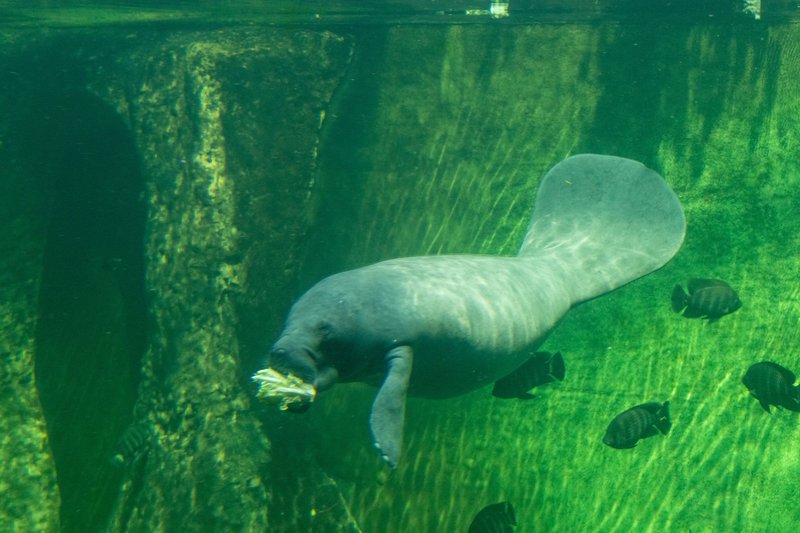
Florida’s rivers, springs, and brackish swamp channels are manatee territory, and they’re the only fully aquatic herbivore on this list — spending their whole lives in water, grazing on seagrass and freshwater vegetation for up to eight hours a day. The U.S. Fish and Wildlife Service lists the West Indian manatee as threatened, with cold-weather die-offs and boat strikes as the leading causes of mortality.
South American Wetlands
Capybara
The capybara is the largest rodent alive, and the Pantanal — the world’s biggest tropical wetland, spanning Brazil, Bolivia, and Paraguay — is its stronghold. Capybaras graze in groups of ten to twenty on grasses and aquatic plants, and their partially webbed feet make them strong swimmers who can stay submerged for close to five minutes to avoid a jaguar or caiman. Unlike most rodents, they’re highly social, and a group will post lookouts while the rest graze.
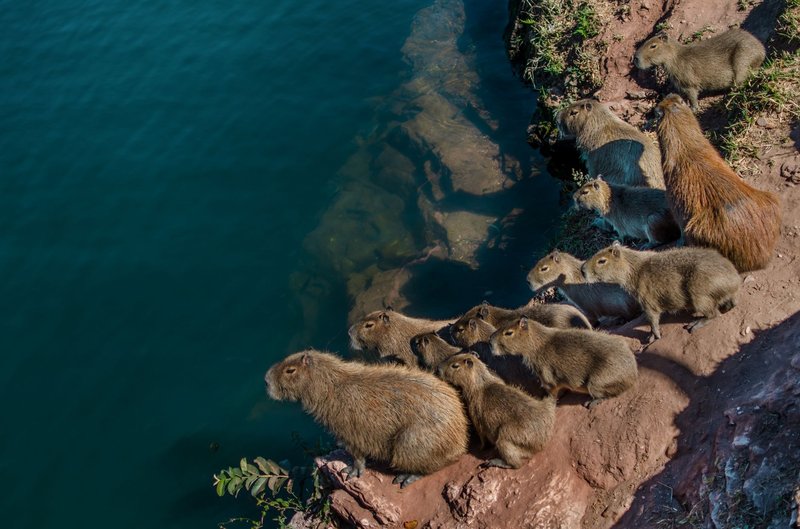
Nutria vs. capybara, since the two get confused: both are large South American rodents with webbed feet and a taste for marsh vegetation, but a capybara is several times heavier — up to 150 pounds versus a nutria’s 20 or so — has no tail to speak of, and lives natively across South American wetlands rather than as an introduced pest. If you see something dog-sized grazing at the water’s edge, it’s a capybara; if it’s closer to a large housecat with a long rat-like tail, it’s nutria.
African Swamps
Hippopotamus
Hippos spend the day submerged in rivers and swamp channels to keep their skin from overheating and cracking, then walk out at night to graze on grass — sometimes traveling several miles inland to feed. Despite the water-based lifestyle, a hippo’s diet is almost entirely terrestrial grass, not aquatic plants. The IUCN Red List classifies the common hippopotamus as vulnerable, with habitat loss and poaching for meat and ivory-like teeth as the main pressures.
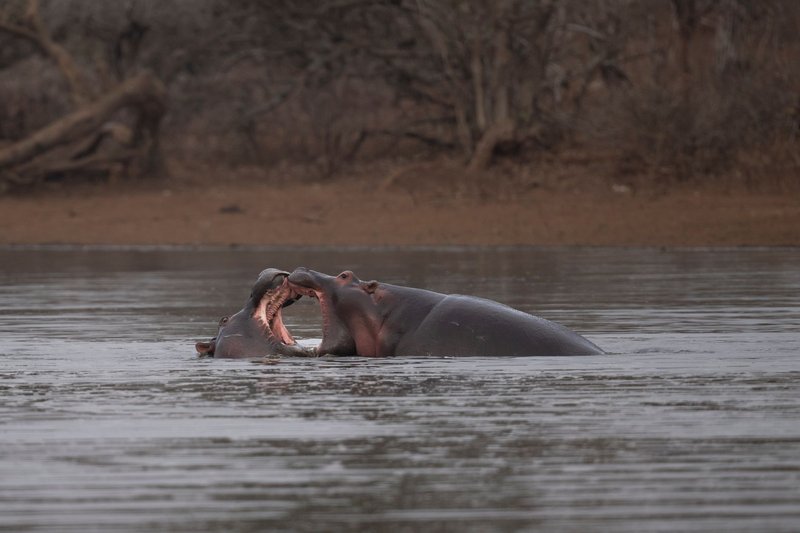
A hippo’s size does the adaptation work that webbed feet do for smaller animals — at over a ton, buoyancy and sheer mass matter more than foot shape for moving through swamp channels.
South Asian Wetlands
Swamp Deer (Barasingha)
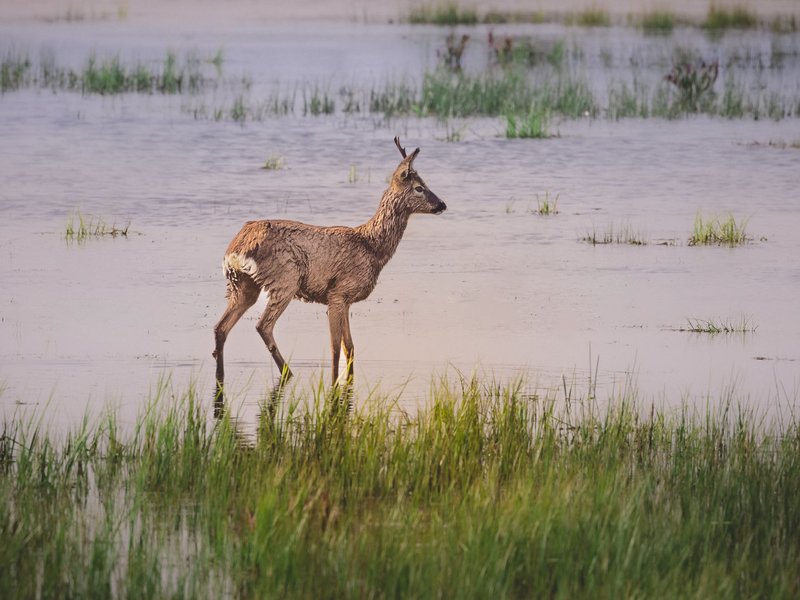
The swamp deer, or Barasingha, is built for exactly the terrain its name describes: the seasonally flooded grasslands of India and Nepal, including Kaziranga and Dudhwa National Parks. Its hooves splay wider than a typical deer’s, spreading weight across soft, waterlogged ground the way a snowshoe does. Adult males carry antlers with up to twelve tines — more than most deer species manage — and the animal is a dedicated grazer of aquatic and semi-aquatic grasses rather than a browser of shrubs and leaves. The IUCN lists the species as vulnerable, with wetland drainage for agriculture as the primary threat to remaining populations.
The Smaller Grazers
Swamps run on more than the animals large enough to name. Several turtle species — red-eared sliders and cooters among them — shift toward a heavily plant-based diet as adults, grazing on duckweed and submerged vegetation. Apple snails graze algae off submerged stems, and their egg masses are a familiar sight clustered pink above the waterline in southern marshes. None of these get the attention nutria or hippos do, but they process more plant matter per acre than any single large herbivore, and they’re the base that keeps the rest of the food chain fed.
Swamp Herbivores at a Glance
| Species | Region | Typical Size | Primary Diet | Standout Adaptation |
|---|---|---|---|---|
| Nutria | North America (introduced) | 15–20 lbs | Marsh roots, sedges | Root-pulling grazing habit |
| Muskrat | North America (native) | 2–4 lbs | Cattail roots and stems | Sealing lips for underwater gnawing |
| Moose | North America (boreal) | 800–1,500 lbs | Aquatic plants, browse | Full head submersion for bottom grazing |
| Manatee | Florida, Caribbean | 800–1,200 lbs | Seagrass, freshwater vegetation | Fully aquatic, up to 8 hrs/day grazing |
| Capybara | South America | 100–150 lbs | Grasses, aquatic plants | Webbed feet, ~5-min dives |
| Hippopotamus | Africa | 3,000–4,000+ lbs | Terrestrial grass | Daytime water submersion, nighttime grazing |
| Swamp Deer (Barasingha) | South Asia | 400–500 lbs | Aquatic and semi-aquatic grasses | Wide-splayed hooves |
How the Swamp Food Chain Works
Every animal on this list sits in roughly the same spot in the food web, one level up from the plants:
- Producers — algae, duckweed, cattails, water hyacinth, submerged grasses
- Primary consumers (the herbivores above) — nutria, muskrat, capybara, swamp deer, manatees, hippos, turtles, apple snails
- Secondary consumers — alligators, caimans, big cats like jaguars, wolves in northern bogs
- Decomposers — bacteria and fungi that break down waste and dead plant matter back into the nutrient-rich muck that feeds the producers again
The loop matters more in a swamp than in most habitats because the “soil” is really decomposing plant material, and herbivore grazing patterns directly shape how much of that material builds up versus washes away. Nutria strip vegetation down to bare mud that erodes; muskrats trim it back in a way that lets new growth in. Same food chain position, opposite effect on the swamp itself — which is a good reminder that “herbivore” describes a diet, not a single role.