Table of Contents
- Saudi Arabia’s Wild Geography, in Brief
- Desert and Mountain Mammals
- Birds of the Arabian Skies
- Reptiles That Rule the Sand
- Life Beneath the Red Sea
- Frequently Asked Questions
Most lists of Saudi Arabian animals are really just oryx-and-camel lists with a leopard photo tacked on for drama. The country’s wildlife is a lot stranger and better than that. Here are 20 species — desert specialists, mountain grazers, raptors, venomous sand-dwellers, and Red Sea giants — that actually live here, plus where in the country to find them.
Saudi Arabia’s Wild Geography, in Brief
Saudi Arabia isn’t one desert. The interior holds the Rub’ al Khali, the largest contiguous sand desert on Earth, and the Nafud, a smaller sea of red dunes in the north. The southwest corner is a different country entirely: the Asir Mountains climb past 3,000 meters, catch monsoon rain, and support juniper forest and terraced farmland where leopards once hunted ibex on cliff faces. The Red Sea coast runs the length of the west side, fringed by coral reef that drops into some of the clearest water in the world. The Arabian Gulf coast on the east is flatter and marshier, with mudflats that pull in migratory shorebirds twice a year. That range — true desert, high mountain, coral sea, tidal flat — is why a country most people picture as flat sand supports everything from sand cats to whale sharks.
Desert and Mountain Mammals
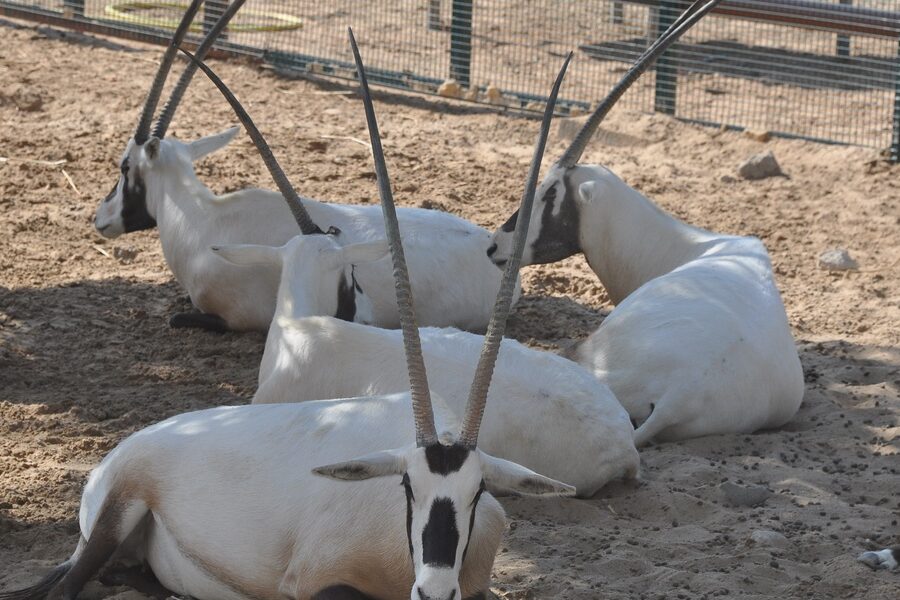
1. Arabian Oryx
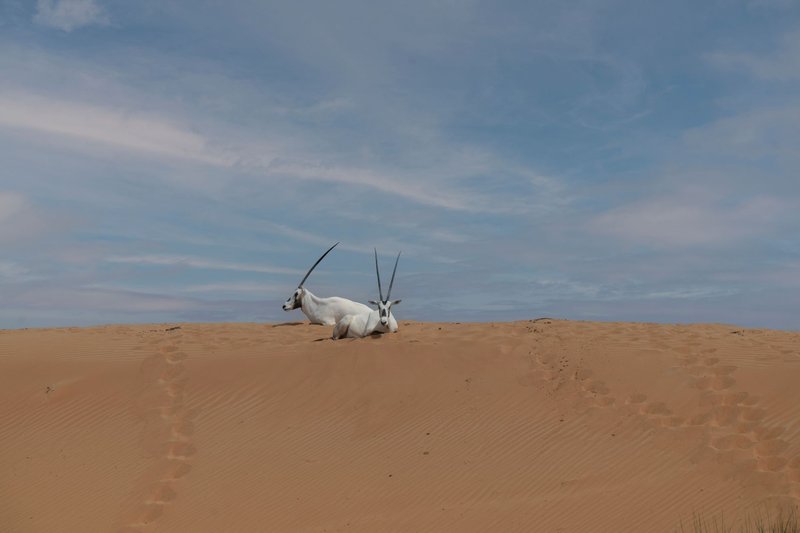
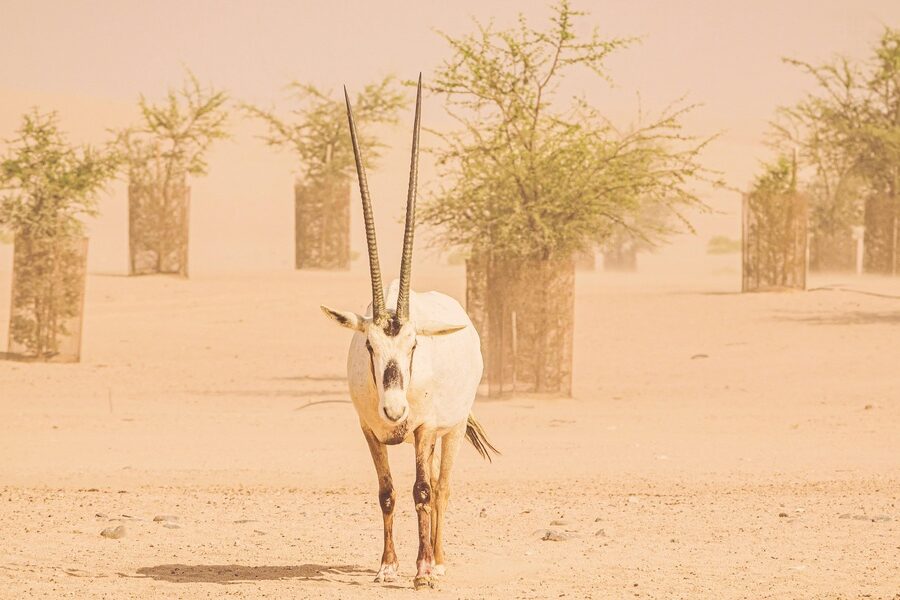
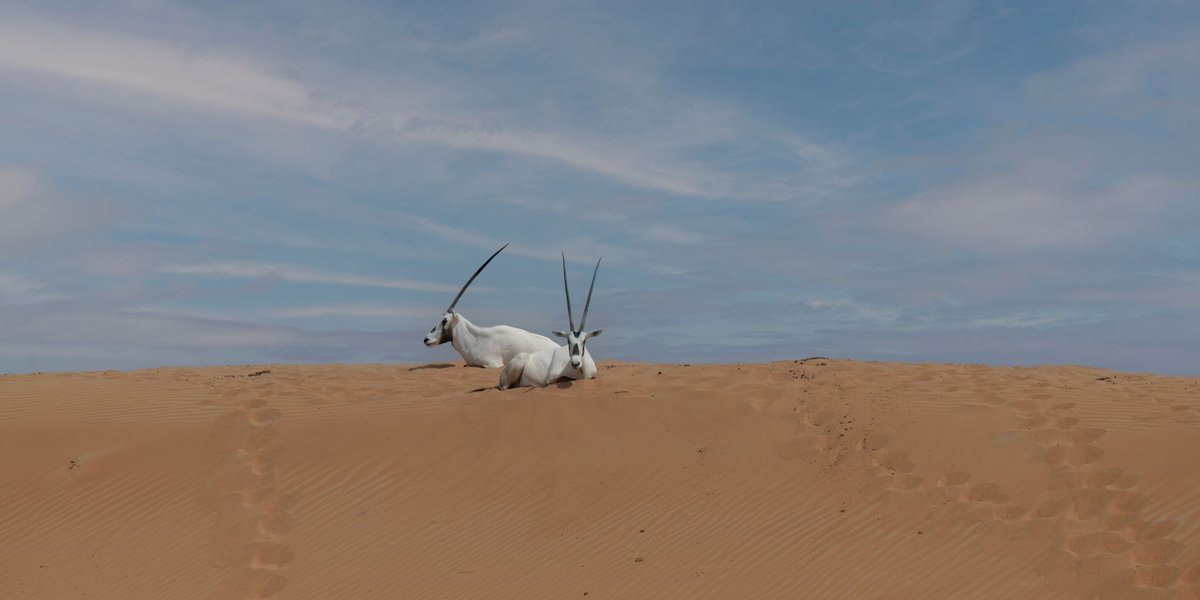
The Arabian oryx is a white antelope with long, straight horns and dark leg markings, built to survive places almost nothing else can. It went extinct in the wild in 1972, hunted from vehicles with rifles, and every wild oryx alive today descends from captive-breeding programs that reintroduced the species starting in the 1980s. Herds now roam protected reserves like Mahazat as-Sayd, and the animal’s recovery from zero wild individuals to a stable, growing population is one of conservation’s genuine comeback stories, according to the IUCN Red List.
2. Arabian Leopard
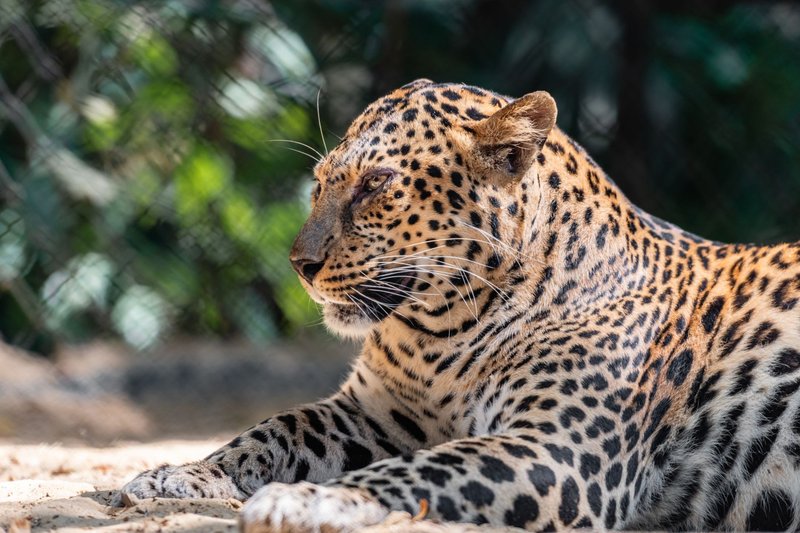
The Arabian leopard is the smallest leopard subspecies, pale gold with tightly packed rosettes, adapted to the rocky terrain of the Asir and Hijaz mountains rather than open savanna. It’s also the most endangered big cat on the planet — fewer than 200 are believed to survive across the entire Arabian Peninsula. Saudi Arabia’s conservationists consider it one of the country’s most critical endangered species, and camera-trap confirmations inside Saudi Arabia itself have been rare for years. Saudi Arabia has poured resources into a captive breeding and reintroduction program centered on the Asir region, betting that a species most residents have never seen can still be brought back from the edge.
3. Sand Cat
The sand cat is small enough to fit in a shoebox, with oversized ears, thick fur pads on its feet that insulate against hot sand, and a coat that all but disappears against dune color. It hunts entirely at night, digs its own den rather than using one abandoned by something else, and can go long stretches without drinking free water, pulling most of its moisture from prey. Sightings in the wild are rare enough that researchers rely mostly on camera traps to confirm it’s still out there.
4. Nubian Ibex
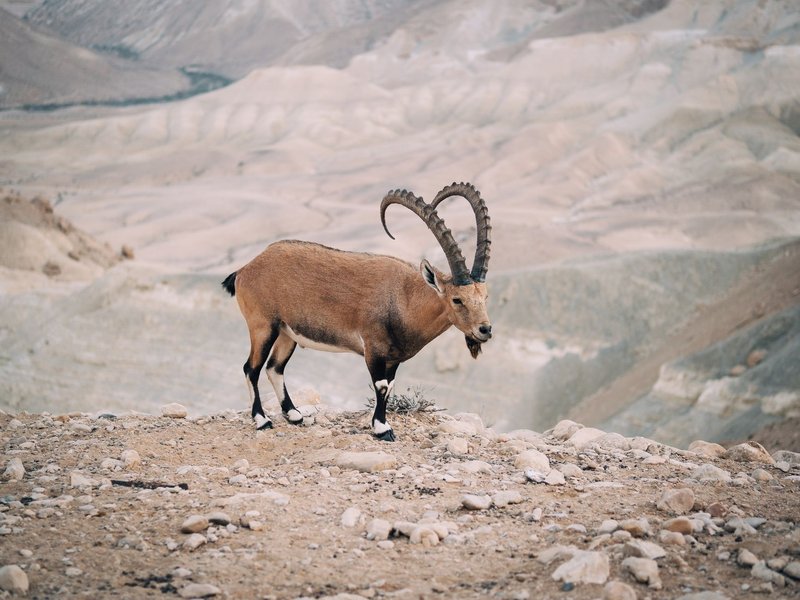
Nubian ibex are wild goats with backward-curving, ridged horns that can grow longer than the animal’s own body on older males, an adaptation for dominance fights on cliff edges rather than open ground. They live on the steep escarpments of the Asir and Hijaz mountains, moving across terrain too vertical for most predators to follow. Males and females herd separately outside the rutting season, and a full-grown male’s horns alone can weigh close to 10% of his body mass.
5. Mountain Gazelle
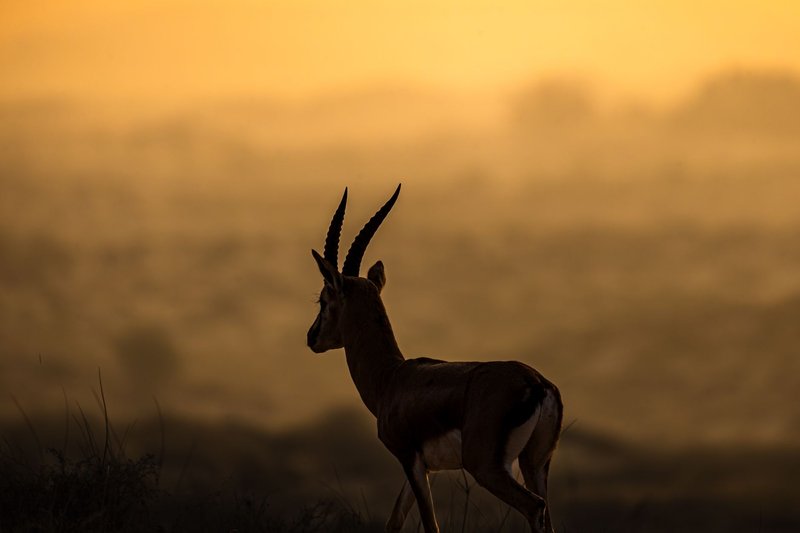
The mountain gazelle is smaller and stockier than the sand gazelle it’s often confused with, built for scrubby foothill terrain rather than flat desert. It once ranged across most of the Arabian Peninsula, but hunting and habitat loss pushed it into fragmented mountain and wadi populations, and it’s now considered vulnerable across its range. Unlike many desert grazers, it browses shrubs as readily as it grazes grass, which lets it survive in terrain too rocky for a full-time grass diet.
6. Rüppell’s Fox
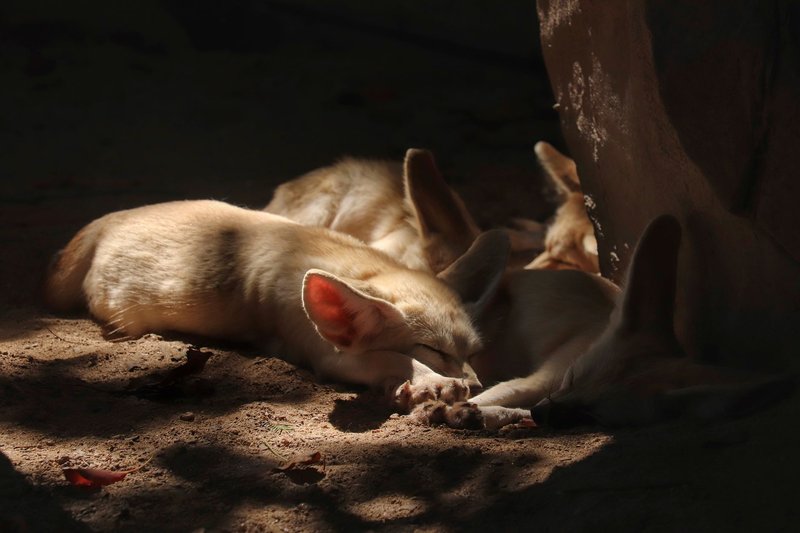
Rüppell’s fox is a small, pale, big-eared fox that overlaps part of its range with the fennec but tends to stick to gravel plains and rocky desert rather than deep sand. It’s an opportunist to the core, eating insects, rodents, birds, and desert fruit depending on what’s available, and it dens underground to escape the daytime heat. Because it’s nocturnal and shy, most people who’ve spent years in the Saudi desert have never actually seen one.
7. Striped Hyena
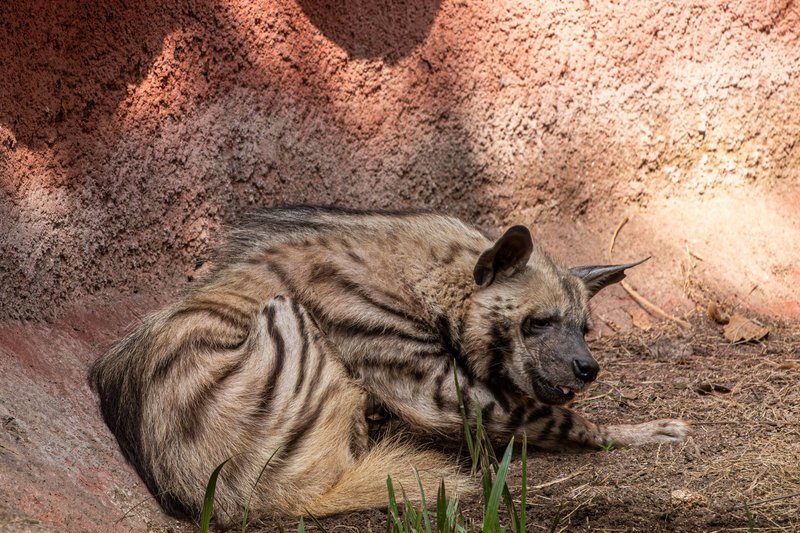
The striped hyena is the only hyena species in Saudi Arabia, a scruffy-maned scavenger with a distinct dark-striped coat, found mainly in the Asir foothills and rocky wadis. It’s a solitary forager rather than a pack hunter like its spotted African cousin, living mostly on carrion, insects, and whatever small prey it can catch. Bedouin folklore treats the animal with real caution — it’s featured in regional legend as an animal capable of hypnotizing people — which says more about its reputation than its actual behavior.
Birds of the Arabian Skies
8. Saker Falcon
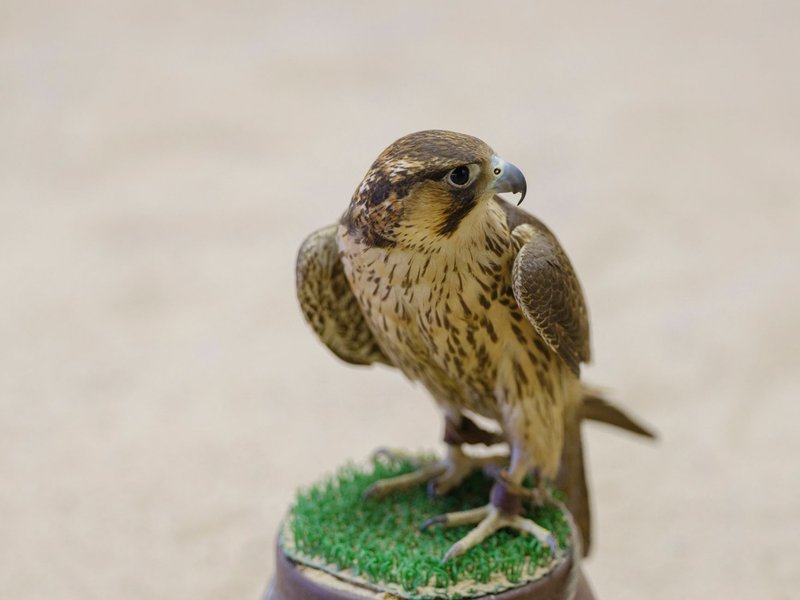
The saker falcon is a large, powerfully built falcon, mottled brown above and pale below, and it’s the bird at the center of Gulf falconry tradition, a practice UNESCO recognizes as intangible cultural heritage across the region. Wild populations pass through Saudi Arabia on migration and winter here, hunting bustards and other ground birds in open desert and steppe. Demand for trained falcons has put real pressure on wild populations, which is part of why captive breeding for falconry has become such a serious industry in the Gulf.
9. Egyptian Vulture
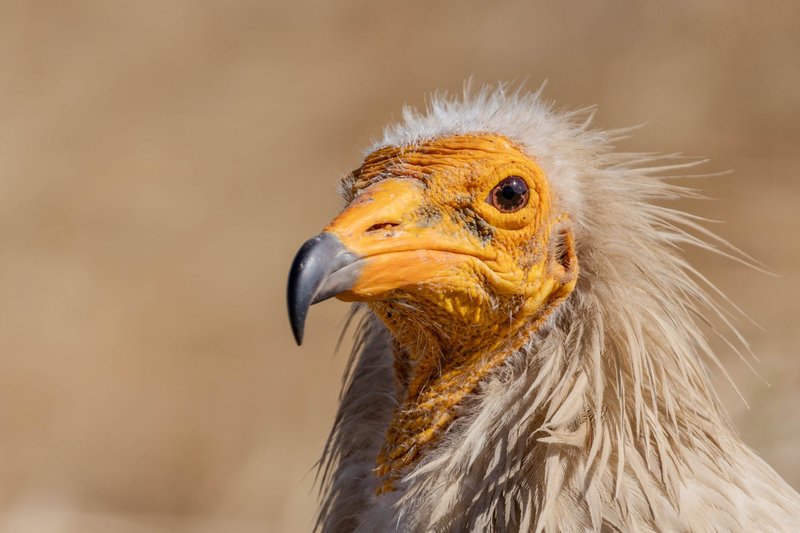
The Egyptian vulture is a small, white-and-black vulture with a bare yellow face and a wedge-shaped tail, unmistakable even at a distance. It’s one of the few birds known to use tools in the wild, picking up rocks and dropping or throwing them to crack open ostrich eggs. Its population has collapsed across much of its range in recent decades, and it’s now globally endangered, with Saudi Arabia’s mountain and coastal populations representing an important piece of what’s left.
10. Houbara Bustard
The houbara bustard is a large, cryptically patterned ground bird — sandy brown with a black-and-white neck plume it fans out during courtship displays. It’s the traditional quarry of Gulf falconry, and that same cultural importance has driven intense hunting pressure across its range, protected under international trade rules through CITES. Houbara are ground-nesters and ground-runners first, only flushing into flight as a last resort, which makes them a genuinely difficult bird to hunt without a trained falcon.
11. Pharaoh Eagle-Owl
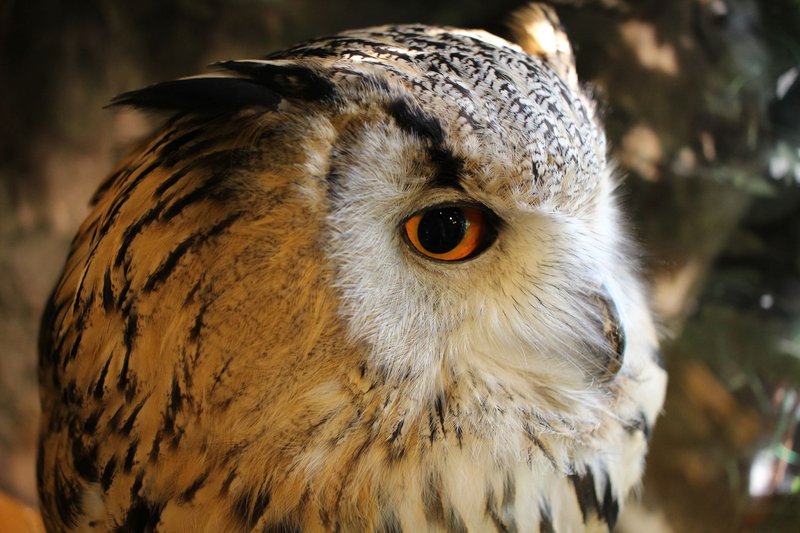
The Pharaoh eagle-owl is a large desert owl with prominent ear tufts and orange eyes, nesting on rocky cliffs and canyon walls across the peninsula’s mountain and escarpment terrain. It hunts almost anything it can overpower after dark — rodents, reptiles, and other birds up to the size of a small hawk. Its call, a deep, repeated boom, carries far enough across open desert at night that it’s often heard well before it’s seen.
12. Greater Flamingo
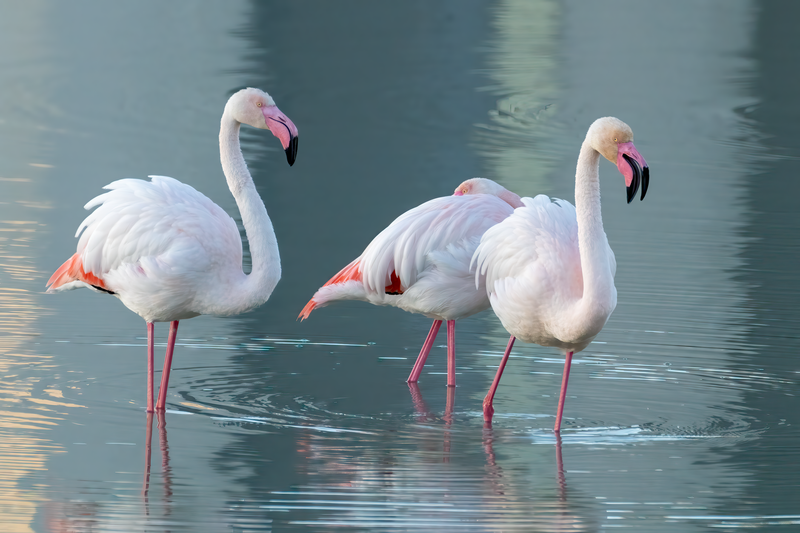
Greater flamingos gather in the hundreds along Saudi Arabia’s coastal lagoons and salt flats, most visibly around the Red Sea coast near the Farasan Islands and in Gulf coast wetlands. Their pink color comes entirely from diet — pigments in the algae and small crustaceans they filter-feed with their oddly hinged, upside-down bills. They’re migratory rather than year-round residents in most of these sites, arriving in numbers that can turn a gray mudflat pink for weeks at a time.
Reptiles That Rule the Sand
13. Arabian Horned Viper
The Arabian horned viper is a stout, sand-colored viper with a distinctive hornlike scale above each eye, and it moves across loose sand with a sidewinding motion that leaves a characteristic J-shaped track. It buries itself just beneath the surface to ambush lizards and rodents, leaving only its eyes and horns exposed. Its venom is a genuine medical concern for anyone working in Saudi Arabia’s dune regions, which is part of why it’s one of the more closely studied snakes in the country — and one of the species featured in the complete list of Saudi Arabia’s reptiles.
14. Dhub (Spiny-Tailed Lizard)
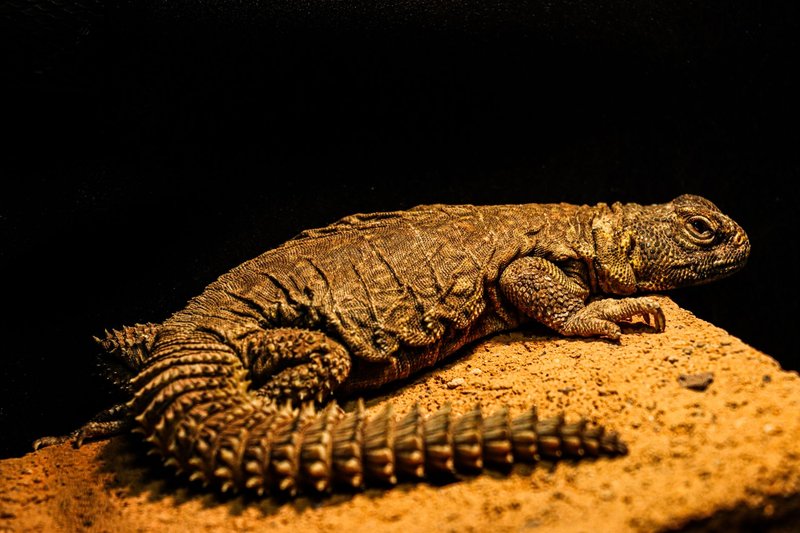
The dhub, or Egyptian spiny-tailed lizard, is a heavyset, armor-plated lizard that can reach over half a meter long, with a thick tail ringed in spiny scales it uses to block its burrow entrance. Adults are almost entirely herbivorous, grazing desert plants, though juveniles eat more insects. It’s also traditionally eaten in parts of Bedouin cuisine, one of the few reptiles in the region with that kind of cultural footprint.
15. Arabian Toad-Headed Agama
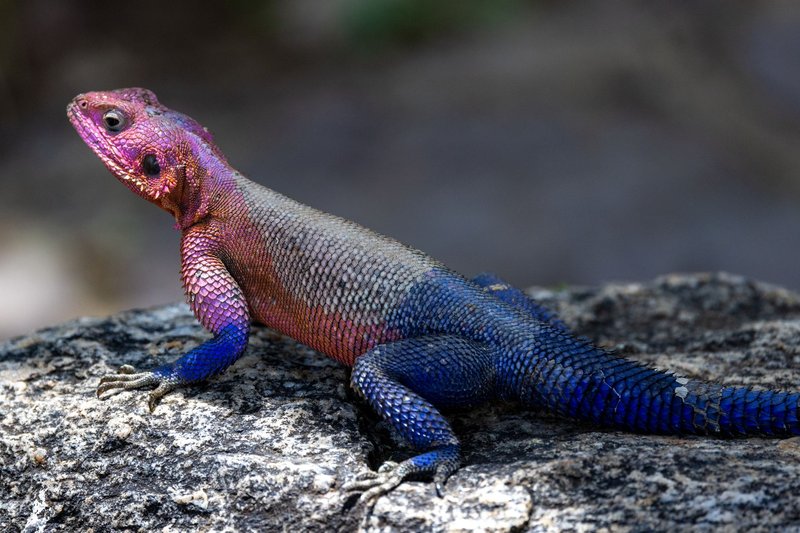
This small, flat-bodied lizard gets its name from a blunt, toad-like head shape, and it can shift its skin tone to match the sand it’s sitting on within minutes. It communicates through a visible push-up display, bobbing its head and body to mark territory or warn off rivals, a behavior visible from meters away if you know to look for it. It’s most active during the cooler hours of early morning and late afternoon, avoiding the flat middle of the day entirely.
16. Arabian Sand Boa
The Arabian sand boa is a short, thick-bodied, nonvenomous snake built for burrowing rather than speed, with small eyes set high on its head so it can stay buried and still watch for prey above. It ambushes lizards and small rodents from just under the sand, striking upward without fully emerging. Because it spends most of its life underground, it’s rarely seen even in areas where it’s common.
Life Beneath the Red Sea
17. Whale Shark
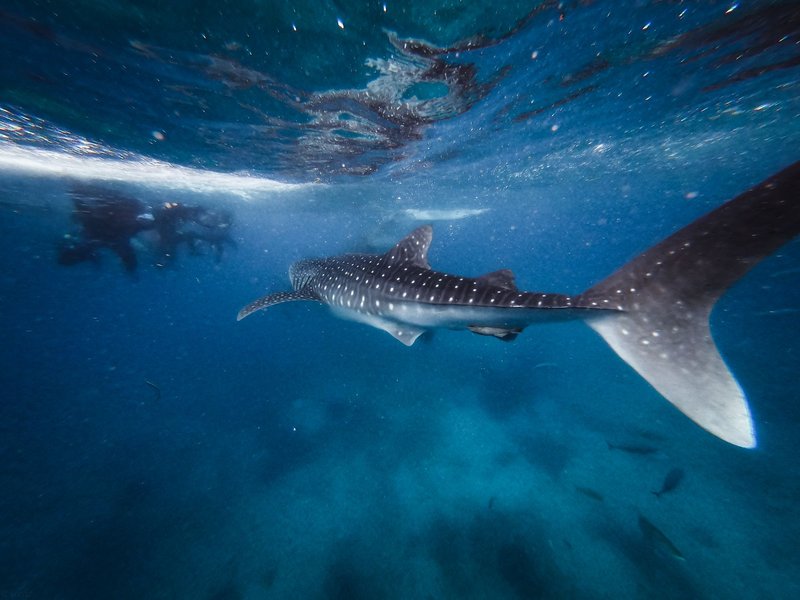
Whale sharks are the largest fish in the ocean, reaching lengths beyond 12 meters, and despite the size, they’re filter feeders, straining plankton and small fish through their gills rather than hunting anything. They gather seasonally along Saudi Arabia’s Red Sea coast, with aggregations near sites like Al Lith drawing researchers and divers during the months when plankton blooms peak, as documented by the Smithsonian’s Ocean initiative. Each whale shark’s spot pattern is unique, which lets researchers identify and track individual animals across years the same way you’d recognize a fingerprint.
18. Dugong
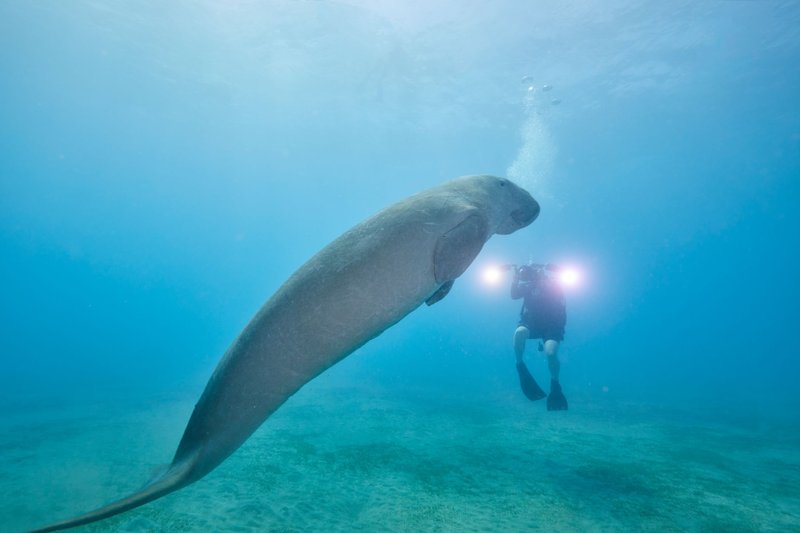
The dugong is a large marine mammal, related to the manatee but with a fluked, dolphin-like tail instead of a paddle tail, and the Red Sea holds one of the more significant dugong populations left in the world. They graze almost exclusively on seagrass meadows, and a single adult can eat dozens of kilograms of seagrass a day, which makes healthy coastal seagrass beds a direct requirement for the population’s survival. They’re shy, slow-moving, and easily disturbed by boat traffic, so most sightings happen from a distance.
19. Hawksbill Turtle
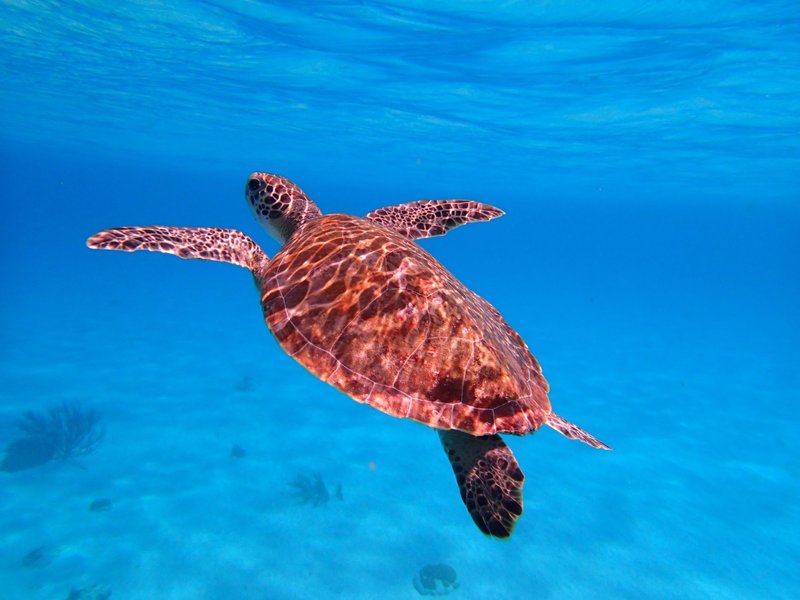
Hawksbill turtles nest on beaches across Saudi Arabia’s Red Sea islands, including the Farasan group, and they’re distinguished by a narrow, hooked beak and an overlapping, tortoiseshell-patterned shell. They feed mainly on sponges, a food source toxic to most other animals, which lets them exploit reef habitat with less direct competition. The species is critically endangered worldwide, and Red Sea nesting sites are considered some of the more important remaining rookeries in the region.
20. Red Sea Clownfish
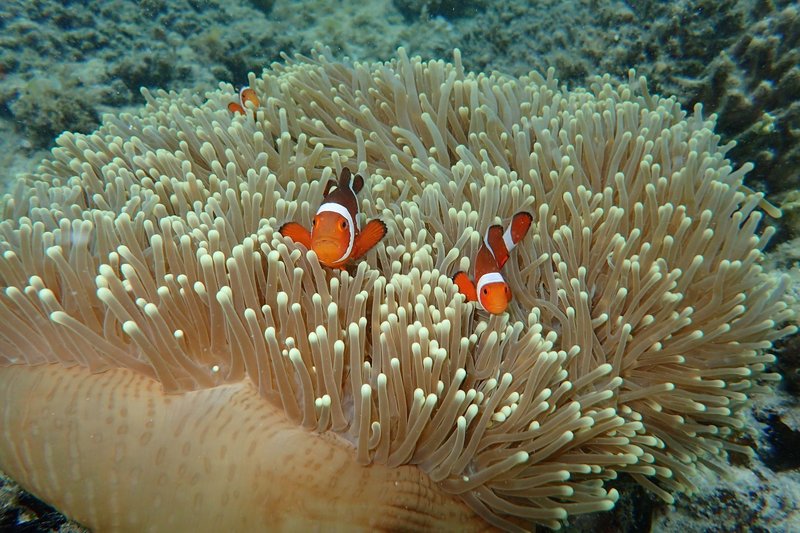
The Red Sea clownfish, also called the two-banded anemonefish, is one of the species most associated with the Red Sea specifically — orange-red with two white bars rather than the three-striped pattern of more widely known clownfish. It lives in a mutual relationship with sea anemones, developing immunity to the anemone’s sting and gaining a defended home in exchange for chasing off the anemone’s predators. Populations here shift sex over their lifespan: every group has one dominant female, and if she dies, the largest male changes sex to replace her.
Frequently Asked Questions
What is the national animal of Saudi Arabia?
The Arabian oryx holds that status. It’s a fitting choice: a species hunted to extinction in the wild within Saudi Arabia’s own lifetime as a modern state, then brought back through one of the most successful large-mammal reintroduction efforts on record.
What is the most dangerous animal in Saudi Arabia?
For actual human encounters, venomous snakes like the Arabian horned viper cause more injuries than any large mammal, simply because they’re common in the same sandy terrain people walk, camp, and drive through. Scorpions are a close second in terms of frequency, even though bites and stings from both are rarely fatal with treatment.
Is the Arabian leopard extinct in Saudi Arabia?
Not officially, but it’s close. Confirmed wild sightings inside the country have been extremely rare for years, and most conservationists treat the wild population as functionally gone or down to a handful of individuals. The active breeding and reintroduction program in the Asir region exists specifically because waiting for the wild population to recover on its own isn’t considered a realistic option anymore.