Contents
- TLDR
- Why “four-legged insect” is a contradiction
- Insects that walk on four legs
- Why insects repurpose their legs
- Comparison table
- The Leviticus question
- Why cartoon bugs have four legs
- FAQ
TLDR
No insect has four legs. Every adult insect has six, in three pairs. But several walk or stand on only four, because the other two have a different job: grabbing prey, jumping, tasting or sensing. Mantids, brush-footed butterflies and pygmy mole crickets are the clearest cases.
Why “four-legged insect” is a contradiction
Six legs is the definition of the group. Insects are built in three body sections, and the middle one, the thorax, carries three pairs of legs. Spiders have eight and belong to a different class. A creature with four legs isn’t an insect.
So the phrase usually means one of two things. Either an insect uses four legs for walking and holds two in some other way, or someone drew a bug with four legs on purpose. Both have real explanations.
The distinction most pages skip is the one between having four legs and walking on four. Every insect below has six. It just doesn’t put all six on the ground.
Insects that walk on four legs
Mantids
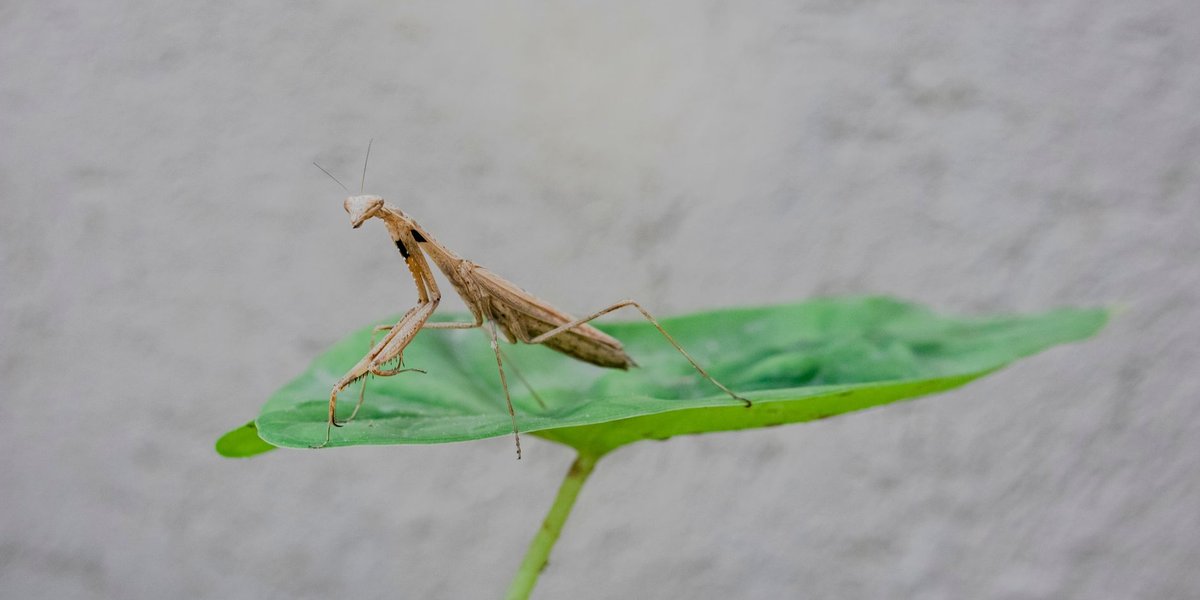
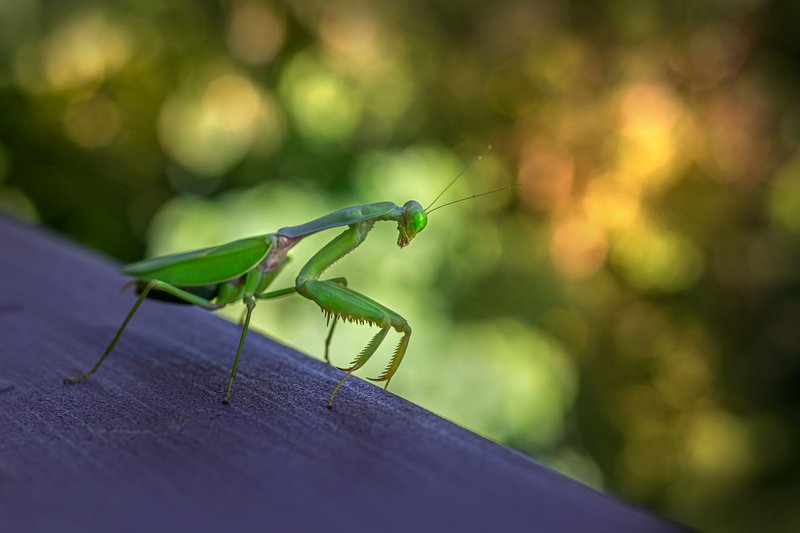
A praying mantis stands on its back four legs. The front pair is folded up in front of its face, lined with spines, and built to snap shut on prey in a fraction of a second. Those are raptorial legs: they’re weapons, not walking gear. Watch a mantis cross a branch and you’ll see it move on the middle and hind pairs only, with the front pair held ready. National Geographic’s mantis profile covers how they hunt with those forelegs.
Brush-footed butterflies
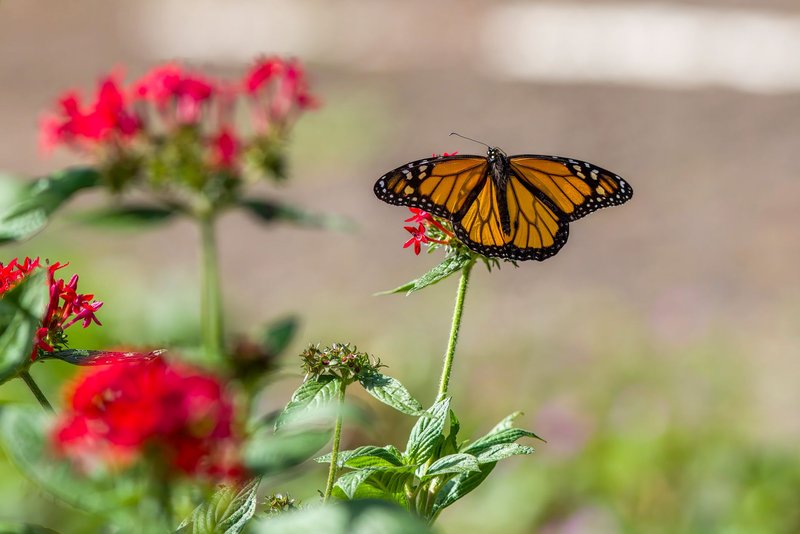
This is the case that surprises people most. In the family Nymphalidae, which includes monarchs, painted ladies, admirals and fritillaries, the front legs are shrunken to small, hairy stubs. They’re called brush feet because of the bristles. Adults hold them tucked against the body and use them mainly to sense and taste surfaces. Look closely at a perched monarch and you’ll count four legs doing the standing.
If you’ve ever wondered about butterflies with four legs, this is the answer. They have six. Two just don’t touch the ground.
Pygmy mole crickets
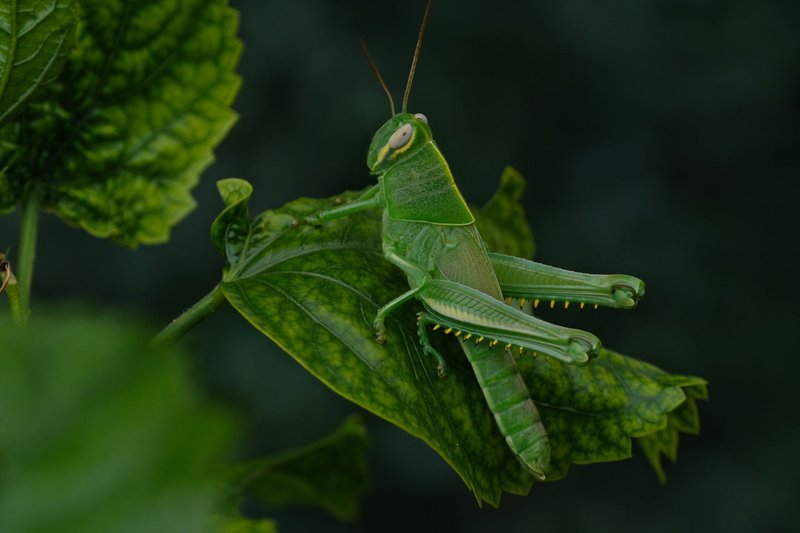
The pygmy mole cricket Xya sichuanensis is a tiny jumper with oversized hind legs. Those back legs are built for launching, not walking, so on the ground it moves on its front and middle legs. A bioRxiv preprint on the species describes this split between jumping legs and walking legs. It’s one of the cleaner examples of a four-legged gait in insects because the walking is genuinely done by four.
Water striders
Water striders skate on the surface film using their long middle legs as oars. The hind legs act as rudders for steering, and the short front legs are kept up front to seize prey that falls on the water. So the strider isn’t a pure four-legged walker, but its propulsion comes from only two of its three pairs.
Why insects repurpose their legs
Evolution doesn’t throw away a body part when it can reuse it. The legs on an insect’s thorax are a modular set, and different species have modified one pair at a time.
- Raptorial legs turn the front pair into grabbing tools. Mantids are the famous example.
- Jumping legs enlarge the hind pair with big muscles. Grasshoppers, crickets and the pygmy mole cricket all have them.
- Sensory legs shrink the front pair and load it with sensors. That’s the brush-footed butterfly strategy.
- Rowing and steering legs let water striders split the work across the middle and hind pairs.
Once a pair is committed to another job, walking falls to the rest. That’s how a six-legged animal ends up on four.
Comparison table
| Insect | Legs used for walking | What the other legs do |
|---|---|---|
| Praying mantis | Middle and hind pairs (4) | Front pair grabs prey |
| Brush-footed butterfly | Middle and hind pairs (4) | Tiny front pair senses and tastes |
| Pygmy mole cricket | Front and middle pairs (4) | Hind pair jumps |
| Water strider | Middle pair rows; hind pair steers | Front pair catches prey |
The Leviticus question
Leviticus 11:20-23 calls flying insects that “go upon all four” unclean, then lists locusts, bald locusts, crickets and grasshoppers as permitted. Readers often ask how an insect can have four legs when the biology says six.
The usual answer is that the text isn’t counting legs the way an entomologist does. It sorts creatures by how they move. Grasshoppers and their relatives are described as having jointed legs above their feet for leaping, which matches the jumping hind legs covered above. On that reading, “four” refers to the legs used for walking, not the total. Others read the passage differently, and scholars have debated it for centuries. What the biology can tell you is narrower: some real insects do walk on four, and that’s a documented fact, not a translation trick.
Why cartoon bugs have four legs
Animators drew insects with four legs long before anyone asked a biologist. Six legs are harder to animate cleanly, and a four-legged design reads faster on screen. TV Tropes catalogs the habit as a standing convention. It’s a shortcut, not a claim about anatomy, and it’s the reason many people carry a mental picture of bugs that doesn’t match the real thing.
FAQ
Do insects have six legs or four? Six. Three pairs, attached to the thorax. Some species walk on four, but all six are present.
Which insects walk on four legs? Praying mantids, brush-footed butterflies such as monarchs, and pygmy mole crickets are the best documented. Water striders use only two of their three pairs for moving across water.
Do butterflies have four legs? Brush-footed butterflies have six legs, but the front pair is so small that they stand and walk on four.
Why do mantids hold their front legs up? Those legs are spined grabbing tools. Keeping them folded and ready lets the mantis strike quickly.
Are there any real insects with only four legs? No adult insect has fewer than six. A missing leg from injury doesn’t change that count in the species.