Ghana’s rarest animals aren’t hiding in some remote corner of the map. Most live in a handful of forest reserves and one savanna park, and a few of them cling to patches of habitat you could drive across in an afternoon. That’s the problem, and also the reason you can still go and look.
This list covers twelve species across primates, amphibians, birds, insects, big mammals and a sea cow. Each entry gives the IUCN status, the reserve where it lives, and the threat pushing it toward the edge.
Table of contents
- What “rare” means here
- Quick reference table
- The 12 rare animals
- Where to see them
- How to visit responsibly
What “rare” means here
Rare and endangered aren’t the same thing. Rare describes how few animals exist or how small their range is. Endangered is a formal category on the IUCN Red List, the global scorecard for extinction risk. A species can be rare and stable, like a butterfly nobody sees because it lives in the canopy. It can also be common somewhere else and nearly gone in Ghana.
The animals below are either threatened on the Red List or genuinely hard to find in Ghana, and most are both.
Quick reference table
| Species | Group | Status | Main place in Ghana |
|---|---|---|---|
| Roloway monkey | Primate | Critically Endangered | Ankasa, Tano forests |
| White-naped mangabey | Primate | Endangered | Ankasa, Bia |
| Geoffroy’s pied colobus | Primate | Critically Endangered | Boabeng-Fiema |
| Olive colobus | Primate | Near Threatened | Ankasa and wet forests |
| Togo slippery frog | Amphibian | Critically Endangered | Volta Region streams |
| Yellow-headed picathartes | Bird | Vulnerable | Atewa Range |
| White-breasted guineafowl | Bird | Vulnerable | Ankasa, Bia |
| African giant swallowtail | Butterfly | Not assessed | Lowland forests |
| West African lion | Big cat | Critically Endangered (West Africa) | Mole National Park |
| African elephant | Mammal | Endangered | Mole National Park |
| White-bellied pangolin | Mammal | Endangered | Forest belt |
| West African manatee | Aquatic mammal | Vulnerable | Rivers, lagoons, Volta |
The 12 rare animals
1. Roloway monkey
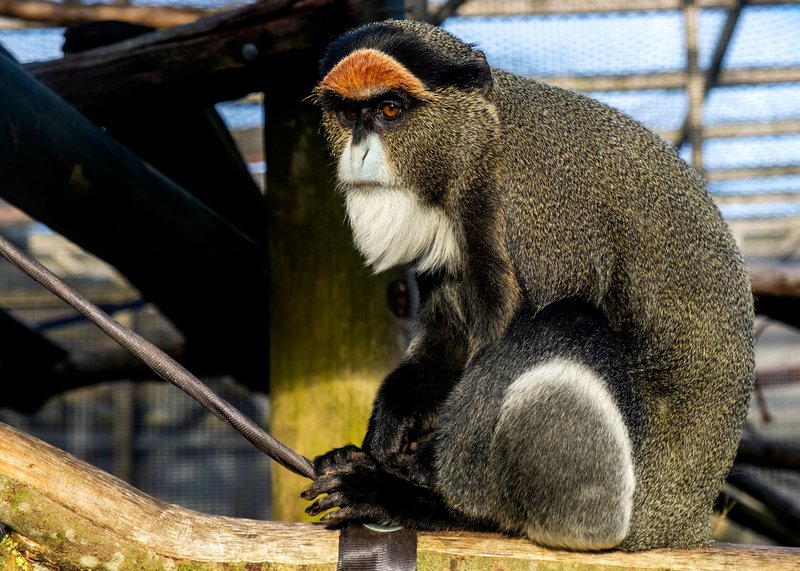
The roloway is the animal conservationists name first when Ghana comes up. It’s a guenon with a white beard that fans out like a bib, a dark face and a bright orange-gold thigh patch. It lives only in the forests of Ghana and Côte d’Ivoire, and the Ghana population is a fragment of what existed a century ago.
Status: Critically Endangered. Look for it in Ankasa and the Tano forests of the southwest. Bushmeat hunting and forest clearance did the damage, and each surviving group is small enough that losing one matters.
2. White-naped mangabey
A big, long-tailed monkey with a pale crescent on the back of the neck, the white-naped mangabey spends a lot of time on the forest floor, which makes it easy prey for hunters. Status: Endangered. It survives in Ankasa and Bia, two of the few Ghanaian forests still large enough to hold it.
3. Geoffroy’s pied colobus
Black body, white thighs, white tail tuft. Geoffroy’s pied colobus is the monkey of Boabeng-Fiema, a sanctuary where local tradition treats the animals as sacred and has protected them for generations. That cultural rule explains why a monkey that has vanished from most of its range still shows up reliably here. Status: Critically Endangered. Outside the sanctuary, hunting and logging keep eating away at it.
4. Olive colobus
The smallest of Ghana’s colobus monkeys is also the oddest. It’s olive-brown, with a pointed tuft of fur on its head, and females carry their babies in their mouths. Status: Near Threatened. Shy and quiet, it often travels with other monkey species for safety, so a patient look at a mixed troop in Ankasa is your best bet.
5. Togo slippery frog (Conraua derooi)
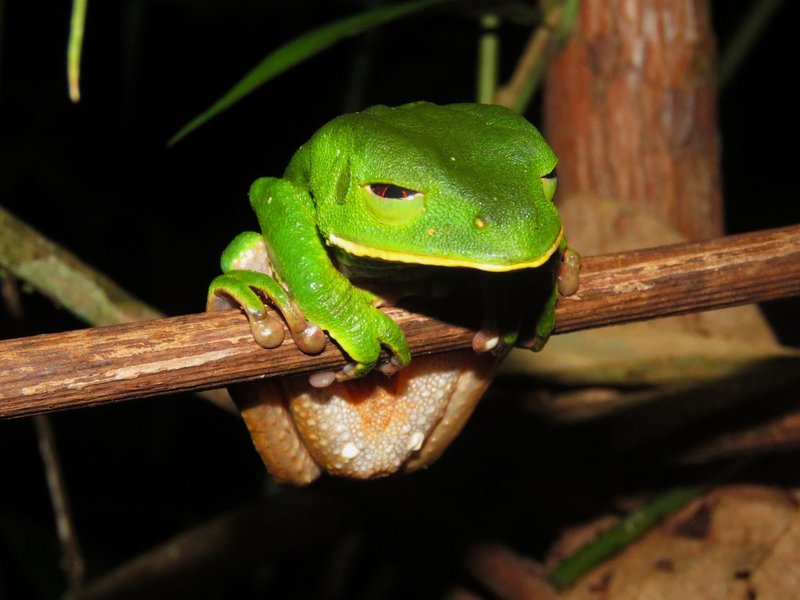
A large, stream-dwelling frog that depends on clean, fast water in forested hills of Ghana’s Volta Region and neighboring Togo. Status: Critically Endangered. It gets eaten by people, and the streams it needs are silting up as forest is cleared for farms. Frogs like this are early warning systems: when the water goes wrong, they disappear first.
6. Yellow-headed picathartes
Also called the white-necked rockfowl, this bird has a bald yellow-and-black head, a long tail and a habit of building mud nests on cave walls and rock overhangs. Birders will travel across continents for it. Status: Vulnerable. In Ghana the Atewa Range is its best-known stronghold, and bauxite mining proposals there put it at risk. Like other endangered tropical rainforest animals, this bird depends on undisturbed forest around its rocky nesting sites.
7. White-breasted guineafowl
A forest guineafowl that nobody sees often, because it keeps to dense understory and moves in small flocks that vanish at the first noise. Status: Vulnerable. Habitat loss across the Upper Guinea forests is its main threat, and Ankasa and Bia hold what remains in Ghana.
8. African giant swallowtail (Papilio antimachus)
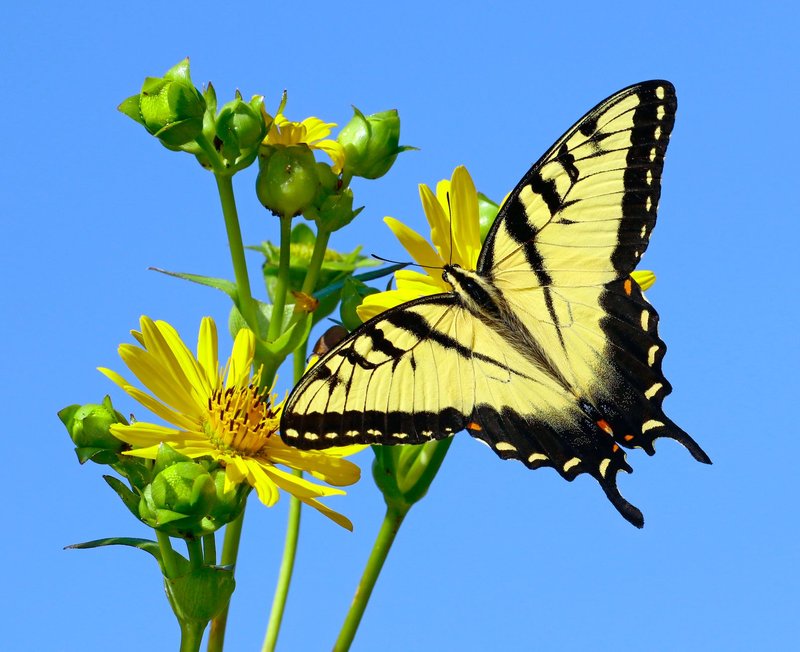
One of the largest butterflies in Africa, with a wingspan that can top 20 centimeters. It flies high in the canopy of lowland rainforest, so most sightings come from collectors’ records rather than casual visitors. The species has not been assessed by the IUCN, but forest loss is shrinking the habitat it depends on. If you see one, you’ve gotten lucky.
9. West African lion
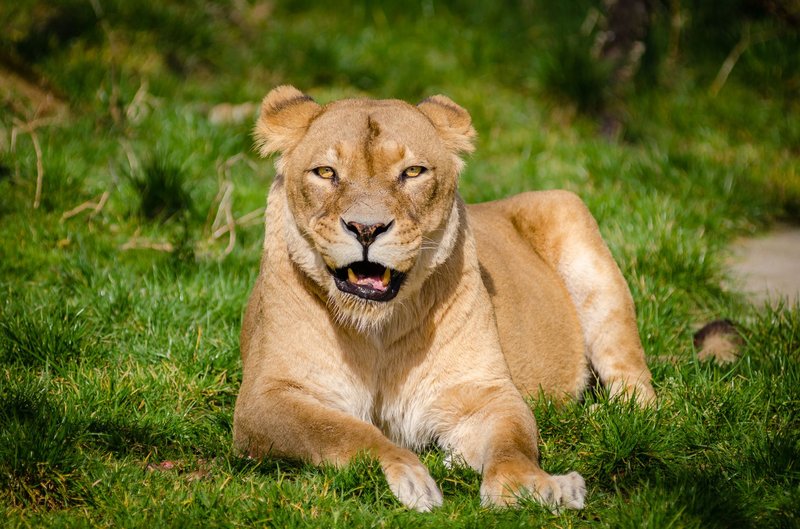
Mole National Park holds a tiny lion population, and camera traps have confirmed it. West African lions are genetically distinct from the big prides of East Africa and are rated Critically Endangered across the region—a fate shared by many animals of West Africa. Numbers in Mole are low enough that sightings by tourists are rare. Poaching of prey, livestock conflict at the park edge and the small size of the population are the threats.
10. African elephant at Mole
Mole is the best place in Ghana to see elephants, and you can watch them from the walking safari or from the motel terrace overlooking a waterhole. Status: Endangered for the species. Ghana’s elephants have lost ground to farmland and poaching, and the herds at Mole are the stronghold for the savanna population.
11. White-bellied pangolin
A scaly, tree-climbing mammal that curls into a ball when threatened. Status: Endangered. Pangolins are the most trafficked wild mammals in the world, according to National Geographic, and Ghana’s forest species is hunted for meat and scales. It’s nocturnal and solitary, so you’ll almost never see one in the wild without a guide who knows where to look.
12. West African manatee
Ghana’s only sea cow lives in slow rivers, estuaries, lagoons and reservoirs like Lake Volta. Status: Vulnerable. It’s hunted for meat and accidentally drowned in fishing nets, and dams chop its river routes into pieces. Manatees surface briefly and quietly, so spotting one takes boat time and luck.
Where to see them
Four places cover almost the whole list.
- Ankasa Conservation Area (southwest): Roloway monkey, white-naped mangabey, olive colobus, white-breasted guineafowl. It’s wet, dense and best with a guide.
- Mole National Park (north): Elephants for sure, lions if you’re very fortunate. The dry season, roughly December to March, concentrates animals at waterholes.
- Atewa Range Forest Reserve (Eastern Region): Yellow-headed picathartes and a deep list of forest birds and butterflies, plus the most active conservation fight in the country.
- Boabeng-Fiema Monkey Sanctuary (Bono East): The easiest place to see Geoffroy’s pied colobus up close.
Kakum National Park, near Cape Coast, is the easiest forest to reach from Accra and worth adding for its canopy walkway and its birds.
How to visit responsibly
Hire local guides. They know where the animals actually are, and the fees give nearby communities a reason to keep the forest standing. Stay on trails, keep your distance from primates, and never buy bushmeat or pangolin products, even when they’re offered as a local specialty. Report sightings to park rangers, because camera-trap and ranger records are how conservation groups learn that a species is still holding on.
Ghana still has these twelve. Whether it keeps them depends largely on a few reserves staying intact.