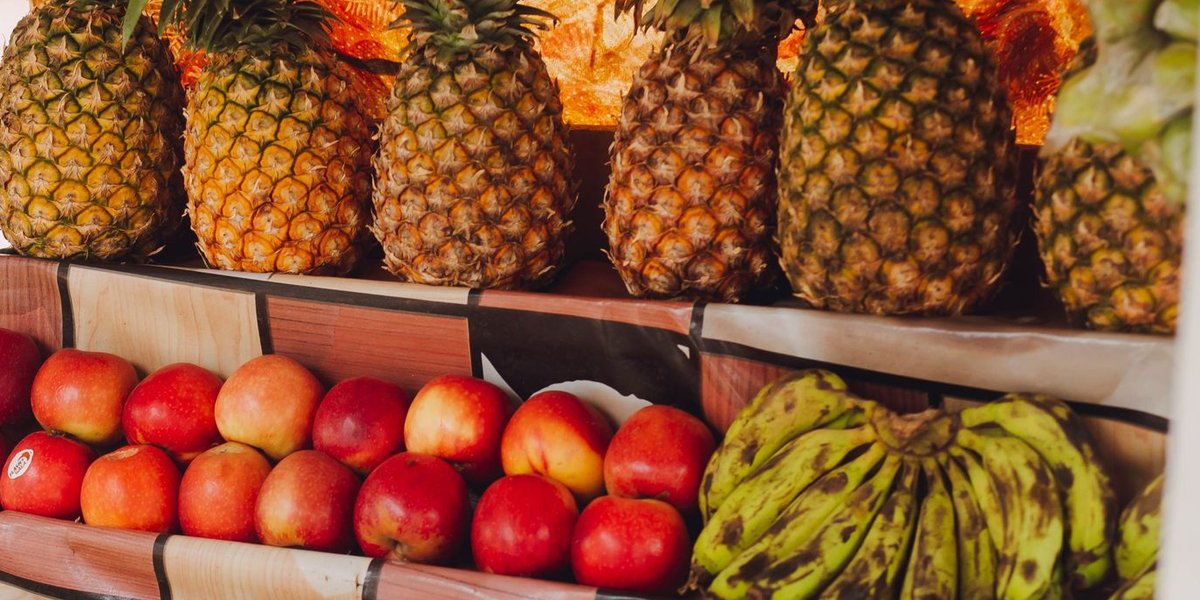
Laos grows fruit on a three-season clock, and the fruit you find depends almost entirely on the month. Mango and jackfruit arrive in the hot season, lychee, longan and rambutan come with the rains, and pomelo and oranges take over once the weather cools. A few staples, bananas, papaya and pineapple, never really leave.
This guide to the fruits of Laos is organized by that clock. Each fruit gets its Lao name, a pronunciation, what it tastes like, how to pick a good one, how to open it, and how locals eat it. The word mak (say “mahk”) means fruit, so most Lao fruit names start with it.
Table of Contents
- Start Here: Six Fruits to Try First
- Laos Fruit Season at a Glance
- Hot Season Fruits (March to May)
- Rainy Season Fruits (June to October)
- Cool Season Fruits (November to February)
- Year-Round Fruits
- Where to Buy Fruit and What It Costs
- Eating Fruit Safely in Laos
Start Here: Six Fruits to Try First
Short on time? These six give you the widest range of flavors in Laos.
- Mango (mak muang): Ripe with sticky rice, or green with a salt, sugar and chili dip. Hot season.
- Mangosteen (mang khut): Sweet-sour white segments inside a purple shell. Late hot season into the rains.
- Longan (lam yai): Small, translucent, honey-sweet. Rainy season.
- Rambutan (mak ngo): Hairy red shell, lychee-like flesh. Rainy season.
- Pomelo (som o): A grapefruit-sized citrus that’s sweet instead of bitter. Cool season.
- Papaya (mak hoong): Orange and soft when ripe, crunchy and green in tam mak hoong, the Lao papaya salad. Year-round.
Laos Fruit Season at a Glance
Months shift by a few weeks depending on region and rainfall, and the north and the south of the country don’t ripen on the same schedule. Treat this table as a guide, not a promise.
| Fruit | Lao name | Best months |
|---|---|---|
| Mango | mak muang | March to June |
| Jackfruit | mak mi | March to August |
| Durian | thu lian | April to July |
| Watermelon | mak mo | February to May |
| Mangosteen | mang khut | May to August |
| Lychee | lin chi | May to July |
| Rambutan | mak ngo | June to September |
| Longan | lam yai | July to September |
| Dragon fruit | kaew mangkon | June to November |
| Pomelo | som o | September to December |
| Orange and tangerine | mak som | November to February |
| Sweet tamarind | mak kham | December to February |
| Banana | mak kuai | Year-round |
| Papaya | mak hoong | Year-round |
| Pineapple | mak nat | Most of the year |
Hot Season Fruits (March to May)
The hot season is the sweetest stretch for fruit. Temperatures climb, markets get louder, and the first mangoes show up in stacks.
Mango (mak muang)
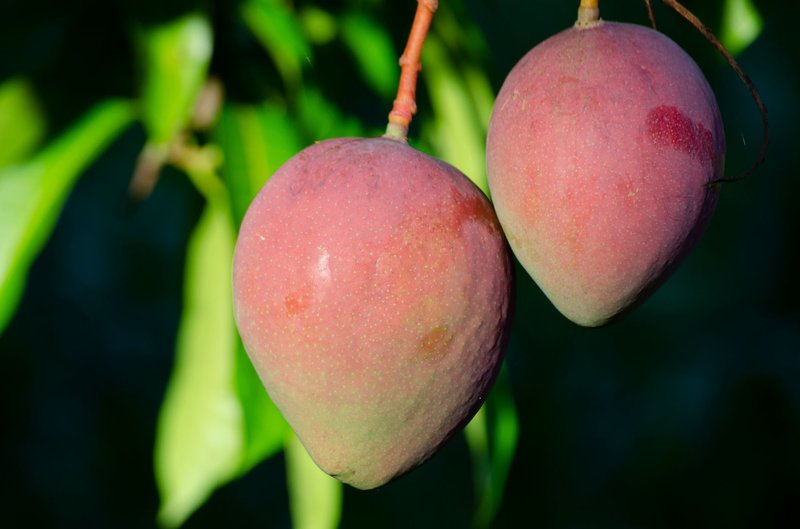
Ripe Lao mango is soft, fragrant and sweet, with fibrous flesh that clings to the stone. The ripe ones come in several types, from small and yellow to large and green-skinned.
To pick one, smell the stem end. A ripe mango smells like mango, and a hard, scentless one will stay hard. Gentle pressure should leave a slight give.
Locals eat unripe green mango (mak muang dip) as a snack, sliced and dipped in salt, sugar and chili. It’s sour, crunchy and a little aggressive, and it makes more sense in 35-degree heat. Ripe mango turns up on dessert stands next to sticky rice.
Jackfruit (mak mi)
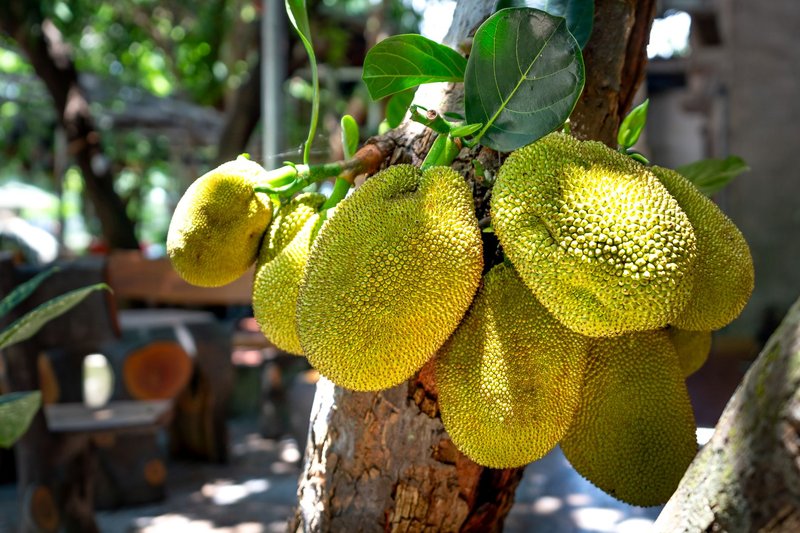
Jackfruit is the largest tree fruit you’ll see on a market table. The yellow bulbs inside taste like banana crossed with pineapple, with a chewy, almost rubbery texture.
Vendors sell it already cut into plastic trays, which is the right way to buy it unless you own a very oily knife. The latex inside is sticky enough to ruin a blade. A ripe jackfruit smells sweet through the rind and sounds hollow when you tap it.
Durian (thu lian)
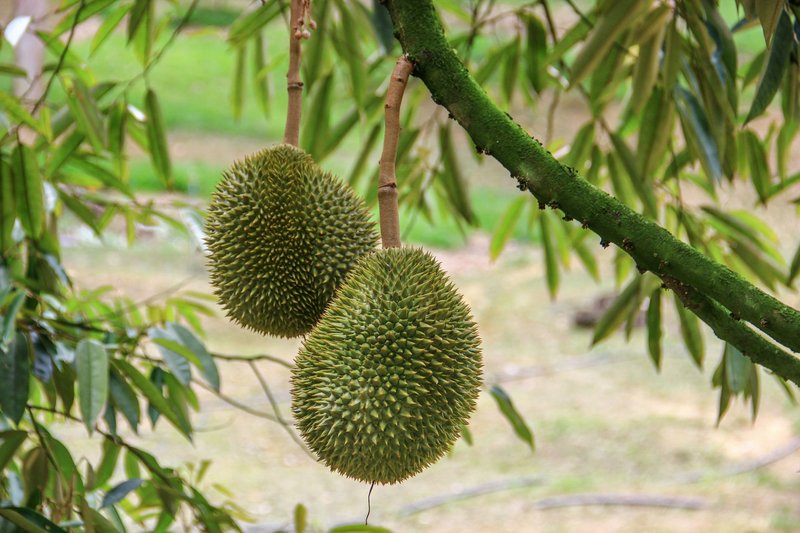
Durian has a custard texture and a smell that divides rooms. Many hotels ban it. The flavor sits somewhere between sweet almond cream and caramelized onion, and people tend to either love it immediately or not at all.
Buy it from a stall that will open it for you, and eat it there. If the smell is too much, the flesh is usually sold sealed in plastic boxes.
Watermelon (mak mo)
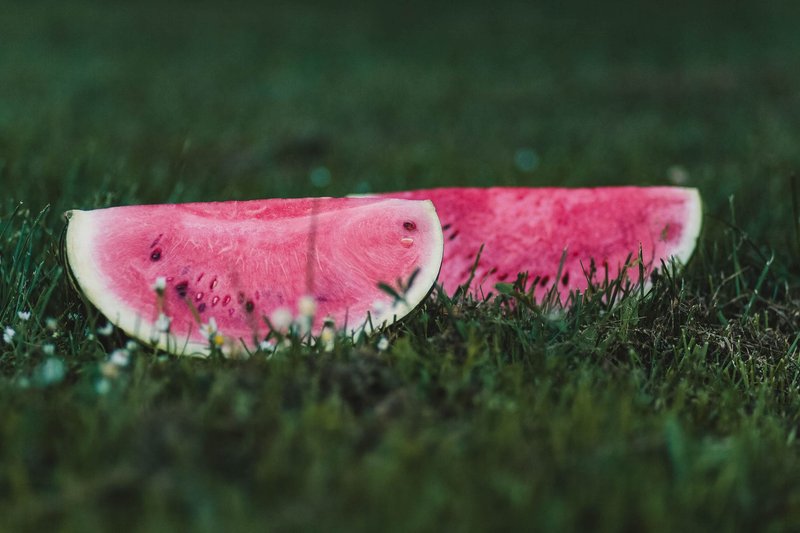
Watermelon is the dry-season thirst fix. Stalls along the roads and at the markets sell it by the slice, often chilled, and it’s the cheapest way to cool down in April. Choose one that feels heavy for its size with a yellowish patch where it sat on the ground.
Rainy Season Fruits (June to October)
The rains bring a long run of small fruits that you eat by the handful. This is the best season for anyone who likes to snack as they walk through a market.
Mangosteen (mang khut)
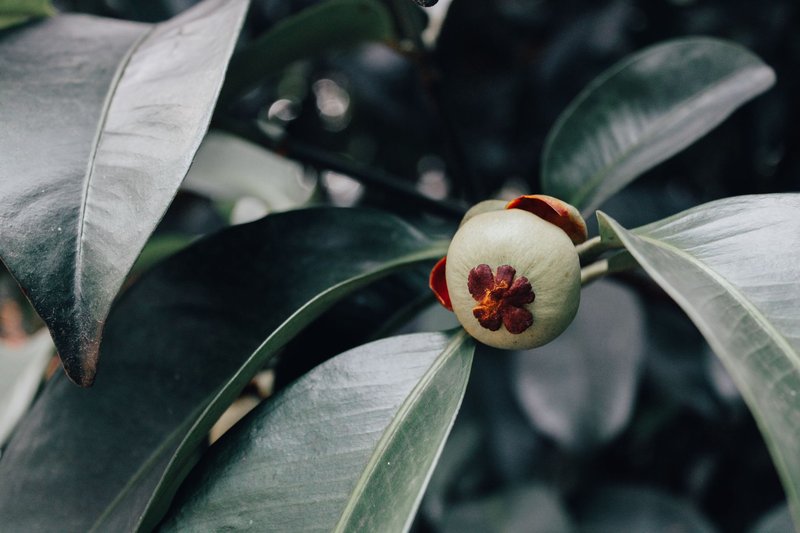
The mangosteen has a thick purple rind and five or six white segments inside that taste sweet and tart at once, like a mix of peach and citrus. Some people call it the queen of fruits, and the flesh justifies it.
Squeeze the fruit around its middle until the rind cracks, then pull the halves apart. Don’t let the purple juice touch your clothes, because it stains. A trick that works: the number of petals on the underside of the fruit matches the number of segments inside. The rind should give a little when pressed. If it’s rock hard, the fruit is old.
Lychee (lin chi)
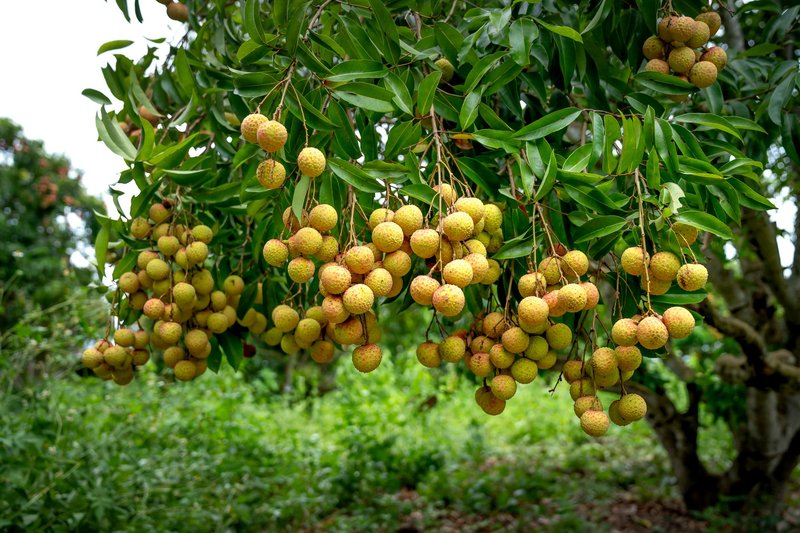
Lychee has a rough, pink-red skin that peels off with your thumbnail. Inside is a juicy, floral, grape-like flesh around a glossy brown seed. Don’t eat the seed.
Pick bunches with bright skin and no brown patches. Lychee goes off quickly in the heat, so eat it the day you buy it.
Longan (lam yai)
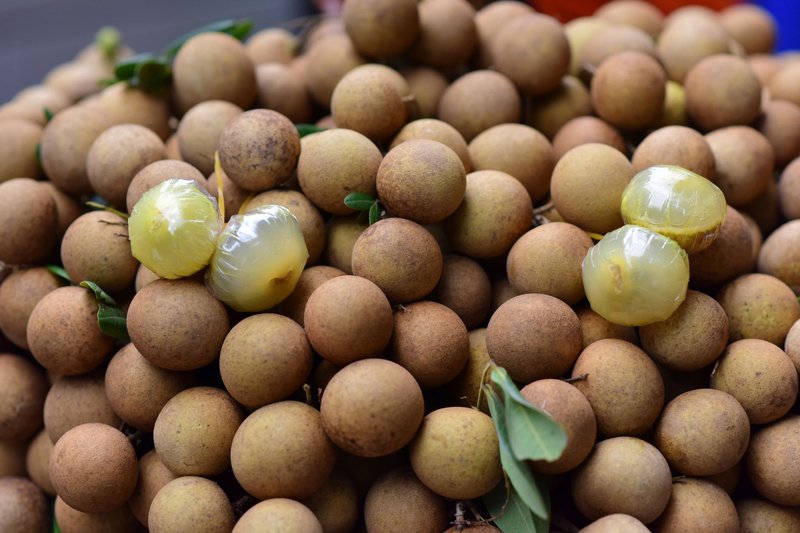
Longan’s name means “dragon eye” in Chinese, and cut one open and the black seed against the white flesh makes sense. It has a smooth tan shell, a crisp bite and a sweeter, muskier flavor than lychee.
Crack the shell with your thumbnail, pinch the fruit out and spit the seed. Buy it still on the stem, which keeps it fresher for a day or two.
Rambutan (mak ngo)
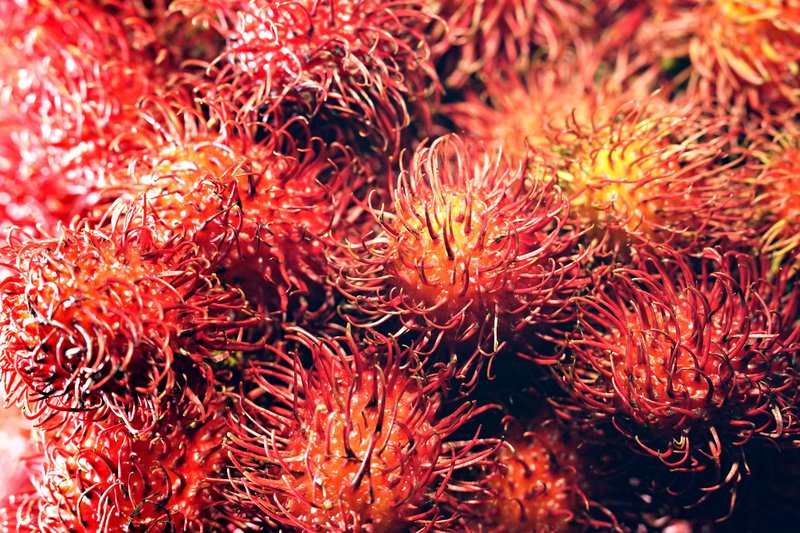
Rambutan looks like a small sea urchin and tastes like a milder, slightly creamier lychee. The soft hairs are red or yellow-green when fresh and turn black when old.
Slice the skin around the middle with a knife or thumbnail and squeeze the fruit out. If the flesh clings to the seed, the fruit is underripe.
Dragon Fruit (kaew mangkon)
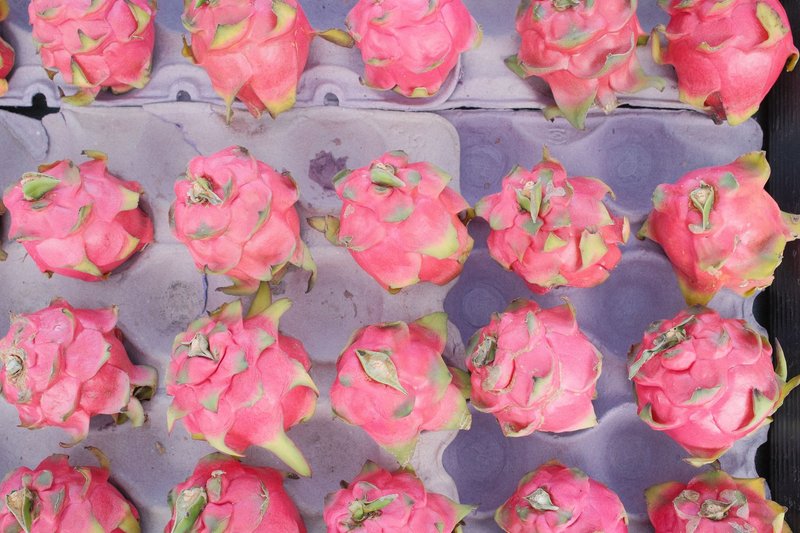
The pink skin and green scales look dramatic, but the taste is mild and slightly sweet, with a texture like a kiwi’s. The red-fleshed variety is sweeter than the white. The tiny black seeds are edible.
Pick one with bright skin and green wings. Brown, dried-out wings mean it’s been sitting. Chill it, cut it in half and scoop the flesh out with a spoon.
Cool Season Fruits (November to February)
When the mornings get cool, citrus takes over the market stalls.
Pomelo (som o)
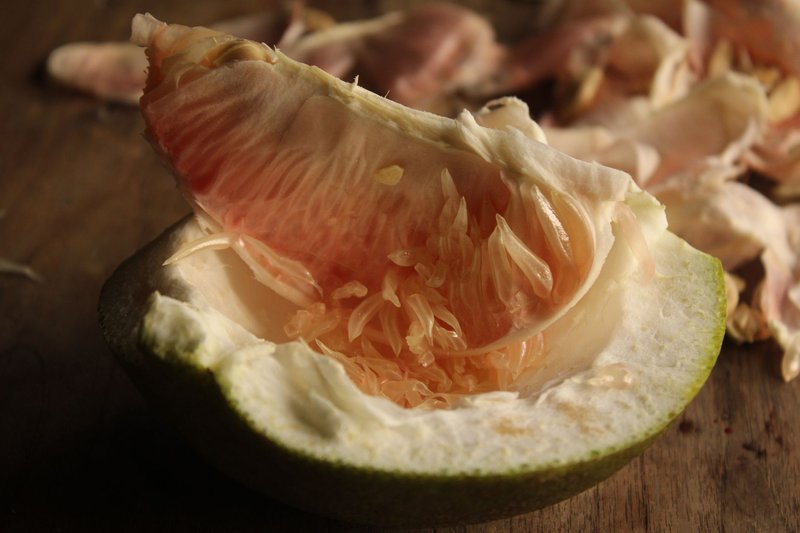
The pomelo is the largest citrus fruit, about the size of a bowling ball when it’s done. Peel the thick pith, split the segments, then strip the membrane from each one. The flesh is juicy and sweet, without the bitterness of grapefruit.
Choose one that feels heavy and smells fragrant at the base. The rough peel doesn’t matter. The pith is thick enough to protect the fruit for days.
Oranges and Tangerines (mak som)
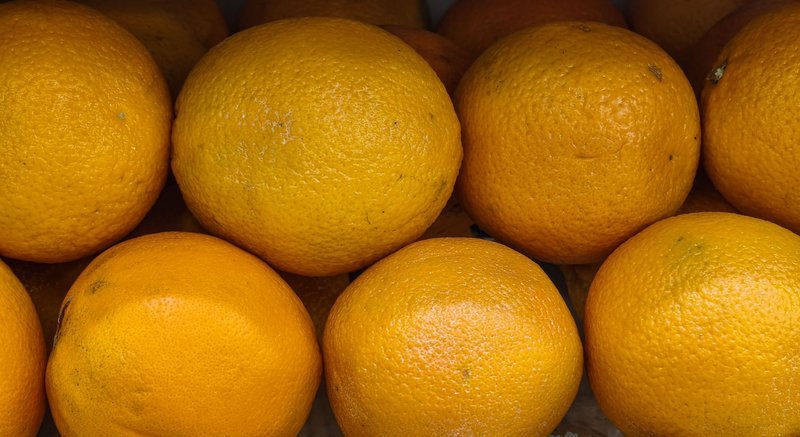
Don’t be thrown off by green skin. In tropical climates, oranges often stay green even when they’re ripe, because the cool nights that turn the rind orange are missing. The juice is sweet and the peel is thin.
Vendors will often peel them for you with a knife in a spiral and hand them over as a snack.
Sweet Tamarind (mak kham)
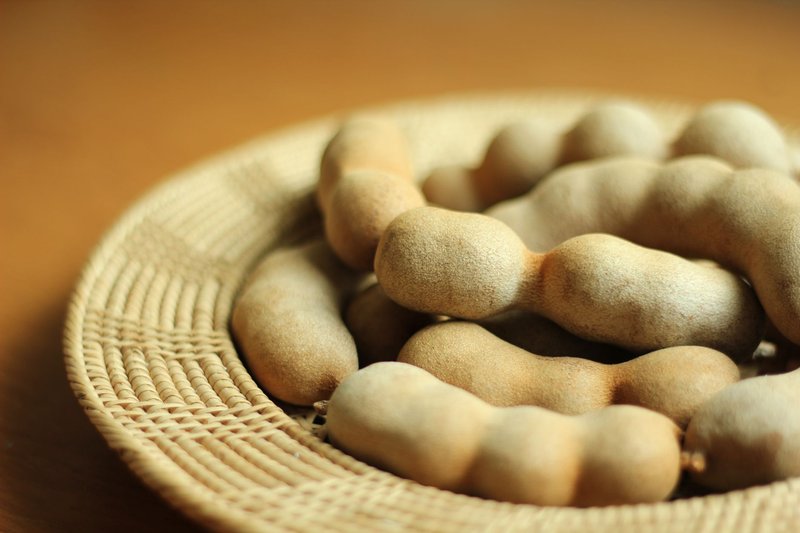
Sweet tamarind comes in brittle brown pods. Crack the shell, pull out the sticky brown pulp and suck it off the seeds. The taste is like a sweet-sour date, and it’s a good example of a fruit that you won’t find in most fruit bowls back home.
Year-Round Fruits
Papaya (mak hoong)
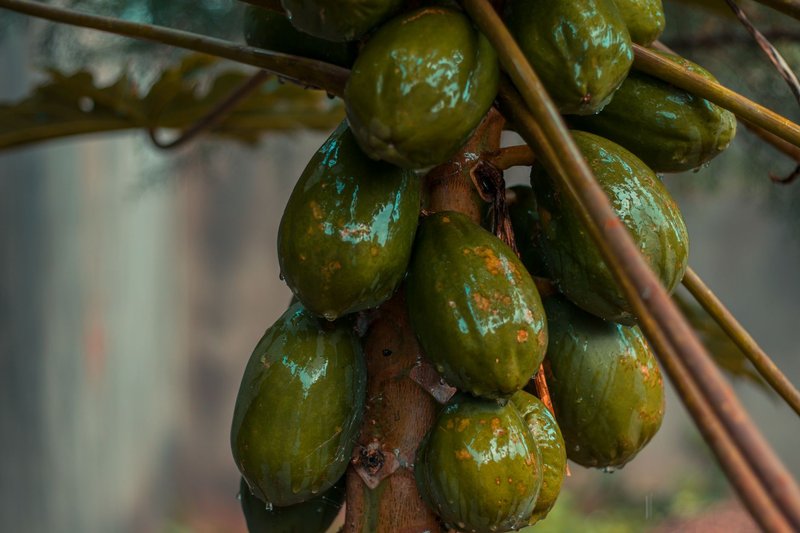
Ripe papaya has orange flesh and a soft, buttery texture. Squeeze a wedge of lime over it. The lime cuts the sweetness and fixes the faint musky smell that puts some people off.
Green papaya is a different food. Shredded and pounded with chili, garlic, lime and fish sauce, it becomes tam mak hoong, the Lao papaya salad, which is the unofficial national dish of the street market. Lao versions often include padaek, a fermented fish sauce, so the flavor is saltier and funkier than the Thai version.
Banana (mak kuai)
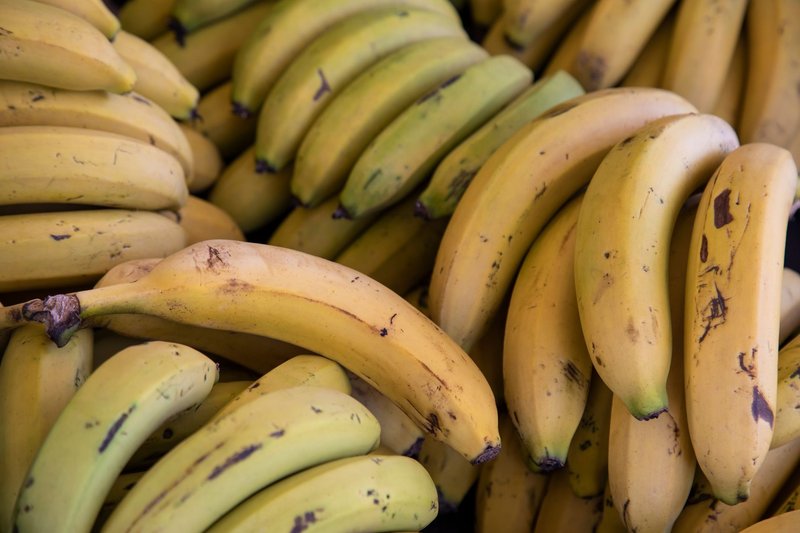
Laos grows several types of banana, and the small, thin-skinned ones are sweeter than the big supermarket kind. A ripe banana has dark freckles on the skin.
You’ll also find grilled bananas (kuai ping) on street corners, roasted over charcoal until the skin blackens and the flesh turns soft.
Pineapple (mak nat)
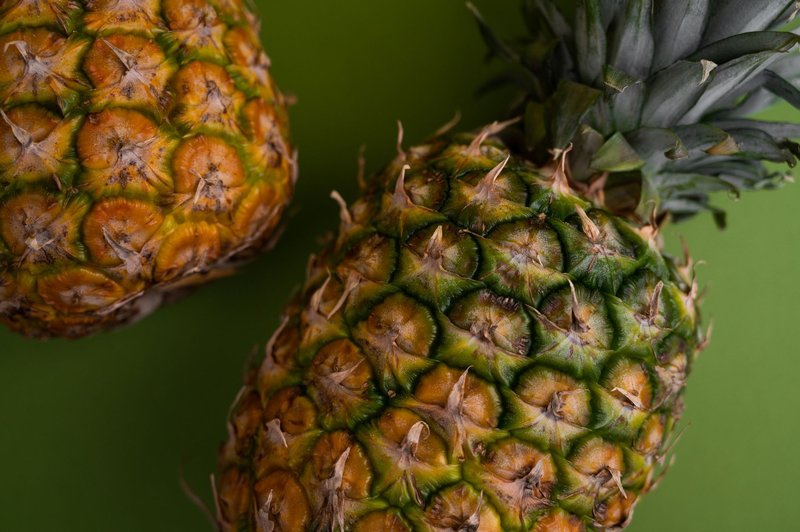
Vendors peel pineapple into spirals and skewer it on a stick, ready to eat. It’s sweet and acidic, and often served with a pinch of salt and chili sugar. A ripe pineapple smells sweet at the base and pulls a leaf from the crown with little effort.
Where to Buy Fruit and What It Costs
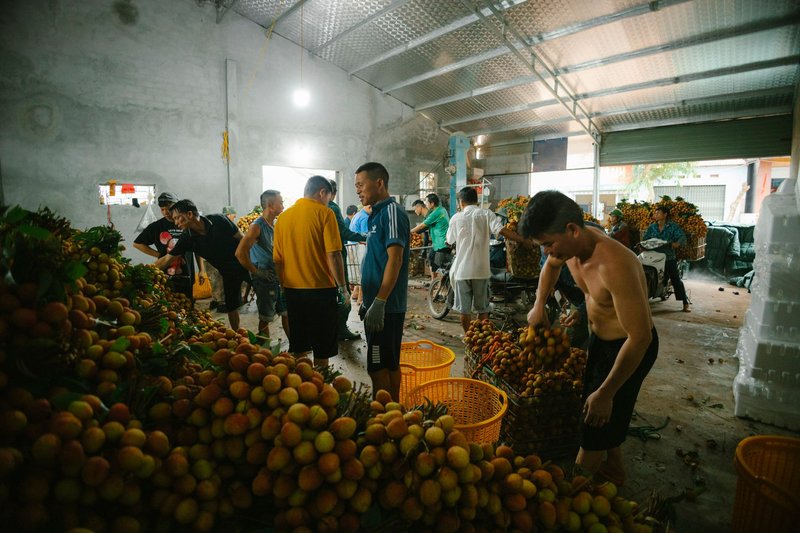
In Vientiane, Talat Sao (the Morning Market) and the markets around it have the biggest range. In Luang Prabang, the morning market near the center is the best place to see what’s in season, and the fruit shake stands near the night market will blend whatever’s ripe. In Pakse, the Dao Heuang market covers the south, including produce from the Bolaven Plateau.
Go early. The best fruit is on the tables before 8 a.m., and the prices rise as the day warms up.
Prices vary by season and by town, so treat these as rough guides. At local markets, bananas, papaya and pineapple tend to run about 5,000 to 15,000 kip per kilogram. Mango, lychee, longan, rambutan and dragon fruit usually fall in the 15,000 to 40,000 range in season. Mangosteen and durian cost more. Tourist areas charge more than neighborhood markets, and a polite bit of bargaining is normal. Check the current kip exchange rate before you go, since the currency has been moving.
Eating Fruit Safely in Laos
Fruit is one of the safest things you can eat in Laos if you follow one rule: peel it yourself, or eat it right after someone else does in front of you. The CDC’s travel food and water guidance recommends choosing food that’s cooked and served hot, or fruit and vegetables you’ve peeled yourself, and it’s a good rule for Laos too. Washing doesn’t help much if the water isn’t clean.
A few more habits help:
- Skip pre-cut fruit that’s been sitting out in the sun.
- Ask whether the ice in a fruit shake comes from a factory. Tube-shaped ice with a hole in the middle is commercial ice, and it’s usually fine.
- Carry hand sanitizer before you eat with your hands.
The WHO’s food safety fact sheet explains how contaminated food causes illness. The short version is that clean hands, clean water and peeling the skin do most of the work.
Then go find a market. The fruits of Laos are cheap, the vendors will let you taste, and the best way to learn the Lao names is to point at something and ask.