Table of Contents
- TLDR
- How many reptiles live in Iran?
- Why the numbers don’t match
- Lizards of Iran
- Snakes of Iran
- Turtles and tortoises
- The crocodile and the worm lizard
- Where to find reptiles in Iran, region by region
- Species at a glance
- Conservation
- Seeing them safely
TLDR
- Iran has about 241 reptile species: roughly 148 lizards, 79 snakes, 12 turtles and tortoises, one crocodile and one worm lizard.
- Around 23% (more than 50 species) are endemic, meaning they live in Iran and nowhere else.
- The dangerous snakes are mostly vipers, plus the Caspian cobra in the northeast. Most of the 79 snake species are harmless.
- The richest areas are the Zagros Mountains, the Alborz range, the Caspian forests, the central deserts and the Persian Gulf coast and islands.
- Counts vary by source because taxonomy keeps changing and new species keep being described.
How many reptiles live in Iran?
The answer is about 241 species, according to the Annotated Checklist of Amphibians and Reptiles of Iran, the most cited modern inventory of the country’s herpetofauna. That is a lot of reptiles for a country that most people picture as one big plateau of dust and mountains.
The breakdown looks like this:
| Group | Approx. species |
|---|---|
| Lizards (geckos, agamas, monitors, skinks, lacertids and others) | 148 |
| Snakes | 79 |
| Turtles and tortoises | 12 |
| Crocodilians | 1 |
| Worm lizards | 1 |
About 23% of them are endemic, which works out to somewhere around 55 species. Roughly 17 are listed as threatened.
The reason is geography. Iran sits where the Mediterranean, Central Asian, Indian and Arabian faunas meet, and its terrain runs from below sea level on the Caspian shore to peaks over 5,000 meters. Mountain ranges act as islands: a gecko population stuck in one Zagros valley stays there, drifts away from its neighbors, and eventually becomes its own species. Add isolated desert basins and you get a country that keeps producing reptiles that science hasn’t catalogued yet.
Why the numbers don’t match
Search for “reptiles of Iran” and you’ll see 241 in one place, a slightly different figure in another, and a Wikipedia category with only about 71 species pages. None of them is wrong. They count different things.
- Taxonomy moves. A species split into three after DNA work turns one entry into three. A merger does the opposite.
- New descriptions. Iranian herpetologists keep naming new species, especially geckos and mountain vipers, so a checklist from 2015 is already behind.
- Inclusion rules. Some lists count marine turtles and sea snakes from Iranian waters. Others only count land and freshwater animals.
- Wikipedia is not a checklist. Its category page only counts species that happen to have an article.
So treat 241 as the working figure, and expect it to creep upward.
Lizards of Iran
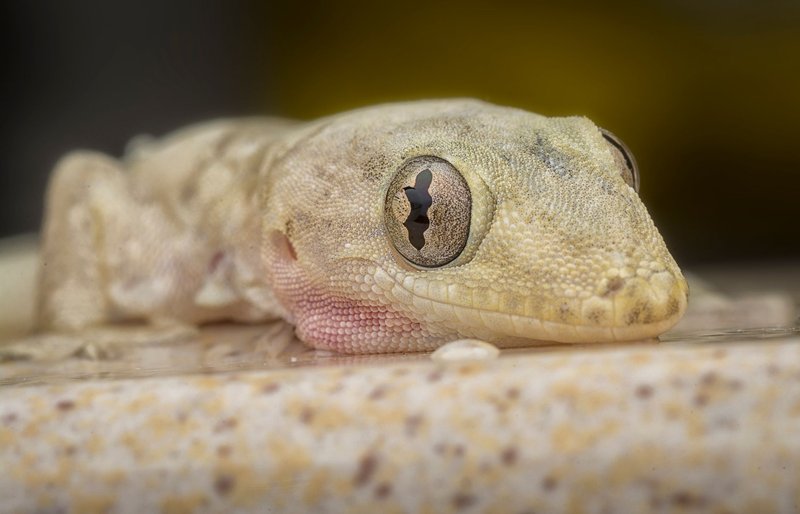
Lizards make up about 60% of the fauna, and geckos, agamas, lacertids and skinks do most of the work. A few stand out.
Desert monitor (Varanus griseus). The biggest lizard in the country, reaching about 1.2 meters. It hunts across the central and eastern deserts, eating rodents, other lizards, eggs and the occasional snake. It tastes the air with a forked tongue like a snake and will dig out prey from burrows. Not venomous in any way that matters to a person.
Spiny-tailed lizard (Uromastyx asmussi). A stocky, plant-eating lizard of the southern stony plains, with a thick tail covered in rings of spikes. It lives in burrows and uses the tail as a plug against predators. It is also a target of the pet trade, which is one reason it gets conservation attention.
Eublepharis angramainyu. A relative of the pet-trade leopard gecko, found in the Zagros foothills in the west and southwest. Like its cousin it has real eyelids, which most geckos lack. The species name comes from Angra Mainyu, the destructive spirit of Zoroastrian tradition, which tells you what locals once thought of a banded, pale-skinned creature coming out of a rock crack at dusk. It is harmless.
Zagros leaf-toed geckos (Asaccus). A group of small geckos tied to limestone cliffs and caves in the Zagros. Several species are endemic to Iran, and some were only described in the 2000s and 2010s. Each lives in a narrow stretch of rock, which is exactly why they’re hard to protect.
Toad-headed agamas (Phrynocephalus). Small desert lizards that vanish into loose sand by shimmying their bodies sideways. When alarmed they curl their tails and flash the underside. Several species occur across the sandy basins of the east and center.
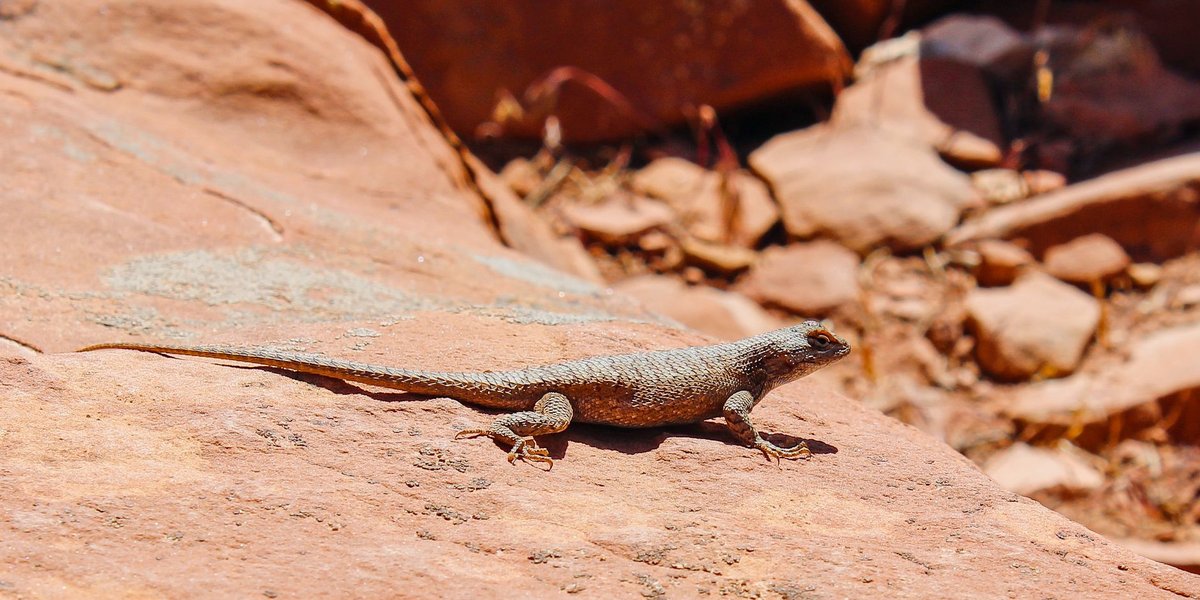
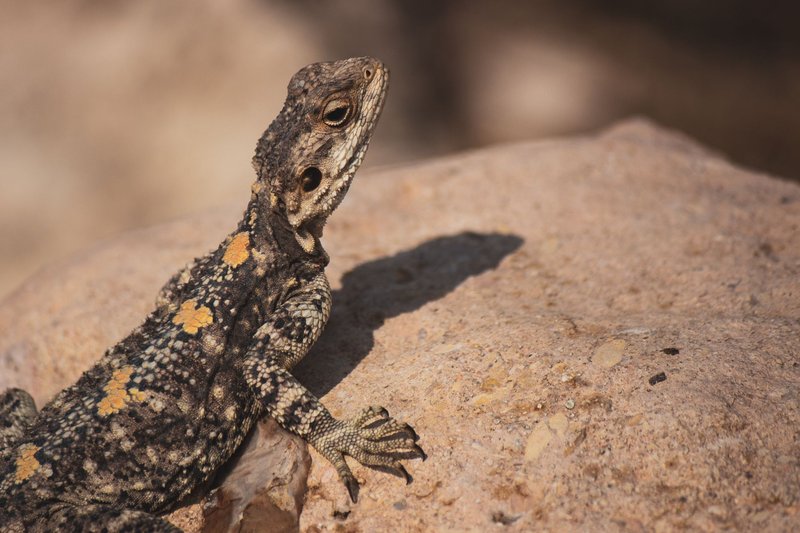
Caucasian agama (Paralaudakia caucasia). A big, flat-bodied rock agama common on boulders and ruins from the Zagros to the Alborz. You can often see males on a sunny wall, bobbing their heads at rivals. This is the lizard most visitors see on hillside hikes.
Rough bent-toed gecko (Cyrtopodion scabrum) and its relatives. The geckos that turn up on walls near lights at night in southern towns. Always a good sign that the insects are doing fine.
Snakes of Iran
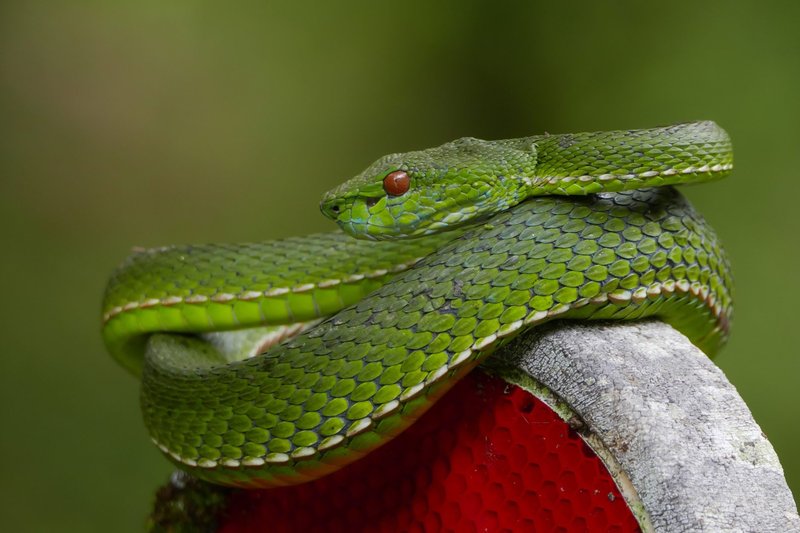
Iran has about 79 snake species, and the great majority pose no danger to people. The ones that do are mainly vipers, with one cobra and the sea snakes as outliers.
The venomous ones
Levantine viper (Macrovipera lebetinus). A thick-bodied, well over a meter long, with heavy blotched patterns that blend into rocky slopes. It is one of the large vipers of the Zagros and Alborz foothills and the neighboring semi-arid steppe, and a significant cause of serious bites.
Saw-scaled vipers (Echis). Small, quick and irritable. When threatened they rub their keeled scales together to make a rasping sound. In the southeast they’re among the snakes responsible for the most envenomations. The World Health Organization counts snakebite envenoming as a neglected tropical disease, and vipers like these are why.
Persian horned viper (Pseudocerastes persicus). Around a meter long, with raised scales over the eyes that look like horns. It lives in rocky desert and mountain country. Its tail tip is used as a lure, wiggling to draw in birds.
Latifi’s viper (Montivipera latifii). An Iranian endemic from the Lar Valley in the Alborz, a mountain viper that spends much of the year in a narrow, high-altitude range. It’s among the best-known of Iran’s endemic snakes.
Caspian cobra (Naja oxiana). Iran’s cobra, found in the northeast and the Kopet Dag range along the Turkmenistan border. It reaches about 1.5 meters and flares a hood when threatened. It is a mountain and foothill species, not a desert one.
Sea snakes. Several species of Hydrophis swim in the Persian Gulf and Gulf of Oman. They are venomous but very rarely bite, and most contact with people happens when fishermen pull them up in nets.
The harmless majority
Dice snake (Natrix tessellata). A water snake that hunts fish and frogs in rivers, ponds and the Caspian lowlands. It hisses, bluffs and smells awful when handled, but it won’t hurt you.
Sand boas (Eryx). Short, blunt-tailed snakes that burrow in sandy soil with only their eyes sticking out. They ambush lizards that walk past.
Diadem snake (Spalerosophis diadema). A large, fast, patterned snake of dry country that looks fearsome and isn’t dangerous.
Turtles and tortoises
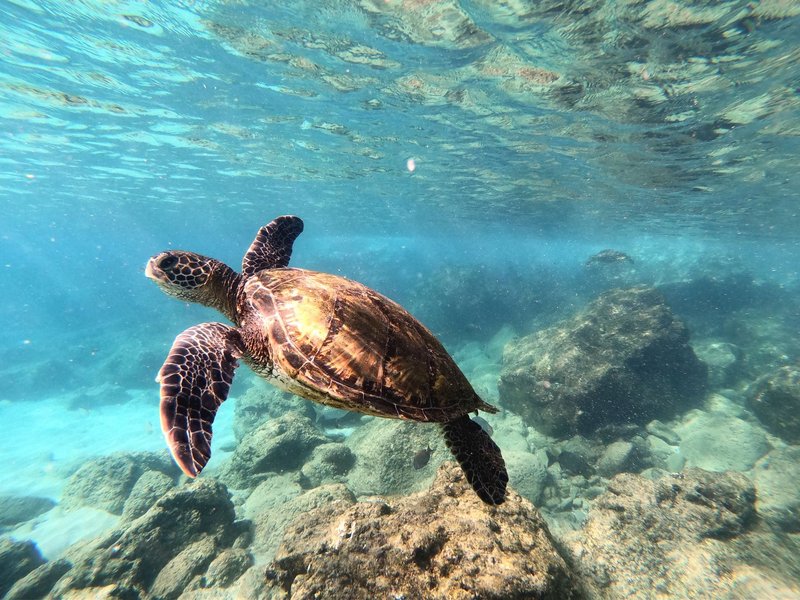
The 12 turtle and tortoise species split across three habitats.
On land. The Greek tortoise (Testudo graeca) is the widespread one, found in dry hills and scrub in much of the country. Horsfield’s tortoise (Testudo horsfieldii) lives in the northeast near the border with Turkmenistan and Afghanistan and spends the hot summer underground.
In fresh water. The Caspian pond turtle (Mauremys caspica) is the common terrapin of rivers, ponds and rice paddies. Then there is the Euphrates softshell turtle (Rafetus euphraticus), a large, flat-headed turtle of the Karun and Dez river systems in Khuzestan. It’s one of the more threatened turtles in the region, hit by dams, pollution and fishing nets.
At sea. Several sea turtles pass through the Persian Gulf and Gulf of Oman. Hawksbills nest on Gulf islands, including Qeshm and Hormuz, in the warm months, which makes them a real reason to visit the coast.
The crocodile and the worm lizard
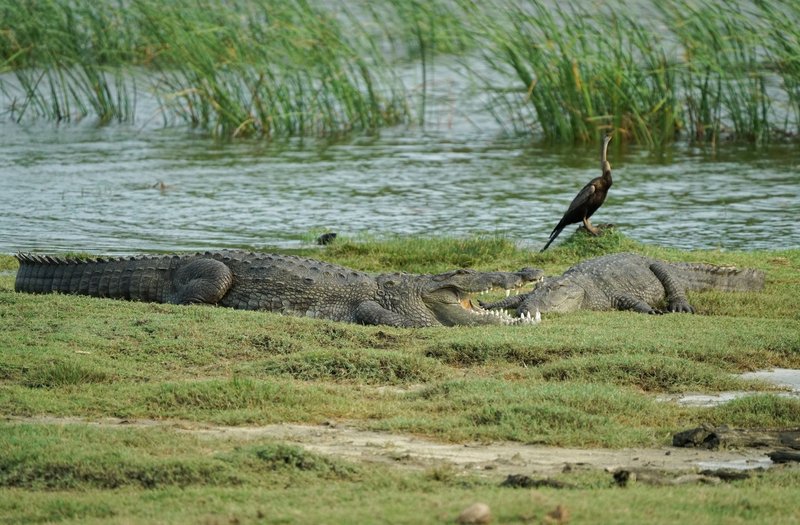
Mugger crocodile (Crocodylus palustris). Iran’s only crocodilian, called gando in Baluchi. It lives at the western edge of the species’ range in the rivers and rain-fed pools of Sistan and Baluchestan, such as the Bahu Kalat and Sarbaz drainage in the southeast. Iranian adults tend to stay smaller than those of India, usually under 3 meters, and the animals survive the dry season by living in seasonal pools and burrows. The population is small, a few hundred animals at most. The species is listed as Vulnerable on the IUCN Red List.
Zarudny’s worm lizard (Diplometopon zarudnyi). A pink, limbless, burrowing reptile that looks like a worm until you notice the scales. It lives in the sandy soils of the southwest and the Gulf coast, and spends nearly its whole life beneath the surface. It’s the only worm lizard in Iran, and few visitors will ever see one.
Where to find reptiles in Iran, region by region
Zagros Mountains. The center of Iranian reptile diversity. The limestone cliffs of Lorestan, Fars and Kohgiluyeh are home to Asaccus geckos, rock agamas, and vipers like the Levantine and the Persian horned. The foothills of Khuzestan and Ilam are good for the leopard-gecko relative Eublepharis angramainyu.
Alborz range. The best-known endemic is Latifi’s viper in the Lar Valley, near Mount Damavand. Higher, cooler slopes also have rock lizards and mountain vipers.
Caspian (Hyrcanian) forests. Humid, green and unlike most of Iran. The Hyrcanian forests are a UNESCO World Heritage Site, and they shelter water snakes, Caspian pond turtles and rock lizards of the genus Darevskia. Expect damp leaf litter, not sand.
Central deserts and the Dasht-e Lut. The Lut Desert is a World Heritage Site with some of the hottest ground surface temperatures ever measured. Reptiles here avoid the heat: desert monitors forage at dawn and dusk, toad-headed agamas bury themselves in sand, and sand boas wait below the surface. For the wider cast of desert species, a list of 45 desert reptiles covers lengths, ranges and venom status.
Persian Gulf islands. Qeshm, a UNESCO Global Geopark, and nearby Hormuz and Hengam have nesting hawksbill turtles, geckos on cliffs and ruins, and sea snakes offshore.
Southeast (Sistan and Baluchestan). The only place in the country where you could meet a wild mugger crocodile, and a good area for saw-scaled vipers and spiny-tailed lizards.
Species at a glance
| Species | Group | Where | Venomous? |
|---|---|---|---|
| Desert monitor (Varanus griseus) | Lizard | Central and eastern deserts | No |
| Spiny-tailed lizard (Uromastyx asmussi) | Lizard | Southern stony plains | No |
| Eublepharis angramainyu | Lizard | Zagros foothills | No |
| Asaccus leaf-toed geckos | Lizard | Zagros cliffs and caves | No |
| Caucasian agama (Paralaudakia caucasia) | Lizard | Zagros to Alborz | No |
| Levantine viper (Macrovipera lebetinus) | Snake | Zagros, Alborz foothills | Yes, dangerous |
| Saw-scaled viper (Echis) | Snake | South and southeast | Yes, dangerous |
| Persian horned viper (Pseudocerastes persicus) | Snake | Rocky deserts, Zagros | Yes |
| Latifi’s viper (Montivipera latifii) | Snake | Alborz (Lar Valley) | Yes |
| Caspian cobra (Naja oxiana) | Snake | Northeast, Kopet Dag | Yes, dangerous |
| Dice snake (Natrix tessellata) | Snake | Rivers, Caspian lowlands | No |
| Greek tortoise (Testudo graeca) | Tortoise | Dry hills, much of the country | No |
| Caspian pond turtle (Mauremys caspica) | Turtle | Rivers and ponds | No |
| Euphrates softshell turtle (Rafetus euphraticus) | Turtle | Karun and Dez rivers | No |
| Mugger crocodile (Crocodylus palustris) | Crocodilian | Sistan and Baluchestan | Not venomous, can be dangerous |
| Zarudny’s worm lizard (Diplometopon zarudnyi) | Worm lizard | Southwest and Gulf coast | No |
Conservation
About 17 Iranian reptiles are listed as threatened, and the pressures are the usual ones plus a few local ones.
- Water. The Euphrates softshell turtle and the mugger crocodile both depend on rivers and seasonal pools. Dams, drought and groundwater pumping take those away.
- Narrow ranges. Endemic geckos and mountain vipers occupy a single valley or ridge. A road, a quarry or a bad fire season can remove most of a species.
- Persecution. Many people kill any snake on sight, including the harmless ones. That includes the dice snake and the sand boas.
- Collection. Spiny-tailed lizards and some geckos are taken for the pet trade.
- Gulf coast development. Nesting beaches for hawksbills are squeezed by construction and lighting.
The mugger crocodile is the best-known conservation case, because a few hundred animals in the southeast hold the entire Iranian population.
Seeing them safely
Most of what you’ll find on a trip is a lizard on a wall. A few habits keep the other encounters safe.
- Watch where you put your hands and feet in rocky country, especially near dusk when vipers are active.
- Don’t pick up any snake, even a dead one, unless you’ve confirmed what it is.
- Keep your distance from crocodiles in the southeast, and don’t swim in pools where they live.
- Look at turtle nests from a distance. Hawksbills are sensitive to lights and noise on the beach.
Snakebite is a medical emergency anywhere. Go to a hospital right away and don’t cut the wound or try to suck out venom. Iran produces its own antivenom, at the Razi Vaccine and Serum Research Institute.
The reptiles of Iran are a bigger and stranger group than most people expect: a country where a cobra, a crocodile, a worm lizard and a gecko named after a Zoroastrian demon all share a map. And with new species still being described, 241 will not be the final count.