Italy’s native animals are the species that reached the peninsula on their own, or evolved there, before people started moving wildlife around. That’s a shorter list than most “animals of Italy” posts suggest. Monk parakeets, red swamp crayfish and Finlayson’s squirrels all live in Italy now, and none of them belong to it.
This guide keeps to species with a real claim to the country, sorted by group. One term matters throughout: endemic means found only in Italy (or, in a few cases, only on one of its islands). Italy has a lot of endemics for a European country, mostly because the Apennines and the islands kept populations isolated for a long time.
Contents
- Native, endemic, introduced, extinct: the difference
- Native mammals of Italy
- Birds
- Reptiles and amphibians
- Freshwater and marine life
- Animals wrongly called native to Italy
- Where to see Italy’s wildlife
Native, endemic, introduced, extinct: the difference
Four labels get mixed together in Italian wildlife lists, and the mix-up is why so many of them are wrong.
- Native: arrived naturally or evolved there. The red squirrel is native. The Alpine ibex is native.
- Endemic: native and found nowhere else. The Marsican brown bear and the Sicilian pond turtle qualify. A full list of endemics is in The Complete List of Animals Only Found in Italy.
- Introduced: brought in by people, deliberately or by accident. The grey squirrel and the red swamp crayfish.
- Extinct: once native, now gone. The Sicilian wolf, the Sardinian pika and the Sicilian dwarf elephant all belong here.
Conservation status below follows the IUCN Red List, the standard international reference. Where a status is uncertain or varies by population, the entry says so instead of guessing. For a wider view of threatened species, see Endangered Species in Italy: The Complete List.
Native mammals of Italy
1. Marsican brown bear
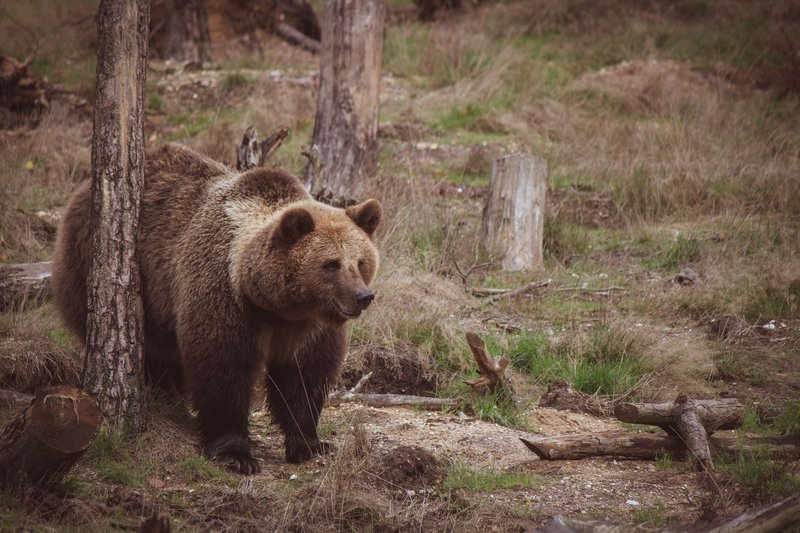
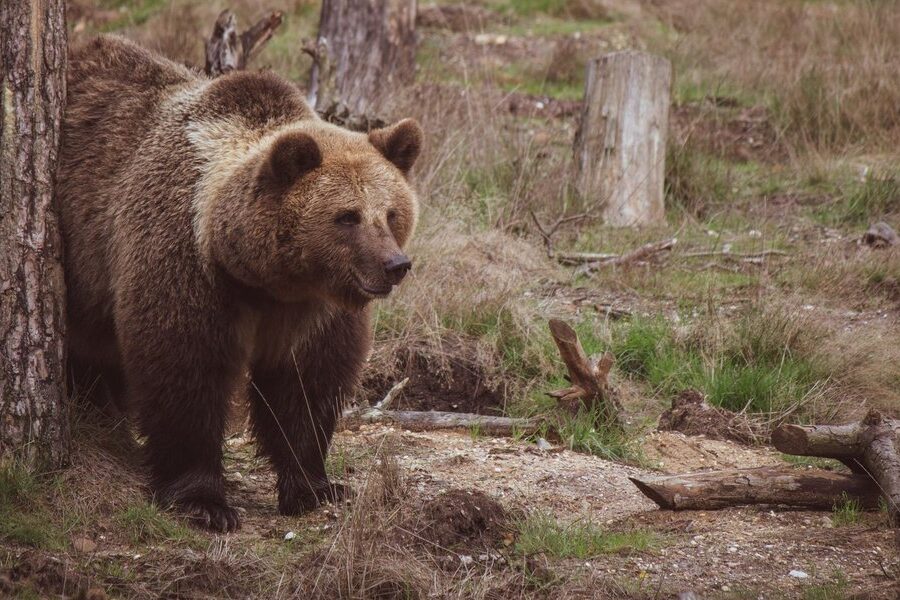
The Marsican brown bear is a subspecies found only in the central Apennines, mainly in and around Abruzzo, Lazio and Molise National Park. Fewer than 60 animals remain. It’s Critically Endangered, and it’s the single most fragile large mammal in Western Europe.
It’s also unusually docile. Marsican bears have almost no record of attacking people, which locals credit to centuries of living among villages and sheep in hills too small to avoid humans.
2. Italian wolf
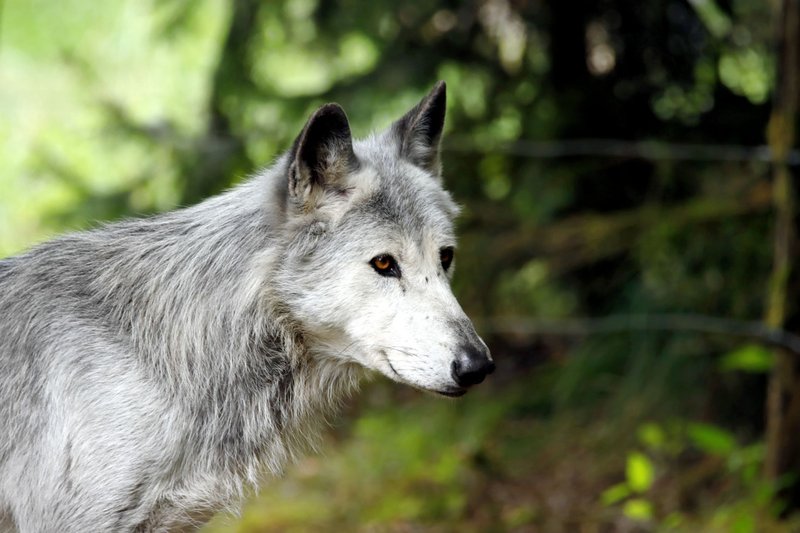
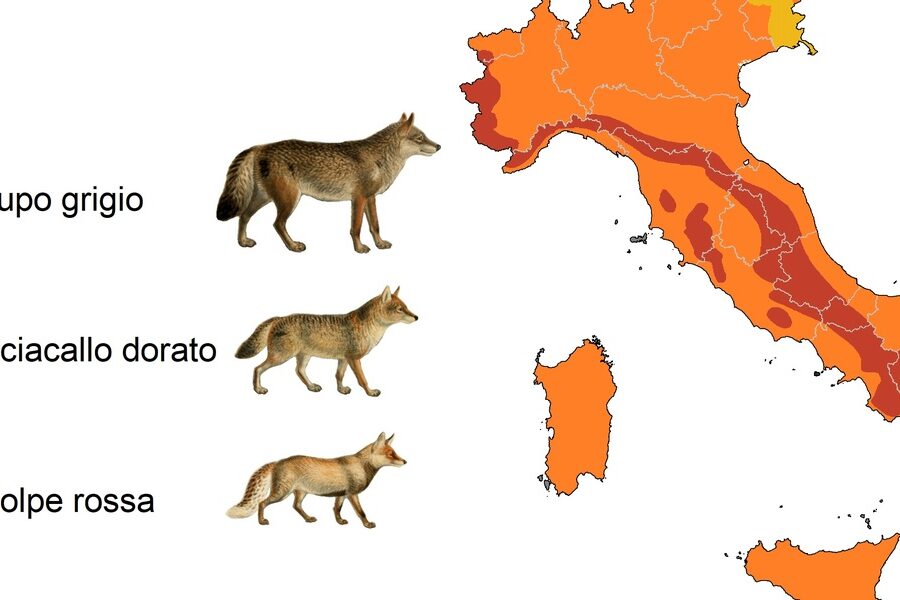
The Italian wolf (Canis lupus italicus) is the Apennine subspecies, and its comeback is one of Europe’s better conservation stories. Hunting was banned in 1971, when fewer than 100 wolves were left. Today the population is in the low thousands and has spread north through the Alps and into France, where wolves from Italy turned up in 1992.
It’s smaller than the northern wolves you see in documentaries, with a rust-grey coat and a dark stripe down the front of each foreleg.
3. Alpine ibex
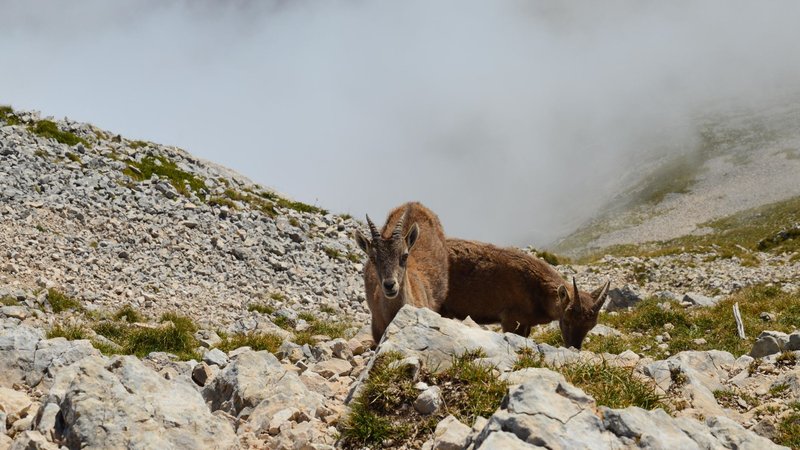
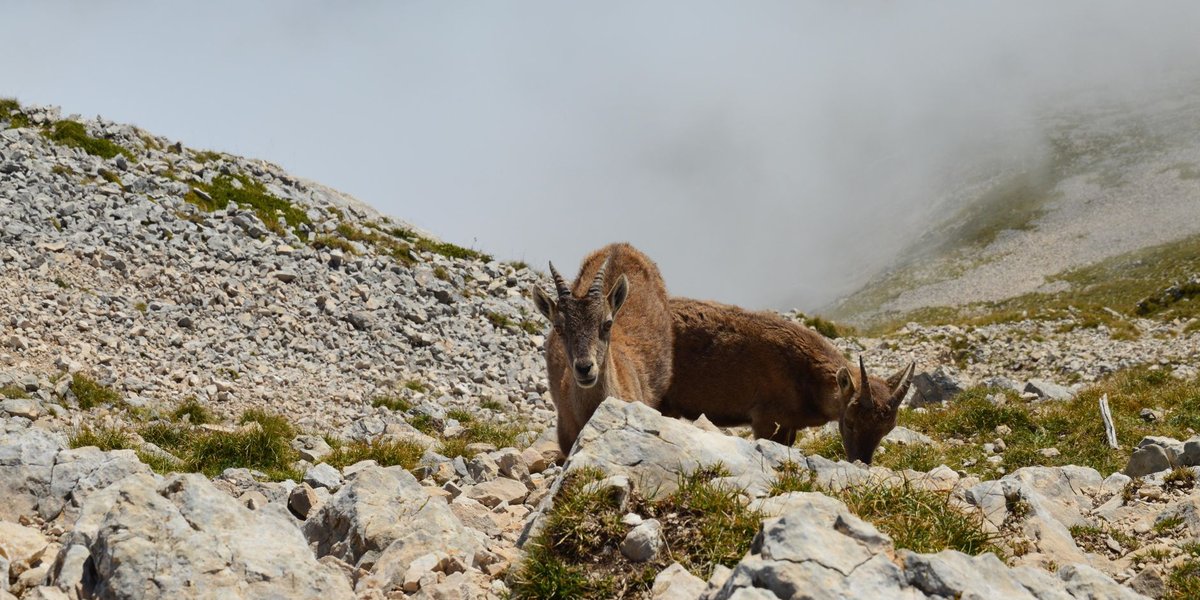
By the early 1800s hunters had reduced the Alpine ibex to fewer than 100 animals, all in the Gran Paradiso massif. Everything alive today, from Italy to Switzerland to Slovenia, descends from that remnant plus later reintroductions. Males carry horns up to a meter long and spend summers above the treeline, climbing slopes that look vertical.
4. Chamois
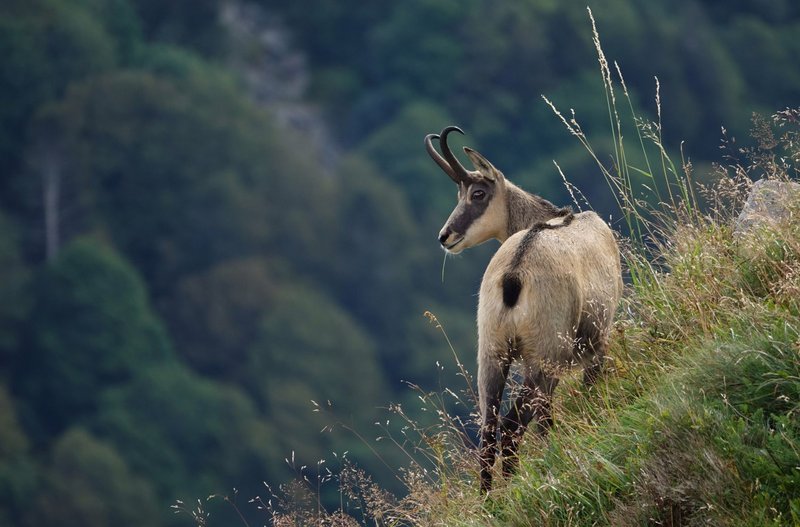
Italy has two chamois species. The Alpine chamois lives across the northern mountains. The Apennine chamois (Rupicapra pyrenaica ornata) lives only in the central Apennines, where it was pushed down to a few dozen animals in the early twentieth century. Reintroductions into Gran Sasso, Majella and the Sibillini have rebuilt it into several separate populations.
Both have the hooked horns, but the Apennine animal is darker in winter and has a clearly paler face.
5. Alpine marmot
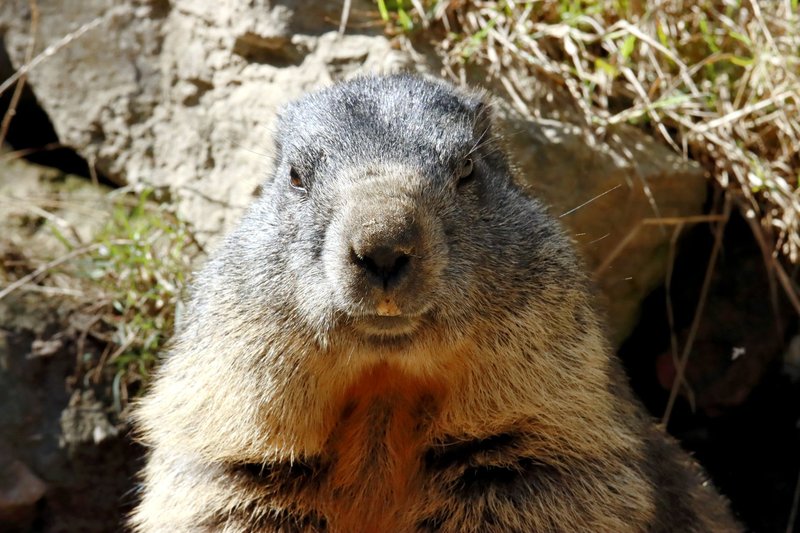
Marmots hibernate for six to seven months, packed into burrows with up to a dozen family members who share body heat. In summer they’re easy to find. They sit on rocks above the treeline, and when a golden eagle passes, one of them whistles loud enough to carry across a valley. You’ll hear the alarm call before you spot the animal.
6. Crested porcupine
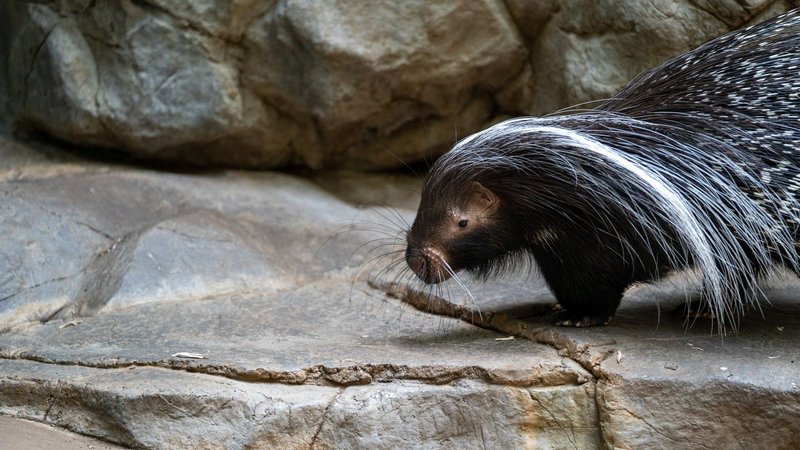
The crested porcupine is Italy’s strangest mammal and its native status is debated. Some researchers argue it arrived on its own from North Africa. Others think the Romans brought it as food. Either way, Italy holds the only established wild population in mainland Europe. It’s nocturnal, sheds quills up to 30 cm long, and rattles them as a warning before it charges backward.
7. Red squirrel
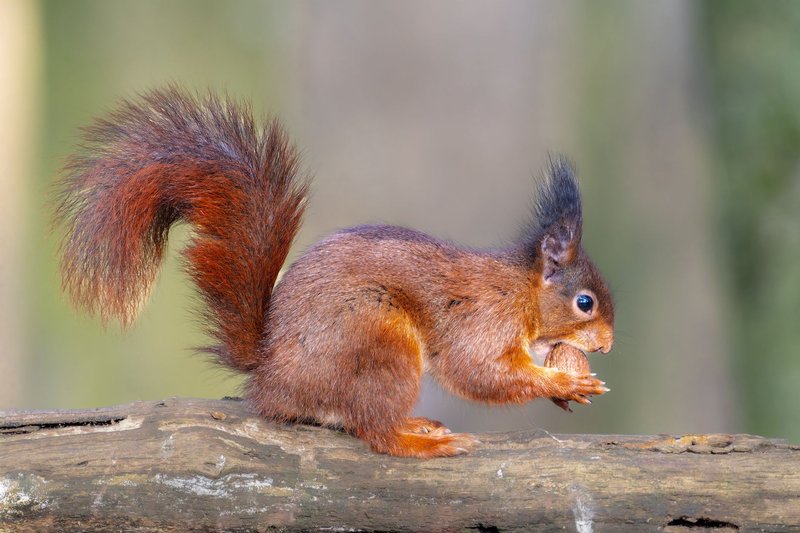
The red squirrel (Sciurus vulgaris) is a true native, found in woodland from the Alps down through the Apennines. It’s also under pressure. Eastern grey squirrels, introduced in Piedmont in 1948, outcompete it for food and carry a virus that kills reds. Italian researchers have warned that greys could spread through the Alps into the rest of Europe.
8. Etruscan shrew
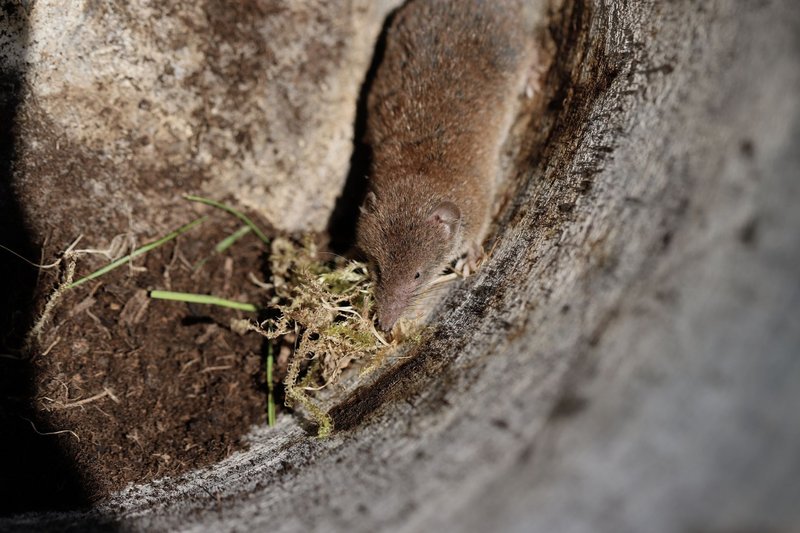
The Etruscan shrew (Suncus etruscus) weighs about 1.8 grams, which makes it one of the smallest mammals on Earth by mass. Its heart beats around 1,500 times a minute. It eats close to its own body weight in insects every day because it can’t last more than a few hours without food. It lives across the Mediterranean, and it was first described from Tuscany, which explains the name.
Birds
9. Italian sparrow
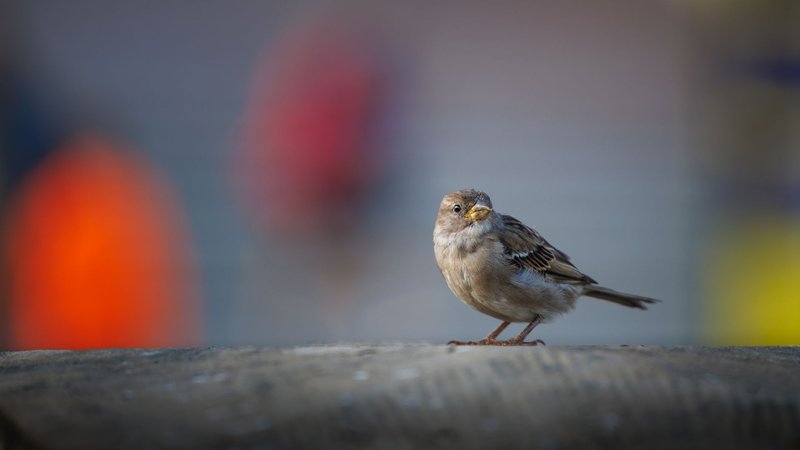
The Italian sparrow (Passer italiae) is a hybrid species. Thousands of years ago, house sparrows and Spanish sparrows interbred in the Mediterranean, and the offspring settled into a stable species of their own. Males have a chestnut crown that the house sparrow lacks. It’s native to Italy and a few neighboring areas, and its numbers have been falling for decades.
10. Bearded vulture
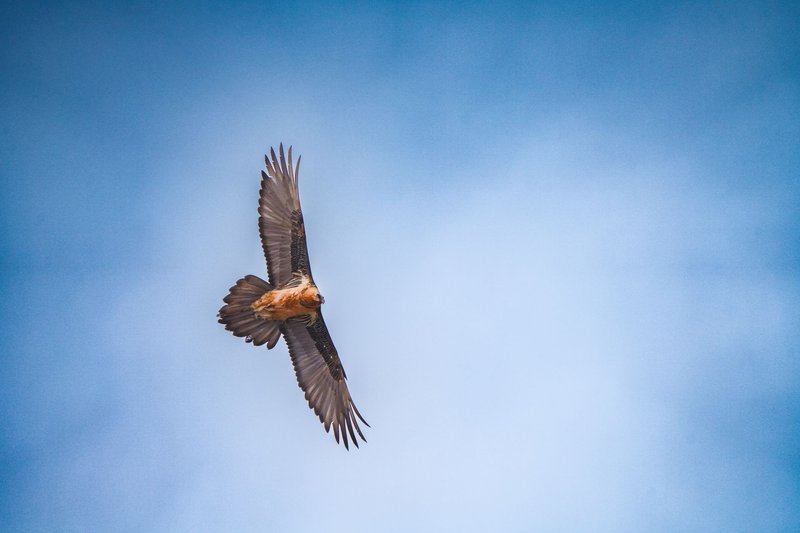
The bearded vulture eats bone. It carries large bones high into the air, drops them on rocks, and swallows the splinters and marrow. Wingspans reach about 2.8 meters. Hunting wiped it out of the Alps by the early twentieth century, with the last Italian bird shot in 1913. A reintroduction program that began in 1986 has put it back over the Alpine arc.
11. Greater flamingo
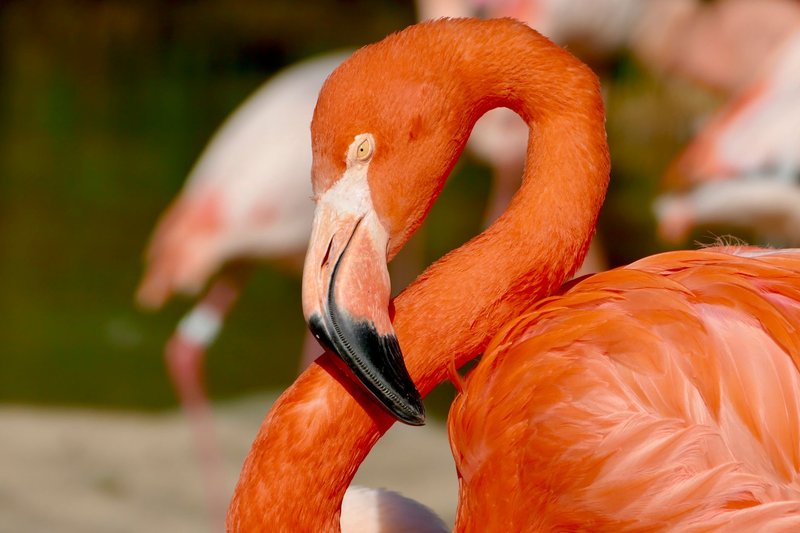
Flamingos are not a tropical-only animal. Greater flamingos breed on Italian lagoons and salt pans, with notable colonies in Sardinia near Cagliari, in Sicily and in Puglia. The Cagliari birds feed on brine shrimp within sight of the city.
Reptiles and amphibians
12. Italian wall lizard
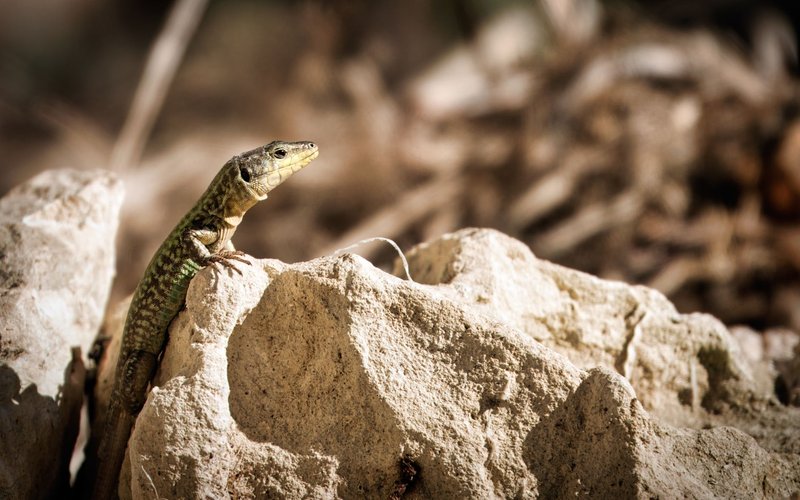
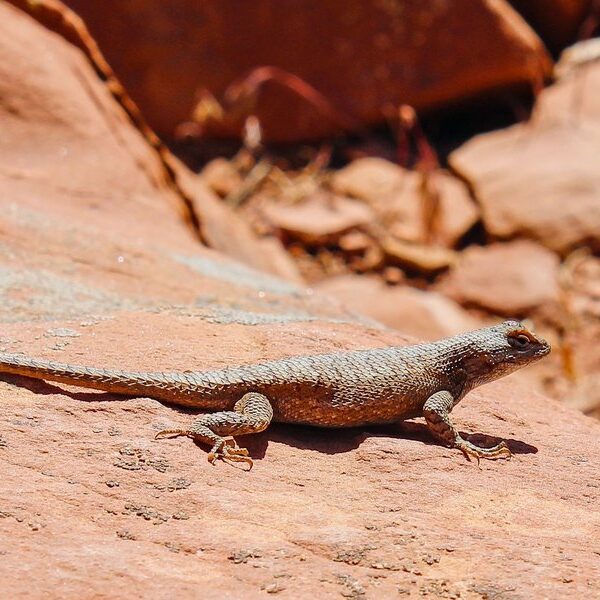
Podarcis siculus is the lizard on every sunny stone wall from Liguria to Sicily. Island populations have split into dozens of local forms, some with striking blue or black coloring. It’s native to Italy and invasive in Spain and parts of the United States.
13. Sicilian pond turtle

The Sicilian pond turtle (Emys trinacris) is endemic to Sicily. It was recognized as its own species only in 2005, after genetic work separated it from the European pond turtle on the mainland. Wetland drainage and invasive turtles have pushed it toward Endangered status.
14. Spectacled salamander
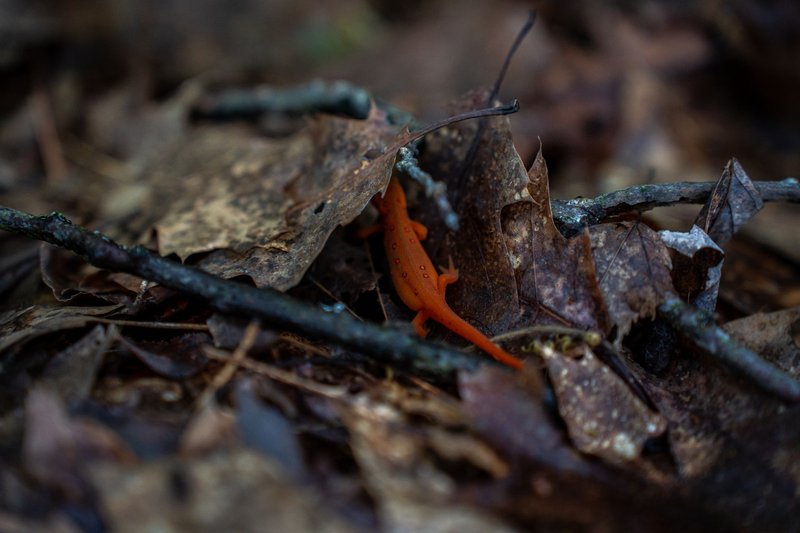
Italy has two spectacled salamanders, one in the northern Apennines (Salamandrina perspicillata) and one in the south (S. terdigitata). Both are endemic. They’re small, dark brown above, with a pale spot between the eyes that gives the “spectacles” name. When threatened, they arch the tail and show a bright red underside.
15. Apennine yellow-bellied toad
This toad (Bombina pachypus) is endemic to the Italian peninsula. It has a black-and-yellow belly that it flashes by arching its back. It’s Endangered, with populations collapsing since the 1990s because of habitat loss and chytrid fungus.
16. Italian crested newt
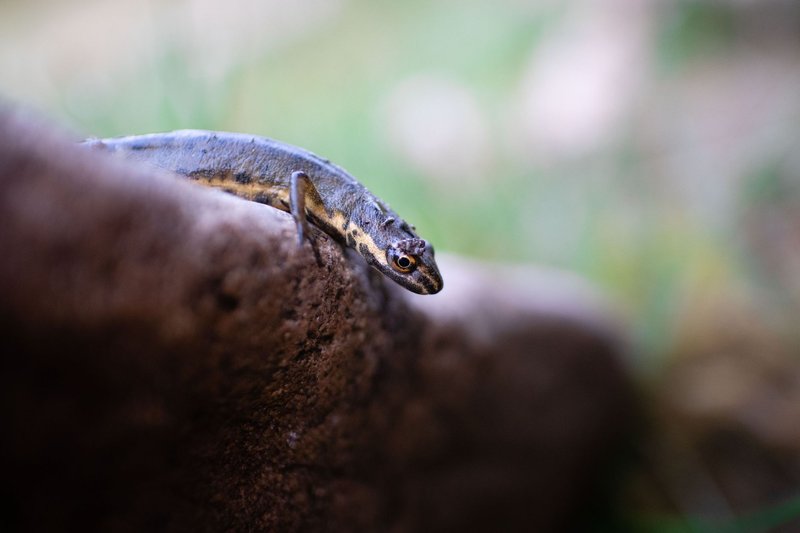
The Italian crested newt (Triturus carnifex) is centered on Italy but is not strictly Italian. Its range spills into neighboring Alpine and Balkan countries, so “endemic” overstates it. Breeding males grow a jagged crest along the back, and the belly is orange with black spots.
Freshwater and marine life
17. Marble trout
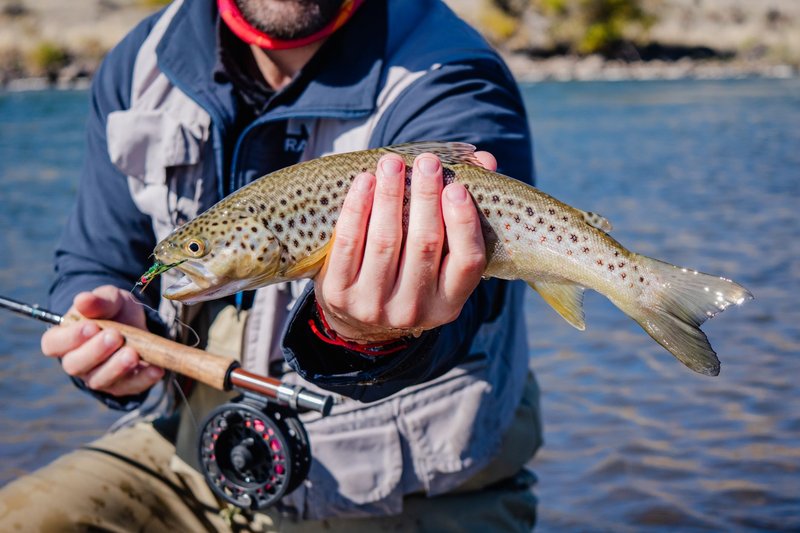
The marble trout (Salmo marmoratus) lives in rivers of the northern Adriatic basin, including the Po system, and is named for the swirling pattern on its flanks. It’s threatened by breeding with stocked brown trout from elsewhere in Europe, which dilutes its genetics.
18. White-clawed crayfish
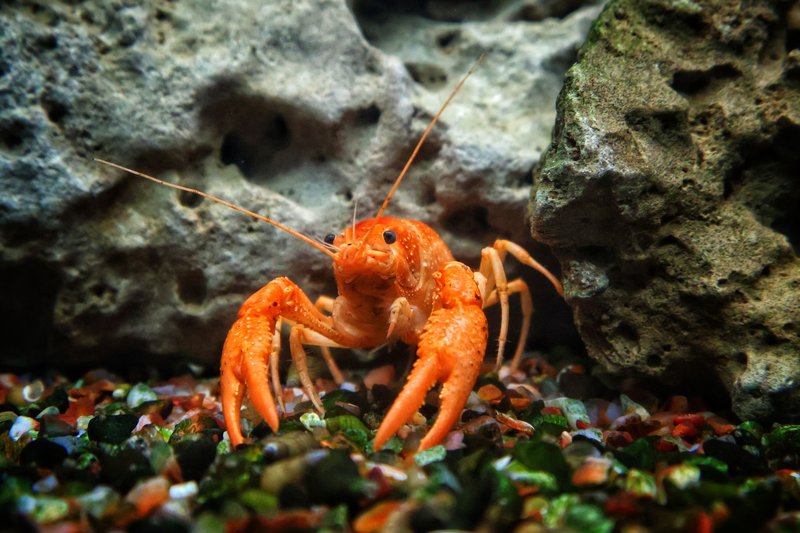
Italy’s native crayfish (Austropotamobius pallipes and relatives) lives in cold, clean streams and is Endangered. It’s being displaced by the introduced red swamp crayfish, which carries crayfish plague, a disease the native species can’t survive.
19. Loggerhead sea turtle
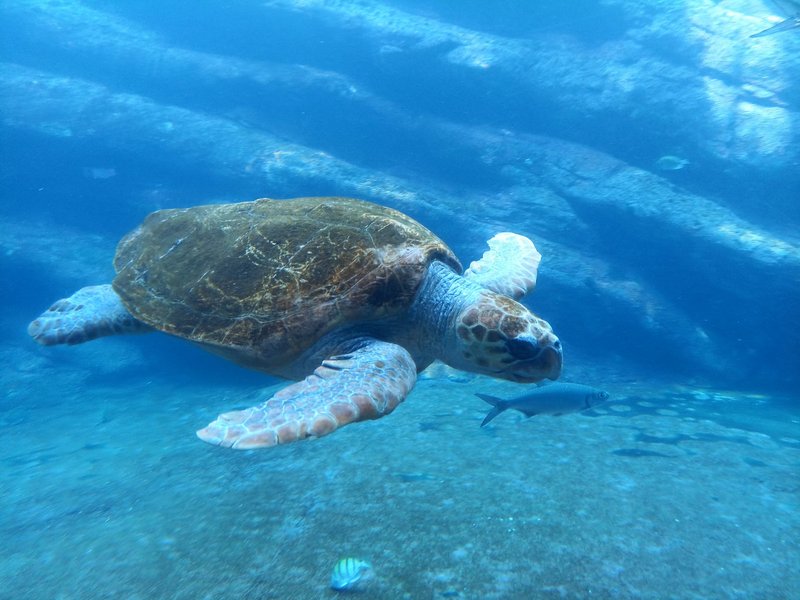
Loggerheads nest on Italian beaches, notably on Lampedusa’s Rabbit Beach, the Ionian coast of Calabria and parts of Sicily. Females come ashore at night between June and August and lay around 100 eggs per nest.
20. Fin whale
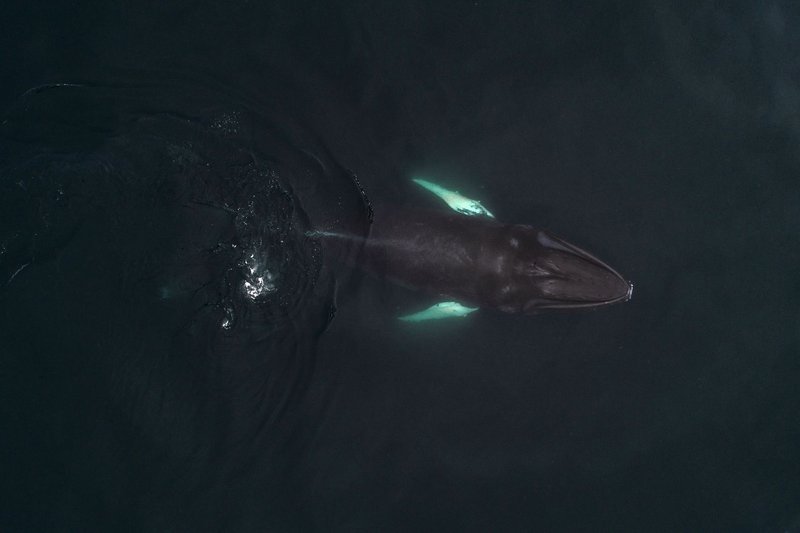
The fin whale is the second-largest animal on Earth, reaching about 22 meters, and it lives in the Ligurian Sea. The Pelagos Sanctuary, set up by Italy, France and Monaco, protects the feeding grounds where they gather.
Animals wrongly called native to Italy
The usual lists include these. None belong.
- Monk parakeet. Escaped pets in cities. Native to South America.
- Red swamp crayfish. Imported from North America for aquaculture in the 1980s.
- Eastern grey squirrel. Released in Piedmont in 1948 and now the main threat to the native red.
- Sicilian wolf and Sardinian pika. Native once, but extinct. The pika vanished in the 1700s or 1800s, the Sicilian wolf in the 1920s.
- Sicilian dwarf elephant. Extinct at the end of the Ice Age.
Where to see Italy’s wildlife
Three places cover most of the list.
Abruzzo, Lazio and Molise National Park. The park’s official site has visitor information. Bears are rare and shy, so expect signs and a guide before you expect a sighting. Chamois and wolves are more realistic, and you’ll see them near Pescasseroli.
Gran Paradiso National Park. Italy’s oldest national park protects the ibex that nearly disappeared. Summer hikes in the Aosta Valley regularly turn up ibex, chamois and marmots.
The Dolomites. Marmots whistle from nearly every talus slope, chamois cross the rocky ledges, and golden eagles patrol the ridges.
The Ligurian Sea is the best option for whales, with summer whale-watching trips from the coast near Genoa. For loggerheads, go to Lampedusa in nesting season.