Cuba’s national flower is the mariposa, a white, jasmine-scented ginger lily that spent the independence wars hidden in women’s hair. It’s the natural starting point for the flowers of Cuba, and the rest of the island’s blooms are just as easy to place once you know their seasons: flame-red trees in early summer, purple jacarandas in spring, bougainvillea over every wall in the dry months.
This guide covers the major flowers you’ll see in Cuba, with their common, Spanish and Latin names, when they bloom, and where to find them. It ends with a note on endemic plants and orchids, a quick-reference table, and a safety warning about one very common ornamental.
Contents
- The mariposa: Cuba’s national flower
- Hibiscus
- Bougainvillea
- Flor de San Diego
- Royal poinciana
- Jacaranda
- Anthurium
- Begonia
- Oleander
- Poinsettia
- Cuban orchids
- Endemic plants of Cuba
- Where to see flowers in Cuba
- Quick reference table
The mariposa: Cuba’s national flower
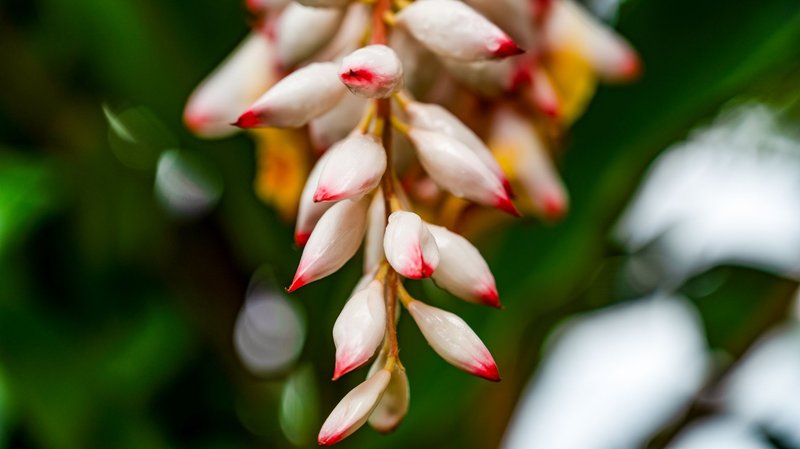
Spanish: mariposa, flor de mariposa | English: butterfly jasmine, white ginger lily | Latin: Hedychium coronarium
The mariposa isn’t a jasmine at all. It’s a ginger relative from Asia that took to Cuba’s damp stream banks so well it now looks native. The flower is white, with three petal-like lobes that spread like wings (hence the name, “butterfly”) and a scent that carries across a garden at dusk.
It earned its national status through the independence wars of the 19th century. Women who carried messages for the rebels are said to have tucked the folded papers into their hair or blouses, with a mariposa on top. The white flower also stood for purity and for peace, and Cuba officially adopted it as the national flower in 1936.
It blooms mostly in the warm, wet months, from about late spring into autumn. Look for it along rivers and ditches, where the tall, reedy clumps grow in thick stands.
Hibiscus
Spanish: hibisco, peregrina | Latin: Hibiscus rosa-sinensis
Hibiscus grows as a hedge plant in nearly every Cuban town, with big flowers in red, pink, orange and yellow. Each bloom lasts about a day, so the plant keeps dropping spent flowers and opening new ones. It flowers year-round in Cuba’s climate, peaking in the warmer, wetter months.
Bougainvillea
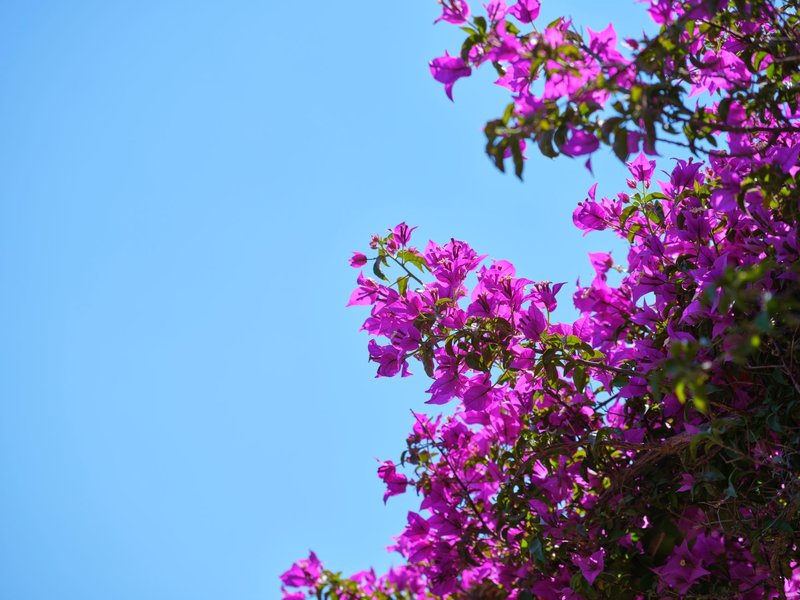
Spanish: buganvilia | Latin: Bougainvillea spp.
The color on bougainvillea isn’t from petals. The papery magenta, orange, white or purple “flowers” are bracts, leaf-like structures wrapped around three small, cream-colored true flowers. That’s why the display lasts for weeks instead of days.
It does best in the dry season, when the vines pour over balconies, courtyard walls and old colonial facades in Havana, Trinidad and Camagüey.
Flor de San Diego
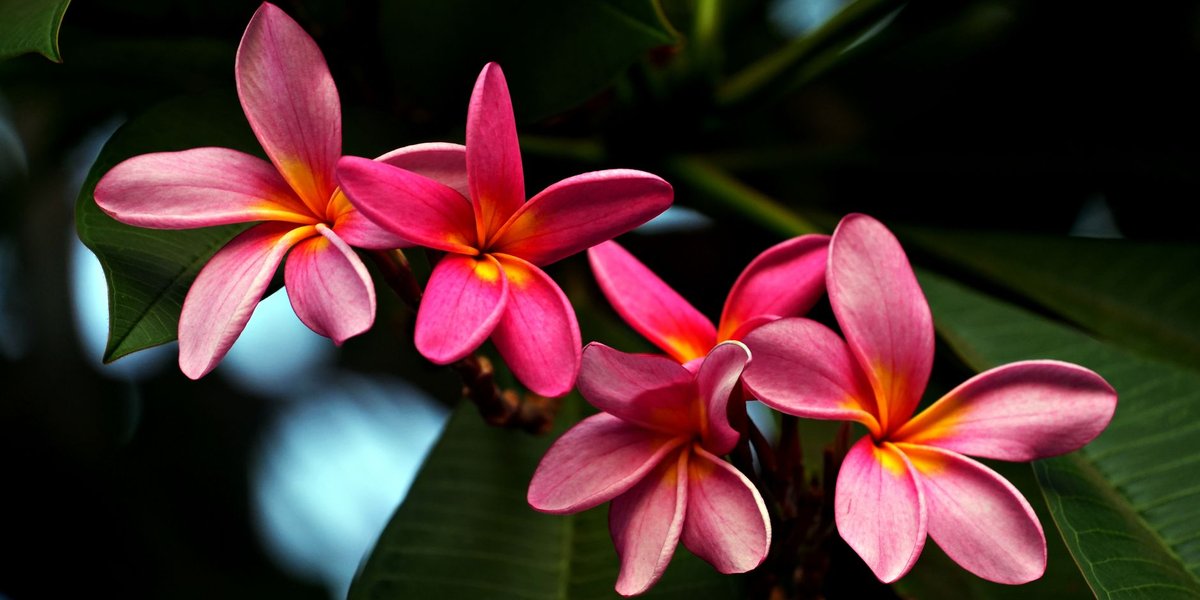
Spanish: flor de San Diego, flamboyán de jardín | English: pride of Barbados, dwarf poinciana | Latin: Caesalpinia pulcherrima
This is the only species the Havana Times photo essays tend to name, and it deserves the attention. It’s a shrub with feathery leaves and clusters of red-orange flowers edged in yellow, with long red stamens that stick out like whiskers. It flowers through much of the year in warm weather and is a favorite of butterflies and hummingbirds.
Royal poinciana
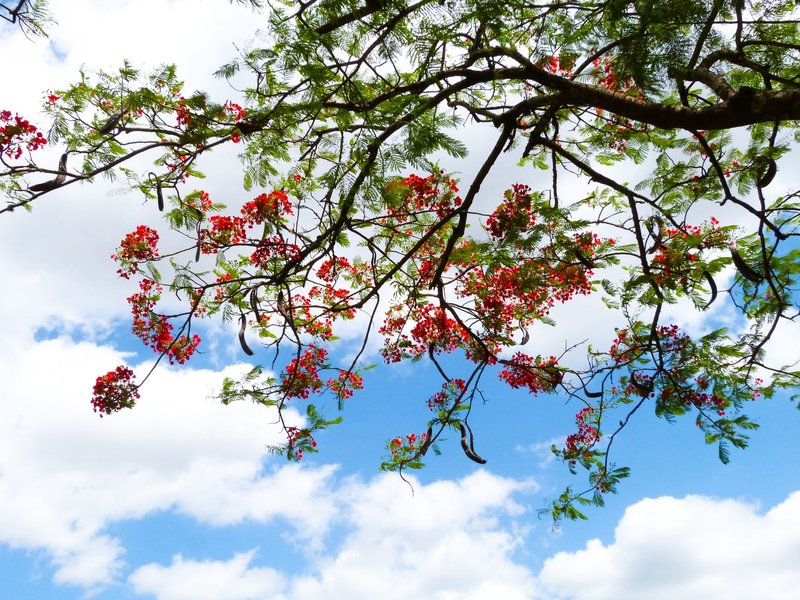
Spanish: flamboyán | Latin: Delonix regia
A mature royal poinciana turns into a flat-topped umbrella of scarlet and orange. It’s native to Madagascar, but in Cuba it’s a street tree, shading avenues and parks across the island. It blooms in early summer, roughly May through July. After the flowers drop, the tree develops long, dark seed pods that rattle in the wind.
Jacaranda
Spanish: jacarandá | Latin: Jacaranda mimosifolia
Jacaranda brings purple to Cuba in spring. The trees bloom before or while the leaves come in, so the crown reads as lavender-blue rather than green. Look for them in older neighborhoods in Havana, where they were planted as ornamentals. A carpet of fallen flowers under a jacaranda is the tell.
Anthurium
Spanish: anturio | Latin: Anthurium andraeanum
The glossy red “petal” is a spathe, a modified leaf; the real flowers are tiny and sit on the upright spike in the center. Anthuriums grow well in shade and humidity, so you’ll find them in Cuban gardens, florists’ bouquets and hotel lobbies. They bloom nearly all year.
Begonia
Spanish: begonia | Latin: Begonia spp.
Begonias are the shade-garden workhorse of the Cuban tropics. Pink, white and red clusters sit over fleshy, asymmetric leaves, often in containers on patios and in botanical garden beds. They bloom most of the year with enough moisture.
Oleander
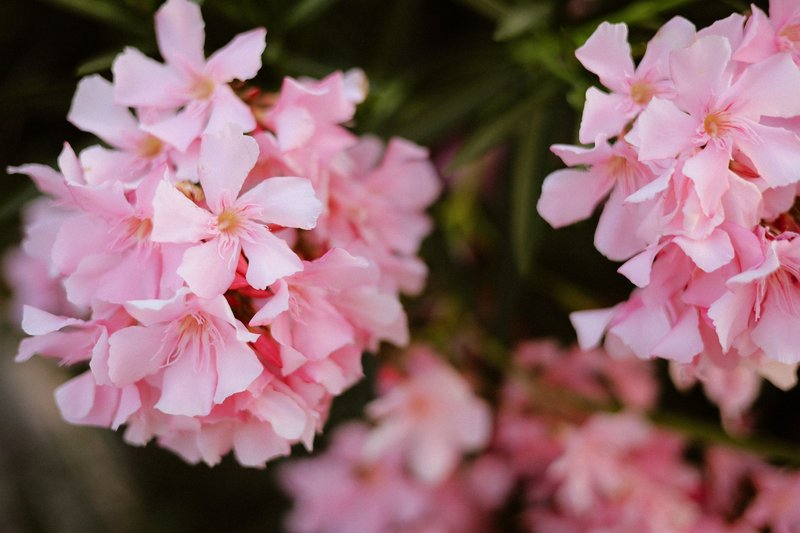
Spanish: adelfa | Latin: Nerium oleander
Oleander lines roadsides and fills parks with white, pink and red blooms through much of the year. It’s also one of the most toxic common ornamentals. Every part of the plant contains cardiac glycosides, and eating even a few leaves can cause serious poisoning in people and animals. Don’t use the wood as a skewer or burn it near food, and keep children and pets away. If someone chews on it, call a poison control service immediately; the American Association of Poison Control Centers lists emergency contacts.
Poinsettia
Spanish: flor de Pascua, flor de Nochebuena | Latin: Euphorbia pulcherrima
The poinsettia is a Mexican native, and in Cuba it grows as a large shrub rather than a pot plant. The red color comes from bracts, not petals, and it appears in the short days of winter, around December. That timing gives it the Spanish name, “flower of Christmas Eve.”
Cuban orchids
Cuba has hundreds of orchid species, from tiny epiphytes on tree branches to larger ground orchids in pine savannas. Many bloom in the dry season, between winter and early spring. Wild orchids are protected, so look at them in gardens and reserves rather than picking or buying plants from roadside sellers.
The best place to see the variety in one visit is Soroa, in Pinar del Río province, home to the Orquideario de Soroa, a garden and research collection established in the 1940s on the hillside above a waterfall.
Endemic plants of Cuba
Cuba is the most plant-rich island in the Caribbean, with more than 6,700 plant species, of which roughly 3,000 to 3,200 grow nowhere else on Earth. That ratio is among the highest of any island in the world, and it’s the reason botanists from Kew and other institutions keep returning to the island’s serpentine hills, limestone mogotes and cloud forests.
Many of the endemic plants are not showy flowers. They’re shrubs, palms and cacti adapted to unusual soils. For a closer look, this guide to ten endemic Cuban plants covers photos, habitat and conservation notes for each. But the diversity is concentrated in a few places, including the mountains of the east and the limestone hills of the west. Check the IUCN Red List if you want to see which Cuban species are threatened.
Where to see flowers in Cuba
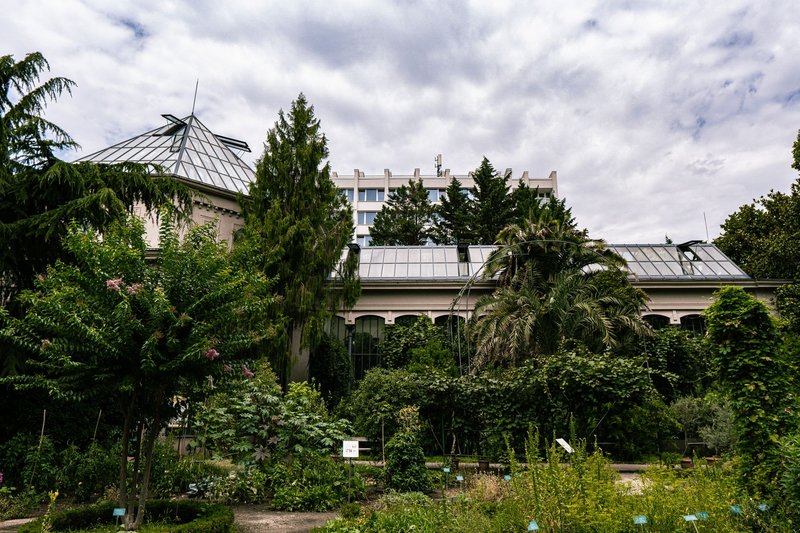
- Jardín Botánico Nacional, Havana. The country’s largest botanical garden sits on the southern edge of the capital and is run by the University of Havana. It has an orchid collection, a Japanese garden and a huge range of tropical plants, so it’s the most efficient single visit.
- Soroa, Pinar del Río. Orchids, ferns and a waterfall, about an hour and a half west of Havana. Go in the dry season for the orchid peak.
- Viñales Valley. Better for scenery than a single garden, but flowering trees and hedges line the roads between the tobacco farms and the limestone cliffs.
- Sierra Maestra. Cuba’s highest mountains hold cloud-forest plants, wild orchids and endemic species, and you’ll need a local guide for the trails.
- Havana’s streets. For royal poincianas and jacarandas, walk Vedado, Miramar and the Malecón side streets in season.
Quick reference table
| Flower | Spanish name | Peak bloom | Color |
|---|---|---|---|
| Mariposa | mariposa | Summer to autumn | White |
| Hibiscus | peregrina | Year-round | Red, pink, yellow |
| Bougainvillea | buganvilia | Dry season | Magenta, orange, white |
| Flor de San Diego | flor de San Diego | Most of the year | Red-orange, yellow |
| Royal poinciana | flamboyán | May to July | Scarlet |
| Jacaranda | jacarandá | Spring | Purple |
| Anthurium | anturio | Year-round | Red, pink, white |
| Begonia | begonia | Year-round | Pink, white, red |
| Oleander | adelfa | Most of the year | White, pink, red |
| Poinsettia | flor de Pascua | Winter | Red |
| Orchids | orquídeas | Winter to spring | Varies |
Summary
The flowers of Cuba follow the calendar more than you’d expect. Spring belongs to jacarandas, early summer to the royal poinciana, and the dry months to bougainvillea. Winter brings poinsettias and orchids. The mariposa sits at the center of it all, as the national flower and as a reminder that a bloom can carry a message. Plan your trip around the season you want, start in Havana’s botanical garden, and keep away from the oleander.