Contents
- Colombia’s Plants at a Glance
- Andean Plants of Colombia
- Amazon Plants
- Pacific Chocó Plants
- Caribbean Coast Plants
- Colombian Plants on Your Windowsill
- Useful Plants: Coffee, Cacao, and Coca
- Quick Reference Table
- Conservation: What’s at Risk
- Where to See Colombian Plants in Person
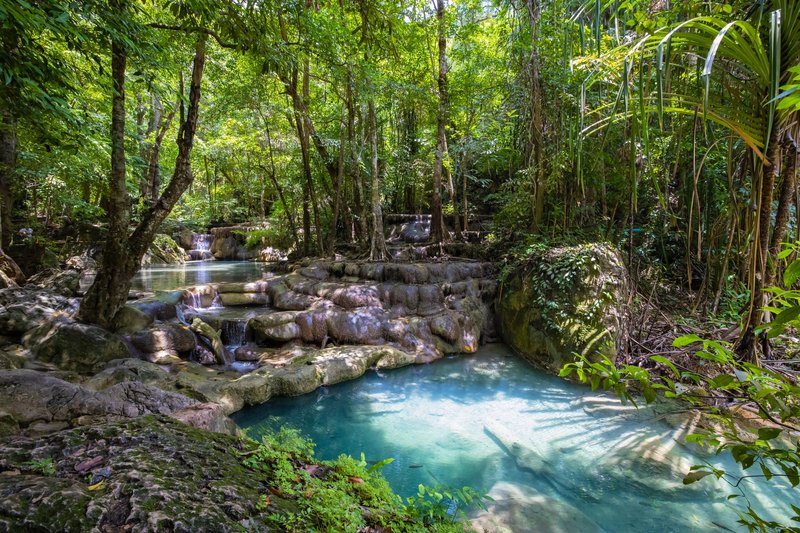
Colombia packs more plant life into its borders than almost any country on Earth, and it does it in a space smaller than Texas and California combined. Three branches of the Andes split the country, the Amazon fills the southeast, the Chocó rainforest soaks the Pacific side, and the Caribbean coast runs from desert scrub to mangrove swamp. Each zone grows plants you won’t find in the next one.
This guide covers 18 of the most iconic plants of Colombia, grouped by region, with the common name, the scientific name, where it grows, and the reason it matters.
Colombia’s Plants at a Glance
- Species count: Colombia’s 2015 national catalogue listed 26,126 plant species, and wider estimates, which include species still being described, put the total above 32,000.
- National flower: Cattleya trianae, an orchid, named in 1936.
- National tree: the Quindío wax palm (Ceroxylon quindiuense), the tallest palm in the world.
- Orchids: more than 4,000 species, more than any other country.
- Main plant zones: Andes, Amazon, Pacific Chocó, Caribbean coast.
Andean Plants of Colombia
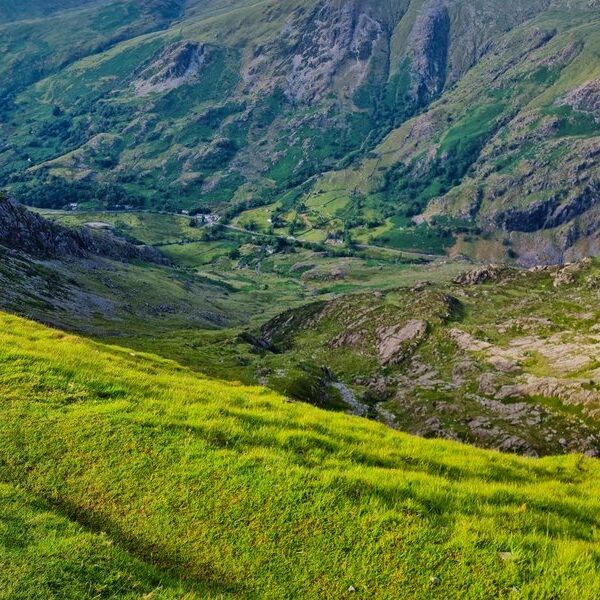
The Andes give Colombia its altitude bands, and altitude sorts plants into neat layers: warm coffee slopes, misty cloud forest, then the treeless, windswept páramo above 3,000 meters. Six plants cover that climb.
1. Quindío Wax Palm (Ceroxylon quindiuense)
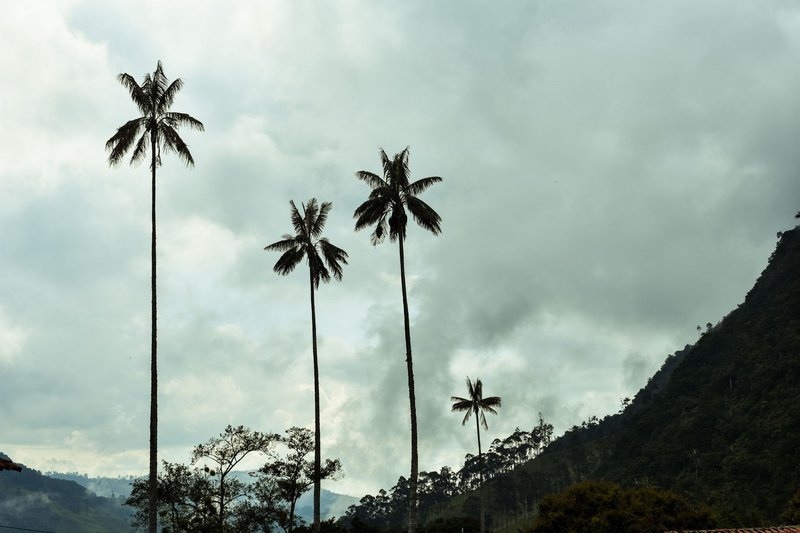
Habitat: Andean cloud forest, roughly 2,000 to 3,000 meters. Why it matters: national tree and tallest palm on the planet.
Trunks reach about 60 meters, and they’re covered in a pale wax that the tree makes itself. The best place to see them is the Cocora Valley near Salento, where the palms stand alone in green pasture like a field of giant pencils. Colombia named it the national tree in 1985.
The wax palm is also tied to a bird. The yellow-eared parrot nests in its trunks, and for decades the palm fronds were cut in huge numbers for Palm Sunday processions. That harvest hit both species. The palm is now classed as threatened, one of many endangered species in South America.
2. Cattleya trianae, the National Flower
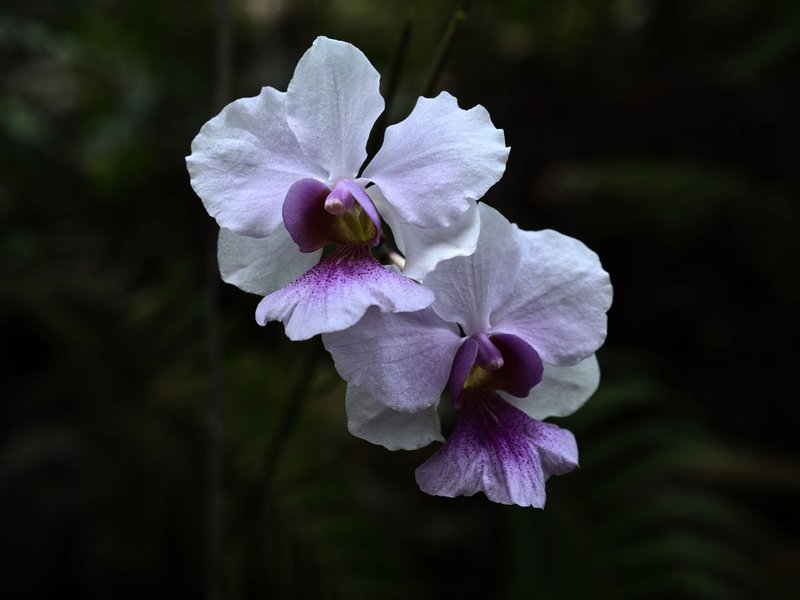
Habitat: Andean forests at mid elevations. Why it matters: Colombia’s national flower and its best-known orchid.
Large lavender petals, a frilled lip that runs from magenta to gold, and a flowering season that peaks from December to February, which earned it the nickname “Christmas orchid.” It’s named for the Colombian botanist José Jerónimo Triana. Wild plants have been stripped for the trade for more than a century, so seeing one growing on a tree is rarer than seeing one in a glasshouse.
3. Frailejón (Espeletia species)
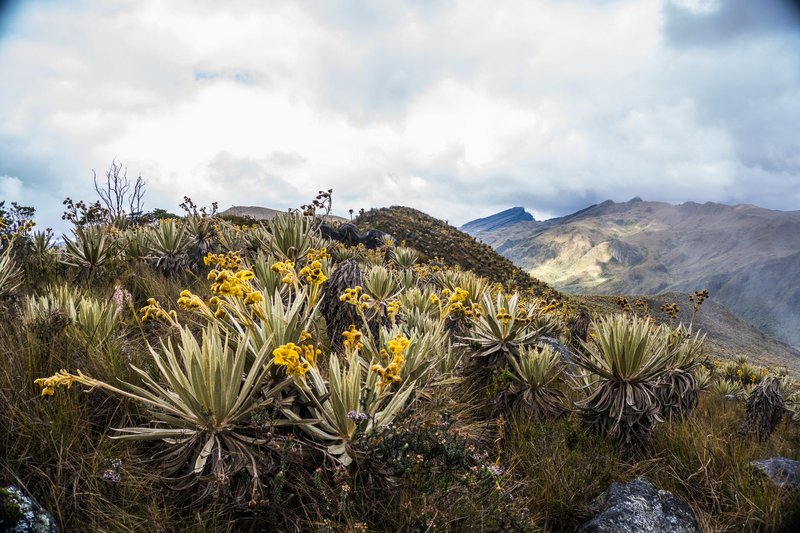
Habitat: páramo grassland above about 3,000 meters. Why it matters: it harvests water from fog.
Frailejones look like silver-green cabbages on stilts. Their leaves are covered in dense hairs that trap mist and funnel it down to the soil, and dead leaves wrap the trunk as insulation against freezing nights. They grow around a centimeter a year, so a head-high frailejón is decades old. Colombia holds more Espeletia species than any other country, and the páramos they grow in feed rivers that supply cities, including much of Bogotá’s water.
4. Guadua Bamboo (Guadua angustifolia)
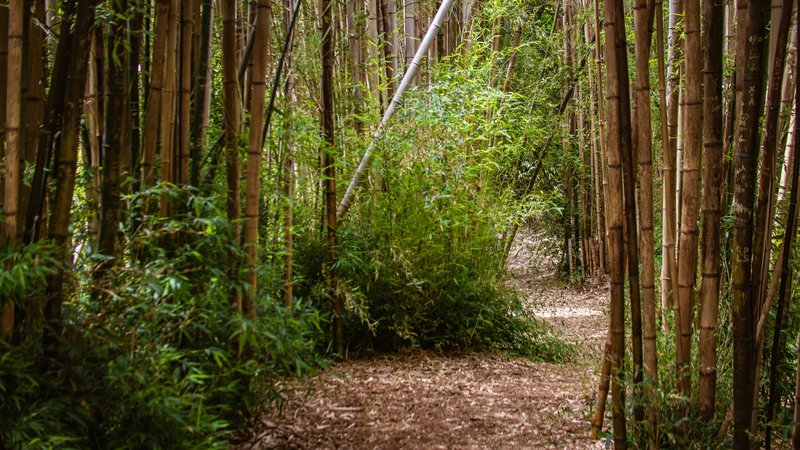
Habitat: the coffee region and warm Andean valleys. Why it matters: it builds houses.
Guadua is a giant bamboo that can climb more than 10 centimeters in a day and reaches 25 meters or more. Colombian builders use it for frames, floors, and bridges, and its flexibility helps buildings ride out earthquakes. Stands of guadua also hold soil on steep slopes and shelter streams, which is why they show up in watershed restoration projects.
5. Cinchona (Cinchona pubescens)
Habitat: Andean cloud forest. Why it matters: the source of quinine.
Cinchona bark contains quinine, the first effective treatment for malaria. Spanish colonial botanists, including José Celestino Mutis in the 1700s, studied the trees in what is now Colombia, and the bark became a major export. Overharvesting nearly wiped out wild stands in places. Today the trees are a reminder that many plants on this list changed world medicine before anyone thought about conserving them.
6. Tree Tomato (Solanum betaceum)
Habitat: Andean slopes, native to the region and widely farmed. Why it matters: it’s a daily fruit.
Called tomate de árbol in Colombia, it’s an egg-shaped, orange-red fruit that tastes like a tart cross between a tomato and a passion fruit. Colombians mostly drink it as juice (jugo de tomate de árbol) or blend it into the chili sauce served with empanadas. The shrub grows fast and fruits within two years, which is why you see it in small farm plots across the highlands.
Amazon Plants
The Colombian Amazon covers roughly a third of the country’s land. Most of it is lowland forest with very few roads, and plant life here is shaped by flooding, heat, and a canopy that blocks most light.
7. Giant Water Lily (Victoria amazonica)
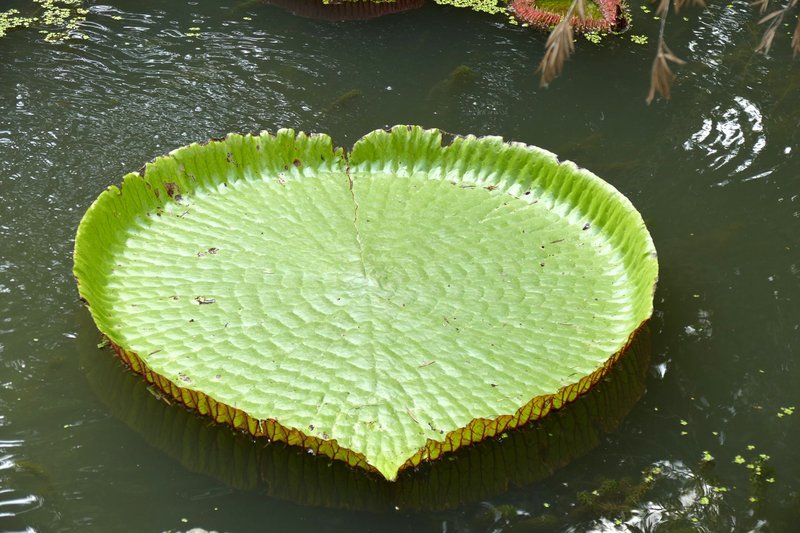
Habitat: still, shallow Amazonian lakes and river backwaters. Why it matters: the largest water lily on Earth.
The round, upturned pads exceed two meters across, and the underside is a rib structure of thick, spiny veins that keeps them afloat. A pad can carry a small child if the weight is spread out. The flowers open for two nights: white and scented on the first, trapping beetles for pollination, then pink and scentless on the second.
8. Yagé Vine (Banisteriopsis caapi)
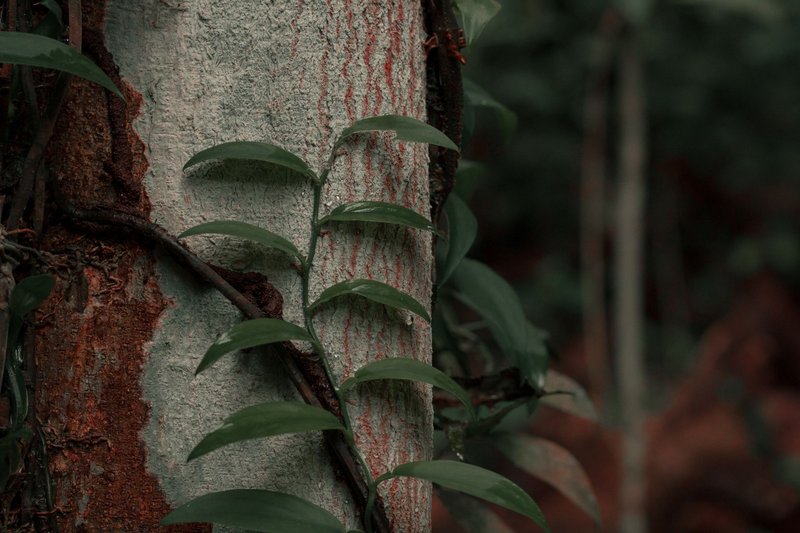
Habitat: Amazon lowland forest. Why it matters: central to Indigenous ceremony and medicine.
Indigenous communities across the Colombian Amazon, including groups in Putumayo, prepare a brew called yagé (also known as ayahuasca) from this woody vine and other plants. It’s used in ceremonies led by healers and is a core part of cultural identity for many peoples. The vine is a clear example of a plant that matters for what a community knows about it, not for what it looks like. Its use outside traditional settings is legally complicated and carries real health risks.
9. Cacao (Theobroma cacao)
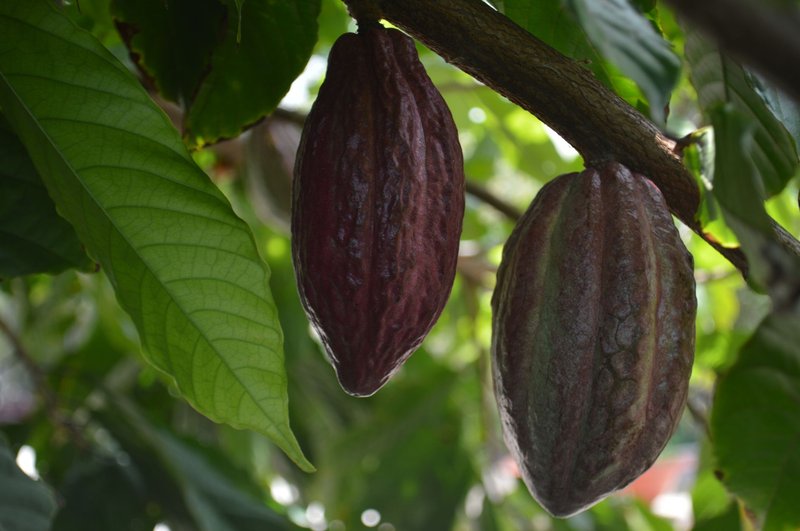
Habitat: native to the upper Amazon basin and now grown in Santander, Huila, and other regions. Why it matters: it’s chocolate.
Cacao pods sprout directly from the trunk and branches, not from the tips, which is a strange sight if you’re used to fruit trees. Each pod holds 30 to 50 seeds in sweet white pulp. More on cacao in the useful-plants section below.
Pacific Chocó Plants
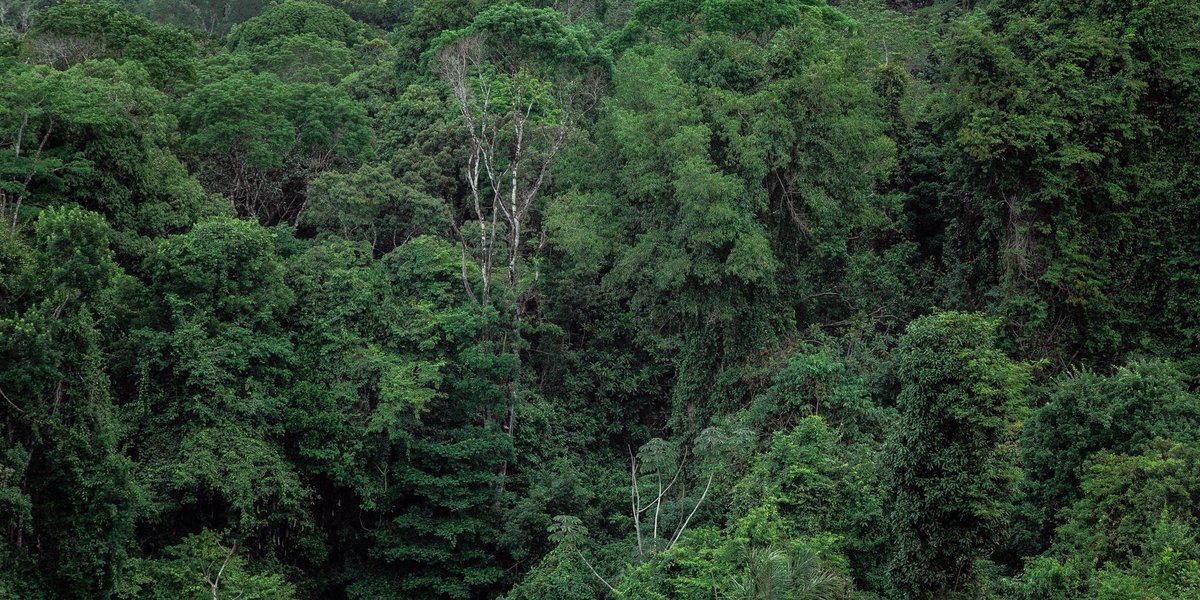
The Chocó rainforest runs along Colombia’s Pacific coast and is among the wettest places on Earth, with some areas getting over 10 meters of rain a year. That water drives a dense, high-endemism forest where palms, heliconias, and epiphytes pile onto every trunk.
10. Chontaduro, or Peach Palm (Bactris gasipaes)
Habitat: Pacific lowlands, also grown in the Amazon. Why it matters: a street food and a staple.
The palm has a trunk armed with long black spines, and it drops clusters of orange-red fruit the size of small plums. Vendors in Cali and along the Pacific coast boil them in salty water, peel them, and serve them with honey or a pinch of salt. The texture is dry and starchy, closer to a chestnut than a peach.
11. Heliconias (Heliconia species)
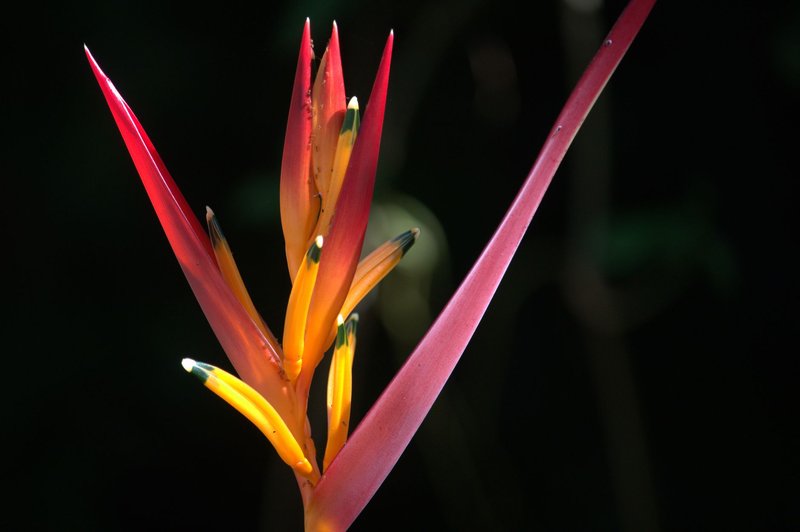
Habitat: wet lowland forest and forest edges. Why it matters: hummingbird fuel.
Heliconias have bright red, orange, and yellow bracts shaped like lobster claws or parrot beaks, depending on the species. Colombia has dozens of them, and they are some of the most unusual flowers on Earth. The flowers are tucked inside the bracts and tuned to hummingbird bills, and Colombia has more hummingbird species than any other country, so the pairing is no accident.
12. Tagua, or Ivory Palm (Phytelephas species)
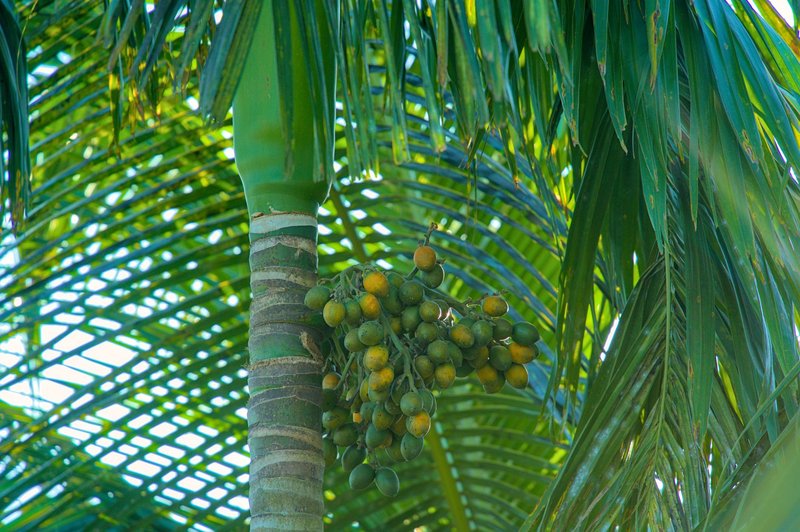
Habitat: Pacific and Caribbean lowland forest. Why it matters: its seeds are vegetable ivory.
The seeds of this palm turn hard and white as they ripen, with a texture close to elephant ivory. Artisans carve them into buttons, beads, and figurines. The tagua trade gives rural communities a reason to keep the standing forest instead of clearing it, which is why conservation groups have supported it.
Caribbean Coast Plants
The Caribbean side runs from the snow-capped Sierra Nevada de Santa Marta down to dry forest, scrub, and wide mangrove lagoons.
13. Red Mangrove (Rhizophora mangle)
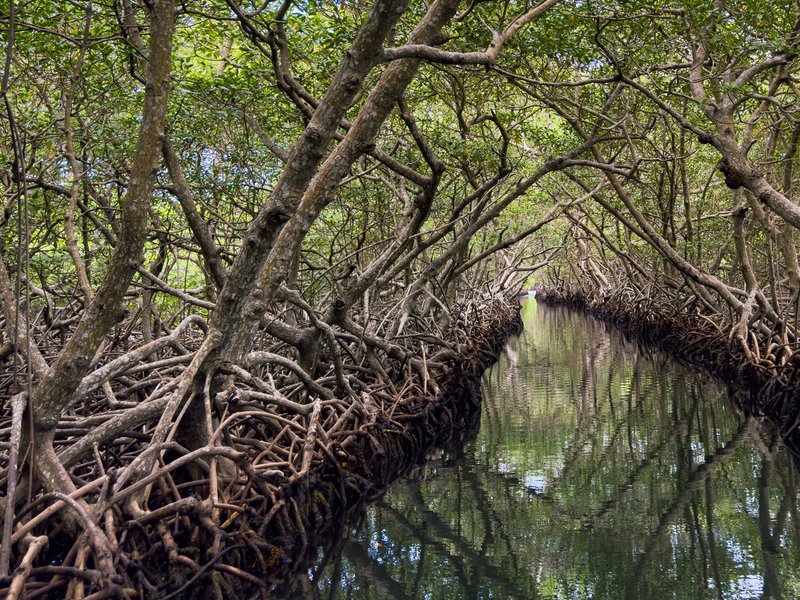
Habitat: brackish coastal lagoons and shorelines, on both the Caribbean and Pacific coasts. Why it matters: nursery for fish and storm barrier.
You can spot a red mangrove by its stilt roots, which arch out from the trunk and anchor the tree in soft mud. Fish and crabs shelter among them. The Ciénaga Grande de Santa Marta lost a large share of its mangroves in the 1990s after roads and canals blocked the flow of fresh water and tides, and restoration work has brought parts back.
14. Guayacán, or Lignum Vitae (Guaiacum officinale)
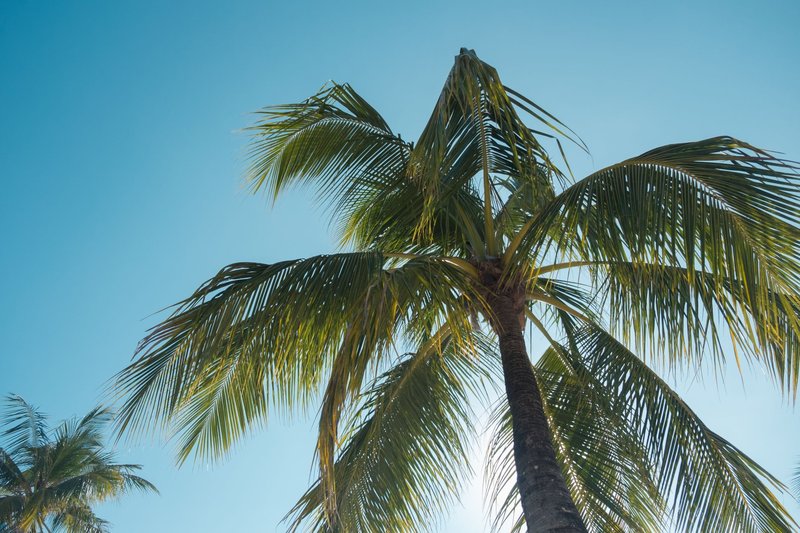
Habitat: Caribbean tropical dry forest. Why it matters: its wood sinks.
Guayacán produces one of the densest woods in the world, heavy enough to sink in water, and it sets violet-blue flowers in the dry season. For centuries it was cut for ship bearings and medicine. The IUCN Red List classes lignum vitae as endangered, and only a small fraction of Colombia’s original dry forest is left.
Colombian Plants on Your Windowsill
If you grow houseplants, you probably own a relative of something from Colombia. Two of the most sought-after tropical aroids come from its forests.
15. King Anthurium (Anthurium veitchii)
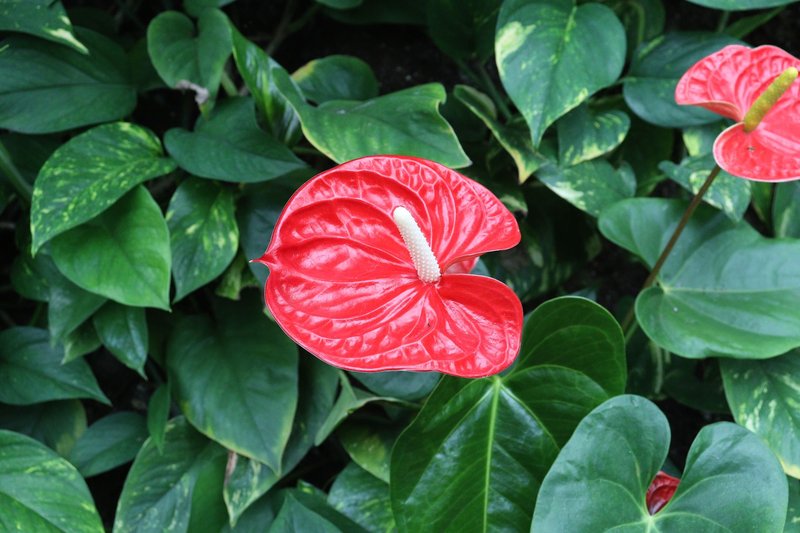
Habitat: humid, shady forest, growing on trees and on the ground. Why it matters: a collector favorite.
The leaves are long, narrow, and deeply corrugated, and on a mature plant they hang down over a meter. In the wild it grows in the shade with steady humidity, so a bright bathroom suits it better than a dry living room. It’s slow growing, which is part of why mature specimens are expensive.
16. Philodendron gloriosum
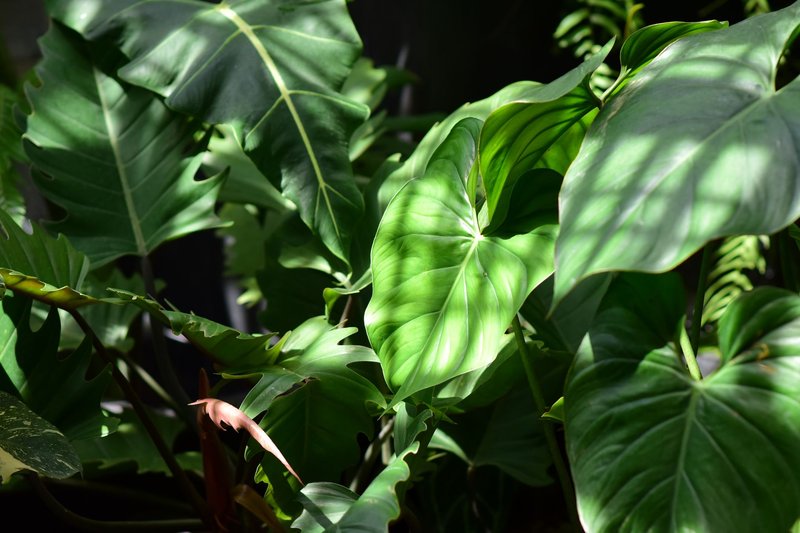
Habitat: forest floor in humid lowland forest. Why it matters: velvet leaves with white veins.
Unlike most philodendrons, this one doesn’t climb. It creeps along the ground on a thick stem, and the heart-shaped leaves can grow bigger than a dinner plate. Give it a wide pot, not a tall one, and a stable spot, since it hates being moved.
Useful Plants: Coffee, Cacao, and Coca
Colombia is home to a huge range of plants people use for food, medicine, fiber, and ritual. The Royal Botanic Gardens, Kew has spent years cataloguing them in its Useful Plants of Colombia project. Three stand out for how much they shape the country.
17. Coffee (Coffea arabica)
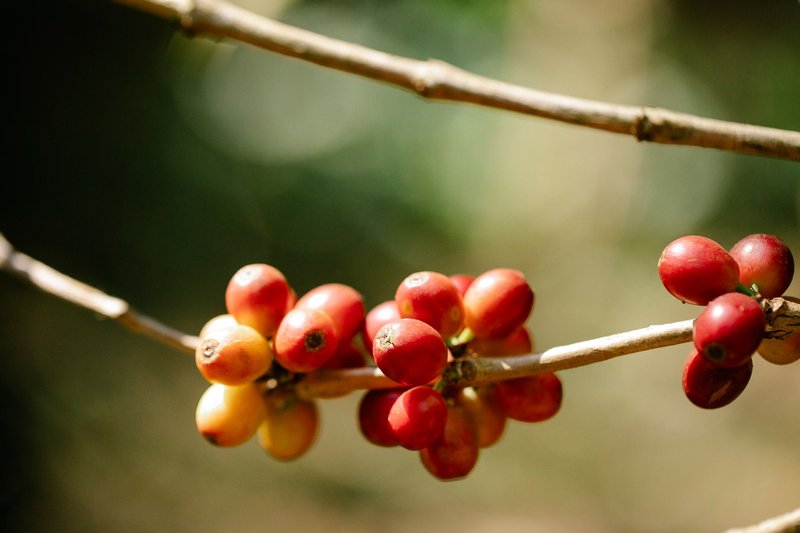
Habitat: mountain slopes, mostly in the central Andes. Why it matters: the country’s best-known crop.
Coffee isn’t native to Colombia (it comes from Ethiopia) but the country grows it as well as anywhere. Colombian coffee is arabica, grown on steep, shaded hillsides, and it’s picked mostly by hand. UNESCO recognized the Coffee Cultural Landscape of Colombia as a World Heritage site in 2011, covering the farms, towns, and traditions of the Coffee Axis.
Cacao, entry 9 above, belongs in this group too. Colombian growers are building a fine-chocolate market around it, with single-origin bars from Santander and Huila.
18. Coca (Erythroxylum coca)
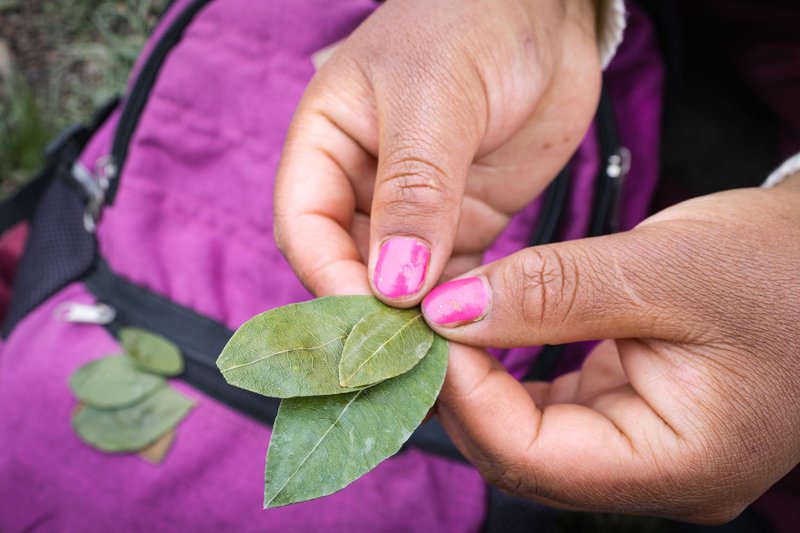
Habitat: Andean foothills and Amazon lowlands. Why it matters: a sacred leaf with a complicated reputation.
Most people know coca only as the raw material for cocaine, and Colombia has paid a heavy price for that trade. But the leaf itself has been chewed and brewed by Indigenous peoples for millennia as a mild stimulant, a tea, and an offering. Communities in the Amazon and the Sierra Nevada still use it in daily and ceremonial life. The plant and the drug are different things, and Colombian law treats traditional use differently from trafficking.
Quick Reference Table
| # | Common name | Scientific name | Region | Why it matters |
|---|---|---|---|---|
| 1 | Quindío wax palm | Ceroxylon quindiuense | Andes | National tree, tallest palm |
| 2 | Christmas orchid | Cattleya trianae | Andes | National flower |
| 3 | Frailejón | Espeletia spp. | Andes (páramo) | Collects water from fog |
| 4 | Guadua bamboo | Guadua angustifolia | Andes | Building material |
| 5 | Cinchona | Cinchona pubescens | Andes | Source of quinine |
| 6 | Tree tomato | Solanum betaceum | Andes | Everyday fruit |
| 7 | Giant water lily | Victoria amazonica | Amazon | Largest water lily |
| 8 | Yagé vine | Banisteriopsis caapi | Amazon | Indigenous ceremony |
| 9 | Cacao | Theobroma cacao | Amazon, Andes | Chocolate |
| 10 | Chontaduro | Bactris gasipaes | Pacific, Amazon | Street food |
| 11 | Heliconias | Heliconia spp. | Pacific | Feeds hummingbirds |
| 12 | Tagua palm | Phytelephas spp. | Pacific, Caribbean | Vegetable ivory |
| 13 | Red mangrove | Rhizophora mangle | Caribbean, Pacific | Coastal nursery |
| 14 | Guayacán | Guaiacum officinale | Caribbean | Endangered dense wood |
| 15 | King anthurium | Anthurium veitchii | Wet forest | Houseplant |
| 16 | Philodendron gloriosum | Philodendron gloriosum | Wet forest | Houseplant |
| 17 | Coffee | Coffea arabica | Andes | Main crop |
| 18 | Coca | Erythroxylum coca | Andes, Amazon | Traditional leaf |
Conservation: What’s at Risk
Colombia’s plant diversity is under pressure from clearing for cattle and crops, mining, illegal crops, and invasive species in Colombia. The damage lands hardest on the forests and páramos that hold the most unique species. The wax palm, guayacán, and wild Cattleya trianae are all threatened. The Chocó and the Andean páramos hold many species that grow nowhere else, and plants in those areas can vanish before anyone has described them.
Some of the work is simple: protecting the high watersheds that supply cities, replanting wax palm pastures in the Cocora Valley, restoring mangroves, and paying farmers for standing forest. If you visit, stick to marked trails, never pull orchids or bromeliads from trees, and buy tagua or guadua crafts from local artisans rather than anything labeled as wild-collected.
Where to See Colombian Plants in Person
- Cocora Valley, Quindío: wax palms in cloud forest. Go early, before the fog fills in.
- Jardín Botánico de Bogotá José Celestino Mutis: páramo section with frailejones, plus a greenhouse with Andean orchids and bromeliads.
- Jardín Botánico de Medellín: orchid house and a large collection of tropical species in the middle of the city.
- Quindío Botanical Garden, Calarcá: the coffee region’s botanical garden, with guadua and a butterfly house.
- Chingaza and other páramos near Bogotá: frailejón fields above the tree line.
- Ciénaga Grande de Santa Marta: mangrove channels by boat.
- Amazon, near Leticia: giant water lilies in quiet backwaters, usually on guided tours.
Start with the wax palm and the frailejón. They’re the two plants that make Colombia look like nowhere else, and both sit within a day’s trip of a major city.