Quick Answer
- Most iconic: the royal palm (palma real), caoba (West Indian mahogany), mamey, yagrumo and green ebony (ébano verde). These five keep turning up in the argument over a Dominican national tree.
- Native and common: royal palm, cana palm, sea grape, red mangrove, ceiba, Hispaniolan pine.
- Introduced but everywhere: coconut, mango, cacao and flamboyán. Coconut palms arrived in the 16th century.
- Most threatened: guayacán and green ebony.
- Best places to see them: Jardín Botánico Nacional in Santo Domingo, Los Haitises, Valle Nuevo and the Ébano Verde reserve.
Table of Contents
- How Hispaniola’s forests work
- Iconic trees and the national tree debate
- Mountain and cloud forest trees
- Palms of the Dominican Republic
- Fruit trees
- Trees you’ll see at resorts and on the coast
- Where to see Dominican trees
The trees of the Dominican Republic cover more ground than the country’s size suggests. Lake Enriquillo sits below sea level and is ringed by thorny dry forest. A few hours’ drive away, Pico Duarte rises to 3,098 meters, the highest point in the Caribbean, and its slopes carry pine and cloud forest. Add mangroves, palm savannas and 500 years of imported crops, and you get a tree list that is half native, half arrivals from Africa, Asia and the Pacific.
This guide covers 16 species. For each one you get the Spanish name, scientific name, whether it’s native or introduced, where it grows, and one fact worth remembering.
How Hispaniola’s Forests Work
Rainfall decides almost everything. The Dominican Republic shares the island of Hispaniola with Haiti, and the mountains split the island into wet and dry sides.
- Dry forest covers the southwest around Jaragua and Lake Enriquillo. Trees here are thorny, short and tough, and many drop their leaves for months.
- Pine forest and cloud forest fill the Cordillera Central above roughly 1,000 meters. Mornings are wet, nights are cold, and frost is normal at the highest elevations.
- Humid broadleaf forest grows across the north and east, including the Samaná peninsula and the limestone hills of Los Haitises.
- Coastal and mangrove zones line the shore, with salt-tolerant trees that hold sand and mud in place.
Keep these four zones in mind. Every tree below belongs to at least one of them, and knowing the zone is half of identifying the tree.
Iconic Trees and the National Tree Debate
Dominicans have argued for years over which tree should be the national tree. Four candidates keep coming back: the royal palm, green ebony, yagrumo and mamey. DR1 covered the debate back in 2003, and it still comes up. Caoba, the mahogany, belongs in the same conversation because of its history. All five are below.
1. Caoba (West Indian Mahogany)
Spanish name: caoba | Scientific name: Swietenia mahagoni | Status: native | Grows: dry and moist lowland forest
The wood that made this tree famous also nearly erased it. West Indian mahogany was cut for ships and furniture from the early colonial period onward, and big old specimens are rare in the wild today. Look for it in parks, plantations and along roads, where the pinnate leaves and cracked, reddish-gray bark give it away. The seed pods are woody, upright capsules the size of a fist that split open into five parts and release winged seeds.
2. Palma Real (Royal Palm)
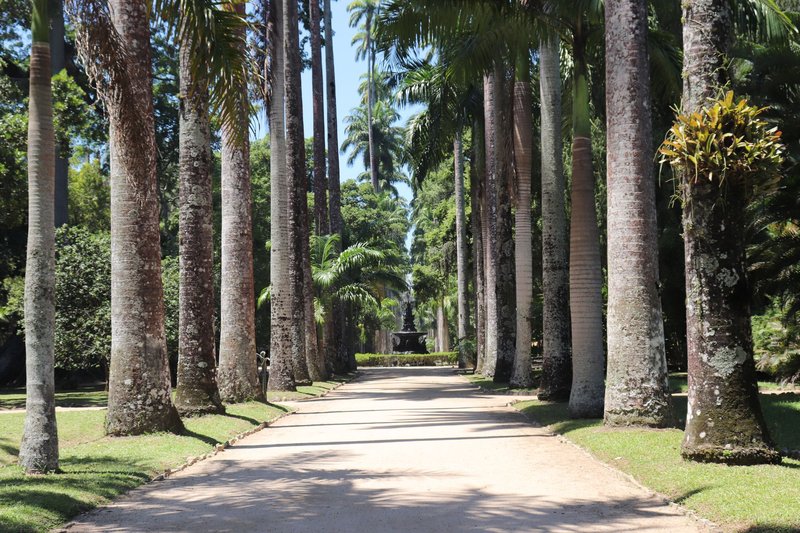
Spanish name: palma real | Scientific name: Roystonea borinquena | Status: native | Grows: lowland valleys, pastures, riverbanks
A royal palm looks like a gray concrete column topped with a green crown. The smooth trunk bulges slightly in the middle and can pass 20 meters. The Taíno used the trunks as building posts and the fronds as thatch for their bohíos, and rural Dominicans still use the palm for roofing and animal fodder. A palm branch also appears on the national coat of arms. If you only get one answer to “what’s the Dominican tree,” this is the one most people give.
3. Mamey
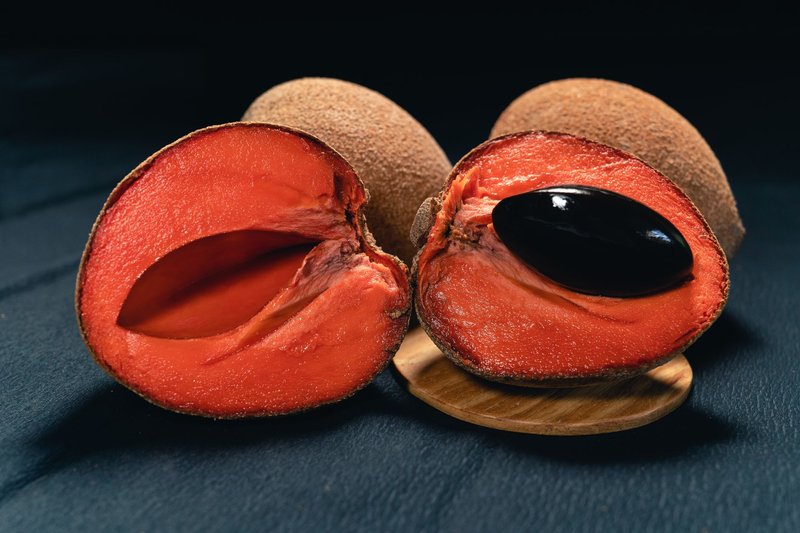
Spanish name: mamey | Scientific name: Mammea americana | Status: native to the Caribbean region | Grows: humid lowlands, yards, farms
Mamey is a big, rounded tree with dark glossy leaves and a thick shade that farmers leave standing in fields. The fruit has a tough brown skin and orange flesh around a large seed, and it’s eaten fresh or turned into juice and jam. Don’t confuse it with the Mexican mamey (Pouteria sapota), a different tree whose fruit goes by the same name in some countries.
4. Yagrumo
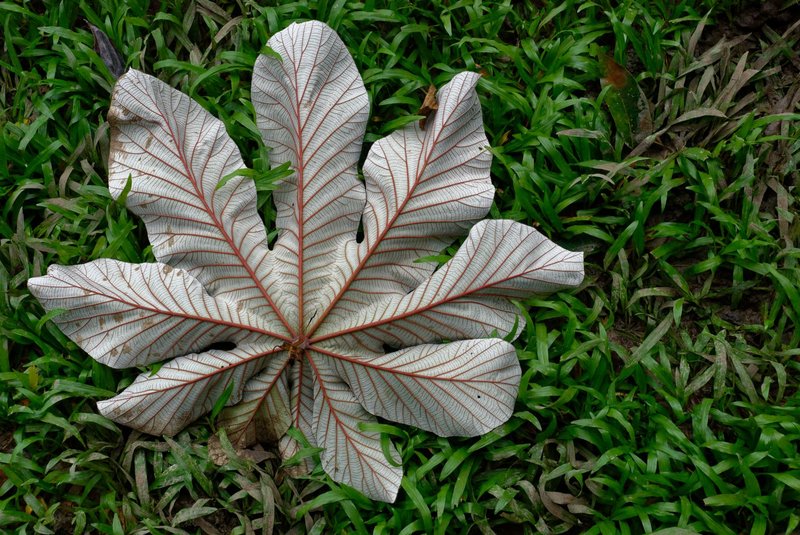
Spanish name: yagrumo | Scientific name: Cecropia schreberiana | Status: native | Grows: disturbed forest, landslide scars, mountain roadsides
You can spot a yagrumo from a moving car. The big, deeply lobed leaves are green on top and silvery-white underneath, so a breeze makes the whole crown flicker. It’s a pioneer tree that grows fast on bare ground, such as a landslide or a hurricane clearing, and then gets shaded out by slower species. The leaves also show up in folk teas across the Dominican countryside.
5. Ébano Verde (Green Ebony)
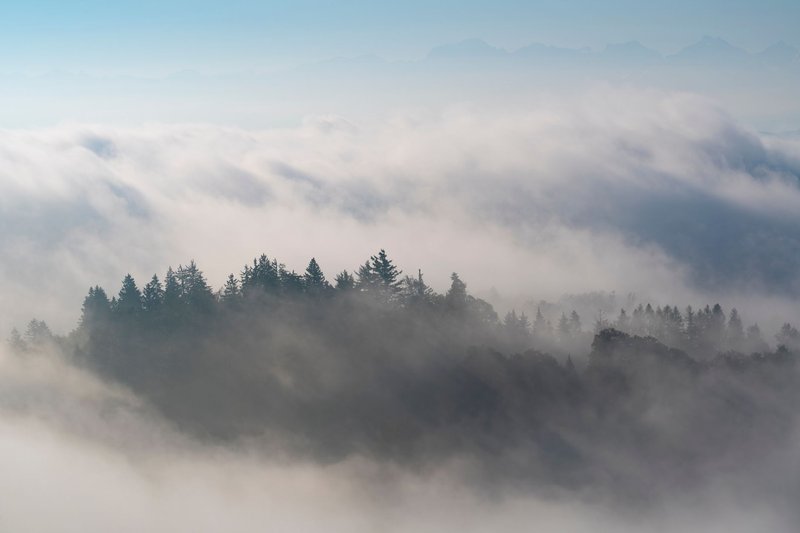
Spanish name: ébano verde | Scientific name: Magnolia pallescens | Status: native, endemic to Hispaniola | Grows: cloud forest in the Cordillera Central
Green ebony is a magnolia, and the connection explains its fragrant flowers. It’s a hard-wooded mountain tree that was cut heavily for timber, which is why the protected Reserva Científica Ébano Verde carries its name. The species has a narrow range, and nearly all that matters for its survival happens inside a handful of reserves. Check its records on Kew’s Plants of the World Online.
Mountain and Cloud Forest Trees
6. Pino Criollo (Hispaniolan Pine)
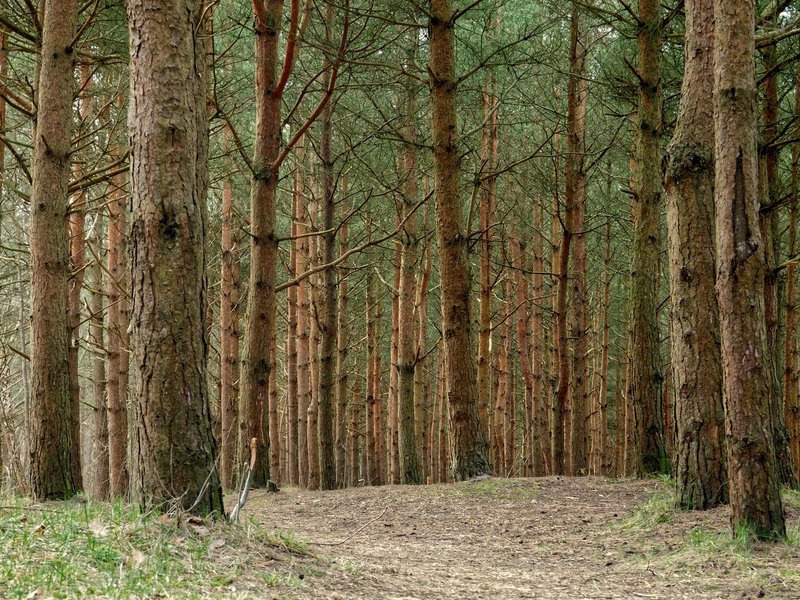
Spanish name: pino criollo | Scientific name: Pinus occidentalis | Status: native | Grows: Cordillera Central and Sierra de Bahoruco, above about 800 meters
This is the tree that surprises first-time visitors. At Valle Nuevo, open pine woodland sits over grass, and winter nights can drop below freezing. The Hispaniolan pine is fire-adapted: thick bark protects it, and fires clear competition and let seedlings sprout. It’s the main pine of the island and the backbone of the highland forests that supply many of the country’s rivers.
7. Ceiba
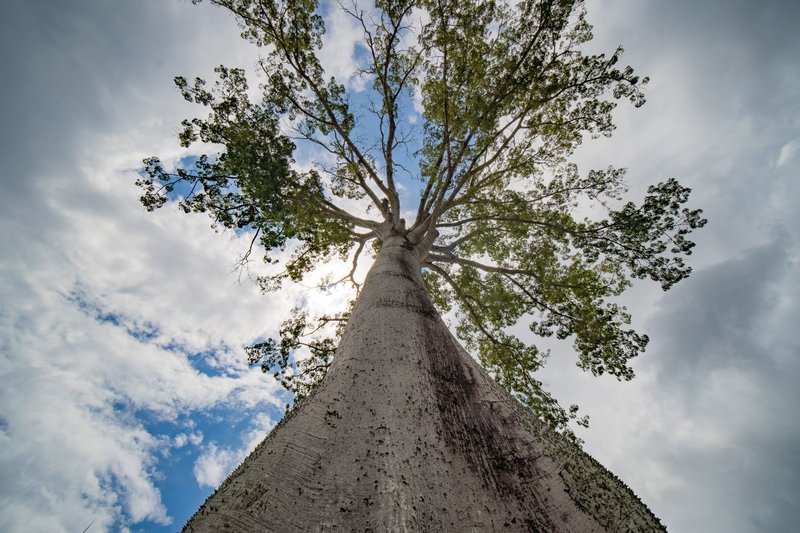
Spanish name: ceiba | Scientific name: Ceiba pentandra | Status: native | Grows: lowland forest, open country, village plazas
Ceibas are the tallest trees most visitors will see outside the mountains. Huge buttress roots flare out from the base like walls, and the smooth gray trunk is often studded with conical thorns when young. Taíno communities treated the ceiba as sacred, and they also carved dugout canoes from its trunks. Isolated giants still stand in fields, left alone by farmers who prefer not to cut them.
8. Guayacán
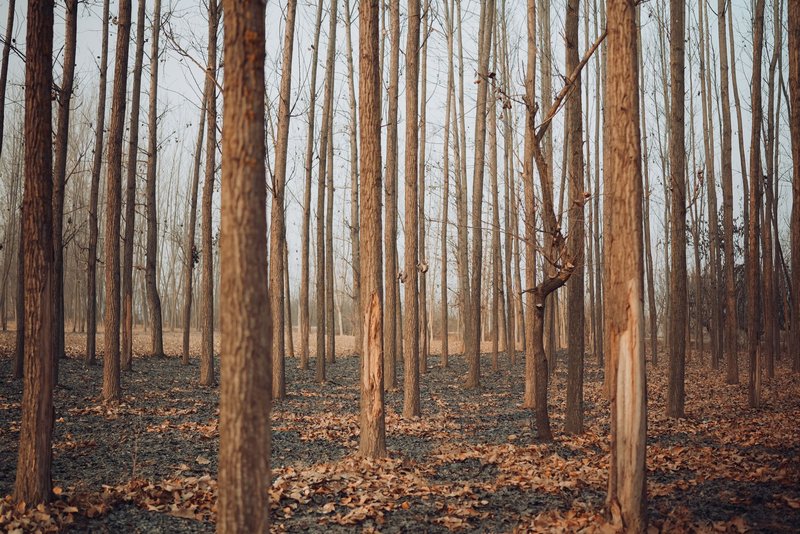
Spanish name: guayacán | Scientific name: Guaiacum officinale | Status: native, threatened | Grows: coastal dry forest, especially the south and southwest
Guayacán wood is so dense that it sinks in water. The tree grows slowly into a twisted, compact shape with small, oval leaves and clusters of blue-purple flowers. Its resin was a famous colonial-era medicine, and the wood was used for ship bearings. Overharvesting put it on the IUCN Red List as Endangered. Conservation groups such as Grupo Jaragua work in the dry southwest, where this tree and several other endemics hang on.
Palms of the Dominican Republic
Palm trees in the Dominican Republic are less uniform than the postcards suggest. Some are natives that predate people, growing alongside dozens of other native plants of the Dominican Republic. Others, like the coconut, came with Europeans.
9. Coco (Coconut Palm)
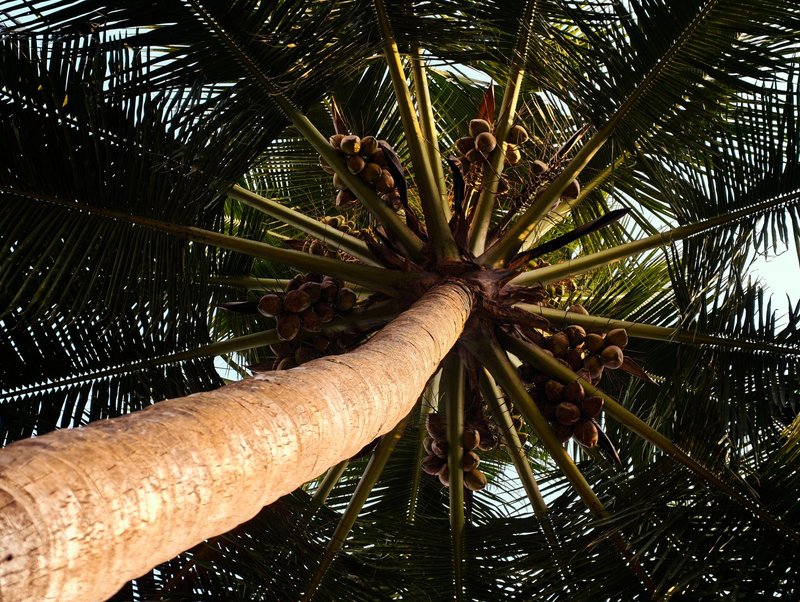
Spanish name: palma de coco | Scientific name: Cocos nucifera | Status: introduced (16th century) | Grows: beaches and coastal plains
The coconut palm is the tree of every Dominican beach, and it’s not native. It reached Hispaniola in the 16th century, after Europeans carried it across the Atlantic. The Samaná peninsula is the best-known coconut country, with long groves running down to the water. Dominican cooks use the milk in sweets, and the husks and fronds end up as fuel and thatch.
10. Palma Cana (Hispaniolan Palmetto)
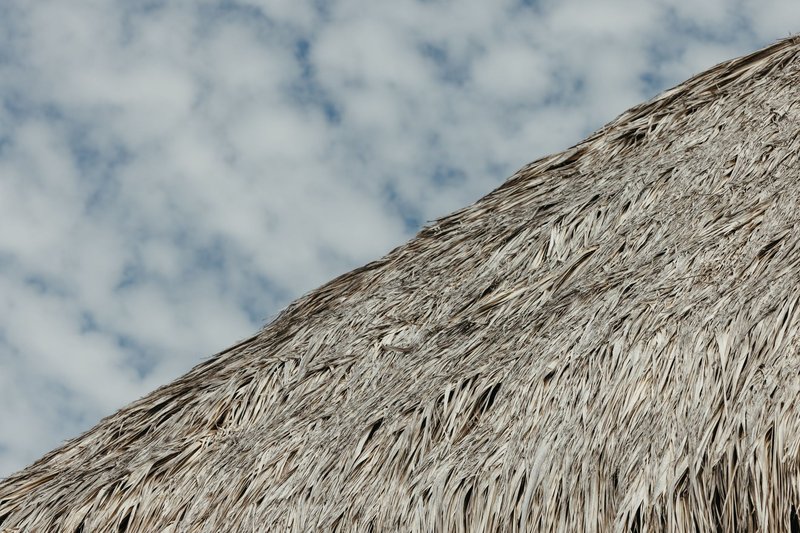
Spanish name: palma cana | Scientific name: Sabal domingensis | Status: native | Grows: savannas, dry slopes, roadsides
Cana palms have fan-shaped leaves instead of feathery fronds, and they’re the traditional roofing palm of the island. The leaves are layered into thick thatch that sheds rain and keeps houses cool. Today you see the same technique on beach bars and resort palapas. When you pass a fan-leaf palm growing out of poor, dry soil, it’s probably this one.
Fruit Trees
Dominican yards and farms are full of fruit trees, and most of the big names came from somewhere else.
11. Mango
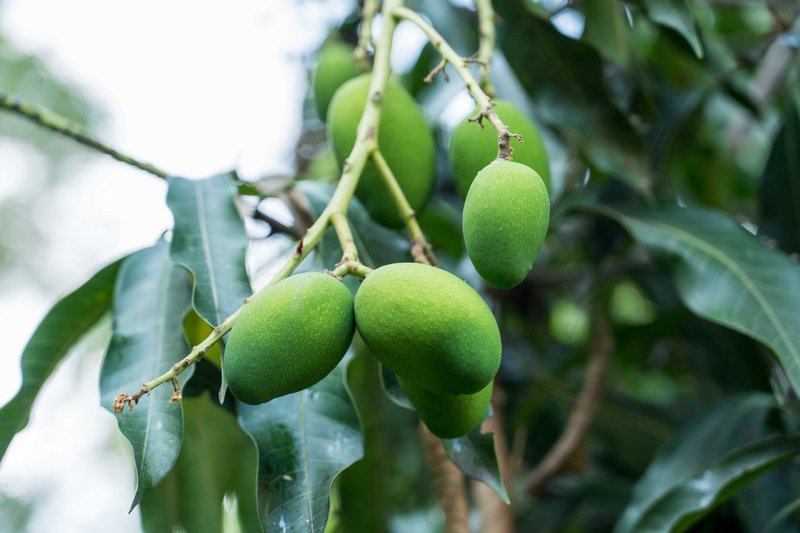
Spanish name: mango | Scientific name: Mangifera indica | Status: introduced (from South Asia) | Grows: yards, farms, roadsides, lowlands
A mango tree is a dense, dome-shaped shade tree that can reach 30 meters and live for decades. Dominicans have named varieties of their own, and mango banilejo, from the Baní area, has a reputation for sweetness. The country is a major mango exporter. Fruit comes in through late spring and summer, and in season you’ll find mangoes sold by the bag from roadside stands.
12. Aguacate (Avocado)
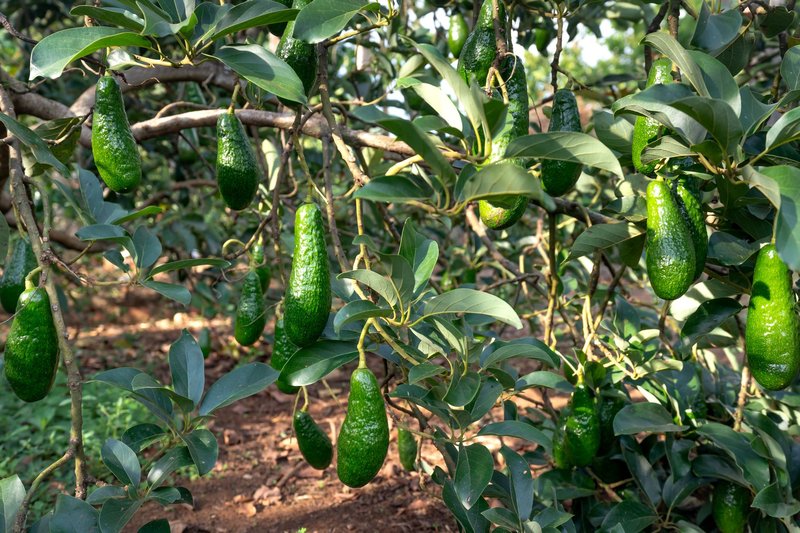
Spanish name: aguacate | Scientific name: Persea americana | Status: introduced (from Mesoamerica) | Grows: foothills and valleys
Dominican avocados are famously huge, often larger than a grapefruit and sold with the seed still rattling inside. The trees grow tall and spreading, with leathery leaves. They are a staple of the Dominican table, served sliced beside fried plantain or mangú. The Dominican Republic ranks among the larger avocado-producing countries in the world.
13. Cacao
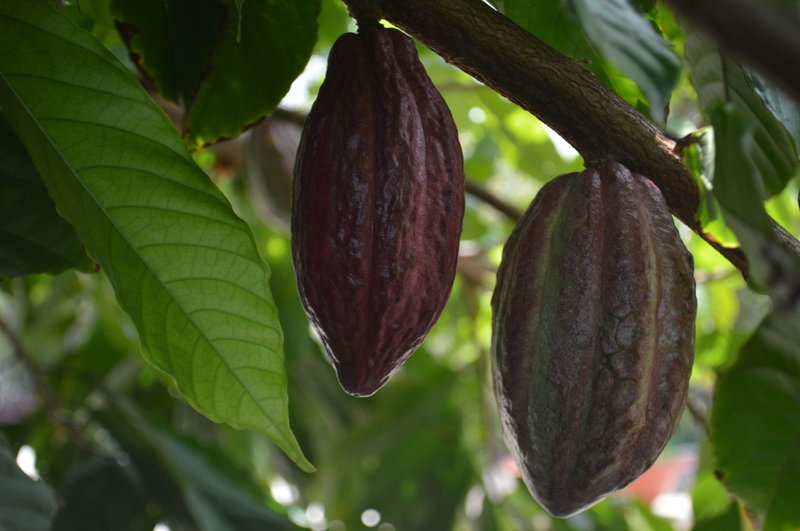
Spanish name: cacao | Scientific name: Theobroma cacao | Status: introduced (native to the Amazon basin) | Grows: humid lowlands under shade trees
Cacao is a small understory tree, and its pods grow straight out of the trunk instead of the branches. They turn yellow, orange or red when ripe, and the beans inside are fermented and dried to make chocolate. The Dominican Republic is one of the world’s leading exporters of organic cacao. Most of it grows under taller shade trees, so cacao farms act as small pockets of forest.
Trees You’ll See at Resorts and on the Coast
14. Flamboyán (Royal Poinciana)
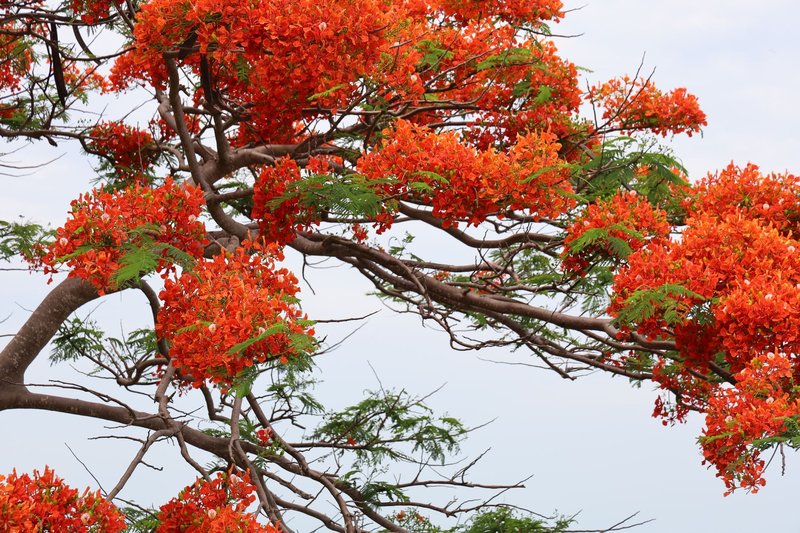
Spanish name: flamboyán | Scientific name: Delonix regia | Status: introduced (from Madagascar) | Grows: parks, streets, resort grounds
Flamboyán trees have an umbrella-shaped crown that turns bright red-orange in late spring and summer, making it one of the most striking of the country’s flowering species. The tree comes from Madagascar, where it’s Endangered in the wild, yet it has become common across the tropics because people plant it for shade and color. In the Dominican Republic it lines avenues and fills resort lawns. After flowering it drops long, brown seed pods that rattle in the wind.
15. Uva de Playa (Sea Grape)
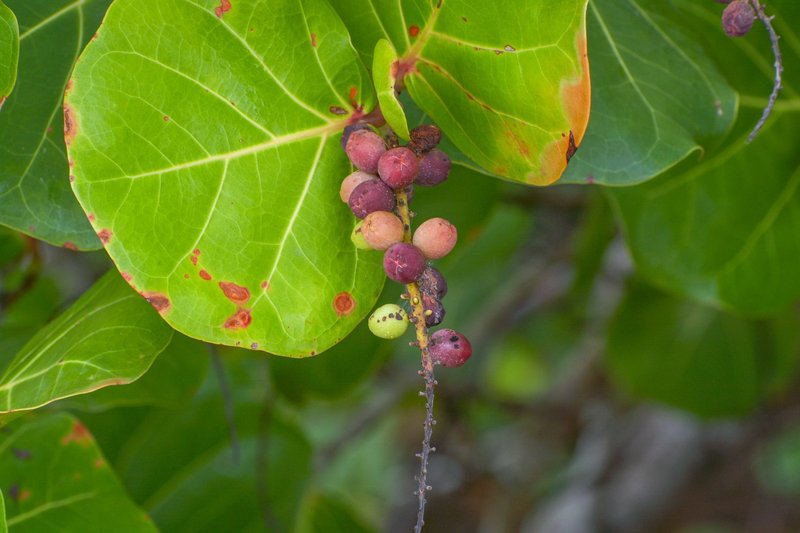
Spanish name: uva de playa | Scientific name: Coccoloba uvifera | Status: native | Grows: beaches and dunes
Sea grape has round, leathery leaves with red veins and sprawls just above the high-tide line. The roots help hold sand in place against storms, which is why resorts try to keep the stands intact. The fruit grows in grape-like clusters and is edible, though the large seed means there isn’t much flesh. Locals make jelly and wine from it.
16. Mangle Rojo (Red Mangrove)
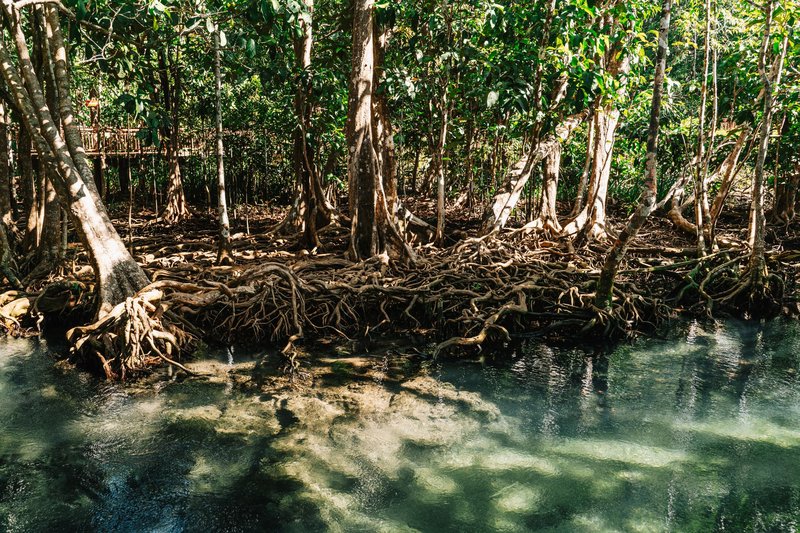
Spanish name: mangle rojo | Scientific name: Rhizophora mangle | Status: native | Grows: tidal shores, bays, estuaries
Red mangroves stand on arching prop roots that lift the trunk above the water. The roots trap sediment, shelter young fish and slow storm surge, so a mangrove shore protects the coast behind it. The Los Haitises National Park, next to Samaná Bay, is the best place to see them, and boat tours run through the channels. Mangroves are the reason that stretch of coast stays muddy and quiet.
Where to See Dominican Trees
- Jardín Botánico Nacional, Santo Domingo. One of the largest botanical gardens in the Caribbean, with palms, native timber trees and a Japanese garden. Best for seeing many species in one afternoon.
- Los Haitises National Park. Red mangroves, limestone hills and humid forest, reached by boat from Samaná or Sabana de la Mar.
- Valle Nuevo National Park. Hispaniolan pine, cold mornings and open highland. A good base for the Cordillera Central.
- Reserva Científica Ébano Verde. Cloud forest protecting green ebony, near Jarabacoa and Constanza.
- Jaragua National Park and the southwest. Dry forest with guayacán and other endemics.
- Samaná peninsula. Coconut groves and, further inland, mango, cacao and royal palm.
- Casa de Campo, La Romana. Planted palms and shade trees on resort grounds, useful for matching names to trees.
Endangered species like Ekman’s trumpet tree, Jaragua’s canelilla and Oviedo’s cherry palm exist only on this island and nowhere else. Most visitors never see them, but they’re a good reason to treat the dry southwest as more than a stop on the way to the beach.