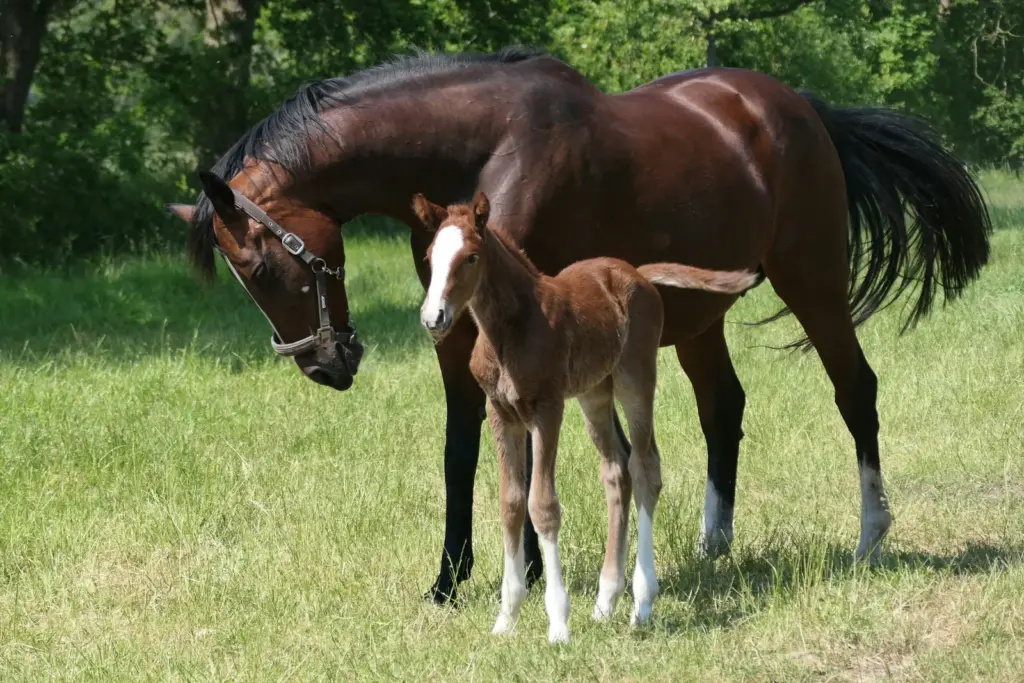
A 1-year-old horse is about 11.5 in human years, a 2-year-old is 18 and a 5-year-old is 24. After that a light riding horse gains about 2.75 human years for each horse year, so a 20-year-old is about 65 and a horse at its typical lifespan of 25 years is 79. The popular chart (6.5 at year 1) and the times-3 rule both give much lower ages for a young horse.
Choose a breed or a type, enter your horse’s age and the horse years calculator returns the human-equivalent age, the life stage and the age your horse becomes a senior. It also works in reverse, from human years to horse years, and it shows how the result compares with the popular chart and the times-3 rule. This page also answers how long horses live, including ponies, draft horses, donkeys and mules. Every chart on it comes from the same model.
How to use the horse years calculator
Pick a breed or type, enter an age and read the human equivalent. The calculator takes four steps.
- Pick a breed, or “Not sure of the breed”. The breed sets your horse’s typical lifespan, which sets how fast the scale runs. If you are unsure, choose the closest type: light horse, warmblood, pony, miniature horse, draft horse, donkey or mule.
- Enter your horse’s age. Use years and months, or the foaling date. Months matter in the first two years, when a horse ages fastest.
- Read the result. You get the human-equivalent age, the life stage and the age at which your horse reaches the senior stage.
- Switch to human to horse years to turn a person’s age into a horse age for the same breed or type. The conversion is the exact inverse of the horse-to-human one.
A horse older than its type’s typical lifespan is labeled “past the typical lifespan”. That describes where the horse sits on the scale. It is not a prognosis, and many horses get there with good care, regular dental work and vet visits. The scale stops at 122 human years, the oldest verified human age.
Also own a dog? The dog years calculator works the same way for dogs. The full set of tools is on the calculators page.
Horse years to human years chart
A 1-year-old horse is 12 in whole human years (11.5 exactly), a 5-year-old is 24, a 10-year-old is 38 and a 20-year-old is 65, for a light riding horse. The chart gives whole human years for horses aged 1 to 40, by type. Light horses and warmbloods share a column, as do ponies and miniature horses, and donkeys and mules.
| Horse age | Light / warmblood | Pony / miniature | Draft | Donkey / mule |
|---|---|---|---|---|
| 1 | 12 | 12 | 12 | 12 |
| 2 | 18 | 18 | 18 | 18 |
| 3 | 20 | 20 | 20 | 20 |
| 4 | 22 | 22 | 22 | 22 |
| 5 | 24 | 24 | 24 | 24 |
| 6 | 27 | 26 | 27 | 26 |
| 7 | 30 | 29 | 30 | 28 |
| 8 | 32 | 31 | 34 | 31 |
| 9 | 35 | 34 | 37 | 33 |
| 10 | 38 | 36 | 40 | 35 |
| 11 | 41 | 38 | 43 | 37 |
| 12 | 43 | 41 | 47 | 39 |
| 13 | 46 | 43 | 50 | 42 |
| 14 | 49 | 46 | 53 | 44 |
| 15 | 52 | 48 | 56 | 46 |
| 16 | 54 | 50 | 60 | 48 |
| 17 | 57 | 53 | 63 | 50 |
| 18 | 60 | 55 | 66 | 53 |
| 19 | 63 | 57 | 69 | 55 |
| 20 | 65 | 60 | 73 | 57 |
| 21 | 68 | 62 | 76 | 59 |
| 22 | 71 | 65 | 79 | 61 |
| 23 | 74 | 67 | 81 | 64 |
| 24 | 76 | 69 | 82 | 66 |
| 25 | 79 | 72 | 84 | 68 |
| 26 | 80 | 74 | 85 | 70 |
| 27 | 82 | 77 | 87 | 72 |
| 28 | 83 | 79 | 89 | 75 |
| 29 | 85 | 80 | 90 | 77 |
| 30 | 86 | 81 | 92 | 79 |
| 31 | 87 | 83 | 94 | 80 |
| 32 | 89 | 84 | 95 | 81 |
| 33 | 90 | 85 | 97 | 82 |
| 34 | 91 | 86 | 98 | 83 |
| 35 | 93 | 87 | 100 | 85 |
| 36 | 94 | 89 | 102 | 86 |
| 37 | 96 | 90 | 103 | 87 |
| 38 | 97 | 91 | 105 | 88 |
| 39 | 98 | 92 | 107 | 89 |
| 40 | 100 | 93 | 108 | 90 |
Three things stand out. Every type is the same through age 5: 12 at year 1, 18 at year 2 and 24 at year 5, because growth and tooth milestones vary little across breeds. After year 5 the types separate: at 20 a draft horse is 73, a light horse 65, a pony 60 and a donkey 57. The reason is the scale. Each type’s typical lifespan lands on 79 human years, which a draft horse reaches at 22, a light horse at 25, a pony at 28 and a donkey at 30.
The chart in a short form: 1 horse year = 12, 2 = 18, 5 = 24, 10 = 35 to 40, 15 = 46 to 56, 20 = 57 to 73, 25 = 68 to 84, 30 = 79 to 92.
Human years to horse years chart
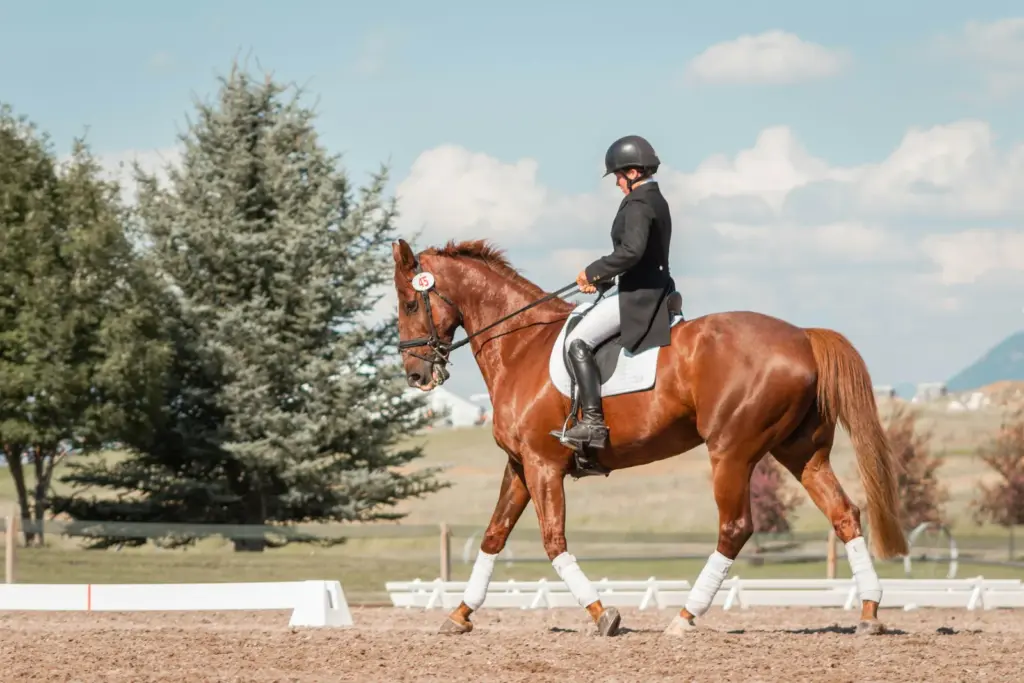
A 10-year-old child matches a horse of 10 months, an 18-year-old matches a horse of 2 years and a 50-year-old matches a light horse of 14 years 5 months. Find the human age in the first column. The cells give the horse’s age in years (y) and months (mo).
| Human age | Light / warmblood | Pony / miniature | Draft | Donkey / mule |
|---|---|---|---|---|
| 5 | 7 mo | 7 mo | 7 mo | 7 mo |
| 10 | 10 mo | 10 mo | 10 mo | 10 mo |
| 15 | 1 y 6 mo | 1 y 6 mo | 1 y 6 mo | 1 y 6 mo |
| 18 | 2 y | 2 y | 2 y | 2 y |
| 21 | 3 y 6 mo | 3 y 6 mo | 3 y 6 mo | 3 y 6 mo |
| 24 | 5 y | 5 y | 5 y | 5 y |
| 30 | 7 y 2 mo | 7 y 6 mo | 6 y 10 mo | 7 y 9 mo |
| 35 | 9 y | 9 y 7 mo | 8 y 5 mo | 10 y |
| 40 | 10 y 10 mo | 11 y 8 mo | 9 y 11 mo | 12 y 3 mo |
| 45 | 12 y 8 mo | 13 y 9 mo | 11 y 6 mo | 14 y 7 mo |
| 50 | 14 y 5 mo | 15 y 10 mo | 13 y | 16 y 10 mo |
| 55 | 16 y 3 mo | 18 y | 14 y 7 mo | 19 y 1 mo |
| 60 | 18 y 1 mo | 20 y 1 mo | 16 y 2 mo | 21 y 4 mo |
| 65 | 19 y 11 mo | 22 y 2 mo | 17 y 8 mo | 23 y 8 mo |
| 70 | 21 y 9 mo | 24 y 3 mo | 19 y 3 mo | 25 y 11 mo |
| 75 | 23 y 7 mo | 26 y 4 mo | 20 y 9 mo | 28 y 2 mo |
| 80 | 25 y 9 mo | 28 y 10 mo | 22 y 7 mo | 30 y 11 mo |
| 85 | 29 y 4 mo | 33 y | 25 y 9 mo | 35 y 5 mo |
| 90 | 33 y | 37 y 2 mo | 28 y 10 mo | 40 y |
| 95 | 36 y 8 mo | 41 y 5 mo | 31 y 11 mo | 44 y 7 mo |
| 100 | 40 y 3 mo | 45 y 7 mo | 35 y | 49 y 1 mo |
Up to about age 24 the types agree, because they share the same early anchors. From age 30 the types diverge: a 30-year-old person matches a light horse of 7 years 2 months, a pony of 7 years 6 months, a draft horse of 6 years 10 months and a donkey of 7 years 9 months. A 79-year-old matches a horse at the end of its typical lifespan, which is 25 years for a light horse.
How long do horses live?
A well-cared-for horse lives about 25 years, and breed-care sources quote 25 to 30 years for riding horses. Studies that follow whole populations report a lower median age at death, from 14.3 years for French saddle horses to 18.8 years for insured Swedish horses, because they count accidents and euthanasia at every age.
This calculator sets a typical lifespan for each type, shown below next to the best cohort figure for that type.
| Type | Typical lifespan used here | Median age at death in studies |
|---|---|---|
| Light / riding horse | 25 years | 14.3 years, French saddle horses (deaths only) |
| Warmblood / sport horse | 25 years | 18.8 years, Swedish insured horses enrolled before age 1 |
| Pony | 28 years | 16.9 years, French ponies (deaths only) |
| Miniature horse | 28 years | No study |
| Draft horse | 22 years | 8.3 years, French draught horses (deaths only) |
| Donkey | 30 years | 8.4 years, French donkeys (deaths only); just over 30 years average life expectancy at The Donkey Sanctuary |
| Mule | 30 years | No study |
Typical lifespan versus median age at death
The two numbers measure different things. A typical lifespan is what a horse in good care can expect. A median age at death is when half of the horses in a study had died, and it includes every cause. Four studies set the range:
- Sweden: in a life-insurance database covering 1997 to 2000, the median age at death of horses enrolled before they were 1 year old was 18.8 years (Egenvall et al. 2006).
- France: a register of 10,335 equines aged 2 and over, with deaths recorded at rendering plants from 2011 to 2014, gave median ages at death of 16.9 years for ponies, 14.3 for saddle horses, 8.3 for draught horses and 8.4 for donkeys (Tapprest et al. 2017). The study counts only deaths in a four-year window and excludes slaughter, about 30% of deaths, so its medians run low. Most donkeys (90%) and many ponies (76%) had no birth date and were left out.
- United Kingdom: in 908 horses aged 15 and over, deaths ran at 11.1 per 100 horse-years, and 94% were euthanasia, with lameness behind 24% of deaths and colic 21% (Ireland et al. 2011). Our rough calculation from that rate puts the expected age at death of a horse that reaches 15 at 23 to 24 years.
- United States: in the USDA’s 2015 equine survey, 11.4% of resident equids were 20 or older, up from 5.6% in 1998 and 7.6% in 2005.
No study gives a lifespan by breed. The breed figures in the next section come from breed-care sources and describe a well-kept horse, not a median.
How long do ponies and miniature horses live?
Ponies live longer than most horse types. This calculator uses 28 years for ponies and miniature horses, and breed-care sources give 20 to 35 years for a Shetland pony. In the French data ponies had the highest median age at death, 16.9 years, against 14.3 for saddle horses. In a US hospital series of horses aged 20 and over, ponies were over-represented at 30 and older (Brosnahan and Paradis 2003). The oldest pony on record, Sugar Puff, reached 56. No study exists for miniature horses, and breed-care sources give 25 to 35 years.
How long do draft horses live?
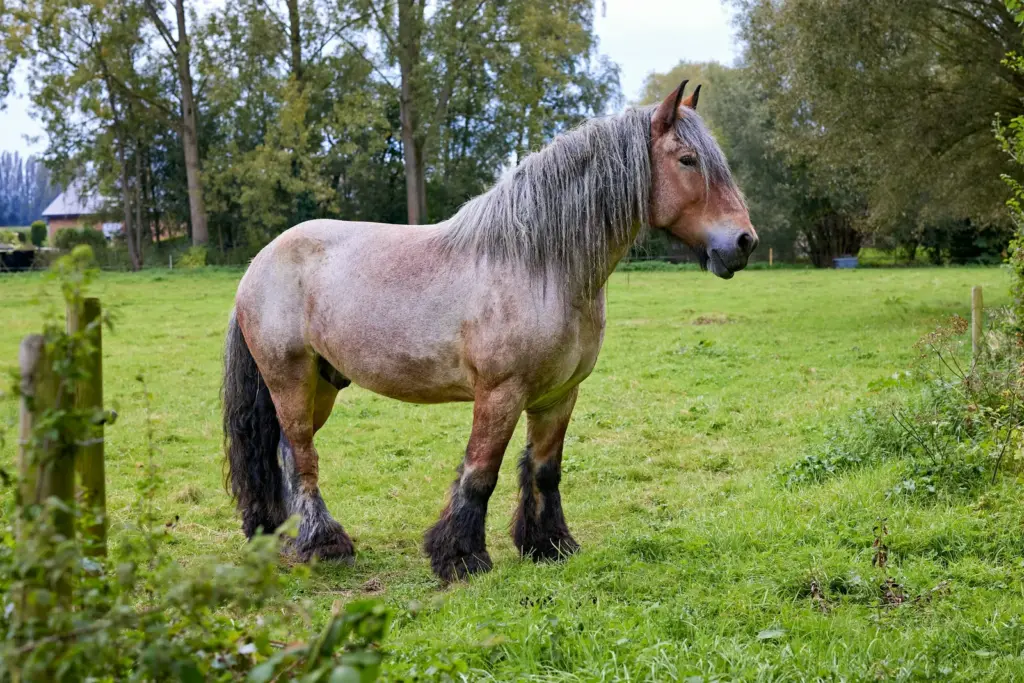
This calculator uses 22 years for draft horses, with 22 for a Clydesdale and 24 for a Percheron. Sources disagree. Breed-care figures for draft breeds run from 18 to 30 years, and the French data gave draught horses the lowest median age at death in that study, 8.3 years. A 20-year-old draft horse is 73 in human years, the oldest reading of any type at that age.
How long do donkeys and mules live?
Donkeys live about 30 years in good care. The Donkey Sanctuary reports an average life expectancy of just over 30 years for donkeys in its care, and a veterinary reference quotes an average age at death of 27 (Svendsen 1997). Breed-care sources give 25 to 40 years. Mules are usually quoted at 30 years or more, and no cohort data exist for them. The calculator uses 30 for both, so a 30-year-old donkey or mule is at its typical lifespan and reads 79. See donkeys vs mules for how the two animals differ.
Horse years by breed
Breed changes the answer because breed-care sources give breeds different typical lifespans. At age 20 a Quarter Horse is 65 in human years, an Arabian 62, a Clydesdale 73, a Shetland Pony 60 and a Friesian 83. The table lists the human-equivalent age at 10, 20 and 25 years for all 51 breeds and types in the calculator, with each breed’s typical lifespan and the age at which it becomes a senior.
| Breed | Type | Typical lifespan (range) | Senior from | 10 y | 20 y | 25 y |
|---|---|---|---|---|---|---|
| Akhal-Teke | Light | 25 (20-30) | 15 | 38 | 65 | 79 |
| American Saddlebred | Light | 25 (20-30) | 15 | 38 | 65 | 79 |
| Appaloosa | Light | 26 (20-30) | 15.6 | 37 | 63 | 76 |
| Arabian | Light | 27 (22-33) | 16.2 | 37 | 62 | 74 |
| Missouri Fox Trotter | Light | 25 (20-30) | 15 | 38 | 65 | 79 |
| Morgan | Light | 27 (22-32) | 16.2 | 37 | 62 | 74 |
| Mustang | Light | 25 (18-30) | 15 | 38 | 65 | 79 |
| Paint Horse | Light | 25 (20-30) | 15 | 38 | 65 | 79 |
| Paso Fino | Light | 26 (22-32) | 15.6 | 37 | 63 | 76 |
| Quarter Horse | Light | 25 (20-30) | 15 | 38 | 65 | 79 |
| Rocky Mountain Horse | Light | 25 (20-30) | 15 | 38 | 65 | 79 |
| Standardbred | Light | 24 (18-28) | 14.4 | 38 | 67 | 80 |
| Tennessee Walking Horse | Light | 25 (20-30) | 15 | 38 | 65 | 79 |
| Thoroughbred | Light | 24 (20-28) | 14.4 | 38 | 67 | 80 |
| Andalusian | Warmblood | 27 (22-32) | 16.2 | 37 | 62 | 74 |
| Cleveland Bay | Warmblood | 25 (20-30) | 15 | 38 | 65 | 79 |
| Dutch Warmblood | Warmblood | 24 (20-28) | 14.4 | 38 | 67 | 80 |
| Hanoverian | Warmblood | 24 (20-28) | 14.4 | 38 | 67 | 80 |
| Holsteiner | Warmblood | 24 (20-28) | 14.4 | 38 | 67 | 80 |
| Irish Draught | Warmblood | 25 (22-30) | 15 | 38 | 65 | 79 |
| Irish Sport Horse | Warmblood | 25 (20-30) | 15 | 38 | 65 | 79 |
| Lipizzaner | Warmblood | 28 (25-35) | 16.8 | 36 | 60 | 72 |
| Lusitano | Warmblood | 27 (22-32) | 16.2 | 37 | 62 | 74 |
| Oldenburg | Warmblood | 24 (20-28) | 14.4 | 38 | 67 | 80 |
| Trakehner | Warmblood | 25 (20-30) | 15 | 38 | 65 | 79 |
| Belgian | Draft | 22 (18-28) | 13.2 | 40 | 73 | 84 |
| Clydesdale | Draft | 22 (18-28) | 13.2 | 40 | 73 | 84 |
| Draft Cross | Draft | 24 (20-30) | 14.4 | 38 | 67 | 80 |
| Friesian | Draft | 18 (14-22) | 10.8 | 45 | 83 | 94 |
| Gypsy Vanner | Draft | 23 (18-28) | 13.8 | 39 | 70 | 82 |
| Percheron | Draft | 24 (20-30) | 14.4 | 38 | 67 | 80 |
| Shire | Draft | 24 (20-30) | 14.4 | 38 | 67 | 80 |
| Suffolk Punch | Draft | 24 (20-28) | 14.4 | 38 | 67 | 80 |
| Chincoteague Pony | Pony | 24 (18-28) | 14.4 | 38 | 67 | 80 |
| Connemara | Pony | 27 (20-32) | 16.2 | 37 | 62 | 74 |
| Dartmoor Pony | Pony | 27 (22-32) | 16.2 | 37 | 62 | 74 |
| Exmoor Pony | Pony | 28 (22-35) | 16.8 | 36 | 60 | 72 |
| Fjord | Pony | 28 (20-35) | 16.8 | 36 | 60 | 72 |
| Haflinger | Pony | 29 (25-35) | 17.4 | 35 | 58 | 70 |
| Highland Pony | Pony | 27 (22-32) | 16.2 | 37 | 62 | 74 |
| Icelandic Horse | Pony | 28 (25-35) | 16.8 | 36 | 60 | 72 |
| New Forest Pony | Pony | 27 (22-32) | 16.2 | 37 | 62 | 74 |
| Pony of the Americas | Pony | 27 (22-32) | 16.2 | 37 | 62 | 74 |
| Shetland Pony | Pony | 28 (20-35) | 16.8 | 36 | 60 | 72 |
| Welsh Cob | Pony | 27 (22-32) | 16.2 | 37 | 62 | 74 |
| Welsh Pony | Pony | 29 (25-35) | 17.4 | 35 | 58 | 70 |
| Falabella | Miniature | 25 (20-30) | 15 | 38 | 65 | 79 |
| Miniature Horse | Miniature | 28 (25-35) | 16.8 | 36 | 60 | 72 |
| Donkey | Donkey | 30 (25-40) | 18 | 35 | 57 | 68 |
| Miniature Donkey | Donkey | 30 (25-40) | 18 | 35 | 57 | 68 |
| Mule | Mule | 30 (25-40) | 18 | 35 | 57 | 68 |
The lifespans come from breed-care sources, not registry or cohort statistics, because none exist at breed level. Where a breed carries a caveat, the calculator shows it:
- Friesian: popular sources put Friesians below most breeds, at about 15 to 20 years, so the table uses 18. That makes a 20-year-old Friesian 83 in human terms.
- Thoroughbred: a UK study of horses aged 15 and over found higher mortality in Thoroughbred and cob types than in other types.
- Mustang: the figure is for domestic and adopted mustangs. Horses living wild die much younger.
- Chincoteague Pony: the figure is for ponies in human care in a managed herd.
- Clydesdale: sources range from the low 20s to about 30 years.
- Draft Cross: a draft cross sits between its parents. Use the type picker if you are unsure.
Horse years vs the popular chart and “times 3”
One horse year is not 3 human years, and a 1-year-old horse is not 6.5. At age 1 this calculator gives 11.5, the popular chart gives 6.5 and the times-3 rule gives 3. The methods differ most in the first years of life.
| Horse age | This calculator (light horse) | Popular chart | Times 3 |
|---|---|---|---|
| 1 | 12 | 6.5 | 3 |
| 2 | 18 | 13 | 6 |
| 3 | 20 | 18 | 9 |
| 5 | 24 | 23 | 15 |
| 10 | 38 | 35.5 | 30 |
| 15 | 52 | 48 | 45 |
| 20 | 65 | 60.5 | 60 |
| 25 | 79 | 73 | 75 |
| 30 | 86 | 85.5 | 90 |
| 35 | 93 | 98 | 105 |
The popular chart says a horse is 6.5 at year 1, 13 at year 2 and 18 at year 3, then 20.5 at year 4 and 2.5 more for each year after. The earliest trace is a chart that The Horse reported in 2003 as created by equine veterinarians and released by Pfizer Animal Health, and the earliest full table we found is from the Saddle Horse Report in 2006. We found no scientific basis for it. Year 5 is 23 in every table we could read.
The first years differ because of puberty. Horses reach puberty at 10 to 11 months, and as early as 8 (Rogers et al. 2021), which matches a human age of about 10 to 12. That gives 11.5 at year 1. The popular chart effectively pairs a 2-year-old horse with a 13-year-old person. Puberty also has a second meaning in horses, the first fertile breeding season at 12 to 25 months, and this model uses the biological onset.
From age 5 the popular chart adds 2.5 human years a year and this calculator adds 2.75 for a light horse, so they converge: the chart is 4.8 below this calculator at 20 (60.5 against 65.3) and 0.4 below at 30 (85.5 against 85.9). The chart reaches 79 at age 27.4. This calculator reaches it at 25 for a light horse.
“Times 3” is attributed to Martin-Rosset (2012), who writes that after age 3 a horse’s age can be multiplied by 3. Applied from birth it falls below this calculator until age 28 and runs above it from there: 105 at age 35 against 93. It reaches 79 at 26.3.
This calculator anchors the early years to measured milestones and sets the pace afterward from the type’s lifespan.
Horse life stages, from foal to geriatric
A horse is a foal until age 1, a yearling from 1 to 2, a young horse from 2 to 5 and an adult from 5. A light horse becomes a senior at 15 and geriatric at 20. The calculator fixes the first four boundaries for every type and places the last two at 60% and 80% of the type’s typical lifespan. Human ages below are for a light horse.
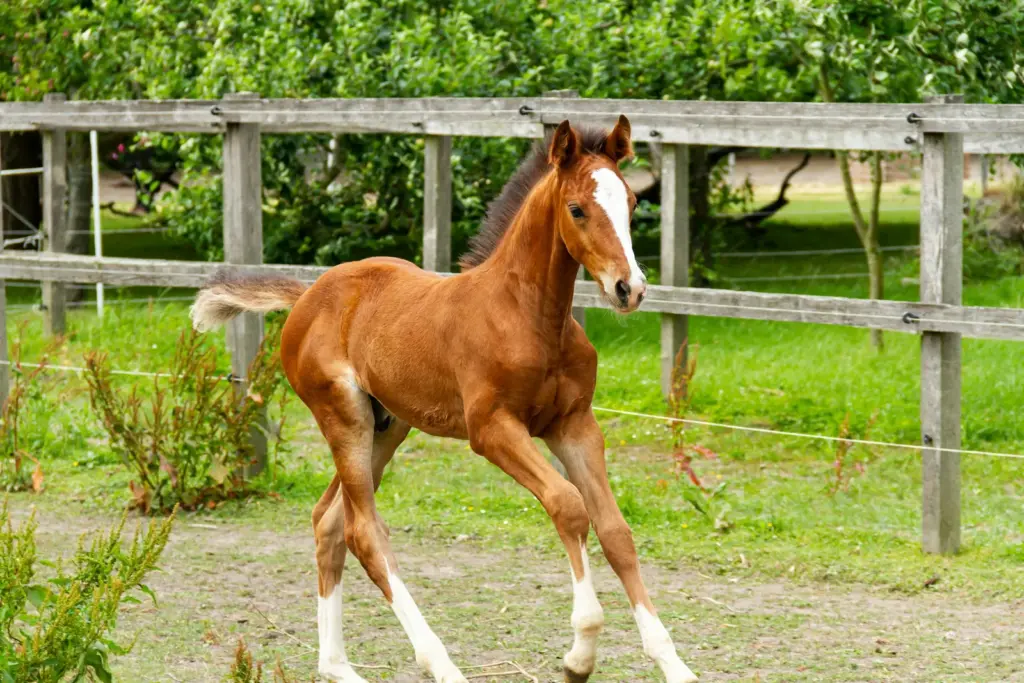
- Foal (birth to 1 year, human 0 to 11.5): nursing, then weaning at 4 to 6 months, which ends the infant growth phase. A Thoroughbred foal is born at about 60% of its mature height.
- Yearling (1 to 2 years, human 11.5 to 18): past puberty and still growing.
- Young horse (2 to 5 years, human 18 to 24): skeletal maturity arrives at 24 months by most definitions, and a Thoroughbred has reached about 98% of its adult wither height. In Icelandic horses the limb growth plates had closed by about 3 years (Strand et al. 2007).
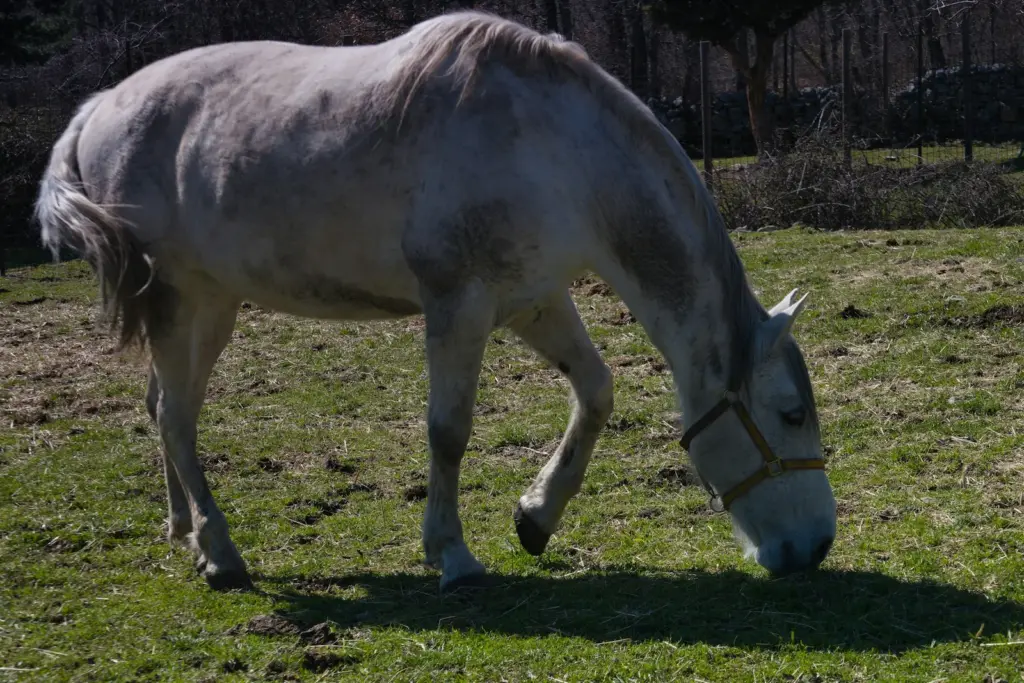
- Adult (5 years on, human 24 and up): the permanent teeth are complete at 5, and the US equine survey counts horses from 5 to under 20 as one age class.
- Senior (from 15 years, human 51.5): see below.
- Geriatric (from 20 years, human 65.3): the stage most vets treat as old age.
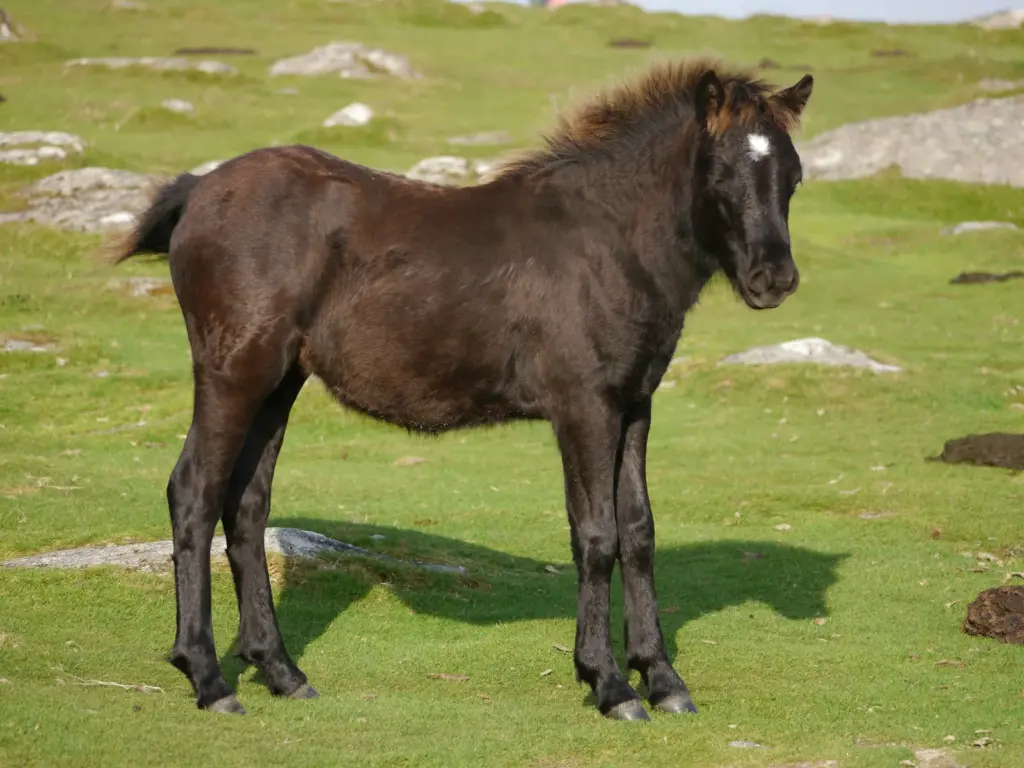
One caveat on the adult boundary: a source that is not peer-reviewed (Bennett) puts closure of the spine at 5.5 to 6 years or later, so a horse can be an adult by this calculator and still be finishing growth.
When is a horse a senior?
A horse is a senior from 15 in research on geriatric horses and from 20 in most modern use. No AAEP-wide numeric age exists. UK studies of geriatric horses start at 15 (Ireland et al. 2011), and a US hospital study defined its geriatric group as horses 20 and over (Brosnahan and Paradis 2003). In a companion survey, owners perceived their horses as old at about 22. Vets who study old horses call 15 to 20 mature, 20 to 29 old and 30 and over very old (Paradis, reported in dvm360 proceedings).
The calculator labels the stages from the type’s typical lifespan, because no separate cut-offs have been published for ponies or donkeys. The Donkey Sanctuary says many donkeys show old age in their early twenties.
| Type | Typical lifespan (years) | Senior from (human age) | Geriatric from (human age) |
|---|---|---|---|
| Light / riding horse | 25 | 15 y (51.5) | 20 y (65.3) |
| Warmblood / sport horse | 25 | 15 y (51.5) | 20 y (65.3) |
| Pony | 28 | 16.8 y (52.2) | 22.4 y (65.6) |
| Miniature horse | 28 | 16.8 y (52.2) | 22.4 y (65.6) |
| Draft horse | 22 | 13.2 y (50.5) | 17.6 y (64.8) |
| Donkey | 30 | 18 y (52.6) | 24 y (65.8) |
| Mule | 30 | 18 y (52.6) | 24 y (65.8) |
In human terms the senior stage begins between 50.5 and 52.6 for every type and the geriatric stage between 64.8 and 65.8.
How to tell a horse’s age by its teeth
Vets estimate the age of a young horse from which permanent incisors have erupted. The central incisors arrive at about 2.5 to 3 years, the intermediates at 3.5 to 4 and the corner incisors at 4.5 to 5, and the permanent set is complete by 5. After that the estimate loses accuracy.
| Permanent tooth | MSD Veterinary Manual | eXtension Horses |
|---|---|---|
| Central incisors | 2.5 years | About 3 years |
| Intermediate incisors | 3.5 years | About 4 years |
| Corner incisors | 4.5 years | About 5 years (“full mouth”) |
| Canines | 4 to 5 years | 4 to 5 years in geldings and stallions, rarely in mares |
The two sources differ by about six months on incisor ages. The MSD manual also lists wolf teeth at 5 to 6 months and says eruption of the permanent set is typically complete by 5 years.
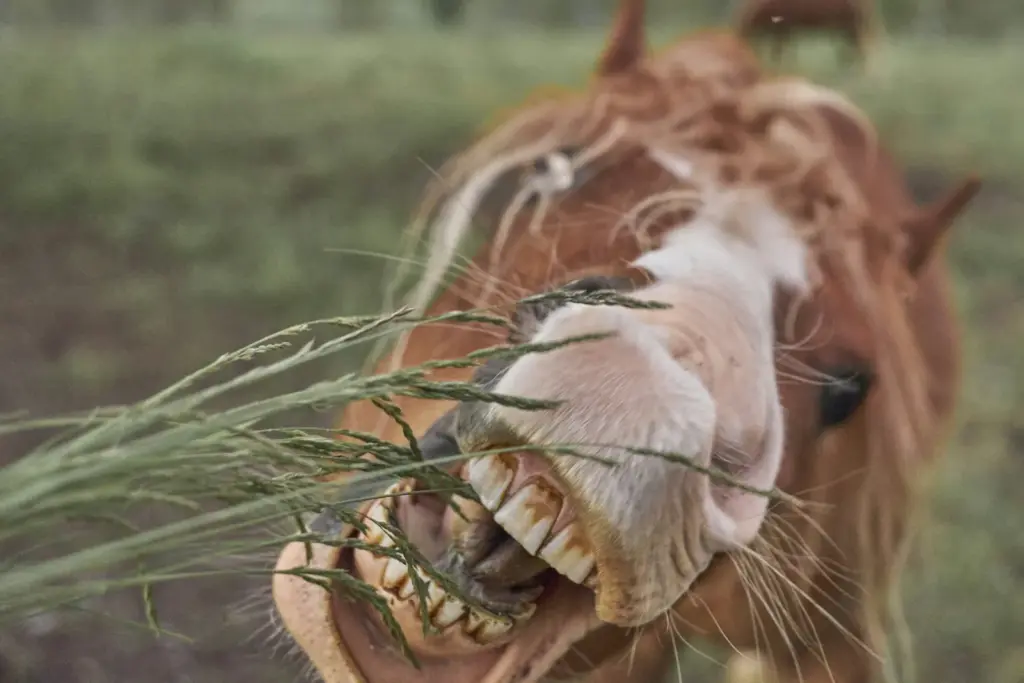
Accuracy falls with age. eXtension reports that estimates decline after 10 to 14 years. In a study of 434 Thoroughbreds of known age, four clinicians aged the horses from photographs and their errors grew with age (Richardson et al. 1995), which makes dental aging an informed guess. Use teeth to confirm a young horse’s age, and rely on a foaling date or registration papers for an older one.
Oldest horses on record
The oldest horse on record is Old Billy, who lived 62 years, from 1760 to 1822, in Lancashire, England. Guinness World Records calls this the greatest age reliably recorded for a horse.
| Record | Animal | Age |
|---|---|---|
| Oldest horse | Old Billy (1760 to 1822) | 62 |
| Oldest Thoroughbred | Tango Duke (1935 to 1978) | 42 |
| Oldest pony | Sugar Puff, a 10-hand Shetland and Exmoor cross gelding, put down on 25 May 2007 | 56 |
The verification method for the Old Billy figure is not explained, and the AnAge longevity database calls it anecdotal and lists 57 as the maximum for the species. The calculator accepts ages up to 60 years and caps the result at 122 human years. A light horse or warmblood reaches that cap at 56.3 horse years, a pony or miniature at 64.0, a draft horse at 48.6 and a donkey or mule at 69.1.
Caring for an older horse
An older horse needs more vet attention, not less. In the UK study of 908 horses aged 15 and over, 94% of deaths were euthanasia, with lameness behind 24% and colic behind 21%. Horses over 30 died at more than five times the rate of horses aged 15 to 19.
- Old age is the most common cause of death after 20. In the US survey, owners reported it as the leading cause in horses 20 and over, and annual mortality in that class was 3.1%.
- Hormonal disease turns up late. In hospital cases aged 20 and over, pituitary dysfunction was more common in horses over 30 (Brosnahan and Paradis 2003).
- Teeth, joints and weight need closer watching from the senior stage, according to the calculator’s life-stage notes, and the geriatric stage brings more vet and dental visits and softer feed.
- Type matters. Thoroughbred and cob types had higher mortality than other types in the UK study.
Ask your vet how often your horse needs senior check-ups and dental work. The senior age this calculator shows is a prompt to book one.
How this calculator works
The calculator pairs four developmental milestones with human ages, then runs a straight line to the horse’s typical lifespan and slows down after it.
The model
- Fixed anchors. Birth is 0. A horse of 5 months is 3 in human years, because weaning ends the infant growth phase. At 11 months it is 11, the typical onset of puberty. At 24 months it is 18, when skeletal maturity is reached by most measures and human peak bone mass is about 18 (Rogers et al. 2021). At 60 months it is 24, when the permanent teeth are complete. One set of anchors serves every type because Rogers and colleagues report little variation across breeds.
- Linear to the typical lifespan. From age 5 the scale is a straight line chosen so that the type’s or breed’s typical lifespan maps to 79, the 2024 US life expectancy at birth (CDC NCHS Data Brief 548). A light horse gains 2.75 human years per horse year, a pony 2.39, a draft horse 3.24 and a donkey 2.20.
- A slower tail. Past the typical lifespan each horse year counts as half of an earlier one, which is 1.38 human years for a light horse, 1.20 for a pony, 1.62 for a draft horse and 1.10 for a donkey. The factor is a modelling choice, checked against record ages. The result is capped at 122.
- Types and breeds. A breed uses its own typical lifespan. “Not sure of the breed” uses the type’s: 25 years for light horses and warmbloods, 28 for ponies and miniatures, 22 for draft horses and 30 for donkeys and mules.
Data
The anchors come from Rogers et al. (2021) and the MSD Veterinary Manual, and the stage boundaries from Ireland et al. (2011) and Brosnahan and Paradis (2003). The lifespans for 51 breeds and types come from breed-care sources, because no breed-level survival data exist. The type lifespans are a judgment placed between the cohort medians at death (14 to 19 years for riding horses) and the 25 to 30 years quoted by breed-care sources. No source states 25, 28, 22 or 30 as such.
Validation
- Human age never decreases as horse age rises. The check covered 78,952 pairs of profile and age, across the 7 types and all 51 breeds from 0 to 60 years in half-month steps, with 0 violations.
- Converting a human age back to horse years returns the original age to within 0.05 horse years, even after the human age is rounded to one decimal.
- At age 20 the popular chart is 4.8 human years below this calculator for a light horse (60.5 against 65.3) and times 3 is 5.3 below (60).
- The cap ages fall near the records: 56.3 for a light horse against Sugar Puff’s 56, and 64.0 for a pony against Old Billy’s 62.
Limitations
- The typical lifespan is an estimate for a well-cared-for horse, not a prognosis. The calculator describes how far along its expected life a horse is and does not predict how long an individual horse will live.
- Draft horses are given 22 years, shorter than light horses, in line with the French data. Breed-care sources disagree, so the draft figures are the least certain in the table.
- Senior and geriatric ages for ponies and donkeys are scaled from the type’s lifespan. No separate cut-offs have been published.
- One anchor set covers every type. Late closure of the spine, reported by Bennett, is not modeled.
- Unlike the dog years calculator, this one has no DNA-methylation comparison, because no such formula maps horse age to human age.
- No measurement defines a horse’s “human age”. Every conversion, including this one, is a model.
Sources
- Rogers CW, Gee EK, Dittmer KE (2021). Growth and bone development in the horse: when is a horse skeletally mature? Animals 11(12):3402. doi:10.3390/ani11123402
- Strand E et al. (2007). Radiographic closure time of appendicular growth plates in the Icelandic horse. Acta Veterinaria Scandinavica 49:19. PMC1950711
- Bennett D. Timing and rate of skeletal maturation in horses (not peer-reviewed). hoofrehab.com
- MSD Veterinary Manual. Estimation of age by examination of the teeth in animals
- Loch W, Bradley L (2020). Determining the age of horses by their teeth. eXtension Horses.
- Richardson JD et al. (1995). Veterinary Record. PMID 8533248
- Egenvall A, Penell JC, Bonnett BN, Olson P, Pringle J (2006). Veterinary Record 158:397-406. PMID 16565338
- Tapprest J et al. (2017). Equine Veterinary Journal. PMID 28079926
- Ireland JL et al. (2011). Equine Veterinary Journal PMID 21143631 and Preventive Veterinary Medicine PMID 21733586
- Brosnahan MM, Paradis MR (2003). Journal of the American Veterinary Medical Association 223:93-98 (hospital cases aged 20 and over), and the companion owner survey, PMID 12839072
- USDA APHIS. NAHMS Equine 2015 study, mortality and demographics reports.
- Guinness World Records. Oldest horse ever. AnAge: Equus caballus.
- Sugar Puff: Horse & Hound and TheHorse.com.
- The Horse (2003). Age relationship chart reveals more about humans and horses. Saddle Horse Report (2006). age table. Animal Corner, Horse years.
- Martin-Rosset W (2012). Le cheval. Quae. Times 3 as quoted in Wikipedia, “Geriatric horse”.
- Paradis M, as reported in What’s new with old horses? Geriatric medicine update, dvm360 proceedings.
- NCHS (2026). Mortality in the United States, 2024. Data Brief 548 (US life expectancy 79.0 years).
The breed and type lifespans, all conversions and the charts are florafaunafun.com calculations, and the original authors did not review or endorse them.
How old is a 20-year-old horse in human years?
A 20-year-old light riding horse or warmblood is about 65 in human years. A pony or miniature horse is 60, a draft horse 73 and a donkey or mule 57. The calculator stretches each type's typical lifespan to 79 human years, so shorter-lived types age faster per year. At 20 a light horse is in the geriatric stage.
How long do horses live?
A well-cared-for horse lives about 25 years, and breed-care sources quote 25 to 30 for riding horses. Studies that follow whole populations report lower medians at death, 18.8 years for insured Swedish horses and 14.3 for French saddle horses, because they include accidents and euthanasia at any age. Ponies and donkeys are quoted at 28 to 30 years.
Is 1 horse year 3 human years?
No. At age 1 a horse is about 11.5 in human years, because horses reach puberty at 10 to 11 months. The popular chart gives 6.5 for year 1 and the times-3 rule gives 3. Times 3 comes close only in the 20s: at 25 it gives 75 against 79 for a light horse here. At 5 years it gives 15 against 24.
How old is a 1-year-old horse in human years?
About 11.5, similar to an 11-year-old child nearing puberty. A 2-year-old horse is 18 and a 5-year-old is 24, for every type and breed. The popular chart says 6.5 for a 1-year-old, but horses enter puberty at 10 to 11 months, and as early as 8, which matches a human age of about 10 to 12.
When is a horse considered a senior?
Research uses 15 or 20. UK studies of geriatric horses start at 15 and a US hospital study used 20 and over. No AAEP-wide age exists. The calculator labels a light horse senior from 15 (51.5 in human years) and geriatric from 20 (65.3). Ponies are senior from 16.8, draft horses from 13.2 and donkeys from 18, because the cut-offs scale to typical lifespan.
How long do ponies live?
Ponies typically live about 28 years in this calculator, and breed-care sources give 20 to 35 years for Shetland ponies and 25 to 35 for Welsh ponies. In French data ponies had the highest median age at death, 16.9 years, against 14.3 for saddle horses. The oldest pony on record, Sugar Puff, reached 56.
How long do donkeys live?
About 30 years with good care. The Donkey Sanctuary reports an average life expectancy of just over 30 years in its care, and breed-care sources range from 25 to 40. Mules are quoted at 30 years or more, with no cohort data. This calculator treats a 30-year-old donkey or mule as 79 in human years.
What is the oldest horse ever?
Old Billy, who lived 62 years and died in 1822 in Lancashire, England. Guinness World Records calls it the greatest age reliably recorded for a horse, though the verification method is not explained and the AnAge database lists 57 as the species maximum. The Thoroughbred record is Tango Duke at 42, and the oldest pony on record is Sugar Puff at 56.
How do you tell a horse's age by its teeth?
Vets read which permanent teeth have erupted. The central incisors arrive at about 2.5 to 3 years, the intermediates at 3.5 to 4 and the corners at 4.5 to 5, and the set is complete by 5. After 10 to 14 years the estimate gets unreliable: in a study of 434 Thoroughbreds of known age, clinicians' errors grew with age.
How do I convert human years to horse years?
Use the calculator's human to horse years mode, or the chart on this page. A 30-year-old person matches a light horse of 7 years 2 months and a 50-year-old matches 14 years 5 months. A 79-year-old matches a horse at its typical lifespan, 25 years for a light horse. Ponies and donkeys run slower, so the same person matches an older horse.
How accurate is a horse years calculator?
It is an estimate, because no one has measured a horse's human age. The early anchors come from measured milestones: weaning at 4 to 6 months, puberty at 10 to 11 months, skeletal maturity at 24 months and a full mouth at 5 years. The lifespan that sets the later pace is a breed-care figure for a well-kept horse, not a prognosis.
How long do draft horses live?
This calculator uses 22 years for draft horses, with 22 for a Clydesdale and 24 for a Percheron. Sources disagree. Breed-care figures run from 18 to 30 years, while French data gave draught horses the lowest median age at death, 8.3 years, with slaughter excluded. A 20-year-old draft horse is 73 in human years.