As an Amazon Associate we earn from qualifying purchases. Disclosure
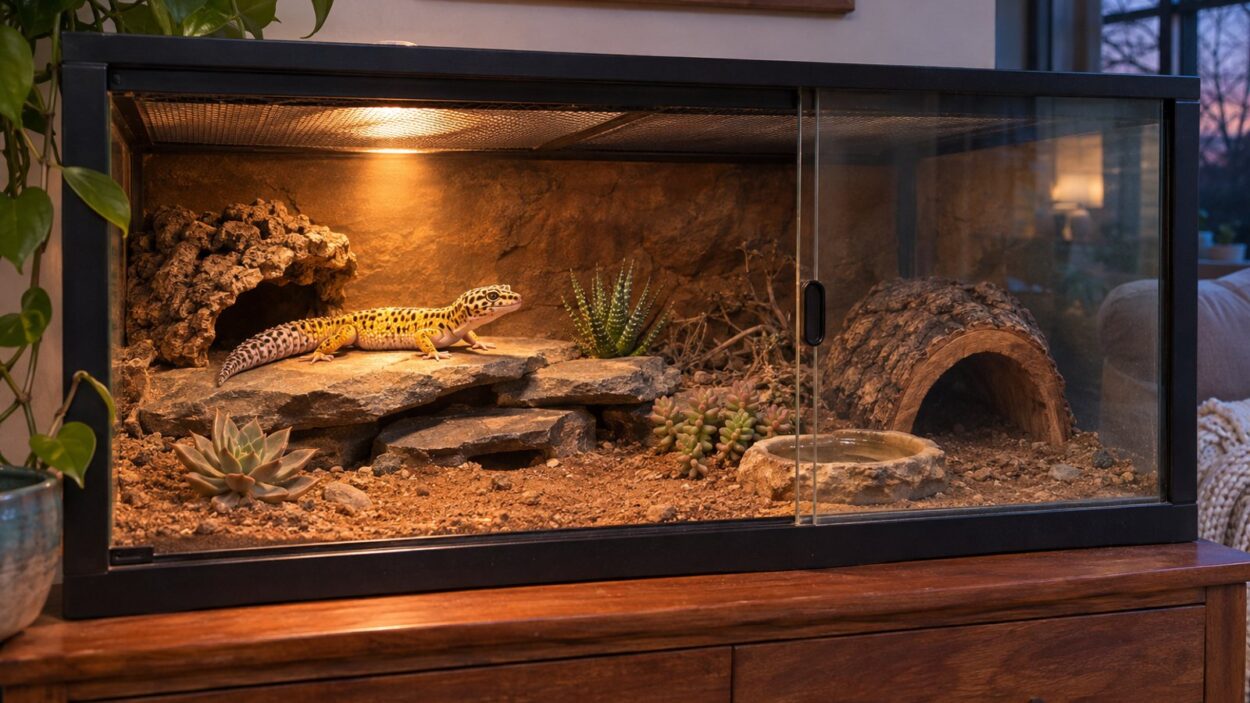
The best leopard gecko enclosure for one adult is a front-opening tank with at least a 36 x 18 inch floor and 18 inches of height. Our top pick is the REPTI ZOO 50 gallon glass terrarium (36 x 18 x 18 inches). If your room runs cool, the REPTI ZOO 36 x 18 x 18 PVC enclosure holds heat better. If you have the space, a 4 x 2 x 2 foot Reptile Habitats PVC enclosure gives a gecko almost twice the floor. A 10 gallon tank or a 20 gallon long is too small for an adult under current care standards. Whichever tank you buy, it also needs a halogen basking bulb, a thermostat and ideally a low-strength UVB tube, so budget for those too.
My first leopard gecko spent her first year in a 20 gallon long on a bedroom dresser, because that is what the pet store sold me with her. She ate well and shed well, and I assumed she was fine. Then I moved her into a 3-foot enclosure with a stack of slate, three hides and a proper basking spot. Within a week she was out every evening, climbing the rocks and patrolling the full length of the glass. She had been fine in the small tank. In the big one she had things to do. Every recommendation below comes from that lesson: buy the floor space first, then the features.
Leopard gecko enclosures at a glance
| Enclosure | Size (inches) | Material | Best for |
|---|---|---|---|
| REPTI ZOO 50 Gallon Glass Terrarium | 36 x 18 x 18 | Glass | Best overall |
| Zilla QuickBuild 36 x 18 x 18 | 36 x 18 x 18 | Tempered glass | Homes with kids or cats (locks) |
| REPTI ZOO 50 Gallon PVC Enclosure | 36 x 18 x 18 | PVC | Cool rooms |
| RepWild 50 Gallon PVC Enclosure | 36 x 18 x 18 | Thick PVC | Alternative PVC pick |
| Reptile Habitats 4x2x2 PVC Enclosure | 48 x 24 x 24 | PVC and aluminum | Best upgrade |
| REPTI ZOO 35 Gallon Wide & Low | 36 x 18 x 12 | Glass | Shelves with low clearance |
| Zoo Med ReptiSun T5 HO 5.0 Hood | 14 inch hood | UVB light | UVB for a 3-foot tank |
| Exo Terra Halogen Basking Spot 50 W | A15 bulb | Heat | Daytime basking heat |
| Exo Terra Dimming Thermostat | 300 W max | Controller | Keeping the basking spot safe |
What size enclosure does a leopard gecko need?
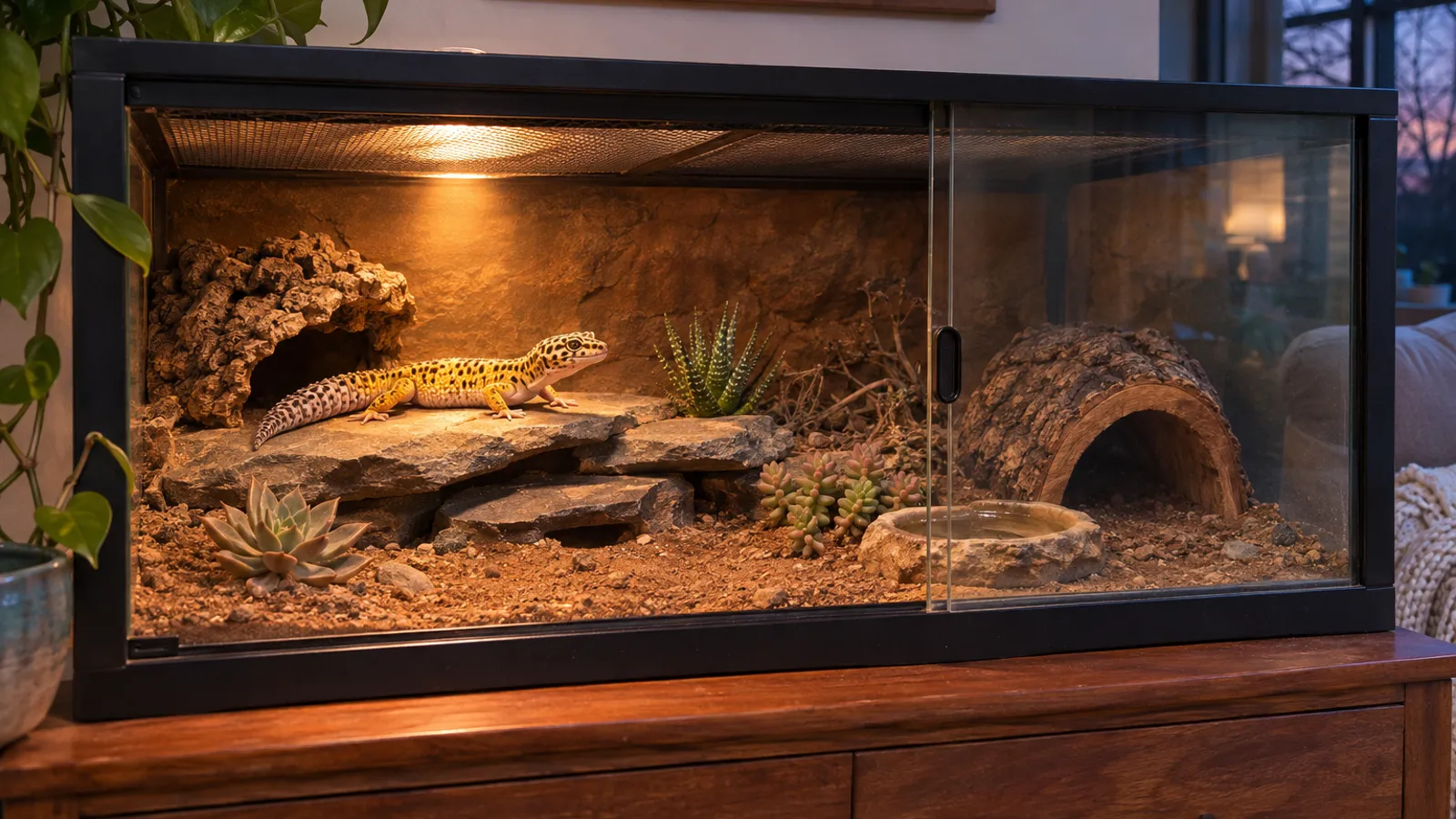
One adult leopard gecko needs at least 36 x 18 inches of floor, which is 4.5 square feet, and 18 inches of height. That is the minimum ReptiFiles gives, and the r/leopardgeckos community guide now points new keepers to a 40 gallon breeder (36 x 18 x 16) as the starting point. The old “20 gallon long” advice still shows up on pet store signs, but keepers have moved away from it because the tank is too short to build a proper heat gradient.
Leopard geckos live on the ground, so floor area matters more than height. They still climb when there is something to climb. Give them stacked slate, cork bark or a sturdy branch and they use the extra height. Gallon numbers are a poor guide: two “40 gallon” tanks can have very different footprints, and a “120 gallon” 4 x 2 x 2 holds closer to 95 gallons once you measure the inside. Shop by the floor dimensions.
| Tank | Floor | Floor area | For one adult |
|---|---|---|---|
| 10 gallon | 20 x 10 in | 1.4 sq ft | Too small |
| 20 gallon long | 30 x 12 in | 2.5 sq ft | Too small |
| 40 gallon breeder | 36 x 18 in | 4.5 sq ft | Minimum |
| 36 x 18 x 18 terrarium | 36 x 18 in | 4.5 sq ft | Minimum |
| 4 x 2 x 2 enclosure | 48 x 24 in | 8 sq ft | Recommended |
Not every source agrees. The RSPCA sets a lower floor of 60 x 30 cm (about 24 x 12 inches) and 40 cm high, and adds that the enclosure “should be as large as possible.” VCA Animal Hospitals still says a single gecko can live in a 10 gallon aquarium. Those figures are welfare minimums, and they are older than the current keeper standard. We built this guide on the 36 x 18 inch floor because that is the size where you can fit a warm end, a cool end, three hides and a climbing stack without crowding any of them.
One gecko per enclosure. ReptiFiles and the RSPCA both advise against housing leopard geckos together: they do not need company and fights can cost a gecko its tail. Two males will fight, and a male and a female will breed.
The best leopard gecko enclosures
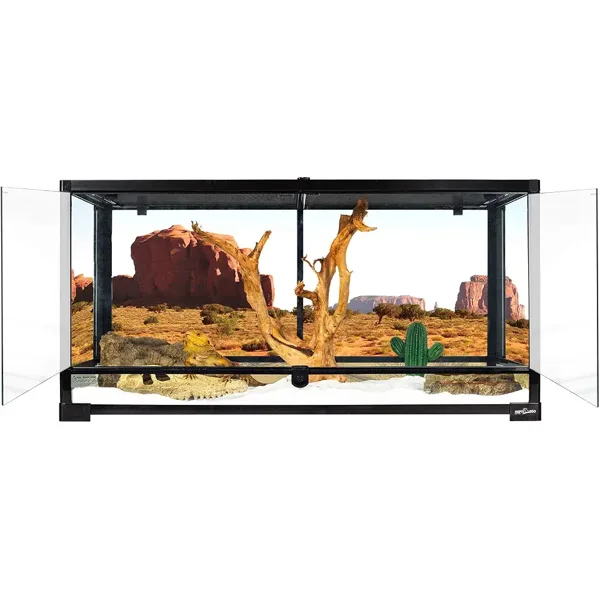
Best overall
1. REPTI ZOO 50 Gallon Glass Terrarium (36 x 18 x 18)
This is the enclosure most leopard gecko care guides point to, and it hits the 36 x 18 x 18 inch standard exactly. Two front doors open separately, so you can reach in from the front instead of coming down from above like a predator. The bottom is water-tight up to the door line, which lets you use a soil and sand mix without it spilling into the frame. A raised base leaves room for an under-tank heater.
Glass gives you the clearest view of your gecko and the sharpest heat gradient: the basking end warms up and the far end stays cool. It ships flat and goes together without tools.
- 36 x 18 x 18 inches, about 51 lb
- Two hinged front doors, side mesh vents, screen top
- Closable cable ports on the left, right and top
- Waterproof base, raised frame for a heat mat
Good: Meets the size standard, front access, waterproof base. Not great: No lock is listed, so add one if you have curious kids or cats. ReptiFiles’ community data puts REPTI ZOO’s top mesh at about 45% UVB loss, so place the UVB lamp closer than you would over a finer mesh.
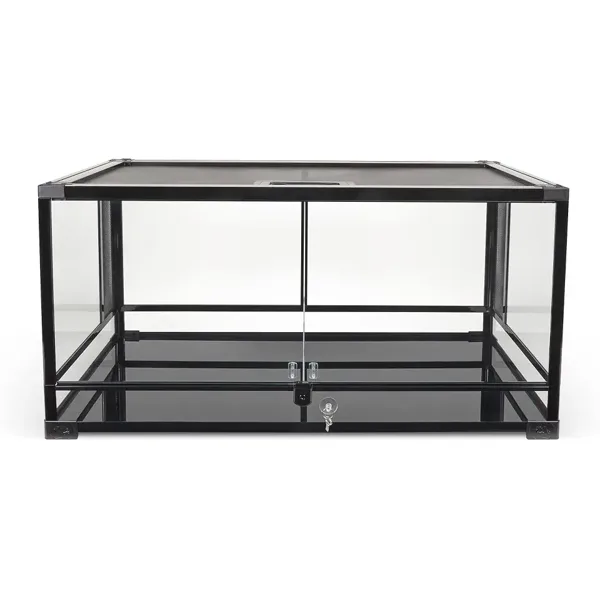
Best for homes with kids or cats
2. Zilla QuickBuild Glass Terrarium (36 x 18 x 18)
The QuickBuild is a tempered glass 36 x 18 x 18 from Zilla with locks on everything: the sliding front doors, the hinged mesh top and the small feeding port in the lid. If a child or a cat could open your gecko’s tank, that matters more than any other feature.
The Amazon title calls this size 65 gallons. It is not. Zilla’s own spec field says 40 gallons, and by outside volume it works out to about 50. The 65 gallon QuickBuild is the 48 inch model. The size you want is the 36 x 18 x 18 option on the listing.
- 36 x 18 x 18 inches, about 48 lb
- Lockable sliding doors, top and feeding port
- Stackable; also sold in 48 x 18 x 18
Good: The most secure glass pick here. Not great: Amazon’s review summary flags doors that do not close cleanly for some buyers; check the doors when you assemble it. The listing does not say whether this size ships with the water-holding base or the bedding tray.
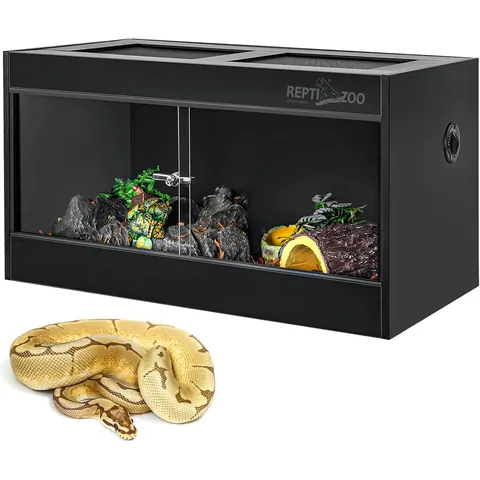
Best for cool rooms
3. REPTI ZOO 50 Gallon PVC Enclosure (36 x 18 x 18)
PVC walls hold heat far better than glass. If your gecko lives in a basement, a north-facing room or anywhere the thermostat drops into the 60s in winter, a PVC enclosure keeps the warm end warm with a smaller bulb. The solid sides and back also mean your gecko is only visible from the front, and many keepers find their geckos settle in faster when they are not exposed on all sides.
This REPTI ZOO model matches the 36 x 18 x 18 standard, has a removable tempered glass sliding door with a lock and weighs about 40 lb, light enough for one person to move.
- 36 x 18 x 18 inches, PVC body, metal frame
- Removable glass sliding door with lock
- Detachable mesh top
Good: Holds heat, light, solid sides. Not great: Amazon reviewers mention leaks and a lock that loosens over time, and the warranty is 90 days. Run a bead of aquarium-safe silicone along the bottom seams before you add a soil mix.
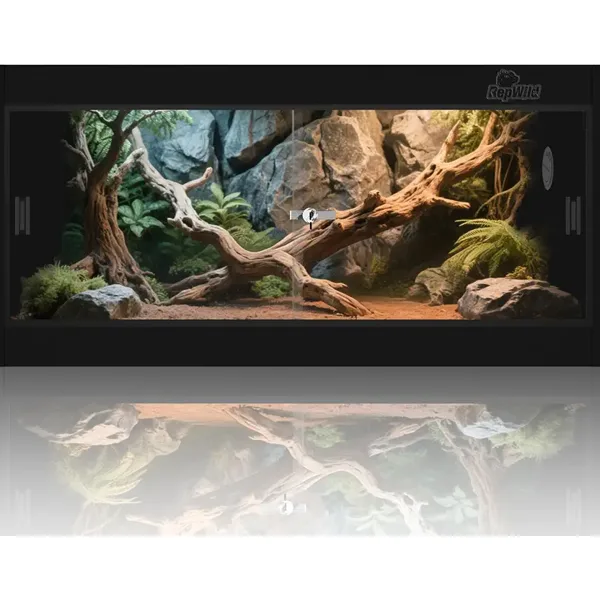
Alternative PVC pick
4. RepWild 50 Gallon PVC Enclosure (36 x 18 x 18)
RepWild lists its PVC panels at 0.6 inches thick, which is heavier stock than most budget PVC enclosures use. Thin PVC can bow at the bottom once 4 inches of soil goes in, a complaint that comes up regularly on r/leopardgeckos, so thicker panels are a real advantage. It has a lockable tempered glass front, a heavy-duty mesh top and weighs about 39 lb.
It is a newer brand with a small review base, shared with its 4 x 2 x 2 model. Buy it as an alternative when the REPTI ZOO PVC is out of stock.
- 36 x 18 x 18 inches listed
- Thick PVC panels, tempered glass door with lock and handle
- Same line in sizes from 24 x 18 x 12 to 48 x 24 x 24
Good: Thick panels, lockable door. Not great: Reviewers report loose sliding glass and plastic inserts that were not glued firmly. The listing recommends silicone sealing for loose or damp substrate.
Best upgrade
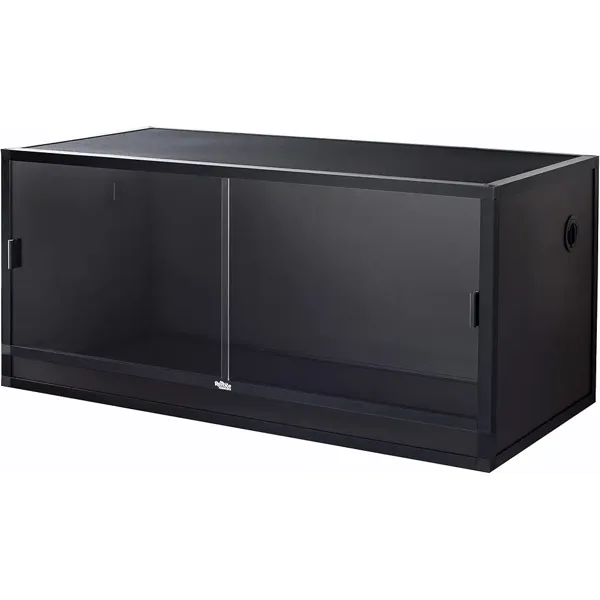
5. Reptile Habitats 4x2x2 PVC Enclosure (48 x 24 x 24)
A 4 x 2 x 2 gives a leopard gecko 8 square feet of floor, almost double the minimum. ReptiFiles puts this size in its “best” tier for leopard geckos. The extra length makes the heat gradient easy: a basking spot at one end, a room-temperature cool end at the other and plenty of space between for a slate stack, a humid hide and some plants.
This model from Dubia.com’s Reptile Habitats line uses an aluminum frame with PVC sides, back and bottom, glass doors and a heavy-duty screen top. It ships flat with a mallet and goes together in about half an hour.
- 48 x 24 x 24 inches
- PVC panels, aluminum frame, acrylic front panel, glass doors
- Cord ports with covers; acrylic substrate panel
Good: Twice the floor of a 3-foot tank, light for its size, finer top mesh (about 33% UVB loss in ReptiFiles’ data). Not great: Not waterproof out of the box: seal the bottom with silicone. The top’s support bars are not rated for weight, so hang your lamps or give them their own stand rather than resting heavy domes on the screen.
Best for a low shelf
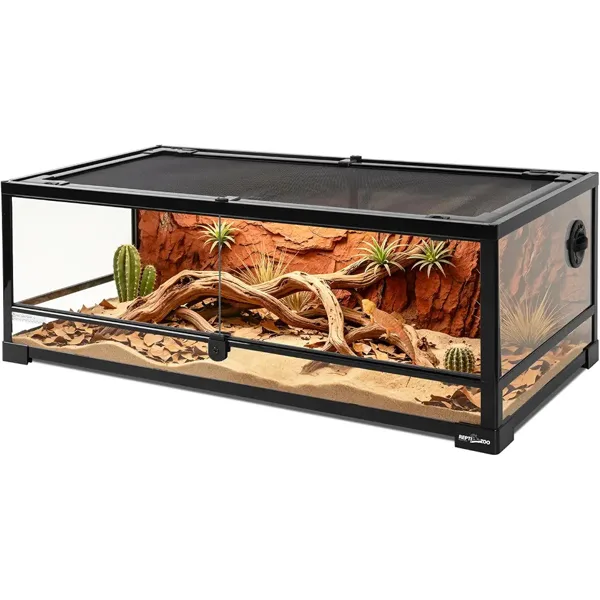
6. REPTI ZOO 35 Gallon Wide & Low Terrarium (36 x 18 x 12)
This tank has the right floor, 36 x 18 inches, but only 12 inches of height. Choose it when the enclosure has to fit under a shelf or into a stand with limited clearance, and not otherwise. Keepers on r/leopardgeckos agree the floor is what matters for a ground-dwelling lizard, but they also flag the real problem with short tanks: the heat lamp and UVB tube end up close to the gecko.
It is full glass on four sides with two lockable front doors, a buckle on the lid and a waterproof bottom.
- 36 x 18 x 12 inches, about 30 lb
- Two front doors with a lock, lid buckle
- Raised base for a heat mat
Good: Full 36 x 18 floor in a low profile. Not great: Below the 18 inch height ReptiFiles recommends; a climbing stack brings the gecko within inches of the lamp. Use a low-wattage bulb and the weakest UVB tube, and avoid this tank for albino morphs.
Heat and light: what goes on top
No enclosure comes ready for a gecko. Every tank above needs three things on or above the screen: a basking bulb for heat, a thermostat to control it and, ideally, a UVB tube. Pet store starter kits often skip the thermostat and include an analog dial gauge, which is the main reason experienced keepers tell beginners to skip the kit and buy each part separately.
Basking heat
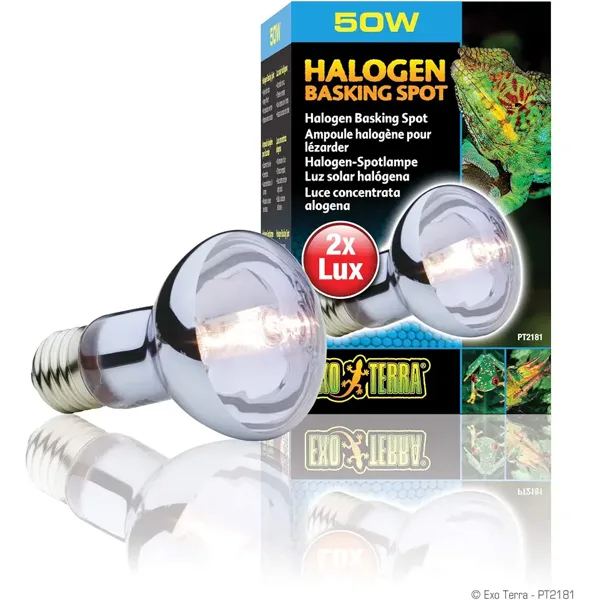
7. Exo Terra Halogen Basking Spot Lamp (50 W)
Leopard geckos warm up best under a bulb that heats a surface from above, the way the sun heats a rock. ReptiFiles recommends halogen bulbs for this and suggests starting around 50 watts in a 3-foot enclosure. Exo Terra’s halogen gives off broad-spectrum light, extra infrared and a small amount of UVA.
This listing is the 50 W bulb. Exo Terra also makes 75, 100 and 150 W versions. In a cool room or a tall glass tank you may need 75 W. Run it inside a ceramic-socket dome (sold separately) with the dome resting on the screen over the basking slate.
- 50 W halogen, A15 shape
- Broad-spectrum daylight, extra infrared
Good: The heat type care guides recommend. Not great: Reviewers report bulbs lasting only 3 to 4 months, so keep a spare.
Thermostat
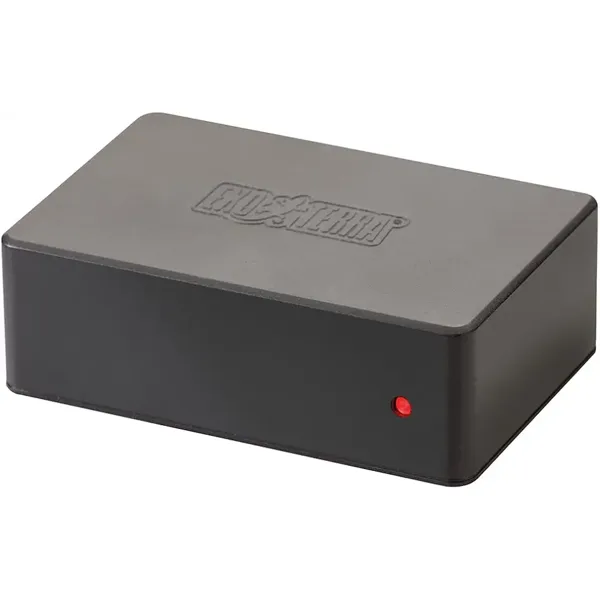
8. Exo Terra Dimming and Pulse Proportional Thermostat
Every heat source in a leopard gecko enclosure needs a thermostat. The r/leopardgeckos guide, ReptiFiles and the RSPCA all say so. A dimming thermostat lowers the power to the bulb as the basking spot reaches your set temperature instead of clicking it on and off, which keeps the spot steady and saves the bulb.
Exo Terra’s model runs heat sources up to 300 watts, covers 64 to 100°F and has a waterproof probe. Put the probe on the basking surface. Exo Terra says to switch light-producing bulbs off at night with a timer, so pair it with a simple plug-in timer.
- Dimming and pulse proportional modes
- 64 to 100°F, up to 300 W
- Waterproof probe, recessed dial
Good: Smooth control for a basking bulb or a heat mat. Not great: Amazon’s spec field lists 230 volts; confirm the listing shows a US plug before you buy. ReptiFiles notes that dimming a bulb also cuts its infrared, so pick a wattage that reaches temperature with little dimming.
UVB
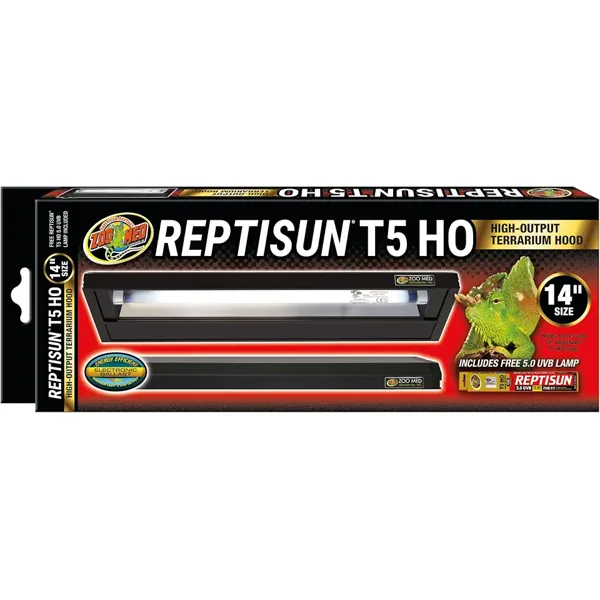
9. Zoo Med ReptiSun T5 HO Hood with 5.0 UVB Lamp (14 inch)
Leopard geckos are active at dusk and dawn, so they need far less UVB than a bearded dragon. Vets used to treat UVB as optional for them. The RSPCA, ReptiFiles and Zen Habitats now all recommend it, and VCA calls it “recommended” even though it does not require it. The goal is a low dose over the basking end: a UV index of about 0.5 to 1.0 where the gecko basks, falling to zero in the hides.
This 14 inch Zoo Med hood holds a 12 inch, 15 watt T5 HO tube, and the 5.0 (desert-lite) tube is included. Zen Habitats lists the Zoo Med 5.0 T5 as a leopard gecko option. A 12 inch tube over the warm third of a 3-foot tank matches the RSPCA’s advice to cover one-third to one-half of the enclosure length.
- 14 inch hood with a 12 inch, 15 W ReptiSun 5.0 T5 HO tube
- Sits on top of the screen
Good: A complete low-UVB kit sized for a 3-foot tank. Not great: T5 HO tubes are strong. Over a fine mesh or in a 12 inch tall tank, raise the hood or add more mesh, and measure with a UV meter such as a Solarmeter 6.5 if you can. Albino and hypo morphs should stay at or below UVI 0.7. Replace the tube every 12 months.
Temperatures and humidity to aim for
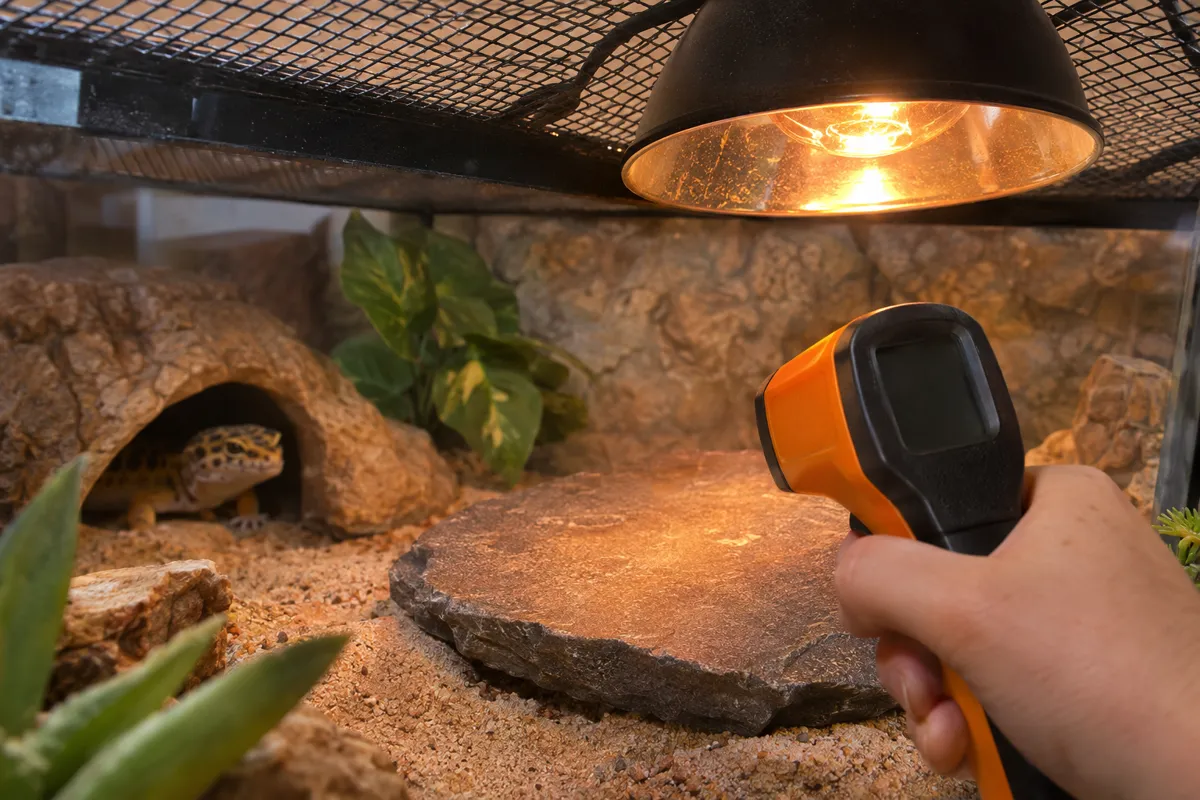
Set up the gradient before the gecko moves in, and check it for two or three days. Measure the basking surface with an infrared thermometer and the air with a digital probe thermometer. Analog dial gauges are often off by several degrees.
| Zone | Target |
|---|---|
| Basking surface (slate under the bulb) | 94 to 97°F |
| Warm hide | 90 to 92°F |
| Cool end | 70 to 77°F |
| Night | Lights off, can drop to 60 to 70°F |
| Humidity, whole tank | 30 to 40% |
| Humid hide | 70 to 80% |
These are the ReptiFiles and Zen Habitats numbers. The r/leopardgeckos guide runs a little hotter (95 to 100°F on the basking surface). The RSPCA lists 28 to 30°C (82 to 86°F) for the basking zone, but that is an air temperature, not the surface reading. Keepers measure the rock because a gecko lying on it absorbs heat through its belly. If your room falls below about 65°F at night, add a ceramic heat emitter or a heat mat on its own thermostat.
Glass or PVC: choose by your room temperature
Most comparisons say PVC “holds heat better” and stop there. That is true, and it is why the right material depends on where the tank will sit.
- Cool room (below about 68°F in winter): Pick PVC. Glass loses heat through all four sides, and you will fight to keep the warm end at temperature. One r/leopardgeckos keeper in the UK could not hold temperature in a PVC enclosure in a 20°C room even with two bulbs, so in a really cold house add a second heat source on a thermostat as well.
- Warm room or warm climate: Pick glass. PVC can trap so much heat that the cool end never gets cool, and leopard geckos need that cool end to regulate their temperature.
- Somewhere in between: Either works. Glass gives a better view and a waterproof base. PVC weighs less, cleans easily and gives a shy gecko solid walls to hide behind.
Avoid MDF and particle board enclosures if you plan to use a damp humid hide or a soil mix: the material swells when it gets wet.
How the screen top changes your UVB
Most front-opening enclosures have a mesh top, and the mesh blocks part of the UVB before it reaches your gecko. ReptiFiles publishes community measurements of how much each brand’s mesh blocks. Few enclosure reviews mention it, yet it decides how close your UVB tube needs to be.
| Brand’s top mesh | UVB blocked (approx.) |
|---|---|
| Dubia.com (Reptile Habitats) | 33% |
| Zoo Med | 34% |
| Exo Terra | 35% |
| REPTI ZOO | 45% |
| Zen Habitats | 45% |
The figures come from T5 HO measurements shared in the Reptile Lighting group and collected by ReptiFiles. They are brand averages, not tests of the exact models above. The practical point: a coarse mesh needs a stronger tube or a shorter distance, and a fine mesh needs the opposite.
Is 12 inches tall enough?
A 36 x 18 x 12 inch tank gives the same floor as the 18 inch version, so the gecko gets the same room to walk. The trouble is overhead. A leopard gecko standing on a 4 inch slate stack in a 12 inch tank has its back about 8 inches from the heat bulb, and a T5 UVB tube that close can deliver more UVB than a shade-loving species should get. The 18 inch tank gives you 6 more inches to play with: room for a taller climbing stack, a deeper soil layer and a safe gap to the lamps. If you can fit the 18 inch tank, buy it.
Do baby leopard geckos need a smaller tank?
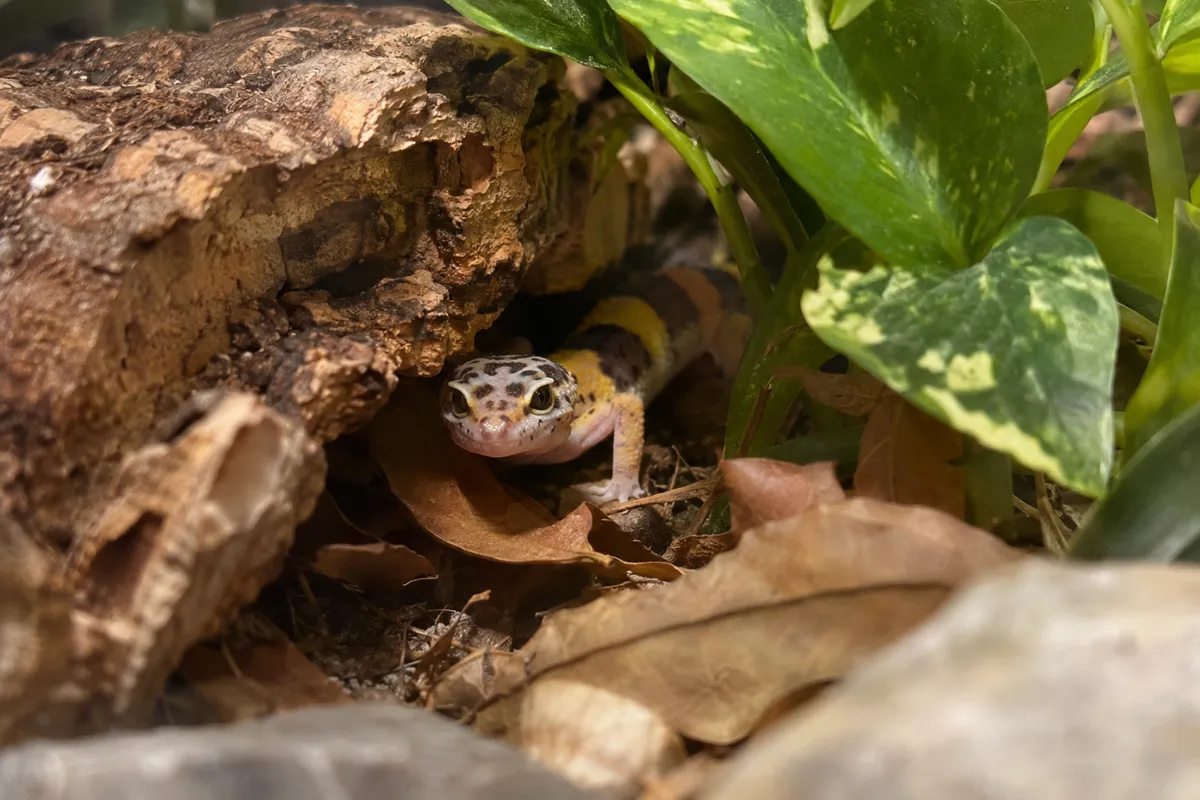
No. You can put a baby leopard gecko straight into its adult enclosure. The r/leopardgeckos guide says it is “fine to buy your end game enclosure straight away,” and the community saying is that a tank is never too big, only too bare. A hatchling in a large, empty tank feels exposed and may hide and refuse food. A hatchling in a large tank full of cover behaves normally.
Some care sheets, and VCA, still suggest a 10 gallon tank for babies and an upgrade at 6 to 9 months. Those tanks work, but you end up buying two enclosures, and the move to a bigger one can stress the gecko. If you start in the adult tank:
- Add extra hides, cork bark and fake plants so there is cover every few inches.
- Put a dish of food near the warm hide, where the baby spends most of its time.
- Keep babies on paper towel or tile until they are eating well, as the RSPCA advises, then switch to a soil mix.
How to set up the enclosure
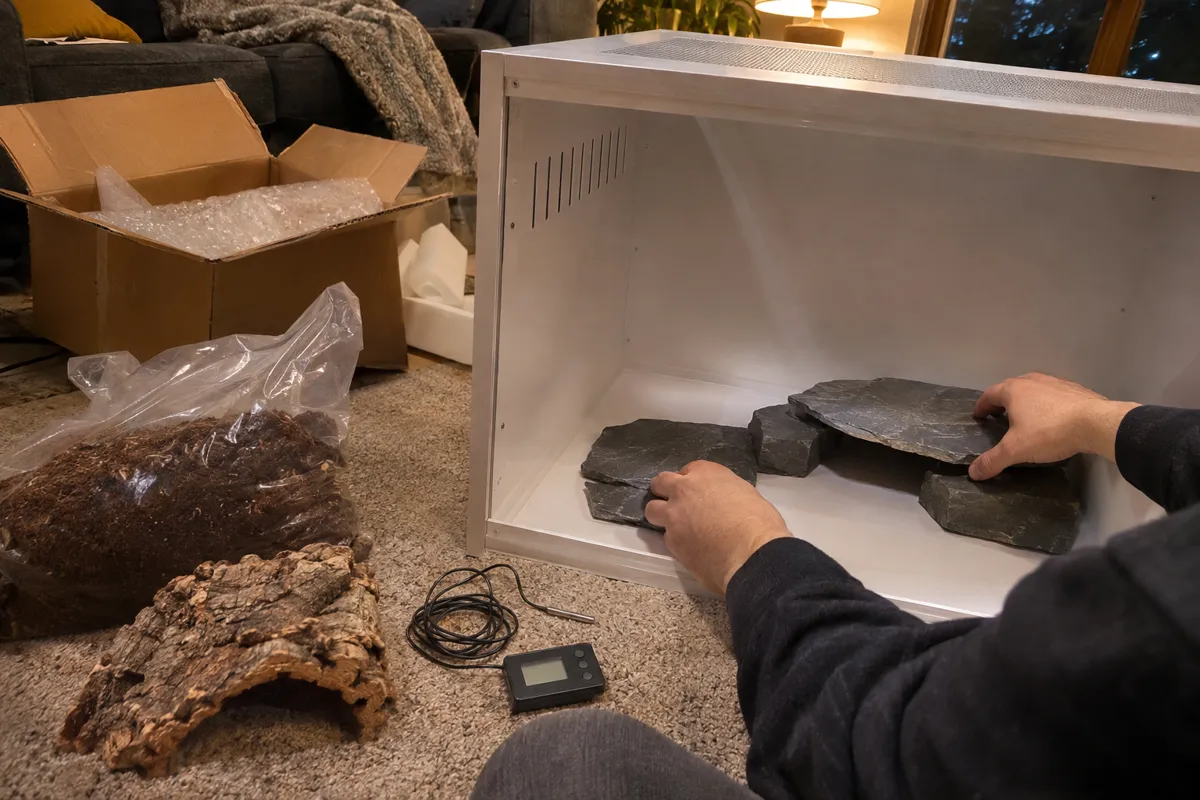
- Seal and place. Run silicone along the bottom seams of a PVC tank and let it cure. Put the enclosure on a stand or dresser that can hold its full weight once substrate is in.
- Build the basking stack. Stack flat slate at one end with gaps between the pieces. ReptiFiles suggests 1 to 2 inch spacers, which makes crevices the gecko can hide in and climb through. Set it on the glass or PVC floor, not on top of loose substrate.
- Add substrate. For a healthy adult, a mix of about 70% topsoil and 30% play sand, at least 4 inches deep, lets the gecko dig. Paper towel or tile is fine for babies, sick geckos and the first weeks of quarantine. Avoid calcium sand, walnut shell and reptile carpet.
- Place three hides. One warm hide near the basking end, one cool hide at the far end and one humid hide (a closed box with damp moss or soil) in the middle.
- Mount the lights. Halogen dome over the slate stack, UVB tube beside it over the warm third, both on a timer for 12 to 14 hours a day.
- Run it empty. Wire the thermostat probe to the basking surface and check the gradient for two days before the gecko moves in.
What we left out and why
New Age Pet ECOFLEX 36 inch Mojave. It is one of the best-selling reptile enclosures on Amazon and shows up on many leopard gecko lists. Its outside measures 36 x 18 inches, but the inside floor is only about 34.5 x 16.5 inches, or 3.9 square feet, below the 4.5 square foot minimum. Lamps also cannot touch the ECOFLEX material, so heat domes have to be raised.
unipaws 50 gallon wood enclosure. Sold as a leopard gecko tank, but its 36 x 17.5 inch footprint is under 4.5 square feet even before the wall thickness is subtracted, and the MDF body is not waterproof, which is a problem for a humid hide or damp soil.
10 and 20 gallon starter kits. They are too small for an adult and usually come with an analog gauge and no thermostat. You end up replacing most of the kit.
Top-opening aquariums. A 40 gallon breeder aquarium has the right floor and works, but reaching in from above is how a predator approaches, and leopard geckos react to it. A front-opening tank is easier on the gecko and on you.
How we chose
We started from the size standard: at least 36 x 18 inches of floor, measured inside where makers state it. From there we favored front-opening doors, a top that can carry a lamp dome and UVB fixture, cable ports and a base that copes with a soil mix. We checked each listing’s dimensions against the maker’s own pages and noted where they disagree. Owner complaints came from Amazon review summaries and from r/leopardgeckos threads about the same brands. We kept glass and PVC options at the minimum size because the right material depends on the room. We have not lab-tested these enclosures. The temperature, humidity and UVB figures come from ReptiFiles, the RSPCA, VCA, Zen Habitats and the r/leopardgeckos care guide, linked in the sources.
FAQ
What is the best enclosure for a leopard gecko?
A front-opening enclosure with at least a 36 x 18 inch floor and 18 inches of height, such as the REPTI ZOO 50 gallon glass terrarium (36 x 18 x 18). In a cool room a PVC enclosure of the same size holds heat better. A 4 x 2 x 2 foot enclosure is the upgrade if you have the space.
What size tank does a leopard gecko need?
One adult leopard gecko needs at least 36 x 18 x 18 inches, which is 4.5 square feet of floor. That is about a 40 gallon breeder or a 50 gallon front-opening terrarium. A 48 x 24 x 24 inch enclosure is better.
Is a 20 gallon tank big enough for a leopard gecko?
No, not for an adult under current care standards. A 20 gallon long has 2.5 square feet of floor, which is too short to build a warm end and a cool end with room for three hides. It was the standard recommendation for years, and many pet stores still sell it, but the r/leopardgeckos community and ReptiFiles now treat 36 x 18 inches as the minimum.
Is a 10 gallon tank OK for a baby leopard gecko?
It works for a few months, but you will need to buy a second enclosure by about 6 to 9 months. You can put a baby straight into a full-size enclosure as long as it has plenty of hides and cover.
Can two leopard geckos live in the same tank?
It is not recommended. Leopard geckos do not need company, and the RSPCA and ReptiFiles both advise keeping them alone. Males fight, and housing a male with a female leads to breeding and stress for the female.
Is glass or PVC better for a leopard gecko?
Glass suits warm rooms and gives the best view. PVC suits cool rooms because it holds heat, and its solid walls help shy geckos feel secure. Both work as long as the enclosure is at least 36 x 18 inches and every heat source is on a thermostat.
Do leopard geckos need a front-opening tank?
It is strongly recommended. Reaching in from above mimics a predator, and many geckos flinch or run. Front doors let you feed, clean and handle from the side.
Do leopard geckos need UVB?
They can survive without it, which is why older sources call it optional, but the RSPCA, ReptiFiles and Zen Habitats recommend low-level UVB. A 2% to 6% T5 tube (such as a ShadeDweller or a 5.0) over the warm third of the tank, aiming for a UV index around 0.5 to 1.0 at the basking spot, is the usual setup.
How hot should a leopard gecko tank be?
The basking surface should read 94 to 97°F, the warm hide 90 to 92°F and the cool end 70 to 77°F. At night the lights go off and the tank can fall to 60 to 70°F.
Related guides
- Best bearded dragon enclosure
- Best ball python enclosure
- Characteristics of a gecko
- Desert reptiles
- All buying guides
Sources
- ReptiFiles. Leopard gecko terrarium size.
- ReptiFiles. Leopard gecko lighting, heating and humidity.
- ReptiFiles. Leopard gecko substrate.
- RSPCA. Leopard gecko care.
- VCA Animal Hospitals. Leopard geckos: care and feeding.
- Zen Habitats. Leopard gecko care guide.
- r/leopardgeckos. Beginner’s guide to leopard gecko care.
- Dubia.com. 4’x2’x2′ PVC reptile enclosure.
- Zoo Med. ReptiSun T5 HO terrarium hood with 5.0 bulb.