
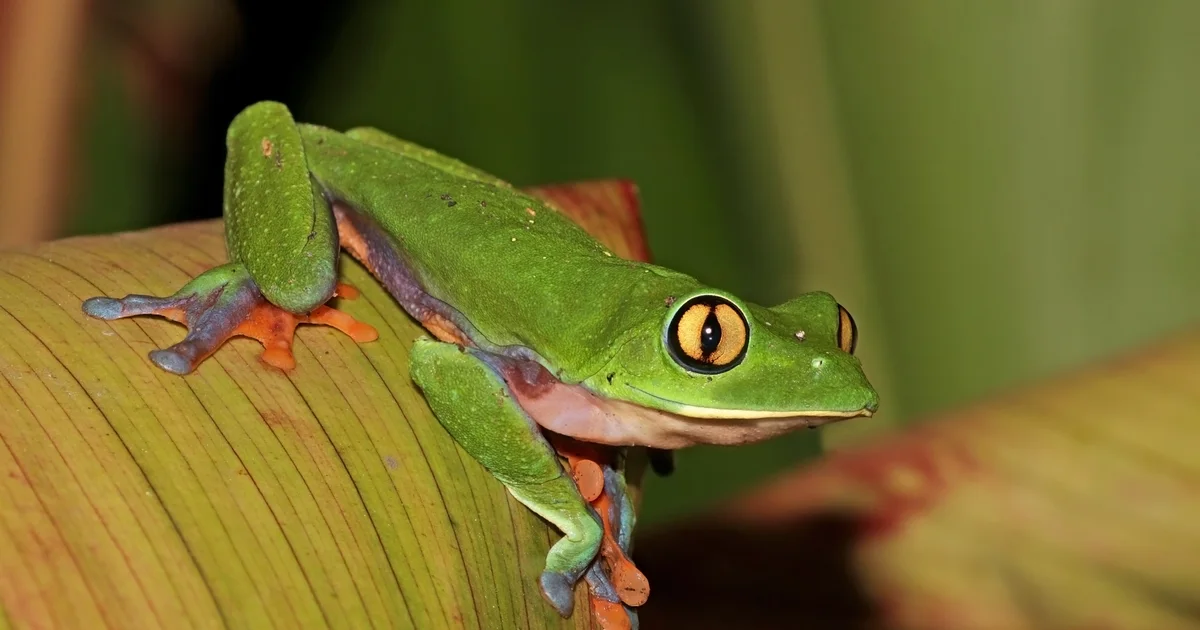
Which popular pet lacks a working sweet taste receptor?
November 2026
Browse by group
How the animal fact of the day works
Every day at midnight Eastern Time, a new animal fact appears at the top of this page. It starts as a question with three possible animals. Pick one, and the card flips to show the answer, the fact behind it and the reason it works the way it does.
After you answer, you can see what share of readers picked the right animal. If a fact surprises you, press Mind blown. Answer on consecutive days and the page keeps a streak for you. The share buttons send the question and a link, never the answer, so the person you send it to gets to guess too.
Each fact has its own page, and older facts stay online. The calendar under the card links to every day’s fact, and the timer shows how long until the next one.
What makes a good animal fact
A body weight or a top speed is a statistic. A good animal fact explains a mechanism, the way an animal solves a problem that would defeat a human body. Every fact here answers two questions: what the animal does, and how it manages it.
- Cats can’t taste sweetness, because a gene for the sweet receptor stopped working somewhere in their evolution.
- Glass frogs turn see-through when they sleep by packing most of their red blood cells into the liver.
- Dung beetles steer by the Milky Way to roll their dung balls in a straight line at night.
- Greenland sharks live at least 250 years, which scientists worked out from carbon in the lenses of their eyes.
- The immortal jellyfish can turn back into a younger stage instead of dying.
- Wild elephants call each other by name, with calls that don’t imitate the elephant being called.
Facts rotate through every group of animals and every habitat, from the deep sea to desert sand and underground tunnels. Mammals appear often, but about a third of the facts cover insects, ocean invertebrates and other animals without a backbone, because that is where much of the strangest biology happens. Familiar animals get their turn too, since the most surprising facts are often about the cat on the sofa or the pigeon on the sidewalk.
How each fact is checked
Every fact comes from a published source: a university, a museum, a government science agency such as NOAA or a scientific journal. The source link sits under each fact, so you can read the original study or article.
Each fact is checked twice. The first check confirms the claim against its source. The second, done separately, confirms every number against a second source and makes sure neither wrong answer in the question shares the trait. If a claim can’t be confirmed, the fact is dropped. Popular myths, such as the three-second goldfish memory or ostriches burying their heads in sand, never appear here.
Fun animal facts for kids and classrooms
The daily question works well as a classroom warm-up. Read the question aloud, have students vote for one of the three animals, then reveal the answer on the board. The explanation under each fact is short enough to read in a minute and gives a clear reason, which makes it a good starting point for a discussion or a short writing prompt.
- Morning question. Vote, reveal, then ask students to explain the mechanism in their own words.
- Research starter. Each fact links to its source and to a florafaunafun page about the animal or its group.
- Compare the animal to us. Many facts include a line that scales the feat up to human size, which helps younger readers picture it.
Browse animal facts by group
Every fact is filed under one animal group. Open a group to see all its facts, or browse our A to Z lists to learn more about the animals themselves.
- Mammal facts and the list of mammals
- Bird facts and the list of birds
- Insect and bug facts and the list of insects
- Fish facts and the list of fish
- Ocean invertebrate facts, from jellyfish to horseshoe crabs
- Reptile facts and the list of reptiles
- Amphibian facts and the list of amphibians
The full archive of past facts is at all animal facts.
More daily animal games
The fact of the day is one of several things on florafaunafun that change every day. ZoomZoo starts with an extreme close-up of an animal photo, and every wrong guess zooms out and adds a hint. WildWhere shows you an animal and asks you to find where in the world it lives. The daily word search hides a new set of plant and animal names each day. For longer challenges, try the animal quizzes.
Frequently asked questions
What is the animal fact of the day?
It is one verified animal fact published on this page every day. Each fact starts as a question with three animals to choose from, then reveals the answer, explains how the animal does it and links to the source. Today's fact is in the card at the top of the page.
What time does the new animal fact appear?
A new fact goes live at midnight Eastern Time (ET) every day. The timer under the card counts down to the next one, and if the page is open at midnight, the new question loads without a refresh.
Are the animal facts true?
Yes. Every fact comes from a university, museum, government science agency or scientific journal, and the source is linked under the fact. Each one is checked twice, numbers are confirmed against a second source, and popular myths such as the three-second goldfish memory are left out.
What is the weirdest animal fact?
A strong candidate is the immortal jellyfish, Turritopsis dohrnii. When it is starving or injured, the adult shrinks into a blob of cells and grows back into a polyp, the stage that comes before the adult. In theory, it can repeat the cycle again and again instead of dying of old age.
Where can I find a fun fact of the day about animals?
On this page. Bookmark it and a new animal fact will be waiting each day, with a question to guess first. Past facts are listed in the calendar under the card and in the archive of all animal facts.
Can I see yesterday's animal fact?
Yes. The previous seven days appear under today's card, and the calendar links to every earlier fact. Each fact also has its own page, so you can bookmark or share a favorite.
Are these animal facts good for kids?
Yes. The facts are written in plain language, each one explains how the animal does what it does, and none contain graphic content. Teachers use the daily question as a classroom warm-up: students vote on one of the three animals before the reveal.
Why does the page ask a question before showing the fact?
Guessing first makes a fact easier to remember. Memory research on the pretesting effect shows that people recall information better after they try to answer a question about it, even when their first guess is wrong.
How do I share an animal fact without giving away the answer?
Use the share buttons under the fact. They send the question, whether you guessed it, and a link to the fact, but never the answer itself. The Save card button creates an image of the fact for Instagram or stories.
Can I see tomorrow's animal fact early?
No. Each fact stays hidden until midnight Eastern Time on its date, so everyone gets the same question on the same day.