Myanmar packs 314 mammal species, more than 1,100 birds, and around 290 reptiles into a country that runs from Himalayan foothills to coral-fringed islands. That range — snow-dusted peaks in Kachin State down to the mangroves of the Ayeyarwady Delta — is why a single border can hold tigers, dolphins, and a monkey nobody knew existed until 2010.
Most species lists hand you a wall of names sorted by IUCN code. This one leads with the animals worth knowing: the endemics found nowhere else on Earth, the headliners hiding in the data, and the regional stories the encyclopedias skip. Sixteen of them, grouped by where they live and why they matter.
Table of Contents
Mammals
1. Myanmar Snub-Nosed Monkey (Rhinopithecus strykeri)
The poster animal for Myanmar’s biodiversity wasn’t described by science until 2010, found in the remote forests of northern Kachin State near the Chinese border. Local hunters knew it long before biologists did — and they had a tell. The monkey’s upturned, nostril-baring nose means it sneezes when it rains, so on wet days it reportedly tucks its head between its knees to keep the water out.
Fewer than 400 are thought to survive, split across a handful of isolated groups. It’s listed as Critically Endangered by the IUCN Red List, which makes it one of the rarest primates on the planet and one of the many endangered species across Asia clinging on in shrinking pockets of forest — and the single best reason Myanmar’s high forests need protection.
2. Asian Elephant (Elephas maximus)
Myanmar holds one of the largest wild Asian elephant populations after India, plus thousands of captive “timber elephants” historically used in logging camps. The wild population sits somewhere around 1,400 to 2,000 animals, scattered through forest reserves where they increasingly bump up against farmland.
There’s a grim modern twist here. Poachers in Myanmar don’t just target tusks — they kill elephants of both sexes, including females and calves, for their skin, which is ground into powder and beads for the traditional medicine trade. That makes Myanmar’s elephants vulnerable in a way that ivory-only poaching elsewhere isn’t.
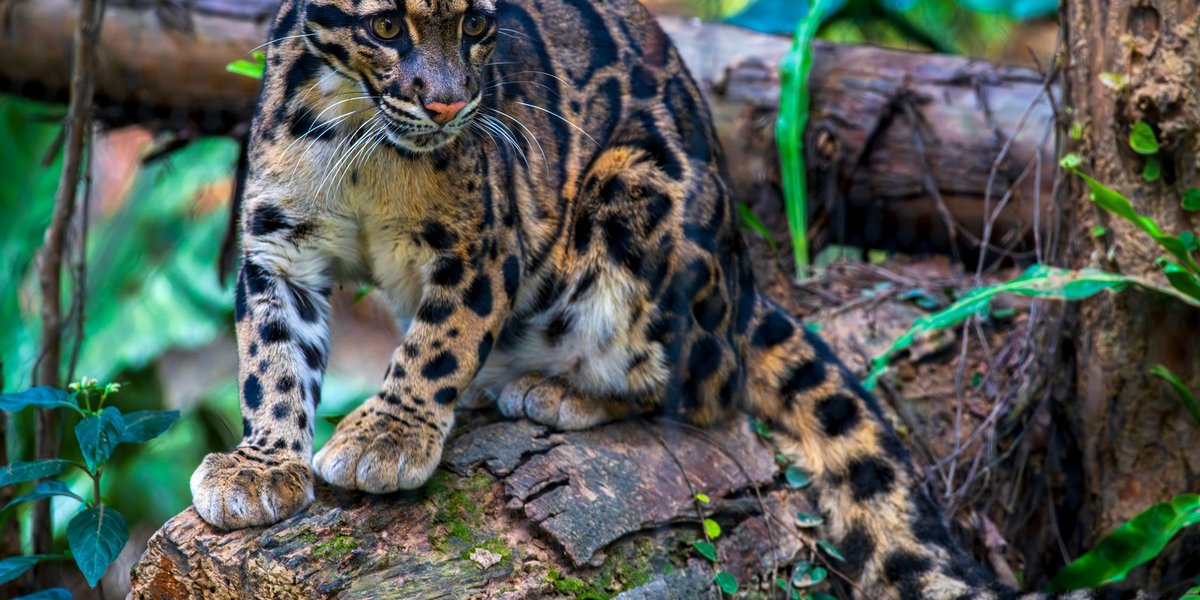
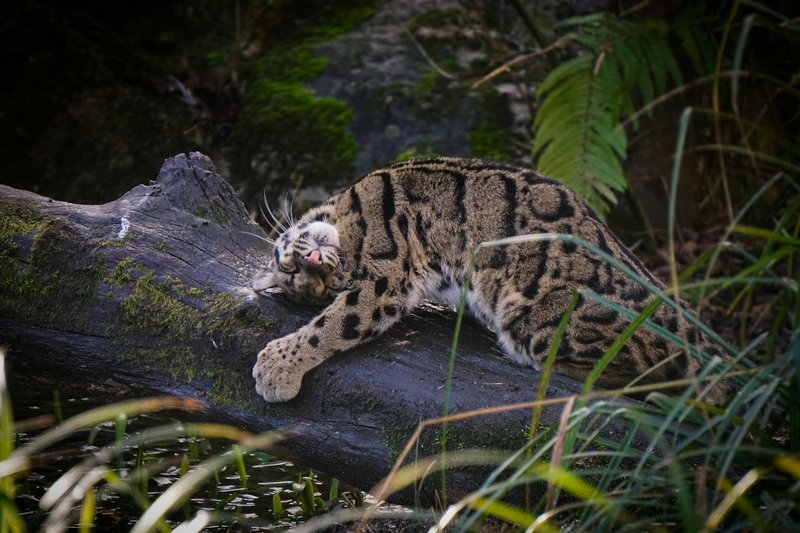
3. Clouded Leopard (Neofelis nebulosa)
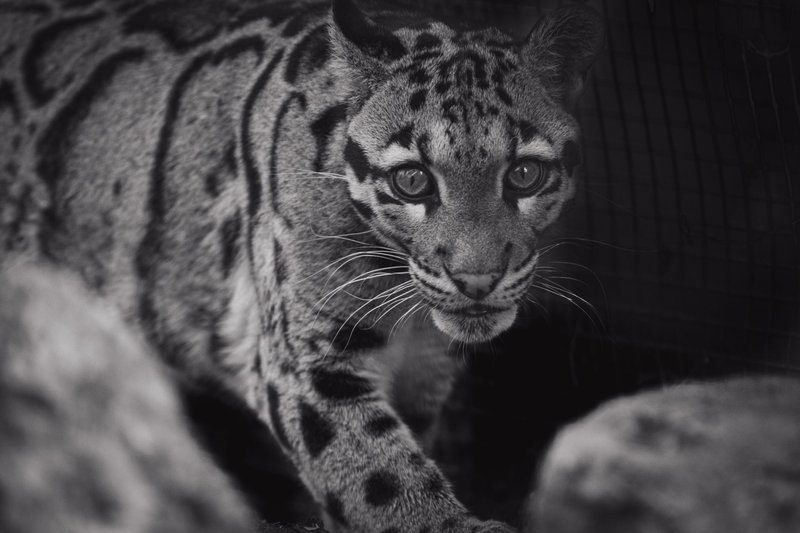
The cloud-blotch coat is the obvious feature, but the engineering underneath is the interesting part. Clouded leopards have the longest canine teeth relative to skull size of any living cat — proportionally closer to the extinct saber-tooths than to a lion. They also have rotating ankle joints that let them climb down tree trunks headfirst and hang from branches by their back feet.
In Myanmar they haunt the forests of Kachin and the Tanintharyi region in the deep south. You will almost never see one. They’re nocturnal, arboreal, and built to vanish.
4. Tiger (Panthera tigris)
Myanmar’s Hukawng Valley in the north was once declared the world’s largest tiger reserve on paper — over 8,000 square miles. The reality has been harder. Tiger numbers here are perilously low, and a 2018 nationwide survey suggested the country may hold only around 22 individuals, the survivors of decades of poaching and habitat loss along the Indo-Burmese corridor.
5. Gaur (Bos gaurus)
The largest wild cattle on Earth, and one of the most underrated animals in Asia. A bull gaur can top 2,000 pounds and stand over six feet at the shoulder, carrying a ridge of muscle along its back like a built-in spoiler. They graze the hill forests of Myanmar in small herds and have the temperament to make even tigers think twice about an adult.
6. Red Panda (Ailurus fulgens)
At the far northern edge of Myanmar, in the temperate montane forests of Kachin, lives a population of red pandas — the rust-colored, bamboo-eating mammal that isn’t a panda or a raccoon but a lineage all its own. This is roughly the southeastern limit of the species’ range, and the Myanmar animals are among the least studied red pandas anywhere.
7. Hoolock Gibbon (Hoolock spp.)
You hear these before you see them. Hoolock gibbons sing booming, whooping duets at dawn, paired males and females calling across the canopy to defend territory. Myanmar is a stronghold for the western hoolock and also holds the Skywalker hoolock gibbon — a species described in 2017 and named, genuinely, after the Star Wars character by the scientists who identified it.
Birds
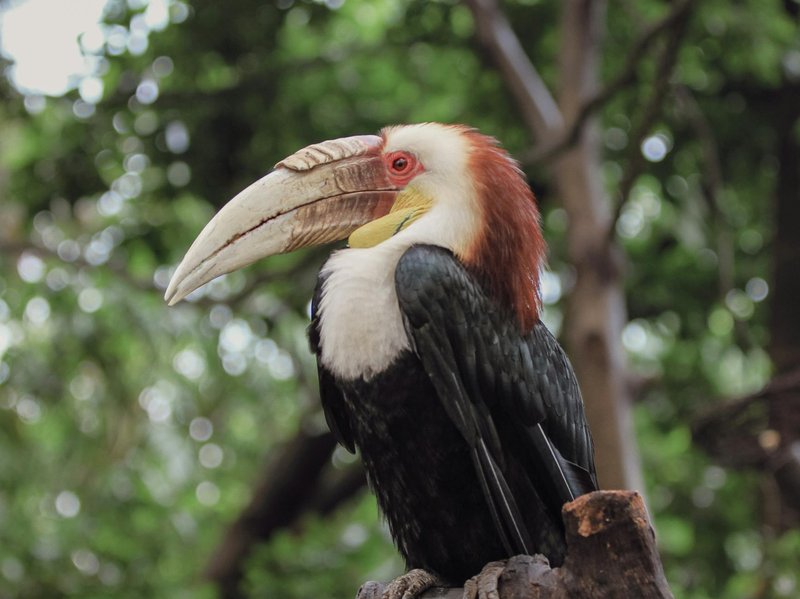
8. Plain-Pouched Hornbill (Rhyticeros subruficollis)
Most hornbills are scattered and solitary. The plain-pouched hornbill does something almost no other does: it gathers in flocks of hundreds, sometimes over a thousand birds, streaming across the sky in one of Southeast Asia’s great avian spectacles. Tanintharyi in southern Myanmar hosts some of the largest known congregations on Earth, with counts that have exceeded 3,000 birds passing a single ridgeline.
9. White-Browed Nuthatch (Sitta victoriae)
This one is found nowhere else on the planet. The white-browed nuthatch lives only on Mount Victoria (Nat Ma Taung) in the Chin Hills of western Myanmar, in a sliver of high oak-and-rhododendron forest. A true single-mountain endemic, it’s the kind of bird that pulls serious birders across the world for one specific peak.
10. Gurney’s Pitta (Hydrornis gurneyi)
For years Gurney’s pitta was thought possibly extinct, then rediscovered. Myanmar’s lowland forests in Tanintharyi became its critical global stronghold — at one point holding the overwhelming majority of the world’s birds. Then the forest started coming down for oil palm and rubber, and this jewel-toned, blue-crowned ground bird went from rediscovery story to renewed emergency in a single decade.
11. Sarus Crane (Antigone antigone)
The tallest flying bird in the world stands nearly six feet, with a gray body and a bare red head. Sarus cranes pair for life and are tied so closely to faithfulness in regional folklore that a bereaved bird is said to mourn its mate. Myanmar’s wetlands and paddy edges hold a meaningful population of these giants, putting the crane among the rare wetland animals whose fortunes rise and fall with the marshes they depend on.
Reptiles
12. Burmese Roofed Turtle (Batagur trivittata)
A genuine back-from-the-dead story. The Burmese roofed turtle was believed extinct until a tiny remnant population turned up on the Chindwin River in the early 2000s. Breeding males grow a startling lime-green head and neck in season. Thanks to a captive-breeding program, there are now over a thousand of these turtles alive — almost none of which existed in collections two decades ago — though the truly wild population is still down to a few dozen.
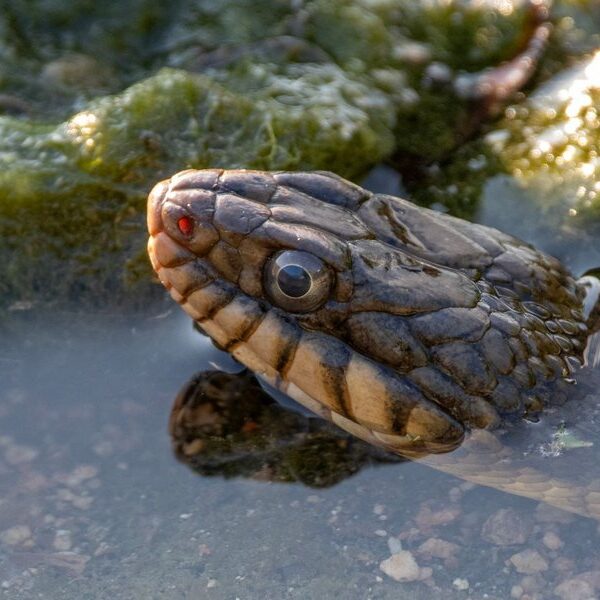
13. Burmese Python (Python bivittatus)
One of the largest snakes on Earth, reaching 18 feet and beyond, native to the grasslands and forests of Myanmar. In its homeland it’s a Vulnerable species, hunted for skins and meat. The irony is loud: the same snake is an ecosystem-wrecking invasive in the Florida Everglades, where escaped pets have bred into the tens of thousands. At home, it needs protecting; abroad, it’s the problem — a reversal worth keeping in mind when you look at the invasive species in Myanmar that arrived the other way and now crowd its own rivers and fields.
14. King Cobra (Ophiophagus hannah)
The longest venomous snake in the world — up to 18 feet — and the only snake known to build a nest for its eggs, which the female guards. Its name comes from its diet: Ophiophagus means “snake-eater,” and it hunts other snakes almost exclusively. Myanmar’s forests are prime king cobra country.
Marine and River Life
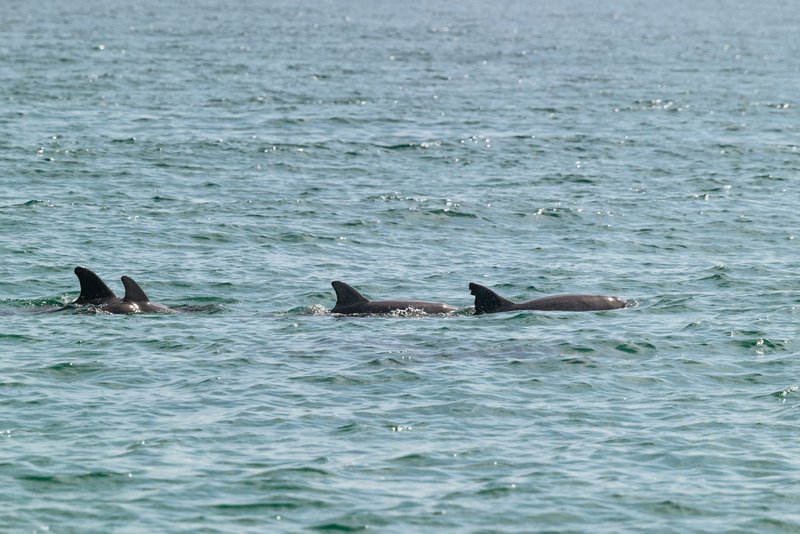
15. Irrawaddy Dolphin (Orcaella brevirostris)
The Ayeyarwady River dolphin does something found in almost no other place on Earth: it fishes with people. On a stretch of the upper river, fishermen call the dolphins with a tapping signal, and the dolphins herd fish toward the boats and into the cast nets, taking the stragglers for themselves. This cooperative human-dolphin fishing is centuries old and passed down both by the fishermen and, apparently, between generations of dolphins.
The blunt-headed, beakless dolphin is Endangered, and this particular population is down to dozens of animals — squeezed by gold-mining mercury, electrofishing, and gillnets. WWF has worked with local communities to protect the partnership before it disappears entirely.
16. Dugong (Dugong dugon)
Off Myanmar’s southern coast and around the Mergui (Myeik) Archipelago, dugongs graze seagrass meadows in the shallows. The “sea cow” is a slow, gentle relative of the manatee — and the likely origin of old sailors’ mermaid sightings, which says more about months at sea than about the dugong’s looks. They’re rare in Myanmar waters now, threatened by net entanglement and the loss of the seagrass beds they depend on entirely.
Conservation: A Country Under Pressure
The pattern repeats across this whole list. Myanmar’s wildlife is extraordinary precisely because the country stayed forested and isolated for so long — and that’s exactly what’s now changing fast.
Three forces do most of the damage. Habitat loss leads, as lowland forest in Tanintharyi falls for oil palm and rubber, taking Gurney’s pitta and the plain-pouched hornbill with it. The illegal wildlife trade runs a close second, funneling pangolins, tiger parts, elephant skin, and live songbirds across the porous Chinese border at hubs like Mong La. And rivers carry their own crisis — mercury from gold mining and electrofishing are quietly poisoning the Irrawaddy dolphin’s last strongholds.
The bright spots are real but fragile. The Burmese roofed turtle exists today only because of hands-on captive breeding. The Myanmar snub-nosed monkey was protected almost the moment it was discovered, with new reserves drawn around its forests. Conservation groups and the Wildlife Conservation Society have spent years building protected areas across Kachin and Tanintharyi.
Whether those wins hold depends on stability the country hasn’t had much of lately. But the animals are still here — the headfirst-climbing leopard, the fishing dolphin, the monkey that sneezes in the rain. That’s worth knowing about, and worth keeping around.