Dominica doesn’t have the white-sand reefs that show up on Caribbean postcards. Its coast drops fast into deep, dark-blue water, the sand is volcanic black, and sperm whales live offshore year-round. That underwater geography is exactly why the fish here are different from what you’ll find drifting over the flat reefs of the Bahamas or Bonaire.
Most pages about Dominica’s fish pick a lane. Charter sites list the marlin and tuna you can catch. Dive blogs name the soldierfish and seahorses you’ll see on a wall. Scientific databases dump a checklist of 500-plus species with no photos and no context. None of them tells you the whole story by where the fish actually lives.
This guide does. We’ve split Dominica’s fish into the three places you’ll encounter them — the offshore deep, the coastal reefs, and the island’s freshwater rivers — so you know what to look for whether you’re holding a rod, a regulator, or just a curiosity about the Nature Isle.
Table of Contents
- Why Dominica’s Fish Are Different
- Offshore Gamefish
- Reef & Coastal Fish
- Freshwater & River Fish
- Best Time to Fish or Dive
- Eating Fish in Dominica
Why Dominica’s Fish Are Different
The island sits on the edge of a steep volcanic shelf. Within a mile of shore, the seafloor can plunge past 3,000 feet. That deep water comes right up to the coast, which is why a resident pod of sperm whales hunts squid just offshore and why big pelagic fish patrol close enough that you don’t need a long run to reach them.
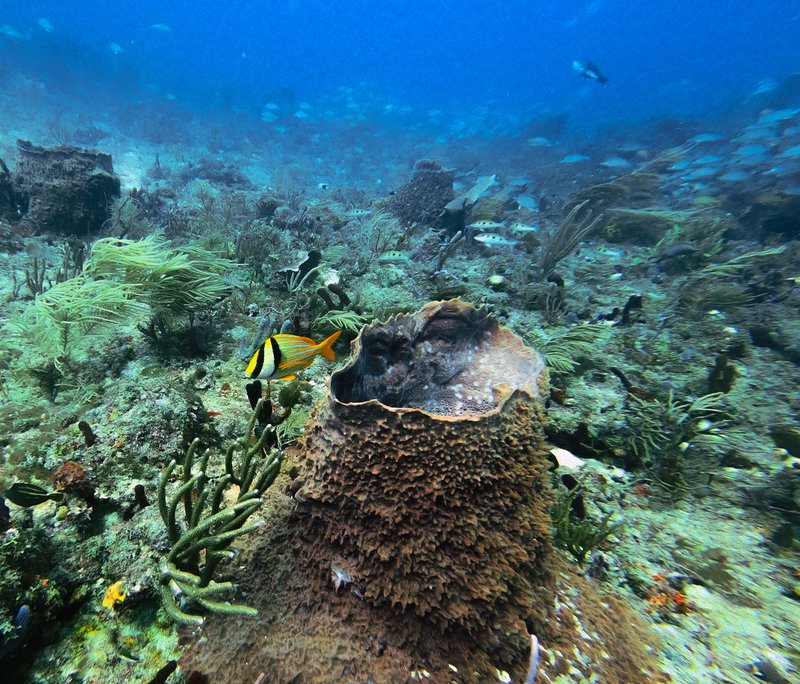
The reefs are volcanic too — black rock, lava arches, drop-offs, and hot springs that bubble up through the sand at sites like Champagne Reef. Fish that like structure and current thrive here. Surveys by the Reef Environmental Education Foundation found the blackbar soldierfish to be one of the most frequently encountered fish on Dominica’s reefs, which is unusual — on most Caribbean dives it’s a fish you have to go looking for in crevices, not one swarming in the open.
And because Dominica is mountainous and rain-soaked, its rivers run clear and fast to the sea, giving migratory fish like mountain mullet and tarpon a route inland. Few Caribbean islands have this much freshwater habitat. That same geography shapes life above the waterline too, and it’s worth seeing how the island’s fish fit alongside the rest of Dominica’s land and coastal animals.
Offshore Gamefish
The deep water close to shore makes Dominica a strong, underrated spot for blue-water fishing. Half-day charters can reach productive grounds in under 30 minutes. These are the fish that make the trip.
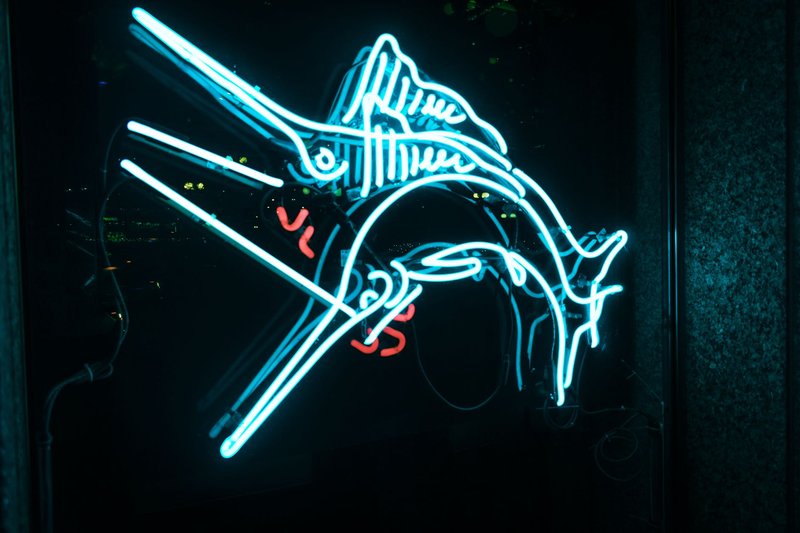
Blue marlin. The headliner. Atlantic blue marlin pass through Dominican waters and can top 400 pounds, with much larger fish hooked occasionally. They’re caught on trolled lures and rigged ballyhoo over the deep drop-offs. Peak season runs through the warmer months, roughly March to June. Most Dominica charters practice tag-and-release for billfish.
Wahoo. A torpedo with teeth. Wahoo are among the fastest fish in the ocean, hitting bursts over 40 mph, and they strike a trolled lure hard enough to scream line off a reel in seconds. They show up reliably in the cooler-water months from late fall into early spring. Excellent eating, which is why anglers actually keep these.
Yellowfin tuna. Found offshore in schools, often feeding under flocks of birds. A solid yellowfin off Dominica runs 30 to 80 pounds. They’re available much of the year and are the bread-and-butter catch when the billfish aren’t cooperating.
Mahi-mahi (dorado). Bright gold-and-blue, fast-growing, and aggressive. Locally called dorado, they gather around floating debris and weed lines. They’re a peak winter-into-spring catch and one of the best fish on the dinner plate the same night you land them.
Sailfish. The acrobat. Smaller than marlin but spectacular on the line, sailfish tail-walk and leap when hooked. They share the billfish grounds and seasons with marlin, and like marlin, they’re typically released.
Reef & Coastal Fish
This is where Dominica earns its Nature Isle reputation underwater. The volcanic reefs hold a dense, varied population, and several species here are easier to find than almost anywhere else in the Caribbean.
Blackbar soldierfish. Deep red, big-eyed, and built for low light. As noted, REEF survey data ranks it among the most-encountered fish on Dominica’s reefs — you’ll see clusters of them hanging under ledges and inside lava arches by day. The big eye is the giveaway: this is a fish adapted to the dim, sheltered spaces the volcanic terrain creates in abundance here.
Spotted drum. A diver favorite. Juveniles have an absurdly long, ribbon-like dorsal fin and swim in tight, looping circles in the same spot, which makes them easy to find once you know a resident’s hideout. Black and white stripes, often tucked under coral overhangs.
Frogfish. Masters of disguise. These ambush predators sit motionless, matching a sponge or rock, and most divers swim right past them. Dominica’s macro-rich reefs are known for them. Spotting one usually means a guide pointing at what looks like a lump of nothing.
Seahorses. Dominica’s calmer bays and seagrass edges hold longsnout seahorses, anchored by their tails to gorgonians and rubble. They’re another macro-photography draw and a reason the island ranks high with critter-hunting divers.
Filefish. Slow, oddly shaped, and often hanging vertically near coral. The whitespotted filefish can change its color and the visibility of its spots. Common across the reefs and easy to approach.
Lionfish. The villain. This invasive Indo-Pacific predator spread across the Caribbean and preys heavily on native juveniles. Dominica, like its neighbors, runs active culling — many dive operators carry spears, and lionfish frequently end up as a menu special, which is the most useful thing you can do with an invasive species. The IUCN and regional fisheries bodies back lionfish removal as a control measure.
Freshwater & River Fish
Dominica’s freshwater fish list is short — roughly 16 species — but it’s a category most Caribbean islands barely have. The fast, clean rivers running off the central mountains support migratory species that move between river and sea.
Mountain mullet. The classic island river fish, locally important and the one most associated with Dominica’s streams. It spawns in the rivers but its larvae wash to sea before returning upstream, so healthy river mouths matter for its survival.
Tarpon. The silver king pushes into Dominica’s lower rivers and estuaries from the sea. A big tarpon hooked in brackish water near a river mouth is one of the more surprising catches on the island — these are the same hard-fighting fish anglers chase across the wider Caribbean.
River gobies and sirajo. Small, bottom-hugging fish built for life in fast current, gripping rocks with fused pelvic fins. Their juveniles run up the rivers in mass migrations, a phenomenon documented across Caribbean islands and a key food source for the freshwater ecosystem. You can read more about Caribbean freshwater fish diversity through FishBase, which catalogs the island’s full species list.
Best Time to Fish or Dive
For offshore fishing: The cooler, drier months from December through April are prime for wahoo, mahi-mahi, and tuna, with marlin and sailfish strengthening into spring and early summer. The sea is generally calmer in this window too.
For diving: Dominica dives well year-round thanks to its sheltered leeward (west) coast. Visibility is typically best in the drier season, roughly December to May. Hurricane season runs June through November and can bring rougher water, though the protected west-coast sites often stay diveable.
For river fish: River species are present year-round, but the dramatic juvenile migrations follow rainfall and lunar cycles rather than a tourist calendar.
Eating Fish in Dominica
Half the fish in this guide end up on plates, and that’s part of the appeal. Mahi-mahi, wahoo, and yellowfin tuna are the staples of a fresh-caught dinner, often grilled simply with lime and local seasoning. Lionfish, increasingly, shows up as a sustainable special — firm, white, mild, and the rare case where ordering the fish actively helps the reef.
If you fish a charter, ask the crew about keeping a wahoo or dorado for dinner. Many will clean your catch dockside. It’s the shortest possible distance from water to table, and after a morning offshore, it’s hard to beat. Round out the meal with one of the island’s tropical fruits of Dominica, which are as local and seasonal as the catch itself.
Dominica’s fish reward a little context. The same deep volcanic water that brings whales to the doorstep brings marlin within easy reach, builds reefs where soldierfish swarm in the open, and feeds rivers that send mullet and tarpon inland. Know where to look, and the Nature Isle’s reputation makes a lot more sense — above the waterline and below it.