Search “fish of North Africa” and you get Wikipedia link-lists — alphabetical, undescribed, no photos, no context. That’s a strange gap for a region with this much going on underwater. North Africa isn’t one fish fauna, it’s three stacked on top of each other: snowmelt trout streams in the High Atlas, an inland sea’s worth of Mediterranean regulars, and an Atlantic coast so nutrient-rich it feeds industrial fisheries from Agadir to Nouadhibou.
That layering is geological, not incidental. The Atlas Mountains wall off cold, isolated headwaters where trout and barbels evolved in near-total isolation for thousands of years — some in a single lake, some in a single river basin. The Mediterranean coast runs warm, shallow, and crowded with the same commercial staples found from Spain to Lebanon. And the Atlantic side sits in the path of the Canary Current, a cold, oxygen-rich upwelling that hauls nutrients up from deep water and turns the coast off Morocco and Mauritania into one of the most productive fishing grounds on Earth.
Here are 20 species that show what that geography actually produces — ten freshwater and relict fish found nowhere else, and ten marine species that define the coastline.
Table of Contents
Freshwater & Desert Relict Fish
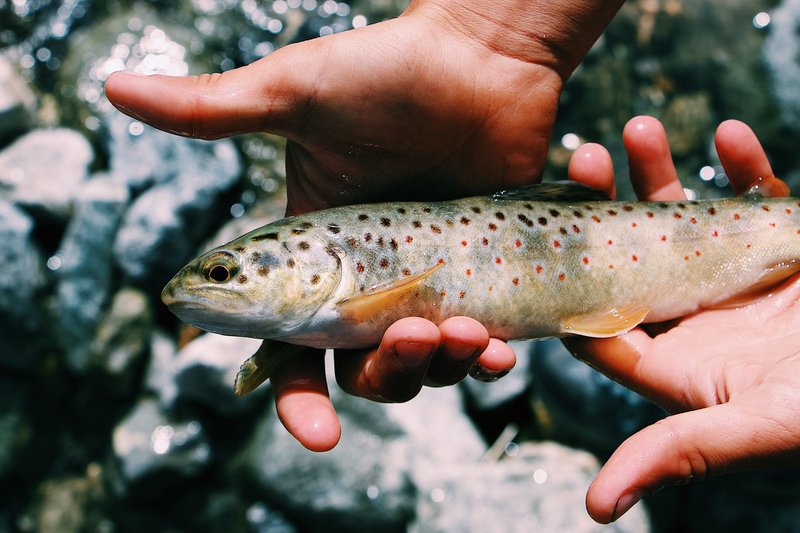
Morocco alone holds 26 fish species found nowhere else on the planet, out of 46 native species total — one of the highest freshwater endemism rates in Africa. Most live in a single river basin, a single lake, or a scatter of desert pools left behind when the Sahara was green.
1. Isli Trout
The Isli trout lives in exactly one place: Lake Isli, a high-altitude lake in Morocco’s Atlas Mountains. It wasn’t formally described as its own species until 2015, and it’s already critically endangered — no stocked hatchery population, no backup lake, just one shrinking body of water and unregulated fishing pressure.
2. Dades Trout
Named for the Dades River, this trout survives only in the headwaters of the Dades and M’Goun rivers on the High Atlas’s southern slope. Distinctive dark spotting sets it apart from the introduced brown trout that now share — and increasingly outcompete it in — the same water.
3. Zayan Barbel
A cyprinid confined to the Oum Er-Rbia basin, the Zayan barbel is one of roughly a dozen Luciobarbus species that radiated across Morocco’s river systems in isolation from each other. IUCN lists it as Vulnerable, mostly from dam construction fragmenting its habitat into disconnected stretches.
4. Rifian Barbel
Found only in the rivers running off the Rif Mountains, from the Loukkos basin on the Atlantic side to the Laou basin on the Mediterranean side, this barbel wasn’t scientifically described until 2015. Genetic work on the species found it’s tetraploid — it carries four sets of chromosomes instead of the usual two, a trait shared with several other Moroccan barbels that hints at a shared ancient hybridization event, according to a mitogenome study published via NCBI.
5. Guercif Barbel
Another recently described Luciobarbus species, restricted to river systems around Guercif in eastern Morocco. Like most of the country’s barbels, it was only formally split out from closely related species in the last two decades, once genetic testing caught up with what local anglers had likely known for generations: the fish in this valley aren’t quite the same as the fish one basin over.
6. Algerian Barb
Ranging across Algeria and into Tunisia, the Algerian barb is one of the region’s more widespread native cyprinids — which hasn’t spared it from decline. Populations in Tunisian reservoirs have dropped sharply as dam-building alters the flow and temperature regimes barbels need to spawn.
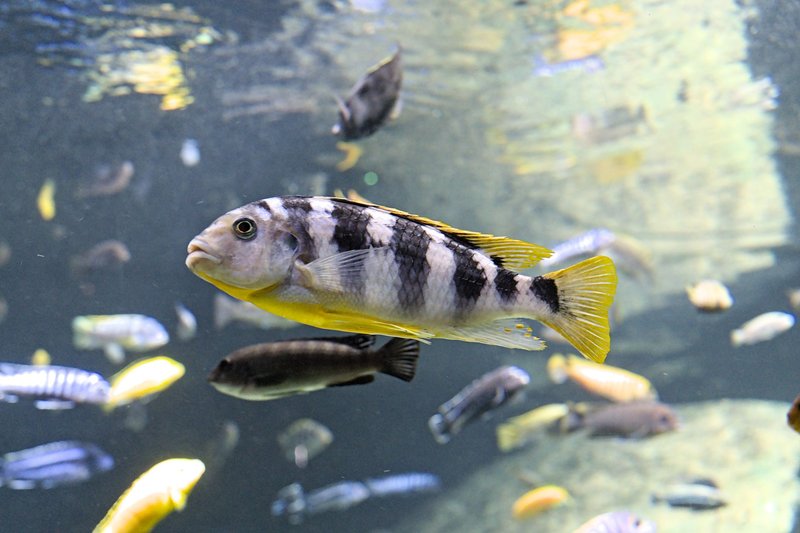
7. North African Cichlid
Algeria and Tunisia host the only cichlid species that occurs naturally north of the Sahara without human introduction — a family otherwise associated almost entirely with the Great Lakes and rivers of sub-Saharan Africa. It lives in freshwater springs, irrigation canals, and ditches, habitats that are also the first to get drained or polluted, which is why it’s currently classified as Critically Endangered.
8. Freshwater Blenny
Blennies are a mostly marine family — rocky tide pools, reef crevices, that sort of thing. This one broke ranks entirely and lives its whole life in rivers and streams across the Maghreb and southern Europe, the only blenny species to do so. It clings to rocks in flowing water with a flattened underside built for exactly that.
9. Saharan Relict Tilapia
In the Adrar mountains of Mauritania, isolated rock pools called gueltas hold small populations of Sarotherodon galilaeus — a tilapia species otherwise found across tropical West Africa. They’re leftovers from a wetter Sahara thousands of years old, stranded as the climate dried around them. Since 1970, rainfall in the Adrar has dropped by roughly 35%, and four of thirteen previously surveyed fish populations there have already gone extinct, according to a study in PLOS ONE tracking the region’s drought.
10. Sahara Pupfish
Aphanius species — small, hardy killifish — persist in scattered desert springs and oases across Algeria’s Saoura basin, sealed off from any other population by hundreds of kilometers of sand. Their entire evolutionary story is a lesson in extremes: tolerate the salinity, tolerate the heat, tolerate the isolation, or disappear when the spring does.
Marine & Coastal Fish
North Africa’s coastline runs two very different seas. The Mediterranean side is warm and semi-enclosed; the Atlantic side sits directly in the Canary Current’s upwelling zone, which is why Morocco and Mauritania rank among the world’s top producers of small pelagic fish despite neither being a large country by population.
11. European Sea Bass
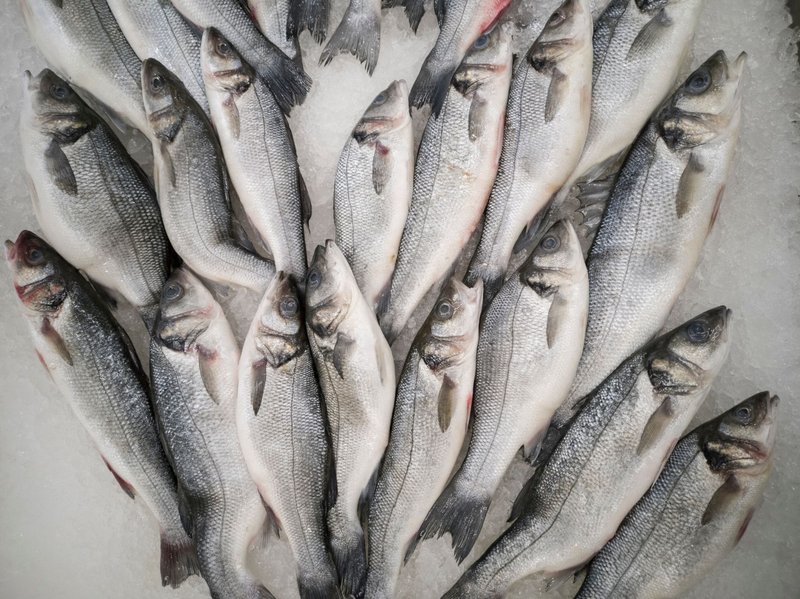
A prized catch on both coasts, sea bass moves inshore to spawn in winter and pushes into estuaries and lagoons as a juvenile. It’s a mainstay of Mediterranean cuisine from Tangier to Tunis and one of the few wild-caught species in the region that’s also farmed at commercial scale.
12. European Pilchard (Sardine)
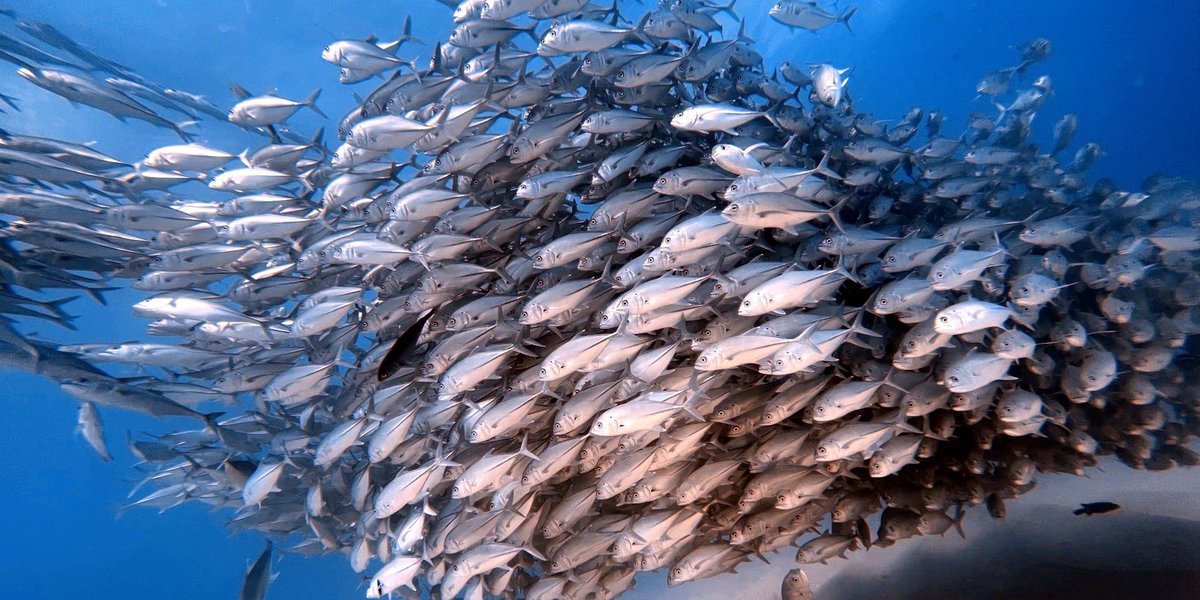
Sardines are the backbone of Morocco’s fishing economy — the country is one of the world’s largest sardine exporters, most of it canned in Agadir and Safi. The fish itself follows the Canary Current’s cold water south along the Atlantic coast in dense, shifting shoals that sonar operators track like weather systems.
13. European Anchovy
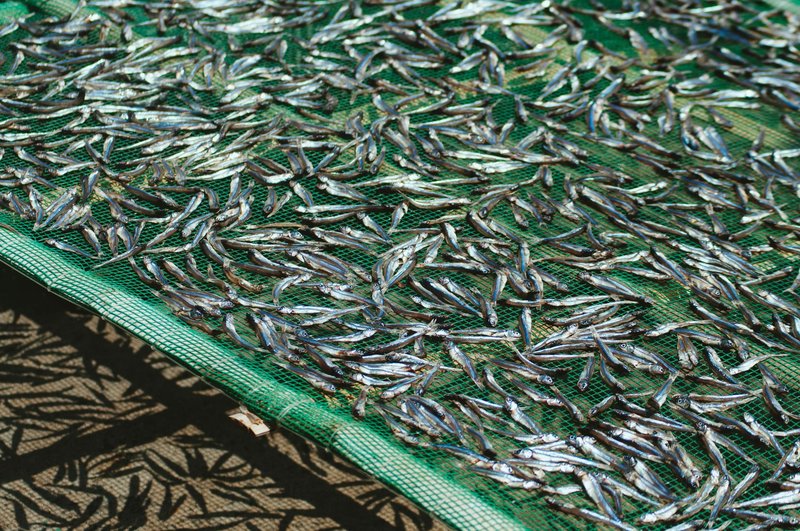
Smaller and shorter-lived than sardines, anchovies fill the same upwelling waters and the same purse-seine nets. Stocks fluctuate hard year to year with sea temperature, and a journal analysis of Mediterranean purse-seine fisheries found both anchovy and sardine landings have been trending down across the region since the late 2000s as warming water shifts where the fish spawn.
14. Mediterranean Horse Mackerel
A schooling fish that ranges the Mediterranean and adjacent Atlantic waters, horse mackerel gets caught alongside sardine and anchovy in the same mixed pelagic fisheries. It’s a rougher, oilier fish than its more famous netmates, and correspondingly cheaper — a staple rather than a delicacy.
15. Striped Red Mullet
Bottom-dwelling and barbel-chinned, red mullet forages over sand and mud for worms and small crustaceans, using the whisker-like feelers under its jaw to find them. It turns a genuine reddish-gold when fresh and is one of the more expensive fish on North African Mediterranean menus, in part because it doesn’t survive well in nets — most of the catch has to be handled individually.
16. Common Pandora
A pink-bodied bream relative found over sandy and rocky bottoms across the Mediterranean and adjacent Atlantic, common pandora is a workhorse of small-scale coastal fisheries. It’s not glamorous, but it’s consistent — present in catches from Casablanca to Alexandria most of the year.
17. Garfish
Long, needle-thin, and startlingly fast near the surface, garfish are easy to spot from a boat by the greenish tint of their bones — a harmless pigment, not a sign of anything wrong with the fish. They follow warming spring water inshore in the Mediterranean to spawn among floating weed.
18. European Conger
The largest eel species in the region, congers hide in rocky crevices and wrecks by day and hunt by night, growing to well over a meter in cold Atlantic waters off Morocco and Mauritania. Divers along wrecked ships in the region regularly report congers using the wreckage as a permanent den.
19. Angelshark
Flat, sand-colored, and built to ambush from the seafloor, the angelshark was once common across European and North African coasts. It’s now considered one of the most threatened shark species in the world, and the waters off the Canary Islands and Moroccan Atlantic coast are among its last real strongholds — a regional conservation overview from the IUCN flags North Africa’s coastal and freshwater habitats as holding an outsized share of the continent’s threatened aquatic species.
20. Undulate Ray
Named for the wavy dark banding across its back, the undulate ray patrols shallow sandy and rocky seabeds across the Mediterranean and northeast Atlantic. Like most rays, it’s slow to mature and produces few young per year, which makes even moderate fishing pressure hard for populations to absorb.
Why So Many of These Fish Are in Trouble
The pattern across this list isn’t subtle: the freshwater species are mostly endemics confined to a single river or lake, and the marine species are mostly caught in fisheries that have been under pressure for decades. Dams fragment the barbels’ rivers into disconnected pools. Drought is drying out the desert gueltas that isolated tilapia and pupfish depend on. And warming Mediterranean and Atlantic waters are already shifting where sardines and anchovies spawn, with knock-on effects for everything that eats them, humans included.
None of that is a reason to skip the region — it’s the reason to look closer. A landscape that produces a trout found in one lake and a shark found nowhere else worth mentioning has more going on beneath the surface than most “best of” lists give it credit for.