TLDR: The national flower of St. Kitts and Nevis is the Poinciana, also called the Flamboyant tree, and it’s near-impossible to miss between May and August when it lights up entire hillsides in red-orange. Beyond that one showpiece, the islands run on frangipani, hibiscus, bougainvillea, and a handful of native beach and forest plants most visitors walk past without a second look. Romney Manor and the Nevis Botanical Gardens are your best bets for seeing most of them in one visit.
Table of Contents
- The National Flower: Poinciana
- Frangipani
- Hibiscus
- Bougainvillea
- Bayhops
- Bellyache Bush
- Orchids
- Bromeliads
- Heliconia
- Allamanda
- Where to See Them: Best Gardens
- Best Months for Blooms
Most write-ups on this topic pick one of two lanes: a government page reciting national symbols, or a symbolism blog explaining what flowers “mean” without saying where you’d actually find one growing. Neither tells you what’s blooming outside your window in Basseterre in July, or which plant is dropping sticky red flowers all over the rental car. This is the version with both — the official flower and the ten others doing the actual work of covering these two islands in color.
The National Flower: Poinciana
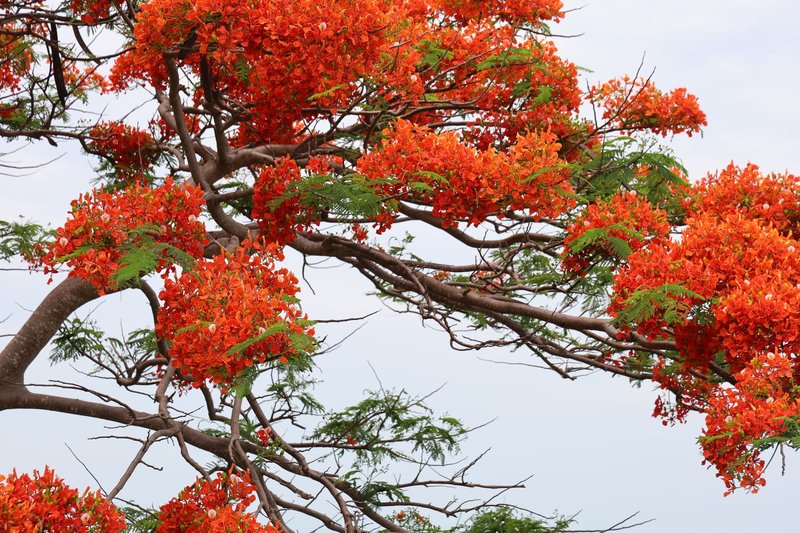
The Poinciana — most locals just call it the Flamboyant, and botanists know it as Delonix regia — is the national flower of both St. Kitts and Nevis. It’s not subtle. A mature tree spreads into a wide, flat canopy that can hit 40 feet across, and when it flowers, the whole thing turns the color of a struck match: red, orange, and streaks of yellow, with individual blooms up to four inches wide. One petal on each flower carries a lighter white-and-yellow stripe, like the tree left itself a signature.
It’s not actually native to the Caribbean. According to Kew’s Plants of the World Online, Delonix regia originated in Madagascar and made its way here through colonial-era plantings, which is part of why you’ll see it across so much of the tropical world now, from Florida to the Philippines. On St. Kitts, the story locals tell traces the tree’s introduction to Monsieur de Poincy, the island’s first French governor — the source of both the “Poinciana” name and a small piece of the tree’s local mythology, whether or not it’s the full story.
Bloom season runs roughly May through August, though a warm, wet year can stretch it into early fall. If your trip lands outside that window, you’ll still find the tree — it just won’t be doing its main trick.
Frangipani
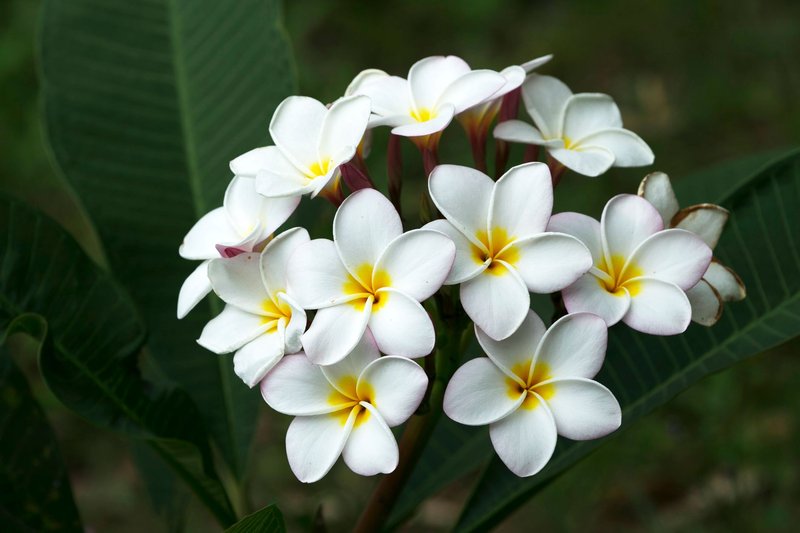
Frangipani (Plumeria) is the flower most people photograph without knowing its name — five waxy petals, usually white or pale yellow, gathered in loose clusters at the branch tips. It shows up in nearly every hotel garden and roadside hedge on both islands, and the scent gets stronger at night, which is a survival trick: University of Florida’s IFAS Extension notes the tree is pollinated by sphinx moths that hunt by smell after dark, not by the reward it looks like it’s offering. The moths visit anyway, chasing a fragrance attached to no nectar.
In parts of the Caribbean, frangipani carries funeral and cemetery associations, which is worth knowing if you’re picking flowers for a photo and a local raises an eyebrow.
Hibiscus
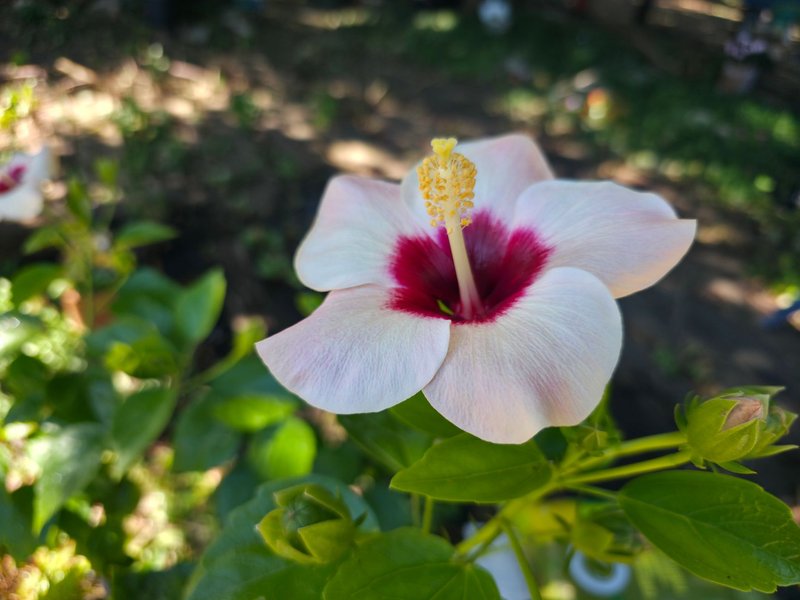
Hibiscus is the workhorse flower of the region — planted as hedging, grown in pots, left to sprawl along fence lines. Each bloom lasts about a day before dropping, which is why a hibiscus hedge always looks slightly different in the afternoon than it did that morning: yesterday’s flowers are gone, today’s are open, tomorrow’s are still buds. The trumpet shape and long, pollen-dusted stamen make it one of the easier flowers to identify at a glance, even for someone who couldn’t name another plant on the trip.
Bougainvillea
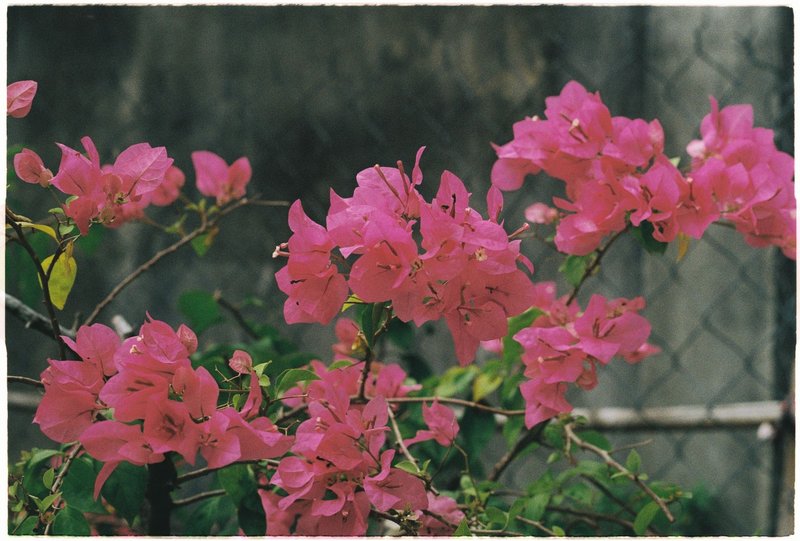
What looks like bougainvillea’s flower is actually a set of papery bracts — modified leaves — wrapped around three small, genuinely inconspicuous white flowers in the center. The color show (magenta, orange, deep purple, sometimes two colors on one plant) is the leaf doing the flower’s job. It’s everywhere on hillside properties here because it tolerates the dry, thin soil that frustrates less resilient plants, and it climbs, which is why you’ll see it draped over garden walls in Basseterre rather than planted as a tidy shrub.
Bayhops
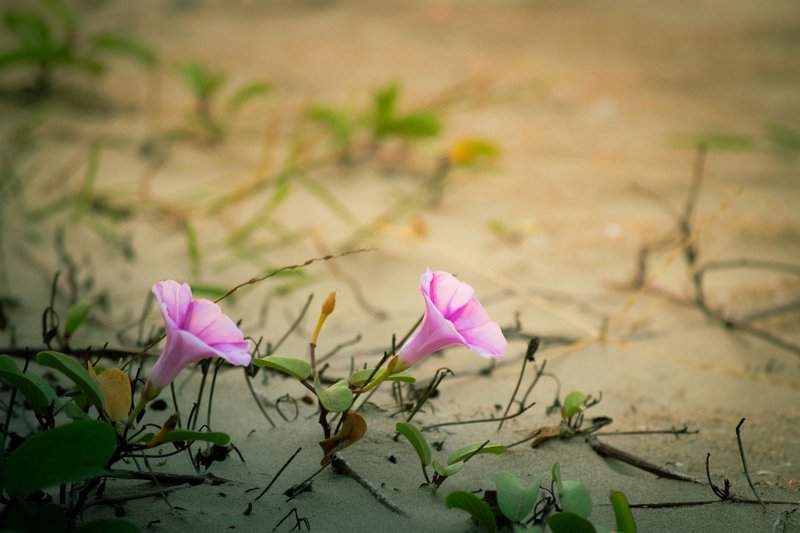
Bayhops (Ipomoea pes-caprae) is the pink, funnel-shaped flower carpeting the sand just above the tide line on most of the islands’ beaches. It’s one of the actual native plants here, not an import, and it does real work: the USDA’s plant profile on the species describes its thick, waxy, hoof-shaped leaves (the species name means “goat’s foot”) and long runners that grab loose sand and hold dunes together against wind and storm surge. It’s a plant conservationists watch closely for exactly that reason — where bayhops disappears, beach erosion tends to follow.
Bellyache Bush
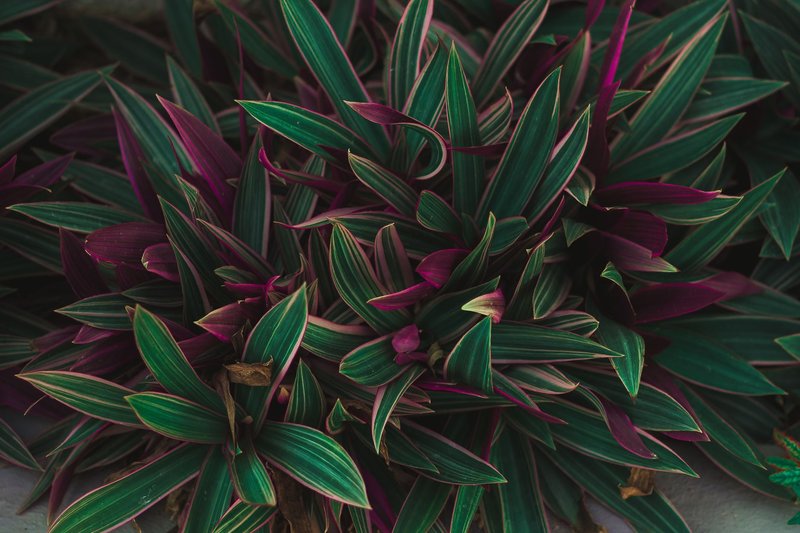
Bellyache bush (Jatropha gossypiifolia) is easy to miss as a “flower” because its small red blooms are almost an afterthought next to its deeply lobed, burgundy-tinted leaves. It’s naturalized on both islands and grows readily in disturbed, sun-baked ground — roadsides, abandoned lots, the edges of pastures. The name is not a metaphor: CABI’s invasive species compendium lists the seeds as toxic if eaten, which is worth mentioning if you’re traveling with kids who pick things up off the ground.
Orchids
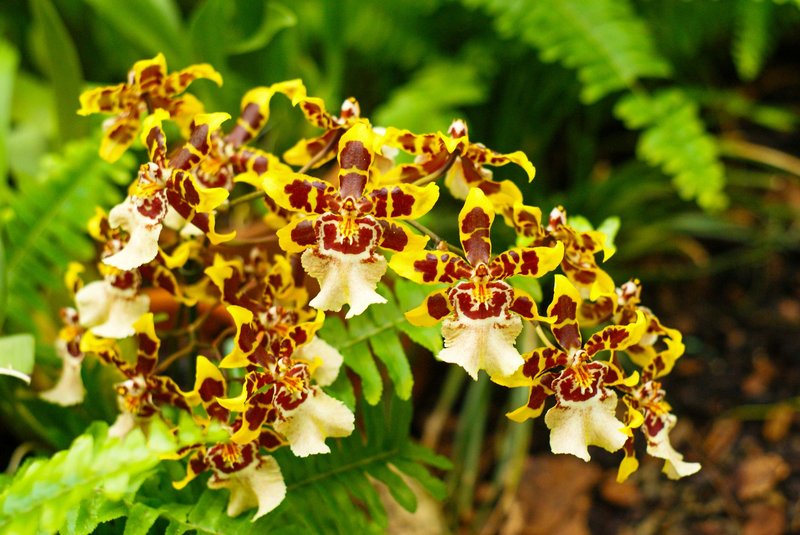
Orchids aren’t the flower most people associate with St. Kitts and Nevis, but they’re one of the better reasons to visit a botanical garden here rather than just wandering a beach road. The Nevis Botanical Gardens keeps a substantial cultivated collection, and Romney Manor’s grounds on St. Kitts hold over a hundred varieties among their tropical plantings — a scale you won’t stumble into just walking through town.
Bromeliads
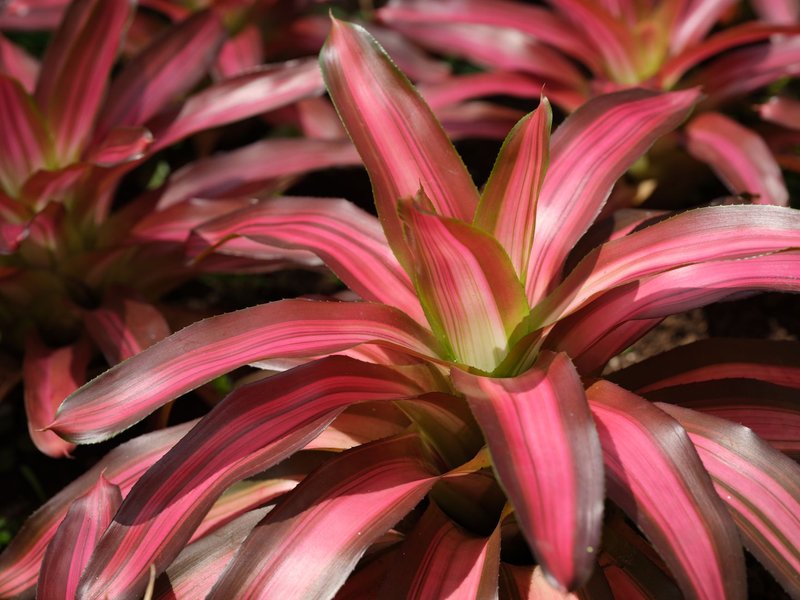
Bromeliads show up as garden accents more than wild specimens — the spiky, rosette-shaped leaves and a central “cup” that collects rainwater, doubling as a tiny ecosystem for insects and the occasional tree frog. They’re planted for structure as much as color, filling in the lower layers of a garden bed under taller flowering trees.
Heliconia
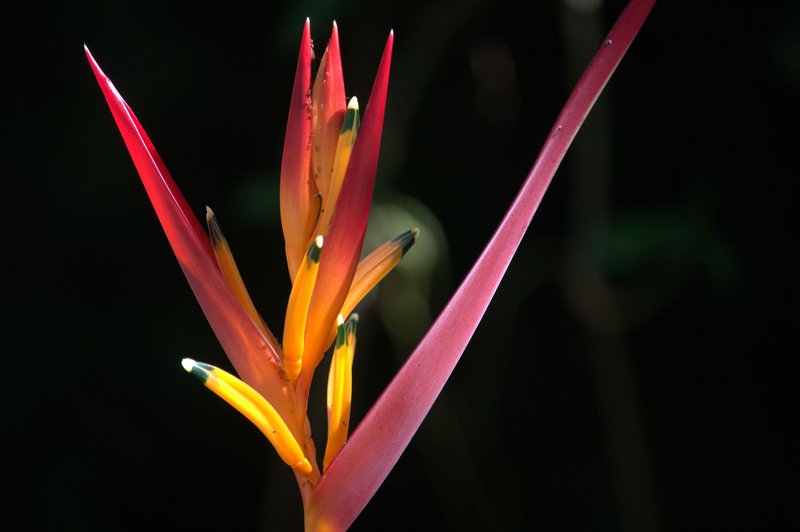
Heliconia looks like it was designed rather than grown: waxy, boat-shaped bracts in red, orange, or yellow stacked in a zigzag down a tall stem, with the true flowers tucked inside, barely visible. It thrives in the wetter, shadier pockets of both islands and reads as more “tropical rainforest” than “Caribbean beach,” which is exactly the contrast that makes the gardens here worth the detour from the coast.
Allamanda
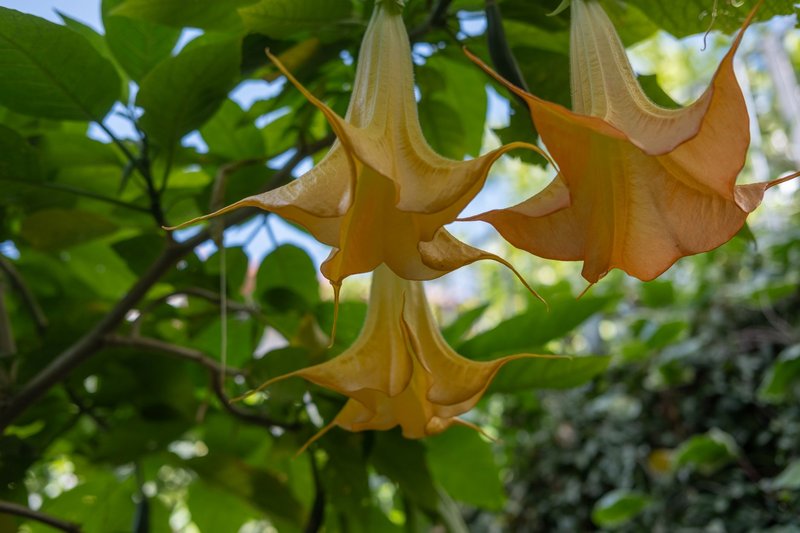
Allamanda’s bright yellow, trumpet-shaped flowers are a common sight climbing fences and trellises across both islands. It flowers nearly year-round in this climate, which makes it one of the more reliable “something will be blooming” plants if your trip doesn’t line up with Poinciana season.
Where to See Them: Best Gardens
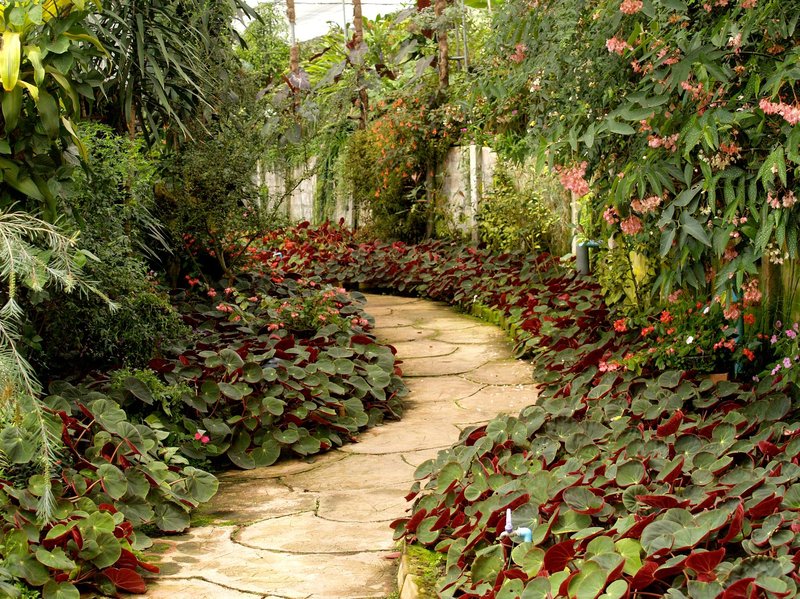
Romney Manor on St. Kitts is the single best stop for range: over a hundred orchid varieties, a stretch of tropical rainforest, manicured European-style lawns, and a 400-year-old saman tree, all on the grounds of a former sugar estate. It’s also home to the Caribelle Batik workshop, so you can pair the plant-spotting with something to actually take home.
The Nevis Botanical Gardens, across the channel, leans harder into cultivated collections — orchids, flowering trees, and structured garden rooms — and tends to be quieter than Romney Manor, which matters if you’re trying to photograph a flower without someone’s elbow in the frame.
Best Months for Blooms
If the Poinciana is the flower you came to see, aim for May through August — that’s peak Flamboyant season on both islands, when the trees are hardest to miss even from a moving car. Frangipani, hibiscus, bougainvillea, and allamanda don’t run on the same strict calendar; in St. Kitts and Nevis’s tropical climate, they flower more or less continuously, with a modest lift in fullness during the wetter months from late summer into fall.
Bayhops follows the sun more than the calendar, blooming along the shoreline for much of the year and thinning out only after a hurricane strips the dune vegetation back — a reminder that a good chunk of what’s growing here answers to weather, not a season on paper.