Madagascar split from mainland Africa roughly 160 million years ago and from India about 90 million years ago, and it’s been evolving in isolation ever since. The result: somewhere between 80 and 95 percent of its plant species grow nowhere else on the planet, depending on which taxonomic group you’re counting. That’s not a marketing line — it’s what happens when an island the size of France runs its own botanical experiment for tens of millions of years with almost no outside interference.
This isn’t a comprehensive catalog of every strange thing rooted in Malagasy soil. It’s 14 species that show you what that isolation actually produced — trees shaped like they’re growing upside down, orchids built around a single moth’s tongue, succulents that look like they wandered in from a different planet. Along the way, the where-to-see-it details and the conservation picture, because most of what’s on this list is losing ground faster than people realize.
Table of Contents
- Why Madagascar Grows Plants Like Nowhere Else
- Three Ecosystems, One Island
- 14 Plants You Won’t Find Anywhere Else
- Why So Much of This Is Disappearing
Why Madagascar Grows Plants Like Nowhere Else
Islands breed strange plants because isolation removes competition and predators that would otherwise keep a lineage in its lane. Madagascar took that further than almost anywhere else. It’s old enough for deep divergence, big enough (nearly 227,000 square miles) to hold multiple climate zones, and isolated enough that seeds and spores rarely made it across the Mozambique Channel in either direction.
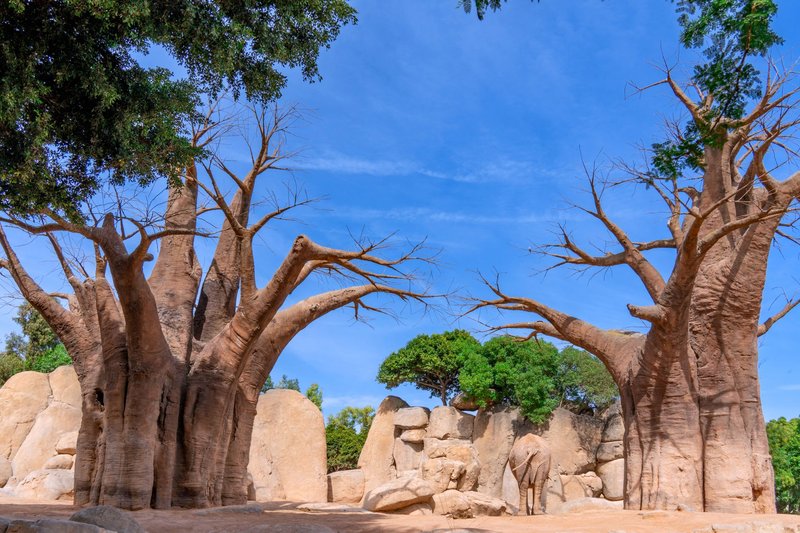
The baobab is the clearest example. Eight species exist worldwide. Six of them are endemic to Madagascar, one is native to mainland Africa, and one — the same African species — also turns up in Australia, likely carried there in seed form thousands of years ago. Nowhere else did a single genus fracture into that many distinct forms in one place. The same isolation produced equally remarkable diversity in Madagascar’s native animals, from endemic lemurs to unique chameleons and snakes found nowhere else.
Three Ecosystems, One Island
Madagascar isn’t one habitat. It’s three, and they sit close enough together that you can drive between them in a day.
The eastern side catches moisture off the Indian Ocean and grows humid rainforest — the kind with orchids clinging to tree trunks and a canopy dense enough to block the sky. The central highlands, stripped of most original forest cover centuries ago, are cooler and grassier. And the southwest is spiny forest: a dry, thorny landscape of succulents and swollen-trunked trees adapted to go months without rain.
That last one has no real equivalent anywhere else on Earth. Botanists sometimes call it the “spiny desert,” though it’s not technically a desert — it’s closer to a forest that decided thorns and water storage mattered more than leaves.
14 Plants You Won’t Find Anywhere Else
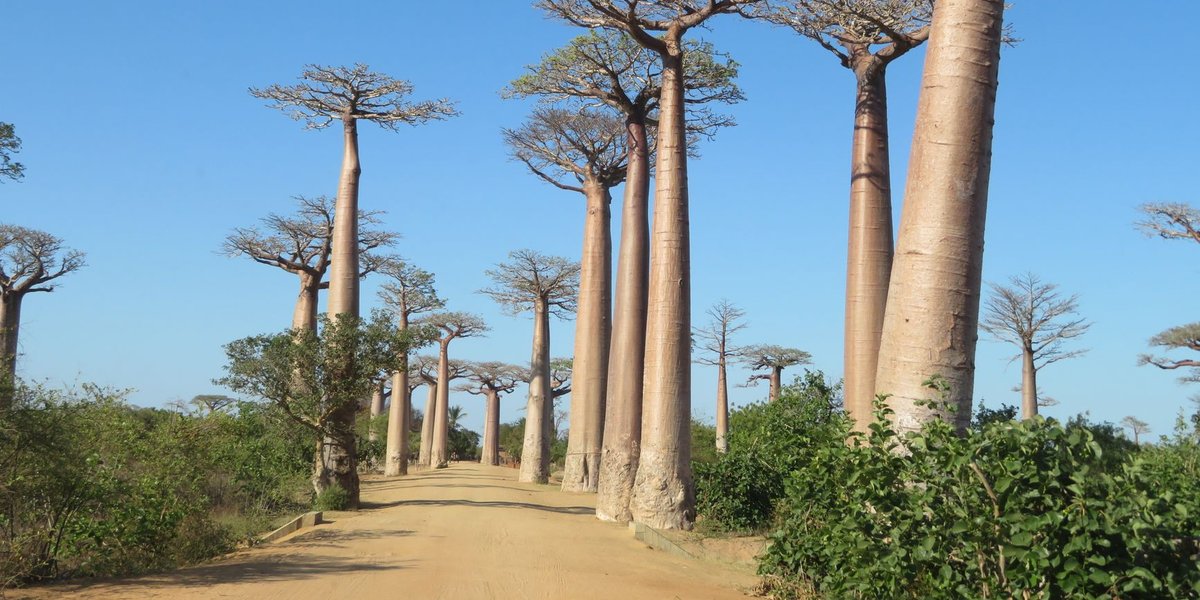
1. Grandidier’s Baobab (Adansonia grandidieri)
This is the baobab from every postcard of Madagascar — the one lining the Avenue of the Baobabs near Morondava, trunks smooth and gray, branches clustered at the top like roots reaching for the sky. Some individuals are estimated at 800 years old and can reach 100 feet. The trunk stores water for the dry season, which is also why the wood is too soft and fibrous to use for lumber.
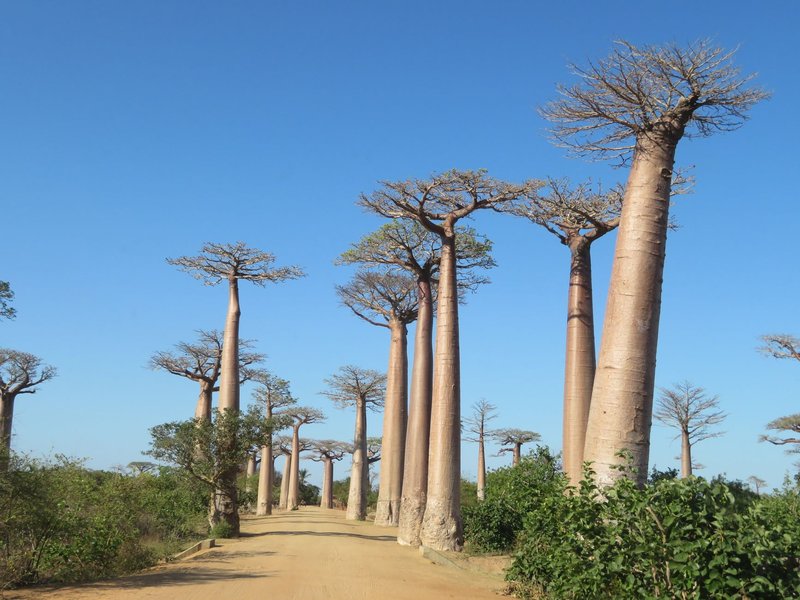
Where to see it: The Avenue of the Baobabs, western Madagascar, best at sunrise or sunset when the light turns the trunks copper.
2. Fony Baobab (Adansonia rubrostipa)
Smaller and stockier than its famous cousin, the fony baobab flowers at night, and the blooms only last a few hours before they wilt. Nocturnal moths and lemurs handle pollination in that narrow window. Malagasy communities have long used its bark fiber for rope and its seed oil in traditional remedies.
Where to see it: Dry deciduous forests of western and southwestern Madagascar, including Kirindy Forest.
3. Traveler’s Palm (Ravenala madagascariensis)
Not actually a palm — it’s in the bird-of-paradise family — but the name stuck because its enormous fan of paddle-shaped leaves grows in a single flat plane, like an open hand. Rainwater collects at the base of each leaf stalk, which gave rise to the old (and only partly reliable) story that thirsty travelers could tap it for a drink. A previously unrecognized second species of Ravenala was formally described by researchers as recently as 2021, which tells you how much taxonomic work on this island is still unfinished.
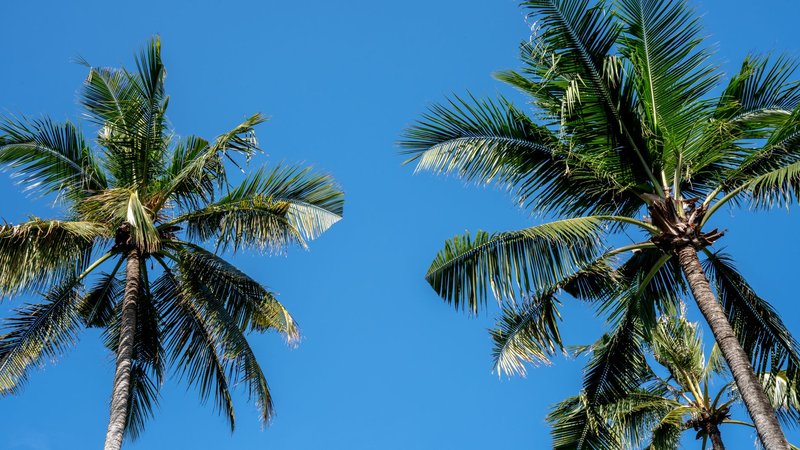
Where to see it: Widespread across eastern Madagascar; it’s also become the country’s unofficial national plant, printed on the Air Madagascar logo.
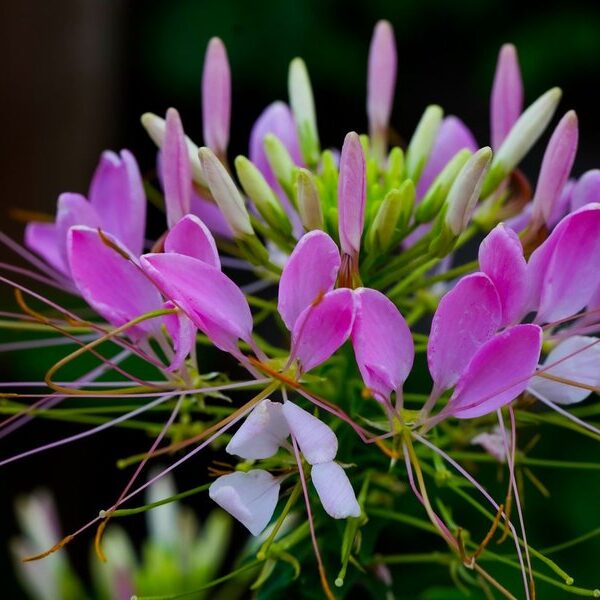
4. Madagascar Periwinkle (Catharanthus roseus)
A small, unassuming pink or white flower with an outsized medical legacy. Compounds isolated from this plant — vincristine and vinblastine — became chemotherapy drugs still used to treat leukemia and Hodgkin lymphoma. It’s now naturalized in warm climates worldwide, so the plant growing in a Florida garden bed shares an ancestor with the one on a Malagasy roadside.
Where to see it: Grows widely across the island, from disturbed roadsides to garden cultivation; also common as an ornamental worldwide.
5. Darwin’s Orchid (Angraecum sesquipedale)
Charles Darwin examined a specimen of this orchid in 1862 and noticed its nectar spur ran nearly a foot long. He predicted a moth with a proboscis long enough to reach the bottom had to exist, even though no one had ever seen one. Researchers at what’s now the Royal Botanic Gardens, Kew confirmed decades later that Darwin was right: the Madagascar hawk moth (Xanthopan praedicta) does exactly that job, uncurling a tongue built to match a single flower’s geometry.
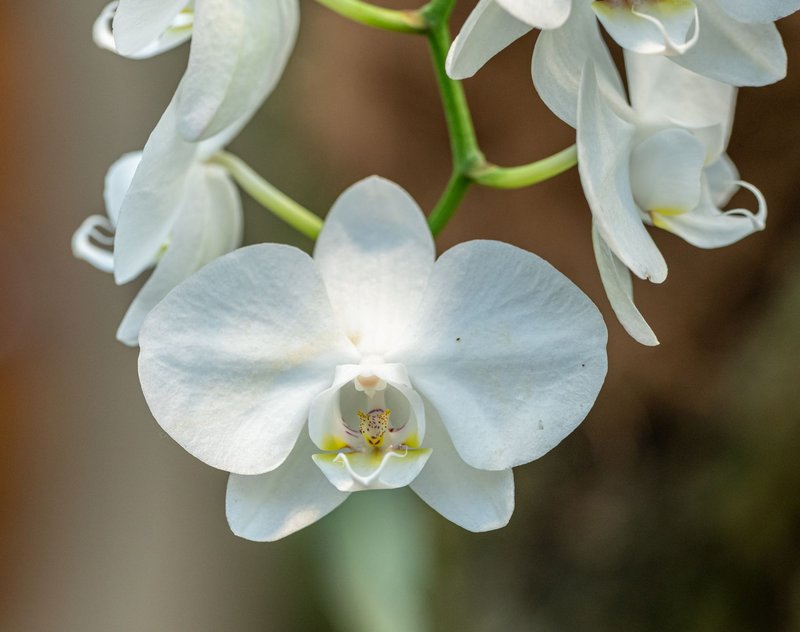
Where to see it: Lowland rainforests along Madagascar’s eastern coast.
6. Octopus Tree (Didierea madagascariensis)
The signature plant of the spiny forest, and it looks the part: a thick central trunk sends out multiple spiny arms covered in small succulent leaves, resembling something between a cactus and a cephalopod frozen mid-reach. It’s not related to cacti at all — it belongs to the Didiereaceae, a plant family found only in Madagascar, an example of convergent evolution producing a nearly identical survival strategy an ocean away from the Americas.
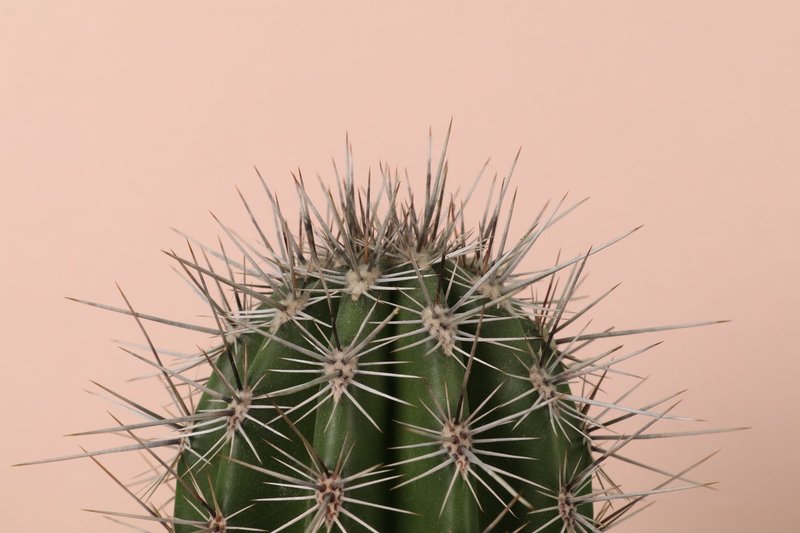
Where to see it: Spiny forest habitat in southwestern Madagascar, including Ifaty and Reniala Reserve.
7. Elephant’s Foot Plant (Pachypodium lamerei)
A swollen, spine-covered trunk topped with a crown of narrow leaves that drop during the dry season, leaving what looks like a spiky bottle planted in the ground. The trunk itself is the water tank — pachypodium translates roughly to “thick foot” in Greek, which is a fair description. It’s become a popular houseplant outside Madagascar precisely because it tolerates the kind of neglect that kills most other tropicals.
Where to see it: Southern and southwestern spiny forests; smaller specimens are widely cultivated as ornamentals.
8. Madagascar Ocotillo (Alluaudia procera)
Tall, spindly, and covered in small round leaves that sprout directly from a thorny stem, this Didiereaceae relative can reach 50 feet and dominates large stretches of the spiny forest skyline. Local communities have traditionally used the wood for fencing and construction, since it’s lightweight but resists termites.
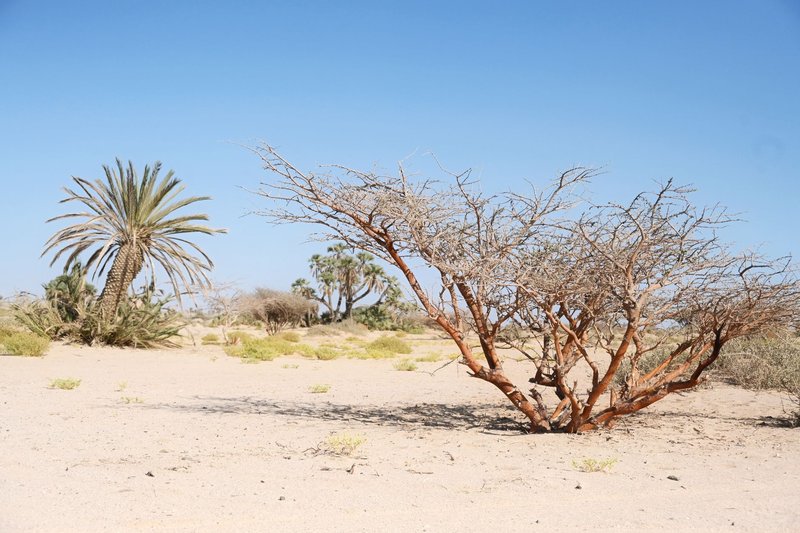
Where to see it: Spiny thicket forests across southern Madagascar.
9. Bismarck Palm (Bismarckia nobilis)
A genuinely enormous fan palm, with silvery-blue leaves up to 10 feet across held on a trunk that can top 60 feet. It’s one of the few Madagascar endemics that’s become a serious landscaping fixture internationally — you’ll find it lining streets in Florida and Southern California, usually with no idea of its actual origin.
Where to see it: Open grasslands and savanna in central and western Madagascar.
10. Madagascar Rosewood (Dalbergia species)
Multiple Dalbergia species native to Madagascar’s eastern rainforests produce a dense, richly colored heartwood long prized for furniture and musical instruments. That value is precisely the problem: rosewood logging, much of it illegal, has driven several species toward collapse, and Madagascar has repeatedly had to seize and repatriate stockpiled logs seized in international trafficking cases.
Where to see it: Remnant eastern rainforest, though most old-growth stands have already been logged out.
11. Tapia Tree (Uapaca bojeri)
A fire-adapted tree with thick, corky bark that forms open, savanna-like woodlands across the central highlands — one of the few native forest types that actually survives, and depends on, the regular grass fires that would kill most other trees. Tapia woodland also hosts a wild silk moth whose cocoons support a small but genuine local silk industry.
Where to see it: Central highland plateau, particularly around Ambositra.
12. Aloe Vaombe (Aloe vaombe)
One of the largest aloe species on Earth, growing a thick, branching trunk topped with rosettes of serrated, blue-green leaves and spikes of deep red flowers. It can reach 10 feet, dwarfing the aloe most people know from a windowsill pot.
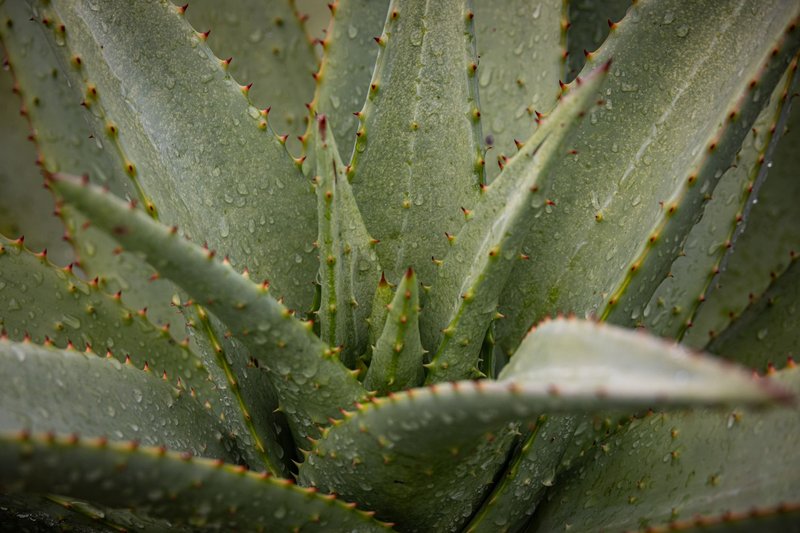
Where to see it: Rocky slopes and spiny forest edges in southern Madagascar.
13. Madagascar Flame Tree (Delonix regia)
Grown as an ornamental street tree across the tropics, the flame tree with its explosion of red-orange blossoms actually originated in Madagascar’s dry western forests, where wild populations are now rare and fragmented. Most people who’ve stood under one — in Miami, in Mumbai, in Bangkok — have no idea they’re looking at a species that’s struggling to survive in its actual homeland.
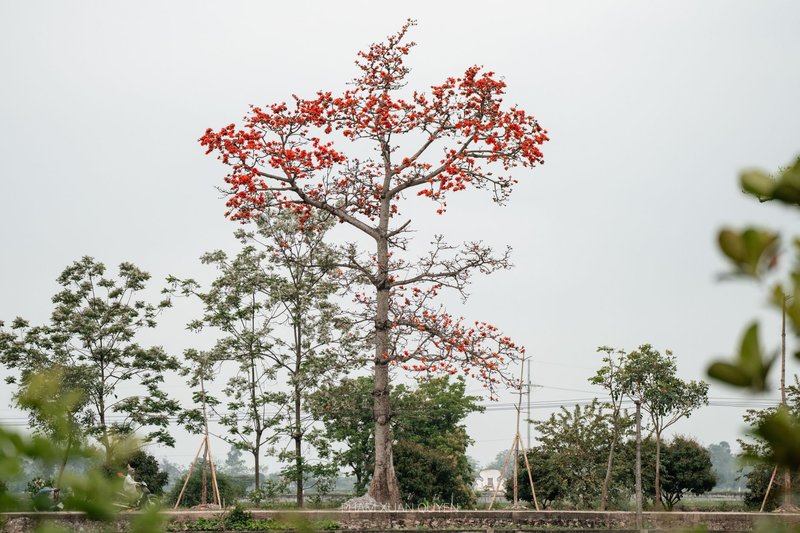
Where to see it: Scattered wild populations in western Madagascar’s dry forests; widely cultivated elsewhere.
14. Madagascar Pitcher Plant (Nepenthes madagascariensis)
A carnivorous vine that grows cup-shaped traps at the end of its leaf tendrils, luring insects in with nectar, then drowning them in digestive fluid at the bottom. It’s one of only two Nepenthes species native to Africa or its surrounding islands, isolated from the roughly 170 other pitcher plant species that evolved separately across Southeast Asia.
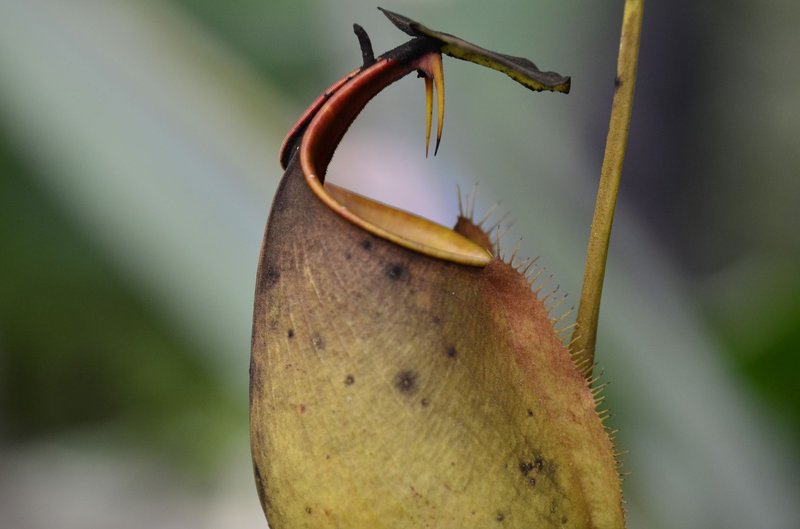
Where to see it: Boggy, nutrient-poor soils in eastern and northern Madagascar.
Why So Much of This Is Disappearing
Madagascar has lost the majority of its original forest cover, and the IUCN lists a growing share of the country’s endemic flora as threatened, from individual baobab species to entire families like the Didiereaceae. Slash-and-burn agriculture, known locally as tavy, clears forest for rice cultivation and cattle grazing. Charcoal production for cooking fuel eats into what’s left. Rosewood logging, largely for export markets in Asia, has hit eastern rainforest species particularly hard.
The World Wildlife Fund has flagged Madagascar’s forests as among the most critically threatened habitats on Earth, precisely because so much of what grows there exists nowhere else — when a stand of spiny forest burns, the species in it don’t have a backup population somewhere else to fall back on.
There’s real conservation work happening: protected areas like Kirindy Forest and Reniala Reserve, seed banking efforts through international botanical gardens, and a handful of community-managed forests where local buy-in has actually slowed clearing. It’s not enough to call the trend reversed, but it’s not nothing either.
The Takeaway
Madagascar didn’t just produce unusual plants — it produced an entire alternate botanical history, running in parallel to the rest of the world for tens of millions of years. A baobab that flowers only at night, an orchid built for a moth nobody had seen yet, a tree family that exists on exactly one island: none of that repeats anywhere else on the planet. Whatever gets lost here doesn’t show up again somewhere else. It’s just gone.